Investor's Corner
Tesla owners are investing in solar projects through Wunder Capital

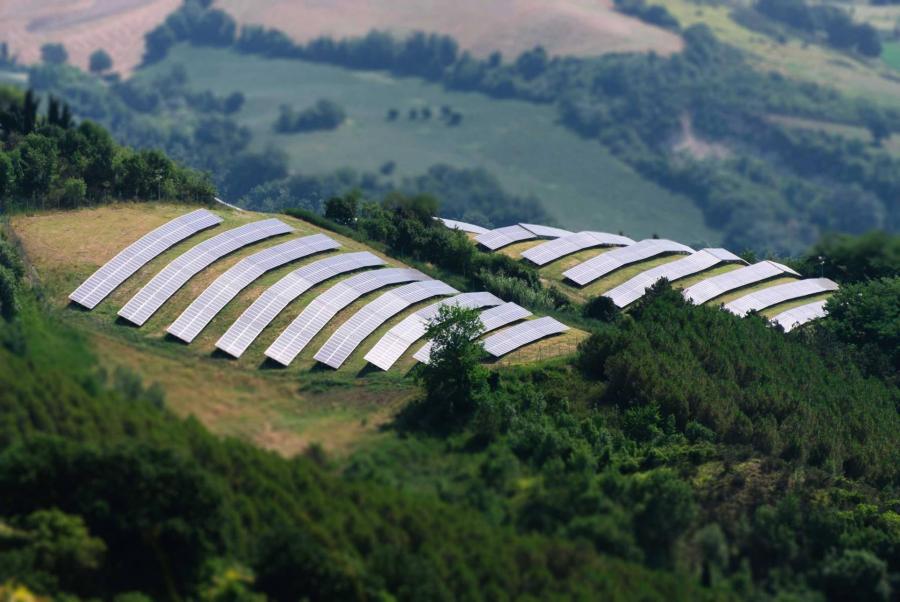
Wunder Capital has been making a name for itself in the world of solar through a set of financial service offerings aimed at accelerating growth within the emerging solar industry. In specific, the Boulder, Colorado-based company has created lending opportunities for small to medium-sized companies that are looking to make the transition to solar generated power. In order to fund these types of solar initiatives, the company has created two Wunder Capital funds that connect accredited investors with U.S. commercial solar projects.
As a Tesla owner that’s hell-bent on pushing renewable energy and trying to “make a difference” through my involvement with solar projects – I’ve had a solar system on my house for the last six years; interested in the Tesla roof; and addicted to all things solar – Wunder Capital particularly interests me because of the firms mission to scale the underserved non-grid scale commercial solar market. More often than not, we hear about residential solar, but seldom do we hear about a nationally-recognized company that’s catered to smaller businesses, schools, and institutions that are looking to “go solar”.
Myself and much of the greater Tesla community have either invested into solar, by way of SolarCity pre-Tesla acquisition, and crowdfunded renewable energy projects, but I, personally, have never seen individual solar systems bundled into a single risk-adjusted fund. Nor have I seen projected returns as high as 8.5% on solar investments, especially from a company that seems to be getting quite a bit of recognition across mainstream media. The two funds being offered by Wunder Capital opens up an opportunity for individual investors to contribute financially to U.S. solar energy projects that were traditionally out of reach.
In the company’s own words, Wunder Capital “develops and manages solar investment funds by leveraging its national partnership network, tested processes, proprietary underwriting framework, and best-in-class online investment portal. Wunder actively manages everything, from the sourcing of commercial solar opportunities, to the underwriting, contracting, and construction of each project. Once a system is live, Wunder manages the ongoing operation and maintenance of the array, bills the energy customer, and distributes proceeds to investors.”
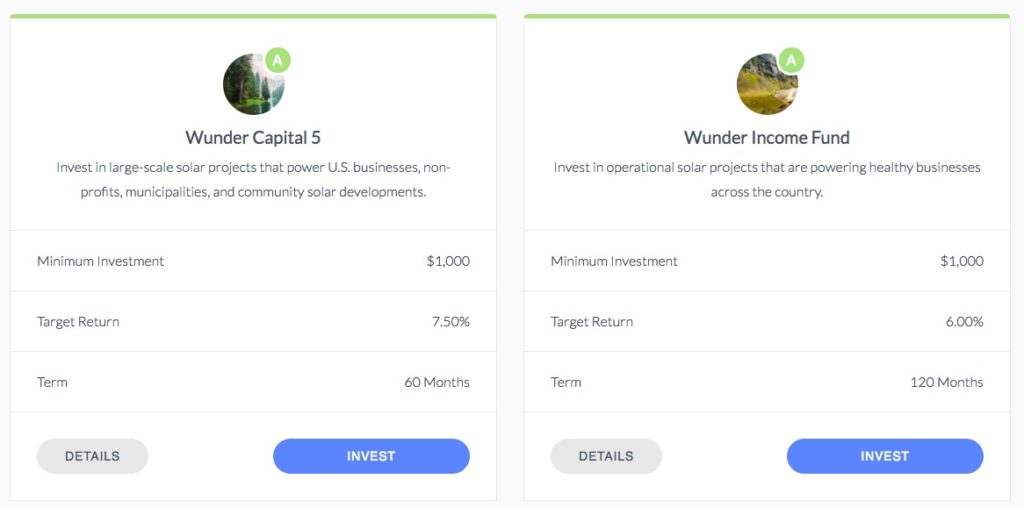
If you’re looking for an investment opportunity that also makes you feel good about your investment, check out the funds being offered on WunderCapital.com. Start by selecting a fund that aligns with your expected annual rate of return.
Both Wunder Capital funds being offered have a minimum investment threshold of $1,000. The Wunder Capital 5 investment is geared towards higher growth seekers and has an annual target return rate of 7.5% over a 60 month term. The other fund being made available is the Wunder Income Fund which is a more risk averse fund that has an annual target return rate of 6% over a 120 month or 10 year term.
Business owners looking to finance their solar installation also have an opportunity to be involved with the company through the Wunder Capital “Get Financing” page.
https://www.youtube.com/watch?v=AgWMwR9Ihtk
Disclaimer: Any investment comes with risk. Please consult with a financial advisor before investing. Wunder Capital is a partner of Teslarati.


Elon Musk
SpaceX (SPCX) IPO is live today at $135: Here’s exactly what you need to know
SpaceX priced its historic IPO at $135 per share today, raising a record $75 billion.

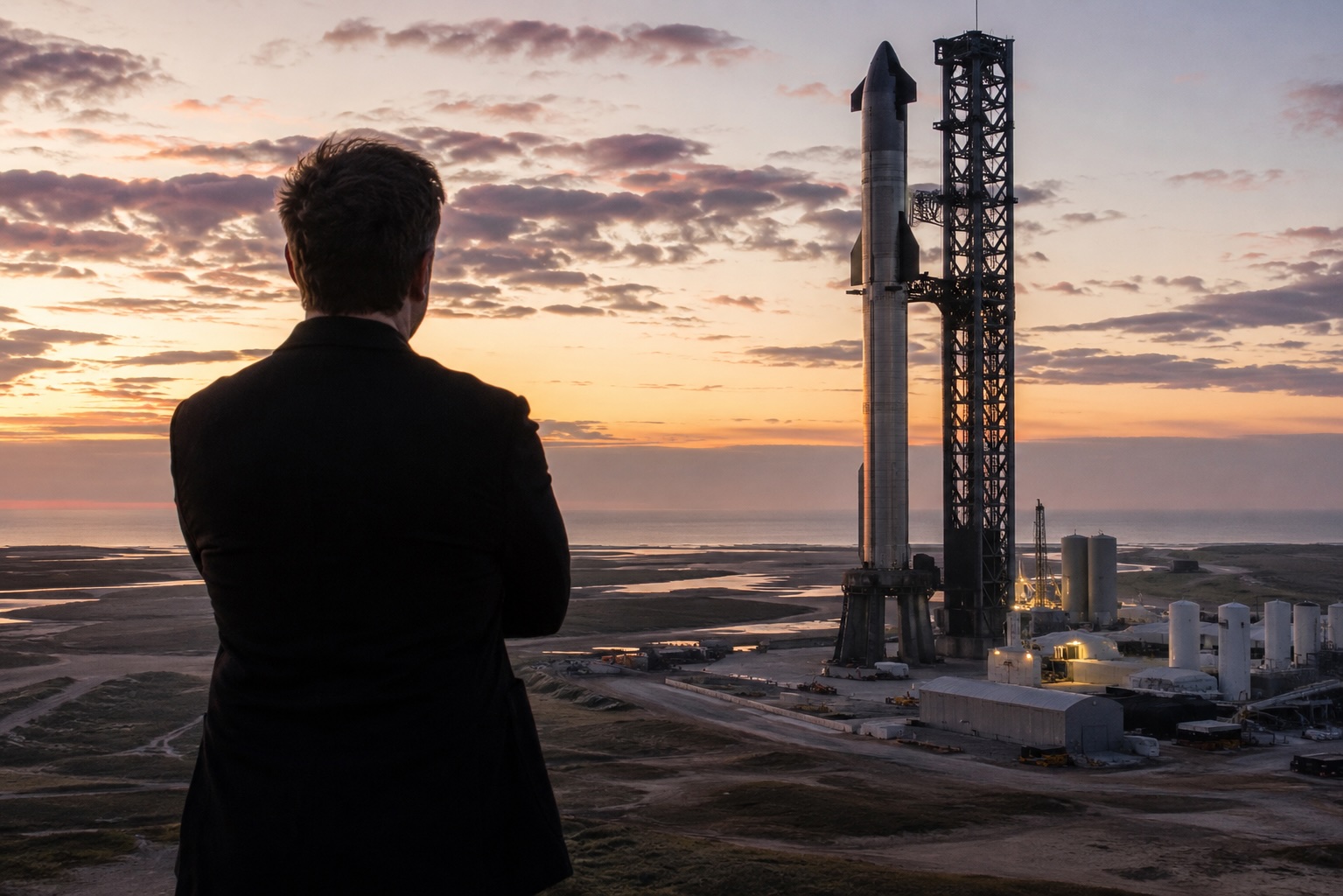
SpaceX officially priced its initial public offering at $135 per share, offering 555,555,555 shares of Class A common stock and raising $75 billion in what is the largest IPO in stock market history. Shares are set to begin trading on the Nasdaq Global Select Market on Friday, June 12, under the ticker symbol SPCX. The previous record holder was Saudi Aramco’s 2019 offering at $29 billion, followed by Alibaba’s $22 billion offering in 2014.
At $135 per share and roughly 555.6 million shares, the implied valuation sits near $1.75 trillion, which would make SpaceX roughly the seventh largest company in the United States, just above Tesla’s current market cap. Regular investors can request shares at the IPO price through Robinhood, Fidelity, Charles Schwab, SoFi, and E*TRADE, though the deal is heavily oversubscribed and most retail allocations will be partial or unfilled. Once trading opens June 12, anyone with a brokerage account can buy SPCX on the open market.
SpaceX’s amended S-1 is sparking a major Tesla merger conversation
The valuation is anchored primarily by Starlink. Starlink crossed 10 million subscribers as of February 2026 and is adding 750,000 to 1.5 million new users per month, with the connectivity segment already posting a $1.19 billion profit last quarter. The offering also bundles in xAI following SpaceX’s all-stock merger earlier this year, adding Grok and the Colossus supercomputer to the investment thesis. As Teslarati reported, Starlink ended 2025 with $10 billion in revenue, a figure analysts project could reach $24 billion by end of 2026.
Wedbush analyst Dan Ives has been vocal in his support. “I think the time is right,” Ives said, adding that the offering expands the Elon Musk ecosystem rather than competing with Tesla. An average 12-month price target of $165 per share represents roughly 22% upside from the IPO price. Not everyone agrees – Motley Fool noted xAI is spending $1 billion per month playing catch-up to OpenAI and Anthropic.
Musk founded SpaceX in 2002 with a single stated purpose. “Elon founded SpaceX with a goal to change humanity, to make us a multi-planet species,” CFO Bret Johnsen said in the company’s retail roadshow video this week. Musk himself has been more direct: “We are building the systems and technologies necessary to provide global connectivity on Earth and beyond, to understand the true nature of the universe, and to extend the light of consciousness to the stars.”
Investor's Corner
Tesla unfolded its first European “folding Supercharger”
Tesla’s folding Supercharger just arrived in Europe and it changes how fast charging expands.
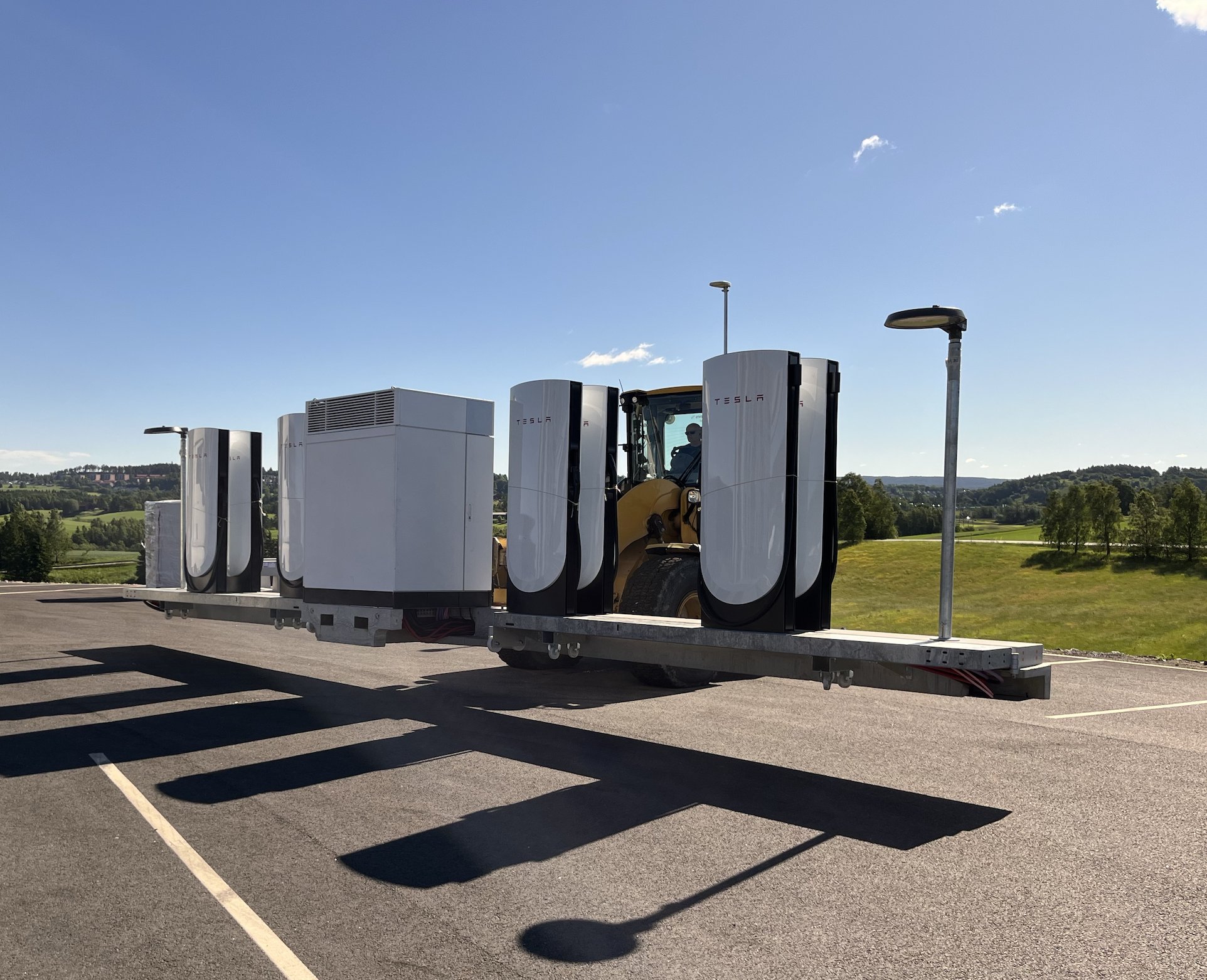
Tesla’s Folding Unit Supercharger has officially landed in Europe, with the company teasing a new installation in its effort for a broader rollout targeting major motorway rest stops across the European continent in Q3 2026. The arrival marks a notable shift in how Tesla is thinking about network expansion, moving from hardware performance alone to engineering the logistics chain itself.
While Tesla did not reveal the exact location for the new folding Supercharger in Europe, the photo shared on X heavily suggests that this maybe somewhere in Norway. Historically, whenever Tesla rolls out an entirely new infrastructure architecture in Europe, whether it was the original Supercharger stalls years ago or these brand-new modular V4 “Folding Units”, Norway is almost always the designated launch pad because of its unmatched EV adoption rate and supportive infrastructure
The Folding Unit, introduced in March 2026, is a factory pre-assembled V4 charging station built on an industrial hinge system mounted to a heavy-duty concrete base. The entire assembly arrives on site ready to unfold and connect. Tesla confirmed the units feature telescopic light poles specifically designed for easy transportation and fast on-site deployment, a detail that signals how carefully the logistics chain has been engineered alongside the hardware itself. The design allows 33% more stalls per delivery truck, cuts installation time roughly in half, and reduces overall deployment costs by more than 20% compared to traditional installations.
Tesla’s newest “Folding V4 Superchargers” are key to its most aggressive expansion yet
Tesla also noted telescopic light poles which provide benefits over traditional Supercharger installations that require fixed-height poles that are awkward to ship, slow to position on site, and often require separate crews and equipment to erect before charging hardware can even be staged. By engineering poles that compress for transit and extend on arrival, Tesla has removed one of the quieter bottlenecks in the physical deployment process. Every hour saved on a light pole installation is an hour redirected toward getting stalls energized. At scale, across dozens of new sites per quarter, those hours add up to a meaningful acceleration in how quickly a location goes from approved permit to serving its first customer.
Each Folding Unit pairs a single V4 power cabinet with eight charging posts. The V4 cabinet delivers up to 500 kW per stall for passenger vehicles and up to 1.2 MW for the Tesla Semi, supporting twice the stalls per cabinet at three times the power density of its predecessor. Longer cables make every new station immediately usable by non-Tesla vehicles, a priority as Tesla continues opening its network to Ford, GM, Rivian, Hyundai, Stellantis, and others.
As Teslarati reported when the Folding Unit was first unveiled, Tesla’s Gigafactory New York produced its final V3 Supercharger cabinet in March 2026 after more than seven years and 15,000 units, completing a full pivot to V4 production. The European arrival of the folding design is the next chapter in that transition.
Faster and cheaper deployment means Tesla can justify building in markets and corridors that were previously too expensive to serve, filling the coverage gaps that have slowed EV adoption outside major urban centers.
First Folding Unit Superchargers in Europe 🇪🇺 https://t.co/KNfYWJukkL pic.twitter.com/YR1udIpH1i
— Tesla Charging (@TeslaCharging) June 10, 2026

Tesla Full Self-Driving (Supervised) is currently listed as a Level 2 suite in terms of its passenger cars. As its Robotaxi platform continues to move quickly, it has been recognized as a Level 4 ride-sharing program by the State of Texas, as Tesla recently self-certified itself.
However, a Wall Street analyst is arguing that Tesla (NASDAQ: TSLA) has effectively achieved Level 4 autonomy in most conditions in all of its vehicles, drawing on personal experience and data released by the company.
Alex Potter of Piper Sandler said in a note to investors on Wednesday that “Tesla has solved the self-driving puzzle,” pointing to decisions to offer insurance discounts for FSD-enabled policies as a signal of confidence, which is backed up by stellar safety records compared to human driving.
Investing.com initially reported on Potter’s new note.
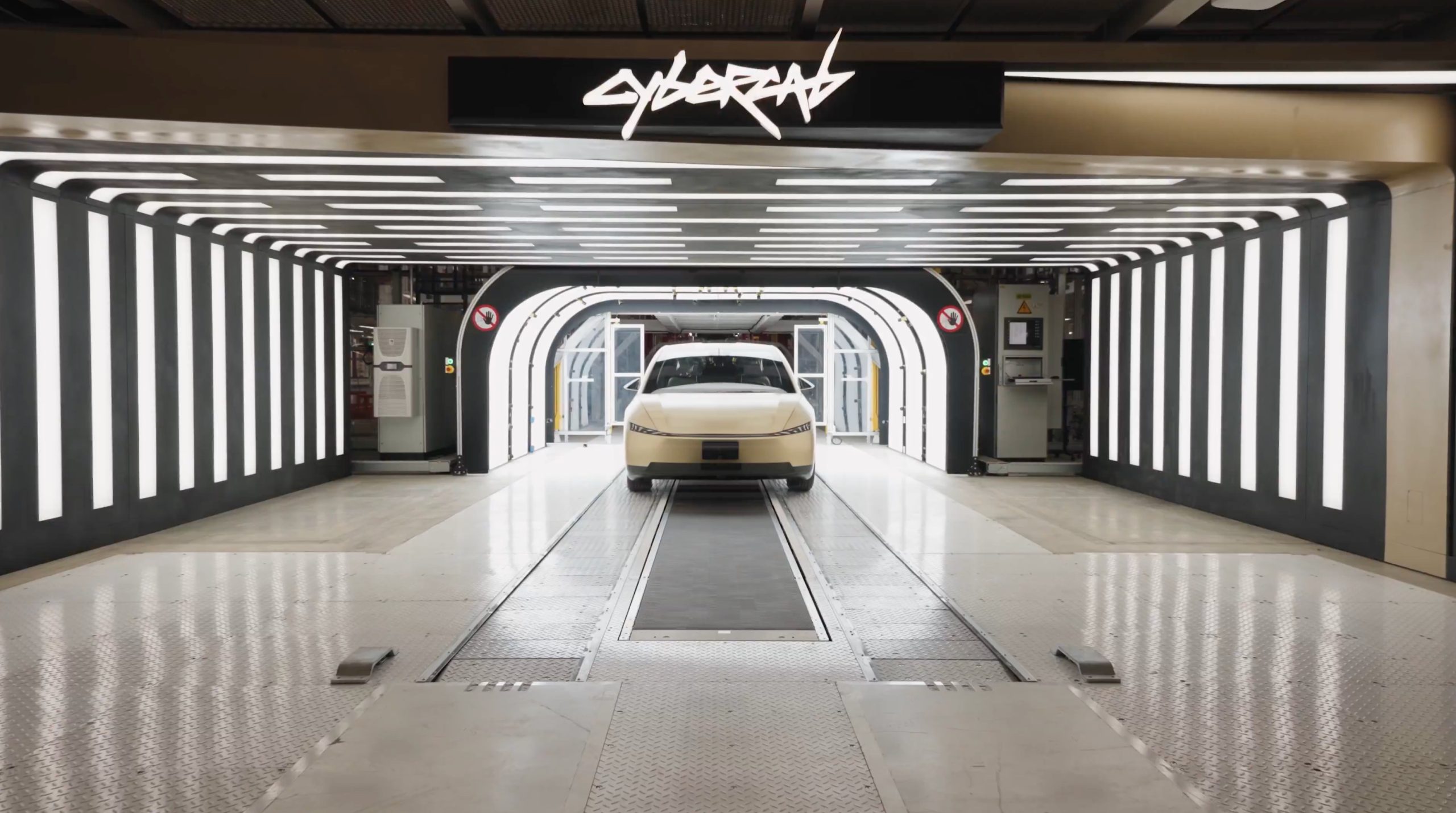
Additionally, Potter looks at the recent start of Cybercab production at Giga Texas as a potential indication that Tesla is ready to offer some level of unsupervised driving at least in the near future. The Cybercab has no steering wheel or pedals, completely eliminating the ability for human input.
He also sees Tesla’s allocation of “several hundred million USD (if not $1B+)” as confidence internally, seeing as it would be tough to set aside that amount of capital toward a project that the company does not see as relatively near-term.
Forward thinking, especially as Cybercab has no human controls, it would make sense that Tesla is at least close to self-driving. How close is another question.
Tesla has routinely teased that unsupervised FSD is close, but there are still a lot of things it feels as if the company has to roll out some more capability, including unsupervised parking features, known as “Banish,” better operation with regional self-driving performance, and other improvements.
That is not to say that Tesla FSD is super impressive already. It has already completed coast-to-coast drives across the United States and Canada, it routinely takes the stress out of driving for most people, and it has proven through Tesla Safety Reports that it is safer and involved in accidents less frequently than humans.
🚨 These are the first-ever FSD safety statistics out of the Netherlands, showing it was over 3.5x safer than human driving on Dutch roads.
The most recent numbers out of Tesla for North America show:
-Over 5.5 million miles between accidents for Teslas using FSD
-660k miles… https://t.co/XKlRzgSGEh pic.twitter.com/HX6kzh0ZKc— TESLARATI (@Teslarati) June 9, 2026
Even Potter believes it is capable, as he used it to go from Missoula, Montana, to Minneapolis, Minnesota, back in April.
“There’s no substitute for personal experience,” he wrote.

SpaceX (SPCX) IPO is live today at $135: Here’s exactly what you need to know

Tesla unfolded its first European “folding Supercharger”


