Elon Musk
Tesla preps to expand Robotaxi geofence once again, answering Waymo
Just days after Waymo responded to them, Tesla is preparing for a potentially massive expansion of the Robotaxi geofence.

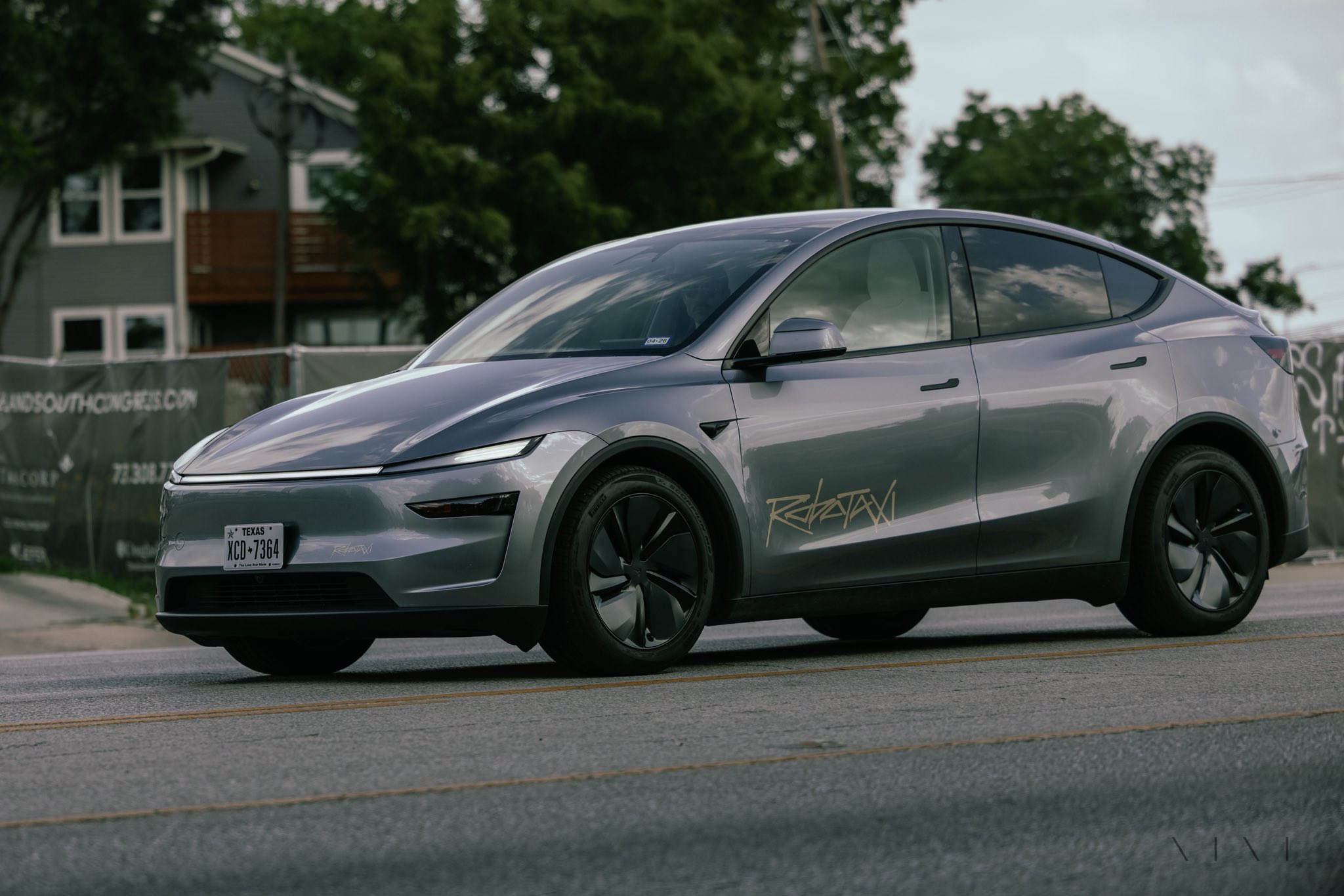
Tesla is preparing to expand its Robotaxi geofence yet again, just days after Waymo responded to its initial broadening of the area.
Tesla launched its first expansion last week, less than a month after introducing Robotaxi rides in Austin.
The company opted for a very interesting shape for its geofence expansion, which was more of an indication that it could launch more rides in virtually any area of the city due to the new geofence it chose.
Waymo then responded to Tesla shortly after with an expansion of its own. After Tesla’s first expansion of its geofence, it had 42 square miles of Robotaxi-accessible travel region. This was larger than Waymo’s 37 square miles.
However, the Waymo expansion last week brought the company to a substantial 90 square miles of Austin:
Waymo responds to Tesla’s Robotaxi expansion in Austin with bold statement
Tesla appears to be ready to respond. Drone operator and Gigafactory Texas observer Joe Tegtmeyer spotted Tesla Robotaxi validation vehicles well west of downtown Austin in the area of Marble Falls, Texas.
This would significantly increase Tesla’s square mileage if it could manage to bring its geofence to that size:
🚨 We could see Tesla’s response to Waymo’s expansion in Austin very soon
Based on Tesla’s expansion last time, it’s safe to assume they can go to any area of Austin whenever they choose
It’s not a coincidence they chose, well, you know, the shape they did 🤣 https://t.co/xB92SQ1ntC
— TESLARATI (@Teslarati) July 19, 2025
The two companies are not directly responding to one another with these expansions, but it appears that there is a significant amount of competition underway, which ultimately benefits the consumers.
Waymo has been operating in Texas since March from a fully public perspective, while Tesla is still slowly expanding its test size for the Robotaxi fleet on a nearly daily basis. Tesla launched Robotaxi rides to a handful of Early Access Program members on June 22.
Tesla is also expanding to other regions of the United States, particularly in Arizona and California. However, the Texas expansion is a priority currently, as it is the only region where Tesla has received approval to operate passenger rides in a driverless setting in the country.


Elon Musk
Tesla FSD in Europe vs. US: It’s not what you think
Tesla FSD is approved in the Netherlands, but the European version differs from what US drivers use.

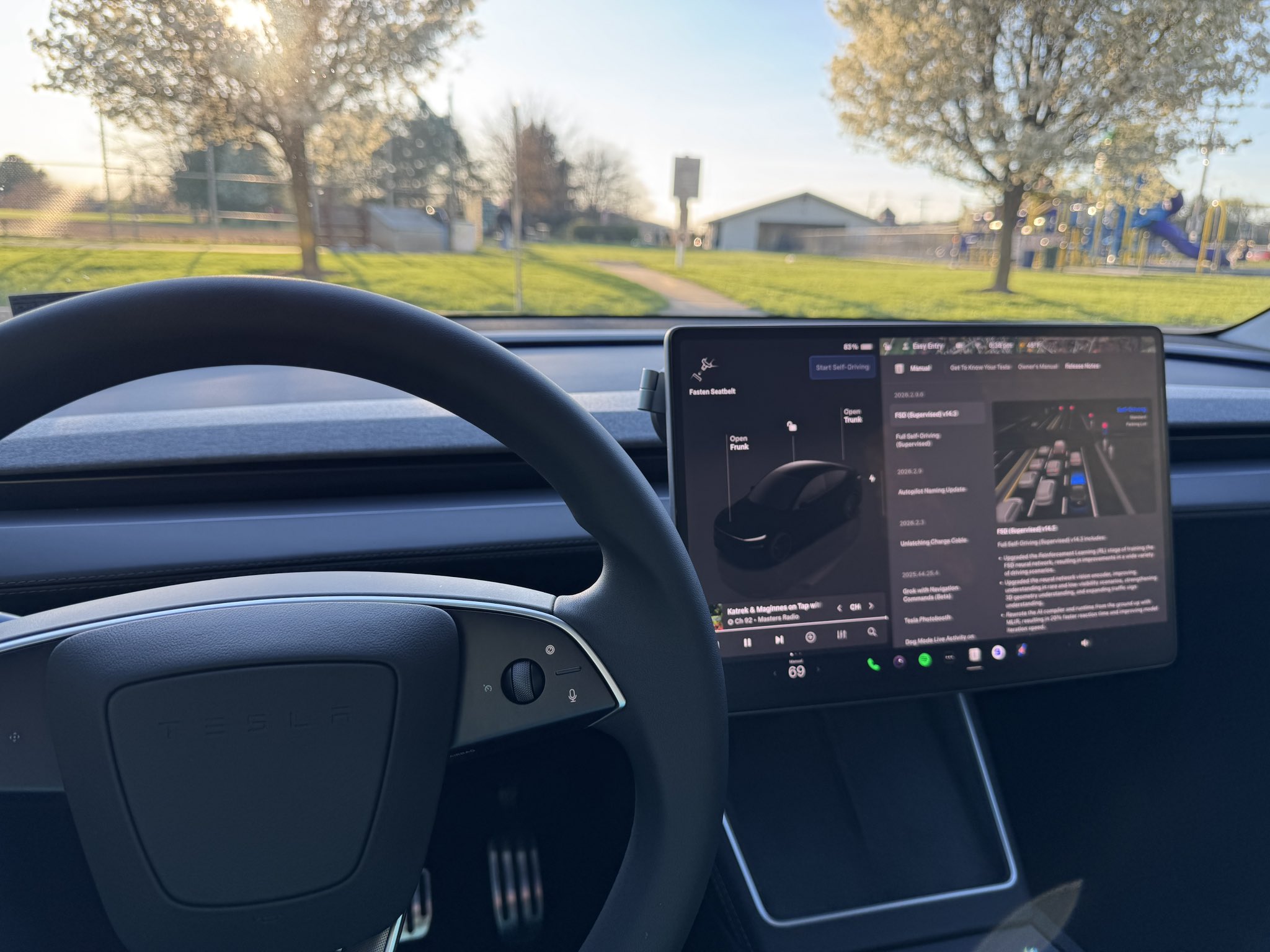
On April 10, 2026, the Dutch vehicle authority RDW granted Tesla the first European type approval for Full Self-Driving Supervised, making the Netherlands the first country on the continent to authorize Tesla’s semi-autonomous system for customer use on public roads.
As Teslarati reported, the RDW approval followed 18 months of testing, more than 1.6 million kilometers driven on EU roads, 13,000 customer ride-alongs, and documentation covering over 400 compliance requirements. Tesla Europe had been running public demo drives through cities like Amsterdam and Eindhoven since early 2026, giving passengers their first experience of the system on European streets.
The European version of FSD is not the same software US drivers use. The RDW’s own statement is direct, noting that the software versions and functionalities in the US and Europe “are therefore not comparable one-to-one.” We’ve compile a table below that captures the most significant differences between US-based Tesla FSD vs. European Tesla FSD that’s based on what regulators and Tesla have publicly confirmed.
| Feature | FSD US | FSD Europe (Netherlands) |
| Regulatory framework | Self-certification, post-market oversight | Pre-market type approval required (UN R-171 + Article 39) |
| Hands requirement | Hands-off permitted on highway | Hands must be available to take over immediately |
| Auto turning from stop lights | Available — navigates intersections, turns, and traffic signals autonomously | Available in EU build — confirmed in Amsterdam demo footage handling unprotected turns and signalized intersections |
| Driving modes | Multiple profiles including a more aggressive “Mad Max” mode | EU build is more conservative by default and errs on the side of restraint when it cannot confirm the limit |
| Summon | Available — Smart Summon navigates parking lots to driver | Status unclear — not confirmed as part of the RDW-approved feature set; urban FSD approval targeted separately for 2027 |
| Driver monitoring | Camera-based eye tracking | Stricter continuous monitoring with more frequent intervention alerts |
| Software version | FSD v14.3 | EU-specific builds that must be separately validated by RDW |
| Geographic restriction | US, Canada, China, Mexico, Australia, NZ, South Korea | Netherlands only; EU-wide vote pending summer 2026 |
| Subscription price | $99/month | €99/month |
| Full urban FSD scope | Available | Partial — separate urban application planned for 2027 |
The approval comes as Tesla is under real pressure to grow FSD subscriptions globally. Musk’s 2025 CEO compensation package, approved by shareholders, includes a milestone requiring 10 million active FSD subscriptions as one condition for his stock awards to vest. Tesla hit one million subscriptions during its Q4 2025 earnings call, which is a meaningful start, but still a long way from the target. Opening Europe as a market for subscriptions, rather than just hardware sales, directly accelerates that number.
Tesla has said it anticipates EU-wide recognition of the Dutch approval during summer 2026, which would extend FSD access to Germany, France, and other major markets through a mutual recognition process without each country repeating the full 18-month review. That timeline is Tesla’s projection, not a confirmed regulatory outcome. As Musk acknowledged at Davos in January 2026, “We hope to get Supervised Full Self-Driving approval in Europe, hopefully next month.”
Elon Musk
Tesla’s Semi truck factory is open with a detail that changes everything
Tesla’s dedicated Nevada Semi factory has opened, targeting 50,000 trucks per year as fleet adoptions accelerate nationwide.
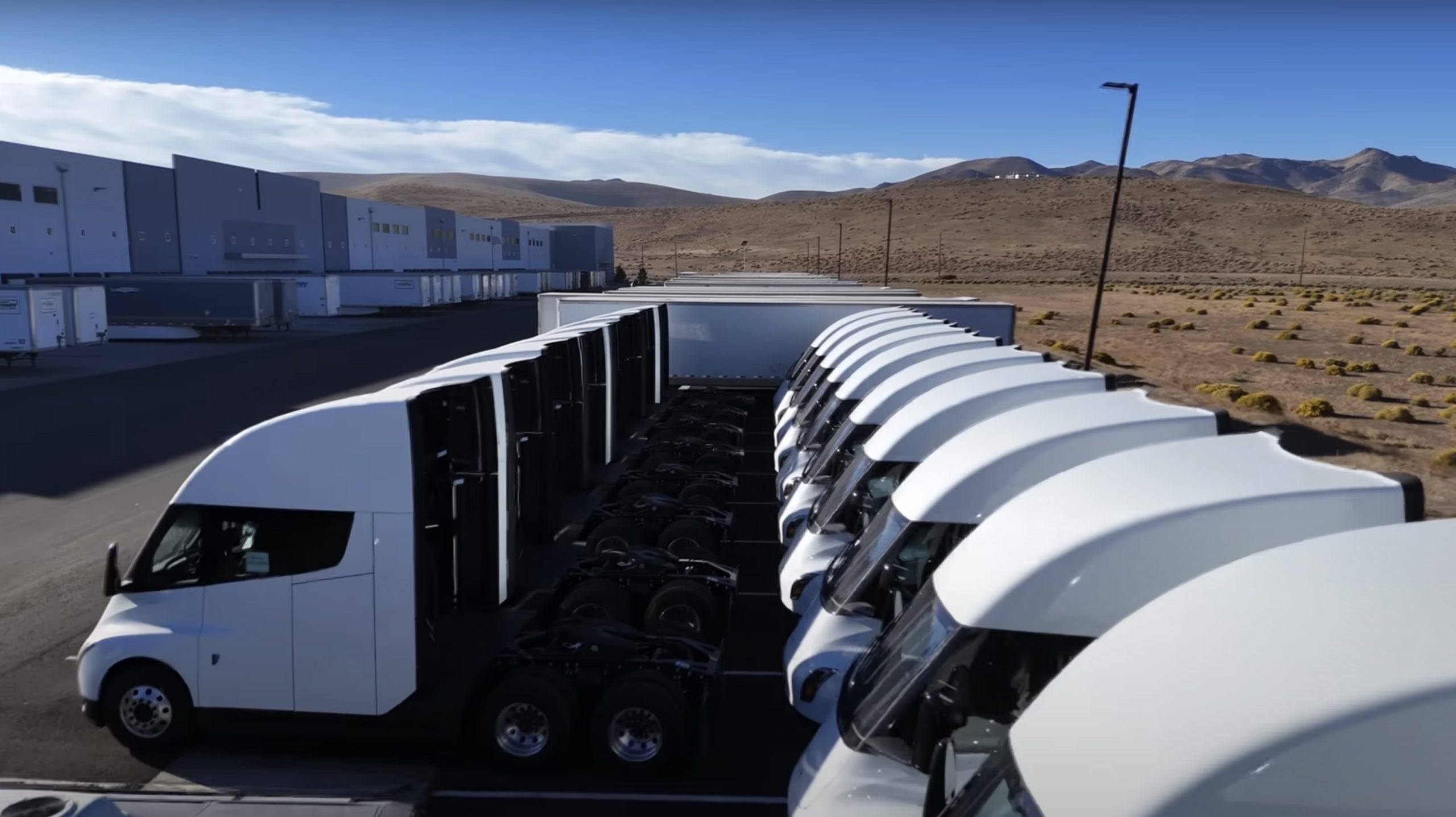
Nearly nine years after Elon Musk unveiled the Tesla Semi in November 2017, the company is now opening a dedicated factory just outside of Reno, Nevada, and ramping toward mass production of 50,000 trucks per year.
Volume production began in March 2026 at the new Tesla Semi factory, with the competitive advantage not being the factory itself. Rather, it’s where Tesla built it. By constructing the 1.7 million square foot facility directly adjacent to Gigafactory Nevada in Sparks, Tesla closed the one supply chain loop that had delayed the Semi program for years. The 4680 battery cells that power the Semi are manufactured in the same complex, which significantly streamlines supply logistics. That single decision eliminates the bottleneck that forced Tesla to prioritize battery supply for passenger cars over the Semi throughout 2020, 2021, and 2022, which is precisely why the first deliveries slipped three years past the original target. Every other electric truck manufacturer sources its battery cells from a separate supplier, ships them to a separate factory, and absorbs the cost and delay that comes with that. Tesla built its Semi factory around its battery factory, and that vertical integration is what makes 50,000 trucks per year a realistic number rather than an aspirational one.
At the 2025 Annual Shareholder Meeting, Musk was direct about where things stood, stating “Starting next year, we will manufacture the Tesla Semi. We already have a lot of prototype Semis in operation – PepsiCo and other companies have been using them for some time. But in 2026, we’ll begin volume production at our Northern Nevada factory.” Full ramp to volume output is targeted before June 30, 2026.
🚨 Awesome new video showing the new Tesla Semi factory in Sparks, Nevada
The future of sustainable logistics is being built here: pic.twitter.com/dbiGV8FYn3
— TESLARATI (@Teslarati) April 10, 2026
The first limited deliveries happened in December 2022 to PepsiCo, which eventually doubled its fleet to 50 trucks out of its California distribution facility. Since then the Semi has been showing up in more corporate fleets. As Teslarati noted in March, a Ralph’s Supermarkets branded Semi was spotted on a Los Angeles highway, confirming Kroger’s partnership with Tesla to deploy up to 500 electric Semis. Walmart, Costco, Sysco, US Foods, DHL, Hight Logistics and WattEV are among the companies actively running or receiving units. DHL logged real-world efficiency of 1.72 kWh per mile under a full 75,000 pound load over 388 miles, matching Tesla’s targets closely.
The 2026 production model arrives with meaningful upgrades over the original, with a 1,000 pound weight reduction, updated aerodynamics, and support for 1.2 MW Megacharger speeds that can restore 60% of range in around 30 minutes during a mandatory driver rest break. Tesla opened its first public Megacharger in Ontario, California in March, positioned near the I-10 and I-15 interchange serving the Ports of Los Angeles and Long Beach. The company plans 37 Megacharger sites by end of 2026 and 66 total across 15 states by early 2027, with construction beginning at the nation’s largest truck stop operator in the first half of this year.
Tesla reveals various improvements to the Semi in new piece with Jay Leno
Musk has described the Semi’s economics as a straightforward case. “The Semi is a TCO no-brainer,” he said, noting the total cost of ownership is “much, much cheaper than any other transportation you could have.” At under $300,000, the truck costs roughly double a comparable diesel, but California’s $200,000 per vehicle subsidy has driven over 1,000 state orders alone. As Teslarati has tracked, the prototype fleet accumulated over 13.5 million miles with 95% fleet uptime before production ever scaled. The factory opening now turns that proof of concept into a production program.
Elon Musk
SpaceX is keeping the Space Station alive again this weekend
SpaceX’s Falcon 9 launches Northrop Grumman’s Cygnus NG-24 to the ISS with 11,000 pounds of cargo Saturday.
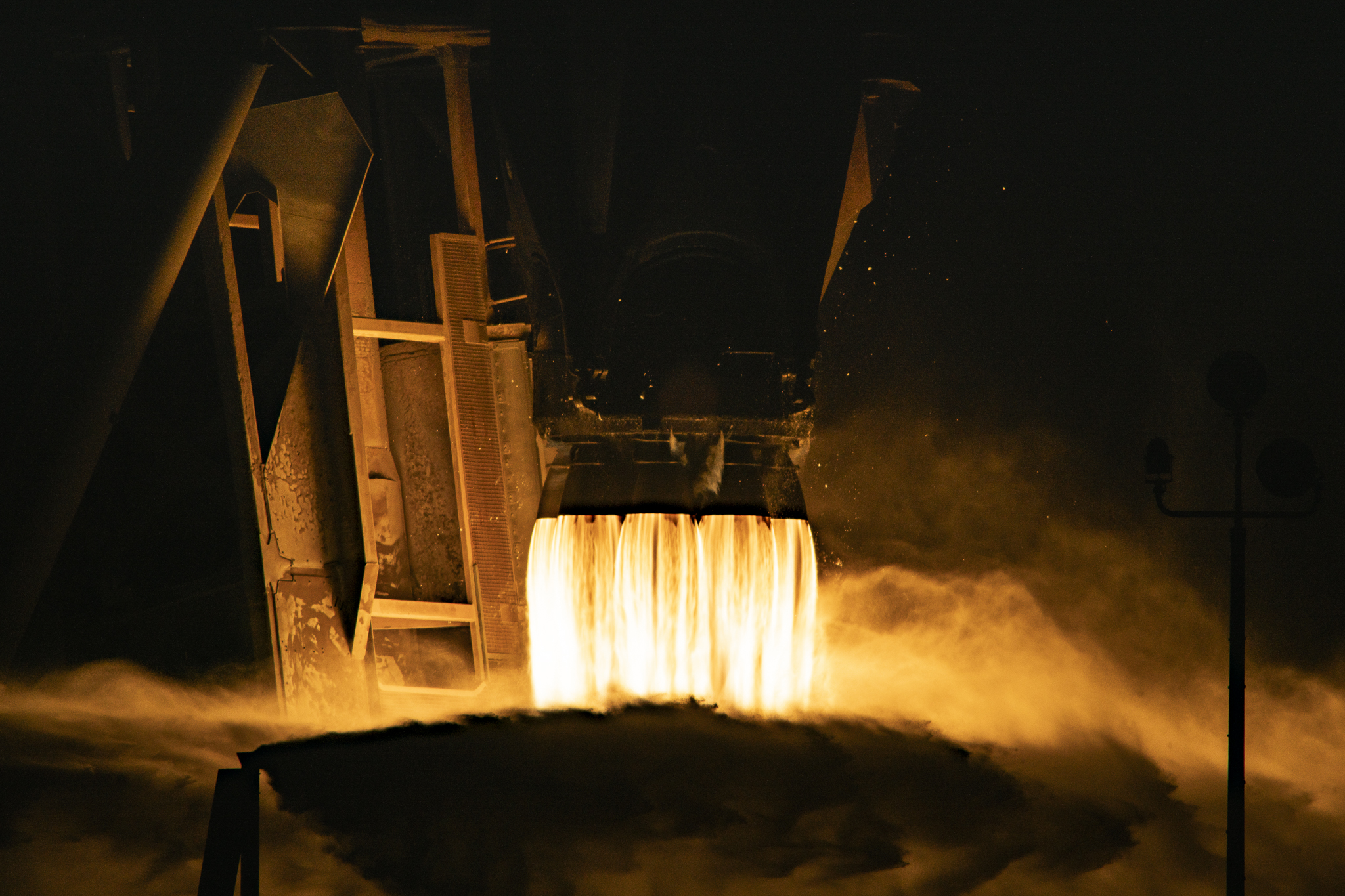
SpaceX is targeting April 11 for the launch of Northrop Grumman’s Cygnus XL cargo spacecraft to the International Space Station, carrying over 11,000 pounds of supplies, science hardware, and equipment for the Expedition 73 crew aboard. Liftoff is set for 7:41 a.m. ET from Space Launch Complex 40 at Cape Canaveral Space Force Station, with a backup window available April 12 at 7:18 a.m. ET.
The mission, officially designated NG-24 under NASA’s Commercial Resupply Services program, names its spacecraft the S.S. Steven R. Nagel in honor of the NASA astronaut who flew four Space Shuttle missions and logged over 723 hours in space before his death in 2014. Unlike SpaceX’s own Dragon capsule, which docks autonomously, Cygnus relies on NASA astronauts to capture it using a robotic arm before it is berthed to the space station’s module for unloading. When the mission wraps up around October, the Cygnus will depart loaded with station trash and burn up on reentry.
Countdown: America is going back to the Moon and SpaceX holds the key to what comes after
This is the second flight of the Cygnus XL configuration, which debuted on NG-23 in September 2025 and offers a roughly 20% increase in cargo capacity over the previous design. Northrop Grumman switched to Falcon 9 launches after its own Antares 230+ rocket was retired in 2023 following supply chain disruptions from the war in Ukraine.
The upcoming cargo includes a new module to advance quantum research, and an investigation studying blood stem cell production in microgravity with potential therapeutic applications on Earth.
The NG-24 mission is one piece of a much larger picture for SpaceX and the U.S. government. As Teslarati reported, SpaceX has become an indispensable launch provider for U.S. national security missions, picking up a $178.5 million Space Force contract in April 2026 to launch missile tracking satellites, while also holding roughly $4 billion in NASA contracts tied to the Artemis lunar program.
At a time when no other American rocket can match the Falcon 9’s combination of reliability, cost, and launch cadence, Saturday’s mission is a straightforward reminder of how much the U.S. government now depends on a single commercial provider to keep its astronauts supplied and its satellites flying.

Tesla FSD in Europe vs. US: It’s not what you think

Tesla’s troublesome Auto Wipers get a major upgrade


