News
Tesla is using a redesigned Cybertruck battery cell to mitigate Semi challenges
It is perhaps the most recent example of Tesla using unique engineering prowess and cross-pollinating vehicle elements to solve common problems, something it does better than most companies out there.

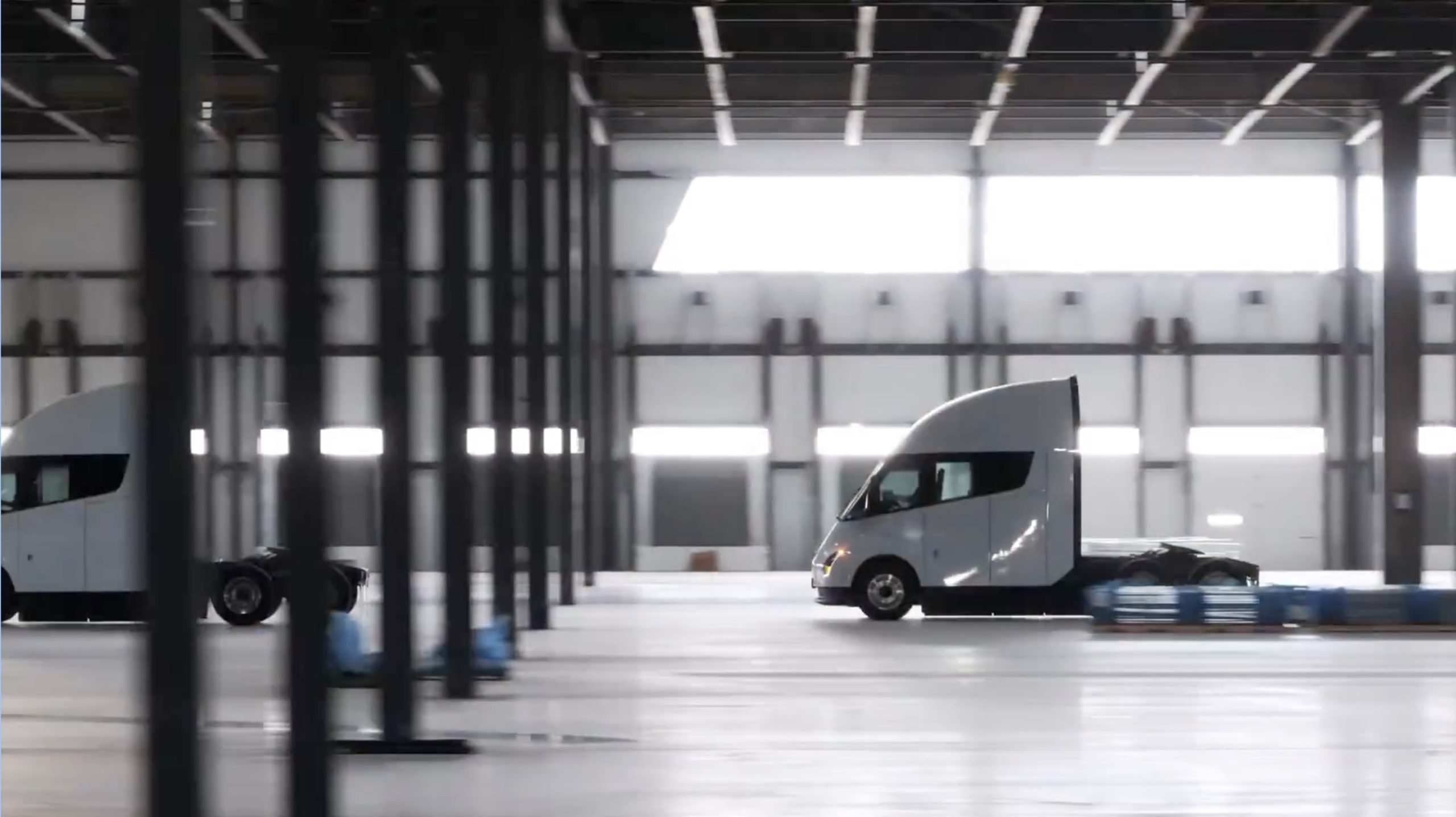
Tesla revealed that it is utilizing redesigned Cybertruck battery cells in its Long Range Semi to mitigate some pertinent challenges that come with long-haul logistics.
It is perhaps the most recent example of Tesla using unique engineering prowess and cross-pollinating vehicle elements to solve common problems, something it does better than most companies out there.
Tesla’s long-awaited Semi truck is entering production at its Nevada Gigafactory, and fresh factory footage reveals a clever evolution in its battery technology.
The Long Range variant, designed for up to 500 miles of real-world range, relies on a structural battery pack that uses the same 4680-form-factor cells found in the Cybertruck.
However, Tesla engineers have completely redesigned the pack’s architecture—shifting from the flat, pancake-style modules typical in passenger vehicles to a compact, vertical cubic layout. This change isn’t just about cramming more energy into the chassis; it’s a targeted solution to one of electric trucking’s biggest headaches: range loss in cold climates.
Dan Priestley, Head of the Tesla Semi program, said:
“We’re using essentially the same cell out of Cybertruck, but our cars packs are more like a pancake. Whereas these are more like a cube. You get a lot of energy stored in a small space. You can only do this if you design the vehicle to be electric from the ground up.”
Here, in all its glory, is the exclusive first look at the massive @Tesla Semi factory.
Our @corememory crew went to Nevada to see the line come to life, as it gets ready to pump out thousands of all-electric trucks. We saw the new cab and went on a drive too. Wunderbar! pic.twitter.com/a0S5zVEr87
— Ashlee Vance (@ashleevance) April 10, 2026
In conventional EVs, battery packs are laid out horizontally in wide, flat arrays to fit under the floor. While this works for cars and even the Cybertruck’s structural pack, it exposes a large surface area to the elements.
Heat escapes quickly, especially overnight when the truck is parked. Cold temperatures slow chemical reactions inside lithium-ion cells, reducing available energy and forcing the vehicle to expend extra power warming the battery and cabin.
Real-world tests on vehicles like the Cybertruck show winter range losses of 20-40 percent, depending on conditions. For long-haul truck drivers operating in Canada, Scandinavia, or the northern U.S., this “silent killer” means unplanned stops, reduced payloads, and higher operating costs.
From personal experience, cold weather still impacts EV batteries even with various inventions and strategies that companies have come up with. In the cold Pennsylvania winter, charging was much more frequent for me due to range loss due to temperatures.
Tesla’s cubic battery pack flips the script. By arranging the 4680 cells in tall, dense vertical stacks, the pack minimizes external surface area relative to its volume—essentially turning the battery into its own thermal blanket.
Factory video from the Semi assembly line shows these large, yellow-green structural modules mounted directly onto the chassis, forming a near-cube shape.
The reduced exposure helps the pack retain heat generated during operation, keeping cells closer to their optimal temperature even after hours in sub-zero conditions.
The design doesn’t stop there. Tesla pairs the cubic pack with an advanced heat pump system that actively recycles thermal energy from the motors, brakes, and even ambient air.
Tesla reveals various improvements to the Semi in new piece with Jay Leno
Unlike passive systems in earlier EVs, this architecture transfers waste heat back into the battery, maintaining readiness for morning departures without draining the pack.
Executives have noted that the combination, cubic geometry plus intelligent thermal management, dramatically cuts overnight cooldown and range degradation, making the Semi viable for 24/7 fleet operations in harsh winters.
Beyond cold-weather performance, the redesigned pack integrates structurally with the truck’s frame, enhancing rigidity while simplifying assembly. Production footage shows workers installing the massive modules early in the line, signaling that the Semi’s battery is now a core chassis component rather than an add-on.
Using proven 4680 cells keeps costs down and leverages Tesla’s scaled manufacturing know-how from Cybertruck and Model Y lines.
Tesla’s focus on ramping up Semi output will lean on small innovative steps like this one. Truckers are not immune to traveling in cold weather conditions, and changes like this one will help make them more effective while also increasing output by logistics operators who choose to go all-electric with the Tesla Semi.


News
Tesla Full Self-Driving shows stunning maneuver in Europe to silence skeptics
In a striking demonstration of autonomous driving prowess, Tesla’s Full Self-Driving (FSD) system recently showcased its capabilities on the narrow rural roads of the Netherlands. Captured in two in-car videos, the system encountered scenarios that would challenge even the most experienced human drivers.
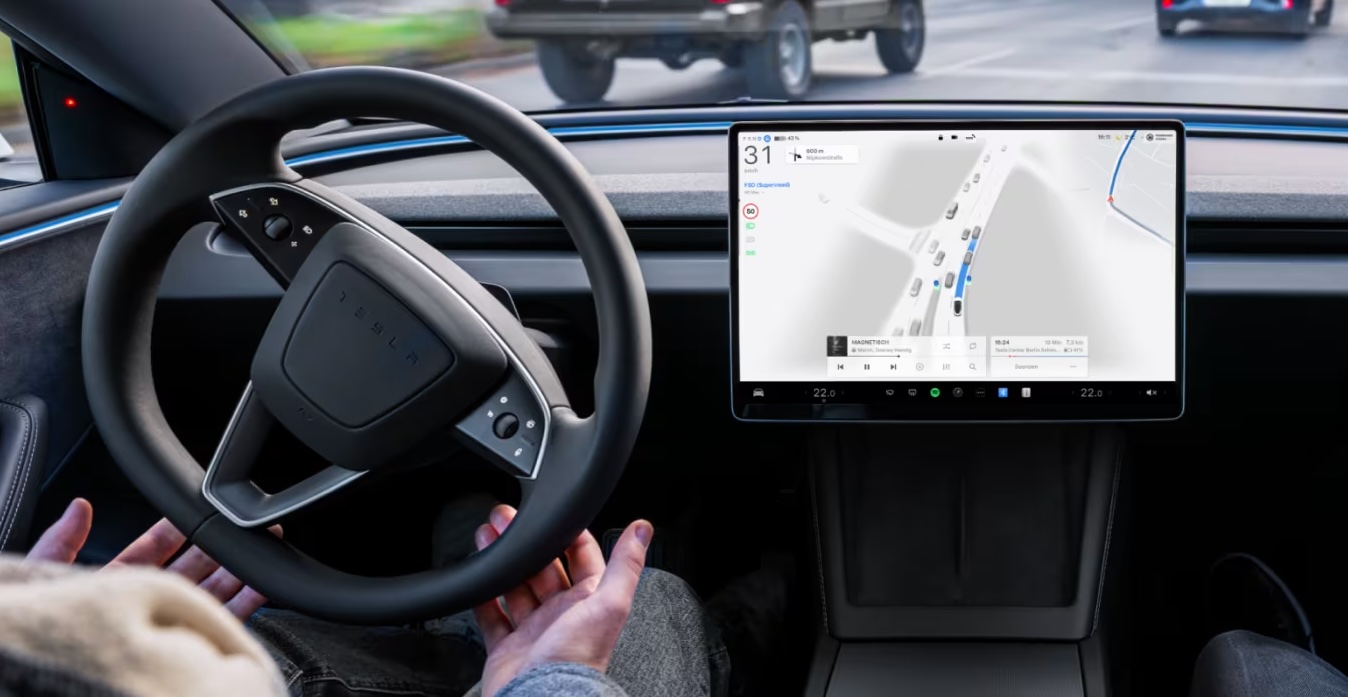
Tesla Full Self-Driving, fresh on the heels of its approval for operation on European roads for the first time, showed off a stunning maneuver that will certainly silence any skeptics on the continent.
Fresh off its approval in the Netherlands, Full Self-Driving is working toward a significant expansion into more parts of Europe.
In a striking demonstration of autonomous driving prowess, Tesla’s Full Self-Driving (FSD) system recently showcased its capabilities on the narrow rural roads of the Netherlands. Captured in two in-car videos, the system encountered scenarios that would challenge even the most experienced human drivers.
In the first clip, a wide tractor occupied more than half the lane on a tight two-way road. Rather than braking abruptly or forcing a collision risk, FSD smoothly edged the vehicle onto the adjacent bike path—using the extra space with precision—before seamlessly returning to the lane once clear.
The second clip was equally demanding: while overtaking a group of cyclists, an oncoming car approached at speed.
FSD maintained a safe, minimal buffer to the cyclists while timing the pass perfectly, avoiding any swerve or hesitation that could unsettle passengers or other road users.
People wonder if FSD is safe on narrow European roads. Well have a look what it did when a tractor took up more than half of the road or when overtaking bicycles with fast oncoming traffic. pic.twitter.com/z37Csa09sP
— Chanan Bos (@ChananBos) April 14, 2026
This maneuver highlights FSD’s advanced spatial reasoning and predictive planning. On roads often under three meters wide, with no room for error, the system calculated available clearance in real time, incorporated shoulder and path geometry, and executed a controlled deviation without compromising safety.
It treated the bike path as a legitimate extension of navigable space, something many drivers might hesitate to do, while respecting Dutch road norms and cyclist priority.
Such feats align closely with a growing library of impressive FSD maneuvers documented on camera worldwide.
In urban Amsterdam, for instance, FSD has navigated the world’s densest cyclist environments, weaving through hundreds of unpredictable bike movements on canal-side streets with tram tracks and pedestrians.
One uncut drive showed it yielding smoothly at crossings, overtaking where needed, and even handling a near-perfect auto-park in a tight residential spot, demonstrating the same low-speed precision seen in the rural clips.
Teslas using FSD have tackled turbo roundabouts in the Netherlands, complex multi-lane circles notorious for geometry challenges, merging confidently while yielding to traffic. Similar clips depict smooth handling of construction zones, emergency vehicle pull-overs, and gated parking barriers, where the car stops precisely, waits for clearance, and proceeds without driver input.
Collectively, these examples illustrate FSD’s evolution toward handling the unpredictable.
The rural Netherlands maneuvers aren’t isolated. Instead, they reflect a pattern of spatial awareness, cyclist deference, and traffic anticipation seen from city streets to highways.
As FSD continues refining through real-world data, videos like this one are certainly building a compelling case for its readiness on Europe’s varied roads.
News
Tesla utilizes its ‘Rave Cave’ for new awesome safety feature
Part of the massive interior overhaul of both the Model 3 “Highland” and Model Y “Juniper” was the addition of interior accent lighting to help bring out the mood of the vehicle, increase the customization of the interior, and to create a unique listening experience.
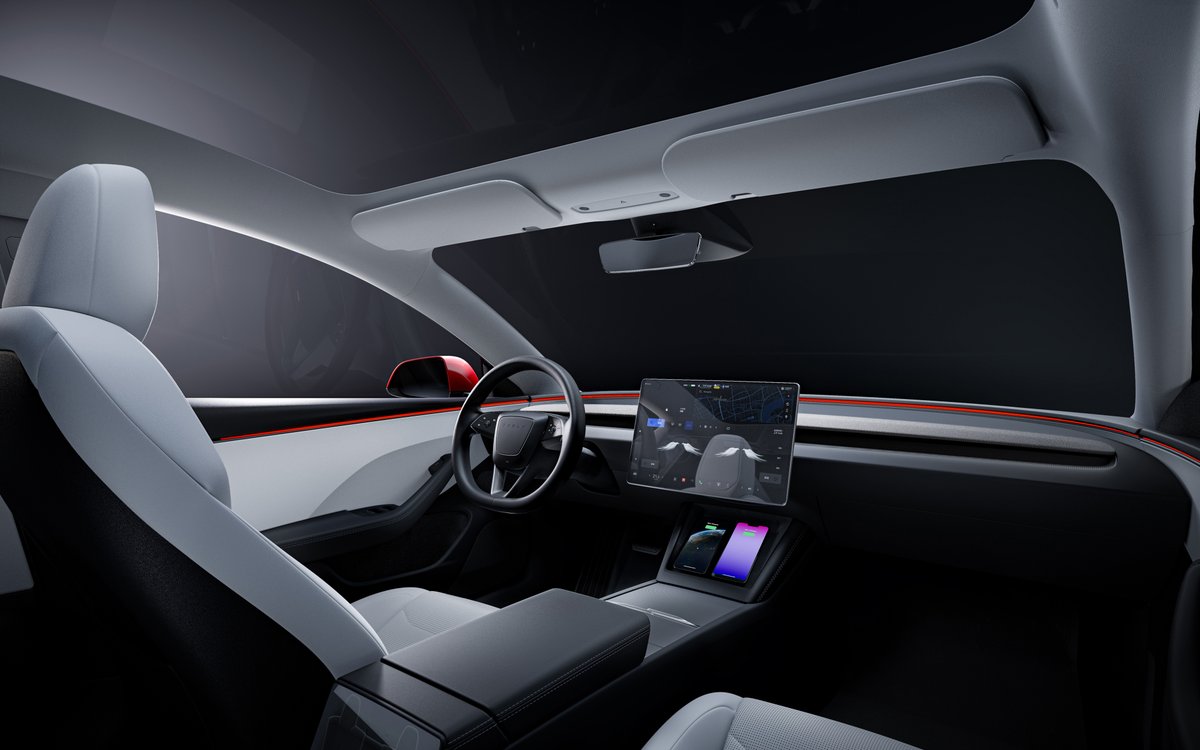
Tesla is utilizing its ‘Rave Cave’ for an awesome new safety feature that will arrive with the upcoming Spring Update for 2026.
Part of the massive interior overhaul of both the Model 3 “Highland” and Model Y “Juniper” was the addition of interior accent lighting to help bring out the mood of the vehicle, increase the customization of the interior, and to create a unique listening experience.
Tesla added a Sync Lights feature that will strobe the accent strips with the beat of the music.
It is one of the most unique and one of the coolest non-functional features of a Tesla, as it does not improve the driving of the vehicle, but makes it a cool and personal addition to the interior.
However, Tesla is going to take it one step further, as the Rave Cave lights will now be used for blind spot recognition. This feature will be added as the Spring 2026 Update starts to roll out.
A lot of CRAZY new features coming with Tesla’s 2026 Spring Update, including a new FSD app!
– Self-Driving App (AI4 hardware): New app in App Launcher > Self-Driving for one-tap FSD subscriptions, activation guides, and ongoing stats.
– “Hey Grok”: Voice-activated Grok with… https://t.co/ljeYPlq9Qt— TESLARATI (@Teslarati) April 13, 2026
Tesla writes:
“Accent lights now turn red when an object is in your blind spot and your turn signal is engaged, or when an approaching object is detected while parked.”
This neat new safety feature will now increase the likelihood of a driver, who is operating their Tesla manually, of seeing the blind spot warnings that are currently available on the A pillar and on the center touchscreen.
These new alerts will now warn drivers of cross traffic as they back out of a parking space with little to no visibility of what is coming. It is a great new addition that will only increase the safety of the vehicles, while also utilizing something that is already installed in these specific Model 3 and Model Y units.
The Model 3 and Model Y were the central focus of the Spring 2026 Update, especially considering the fact that the Model S and Model X are basically gone, with only a few hundred units left. Additionally, Tesla included new Immersive Sound and Car Visualization for the Model 3 and Model Y specifically in this new update.
News
Tesla parked 50+ Cybercabs outside its Texas Factory with some crash tested
Dozens of Tesla Cybercabs have been spotted at Giga Texas crash testing facility ahead of launch.

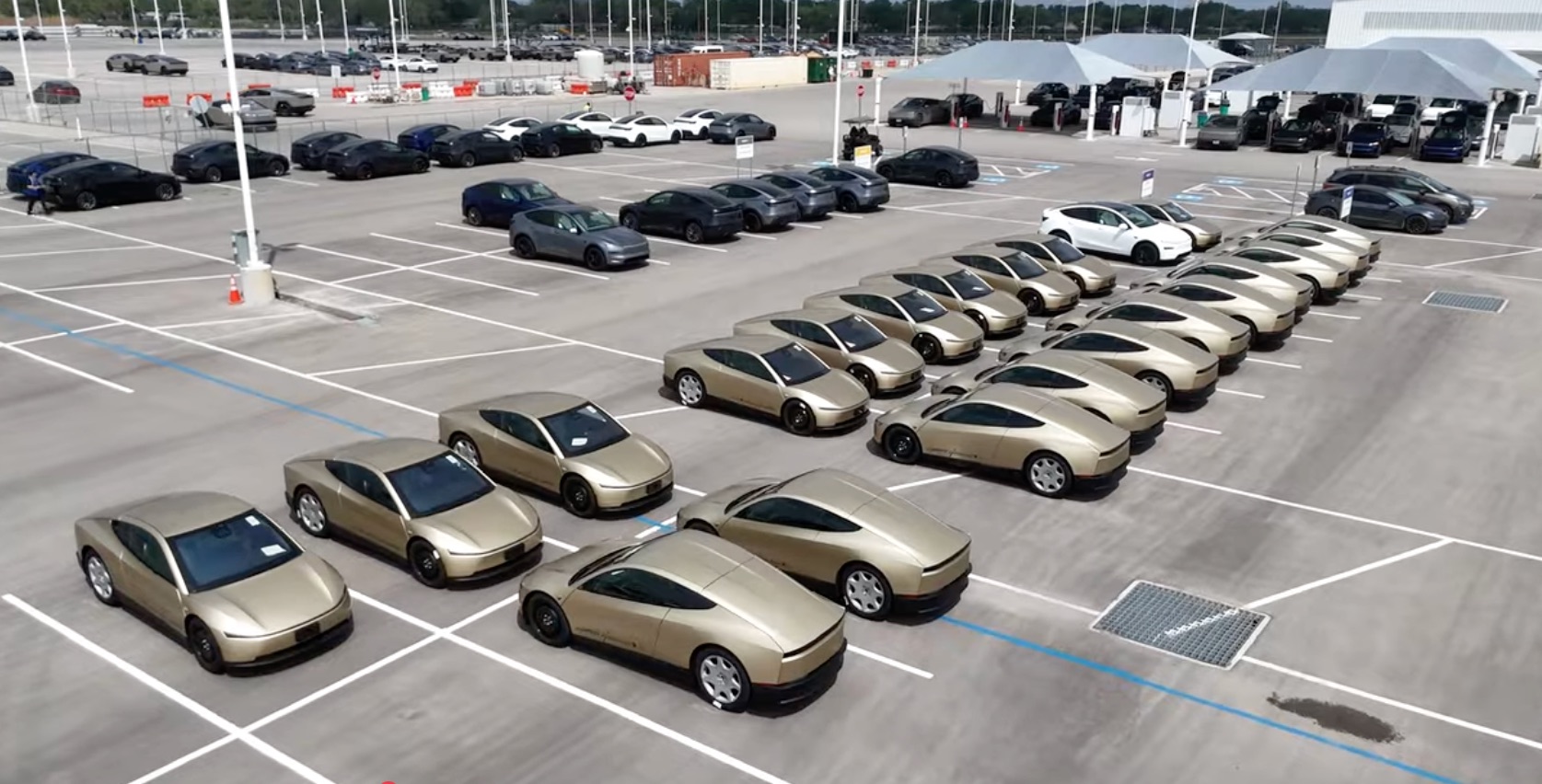
Drone footage captured by longtime Giga Texas observer Joe Tegtmeyer shows over 50 units of Tesla Cybercab at the Austin factory campus, including several units clustered by Tesla’s on-site crash testing facility.
The outbound lot at Gigafactory Texas sits just outside the factory exit and serves as the primary staging area where finished vehicles are held before being loaded onto transport carriers or dispatched for validation testing. On any given day, the lot holds a mix of Model Y and Cybertruck units alongside the growing Tesla Cybercab fleet, as can be seen in the drone footage captured by Joe Tegtmeyer.
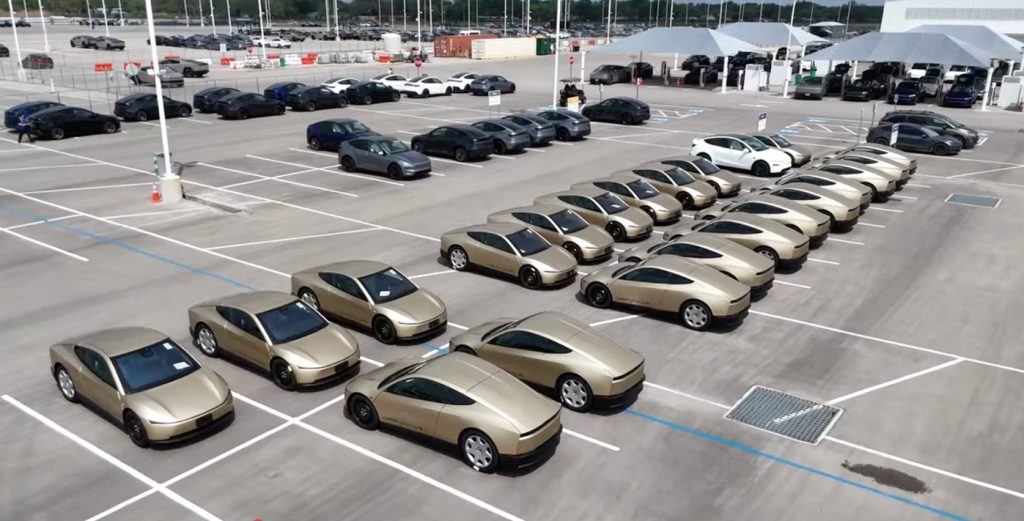
Tesla Cybercab fleet spotted at Gigafactory Texas on April 13, 2026 [Credit: Joe Tegtmeyer)
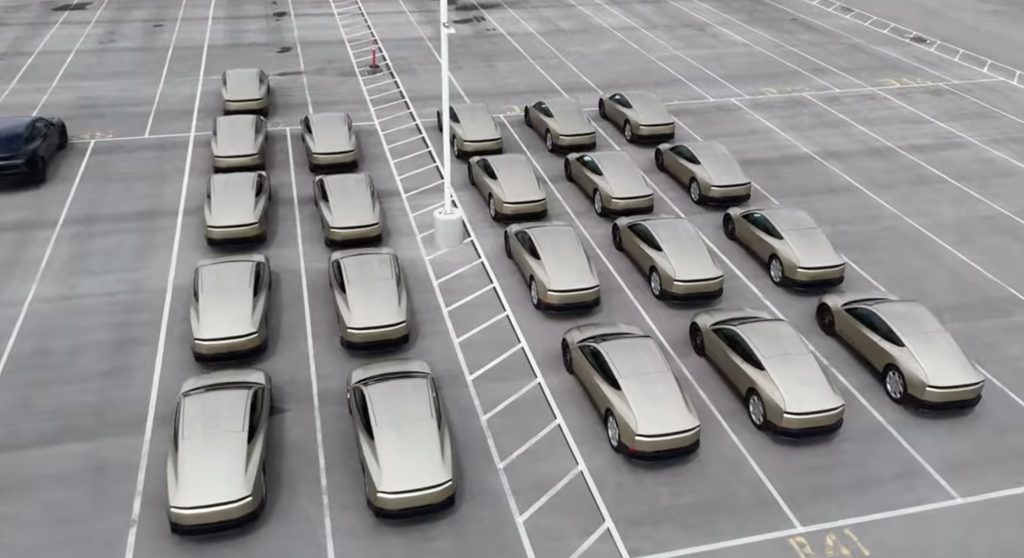
Tesla Cybercab fleet spotted at Gigafactory Texas [Credit: Joe Tegtmeyer)
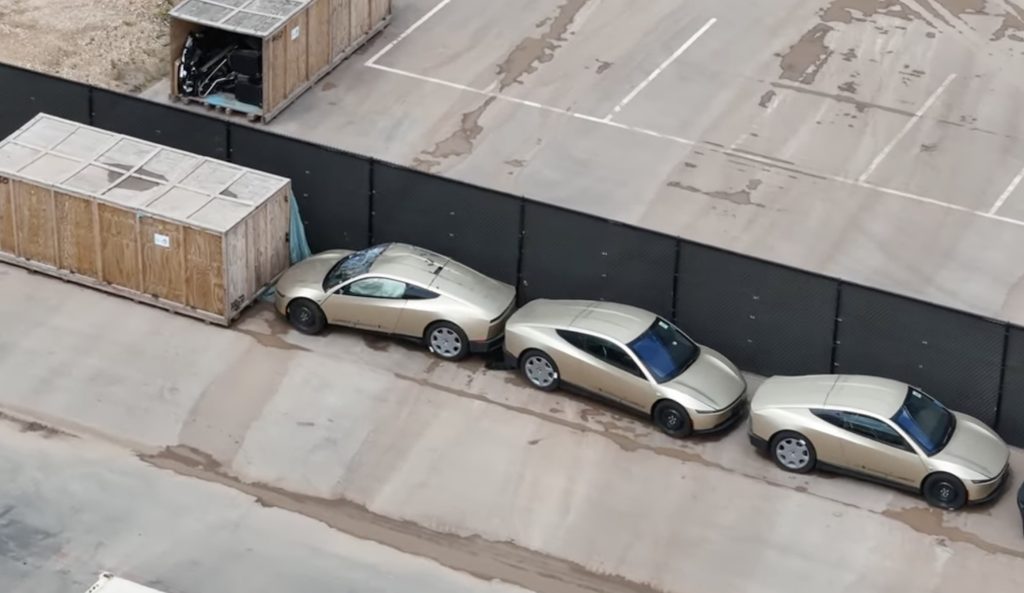
Tesla Cybercab crash test units spotted at Gigafactory Texas [Credit: Joe Tegtmeyer)

Tesla Full Self-Driving shows stunning maneuver in Europe to silence skeptics

Tesla utilizes its ‘Rave Cave’ for new awesome safety feature


