Elon Musk
Tesla Roadster’s new patent preps white-knuckle speeds, keeping it grounded

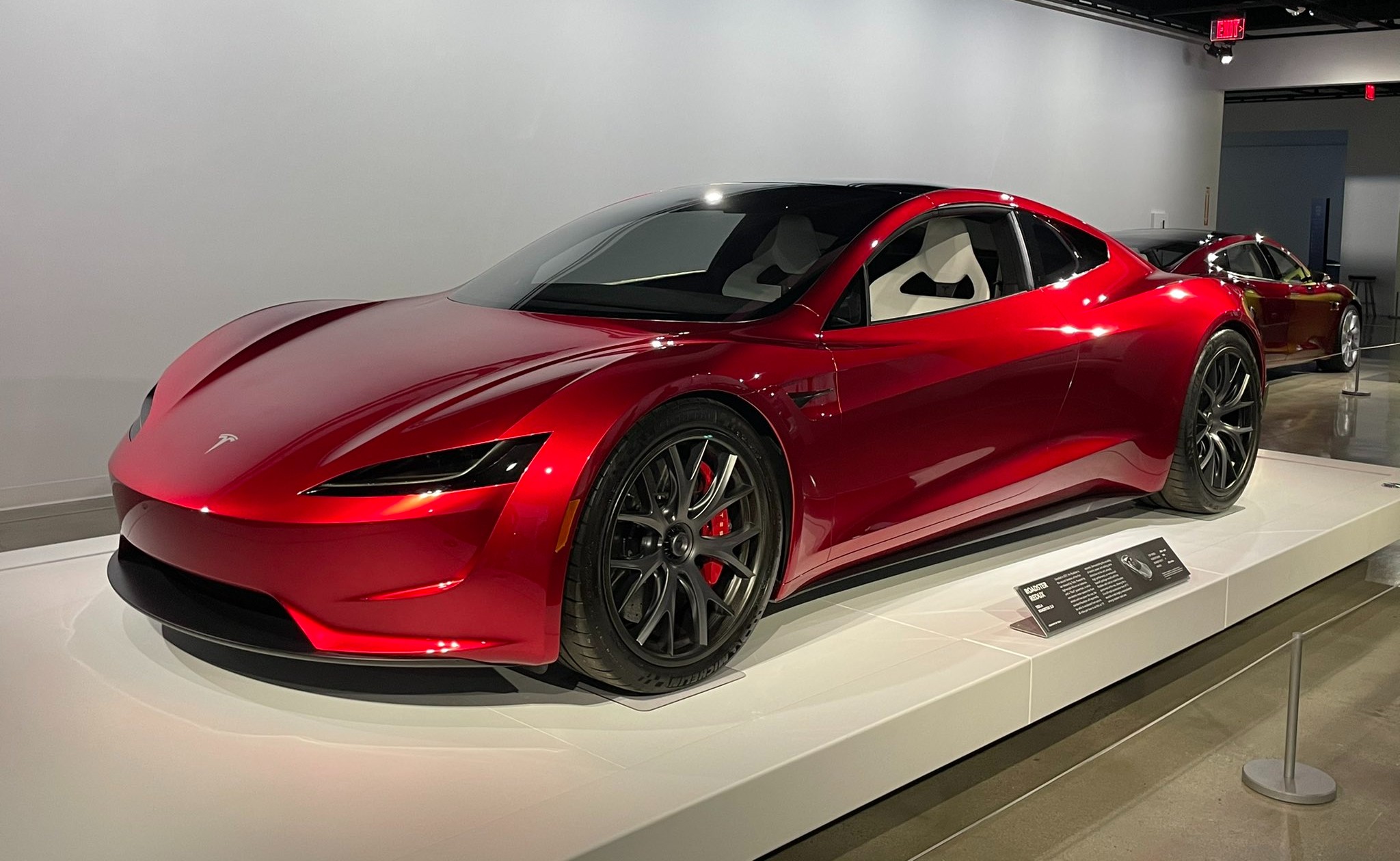
Ahead of its highly anticipated unveiling, Tesla’s upcoming Roadster received a new patent that aims to keep it grounded while enabling white-knuckle speeds.
The patent, which was granted on September 29, is titled “Electric Car Fan,” bluntly stating its design but not its purpose, which is further detailed in the text of the application. Interestingly, it comes two weeks before the Roadster event, which was delayed due to unfavorable weather on Thursday, which could cause issues, as Tesla revealed the event must be held outdoors.
🚨 The design uses electrically driven ducted fans, typically shown as a row of four at the rear, powered by the vehicle’s high-voltage battery.
The fans pull air from an underbody inlet, route it through ducts, and expel it from a larger rear outlet that functions as a… https://t.co/CHQB9u9UA3 pic.twitter.com/QVXmWTdggh
— TESLARATI (@Teslarati) September 29, 2026
The purpose is to solve a problem that is relatively unique to high-performance electric cars. Instant motor torque is useless if the tires cannot plant that force, and conventional wings and underbody tunnels generate downforce only when air is already rushing past the car. At launch, in slow corners, and under hard braking from modest speed, passive aerodynamic additions contribute essentially very little to downforce.
Tesla’s filing says that its fans can produce the downforce needed, independent of vehicle velocity, then ease off so the same hardware does not pile on drag at highway speeds, an issue that can come from excessive body modifications.
The hardware outlined in the patent is a ducted-fan package that is placed into the rear of the vehicle. An underbody inlet between the rear wheels feeds a duct that rises to a wide outlet in the diffuser. In that outlet are four axial fans, which are divided by vertical strakes. They will pull air from under the floor and press the chassis onto the pavement.
The language in the patent claims it can cut drag rather than add to it while simultaneously increasing downforce.
Tesla Roadster event requires restricted airspace, and the FAA obliges
The fans run from the high-voltage battery and a vehicle control system, so output can be modulated rather than left on as a fixed penalty.
There are additional strengths that can come from this design, like extra tire load at low speed, which can contribute to even more face-melting acceleration rates, decrease stopping distance, and sharper turn-in before a wing has air to work with. Adjustable fan speed lets the car add grip only when needed, so it can be catered to the force of a turn or acceleration.
These designs were previously used, and banned, in some competitive settings. The Brabham BT46B was banned in F1 competition for using a similar fan design and being labeled as too effective.
Tesla still lists the Roadster as having a sub-two-second 0-60 MPH time and a 250-plus-MPH top speed, and there are expectations for a SpaceX cold-gas thruster package that could not only increase acceleration but potentially cause the vehicle to hover.
It is important to note that a patent is not a production part, and packaging four fans in a rear diffuser, managing noise, and potential debris are all things Tesla must consider. With that being said, the patent being granted shows Tesla is designing the Roadster to go fast, but it is also attempting to use unique strategies to combat any issues it might have at those speeds.


Elon Musk
The Boring Company’s latest Tesla tunnel truck mod “fits like a glove”
The Boring Company has modified a Tesla powered tunnel truck to carry freight containers underground.

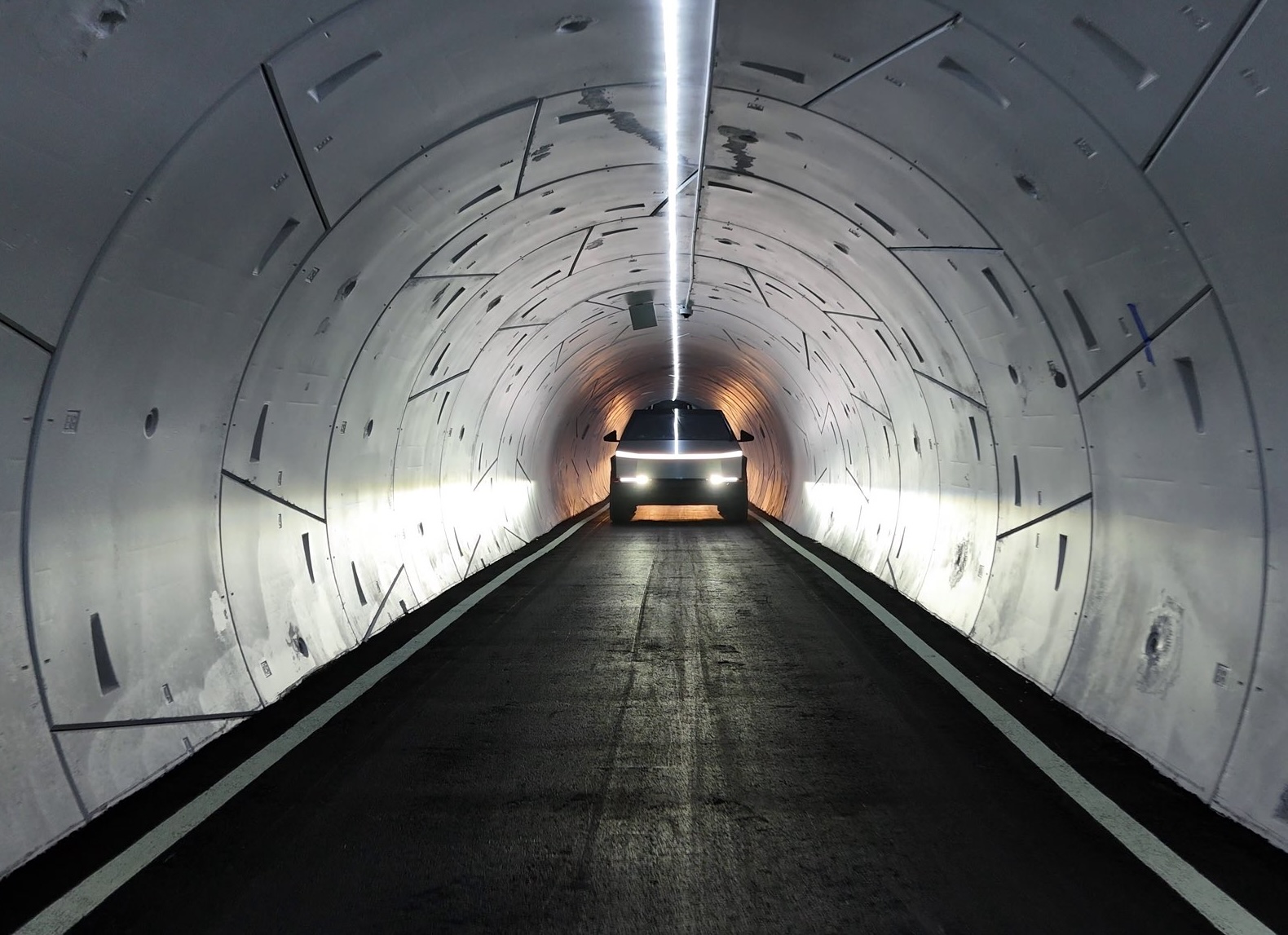
The Boring Company has found a second job for the Tesla hardware it already runs underground. In a post on X, Elon Musk’s tunneling company showed its latest Prufrock Liner Truck modified to carry a standard 20 foot shipping container. “Using TBC tunnels to transport freight,” the company wrote. “The latest Prufrock Liner Truck (using Tesla Model 3 batteries and drive units) has been modified to carry a standard 20′ shipping container. Fits like a glove!”
The photo shows a red container sitting on a long, low white chassis parked outside, with drive hardware visible at one end. The Boring Company did not say where or when freight hauling would start, which customers it has in mind, or how many trucks it is converting.
Using TBC tunnels to transport freight.
The latest Prufrock Liner Truck (using Tesla Model 3 batteries and drive units) has been modified to carry a standard 20’ shipping container.
Fits like a glove! https://t.co/VV0phWK4fc
— The Boring Company (@boringcompany) October 19, 2026
Until now, the liner trucks have hauled concrete. Teslarati reported in August on Liner Truck 3, which uses Model 3 battery packs and drive units to move more than 22,000 pounds of precast tunnel segments to the boring machine. It has 28 miles of range, tops out at 12 mph, and is piloted remotely from the company’s operations center in Texas. The freight version appears to be the same platform with a different bed, and The Boring Company has not said whether it will also be remotely piloted.
Freight has been on the company’s menu for years. When TBC updated its product lineup in 2021, its freight tunnel was described as sized to fit a standard shipping container, “barely.” The company later used the idea at Tesla’s own factory, where Prufrock 3 dug a tunnel to Giga Texas that now moves finished Cybertrucks away from the production line.
The Boring Company closed a $3 billion Series D in September at a $23 billion valuation, and Teslarati has covered how that money is tied to a UAE tunneling push and a faster Nashville build. In Nashville, Prufrock MB1 and MB2 are mining at the same time, and a third machine is expected to launch in late October. Each machine needs a steady supply of liner trucks, so any design that works for segments and containers alike gives the company more use out of the same Tesla parts.
The Vegas Loop remains the only Boring Company system open to the public, and it moves passengers in Tesla vehicles. A freight service would be a separate product, and the post gave no indication that one is close to launch. For now, it is a truck, a container and a short caption saying they fit together.
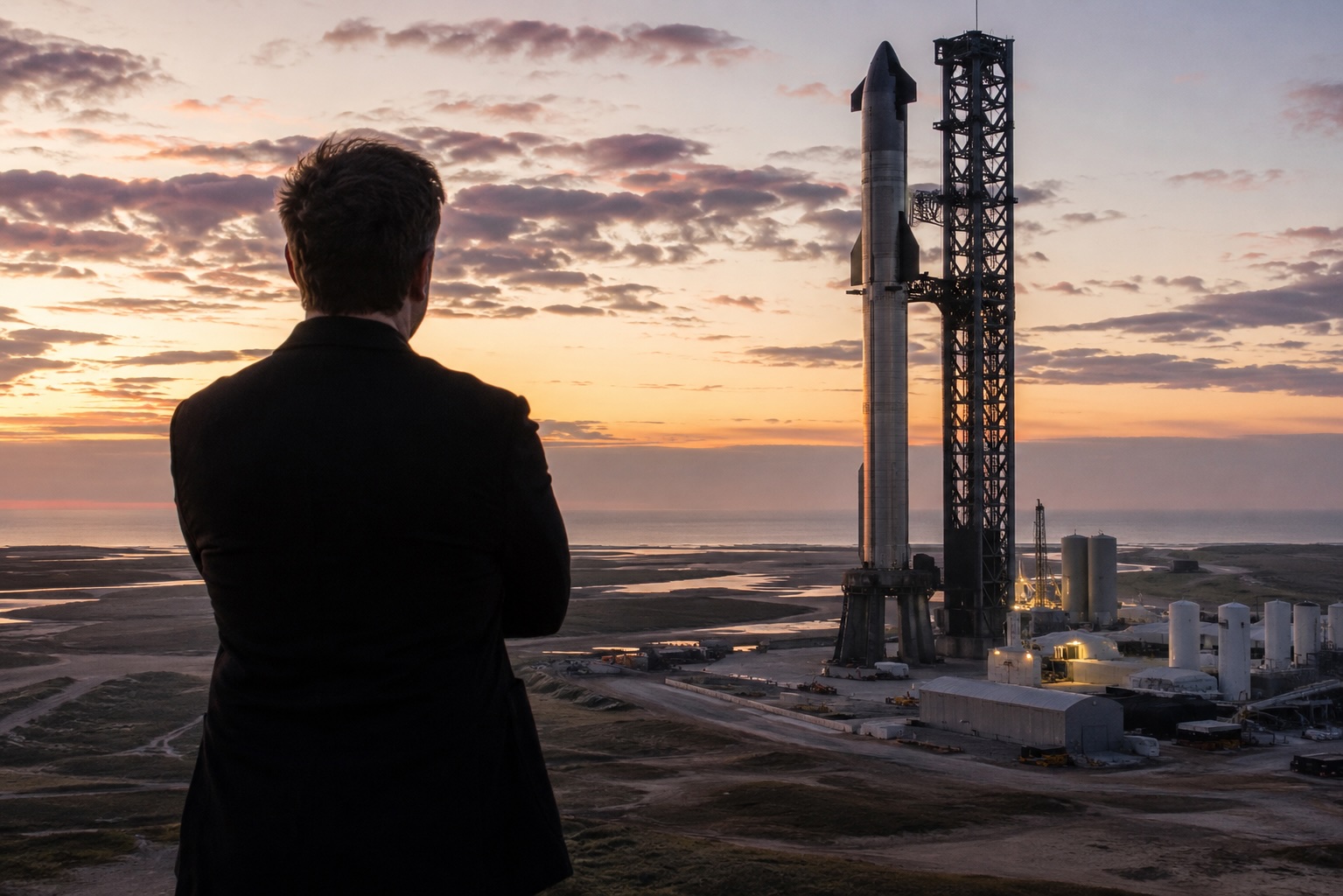
Elon Musk said he is planning to give “every one of his SpaceX shares to every kid in America” in 2027, stating that “this will be the first of many.”
SpaceX went public earlier this year, and its stock price has been relatively stable since leveling off shortly after its IPO. Based on its current price, it’s a gift of just over $10 billion to children across the United States.
It appears to be closely related to President Donald Trump’s bank accounts for children, which were set up earlier this year as Trump Accounts.
Just hours earlier, Anthropic had announced the establishment of its Anthropic Public Benefit Fund, “a new wholly-owned entity dedicated entirely to public benefit.” Musk responded by stating he recommended “giving the shares directly to the public,” and that he would be doing it that way.
Just a little bit later, Musk said children across the U.S. would be getting a share from him:
Next year, I will give one of my SpaceX shares to every kid in America.
This will be the first of many.
— Elon Musk (@elonmusk) October 19, 2026
There are roughly 70 million children, meaning someone under the age of 18, in the United States, according to the Federal Interagency Forum on Child and Family Statistics. Musk’s ownership of SpaceX stock shows he has around 849 million Class A shares of SpaceX stock, according to filings with the SEC.
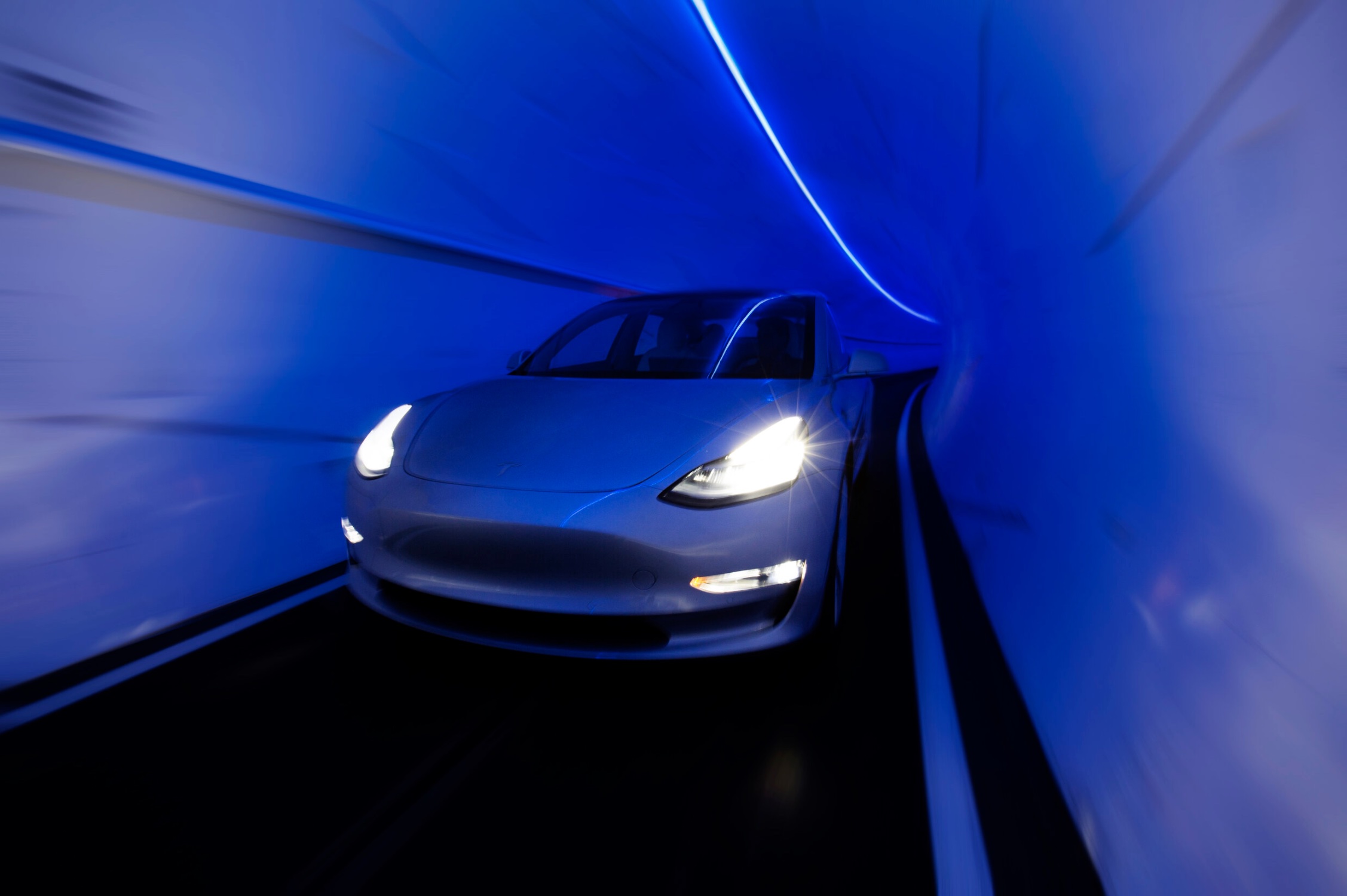
Elon Musk revealed in a post on X that “Permits were impossible to get,” explaining the fate of The Boring Company’s most ambitious East Coast proposal.
The comment responded to a query about what became of his July 20, 2017 announcement that he had “just received verbal govt approval” for an underground Hyperloop connecting New York City, Philadelphia, Baltimore, and Washington, D.C., capable of carrying passengers from the Big Apple to the Nation’s Capital in just 29 minutes.
The Boring Company receives verbal ‘approval’ to build NY to DC Hyperloop tunnel
The 2017 post, which envisioned city-center stations and multiple elevators in each city, sparked immediate scrutiny. Local and state officials in New York, Philadelphia, Baltimore, and D.C. said they had no knowledge of any approval. A White House spokesperson confirmed only “promising conversations” about the transformative infrastructure.
Musk clarified shortly after that there was “still a lot of work” to do for formal approvals.
@cybrtrkguy Permits were impossible to get
— Elon Musk (@elonmusk) October 19, 2026
Limited progress followed, as Maryland Governor Larry Hogan’s administration issued a conditional utility permit and supported work near Fort Meade. In 2018, Washington, D.C., granted a preliminary permit for site preparation and excavation on a vacant lot at 53 New York Ave. NE in the NoMa neighborhood, which The Boring Company said could become a station.
A draft environmental assessment for a D.C.-Baltimore segment was released in 2019. Yet, by April 2021, the company had removed the project from its website, and the Federal Highway Administration reported receiving no indication of further interest. Communication with Maryland officials had ceased.
The full corridor would have required coordination among the District of Columbia, Maryland, Pennsylvania, New York, the Federal Highway Administration, the Army Corps of Engineers, the National Park Service, and other agencies.
Environmental reviews under the National Environmental Policy Act, utility clearances, and approvals for novel infrastructure added to the overall complexity of the project and its approval.
Speculation on the permitting barriers centers around a few factors, but a multi-state, multi-level route involving unproven high-speed vacuum-tube technology inherently triggers exhaustive safety, environmental, and engineering reviews that can stretch for years, even for conventional projects.
There are also other elements, of course, like officials who may face political exposure if a privately funded, untested system encountered anything such as cost overruns, delays, or safety issues. On the outset of this project, there were limited things such as engineering plans or demonstrated technology maturity, which also added to the potential skepticism.
The East Coast vision for Boring Co., once framed as a privately funded revolution that could reshape Northeast travel, quietly ended without construction of the promised network. Musk’s recent statement frames the outcome as a regulatory impasse, unfortunate but not unexpected.

The Boring Company’s latest Tesla tunnel truck mod “fits like a glove”

Elon Musk will give ‘every kid in America’ a SpaceX share in 2027

Elon Musk reveals why Boring Co’s biggest East Coast project never happened

SpaceX reveals how its 1 Million AI satellite network will work and prevent space collisions

Tesla Roadster: Three configs, one can fly, 0-60 in 0.8 seconds


