Elon Musk
Tesla stock: Morgan Stanley says eVTOL is calling Elon Musk for new chapter
Could Tesla dive into the eVTOL market? Morgan Stanley takes a look.

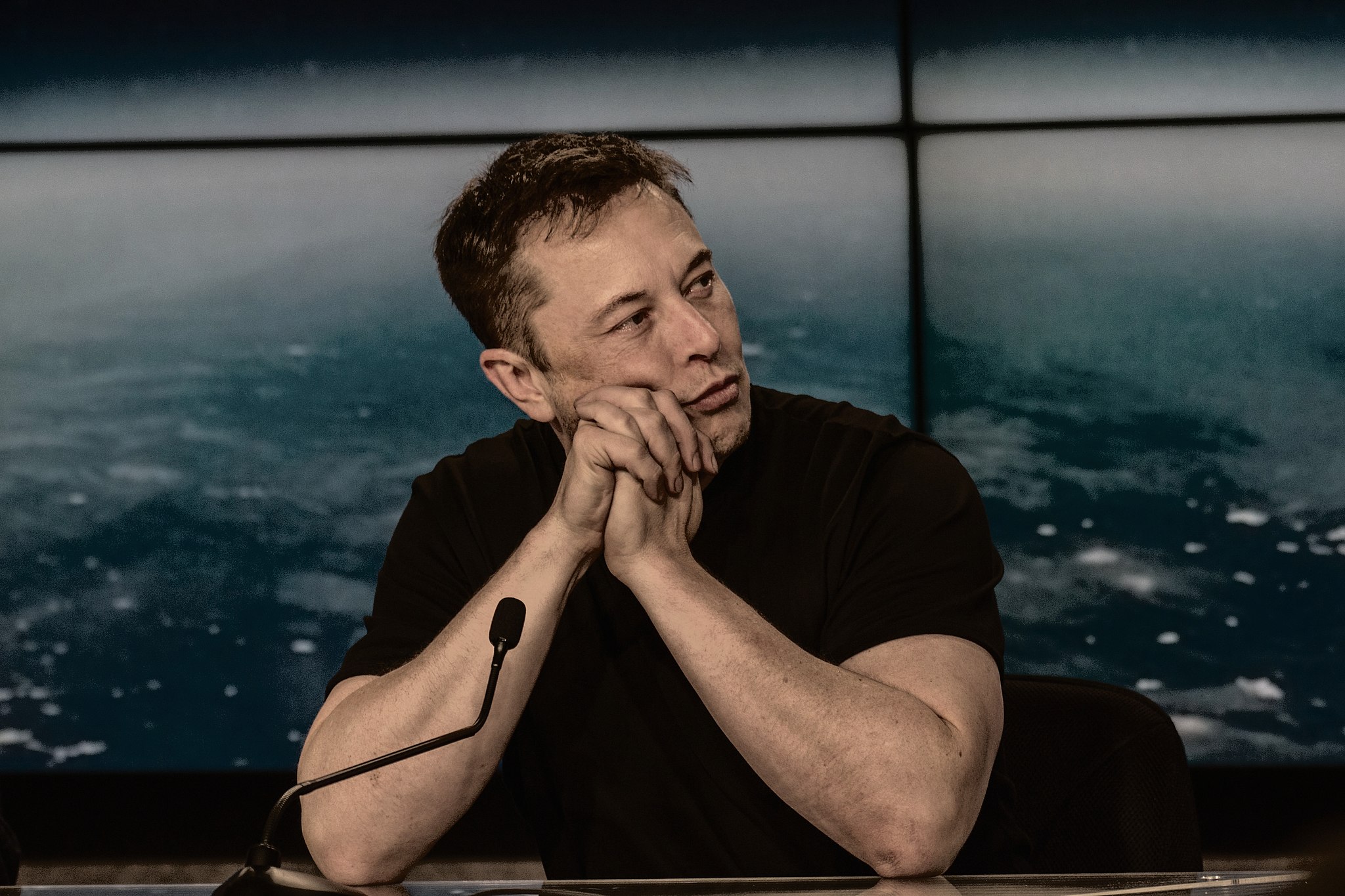
Tesla shares are up nearly 20 percent in the past month, but that is not stopping the only trillion-dollar automaker from attracting all types of new potential sectors to disrupt, at least from an investor and analyst perspective.
Morgan Stanley’s Adam Jonas is not one to shy away from some ideas that many investors would consider far-fetched. In a recent note, Jonas brought up some interesting discussion regarding Tesla’s potential in the eVTOL industry, and how he believes CEO Elon Musk’s answer was not convincing enough to put it off altogether.
Tesla’s Elon Musk says electric planes would be ‘fun problem to work on’
Musk said that Tesla was “stretched pretty thin” when a question regarding a plane being developed came up. Jonas said:
“In our opinion, that’s a decidedly different type of answer. Is Tesla an aviation/defense-tech company in auto/consumer clothing?”
Musk has been pretty clear about things that Tesla won’t do. Although he has not unequivocally denied aviation equipment, including planes and drones, as he has with things like motorcycles, it does not seem like something that is on Musk’s mind.
Instead, he has focused the vast majority of his time at Tesla on vehicle autonomy, AI, and robotics, things he sees as the future.
Tesla and China, Robotics, Pricing
Morgan Stanley’s note also discussed Tesla’s prowess in its various areas of expertise, how it will keep up with Chinese competitors, as there are several, and the race for affordable EVs in the country.
Tesla is the U.S.’s key to keeping up with China
“In our view, Tesla’s expertise in manufacturing, data collection, robotics/ physical AI, energy, supply chain, and infrastructure are more critical than ever before to put the US on an even footing with China in embodied AI,” Jonas writes.
It is no secret that Tesla is the leader in revolutionizing things. To generalize, the company has truly dipped its finger in all the various pies, but it is also looked at as a leader in tech, which is where Chinese companies truly have an advantage.
Robotics and the ‘Humanoid Olympics’
Jonas mentioned China’s recent showcasing of robots running half marathons and competing in combat sports as “gamification of robotic innovation.”
Tesla could be at the forefront of the effort to launch something similar, as the analyst predicts the U.S. version could be called “Humanoid Ninja Warrior.”
Pricing
Tesla is set to launch affordable models before the end of Q2, leaving this month for the company to release some details.
While the pricing of those models remains in limbo with the $7,500 tax credit likely disappearing at the end of 2024, companies in China have been able to tap incredibly aggressive pricing models. Jonas, for example, brings up the BYD Seagull, which is priced at just about $8,000.
Tesla can tap into an incredibly broader market if it can manage to bring pricing to even below $30,000, which is where many hope the affordable models end up.
During the Q3 2024 Earnings Call, Musk said that $30,000 is where it would be with the tax credit:
“Yeah. It will be like with incentive. So, 30K, which is kind of a key threshold.”


Elon Musk
SpaceX is quietly becoming the U.S. Military’s only reliable rocket
Space Force drops ULA for SpaceX on GPS launch after Vulcan rocket anomaly investigation halts flights.

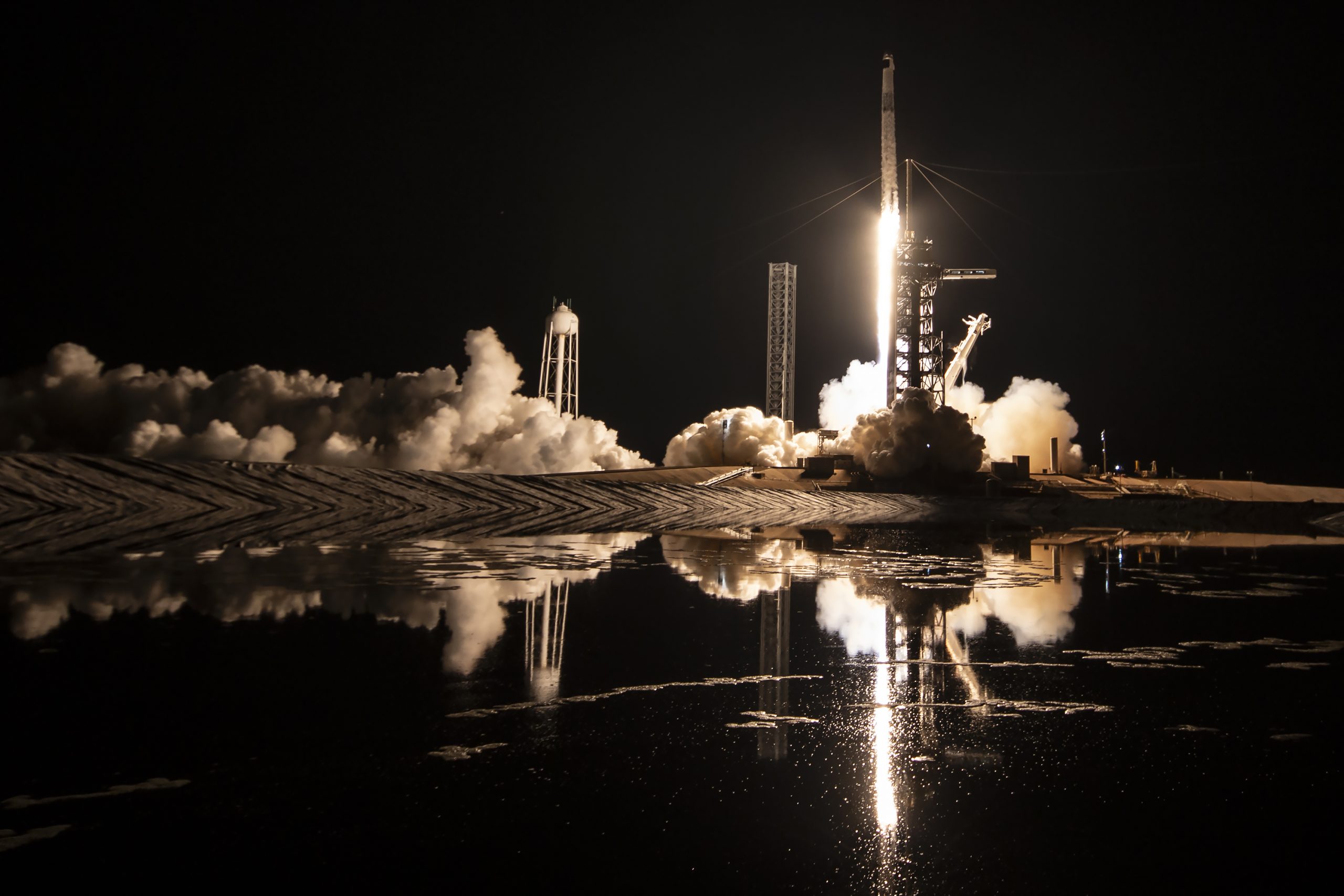
The U.S. Space Force announced today it is switching an upcoming GPS III satellite launch from United Launch Alliance’s Vulcan rocket to a SpaceX Falcon 9, a move that is as much a reflection of Vulcan’s mounting problems as it is a validation of SpaceX’s growing dominance in national security space launch. The GPS III Space Vehicle 09, originally contracted to fly on Vulcan this month, will now target a late April liftoff on Falcon 9, marking the fourth consecutive GPS III satellite the Space Force has moved to SpaceX after contracts were originally awarded to ULA.
The immediate trigger is a solid rocket motor anomaly that occurred on February 12 during Vulcan’s USSF-87 mission. Although the payloads reached orbit and ULA declared the mission successful, the company characterized the malfunction as a “significant performance anomaly” and has since paused all military launches on Vulcan pending a root cause investigation.
“With this change, we are answering the call for rapid delivery of advanced GPS capability while the Vulcan anomaly investigation continues,” said Systems Delta 81 Commander Col. Ryan Hiserote. “We are once again demonstrating our team’s flexibility and are fully committed to leverage all options available for responsive and reliable launch for the Nation.”
The broader reality is that SpaceX’s reliability record and launch cadence have made it the path of least resistance for the Pentagon, and bodes well with Elon Musk’s plans to IPO SpaceX sometime this year. Its Falcon 9 is the most flight-proven rocket in history, and the Space Force’s Rapid Response Trailblazer program was specifically designed to enable exactly this kind of provider swap for GPS missions, and effectively building SpaceX’s flexibility into the national security launch architecture by design.
For ULA, the stakes are existential. The company entered 2026 with aspirations of finally turning a corner after years of Vulcan delays, with interim CEO John Elbon pointing to a backlog of over 80 missions as reason for optimism. Meanwhile, SpaceX’s contracts with the Space Force have given it a formal pathway to take on even more national security launches going forward.
The significance of today’s announcement extends beyond one satellite swap. It reinforces that America’s most critical space infrastructure, including GPS, missile warning, and beyond, is increasingly dependent on a single commercial provider.
Elon Musk
Tesla’s $2.9 billion bet: Why Elon Musk is turning to China to build America’s solar future
Tesla looks to bring solar manufacturing to the US, with latest $2.9 billion bet to acquire Chinese solar equipment.
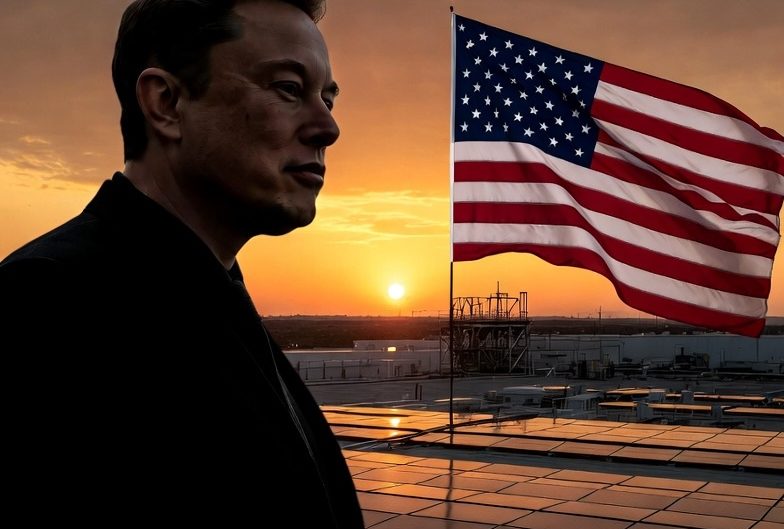
Tesla is reportedly in talks to purchase $2.9 billion worth of solar manufacturing equipment from a group of Chinese suppliers, including Suzhou Maxwell Technologies, which is the world’s largest producer of screen-printing equipment used in solar cell production. According to Reuters sources, the equipment is expected to be delivered before autumn and shipped to Texas, where Tesla plans to anchor its next phase of domestic solar production.
The move is a direct extension of a vision Elon Musk has been building for months. At the World Economic Forum in Davos this past January, Musk announced that both Tesla and SpaceX were independently working to establish 100 gigawatts of annual solar manufacturing capacity inside the United States. Days later, on Tesla’s Q4 2025 earnings call, he made the ambition concrete: “We’re going to work toward getting 100 GW a year of solar cell production, integrating across the entire supply chain from raw materials all the way to finished solar panels.”
Job postings on Tesla’s website reflect that same target, with language explicitly calling for 100 GW of “solar manufacturing from raw materials on American soil before the end of 2028.”
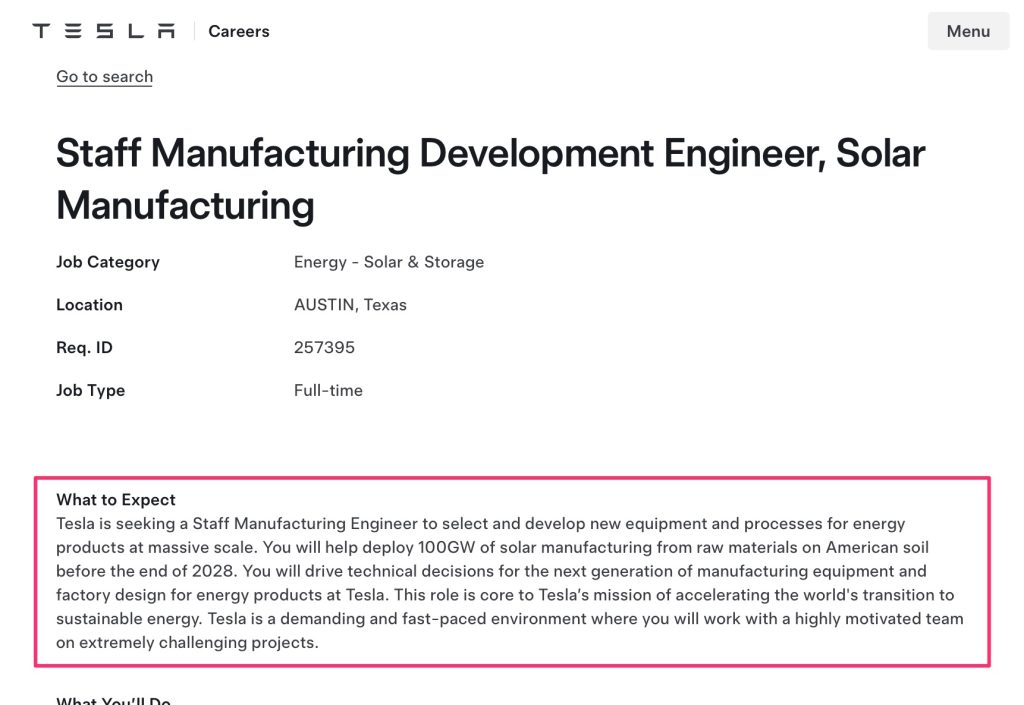
Tesla job listing for Staff Manufacturing Development Engineer, Solar Manufacturing
The urgency behind the latest solar manufacturing target is rooted in a set of rapidly emerging pressures related to AI and Tesla’s own energy business. U.S. power consumption hit its second consecutive record high in 2025 and is projected to climb further through 2026 and 2027, driven largely by the explosion in AI data centers and the broader electrification of transportation. Tesla’s own energy division, which produces the Megapack utility-scale battery storage system, has been growing rapidly, and solar supply is a critical companion component for the business to scale. Musk has argued that solar is not just a clean energy option but the only one that makes economic sense at the scale AI infrastructure demands.
Tesla lands in Texas for latest Megapack production facility
Ironically, the path to domestic solar independence currently runs through China. Sort of.
Despite Tesla’s stated push to localize its supply chain, mirrored recently by the company’s plan for a $4.3 billion LFP battery manufacturing partnership with LG Energy Solution in Michigan, Tesla still relies on China-based suppliers to keep its cost structure intact.
The $2.9 billion equipment deal underscores a tension Musk himself acknowledged at Davos: “Unfortunately, in the U.S. the tariff barriers for solar are extremely high and that makes the economics of deploying solar artificially high, because China makes almost all the solar.” Building the factory in America requires buying the machinery from the country Tesla is trying to reduce its dependence on.
Tesla named by U.S. Gov. in $4.3B battery deal for American-made cells
The regulatory pathway adds another layer of complexity. Suzhou Maxwell has been seeking export approval from China’s commerce ministry, and it remains unclear how quickly that clearance will come. Still, the market has already reacted, with shares in the Chinese firms reportedly involved in the talks surged more than 7% following the Reuters report that broke the story.
Whether Tesla can hit its 2028 target of 100GW of solar manufacturing remains an open question. Though that scale may seem staggering, especially in such a short timeframe, we know that Musk has a documented history of “always pulling it off” in the face of ambitious deadlines that may slip. But, rest assured – it’ll get done.
Elon Musk
Elon Musk reveals date of Tesla Full Self-Driving’s next massive release
Initially planned for a January or February release, v14.3 aims to add some reasoning and logic to the decisions that Full Self-Driving makes, which could improve a lot of things, including Navigation, which is a major complaint of many owners currently.
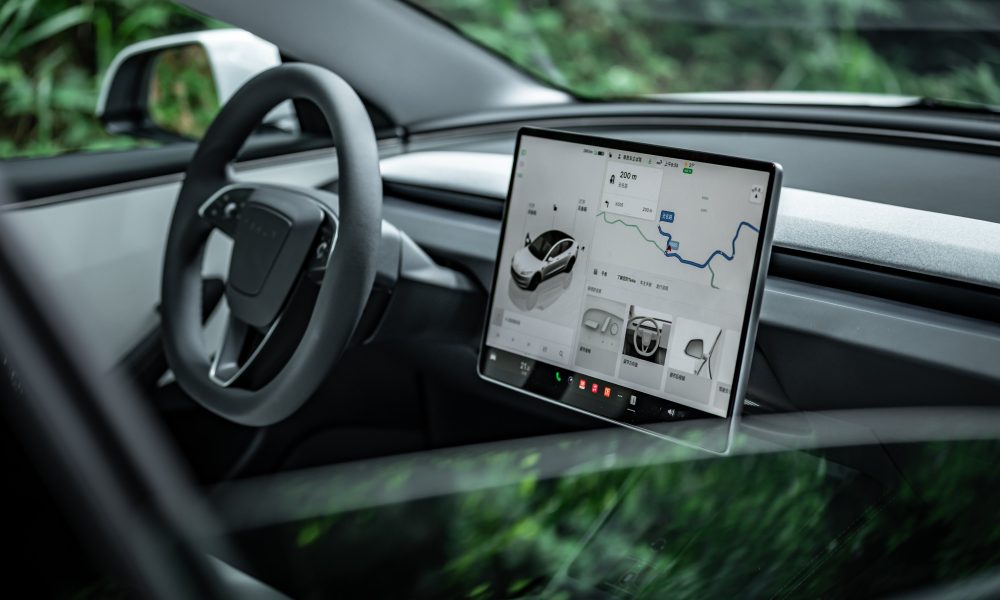
Tesla CEO Elon Musk revealed the date of Full Self-Driving’s next massive release: v14.3.
For months, Tesla owners with Hardware 4 have been utilizing Full Self-Driving v14.2 and subsequent releases. Currently, the most up-to-date FSD version is v14.2.2.5, which has definitely brought out mixed reviews. With releases, some things get better, and other things might regress slightly.
For the most part, things are better in terms of overall behavior.
However, many owners have been looking forward to the next release, which is v14.3, about which Musk has said many great things. Back in November, Musk said that v14.3 “is where the last big piece of the puzzle lands.”
He added:
“We’re gonna add a lot of reasoning and RL (reinforcement learning). To get to serious scale, Tesla will probably need to build a giant chip fab. To have a few hundred gigawatts of AI chips per year, I don’t see that capability coming online fast enough, so we will probably have to build a fab.”
Initially planned for a January or February release, v14.3 aims to add some reasoning and logic to the decisions that Full Self-Driving makes, which could improve a lot of things, including Navigation, which is a major complaint of many owners currently.
Tesla Full Self-Driving v14.2 is a considerable improvement from early versions of the suite, but we have written about the somewhat confusing updates that have come with recent versions.
Tesla Full Self-Driving v14.2.2.5 might be the most confusing release ever
They’ve been incredibly difficult to gauge in terms of progress because some things have gotten better, but there seems to be some real regression on a handful of things, especially with confidence and assertiveness.
Musk confirmed today on X that Tesla is already testing v14.3 internally right now. It will hit a wide release “in a few weeks,” so we should probably expect it by late April.
It’s in testing right now. Wide release in a few weeks.
— Elon Musk (@elonmusk) March 19, 2026
Overall, there are high hopes that v14.3 could be a true game changer for Tesla Full Self-Driving, as many believe it could be the version that Robotaxis in Austin, Texas, some of which are driverless and unsupervised, are running.
It could also include some major additions, including “Banish,” also referred to as “Reverse Summon,” which would go find a parking spot after dropping occupants off at their destination.
What Tesla will roll out, and when exactly it arrives, all remain to be seen, but fans have been ready for a new version as v14.2.2.5 has definitely run its course. We have had a lot of readers tell us their biggest request is to fix Navigation errors, which seem to be one of the most universal complaints among daily FSD users.

Rolls-Royce makes shocking move on its EV future

Elon Musk teases expectations for Tesla’s AI6 self-driving chip


