News
Tesla tinkering with Speed Profiles on FSD v14.2.1 has gone too far


Tesla recently released Full Self-Driving (FSD) v14.2.1, its latest version, but the tinkering with Speed Profiles has perhaps gone too far.
We try to keep it as real as possible with Full Self-Driving operation, and we are well aware that with the new versions, some things get better, but others get worse. It is all part of the process with FSD, and refinements are usually available within a week or so.
However, the latest v14.2.1 update has brought out some major complaints with Speed Profiles, at least on my end. It seems the adjustments have gone a tad too far, and there is a sizeable gap between Profiles that are next to one another.
Tesla FSD v14.2.1 first impressions:
✅ Smooth, stress-free highway operation
✅ Speed Profiles are refined — Hurry seems to be limited to 10 MPH over on highways. Switching from Mad Max to Hurry results in an abrupt braking pattern. Nothing of concern but do feel as if Speed…— TESLARATI (@Teslarati) November 29, 2025
The gap is so large that changing between them presents a bit of an unwelcome and drastic reduction in speed, which is perhaps a tad too fast for my liking. Additionally, Speed Profiles seem to have a set Speed Limit offset, which makes it less functional in live traffic situations.
Before I go any further, I’d like to remind everyone reading this that what I am about to write is purely my opinion; it is not right or wrong, or how everyone might feel. I am well aware that driving behaviors are widely subjective; what is acceptable to one might be unacceptable to another.
Speed Profiles are ‘Set’ to a Speed
From what I’ve experienced on v14.2.1, Tesla has chosen to go with somewhat of a preset max speed for each Speed Profile. With ‘Hurry,’ it appears to be 10 MPH over the speed limit, and it will not go even a single MPH faster than that. In a 55 MPH zone, it will only travel 65 MPH. Meanwhile, ‘Standard’ seems to be fixed at between 4-5 MPH over.
This is sort of a tough thing to have fixed, in my opinion. The speed at which the car travels should not be fixed; it should be more dependent on how traffic around it is traveling.
It almost seems as if the Speed Profile chosen should be more of a Behavior Profile. Standard should perform passes only to traffic that is slower than the traffic. If traffic is traveling at 75 MPH in a 65 MPH zone, the car should travel at 75 MPH. It should pass traffic that travels slower than this.
Hurry should be more willing to overtake cars, travel more than 10 MPH over the limit, and act as if someone is in a hurry to get somewhere, hence the name. Setting strict limits on how fast it will travel seems to be a real damper on its capabilities. It did much better in previous versions.
Some Speed Profiles are Too Distant from Others
This is specifically about Hurry and Mad Max, which are neighbors in the Speed Profiles menu. Hurry will only go 10 MPH over the limit, but Mad Max will travel similarly to traffic around it. I’ve seen some people say Mad Max is too slow, but I have not had that opinion when using it.
In a 55 MPH zone during Black Friday and Small Business Saturday, it is not unusual for traffic around me to travel in the low to mid-80s. Mad Max was very suitable for some traffic situations yesterday, especially as cars were traveling very fast. However, sometimes it required me to “gear down” into Hurry, especially as, at times, it would try to pass slower traffic in the right lane, a move I’m not super fond of.
We had some readers also mention this to us:
The abrupt speed reduction when switching to a slower speed profile is definitely an issue that should be improved upon.
— David Klem (@daklem) November 29, 2025
After switching from Mad Max to Hurry, there is a very abrupt drop in speed. It is not violent by any means, but it does shift your body forward, and it seems as if it is a tad drastic and could be refined further.


Elon Musk
Brazil Supreme Court orders Elon Musk and X investigation closed
The decision was issued by Supreme Court Justice Alexandre de Moraes following a recommendation from Brazil’s Prosecutor-General Paulo Gonet.

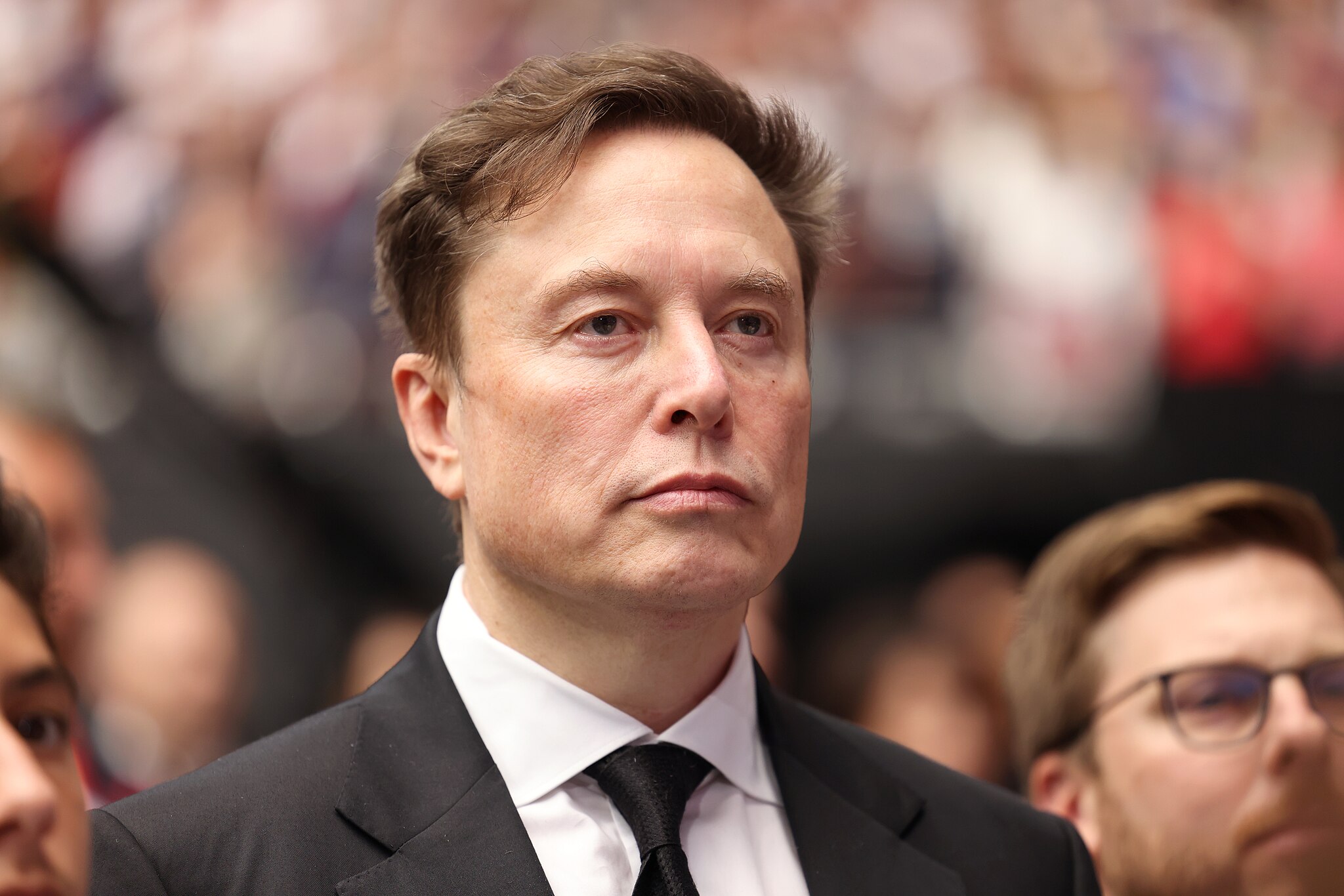
Brazil’s Supreme Federal Court has ordered the closure of an investigation involving Elon Musk and social media platform X. The inquiry had been pending for about two years and examined whether the platform was used to coordinate attacks against members of the judiciary.
The decision was issued by Supreme Court Justice Alexandre de Moraes following a recommendation from Brazil’s Prosecutor-General Paulo Gonet.
According to a report from Agencia Brasil, the investigation conducted by the Federal Police did not find evidence that X deliberately attempted to attack the judiciary or circumvent court orders.
Prosecutor-General Paulo Gonet concluded that the irregularities identified during the probe did not indicate fraudulent intent.
Justice Moraes accepted the prosecutor’s recommendation and ruled that the investigation should be closed. Under the ruling, the case will remain closed unless new evidence emerges.
The inquiry stemmed from concerns that content on X may have enabled online attacks against Supreme Court justices or violated rulings requiring the suspension of certain accounts under investigation.
Justice Moraes had previously taken several enforcement actions related to the platform during the broader dispute involving social media regulation in Brazil.
These included ordering a nationwide block of the platform, freezing Starlink accounts, and imposing fines on X totaling about $5.2 million. Authorities also froze financial assets linked to X and SpaceX through Starlink to collect unpaid penalties and seized roughly $3.3 million from the companies’ accounts.
Moraes also imposed daily fines of up to R$5 million, about $920,000, for alleged evasion of the X ban and established penalties of R$50,000 per day for VPN users who attempted to bypass the restriction.
Brazil remains an important market for X, with roughly 17 million users, making it one of the platform’s larger user bases globally.
The country is also a major market for Starlink, SpaceX’s satellite internet service, which has surpassed one million subscribers in Brazil.
Elon Musk
FCC chair criticizes Amazon over opposition to SpaceX satellite plan
Carr made the remarks in a post on social media platform X.
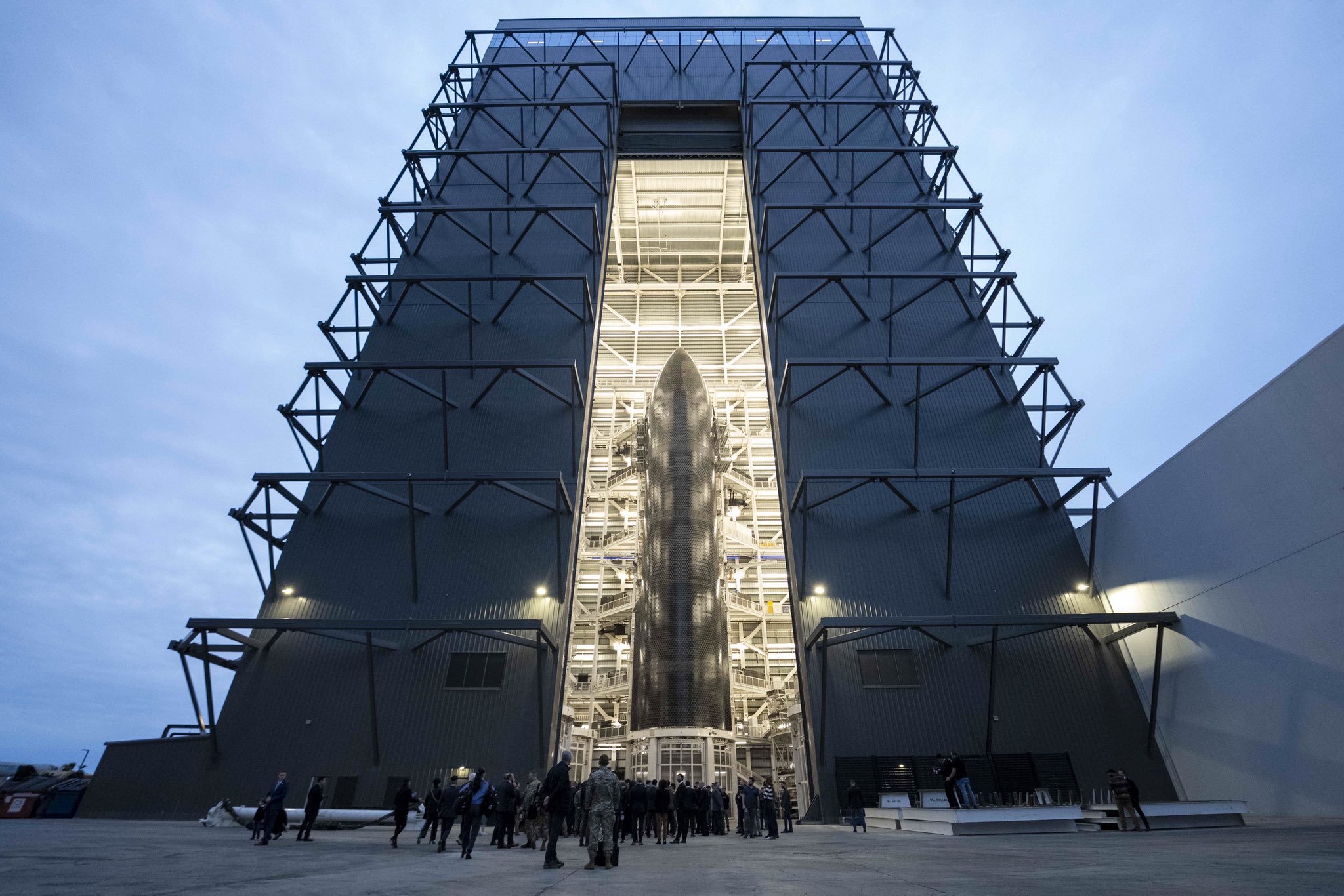
U.S. Federal Communications Commission (FCC) Chairman Brendan Carr criticized Amazon after the company opposed SpaceX’s proposal to launch a large satellite constellation that could function as an orbital data center network.
Carr made the remarks in a post on social media platform X.
Amazon recently urged the FCC to reject SpaceX’s application to deploy a constellation of up to 1 million low Earth orbit satellites that could serve as artificial intelligence data centers in space.
The company described the proposal as a “lofty ambition rather than a real plan,” arguing that SpaceX had not provided sufficient details about how the system would operate.
Carr responded by pointing to Amazon’s own satellite deployment progress.
“Amazon should focus on the fact that it will fall roughly 1,000 satellites short of meeting its upcoming deployment milestone, rather than spending their time and resources filing petitions against companies that are putting thousands of satellites in orbit,” Carr wrote on X.
Amazon has declined to comment on the statement.
Amazon has been working to deploy its Project Kuiper satellite network, which is intended to compete with SpaceX’s Starlink service. The company has invested more than $10 billion in the program and has launched more than 200 satellites since April of last year.
Amazon has also asked the FCC for a 24-month extension, until July 2028, to meet a requirement to deploy roughly 1,600 satellites by July 2026, as noted in a CNBC report.
SpaceX’s Starlink network currently has nearly 10,000 satellites in orbit and serves roughly 10 million customers. The FCC has also authorized SpaceX to deploy 7,500 additional satellites as the company continues expanding its global satellite internet network.
Energy
Tesla Energy gains UK license to sell electricity to homes and businesses
The license was granted to Tesla Energy Ventures Ltd. by UK energy regulator Ofgem after a seven-month review process.
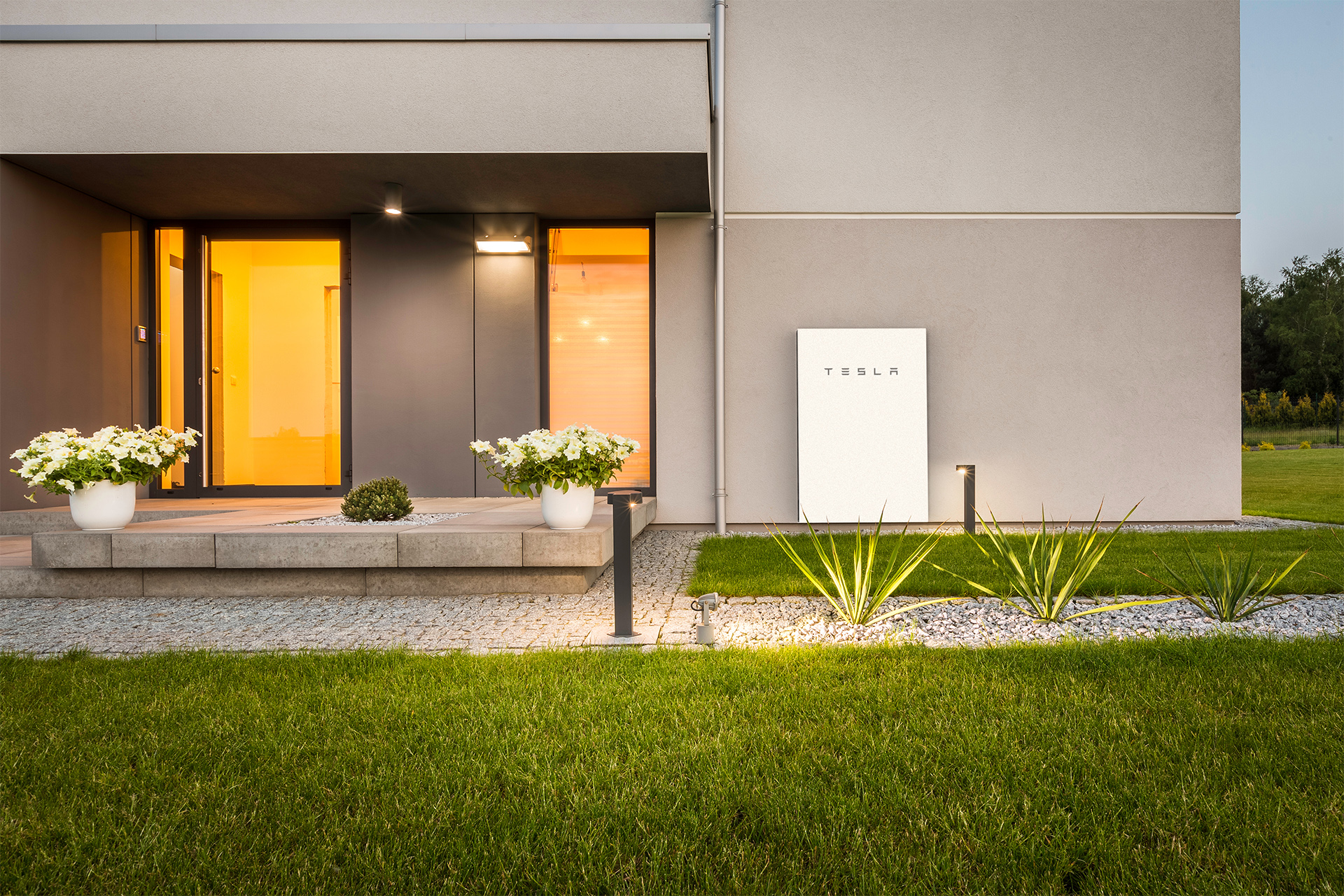
Tesla Energy has received a license to supply electricity in the United Kingdom, opening the door for the company to serve homes and businesses in the country.
The license was granted to Tesla Energy Ventures Ltd. by UK energy regulator Ofgem after a seven-month review process.
According to Ofgem, the license took effect at 6 p.m. local time on Wednesday and applies to Great Britain.
The approval allows Tesla’s energy business to sell electricity directly to customers in the region, as noted in a Bloomberg News report.
Tesla has already expanded similar services in the United States. In Texas, the company offers electricity plans that allow Tesla owners to charge their vehicles at a lower cost while also feeding excess electricity back into the grid.
Tesla already has a sizable presence in the UK market. According to price comparison website U-switch, there are more than 250,000 Tesla electric vehicles in the country and thousands of Tesla home energy storage systems.
Ofgem also noted that Tesla Motors Ltd., a separate entity incorporated in England and Wales, received an electricity generation license in June 2020.
The new UK license arrives as Tesla continues expanding its global energy business.
Last year, Tesla Energy retained the top position in the global battery energy storage system (BESS) integrator market for the second consecutive year. According to Wood Mackenzie’s latest rankings, Tesla held about 15% of global market share in 2024.
The company also maintained a dominant position in North America, where it captured roughly 39% market share in the region.
At the same time, competition in the energy storage sector is increasing. Chinese companies such as Sungrow have been expanding their presence globally, particularly in Europe.

Brazil Supreme Court orders Elon Musk and X investigation closed

FCC chair criticizes Amazon over opposition to SpaceX satellite plan


