Investor's Corner
Top 5 questions Tesla (TSLA) retail investors want answered in the Q1 2021 earnings call

Tesla’s Q1 2021 earnings call is coming up, and TSLA shareholders only have a day left to vote on questions during the meeting. Below are the top 5 questions retail investors are asking.
Question 1 & 2 – Dojo and Solar Roof Updates
Retail investor Robert M. submitted two questions that have garnered significant shares and votes. First, he submitted a question about Dojo–the supercomputer Tesla is developing to process vast amounts of data. In November 2020, Elon Musk noted that Version 1 of Dojo was about a year away from ready.
“How is Dojo coming along? Could Dojo unlock an AWS-like business line for Tesla over the next few years?” Robert M. asked.
The retail investor also asked about Tesla’s recent Solar Roof price changes. Many Solar Roof customers reported seeing price hikes in their installation quotation in the past few weeks. Musk recently announced that Tesla’s solar products—solar panels and Solar Roof—will be sold with Powerwalls as an integrated system.
“The recent price changes on Solar Roof have been a bit discouraging for customers and investors. Could Tesla share more about Solar Roof challenges and if the outlook [h]as changed at all (i.e., 1,000+ per week?” Robert M asked.
Question 3 & 4 – Bitcoin Payments and FUD from MSM
The next two questions from retail investors with the third and fourth-most shares and votes came from Emmet P. The retail investor asked about Tesla’s plans in the “digital currency space” and wondered when any significant cryptocurrency developments would be revealed.
 -
-
Earlier this year, Tesla once again broke away from traditional automaker practices when it invested $1.5 billion in cryptocurrency, enabling customers to purchase Tesla vehicles with Bitcoin. Tesla launched Bitcoin payments last month.
Emmet P.’s second question pertained to the mainstream media’s (MSM) “deceptive [clickbait] headline campaigns,” specifically related to Autopilot and Full Self-Driving. He asked if Tesla had any proactive plans to address the misleading articles published by mainstream media and suggested that the company might consider a “specialty PR” job.
Last week, Consumers Reports released an article about Tesla Autopilot that received massive attention for its questionable content. The article brought mainstream media’s integrity into question again, especially in relation to Tesla.
Question 5 – Tesla’s Customer Service
The fifth question with the most shares and votes related to Tesla’s efforts to improve customer service and communication. Over the years, Tesla service has been a segment of the company that most customers believe drastic improvements.
“It is extremely frustrating to have to go to Elon’s Twitter to do feature requests and bug report recognition, and I often feel like Tesla[’s] development efforts don’t align with customer needs. Can we please get a Tesla Official community feedback system with up/downvoting?” Kevin P. asked.
Tesla’s Q1 2021 earnings call is scheduled for Monday, April 26, 2021, at 2:30 pm Pacific Time or 5:30 pm Eastern Time. Tesla will release an Update Letter after the market closes on Monday.
The Teslarati team would appreciate hearing from you. If you have any tips, email us at tips@teslarati.com or reach out to me at maria@teslarati.com.
-



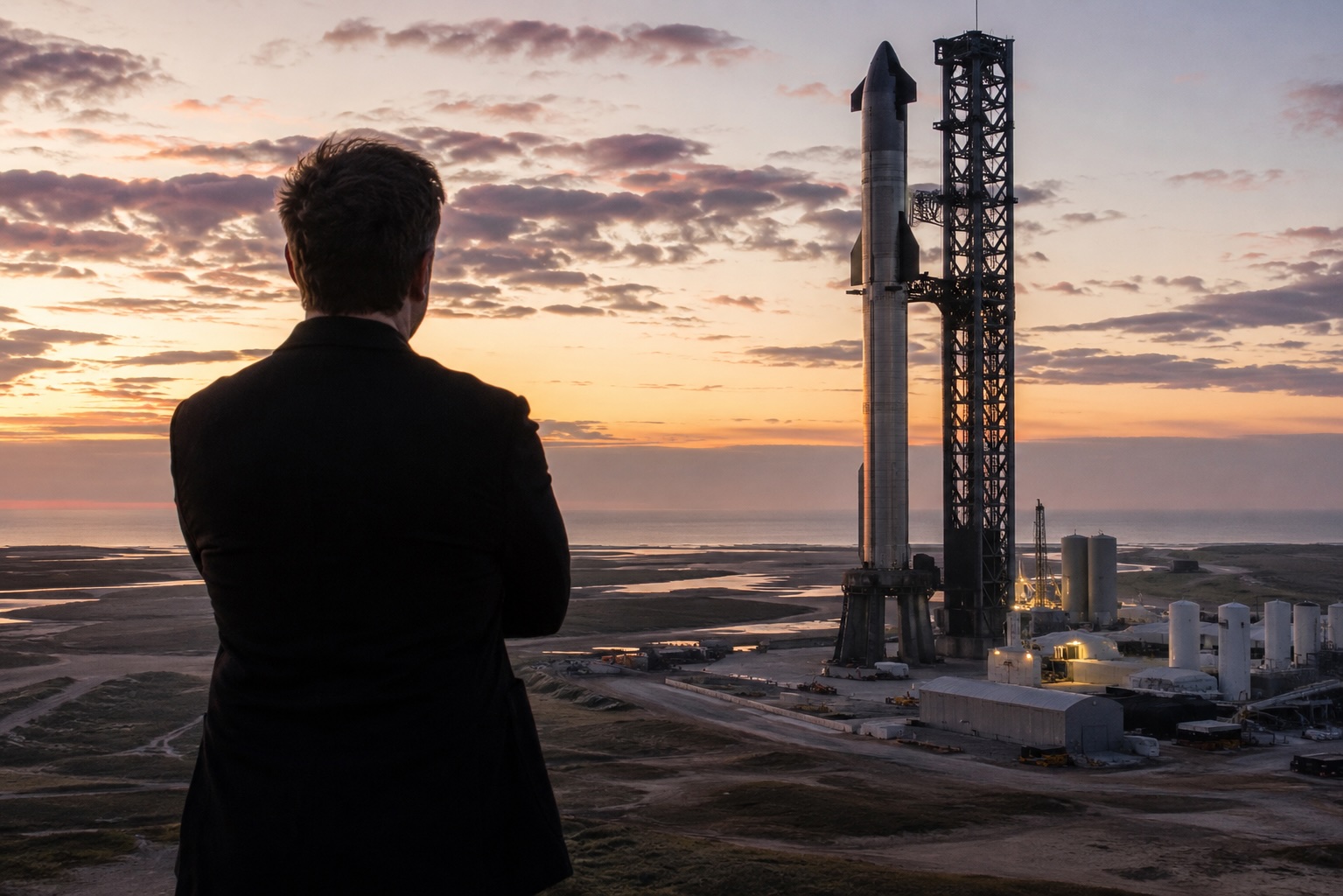
SpaceX will report second quarter results after the market closes on Tuesday, August 4, marking the first time the company has opened its books to the public since its record IPO in June. Management will host a live audio only webcast at 4:30 p.m. ET, streamed on X, with no dial in option.
The debut carries more weight than a typical first quarter as a public company. Two trading days after the release, on August 6, the first tranche of SpaceX’s lockup expires, freeing roughly 911.5 million insider and employee shares, worth well over $100 billion at current prices and the largest such release in Wall Street history. A second, larger tranche tied to the stock trading 30 percent above its $135 IPO price never triggered, since shares have spent most of July trading below that price.
Wall Street’s models point to revenue near $6.9 billion for the quarter, up sharply from the $4.69 billion SpaceX reported in the first quarter, with a narrower per share loss than the $1.27 posted three months earlier, according to estimates compiled by Motley Fool. Those numbers will be the first look at how SpaceX’s three segments, Starlink, launch and AI, are performing independently.
SpaceX scores another massive Pentagon deal to support military satellites
Investors heading into the call have a specific list of questions. How many net new Starlink subscribers did SpaceX add after ending March with 10.3 million, and is average revenue per user holding up as the service expands into lower income markets. How much of the AI segment’s revenue reflects contract signings with Anthropic, Google and Reflection AI this year, deals that combined could annualize to nearly $28 billion if fully ramped. Whether capital expenditures, which nearly doubled in the AI segment alone between 2024 and 2025, are still accelerating or starting to plateau. And whether management offers any forward guidance at all, something SpaceX has never done publicly.
The report will also land days after Elon Musk publicly denied a Wall Street Journal report describing internal planning to separate Tesla’s China business ahead of a potential Tesla-SpaceX merger. Whether Musk or SpaceX executives address that speculation on the call, even indirectly, maybe something investors will be listening for on Tuesday.
As Teslarati reported after Musk’s own warning to short sellers last week, the CEO has made clear he expects skeptics to be proven wrong over time. Tuesday will be the first chance for the numbers themselves to make that case.
Elon Musk
Tesla AI boss reveals how big Optimus is going to get
Tesla’s Optimus chief corrected himself on X, confirming a staggering 10 million robot production target.

![Tesla Optimus Gen 3 [Credit: Tesla]](https://www.teslarati.com/wp-content/uploads/2026/03/tesla-optimus-gen3-diner.jpg)
Tesla’s Optimus program has a new number attached to it, after Ashok Elluswamy, the executive who has run the humanoid robot program since June 2025, posted a three word correction on X Thursday, “Correction, 10 million robots.”
The line clarifies the long term annual capacity Tesla is building toward its planned second Optimus production line at Gigafactory Texas, a figure Musk has cited repeatedly since last year’s shareholder meeting.
The scale is worth noting, because ten million robots a year would mean Tesla building more units annually than most countries sell in new cars. Tesla has framed this as a second line, not the first. The buildout is happening in two phases: a roughly one million unit per year line inside Tesla’s Fremont factory, installed on the floor space vacated when Model S and Model X production ended earlier this year, and a much larger dedicated facility under construction at Giga Texas that broke ground on its first steel structure in May. That Texas facility is the one Elluswamy’s correction refers to, and is expected to reach volume production sometime in 2027.
Correction, 10 million robots https://t.co/0z4nyQNTzp
— Ashok Elluswamy (@aelluswamy) July 30, 2026
Tesla Optimus project fires up as Musk sees production line progress
Elluswamy took over Optimus from Milan Kovac last summer and has spent the months since talking up the program’s trajectory. Elon Musk has also floated the ten million figure at Tesla’s 2025 shareholder meeting.
Ending Model S and Model X production to make room for the first Optimus line was one of the more consequential manufacturing decisions in the company’s recent history, retiring two flagship vehicles in favor of a robot that has yet to enter mass production. Musk has previously estimated per unit production costs at $20,000 to $25,000 once Tesla reaches a million units a year, though he hasn’t said what that cost looks like at ten times the volume.
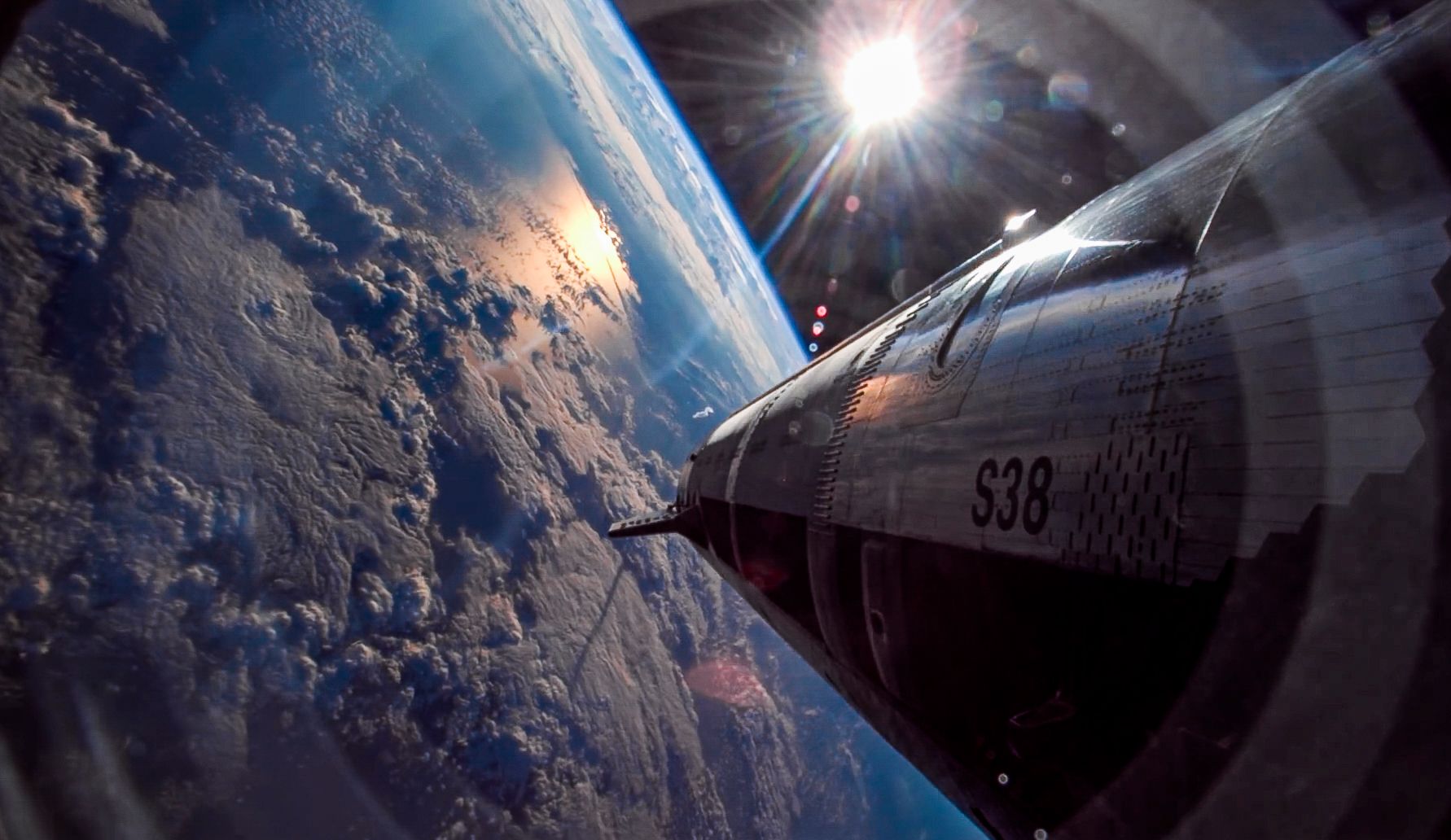
SpaceX just picked up another $1.6 billion from the Pentagon, with the U.S. Space Force awarding two task orders worth $1.6 billion to fly 18 Falcon 9 missions from Vandenberg Space Force Base in California through the end of 2027. The launches will carry satellites for the Space Based Sensing and Targeting portfolio, a set of programs meant to help the military detect and track airborne threats and relay that information across forces in near real time.
The award falls under National Security Space Launch Phase 3 Lane 1, the Space Force’s faster, commercial style procurement track for missions that do not require the military’s most demanding certification process. It is also the largest single order publicly disclosed under that program so far, and the first task order issued since the Space Force nearly tripled Lane 1’s contract ceiling from $5.6 billion to $17 billion on July 17.
SpaceX to become America’s Military data backbone for missiles, drones, and warfighters
Eric Zarybnisky, the Space Force’s acting portfolio acquisition executive for space access, said the entire process, from identifying the requirement to signing the contract, took about two months, including a month set aside for companies to prepare proposals.
SpaceX is not just launching these satellites. It already holds the contracts to build two of the programs within the same portfolio, $4.16 billion for the Space Based Airborne Moving Target Indicator system and $2.29 billion for the Space Data Network Backbone, which Teslarati covered in May. That means SpaceX is now responsible for both building key pieces of the military’s next generation sensing network and getting them into orbit.
With this latest award, SpaceX’s Pentagon contract total for 2026 alone tops $8 billion, adding to a defense portfolio that already includes the Golden Dome missile defense software group SpaceX joined in April and a string of GPS launches it inherited after ULA’s Vulcan rocket ran into a booster anomaly, which we detailed in March.
Lane 1’s vendor pool technically includes seven companies: SpaceX, ULA, Blue Origin, Rocket Lab, Stoke Space, Impulse Space, and Relativity Space. In practice, SpaceX remains the only provider with the combination of launch cadence, flight proven Falcon 9 hardware, and West Coast infrastructure to support a campaign requiring roughly one Vandenberg launch a month for the next year and a half.
Some lawmakers have flagged the growing concentration of national security launches with one company as a risk worth watching. For now, the Space Force keeps backing SpaceX, with it being the company that shows up ready to launch.

SpaceX’s biggest test yet arrives this week and it’s not a rocket launch

SpaceX’s Starship just got filmed by its own cargo


