Investor's Corner
Tesla (TSLA) posts Q2 2018 financial results: $4B revenue, profitability in focus

Tesla’s second-quarter earnings for 2018 saw the California-based carmaker beat Wall Street revenue estimates after posting $4B billion in revenue and missed earnings estimates with a non-GAAP loss of $520 million.
The results, which were posted in an update letter to investors after the closing bell on Wednesday, August 1st, showed second-quarter earnings of -$3.06 per share, slightly worse analyst estimates of -$2.92 per share. Compared to the previous year, revenue grew 43.5%.
The company burned through $430M in cash in the second quarter.
REVENUE AND OPERATING LOSSES
The company’s revenue for the second quarter consisted of $3.36B in automotive revenue and $374M from their energy and battery storage division. Automotive revenue saw an increase of 46.8% compared to the same period last year. The energy and battery storage division saw an increase of 30.6% compared to the same period last year.
Automotive revenue increased by 22.75% compared to Q1 2018, largely due to the rapid increase in Model 3 sales, while energy generation and storage declined by 8.7%. Tesla deployed 84 MW of energy generation and 203 MWh of energy storage products in the second quarter as well.

MODEL 3
Tesla was able to deliver 18,449 Model 3 vehicles during the second quarter of 2018. In the quarter the company produced 28,578 Model 3’s. The company’s Q2 2018 Update Letter stated that the company still expects to reach its production goal of 6,000 Model 3’s per week by the end of August.
The company is aiming to reach a gross margin of 25% on the Model 3 in the long-term but set an initial goal of break-even for the second quarter. The company beat that goal in the quarter posting a slightly positive gross margin. After conducting a complete breakdown, an automotive expert recently estimated that Tesla could achieve a 30% or higher gross margin on the vehicle.
“Over the past 12 months, we have overcome bottlenecks across various stages of the Model 3 manufacturing process. Last quarter, it became clear that GA3, our main general assembly line, would likely become a production constraint if certain issues were not addressed. This assembly line, which is where we add all the components to a painted metal body, was designed to work with hundreds of robotic lifters that bring components to the line. Due to the density of the line and the relatively high downtime of the lifters, ramping GA3 became substantially more complicated than we had anticipated. That said, significant progress has been made in the last few months, and GA3 is now expected to reach a production rate of 5,000 per week very soon,” Tesla stated in the letter.
The company reported that they have received over 60,000 test drive requests for the Model 3. Most Tesla stores received their first Model 3 test drive vehicles and the company plans to continue deploying more Model 3’s to other stores, with a focus on the new Model 3 Dual Motor Performance. The company stated that early results show that the Model 3’s “test drive-to-order conversion rate” is higher than the Model S and X.
TESLA ENERGY
Tesla deployed 203MWh of energy storage in the second quarter and 84MW of solar energy generation systems. Tesla stated that the company’s solar and energy storage division has undergone massive changes as they prepare to exclusively sell the products online and at Tesla stores.
Energy Storage and Generation generated $374M worth of revenue for the company in the quarter. Tesla stated that 68% of all installations were cash and loan based, compared to lower-revenue generating lease-based sales.
“We are steadily ramping Solar Roof production in Buffalo and are also continuing to iterate on the product design and production process, learning from our early factory production and field installations. We have deployed Solar Roof on additional homes in Q2 and are gaining valuable feedback from each new installation. We plan to ramp production more toward the end of 2018 and are working hard to simplify the production and installation process before deploying significant capital into factory automation,” Tesla stated in the quarterly letter.
GUIDANCE FOR THE END OF 2018
Tesla still expects to deliver 100,000 Model S and X vehicles for 2018. The company also stated it targets to produce 50,000-55,000 Model 3’s in the third quarter. Tesla still did not disclose an overall production target for the Model 3 in 2018. The Model 3 is expected to carry a 15% gross margin for the third quarter and 20% in the fourth quarter.
Tesla reiterated that they expect to be GAAP profitable in both the third and fourth quarter of 2018. Tesla also stated that they expect the company to be profitable going forward, despite rapid growth.
Tesla has just over $2.23 billion in cash at the end of the quarter, down from $2.67 billion in the previous quarter.
Today’s trading session ended with TSLA closing up .9% at $300.85. After-hours, the stock was trading up 3.9%.
Tesla’s full Q2 2018 Update Letter can be accessed here.


Elon Musk
Tesla Semi finally has an FSD timeline and it’s waiting on the Cybercab
Elon Musk told investors Semi self-driving should start working by early 2027, per today’s earnings.

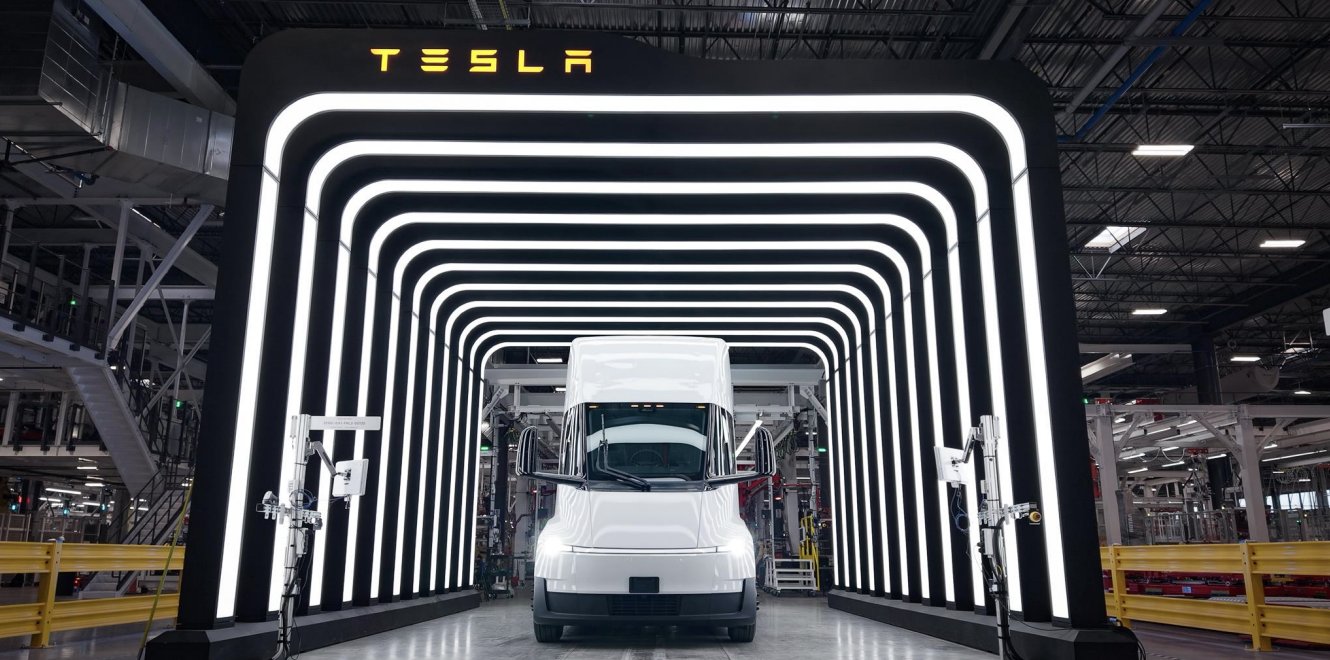
During Wednesday’s’ Tesla Q2 earnings call, an analyst asked Elon Musk when Tesla would look at autonomy for the Semi. His answer set a real timeline for the first time, noting that self-driving on the Tesla Semi is expected to start working “around the end of this year or early next year”.
Musk framed the delay as a matter of priority, not capability. Tesla’s self-driving team is currently focused on Model 3, Model Y, and Cybercab, the vehicles that make up the overwhelming majority of Tesla’s fleet. Since Semi trucks on the road remain a small fraction of that total even after the recent Nevada factory ramp, Musk said it made more sense to keep the software team’s attention on what he called “the march of nines of safety” for the higher volume vehicles first. Autonomous Semi development is “taking a bit of a backseat for the next six months or so,” he said, before adding that it “will definitely be working next year and in time for the scale-up to high production of the Tesla Semi.”
Tesla Semi’s official battery capacity leaked by California regulators
The timeline lines up with what’s already been showing up on public roads. In June, a Tesla Semi was spotted in Sunnyvale wearing a full validation rig, the same rooftop sensor array Tesla mounts on vehicles ahead of an FSD milestone.
A second unit was seen near Fremont days later with a matching camera suite and lens washers. Separately, Tesla analyst Nic Cruz Patane posted video this month of the production Semi’s exterior camera array, ten AI4 based units built directly into the truck rather than added later.
Tesla Semi AI4 cameras. The production version has 10 cameras on its exterior.
These trucks are designed to be autonomous. pic.twitter.com/GH3BamxIBQ
— Nic Cruz Patane (@niccruzpatane) April 14, 2026
Musk also gave the reason autonomy on the Semi matters in the first place, a persistent shortage of qualified truck drivers. “There is a really serious shortage of truckers,” he said on the call, framing a self-driving Semi as important both for addressing that shortage and for improving safety and comfort for the drivers running the truck today.
The timing also tracks with the Semi’s production reality. Tesla’s Q2 shareholder letter, dropped language promising the Semi would reach volume production this year. Musk pointed to 4680 battery cell output as the near-term constraint on Semi and Cybercab production. A software timeline landing in early 2027 gives Tesla’s autonomy team room to work while the hardware ramp catches up behind it.
It’s worth nothing that this isn’t necessarily a promise the Semi ships driverless next year. Musk’s own language, self-driving “working” by early 2027, describes internal validation catching up to hardware already riding on every production truck, not a public unsupervised rollout.


Tesla (NASDAQ: TSLA) reported its earnings for the first quarter of 2026 on Wednesday afternoon. Here’s what the company reported compared to what Wall Street analysts expected.
The earnings results come after Tesla reported a massive beat on vehicle deliveries for the second quarter, delivering 489,126 vehicles and building 451,758 cars during the three-month span.
This was a major shock for those on Wall Street as they anticipated somewhere around 400,000 deliveries for the quarter, and showed Tesla still has plenty of demand for its vehicles around the world and in the U.S. despite losing the $7,500 EV Tax Credit last year.
Tesla Q2 2026 Earnings Results
- Non-GAAP EPS – $0.33 reported vs. $0.53 expected
- Revenues – $28.236 billion reported vs. $26.4 billion expected
- Free Cash Flow- -$1.092B
- Profit -$ 4.751B
Tesla (beat/missed) analyst expectations, so the market response to the company’s quarter is what we will look for next.
Tesla shares closed today down just over 1 percent, trading at $374.01.
In the past, it has been anyone’s guess with what Tesla shares will do after they report earnings. Strong quarters have resulted in sharp drops, while lackluster quarters have seen the stock shoot up considerably.
Tesla will hold its Q2 2026 Earnings Call in about 90 minutes at 5:30 p.m. on the East Coast. Remarks will be made by CEO Elon Musk and other executives, who will shed some light on the investor questions that we covered earlier this week.
You can stream it below. Additionally, we will be doing our Live Blog on X and Facebook.
Q2 2026 Earnings Call https://t.co/zZS6ii2TWK
— Tesla (@Tesla) July 22, 2026
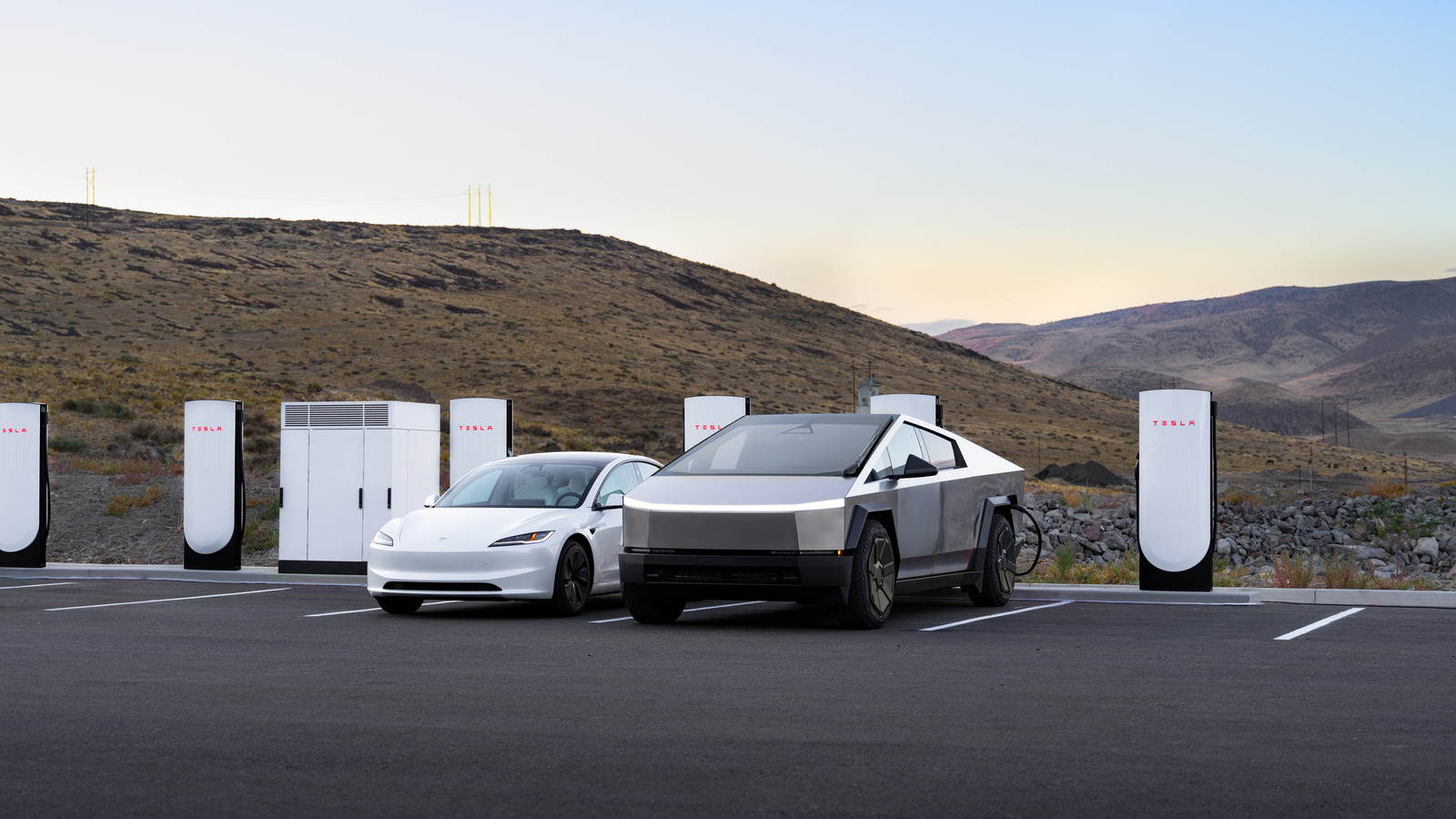
Tesla (NASDAQ: TSLA) will report its earnings for the second quarter of 2026 this evening after market close, and investors and analysts are waiting anxiously to see what the company will report for the second three-month span of the year.
Analysts have already put out their expectations from a financial standpoint for the company’s second quarter, but what’s unknown is what Tesla plans to discuss during the call.
Financial Expectations
Wall Street consensus expectations put Tesla’s Earnings Per Share (EPS) at $0.53, while revenues are expected to come in around $26.4 billion.
This would compare to an EPS of $0.39 and $22.19 billion compared to Tesla’s Q2 2025. Last quarter, EPS came in at $0.41 on $22.387 billion of revenue. Additionally in Q1, Tesla beat analyst expectations, but shares dropped over 3 percent the following trading day.
What We Expect
In terms of discussions, Tesla earnings are pretty sporadic and depend on a handful of things, including current events, investor questions, and more.
Tesla uses a platform called Say to field questions from investors and analysts. These questions are what will be used during the call. Here are the top 5 from the Retail side and top 3 from the Institutional side:
Retail:
“Tesla has missed short-term guidance on robotaxi 3 earnings reports in a row, from 50% coverage of USA by end of 2025 to most recently 7 new cities in 1H26. What is keeping Tesla back from accomplishing these short term goals that they’ve set for themselves?”
“What are the main constraints to expanding robotaxi operations faster, and how do you see that lining up with Cybercab production?”
“What’s the current status of Optimus Gen 3 production ramp, initial deployment in factories, and external sales timeline/volume for 2027? What tasks can we expect the Optimus to perform by end of 2027?”
“To reward long-term Tesla retail shareholders for their loyalty, can you commit to achieving at least half of the goals outlined in your 2025 compensation plan before considering any offers to acquire or merge Tesla?”
“Why has growth of robotaxi vehicles stalled? When will we see cybercab start customer rides?”
Institutional
“Previously, you’ve said Tesla would lead the R&D while SpaceX would lead production for Terafab. Can you provide an update on how that division of responsibilities is evolving, and any additional clarity on the expected capital contributions from Tesla and SpaceX?”
“For autonomous driving, Tesla’s fleet created a huge data advantage by collecting billions of real-world miles. That advantage doesn’t yet exist for Optimus. How should we think about data availability and its impact on Optimus development?”
“Why is it necessary to limit robotaxi operations within specific zones within cities to start? Will every city have to be rolled out this way?”
Tesla will report earnings for Q2 this evening with the Shareholder Deck at 4 p.m. ET, with the call starting around 5:30 p.m. ET.

Tesla’s switch-up on selling Full Self-Driving has paid off big time

Tesla Robotaxi’s slow rollout gets explanation from Elon Musk


