News
Xpeng CEO: Tesla FSD 14.2 has developed “near-Level 4” performance
While acknowledging that imperfections remain, the Xpeng CEO said FSD’s current iteration significantly surpasses last year’s capabilities.

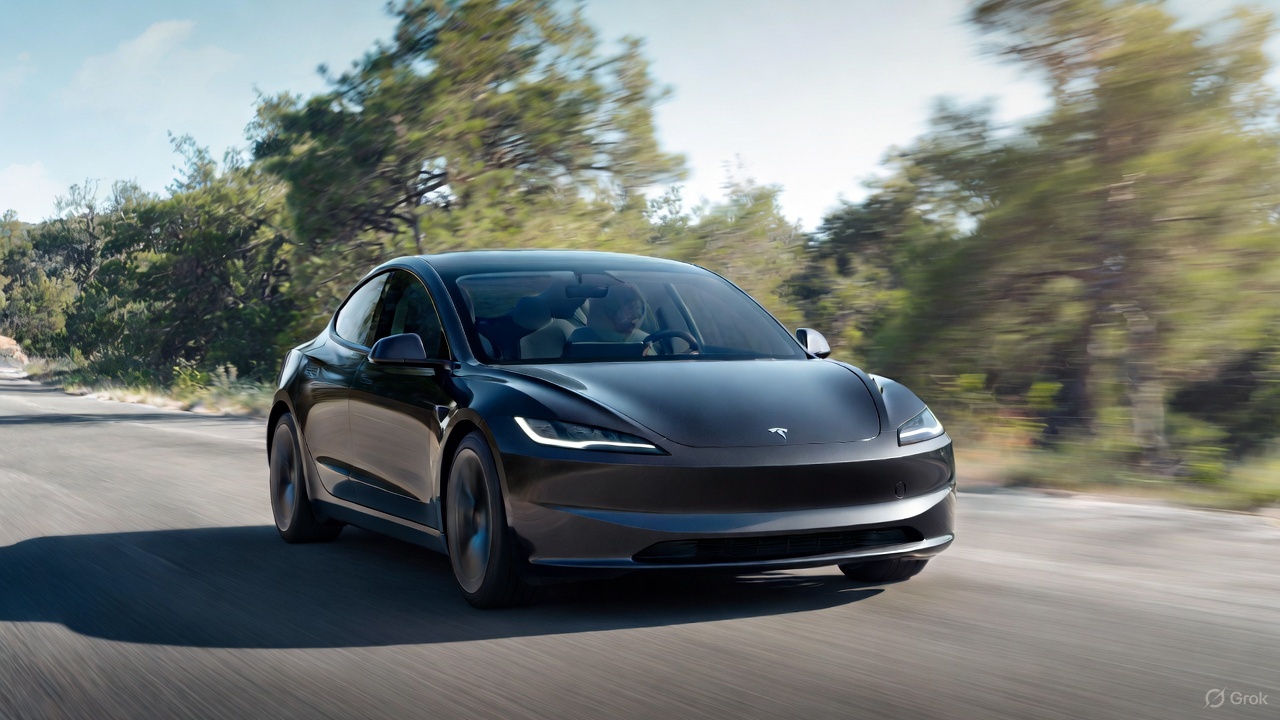
Xpeng CEO He Xiaopeng has offered fresh praise for Tesla’s Full Self-Driving (FSD) system after revisiting Silicon Valley more than a year after his first hands-on experience.
Following extended test drives of Tesla vehicles running the latest FSD software, He stated that the system has made major strides, reinforcing his view that Tesla’s approach to autonomy is indeed the proper path towards autonomy.
Tesla FSD closing in on Level 4 driving
During his visit, He test-drove a Tesla equipped with FSD V14.2. He also rode in a Tesla Robotaxi. Over roughly five hours of driving across Silicon Valley and San Francisco, He said both vehicles delivered consistent and reassuring performance, a notable improvement from his experience a year earlier.
According to He, Tesla’s FSD has evolved from a smooth Level 2 advanced driver assistance system into what he described as a “near-Level 4” experience in terms of capabilities. While acknowledging that imperfections remain, the Xpeng CEO said FSD’s current iteration significantly surpasses last year’s capabilities. He also reiterated his belief that Tesla’s strategy of using the same autonomous software and hardware architecture across private vehicles and robotaxis is the right long-term approach, allowing users to bypass intermediate autonomy stages and move closer to Level 4 functionality.
He previously tested Tesla’s FSD V12.3.6 and Waymo vehicles in California in mid-2024, noting at the time that Waymo performed better in dense urban environments like San Francisco, while Tesla excelled in Silicon Valley and on highways.
Xpeng’s ambitious autonomy roadmap and internal challenge
The Silicon Valley visit also served as a benchmark for Xpeng’s own autonomy ambitions. He stated that Xpeng is looking to improve its VLA autonomous driving system to match the performance of Tesla’s FSD V14.2 within China by August 30, 2026. Xpeng is poised to release its VLA 2.0 smart driving software next quarter, though He cautioned that the initial version will not be able to match FSD V14.2’s capabilities, as noted in a CNEV Post report.
He also added a personal twist to the goal, publicly challenging Xpeng’s autonomous driving team. If the performance target is met by the 2026 deadline, the CEO stated that he will approve the creation of a Chinese-style cafeteria for Xpeng’s Silicon Valley team. If not, Liu Xianming, head of Xpeng’s autonomous driving unit, has pledged to run naked across the Golden Gate Bridge, He noted.


News
Tesla makes major rebound in European market with 4x in registrations
Tesla delivered a striking performance in Germany’s automotive market in March 2026, with new vehicle registrations more than quadrupling year-over-year, according to official data from the German Federal Motor Transport Authority (KBA).

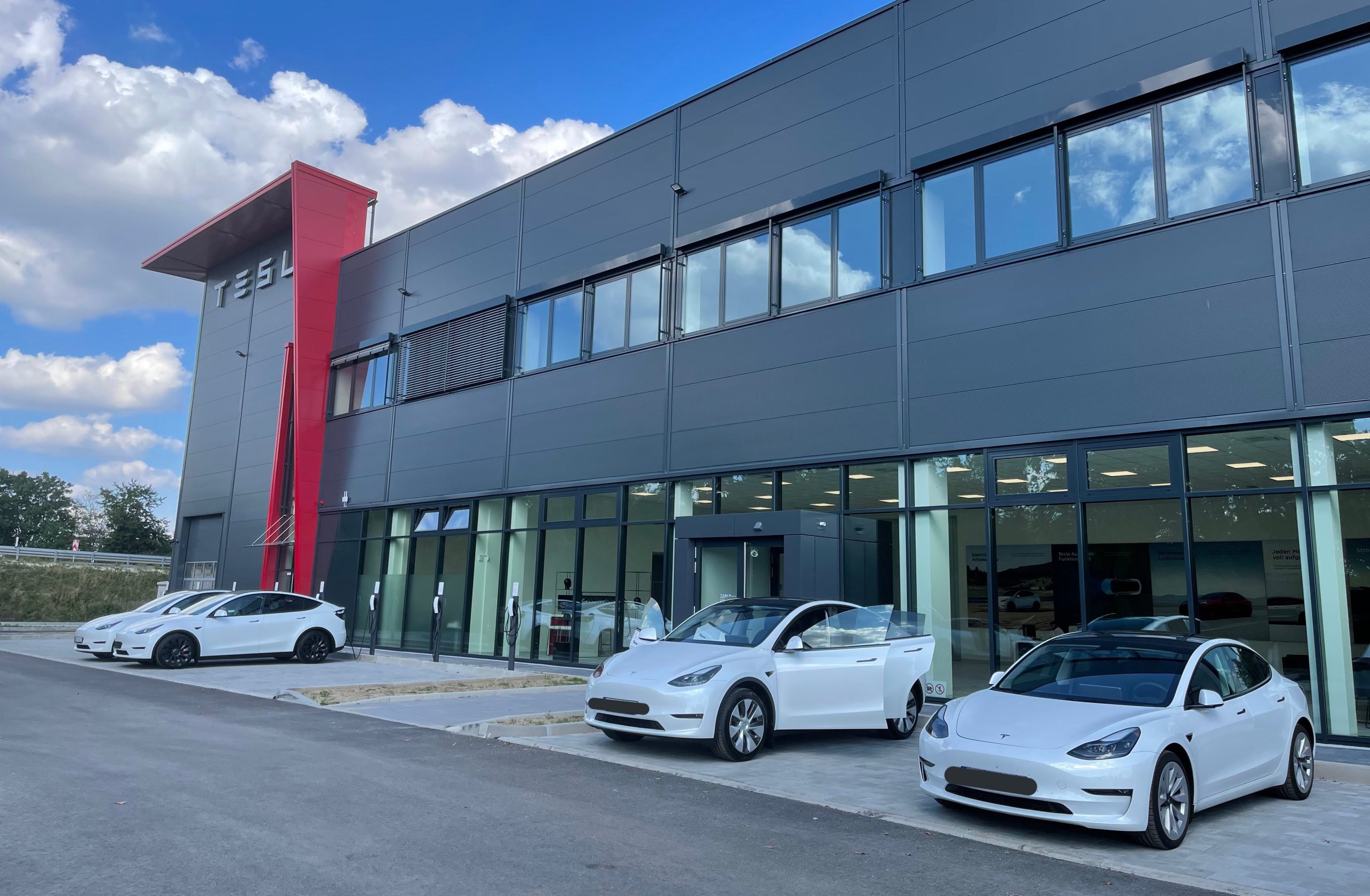
Tesla headlines will have you believe the company is dead to rights in Germany, selling nearly no cars, and stating consumers are more interested in other brands not run by CEO Elon Musk.
However, the latest data from Germany proves this might be a dying narrative.
Tesla delivered a striking performance in Germany’s automotive market in March 2026, with new vehicle registrations more than quadrupling year-over-year, according to official data from the German Federal Motor Transport Authority (KBA).
Newly registered Tesla vehicles jumped 315.1 percent to 9,252 units, marking the company’s strongest March on record in the country and signaling a sharp rebound after earlier challenges in the European market.
A big 4x from Tesla in Germany in March in vehicle registrations
Don’t let anyone tell you Tesla is dead in Europe https://t.co/24hyus1xTF pic.twitter.com/205yPwncRv
— TESLARATI (@Teslarati) April 7, 2026
The March surge accounted for roughly 72 percent of Tesla’s first-quarter total in Germany. Q1 registrations reached 12,829 vehicles, a 160 percent increase from the same period a year earlier. For context, the implied March 2025 figure was approximately 2,229 units—one of the brand’s weaker months in recent years.
These numbers underscore Tesla’s ability to capitalize on renewed demand in Europe’s largest car market, where the company had faced softening sales throughout much of 2025 amid heightened competition and broader economic pressures.
Germany’s overall new passenger car market also expanded in March, with 294,161 registrations—a 16 percent rise from the prior year. Battery-electric vehicles (BEVs) performed even more robustly, climbing 66.2 percent to 70,663 units and representing about 24 percent of all new car registrations.
Tesla’s 9,252 deliveries captured approximately 13.1 percent of the BEV segment for the month and roughly 3.1 percent of the total new car market, highlighting its continued leadership among pure-play electric brands despite growing competition from both domestic German manufacturers and Chinese entrants like BYD, which saw its own registrations surge 327.1 percent to 3,438 units.
The strong showing comes as Germany’s EV incentives and infrastructure investments continue to support adoption. Tesla’s lineup, anchored by the Model Y and Model 3, appears to have resonated with buyers seeking premium electric options.
Industry observers note that the concentrated March registrations, accounting for the bulk of the quarter, may reflect strategic inventory management, competitive pricing adjustments, or pent-up demand following a slower start to 2026.
This performance provides a much-needed bright spot for Tesla in Europe, where the brand had seen market share erosion in prior periods.
Tesla Model Y outsells all EV rivals in Europe in 2025 despite headwinds
With Q1 2026 registrations up significantly, Tesla has demonstrated resilience in a market that registered 699,404 new passenger cars for the quarter, up 5.2 percent overall. As the year progresses, sustained momentum in Germany could bolster Tesla’s European outlook, particularly if broader BEV growth persists amid evolving policy support and technological advancements.
The March 2026 data from the KBA paints a picture of Tesla’s renewed strength in Germany: a fourfold monthly leap, record quarterly gains, and a solid foothold in an expanding EV segment.
Whether this marks the beginning of a sustained recovery or a seasonal peak remains to be seen, but the numbers affirm Tesla’s enduring appeal in one of the world’s most competitive automotive landscapes.
Elon Musk
Elon Musk reveals unfortunate truth of Tesla Full Self-Driving development
In a candid reply to a dramatic video of Tesla’s Full Self-Driving (FSD) system averting disaster, Elon Musk laid bare a harsh reality facing autonomous vehicle technology.
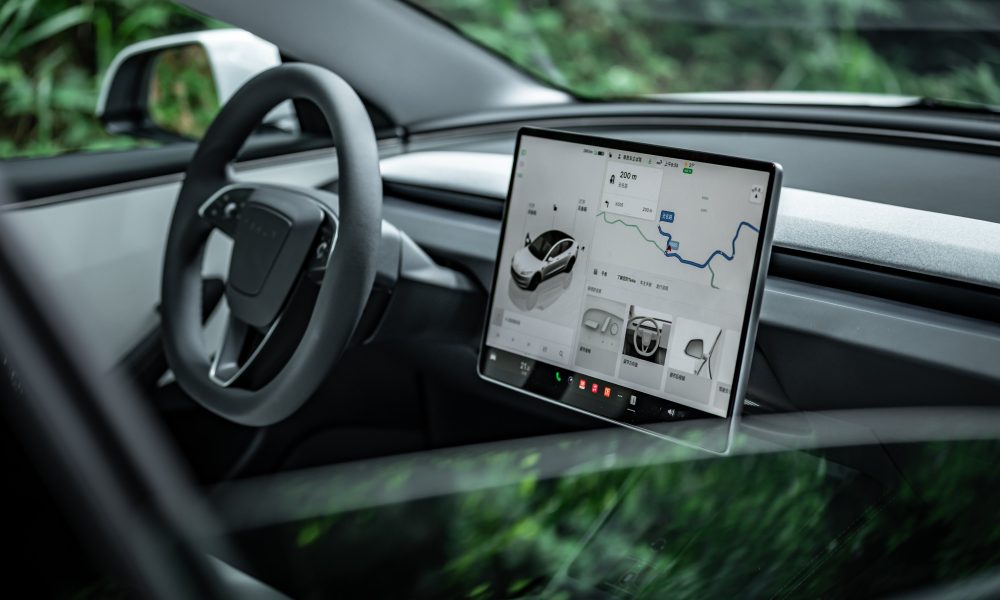
Tesla’s Full Self-Driving suite is one of the most significant technological developments in terms of passenger travel in decades, but it is not all sunshine and rainbows, even with major strides in safety, CEO Elon Musk revealed.
In a candid reply to a dramatic video of Tesla’s Full Self-Driving (FSD) system averting disaster, Elon Musk laid bare a harsh reality facing autonomous vehicle technology.
The clip shows a Model 3 traveling at over 65 mph on a foggy, rain-soaked highway when a pedestrian suddenly steps into traffic.
Full Self-Driving instantly detects the threat and swerves safely, preventing what could have been a fatal collision for both the pedestrian and the driver’s cousin.
Musk’s response was unequivocal:
“Tesla self-driving saves a lot of lives – the statistics are unequivocal. That doesn’t mean it’s perfect, of course.” Even with a projected 10x safety improvement over human drivers, FSD would still prevent roughly 90% of the world’s approximately one million annual auto fatalities. The remaining 10%—roughly 100,000 deaths—would expose Tesla to relentless lawsuits. Meanwhile, the vast majority of lives saved would go unnoticed. “The 90% who are still alive mostly won’t even know that Tesla saved them. Nonetheless, it is the right thing to do.”
This “unfortunate truth,” as Musk implicitly framed it, highlights a fundamental asymmetry in how society perceives safety technology. Human drivers cause the overwhelming majority of crashes through distraction, fatigue, or error.
Tesla self-driving saves a lot of lives – the statistics are unequivocal.
That doesn’t mean it’s perfect, of course.
Even when we improve safety 10X, saving 90% of the million lives lost in auto accidents every year, Tesla will still get sued for the 10% who did die. The 90%… https://t.co/OrNB1mO5eF
— Elon Musk (@elonmusk) April 6, 2026
Yet when FSD errs, the incident becomes headline news and a courtroom target. Prevented tragedies, by contrast, leave no trace.
Survivors simply continue their journeys, unaware of the split-second intervention that kept them alive. The result is a distorted public narrative that amplifies failures while rendering successes invisible.
We have seen this through various headlines throughout the years, including the mainstream media’s obsession with only mentioning the manufacturer’s name in the instance of an accident when it is “Tesla.”
Opinion: Tesla Autopilot NHTSA investigation headlines are out of control
The video’s real-world example underscores FSD’s current capabilities. In near-zero visibility, the system’s cameras and neural network reacted faster than any human could, demonstrating the life-saving potential Musk cites.
Tesla’s latest safety data already shows FSD (Supervised) performing significantly better than the U.S. average, with crashes occurring far less frequently per mile driven.
Still, regulatory scrutiny, liability concerns, and media focus on edge-case failures continue to slow widespread adoption. Musk’s frank admission suggests Tesla is prepared to push forward despite the legal and perceptual headwinds.
As FSD edges closer to unsupervised autonomy, Musk’s post serves as both a progress report and a reality check. The technology is already saving lives today.
The unfortunate truth is that proving it and scaling it responsibly will require society to value statistical lives saved as much as dramatic stories of those lost. In the race toward safer roads, perception may prove as formidable an obstacle as the fog and rain in that viral video.
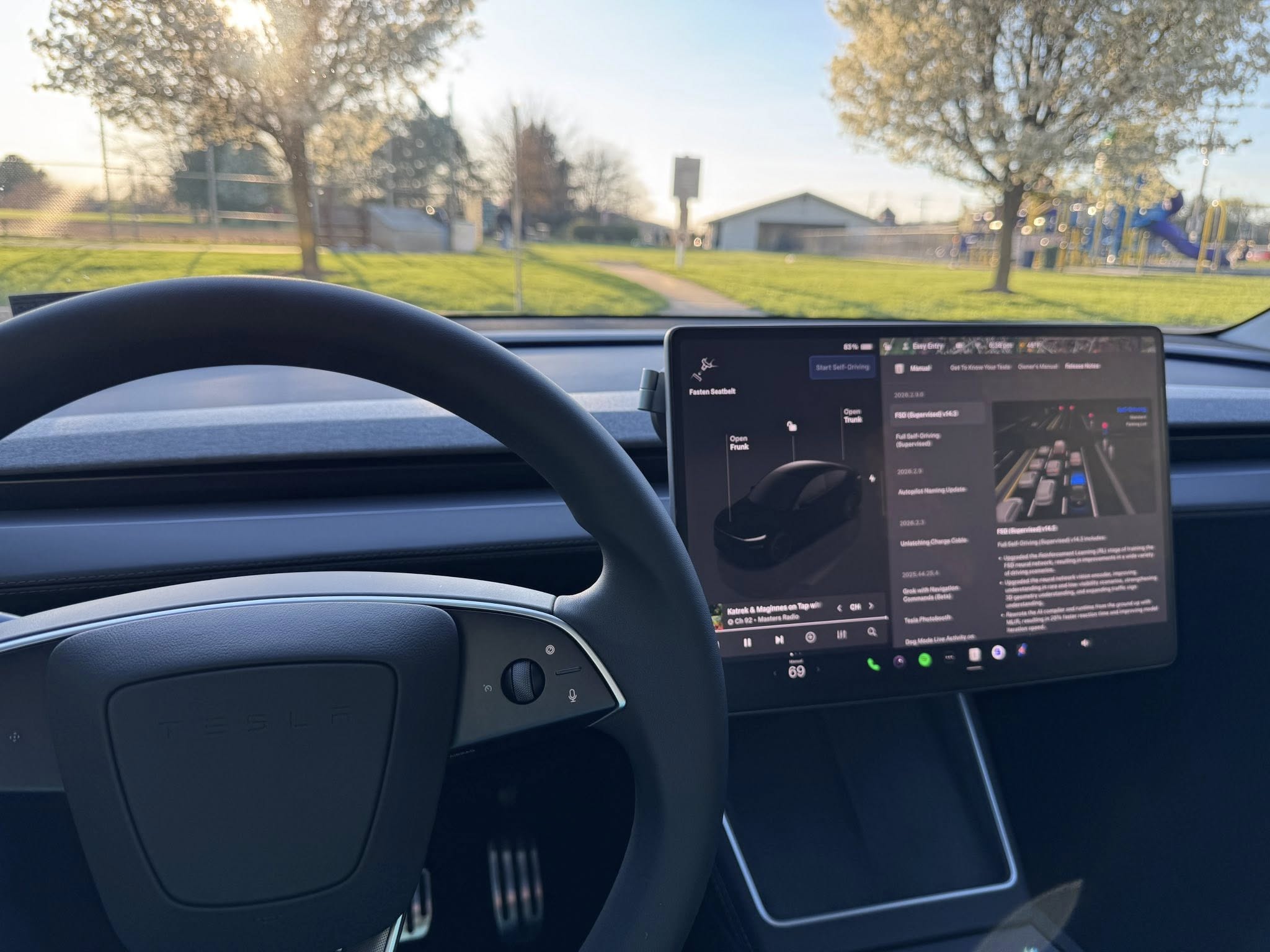
Tesla started rolling out Full Self-Driving v14.3 to Early Access Program (EAP) members earlier today, and I had the opportunity to see some of the improvements that were made from v14.2.2.5.
While a lot of things got better, and I truly enjoyed using Full Self-Driving again after being stuck with the widely confusing and frustrating v14.2.2.5, Tesla still has one major problem on its hands, and it has to do with Navigation and Routing. I truly believe those issues will be the biggest challenges Tesla will face with autonomy: the car simply going the correct way, not conflicting with what the navigation says, and taking the simplest and most ideal route to a destination.
Here’s what I noticed as an improvement with my first hour with v14.3. This is not a full review, nor is it reflective of everything I will likely experience with this new version. This is simply what I saw as a noticeable improvement from the past version, v14.2.2.5.
There is also a more streamlined version on X, available at the thread below:
Tesla Full Self-Driving v14.3 testing now: pic.twitter.com/9UuP11Fv9f
— TESLARATI (@Teslarati) April 7, 2026
Yellow Light Behavior is Significantly Better
On v14.2.2.5, I had so many instances of the car slamming the brakes on to stop at a yellow light when it was clearly the safer option to proceed through. There were several times when the car would be about 20 feet from the line, traveling at 15-20 MPH, the light would turn yellow, and it would slam the brakes to stop. I would nudge it through yellow lights constantly because of this by putting my foot on the accelerator.
The instances I’m talking about here would not have been close calls — the car would have likely moved through the intersection completely before the light would turn red.
On multiple occasions this evening, FSD proceeded through yellow lights safely, without hesitation or any brake stabbing. It was refreshing:
🚨 Here’s an EXCELLENT example:
v14.2.2.5 would have slammed the brakes and stopped at this stop sign. I would have tapped the accelerator to proceed.You can see the light turns yellow and the car makes — in my opinion — the correct decision to proceed. https://t.co/hHMikimkbp pic.twitter.com/Iesta1OYoV
— TESLARATI (@Teslarati) April 7, 2026
This was a huge complaint with v14.2.2.5. Sometimes, it’s a safer option to go through a yellow light, especially when you have traffic behind you. It’s a great way to get rear-ended.
Parking Performance
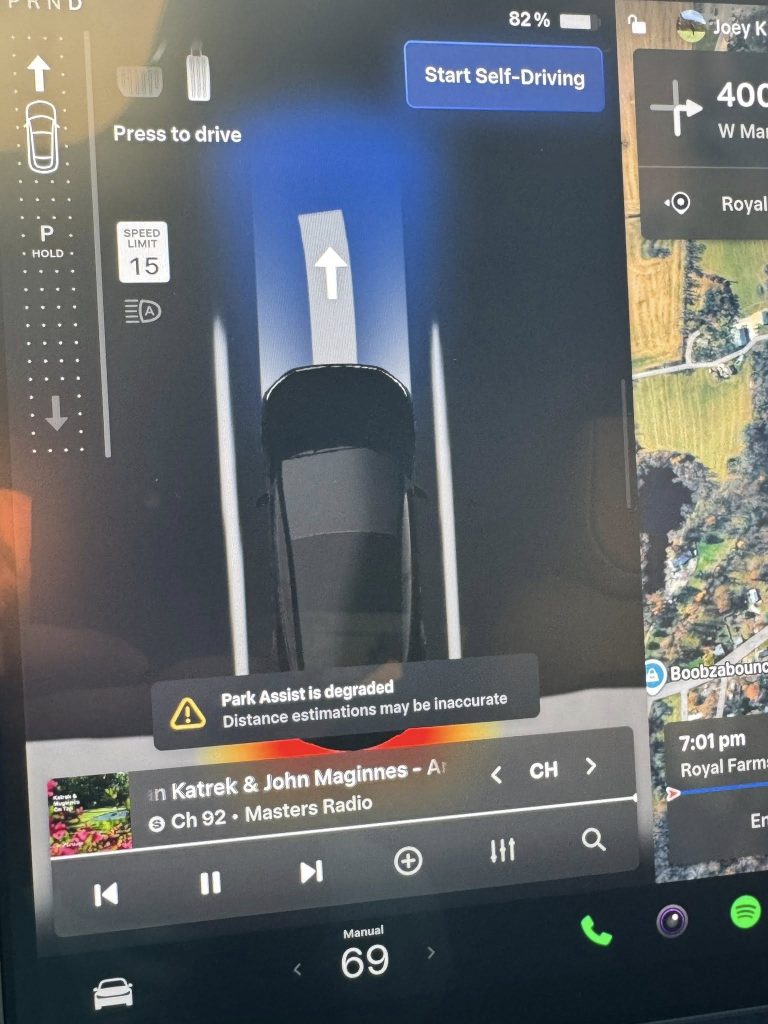
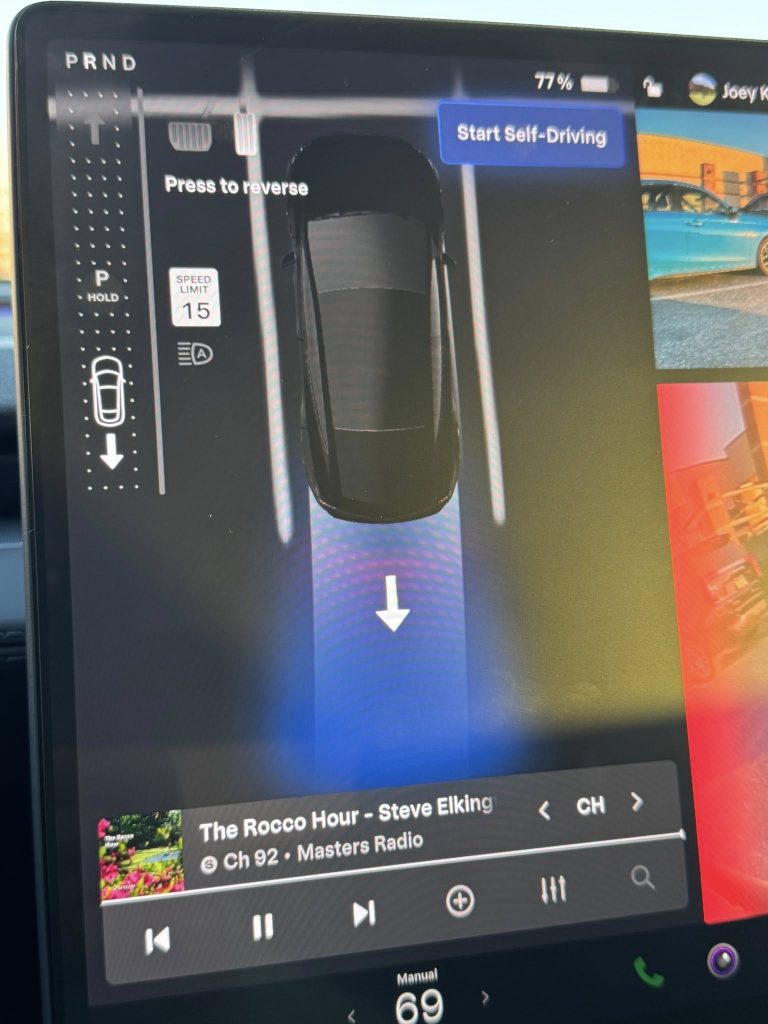
I had four instances of parking, and FSD v14.3 really did a flawless job. I was very impressed with how solid it was, but also with how efficiently it moved into the spot. When there was traffic around with past versions, I usually chose to park manually just because FSD took its time getting into a spot. I don’t see that being an issue anymore.
I complained about parking a lot and shared several images on X and Facebook of those examples:
Still a few issues with parking on FSD v14.2.2.4 pic.twitter.com/BphvVWDPqe
— TESLARATI (@Teslarati) February 5, 2026
No issues with it this evening. 4/4. Here are two looks:
Highway Performance
FSD v14.3 passed the five cars shown in this image:
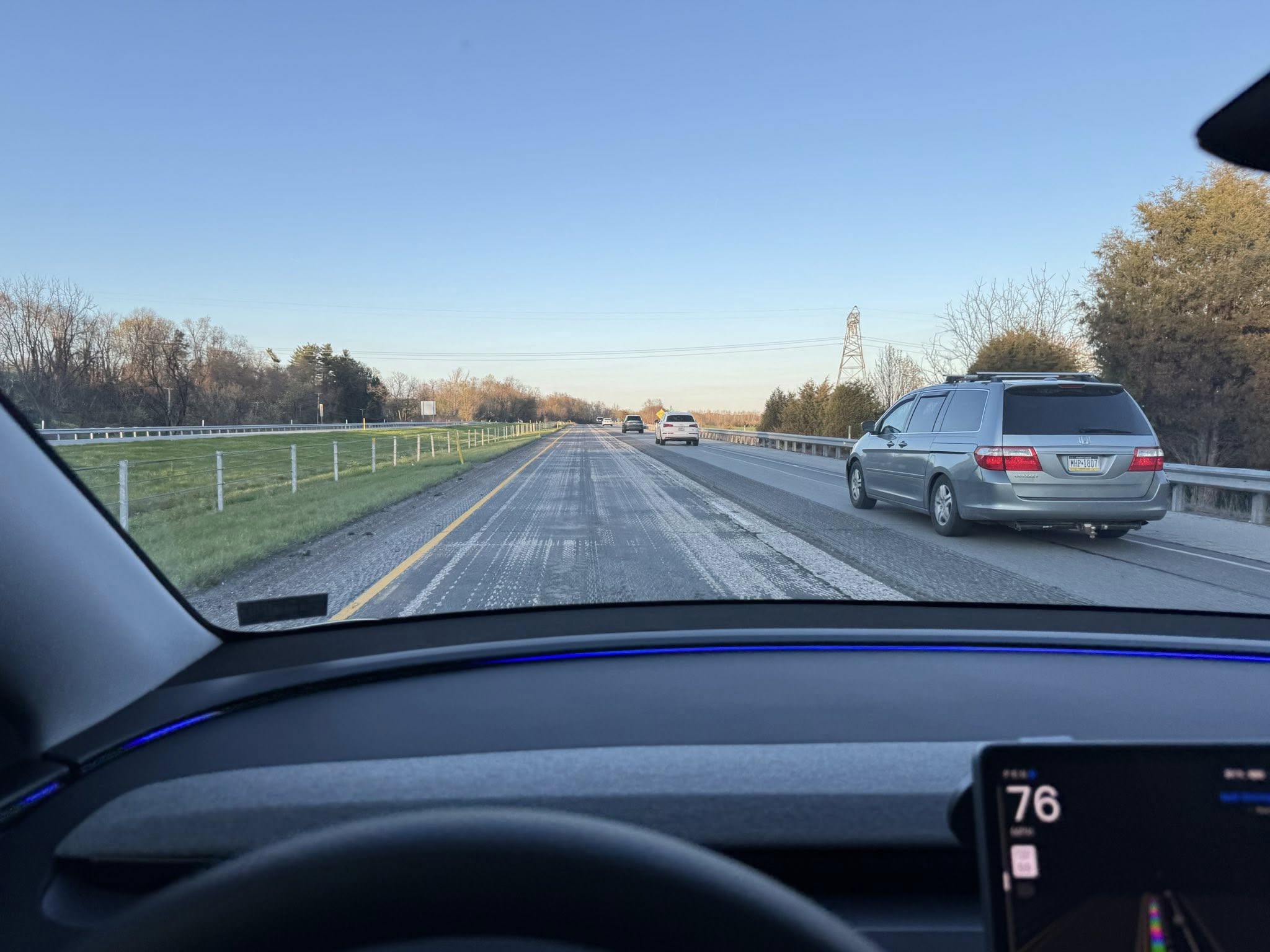
The sixth was 200-300 yards ahead of the fifth. In v14.2.2.5, FSD would usually stay in the left lane, especially on Hurry and Mad Max. It did not do that, as it instead chose to get back over in the right lane after passing the final car.
Speed was not much of a concern here, even though it was going 21 MPH over. Although it was fast, I did have a line of cars behind me traveling at the same speed, and FSD had just merged about a half mile prior, so I chose to let it continue.
There were no instances of camping in the left lane for extended periods of time. I do want to do more testing with the Speed Profiles because they were in need of some work with the previous version. I am starting to side with those who want a Max Speed setting, which was removed last year.
Navigation and Routing Still Need Work
I was heading back toward where I came from, so I turned “Avoid Highways” on to take a different way. This confused the Routing system, and instead of turning left, then right, as the Routing said, the car turned right, then indicated for another right, basically going in a big rectangle. The car ignored the second right-hand turn and continued straight. I ended up turning “Avoid Highways” off and letting the car pick the same routing option as what took me here.
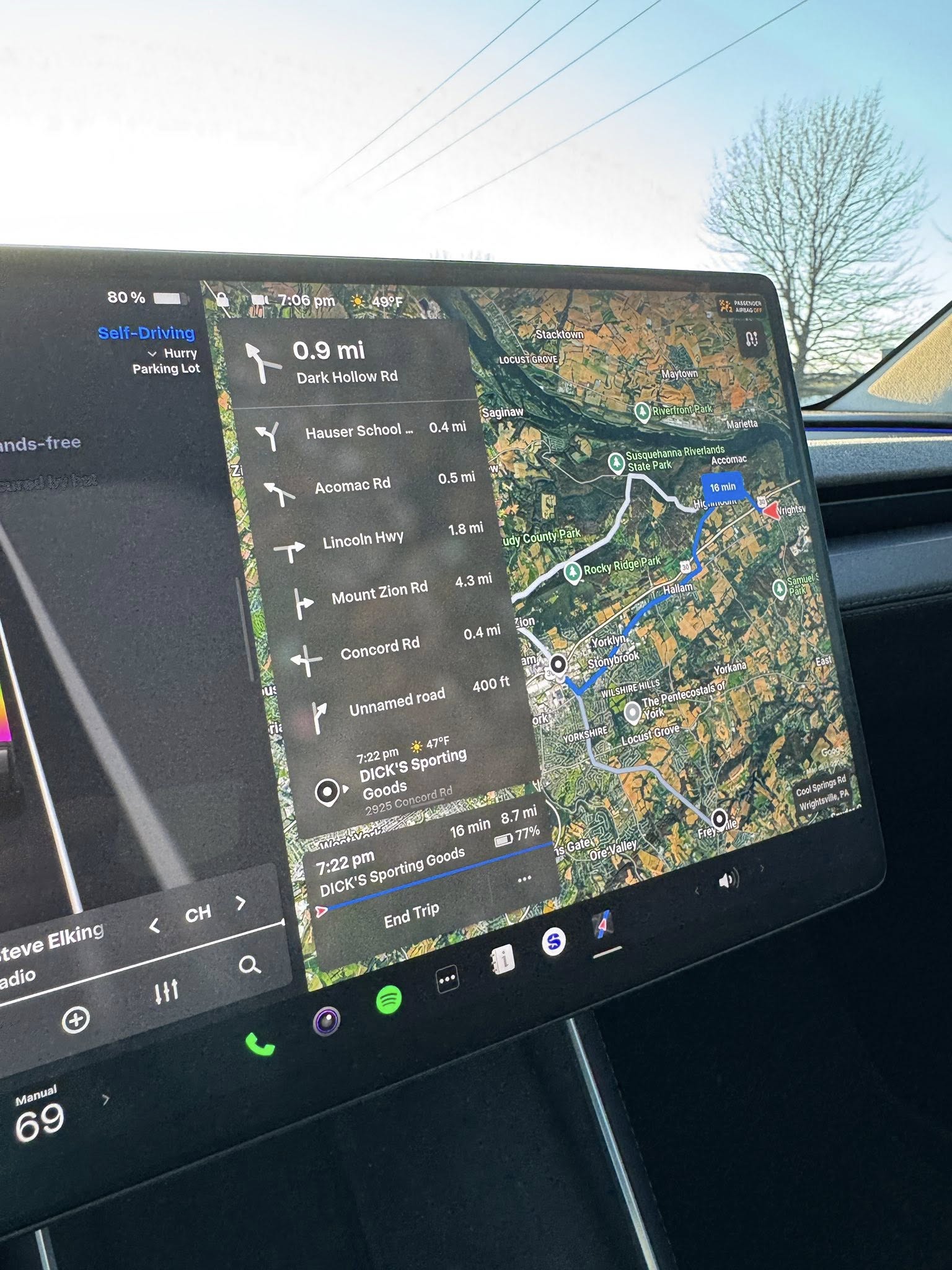
I have truly complained so much about Navigation and Routing that I’m starting to feel sort of bad. It is obviously such a massive challenge for some reason, but I am confident it will improve. I recall seeing Tesla hiring someone for this role a few months back, so perhaps there is hope for it to get better.
Smarter Behavior When Approaching Exits/Routing
This probably should be grouped in with Highway Behavior, but I wanted to highlight it on its own.
The highway exit pictured was always frustrating for v14.2.2.5. In the Hurry speed profile, I have seen it try to execute passes on multiple cars with as little as 0.6 miles to spare before taking the exit.
With three cars ahead of it, it chose to reduce speed and just wait until the exit. It was refreshing to see an improvement here, so I hope this behavior persists. Sometimes there’s just no reason to pass when you’re less than a mile from getting off the highway anyway.
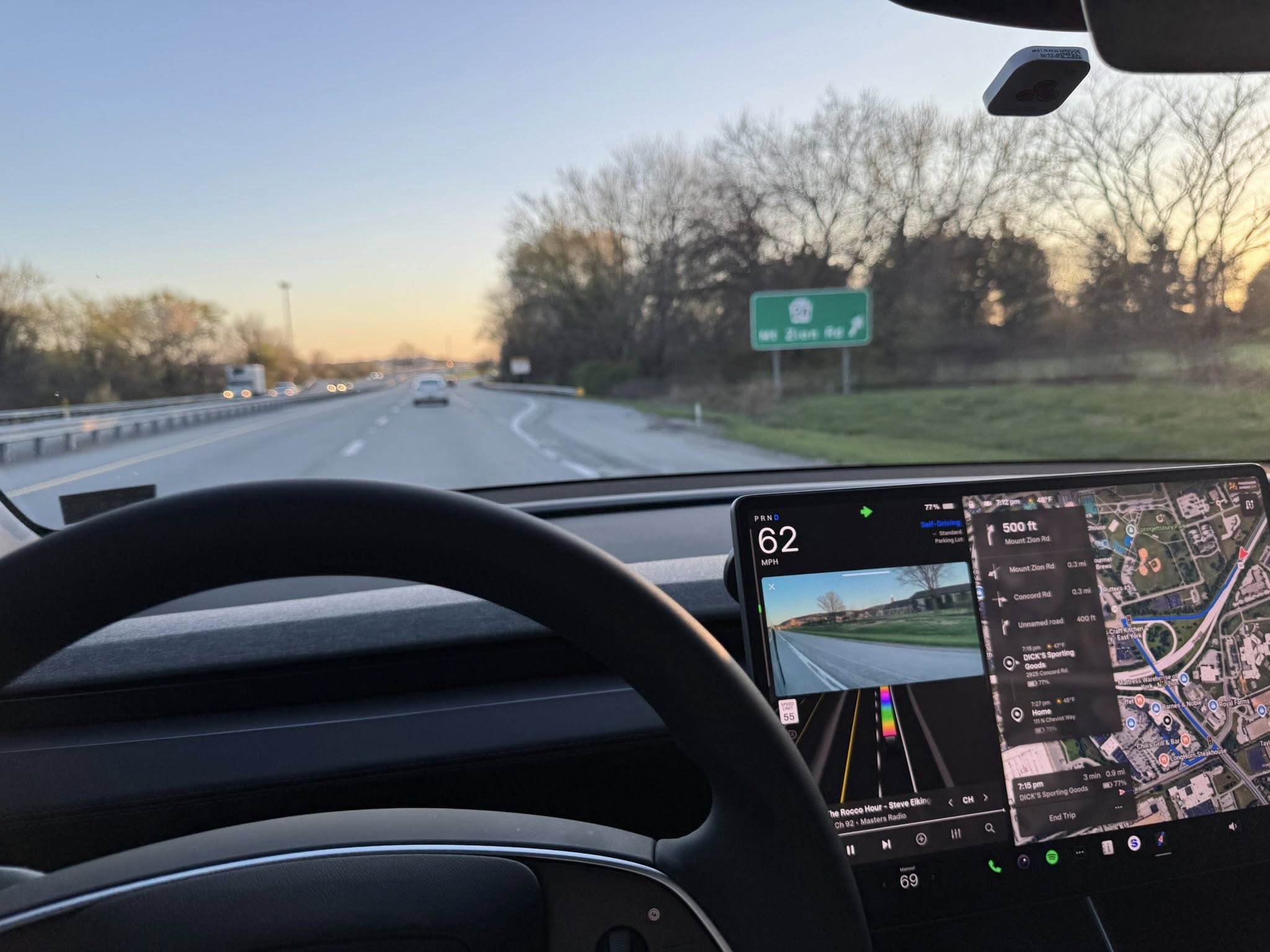
Larger Visibility Warnings
Tesla seems to have increased the size of these “Camera Visibility Limited” warnings. Previously, they were just small thumbnails:
🚨 The warnings of “Camera Visibility Limited” appear to be larger with v14.3
Previously, it was a small thumbnail. Haven’t seen it this magnified before. https://t.co/iKJLsZ8P4Q pic.twitter.com/qRWwFyIZNd— TESLARATI (@Teslarati) April 7, 2026
Stop Sign Behavior
This is probably the biggest improvement of all, because how it behaved at Stop Signs in v14.2.2.5 was so incredibly terrible and disruptive to the flow of a busy intersection.
There are several four-way, all-stop intersections near me. In the past, FSD would stop well behind the Stop Sign or the white-painted line on the road. It would then inch forward, stopping again at this line, essentially making two stops at a single intersection.
If there is visibility, I don’t truly care where FSD stops, as long as it stops once. Stopping twice just isn’t ideal or logical. I can’t imagine many humans would do it, I know I wouldn’t.
I didn’t have that issue this evening:
🚨 Here’s a look with some commentary – Previously, FSD would stop where it did in this video, then again at the white line, before proceeding. https://t.co/xwyVGMy28y pic.twitter.com/MObgUa7DoA
— TESLARATI (@Teslarati) April 7, 2026
This was pretty tight, too, in the sense that both my car and the other one got to the intersection at the same time. FSD may have stopped first, but the other vehicle was probably around the same point that I was when FSD decided to stop. I was happy to see the assertiveness to proceed; it felt like it was ideal to just go through. I was happy it didn’t stop a second time up at the line. I’d be fine if it stopped at the line, as long as that was the only stop it made.

Tesla makes major rebound in European market with 4x in registrations

Elon Musk reveals unfortunate truth of Tesla Full Self-Driving development


