SpaceX
Pilot captures amazing footage of SpaceX Falcon 9 liftoff, from the sky

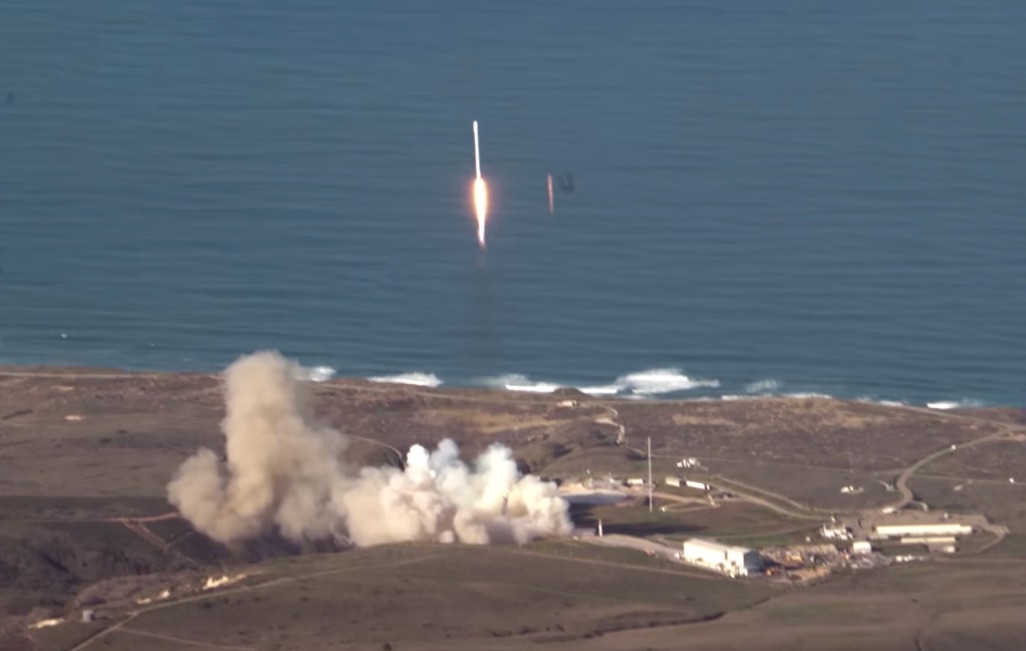
A new video making its rounds over the internet provides a rare aerial look, from an overhead vantage point, of SpaceX’s Falcon 9 lifting off from its launchpad at the Vandenberg Air Force Base. The video, posted to YouTube by Amir Blachman, shows him and two of his buddies departing Santa Monica airport in a small four passenger plane to celebrate SpaceX’s return to flight from Lompoc, California.
“We’re going to fly up to Vandenberg and watch the launch from the air” says Blachman in his video. The trio would ultimately fly 150 miles north before reaching the nearby site of SpaceX’s launch pad. The pilot of the small airplane was flying at a low altitude of 8,500 feet and outside of the air force base’s no-fly-zone, says Mashable.
We were there to witness SpaceX’s much anticipated return to flight this past Saturday. Amid dozens of SpaceX employees and fans lining a public street not too far from the launch site, silence fell on the crowd as all eyes gazed at Falcon 9 lifting off from the air base. Blachman’s video provides another angle of view for this flight, which we think looks absolutely stunning.


Elon Musk
SpaceX to launch military missile tracking satellites through new Space Force contract
SpaceX wins a $178.5M Space Force contract to launch missile tracking satellites starting in 2027.
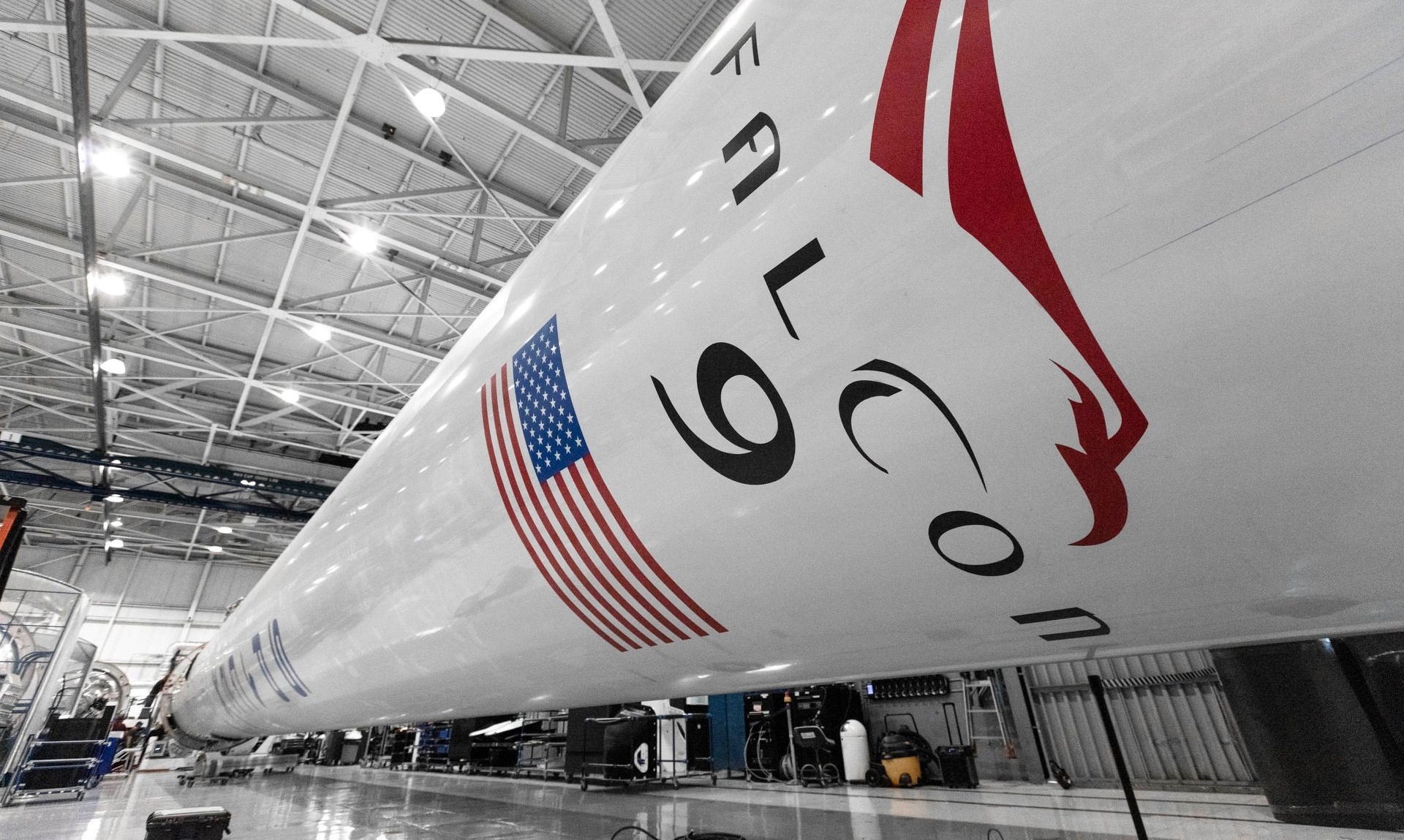
The U.S. Space Force awarded SpaceX a $178.5 million task order on April 1, 2026 to launch missile tracking satellites for the Space Development Agency. The contract, designated SDA-4, covers two Falcon 9 launches beginning in Q3 2027, one from Cape Canaveral Space Force Station in Florida and one from Vandenberg Space Force Base in California. The satellites, built by Sierra Space, are designed to bolster the nation’s ability to detect and track missile threats from orbit.
The award falls under the National Security Space Launch Phase 3 Lane 1 program, which Space Force uses to move payloads to orbit on faster timelines and at more competitive prices. “Our Lane 1 contract affords us the flexibility to deliver satellites for our customers, like SDA, more easily and faster than ever before to all the orbits our satellites need to reach,” said Col. Matt Flahive, SSC’s system program director for Launch Acquisition, in the official press release.
SpaceX is quietly becoming the U.S. Military’s only reliable rocket
The SDA-4 contract is the latest in a long string of national security wins for SpaceX. As Teslarati reported last month, the Space Force recently shifted a GPS III satellite launch from ULA’s Vulcan rocket to SpaceX’s Falcon 9 after a significant Vulcan booster anomaly grounded ULA’s military missions indefinitely. That move made it four consecutive GPS III satellites transferred to SpaceX after contracts were originally awarded to its competitor.
This didn’t come without a fight and dates back years. SpaceX originally had to sue the Air Force in 2014 for the right to compete for national security launches, at a time when United Launch Alliance held a near monopoly on the market. Since then, the company has steadily displaced ULA as the dominant provider, and last year the Space Force confirmed SpaceX would handle approximately 60 percent of all Phase 3 launches through 2032, worth close to $6 billion.
With missile defense satellites now part of its launch manifest alongside GPS, communications, and reconnaissance payloads, SpaceX is giving hungry investors something to chew on before its imminent IPO.
Elon Musk
SpaceX files confidentially for IPO that will rewrite the record books
SpaceX files confidentially for a record-breaking IPO targeting a $1.75T valuation and $80B raise, driven by Starlink growth and its xAI merger.
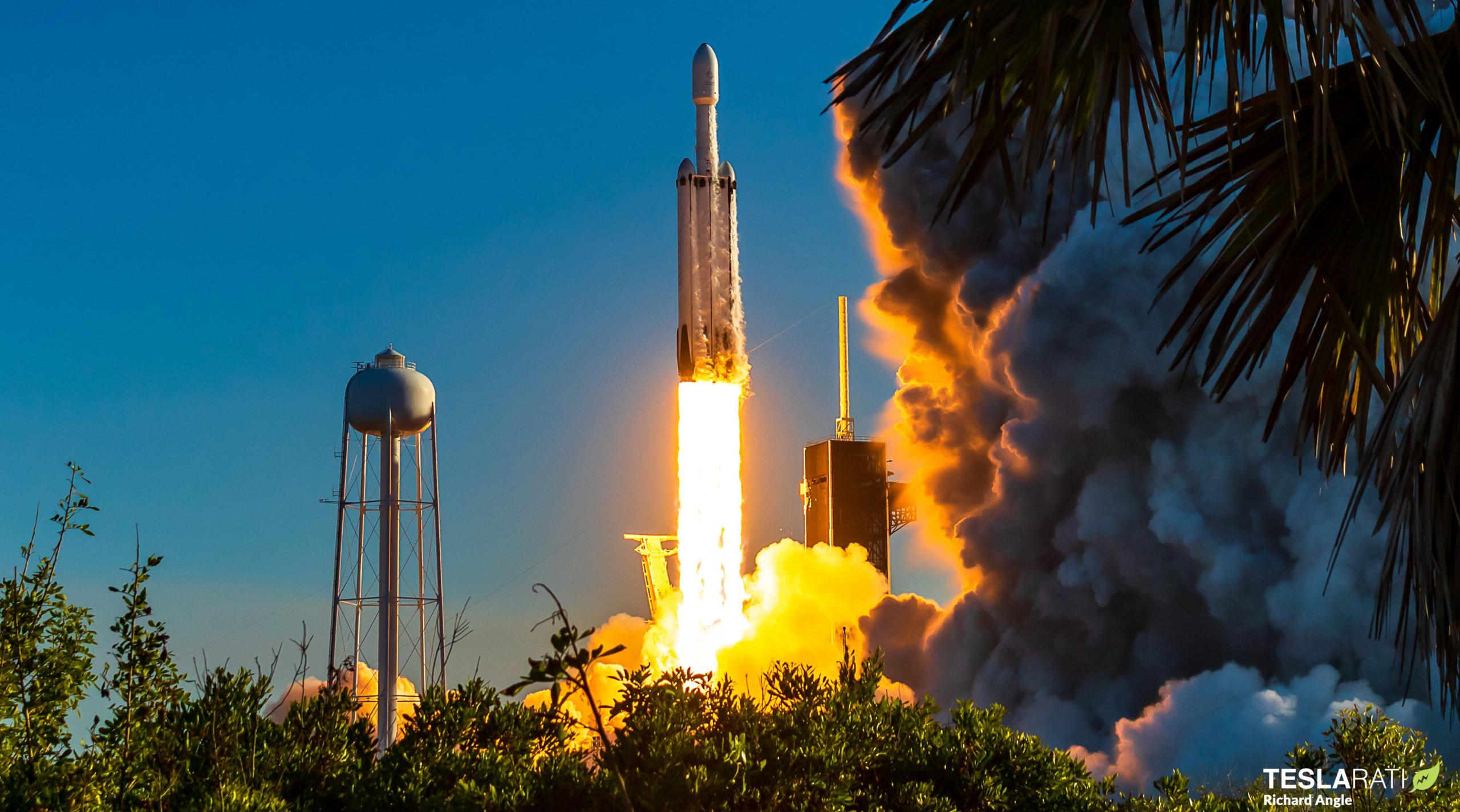
Elon Musk’s rocket and satellite company submitted its draft registration to the U.S. Securities and Exchange Commission today for an initial public offering, targeting June at a $1.75 trillion valuation. This would be the largest in history.
SpaceX has filed confidentially with the SEC, first reported by Bloomberg. SpaceX would be valued above every S&P 500 company except Nvidia, Apple, Alphabet, Microsoft, and Amazon.
The filing uses a confidential process that allows companies to work through SEC disclosures privately before initiating a public roadshow. With a June target, official details through a formal prospectus is expected to go public in April or early May, after which SpaceX must wait at least 15 days before beginning investor marketing.
While SpaceX is best known for its Falcon 9 and Starship rockets, the $1.75 trillion valuation is anchored by Starlink, its satellite internet service. Starlink ended 2025 with 9.2 million subscribers and over $10 billion in revenue, which is a figure analysts project could reach a staggering $24 billion by the end of 2026. A February all-stock merger with xAI, Musk’s artificial intelligence venture, further boosted the valuation.
SpaceX officially acquires xAI, merging rockets with AI expertise
Bank of America, Goldman Sachs, JPMorgan Chase, and Morgan Stanley are lined up as senior underwriters. SpaceX is also considering a dual-class share structure to preserve insider voting control, and plans to allocate up to 30% of shares to retail investors, which is roughly three times the typical norm.
Elon Musk
Countdown: America is going back to the Moon and SpaceX holds the key to what comes after
NASA’s Artemis II launches Wednesday, sending humans near the Moon for the first time since 1972.
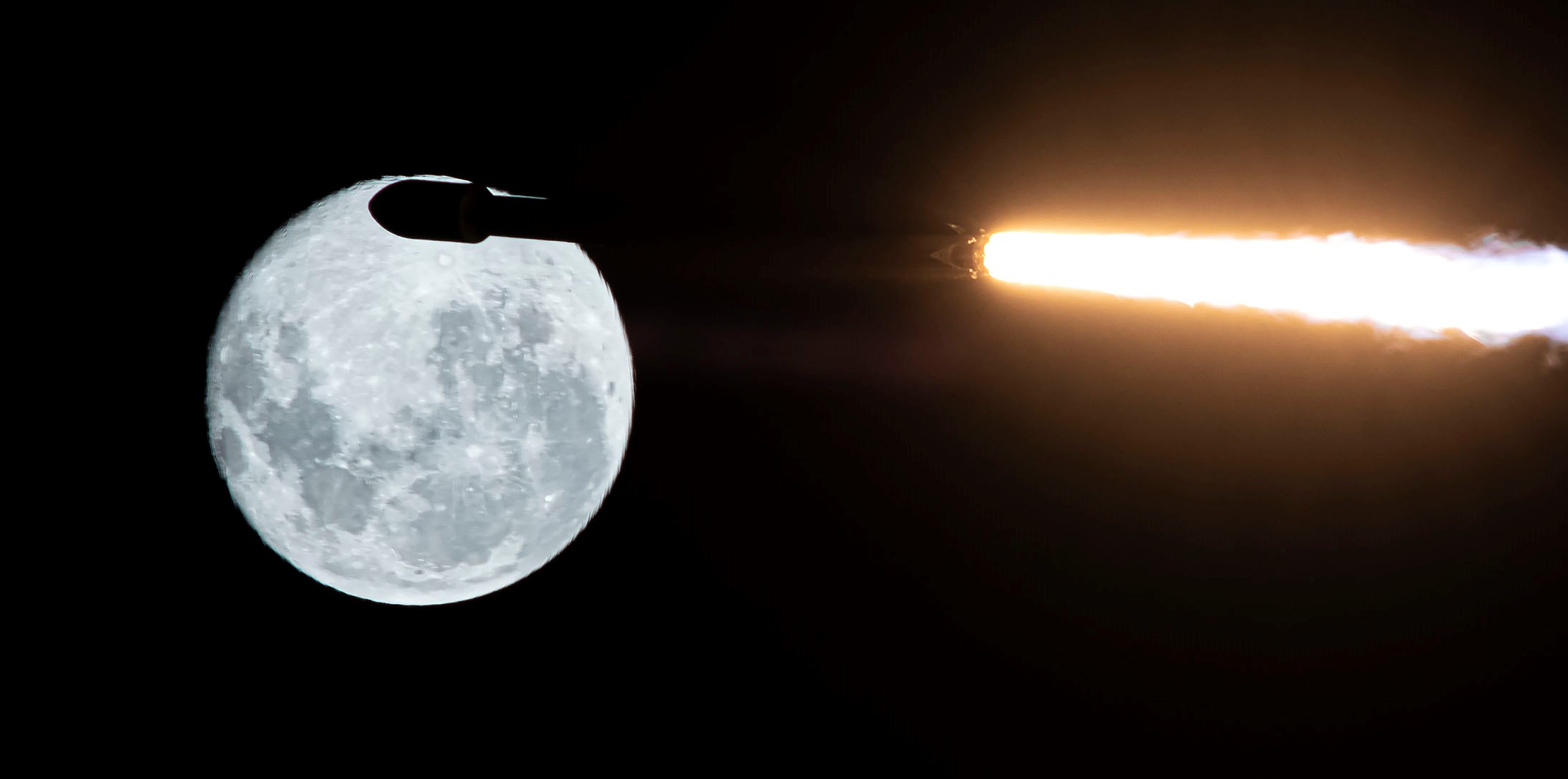
For the first time since Apollo 17 touched down on the lunar surface in December 1972, the United States is sending humans back toward the Moon. NASA’s Artemis II mission is set to launch as early as this week from Kennedy Space Center in Florida, carrying four astronauts on a 10-day journey around the Moon and back to Earth. It will not land anyone on the surface this time, but it is the first crewed flight in over half a century to travel beyond low Earth orbit, and it sets the stage for Elon Musk’s SpaceX missions to follow.
The mission uses NASA’s Space Launch System rocket and the Orion spacecraft, which will fly around the Moon before splashing down in the Pacific Ocean around April 10. For context, an uncrewed Artemis I flew the same path in 2022, proving the hardware worked. Artemis II now tests it with people aboard.
According to NASA’s official countdown blog, launch preparations are on track with an 80 percent chance of favorable weather. “Hey, let’s go to the moon!” Commander Wiseman told reporters upon arriving at Kennedy Space Center.
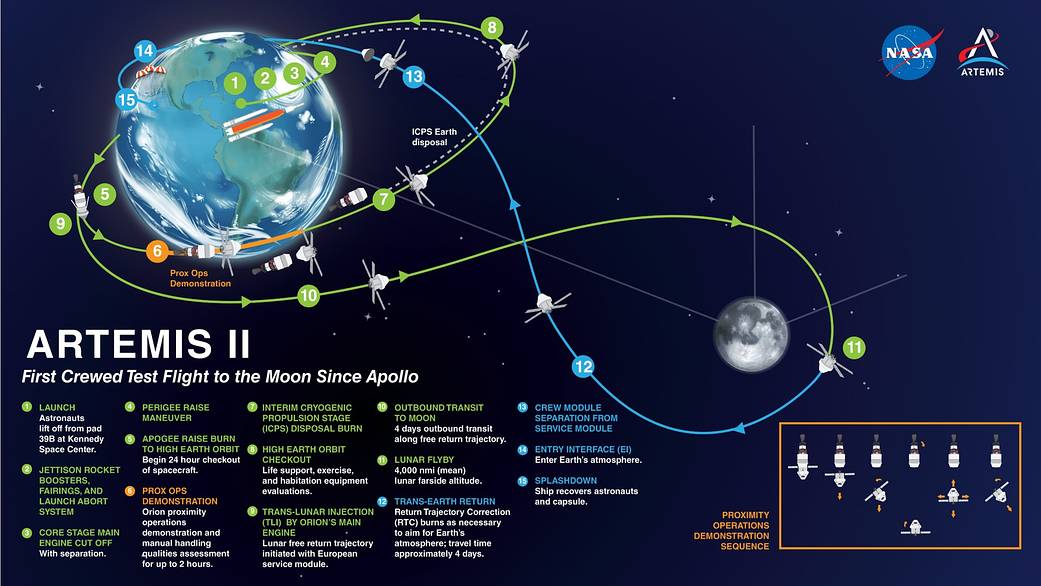
Source: NASA
Beyond Artemis II lies the lander question, and that is where SpaceX enters directly. In 2021, NASA awarded SpaceX a $2.89 billion contract to develop the Starship Human Landing System, a modified version of Starship designed to ferry astronauts from lunar orbit to the surface. The original plan called for SpaceX to deliver that lander for Artemis III, which was to be the first crewed lunar landing. Timing for Starship development, however, caused NASA to restructure the mission sequence entirely.
Before SpaceX’s Starship Human Landing System (HLS) can put anyone on the Moon, it has to solve a problem no rocket has demonstrated at scale, which is refueling in orbit. Because the Starship HLS requires approximately ten tanker launches worth of propellant loaded into a depot in low Earth orbit before it has enough fuel to reach the lunar surface, SpaceX plans to conduct this refueling process using its upgraded V3 Starship. And until that demonstration flies and succeeds, the Starship moon lander remains a question mark.
SpaceX’s Starship V3 is almost ready and it will change space travel forever
In February 2026, NASA Administrator Jared Isaacman confirmed that Artemis III, now planned for mid-2027, and will instead test lunar landers in low Earth orbit, with the actual landing pushed to Artemis IV that’s targeted for 2028.
Musk responded to earlier criticism of SpaceX’s schedule by posting on X that his company is “moving like lightning compared to the rest of the space industry,” and added that “Starship will end up doing the whole Moon mission.” The contract competition was also reopened in October 2025 by then NASA chief Sean Duffy, who cited Starship’s delays and said the agency needed speed given China’s own stated goal of landing astronauts on the Moon by 2030.
They won’t. SpaceX is moving like lightning compared to the rest of the space industry.
Moreover, Starship will end up doing the whole Moon mission. Mark my words.
— Elon Musk (@elonmusk) October 20, 2025
Artemis came from the first Trump administration’s 2017 Space Policy Directive 1, which directed NASA to return humans to the Moon. The program picked up pace through the 2020s, with the Orion spacecraft and SLS taking years to develop at enormous costs. SpaceX entered the picture in 2021 as the chosen lander contractor, tying the commercial space sector into what had historically been an all government undertaking.
Whether SpaceX’s Starship ultimately carries astronauts to the lunar surface or shares that role with Blue Origin’s competing lander, this week’s Artemis II launch is the necessary first step. Getting four humans to the Moon’s vicinity and back safely is the proof of concept everything else depends on.

SpaceX to launch military missile tracking satellites through new Space Force contract

Tesla’s Q1 delivery figures show Elon Musk was right

Tesla reports Q1 deliveries, missing expectations slightly

Elon Musk says Tesla is developing a new vehicle: ‘Way cooler than a minivan’

Elon Musk launches TERAFAB: The $25B Tesla-SpaceXAI chip factory that will rewire the AI industry


