Lifestyle
A First-hand Account of the Tesla D Event, Part 1

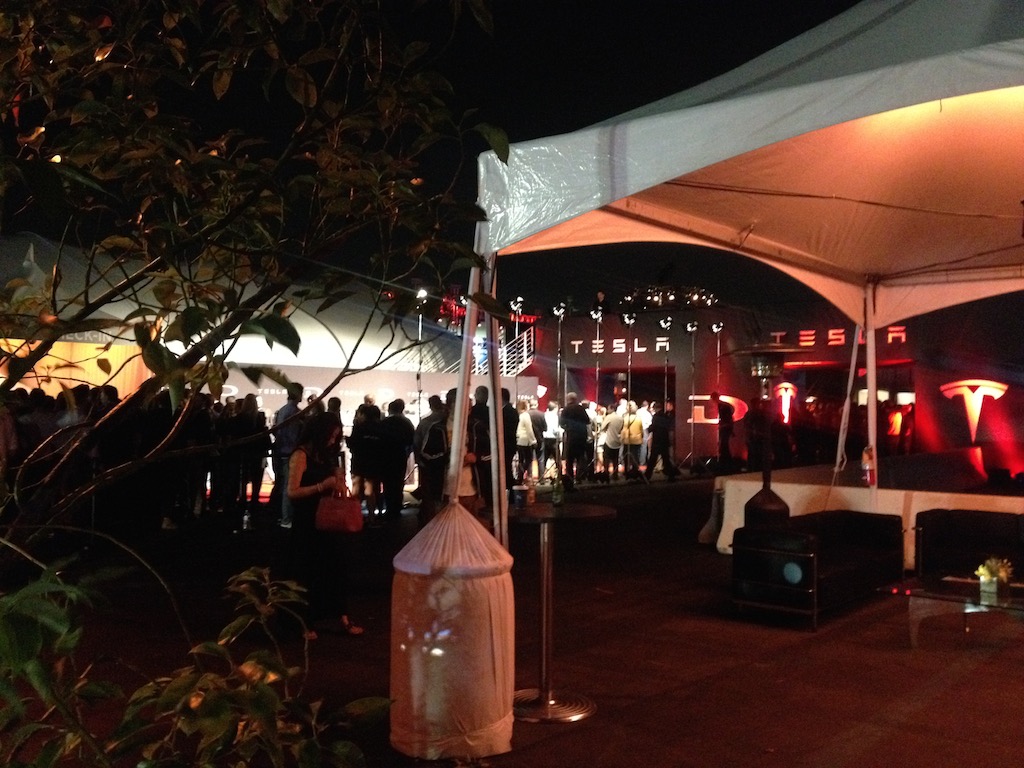
So, we finally saw #ElonsD and … we liked it.
The night started off young but we knew we had a long evening of journalistic duties ahead of us. Half of the team was already tweeting furiously as they approached a relatively empty Hawthorne Design Center at 5pm PST while the other half was making their way through a hellish back up of cars all looking to squeeze into a single parking entrance.
The Madness Begins
Any sort of driving etiquette that one would normally have was completely thrown out the window that night. I saw Model S after Model S making dangerous illegal U-turns right in the middle of a busy main street just to get an edge in line, but in reality it was just a silent FU to the ones that had already sat in the 1 mile back up of cars waiting to get in – me included. The sounds of EDM music heard from a distance is somehow pumping in sync with the rhythm of my heart. I find my patience beginning to draw a direct correlation with the number of cars behind us that are seen turning out of lane only to muscle their way back into the same turn lane 1/2 mile ahead. The more cars turning out, the less my patience became.
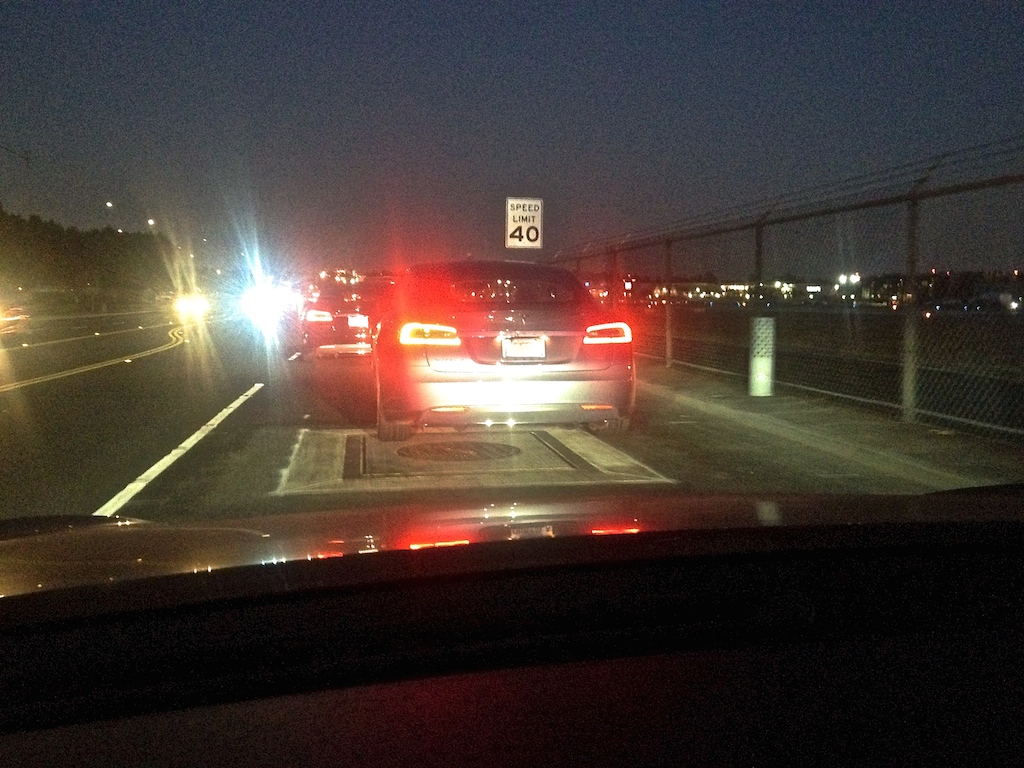
To make things worse, one of our tech guys is on the phone letting us know that the servers came to a halt after receiving an unexpected surge in worldwide traffic to our live-tweet page. The world was watching but the only thing I can think of was why Taylor Swift is playing in the background of our tech guys house. Wait …. the server, oh right.
Upgrade, upgrade, hurry!, I impatiently direct while also making sure I continue to inch forward without creating a big enough gap that would allow line-cutters to squeeze in. I wouldn’t normally do this, but having already let at least 20+ cars cut ahead, on top of the irritating beats of techno resonating throughout my cerebral cortex, I somehow felt justified to put myself into A-hole mode that night. Please forgive me.
Five minutes later, additional servers were added, Taylor Swift was still heard singing across the speaker phone and I was a happy camper again. I’m ready for #ElonsD.
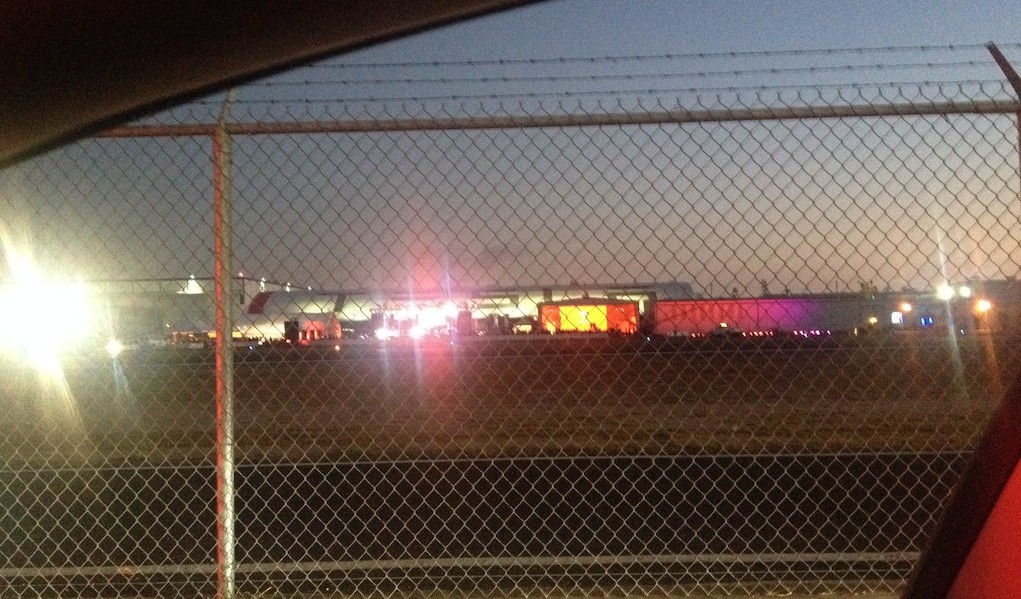
Tesla D event seen and heard from the freeway
So Close, Yet So Far
After 45 minutes of standstill traffic, I finally reach the gates to the parking lot entrance. A combination of frantic Tesla parking attendants and police officers guide me through a windy maze of people and cars. I make eye contact with a Tesla attendant that’s 5 feet from my windshield; he points an orange glowing baton to the right; I go right.
“OK sir, please leave your keys here,”. I eagerly step out of the car, grab the camera gear and make my way all the way back to the end of the line where another wait begins. At this point I’m just passing time reading some of Dennis’s (@dennis_p) and Sam’s (@TeslaMS60) tweets. Head down, reading tweets and walking blindly into people like a digital zombie – something I laugh at when I see others doing it, but tonight it was my turn.
I secretly curse at Sam beneath my breath after seeing that he’s already inside and helping himself to a drink. Nicolas is telling me how great of a time he’s having inside while I stare helplessly at the big D in the distance. I begin to think of all the words that begin with the letter D but can only come up with one. Repeated thoughts of cutting the line run rampant in my head. Should I pull the “I have a press pass” card (which I didn’t this time) or wait patiently like every other civilized person in line? I pulled the press pass of course.
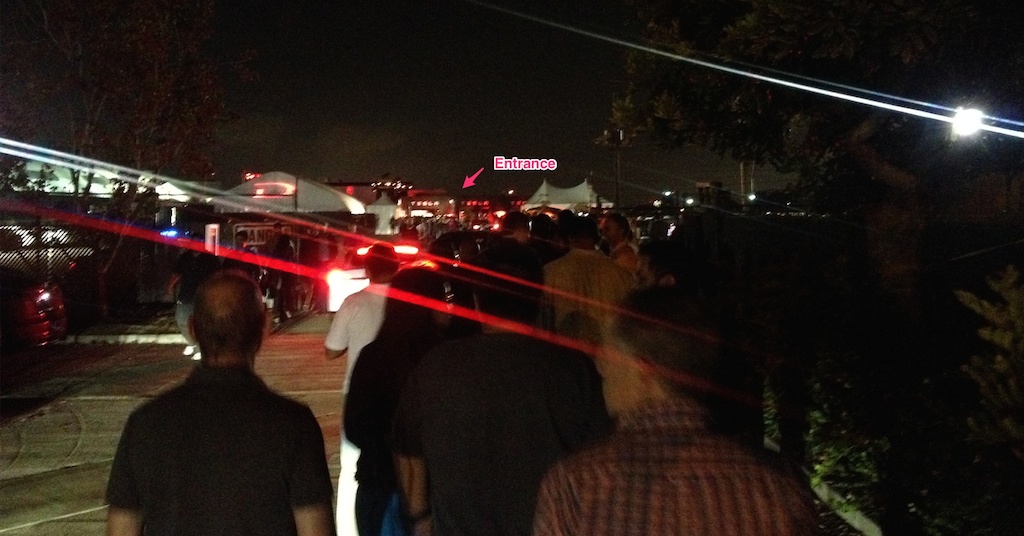
Kidding about the press pass. Another 20 or so minutes go by in line and a hysteria of people begin piling into the parking area. Some are seen biking to the event while others are walking in with entire family in tow – stroller and all. Based on the conversation I’m hearing from people in line, it seems as if most are just there for the spectacle and came by way of a +1 on someone else’s invite.
The music was getting louder and I was getting closer to the official entrance. The rhythmic sounds of EDM was actually becoming more pleasant to listen to. Maybe because I could see the sights of the red carpet ahead of me and I knew it would be just minutes before I would make my way into the holy land.
What lay before me and the official entry to the event was 30ft and a check-in desk, except I didn’t need to check-in at all. Apparently Tesla was so overwhelmed by the volume of people that showed up (the official count was over 4,000 people) that they decided to just hand out wristbands to all that showed up at the check-in desk. OK, sounds good to me. I grabbed the wristband and made my way to the red carpet, pausing for a moment to decide whether I wanted to do a few gratuitous selfies along the Tesla D backdrop, or take the less glamorous path to the right.
In my head, I had already put away all sense of humility and pictured myself doing the robot, a flying jump kick and giving two tickets to the gun show on the red carpet, but I knew that would likely scare the attendees, or at the very least, make Tesla staff question my sanity and deny my entry. I walked to the right and made my way into the event.
After an hour and a half wait, I was finally in but what happened next was something I would have never imagined take place. See Part 2
RELATED: The 691 HP, dual-motor Tesla Model S P85D will rival McLaren’s F1


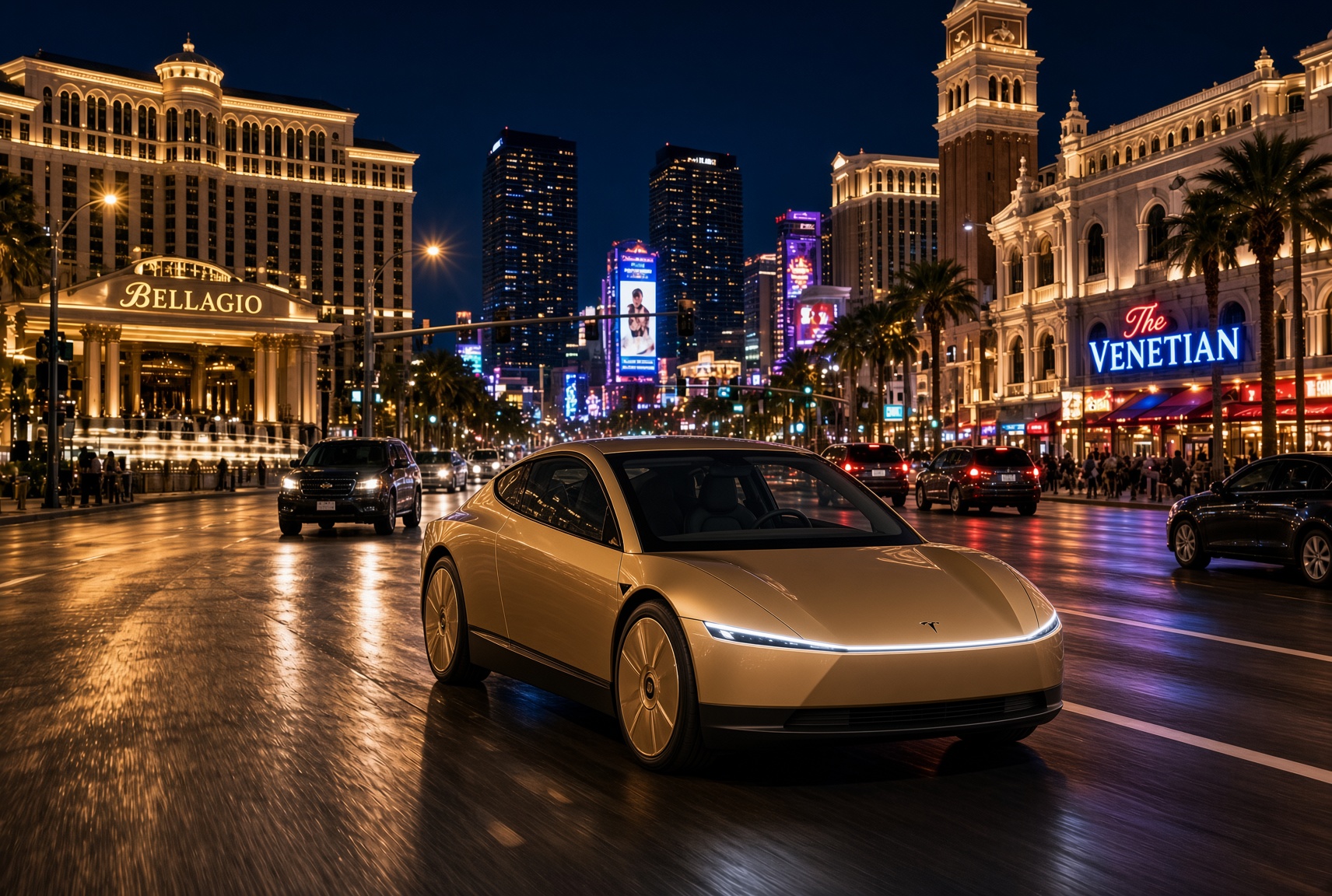
For a century, the car has asked the same thing of its owner, which is basically to pay attention. Even the best ride-hailing app like Uber or Lyft only moved the problem into someone else’s hands. You stopped driving, but you still sat in a stranger’s car, while half listening, and wondering whether to take a phone call in the car without being rude. The Cybercab has no wheel, no pedals and no driver. With Grok @bot now live inside it, it becomes something else entirely, and I think that matters more than the fleet count that everyone is tracking.
Grok @bot is an agent, not a voice assistant. A rider signs in once, and from then on can say what they need and watch it happen. Order dinner from a favorite restaurant. Fill the grocery cart. Move money, answer email, adjust a calendar, push a work project forward. Tesla engineer Yun-Ta Tsai confirmed it is enabled across every Cybercab and the rest of the Model Y fleet, and Tesla’s own pitch is that Full Self-Driving handles the commute while Grok handles the errands.
Think about what that does to a thirty minute ride. Uber sells you a trip, while Waymo sells you the same trip in a more private setting. Tesla is selling the thirty minutes themselves, returned to you with an assistant attached. Errands that used to eat a Saturday get done between pickup and drop off. The ride stops being dead time between two places and becomes a place of its own.
Tesla integrates Grok Bot into its vehicles for the ultimate personal assistant
Best of all, your Bots follow you into any Cybercab, and presumably your own Tesla, then logs you out automatically when you step out. Anyone can bolt a chatbot onto a screen, but much harder to own the vehicle, the autonomy stack and the assistant at once. It also quietly ties SpaceX’s Super Intelligence business to Tesla’s fleet, after Tesla converted its xAI stake into SpaceX equity. The relationship between those two companies is getting harder to describe as separate.
This is also where the hard questions start, because an agent that can spend your money in a vehicle other people also ride in needs some answers. How does it handle a voice it shouldn’t trust? What gets recorded, who can see it, and for how long? What happens when a rider leaves halfway through a task?
If Tesla gets those answers right, the scoreboard changes. We have been counting Cybercabs and wait times. The more telling number may be what riders accomplish per trip. That is data almost no one else will ever have, and it is the real reason to watch Grok @bot.
What do you think? Leave me a comment.
Lifestyle
Tesla’s mirrorless Cybercab will give riders a visibility upgrade
Tesla engineer confirms Cybercab update letting riders pull up rear and repeater cameras on demand.
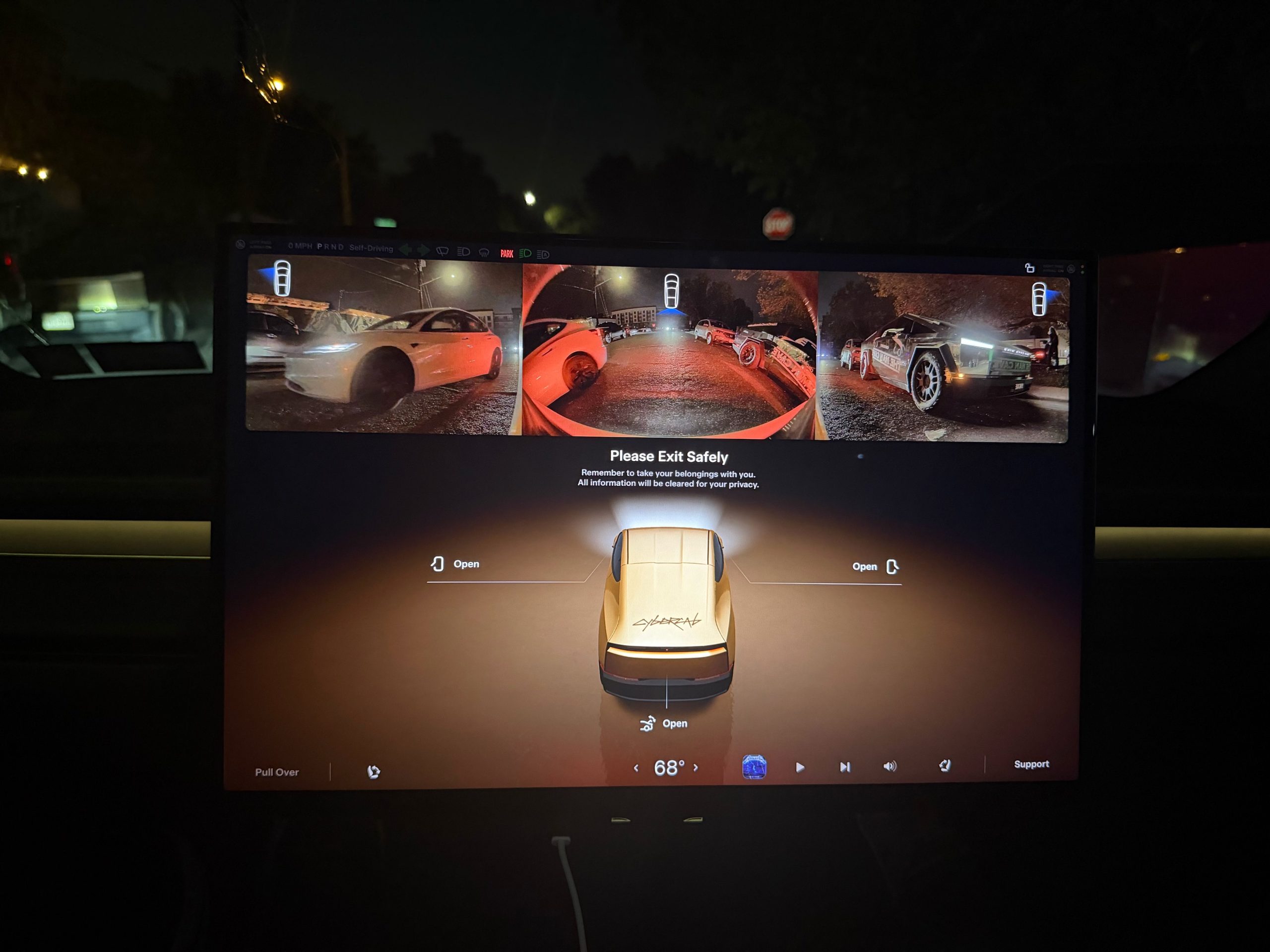
Tesla is working on a Cybercab update that would let passengers pull up the vehicle’s rear and side cameras on demand, and the request came straight from a rider.
The exchange played out on X late Friday. Cybercab rider Dan Burkland shared photos of the two-seater’s cabin screen after an evening ride, praised the UI team’s work, and left one request: let riders open the rear and repeater cameras whenever they want, “especially for peace of mind.” Tesla UI software engineer Evan (@CarCoder) answered with two words: “In development.”
The Tesla UI team absolutely crushed it with the infotainment software. Nicely done @CarCoder!
One feature request: Allow folks to pull up the rear & repeater cameras on demand. This would be great especially for peace of mind. https://t.co/mNAOSLx6pE
— Dan Burkland (@DBurkland) October 10, 2026
The idea fits a pattern Teslarati has tracked since public rides began. Days after paid Cybercab service opened in Austin, Tesla sent riders a survey that asked them to rate the touchscreen, the app and the cabin, and to pick the features they wanted most. We reported on that survey in September, and a camera view is the kind of small software change Tesla can push quickly if riders keep asking.
It also speaks to something unique about the vehicle. With no steering wheel, no pedals and no driver, passengers have no mirror to check and no way to see behind them. The hardware is clearly built for camera awareness, from the repeater cameras to the rear camera. Letting a passenger look through those same cameras would give a nervous first time rider a way to confirm what is around the car.
The timing matters because the fleet is growing fast. Tesla’s Robotaxi account said on Saturday that more than 300 Cybercabs are now serving Austin, an eightfold increase in 30 days, and Tesla AI chief Ashok Elluswamy named Dallas as the next city. More cars and more cities mean more people riding in a driverless vehicle for the first time, which is exactly when small trust features carry weight.
For now, the feature is confirmed only as in development. If Tesla follows its usual pattern with Cybercab software, riders could see it appear in a point release without any announcement, and Teslarati will watch for it.
Elon Musk
Elon Musk’s surprise addition to the X Takeover lineup has fans talking
Elon Musk will join Saturday’s X Takeover at Giga Texas for a live virtual interview.
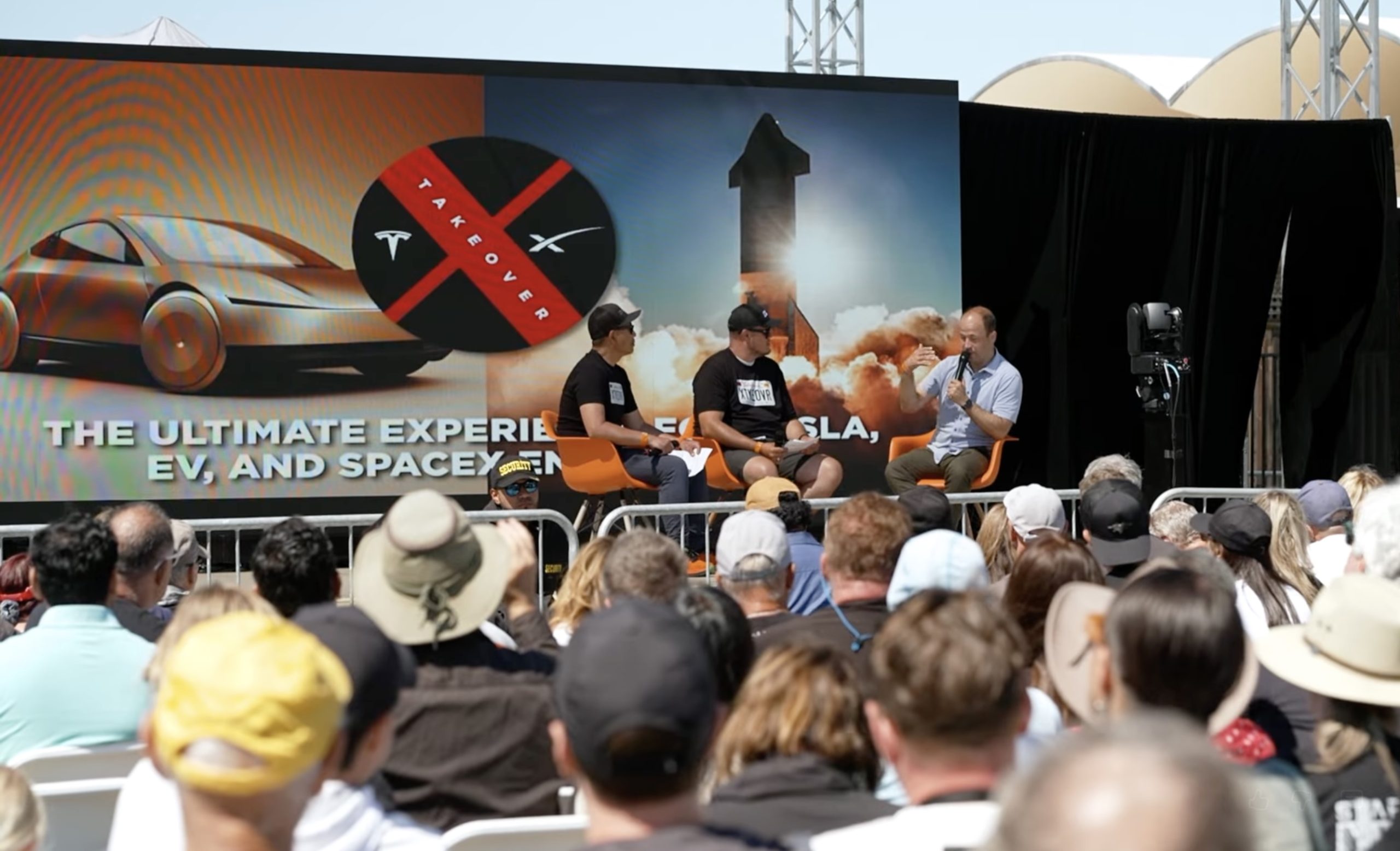
Elon Musk will join X Takeover at Giga Texas on Saturday for a live virtual interview, according to Sawyer Merritt, who shared the news late Thursday. Musk will not be on stage in Austin. The conversation is set to stream for free on the @teslaownersSV account on X.
Organizers had kept expectations in check. In a September update, Tesla Owners Silicon Valley said Musk had appeared at the event twice before but was not promising a third appearance, even as fans hoped he would walk the Giga Texas grounds in person. A virtual spot matches 2024, when Musk gave a surprise interview of about an hour to the crowd in San Luis Obispo, as Teslarati reported at the time.
Wasn’t expecting this 🫡
— Tesla Owners Silicon Valley (@teslaownersSV) October 9, 2026
This year’s edition is a first in several ways. It is the first X Takeover held outside California and the first at a Tesla facility, with tickets selling out in eight days. Tesla provides the venue, but the event is produced independently by Tesla Owners Silicon Valley. The main event runs from 10 a.m. to 6 p.m. CT, followed by a drone and light show at 9 p.m. Maye Musk is the keynote speaker, Franz von Holzhausen is set for a virtual keynote, and Nicki Minaj is the special guest. Joe Tegtmeyer, whose drone footage Teslarati used to track the Optimus factory steel frame at Giga Texas, is also on the speaker list.
Musk’s interview topics have not been revealed, but the backdrop is busy. Tesla doubled its Cybercab fleet in Austin in late September, and last week Musk explained why Robotaxi hours only moved from 10 p.m. to 11 p.m.. Merritt also reported Thursday that Texas DMV records now show 319 registered Cybercabs, up from 169. NHTSA’s deadline for Tesla’s sworn answers on Cybercab certification is October 30, and Tesla reports third quarter earnings on October 21.
Fans who cannot make it to Austin can watch the livestream on X. Musk tends to say more in unscripted settings than he does in prepared remarks, which is the reason this one is worth having open on Saturday.

Elon Musk breaks his silence on the Starlink impact to Ukraine drones

Tesla opens the Q&A for its biggest earnings call yet

Ukraine says Starlink is cutting out its military drones as Poland calls out Elon Musk

The Pentagon taps Elon Musk to design the battlefield of the future

SpaceX reveals how its 1 Million AI satellite network will work and prevent space collisions


