Lifestyle
Musk predicts AI will be better than humans at everything in 2030

In response to an article by New Scientist predicting that artificial intelligence will be able to beat humans at everything and anything by 2060, Elon Musk replied that he believed the milestone would be much sooner – around 2030 to 2040.
Probably closer to 2030 to 2040 imo. 2060 would be a linear extrapolation, but progress is exponential. https://t.co/e6gyOVcMZG
— Elon Musk (@elonmusk) June 6, 2017
The New Scientist Study based its story from a survey of more than 350 AI researchers who believe there is a 50% chance that AI will outperform humans in all tasks within 45 years.
At a high level, the data is not shocking, but more of an interesting tidbit from the future. Dive into the details of when those very same AI experts believe machines will be better at specific tasks than humans and things get a little creepy. Experts believe they will be better at translating languages than humans by 2024 – something that is already being done on-the-fly by Google for webpages and for spoken word via Google Translate.
High school students everywhere will be outclassed by AI that is estimated to outperform them in essay writing by 2026. AI moves in to takeover truck driving by 2027 thought we believe this will happen much sooner based on the progress Tesla is making with autonomous driving. Tesla has a fully autonomous cross-country trip planned for later this year that, if successful, will pave the way for autonomous vehicle technology to go mainstream.
The estimates get stranger with AI predicted to be able to write a bestselling book better than humans by 2049 and to perform extremely complex, dynamic surgery by 2053. All human jobs are expected to be automated within 120 years which is admittedly quite a bit farther out than 2060 but that is representative of the long tail of increasingly smaller tasks.
Elon is not all rainbows and sunshine with AI which is why he created the non-profit OpenAI organization. He co-founded the organization specifically to map out a path forward for AI research and development, and to ensure that AI is created in an intentional and safe manner.
OpenAI is a non-profit AI research company, discovering and enacting the path to safe artificial general intelligence.
While the individual tasks or groups of tasks that comprise each automated industry from trucking to making tacos at your local taqueria, OpenAI is looking beyond that to the first Artificial General Intelligence. This is an intelligence that will have the ability to adapt dynamically to a situation, learn new tasks, creatively apply itself to the new conditions and to perform much like a human would. OpenAI believes that a dynamic AGI will far surpass the AI implemented in any specific industry and will be a game-changer in AI packing the power to change the world in ways we never imagined.
With that goal in mind, OpenAI is pushing the envelope in an attempt to define the cutting edge of AI and to thereby earn the right to define the future of AI for the world. As famed computer scientist Alan Kay once said, “The best way to predict the future is to invent it.”
Elon surely has his finger on the pulse of AI and believes that it is highly likely that it will have a massive impact on humanity. OpenAI carries this belief forward, stating that,
Artificial general intelligence (AGI) will be the most significant technology ever created by humans.
Though Elon is confident AI is moving forward at a far faster pace than scientists believe and is actively work to shape its future, he still fears the technology.
I hope I'm wrong
— Elon Musk (@elonmusk) June 6, 2017


Lifestyle
Tesla app update makes Robotaxi ownership make a lot more sense
Tesla’s app now shows a live indicator when your car is actively driving itself.

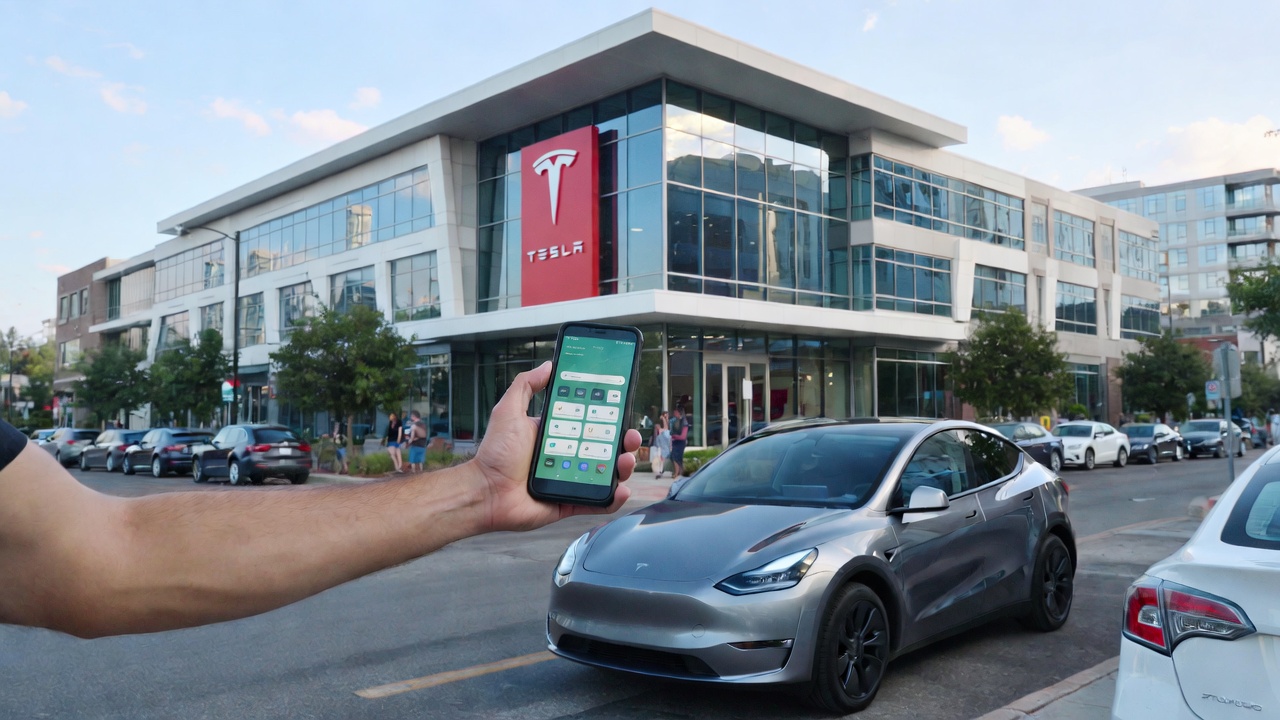
A recent Tesla app update, released last week (4.58.5), gives visibility on whether a vehicle is navigating in its semi-autonomous mode or being drive by a human driver. The updated app now displays a live “Self-Driving” indicator in bright blue text directly beneath the vehicle’s speed readout whenever Full Self-Driving is actively engaged, along with the signature glowing blue navigation path that FSD users see on the main touchscreen. It is a small visual update with meaningful implications for how Tesla owners monitor their vehicles remotely.
The feature was first spotted in the wild by X user Jordan Camina, who shared video of a Hardware 3 Model S displaying the new animation through the app while driving. That detail is significant because it confirms the update is not limited to newer HW4 vehicles. It works across hardware generations, and Tesla confirmed it will eventually support all vehicles regardless of chip platform once both the app and vehicle software are updated. The vehicle side requires software version 2026.20.6.1, which has reached nearly 40% of the fleet so far, as monitored by NotaTeslaApp.
The feature makes the most practical sense when viewed through the lens of Tesla’s expanding robotaxi operation. In a robotaxi context, the owner of a vehicle generating ride revenue has a direct financial and safety interest in knowing whether their car is operating under autonomous control at any given moment. The app’s new FSD indicator gives fleet owners exactly that visibility, the same way a logistics company monitors whether a delivery driver is following the planned route. It also carries implications for Tesla’s insurance model. Tesla’s own insurance product prices premiums in part based on FSD engagement rates, and real-time visibility into when FSD is active creates a feedback loop that could eventually tie directly into policy pricing. For individual owners who have opted their personal vehicles into the robotaxi network, the update effectively turns the Tesla app into a fleet management dashboard, one that tells you whether your car is earning money, whether it is driving itself to do it, and whether everything is operating the way it should from wherever you happen to be.
Tesla expands Robotaxi to Florida, marking its third state for autonomy
As Teslarati has reported, Tesla launched unsupervised robotaxi rides in Miami this summer, a milestone that makes a remote FSD status indicator significantly more practical than a cosmetic feature. When a vehicle is operating as a robotaxi without a driver present, the owner or fleet operator needs a reliable way to confirm autonomy is engaged. The app now provides exactly that.
As noted by NotATeslaApp, The update also arrived alongside a hint buried in the same app version that Tesla plans to use the cabin camera to verify driver identity before FSD can be activated. Pairing identity verification with a live autonomy status indicator points toward the infrastructure Tesla is building for a fleet of driverless vehicles that owners can monitor the way you would track a package delivery.
Elon Musk
The Boring Company just doubled its tunneling power in Nashville
The Boring Company’s Prufrock MB2 is commissioned and ready to mine beneath Nashville’s streets.
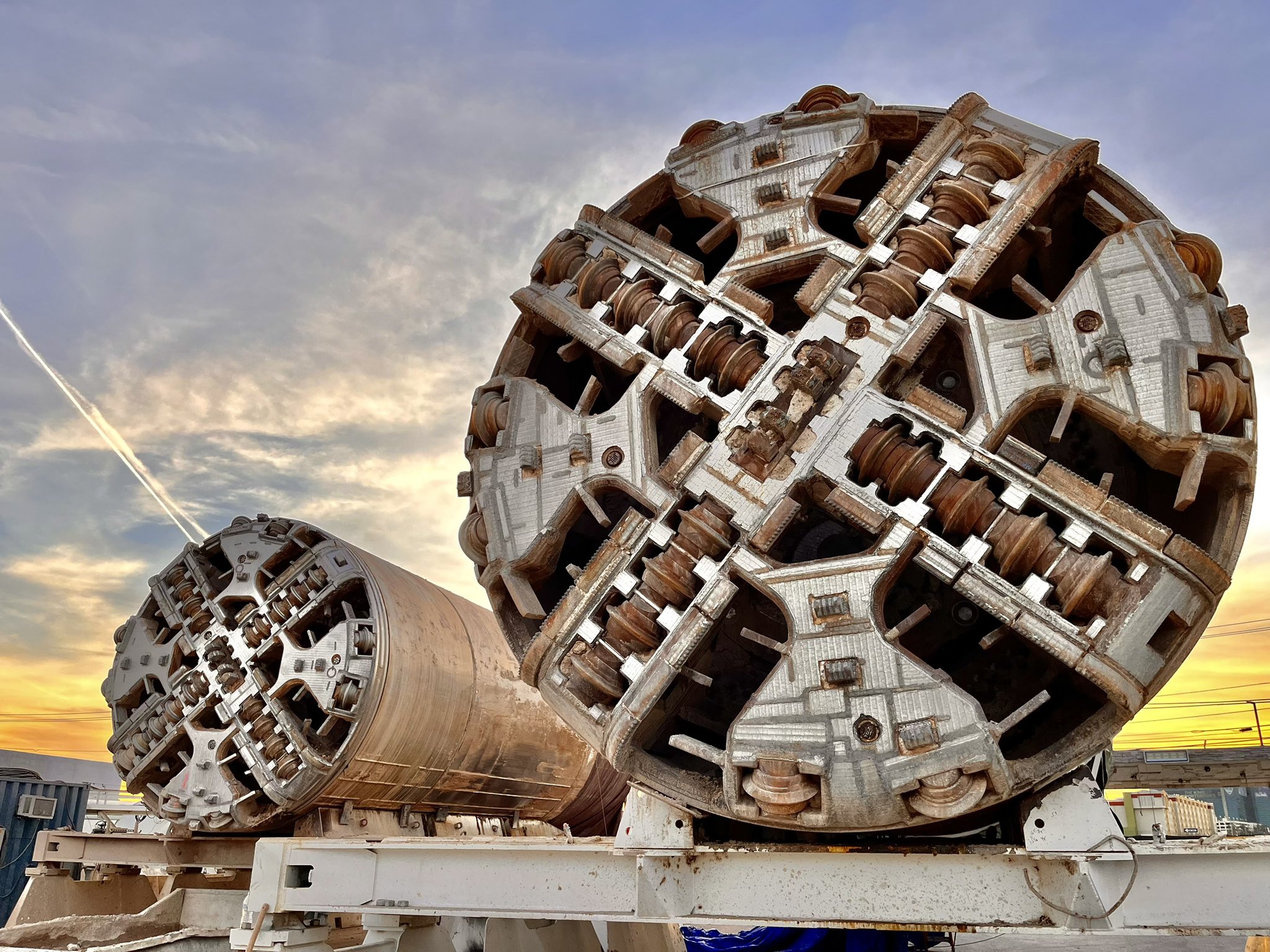
The Boring Company’s second tunnel boring machine, Prufrock MB2, is officially ready to dig in Nashville. The company confirmed the news on X, posting: “Prufrock-MB2 is ready to mine in Nashville! MB2 commissioning is complete, including the brief 11 rpm rotation shown here. Will MB2 catch up to MB1, who had quite the head start? And Prufrock-MB3 ships in August!”
MB2 arrives with meaningful improvements over its predecessor. Lessons learned from the launch and operation of MB1 have already been applied to MB2 to improve efficiency and prepare the machine for launch.
Traditional tunnel boring machines operate in a stop-and-go cycle, digging roughly five feet, halt, erect precast concrete segments to line the tunnel wall, then resume. That repeated interruption is one of the main reasons conventional tunneling is slow and expensive. Prufrock is designed to install the tunnel liner simultaneously with mining, eliminating the need to stop every five feet. The machine also skips the need for excavated launch pits. Prufrock arrives on a truck, tilts down, and launches into the ground within 24 hours. And when the tunnel is complete, it emerges from the ground and drives to its next launch site on a trailer, eliminating the need for expensive cranes or pit excavation. The machine is also fully electric and runs with zero people in the tunnel during normal operations, controlled remotely from a surface operations center.
Prufrock-MB2 is ready to mine in Nashville! MB2 commissioning is complete, including the brief 11 rpm rotation shown here.
Will MB2 catch up to MB1, who had quite the head start?
And Prufrock-MB3 ships in August! pic.twitter.com/TTrMql2aRg
— The Boring Company (@boringcompany) June 17, 2026
It won’t be long before we hear of another major update on The Boring Company’s Music City Loop project – a planned underground transit network beneath Nashville that would move passengers in electric vehicles through a series of tunnels at highway speeds, and bypassing surface traffic entirely. Nashville was selected in part because of its strong rock conditions that suits the Prufrock machines well, and relatively less regulatory hurdles.
Progress has been steady on multiple fronts. All 37 permits and approvals required ahead of tunneling have been obtained, out of 45 total. Key wins include a fully executed TDOT tunnel permit authorizing 25 miles of tunnel, unanimous airport authority approval for a Nashville International Airport station, and the city’s first residential station agreement serving downtown tower residents.
With MB1 already tunneling, MB2 now commissioned, and MB3 shipping in August, Nashville is becoming something of a live proving ground for scaled tunnel boring. The broader ambition is not limited to one city. The Boring Company’s stated goal is to make underground transportation a practical alternative to surface roads across major metro areas. Nashville is one of many cities, including a successful Las Vegas tunnel system, where that idea is being put to the test at real speed.
Investor's Corner
Tesla unfolded its first European “folding Supercharger”
Tesla’s folding Supercharger just arrived in Europe and it changes how fast charging expands.
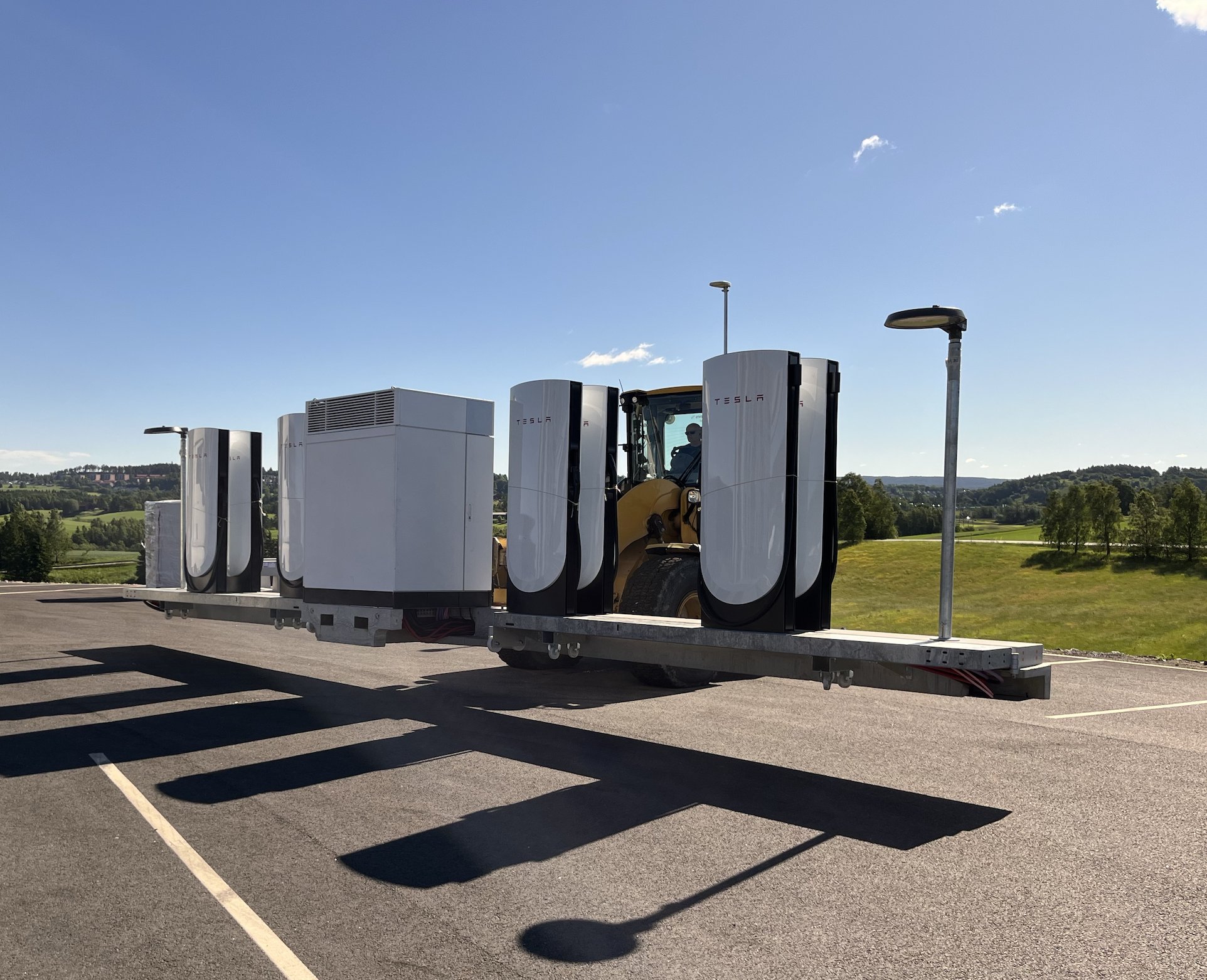
Tesla’s Folding Unit Supercharger has officially landed in Europe, with the company teasing a new installation in its effort for a broader rollout targeting major motorway rest stops across the European continent in Q3 2026. The arrival marks a notable shift in how Tesla is thinking about network expansion, moving from hardware performance alone to engineering the logistics chain itself.
While Tesla did not reveal the exact location for the new folding Supercharger in Europe, the photo shared on X heavily suggests that this maybe somewhere in Norway. Historically, whenever Tesla rolls out an entirely new infrastructure architecture in Europe, whether it was the original Supercharger stalls years ago or these brand-new modular V4 “Folding Units”, Norway is almost always the designated launch pad because of its unmatched EV adoption rate and supportive infrastructure
The Folding Unit, introduced in March 2026, is a factory pre-assembled V4 charging station built on an industrial hinge system mounted to a heavy-duty concrete base. The entire assembly arrives on site ready to unfold and connect. Tesla confirmed the units feature telescopic light poles specifically designed for easy transportation and fast on-site deployment, a detail that signals how carefully the logistics chain has been engineered alongside the hardware itself. The design allows 33% more stalls per delivery truck, cuts installation time roughly in half, and reduces overall deployment costs by more than 20% compared to traditional installations.
Tesla’s newest “Folding V4 Superchargers” are key to its most aggressive expansion yet
Tesla also noted telescopic light poles which provide benefits over traditional Supercharger installations that require fixed-height poles that are awkward to ship, slow to position on site, and often require separate crews and equipment to erect before charging hardware can even be staged. By engineering poles that compress for transit and extend on arrival, Tesla has removed one of the quieter bottlenecks in the physical deployment process. Every hour saved on a light pole installation is an hour redirected toward getting stalls energized. At scale, across dozens of new sites per quarter, those hours add up to a meaningful acceleration in how quickly a location goes from approved permit to serving its first customer.
Each Folding Unit pairs a single V4 power cabinet with eight charging posts. The V4 cabinet delivers up to 500 kW per stall for passenger vehicles and up to 1.2 MW for the Tesla Semi, supporting twice the stalls per cabinet at three times the power density of its predecessor. Longer cables make every new station immediately usable by non-Tesla vehicles, a priority as Tesla continues opening its network to Ford, GM, Rivian, Hyundai, Stellantis, and others.
As Teslarati reported when the Folding Unit was first unveiled, Tesla’s Gigafactory New York produced its final V3 Supercharger cabinet in March 2026 after more than seven years and 15,000 units, completing a full pivot to V4 production. The European arrival of the folding design is the next chapter in that transition.
Faster and cheaper deployment means Tesla can justify building in markets and corridors that were previously too expensive to serve, filling the coverage gaps that have slowed EV adoption outside major urban centers.
First Folding Unit Superchargers in Europe 🇪🇺 https://t.co/KNfYWJukkL pic.twitter.com/YR1udIpH1i
— Tesla Charging (@TeslaCharging) June 10, 2026

The secret behind Tesla’s Cybercab Gold goes well beyond just the color

Tesla app update makes Robotaxi ownership make a lot more sense


