Lifestyle
Saleen FOURSIXTEEN Tesla Model S Features & Specifications List

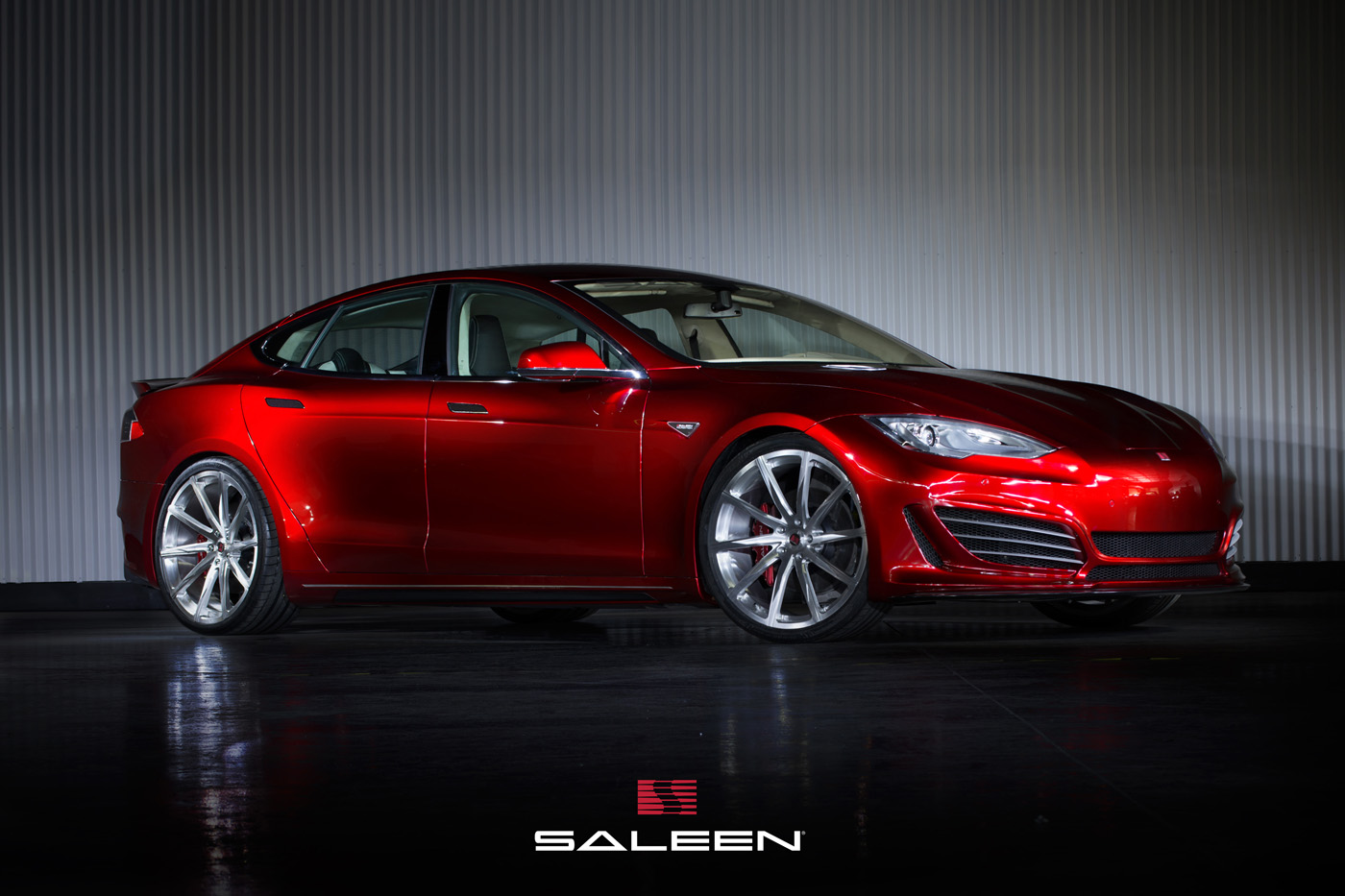

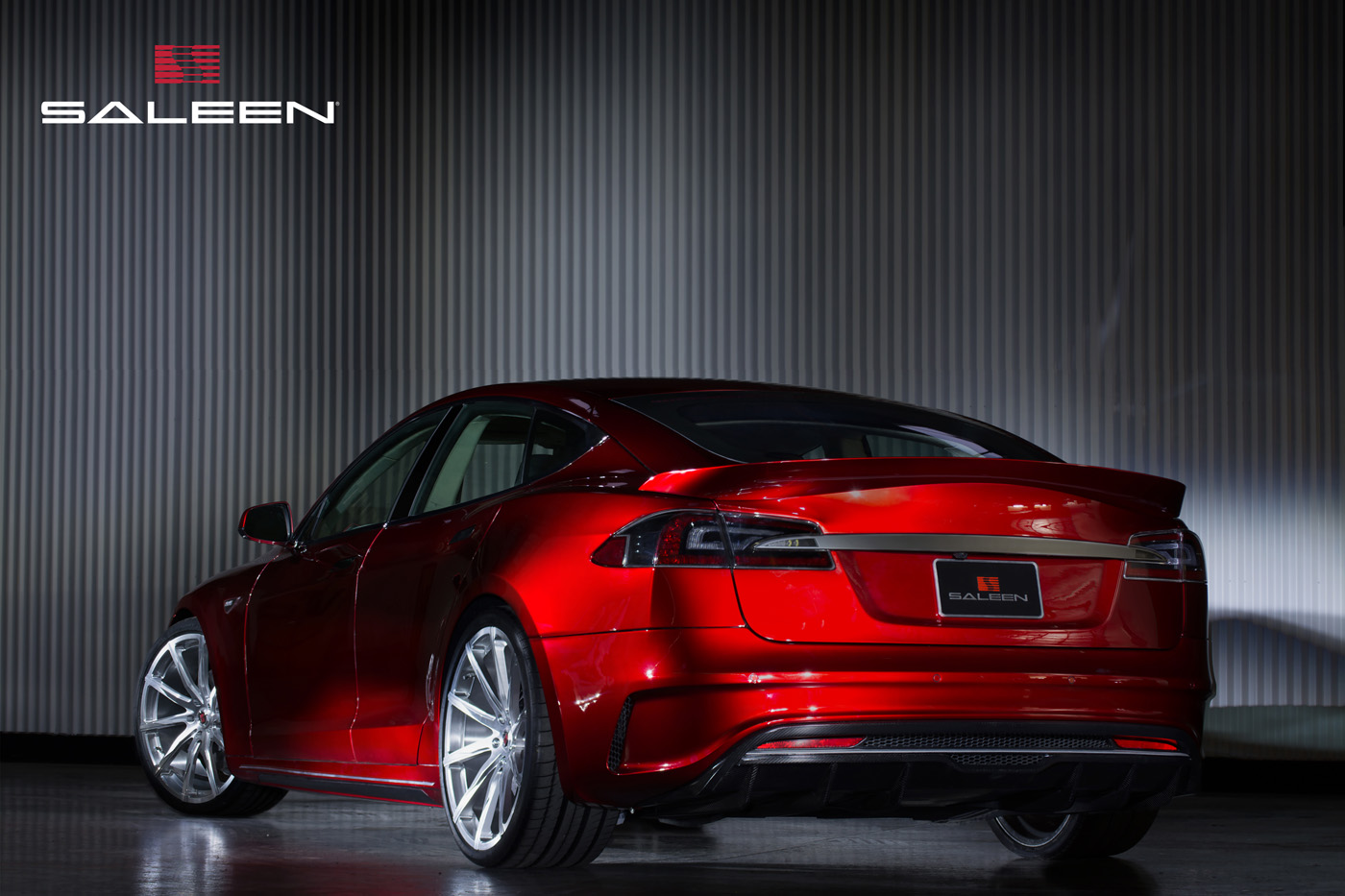
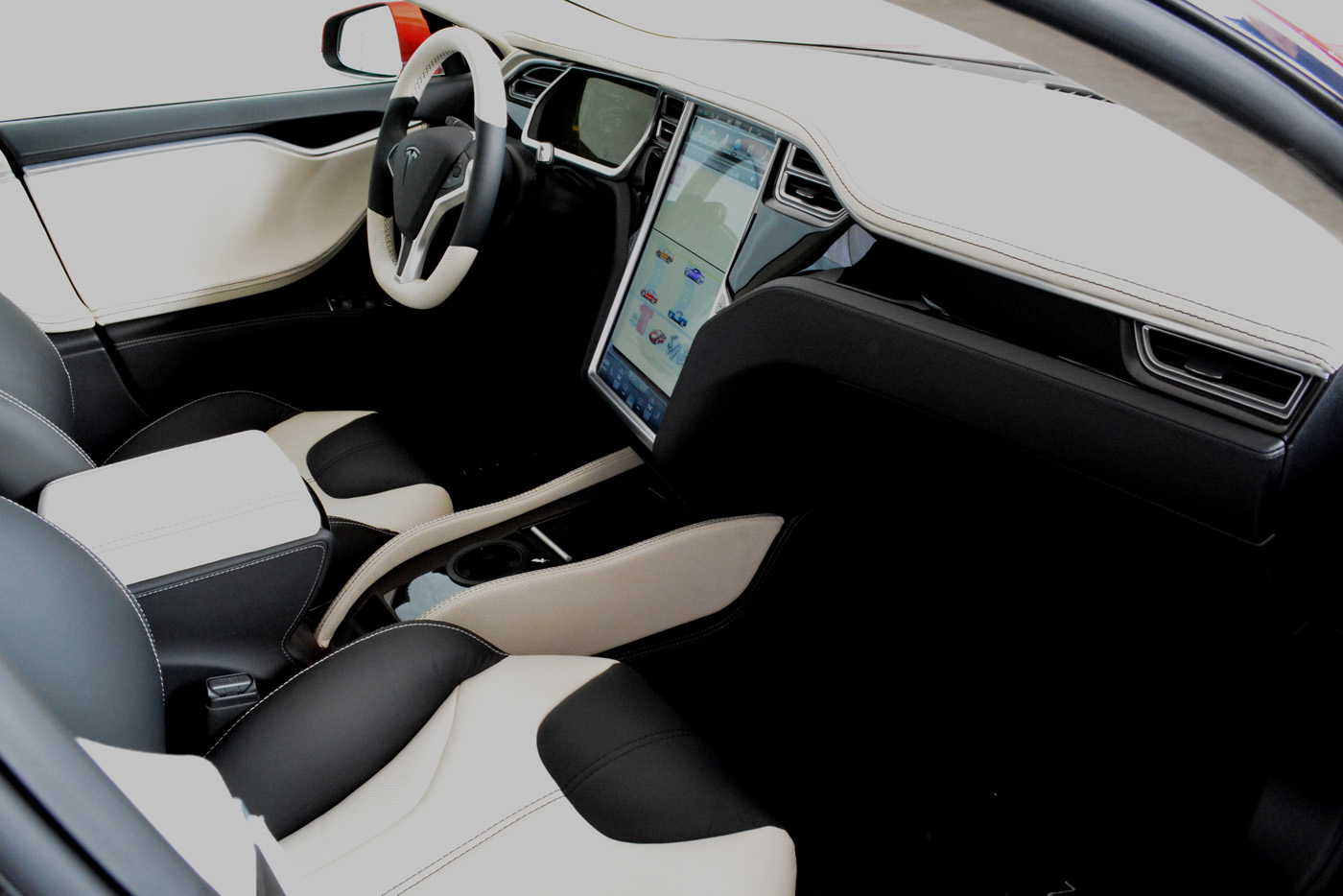
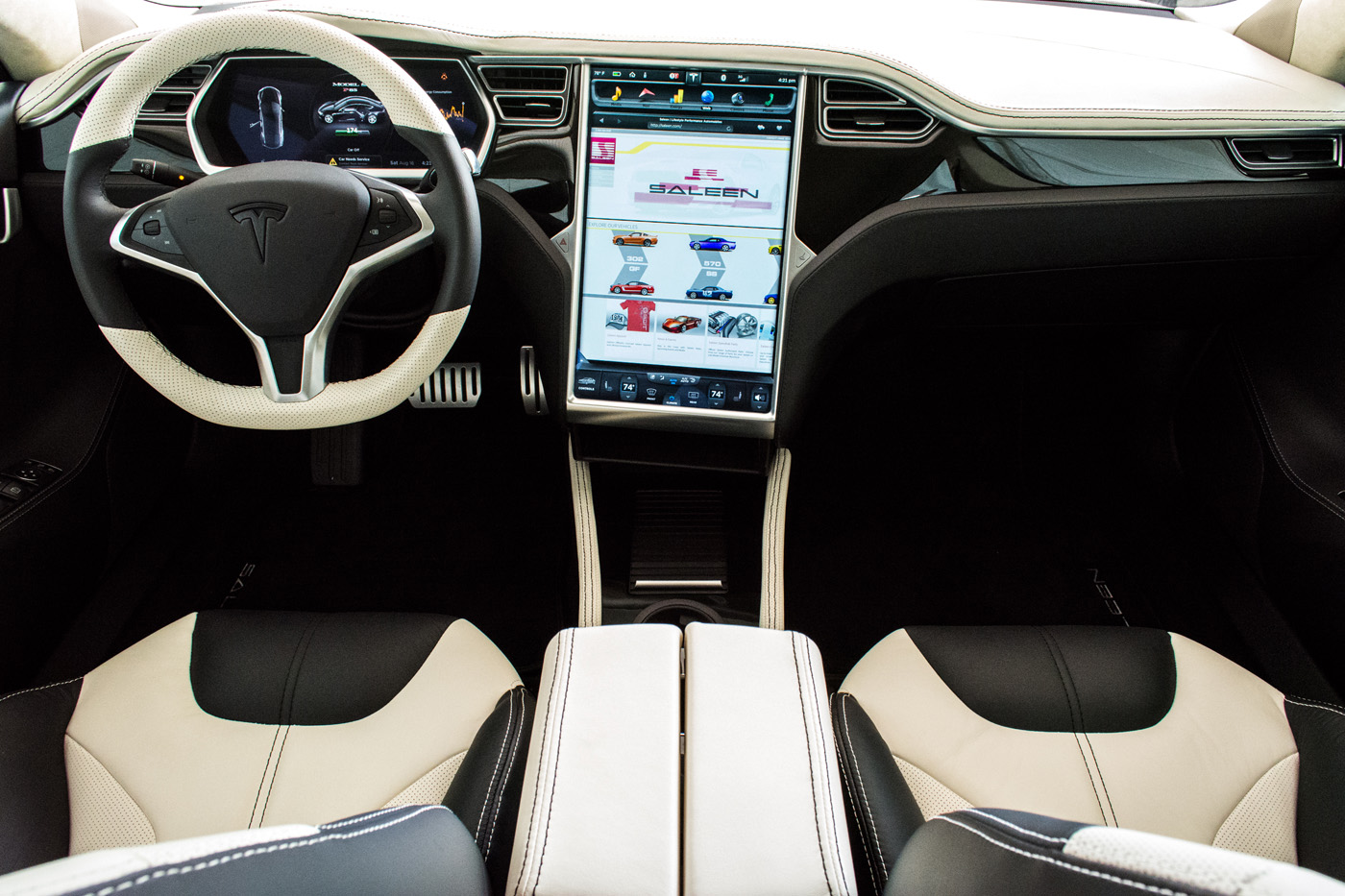
Saleen FOURSIXTEEN Features & Specifications
Saleen, known for building the exotic S7 supercar and tuned Ford GT40, has debuted its new FOURSIXTEEN at famed Pebble Beach, CA Concours d’Elegance. Their announcement that they would make their entrance into the world of electric vehicles with a tuned version of the Tesla Model S took the world by storm not too long ago, but no one knew the details, until now. The Saleen FOURSIXTEEN full features and specifications list has been published. Most prominently displayed is the large 22″ race-inspired forged aluminum wheels and completely redesigned front-end of the Tesla Model S that removes the traditional “nose cone”. But beyond the cosmetic lies a re-engineered cooling system and upgraded drivetrain said to provide even quicker off-the-line acceleration and track performance. A fully adjustable race-ready coilover suspension system rounds out the Tesla double wishbone suspension system.
Updated: Sep. 5 2014
Saleen has just released a video that shows off a distinctive Formula One sound to their FOURSIXTEEN. “This is what the future sounds like,” explains Steve Saleen, CEO of Saleen Automotive, “Anytime you watch a movie or TV show about the future, vehicles make a distinctive sound. That is what we achieved with our FOURSIXTEEN. I think George Jetson would approve.”
POWERTRAIN
- Liquid-Cooled Three Phase, Four Pole AC Induction Motor with Copper Rotor
- Drive Inverter with Variable Frequency Drive and Regenerative Braking System
- Single Speed Fixed Gear with 9.73:1 Reduction Ratio
- 85 kWh Microprocessor Controlled, Lithium-Ion Battery
- 10 kW Capable On-Board Charger with the Following Input Compatibility: 85-265 V, 45-65 Hz, 1-40 A
- 10 kW Capable Universal Mobile Connector with 110 V, 240 V, and J1772 Adapters
SALEEN SIGNATURE SERIES POWERTRAIN BLACK LABEL
- Three phase, four pole AC induction motor with copper rotor
- Horsepower 416
- Torque @ 0 RPM 443
- Saleen High-Efficiency Drivetrain Cooling System
- 1-speed Automatic Gearbox
- 9.73:1 Final Gear Ratio
- 11.39:1 Final Gear Ratio (optional)
- MAXGRIP Locking Differential (optional)
- Model Designation Serialized Plaque
SUSPENSION
- Double Wishbone, Virtual Steer Axis Coil Spring Front Suspension and Independent Multi-Link Coil Spring Rear Suspension
- S4 High Durometer Swaybar Pivot Bushings
- S4 Increased Diameter Lightweight Front Swaybar
- S4 Track Calibrated, High Performance, Monotube Coilovers
- S4 Track Calibrated, Increased Rate Coil Springs
- Variable Ratio, Speed Sensitive, Rack and Pinion Electronic Power Steering
- Anti-Lock Disc Brakes (ABS) with 2-Piece Ventilated Rotors with Aluminum Hats and Electronically Actuated Parking Brake
SALEEN SIGNATURE SERIES S4 HIGH PERFORMANCE SUSPENSION BLACK LABEL
- S4 Track Calibrated, High Performance, Monotube Coilovers
- S4 Track Calibrated, Increased Rate Coil Springs
- S4 Increased Diameter Hollow Front Swaybar
- S4 High Durometer Swaybar Pivot Bushings
- S4 Fully Adjustable Coil-Over Suspension (optional)
- Saleen Specific Stability Control System (optional)
EXTERIOR
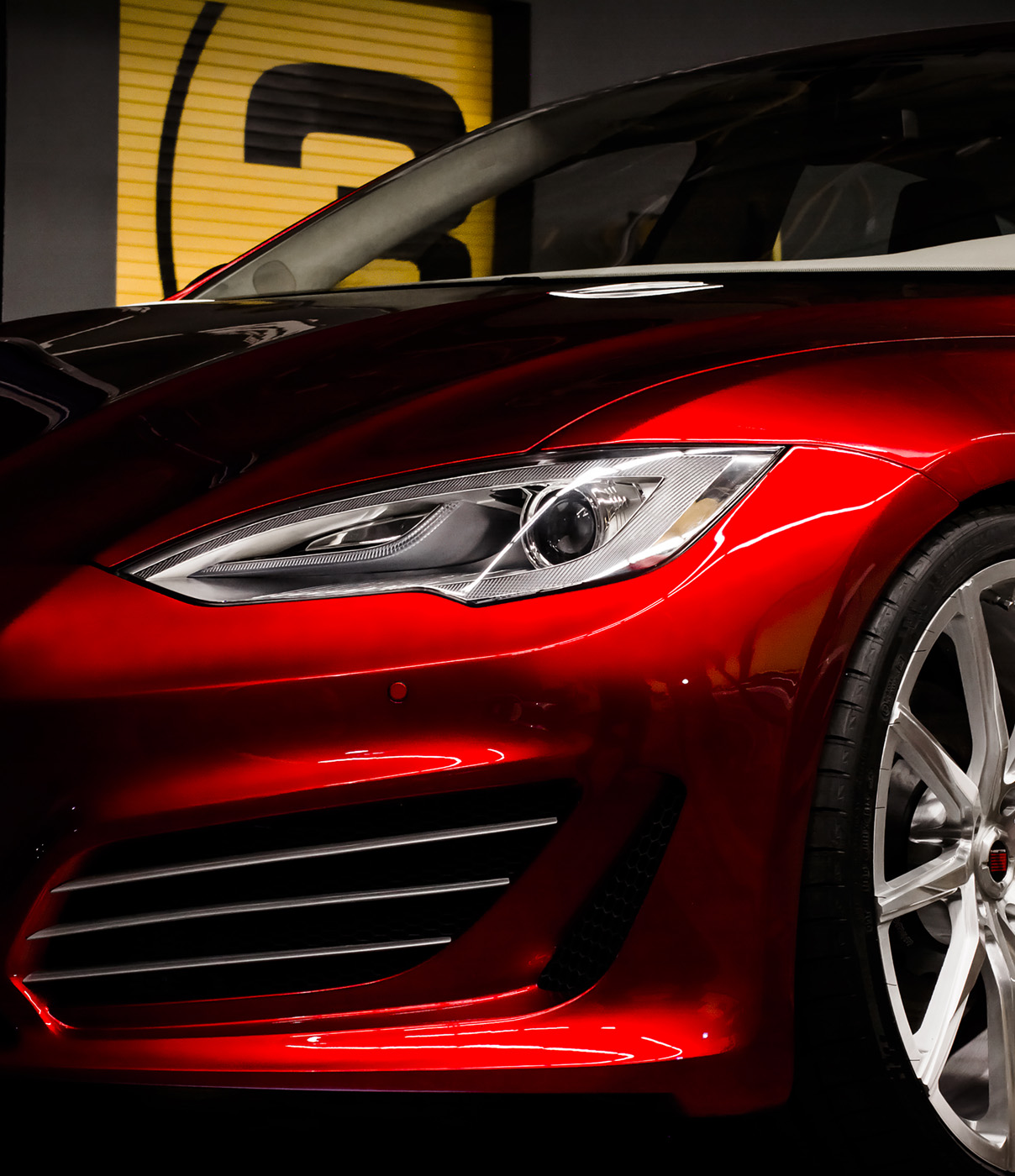
- Saleen Front Fascia with Integrated Dual Cooling Vents, and Aero Management Vents
- Saleen Carbon Fiber Air Splitter
- Saleen High Downforce Spoiler
- Saleen Hood with Static Air Channel and Style Vents
- Saleen Rear Fascia with Integrated Rear Aero Management Vents, and High Intensity Reflectors
- Saleen Carbon Fiber Diffuser
- Saleen Side Skirts with Carbon Fiber Accents
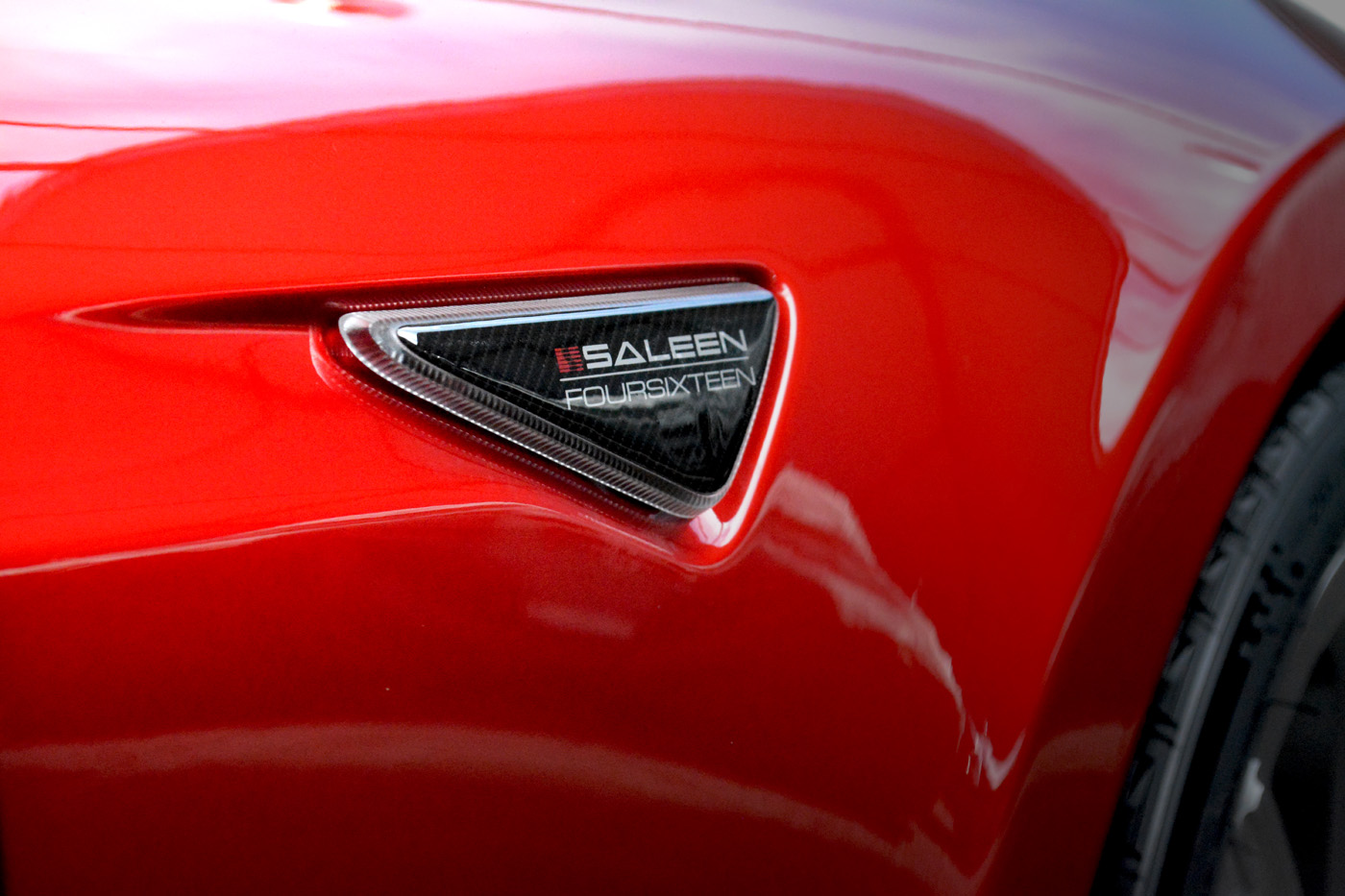
- Backlit Side Turn Signals, Front Side Markers Lights, and Rear Reflex Lights
- Flush Mounted Door Handles
- Headlights—Xenon with Automatic On/Off
- LED Rear Taillights and High-Mounted LED Stop Lamp
- Saleen Badging on Hood, Fenders, and Decklid
SALEEN SIGNATURE SERIES AIR MANAGEMENT BLACK LABEL
- Saleen Front Fascia with Dual Cooling Vents, and Aero Management Vents
- Saleen Carbon Fiber Air Splitter
- Saleen Hood with Signature Body Lines
- Saleen Side Skirts with Carbon Fiber Inserts
- Saleen High Downforce Rear Spoiler
- Saleen Carbon Fiber Decklid Accent
- Saleen Rear Fascia with Rear Aero Management Vents, and High Intensity Reflectors
- Downforce Boosting Rear Diffuser
FUNCTIONAL
- Bluetooth Connectivity
- Dual Front USB Ports for Media and Power
- High Definition Backup Camera
- Keyless Entry
- Power Outlet—12 V
- Rear Window Defroster
- Wi-Fi Ready
- Windshield Wipers—Rain Sensing, Adjustable Speed
WHEELS AND TIRES
- Saleen Lightweight 21” Forged Aluminum Wheels
- High Performance 245/35ZR21 Front Tires
- High Performance 295/30ZR21 Rear Tires
SALEEN SIGNATURE SERIES WHEELS & TIRES BLACK LABEL
- Forged Aluminum Split Five Spoke Wheels 21”x9” (f) 21”x10” (r)
- Forged Aluminum Multi Spoke Race-Inspired Wheels 22”x9” (f) 22”x10” (r) (optional)
- High Performance 245/35ZR21 (f) 295/30ZR21 (r) Tires
- High Performance 255/30ZR22 (f) 295/25ZR22 (r) Tires (optional)
INTERIOR
- Audio—200 Watt, Seven Speaker Stereo System with AM/FM/HD Radio
- Center Armrest with Two Cup Holders
- Climate Control—Automatic, Dual Zone
- Cruise Control
- Driver Seat Detection Sensor for Start/Stop Functionality
- Front LED Map Lights and Rear LED Reading Lights
- Front Trunk and Rear Cargo Area with Keyless Open
- Glove Compartment
- Manual Rear Liftgate
- Micro-Filter Ventilation System with Replaceable Filters
- Open Center Console Storage Area
- Power Tilt and Telescopic Steering Column
- Power Windows Featuring One-Touch Up and Down
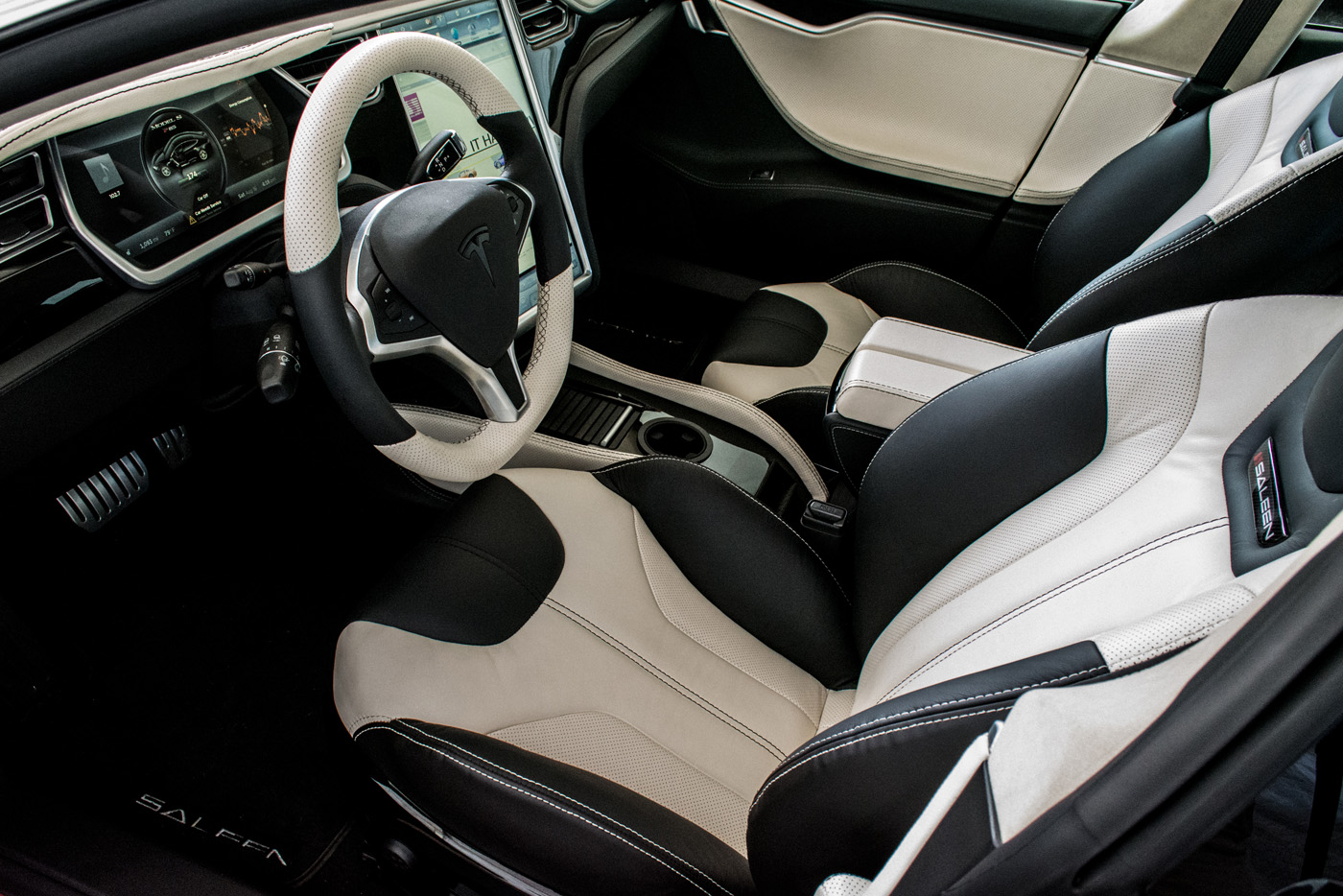
- Saleen Black Leather and Alcantara Performance Seating with Contrasting Stitching
- Seats, Front—Twelve Way, Power Adjustable, Heated
- Seats, Rear—60/40 Split Fold-Down
- Steering Wheel—Three Spoke, Multi-Function with Tactile Controls
- Sun Visors
- Touchscreen—17” Capacitive with Media, Communication, Cabin, and Vehicle Controls
- Tire Pressure Monitoring System
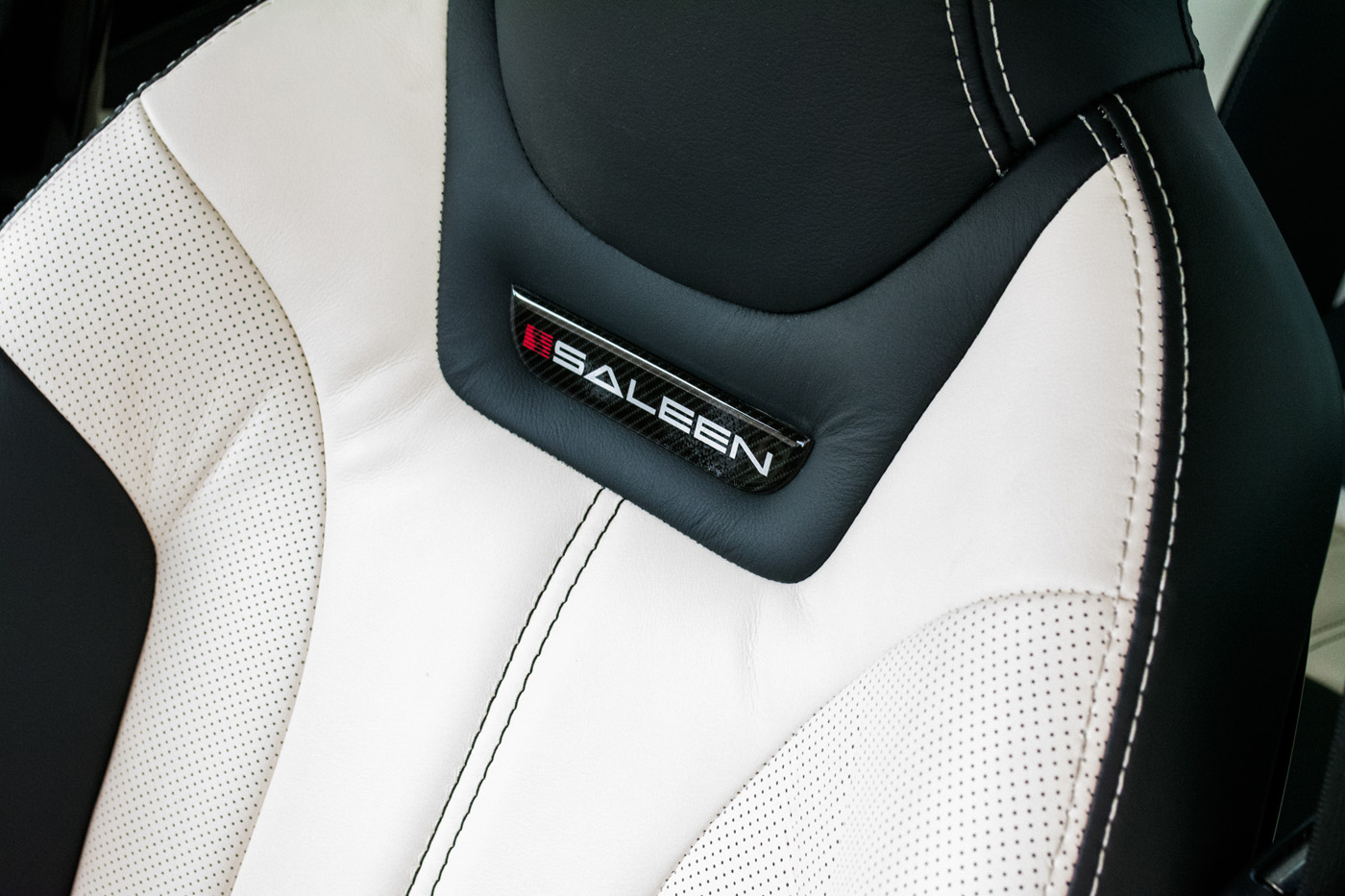
SALEEN SIGNATURE SERIES INTERIOR BLACK LABEL
- Saleen Black Leather and Alcantara Seats with Contrasting Stitching
- Saleen Embroidered Floor Mats
- Saleen Embroidered Model Designation Trunk Mat
- Model Specific Serialized Dash Plaque
- Steve Saleen Personally Signed Dash
- Leather Wrapped Steering Wheel
- Saleen Steering Wheel Badge
- Saleen Key Chain
- Saleen Owners Document Portfolio and Warranty Guide
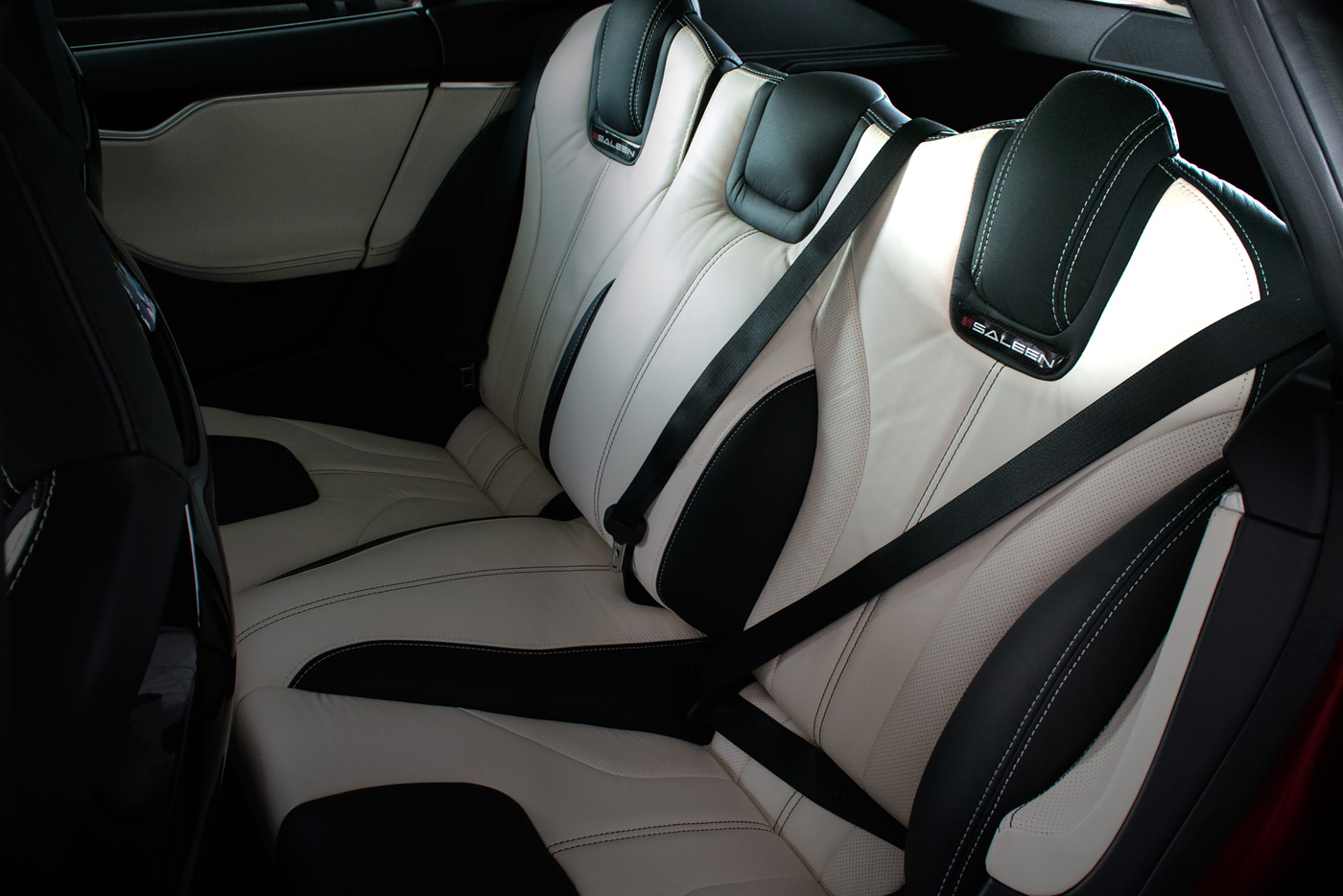
- Saleen Four Bucket Black Leather Performance Seating with Improved Bolstering, Contrasting Perforated
- Leather and Alcantara, and Black Front Seat Shells (optional)
- Saleen Leather and Alcantara Covered Door Panels (optional)
- Saleen Leather Covered Dash with Contrasting Hand Stitching (optional)
- Saleen Alcantara Covered Headliner (optional)
- Saleen Center Console with Storage (optional)
SAFETY & SECURITY
- Acoustic Front Row Safety Belt Warning
- Airbags—Head, Knee, Pelvis, Driver and Passenger Side-Impact Airbags in the Front Plus Two Side Curtain Airbags
- Anti-Theft Alarm and Immobilizer System
- Crash Sensor for High Voltage Disconnect
- Driver and Front Passenger Seat Sensors
- Driver Seat Position Sensor
- Interior, Manual Release Mechanism for All Doors, Front Trunk, and Rear Cargo Area
- Rear Door Child Safety Locks
- Rollover Crash Sensor
- Seatbelts—Three Point Driver, Front Passenger, and Both Rear Seats
- Traction Control with Electronic Stability Control
SALEEN COLORLAB EXTERIOR PAINT COLORS CODE BLACK LABEL (optional)
- Plum Insane Metallic SP
- Burnout Black Pearl SP1
- Tire Smoke White Pearl SP2
- Lizstick Red Metallic SP3 (shown in pictures)
- Sour Apple Green Metallic SP4
- Orange County Orange Metallic SP5
- Maliblue Metallic SP6
- Speedlab Yellow SP7
- Shark Skin Metallic SP8
- Beryllium Copper Metallic
############################## NEWSWIRE ##############################
Saleen Automotive Inc. (OTCQB: SLNN) Monterey, CA – (August 17, 2014)
From the same automotive performance brand that brought the true American Supercar, the S7, Saleen has once again set precedence for a vehicle of epic proportions. The Tesla Model S based Saleen FOURSIXTEEN performance electric car was shown for the first time at the 2014 Pebble Beach Concours d’Elegance.
“Tesla has created an entirely new class of American automobile”, explained Steve Saleen. “There are many similarities to this and how Ford created the ‘pony car’ class in 1964 with the Mustang, which is how these vehicles stand out from the rest of the pack.”
Standing out from the pack is Saleen’s specialty. Whether it’s their winning racing pedigree, expertly engineered Saleen vehicles, or instantly recognizable design. The Saleen legacy is perfectly packaged into the FOURSIXTEEN Model S and hinges on the mantra for the performance luxury electric car that ‘status quo won’t do’.
Purposefully advanced design From the outside, the FOURSIXTEEN is a harmonious blend of aerodynamic aggressiveness and subtle classiness. Applying the same championship Saleen DNA used over the last three decades, Saleen has created a car that can drive the streets of Monaco and set records at Laguna Seca. From the Saleen crafted front fascia to the carbon fiber rear diffuser, the FOURSIXTEEN aerodynamic design is as inspired as it is functional.
Front aero management vents helps ensure that the Saleen FOURSIXTEEN model maintains a low pressure field as air acceleration increases around the chassis. Assisting the lower aero management is the unique V-shaped hood architecture efficiently directing hot air away from the drivetrain cooling system all while generating valuable downforce across the front section.
The rear fascia design finalizes the aerodynamic system as air moves across the cabin and onto the Saleen designed high-downforce decklid mounted spoiler. Mid-chassis air is directed across the carbon fiber accents stretching between the taillights. Supplying rear wake diffusion is a Saleen diffuser design that boosts aerodynamic downforce capability.
Electrified Performance Just like the rest of the Saleen lineup, this car is more than just an eye catching aerodynamic package. Propelling the new FOURSIXTEEN is the 3-phase, four pole AC induction motor and copper rotor with the upgraded Saleen drivetrain including an all-new 11.39:1 final gear ratio for quicker acceleration. Also new for the FOURSIXTEEN is a Saleen specific MAXGRIPTM locking differential that allows each wheel to efficiently apply rotational force and maximize traction and grip in performance environments. All of the Saleen engineered driveline components increase efficiencies in torque management, give a track capable throttle response, and provide faster acceleration. Overall the FOURSIXTEEN is a well-balanced vehicle and sounds great too!
Electric motor cooling has also been made more productive from the Saleen high-efficiency drivetrain cooling system. Comprising the system is a larger volume radiator, upsampled cooling fans, and a high-flow water pump to help maintain consistent temperatures in more stressful performance applications.
“Electric drivetrains are unique in that they can generate an incredible amount of torque at zero RPM”, detailed Sven Etzelsberger, VP Advanced Engineering. “Our challenge was really to find methods to manage the energy that is generated by the electric motor and rotor assembly. With the FOURSIXTEEN we have successfully found a comprehensive solution to increase performance and harness power in an efficient manner.”
Suspension Saleen’s design and engineering teams worked together to ensure a functional suspension that doesn’t sacrifice ride quality. The Saleen specific S4 track-calibrated suspension includes a monotube coilover, which works in conjunction with an S4 sway bar setup to increase cornering agility without sacrificing ride quality. The FOURSIXTEEN suspension system can also be ordered in a fully adjustable configuration, allowing the driver to easily increase stiffness for a day at the track and revert to a more streetable setting with simple adjustments.
The Stability Control System has also undergone a track tested performance enhancement. A software change gives the FOURSIXTEEN better cornering response and drivability by allowing the driver to maintain power as traction and vehicle weight distribution change.
Working together with the stability control software, wheel, tire, and S4 suspension system are the Saleen-specific brakes. The standard brake package in the FOURSIXTEEN include 14” 2-piece aluminum hat vented rotors and multi-piston front calipers with performance brake pads. An optional upgrade is the carbon ceramic disc brake system for maximum braking, cooling, and weight reduction. Saleen designed wheels fill out the wheel openings and add an air of performance luxury. All of this combined with the ZR-spec tires make sure the car will hug the corners, accelerate true in the straights, and stop effortlessly when needed.
Supercar inspired interior The interior refinements of the Saleen FOURSIXTEEN are abundant. From the handpicked leather palette to the carbon fiber dash accents, the cabin environment is as supercar stylish as it is functionally chic. Starting with the seating, black leather is contrasted by perforated leather accents and Alcantara suede inlays providing a true luxury atmosphere.
“Our theme of an electric four-seat supercar really comes to life with the interior of this car”, said Sean Smith, Design Director. “Our design team spent a lot of time evaluating different materials, fitments, and finishes to accomplish the refined interior design of the FOURSIXTEEN while still keeping the modern sports car inspiration intact. I think the result is appropriate for this new class of electric American performance cars.”
A new center console has also been integrated into the interior redesign. This functional aspect gives the driver and front passenger additional center storage, a personal electronic device pocket, and a much needed cupholder all within arm’s reach.
Continuing the track-inspired exterior enhancements, the front and rear seating have been remolded to produce four full bucket seats complete with added bolstering to create a discerning interior that is fittingly built around the driver and passengers. Marrying the seating design to the rest of the cockpit are the Saleen tailor-made door panels and a full leather-wrapped dash both artistically complimented with hand sewn contrast stitching. The final stroke of interior craftsmanship draws attention to the seat shells which have been color matched to the black leather, creating a dynamic modern feel in the rear cabin.
Availability, Pricing and Additional Information MSRP for the FOURSIXTEEN model is set to start at $152,000 for the complete vehicle, which includes the base P85Model S sedan. This is priced before existing state and federal EV incentives which can range from $7,500 to $15,000 depending on the buyers state (i.e. A California resident would pay $142,000.00).
Warranties are also included on all new Saleen vehicles, components, and labor. Each newly purchased Saleen FOURSIXTEEN will include a 4-year / 50,000 mile warranty to match the manufacturer backed limited warranty.
Purchases for this all new electric vehicle can be placed by contacting Saleen directly for an expedited ordering process of the Saleen FOURSIXTEEN. Orders are now being taken for the FOURSIXTEEN with delivery 6-8 weeks following order confirmation and receipt.
Alternatively, individual FOURSIXTEEN components are also available for Model S owners that are looking to just add a touch of performance or styling to their current vehicle without the desire for a serialized version. Installation can be scheduled through the Saleen Performance Parts division. For more information visit www.saleen.com
###


Elon Musk
How to use Grok Bot to block spam calls and texts
Musk told users to ask Grok Bot to scrub their phone numbers from spam lists.

Elon Musk has a new use case for Grok Bot, and it is the spam call. On Thursday he replied to an X user named Arash with a short instruction: “Ask your @Grok @Bot to remove your phone number from spam call & text lists!” Arash had said he got tired of the calls, had an AI bot find his number on listing sites and file removal requests, and packaged the process as a free skill for others.
The skill is called Spam-Call Scrubber, which is described to find a phone number on people search sites and data brokers, submits the opt outs, completes the confirmation emails those sites send back, and rechecks on a schedule the user picks. Using it requires the Grok Bot app. The pitch is time saved, since most broker opt outs sit behind separate forms on separate sites.
Ask your @Grok @Bot to remove your phone number from spam call & text lists!
— Elon Musk (@elonmusk) October 15, 2026
Musk said Grok Bot now gives each bot its own email address, and that it can detect scam emails. On Thursday he also said SpaceX would make users whole if the bot botches a purchase or leaks a card, then told users to shop away from Amazon after the retailer blocked the agent, as Teslarati reported. The terms of service we reviewed at the time put responsibility for what an agent does on the user.
For Tesla owners, Grok Bot is not just a phone app. Tesla brought Grok Bot into its vehicles on September 22, and we argued earlier this week that the Cybercab’s real advantage may be the errands it runs during a ride. Every Cybercab and the rest of the Model Y Robotaxi fleet has it enabled. The more routine tasks like this one become, the more a rider has reason to hand over something personal in the back seat.
The new Spam-Call Scrubber skill can be downloaded for free and works on sites that honor removal requests, while noting that listings can reappear, and illegal robocallers do not check any registry. Whether Spam-Call Scrubber cuts anyone’s call volume is something the first wave of users will find out, and Musk’s endorsement guarantees that wave is coming.
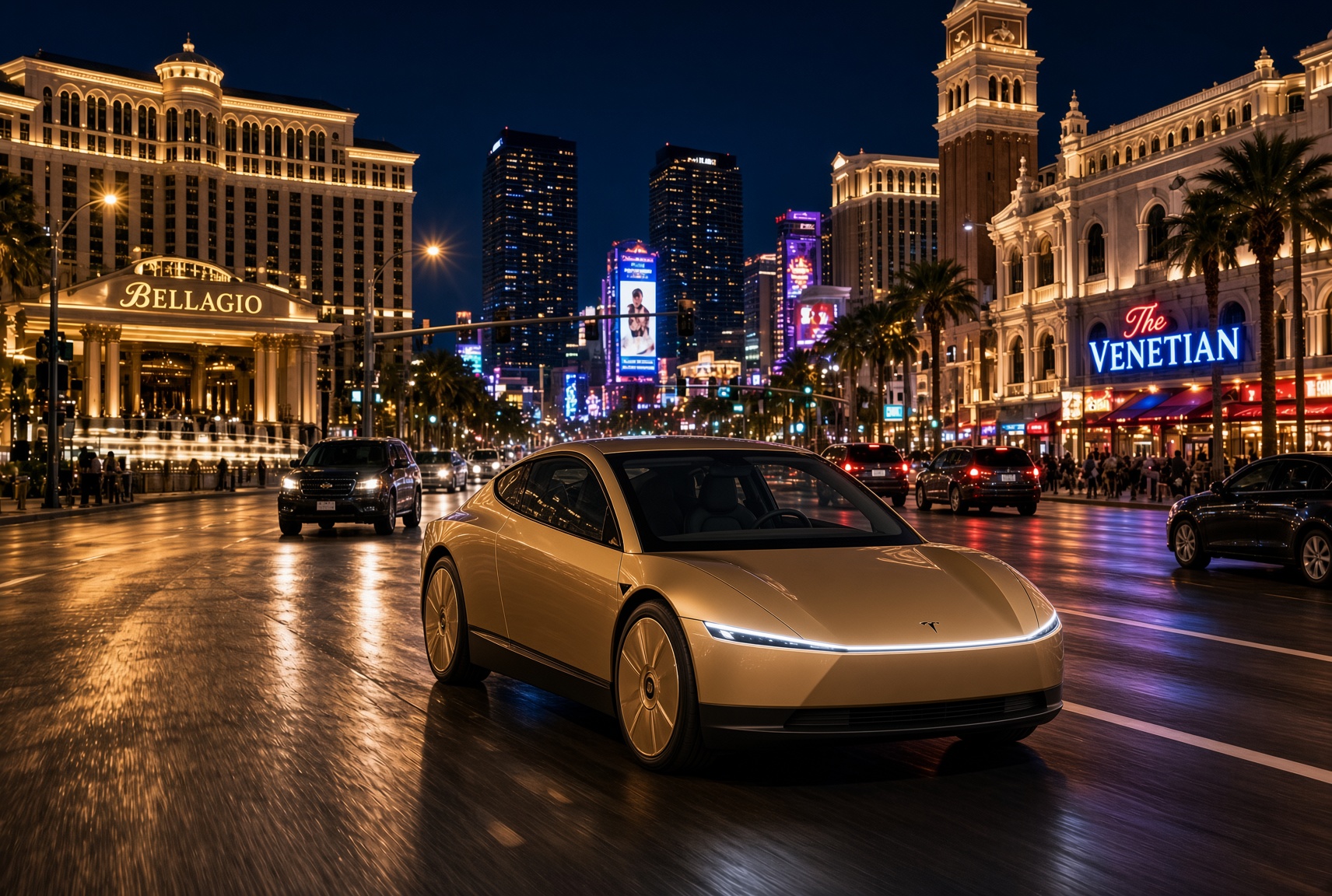
For a century, the car has asked the same thing of its owner, which is basically to pay attention. Even the best ride-hailing app like Uber or Lyft only moved the problem into someone else’s hands. You stopped driving, but you still sat in a stranger’s car, while half listening, and wondering whether to take a phone call in the car without being rude. The Cybercab has no wheel, no pedals and no driver. With Grok @bot now live inside it, it becomes something else entirely, and I think that matters more than the fleet count that everyone is tracking.
Grok @bot is an agent, not a voice assistant. A rider signs in once, and from then on can say what they need and watch it happen. Order dinner from a favorite restaurant. Fill the grocery cart. Move money, answer email, adjust a calendar, push a work project forward. Tesla engineer Yun-Ta Tsai confirmed it is enabled across every Cybercab and the rest of the Model Y fleet, and Tesla’s own pitch is that Full Self-Driving handles the commute while Grok handles the errands.
Think about what that does to a thirty minute ride. Uber sells you a trip, while Waymo sells you the same trip in a more private setting. Tesla is selling the thirty minutes themselves, returned to you with an assistant attached. Errands that used to eat a Saturday get done between pickup and drop off. The ride stops being dead time between two places and becomes a place of its own.
Tesla integrates Grok Bot into its vehicles for the ultimate personal assistant
Best of all, your Bots follow you into any Cybercab, and presumably your own Tesla, then logs you out automatically when you step out. Anyone can bolt a chatbot onto a screen, but much harder to own the vehicle, the autonomy stack and the assistant at once. It also quietly ties SpaceX’s Super Intelligence business to Tesla’s fleet, after Tesla converted its xAI stake into SpaceX equity. The relationship between those two companies is getting harder to describe as separate.
This is also where the hard questions start, because an agent that can spend your money in a vehicle other people also ride in needs some answers. How does it handle a voice it shouldn’t trust? What gets recorded, who can see it, and for how long? What happens when a rider leaves halfway through a task?
If Tesla gets those answers right, the scoreboard changes. We have been counting Cybercabs and wait times. The more telling number may be what riders accomplish per trip. That is data almost no one else will ever have, and it is the real reason to watch Grok @bot.
What do you think? Leave me a comment.
Lifestyle
Tesla’s mirrorless Cybercab will give riders a visibility upgrade
Tesla engineer confirms Cybercab update letting riders pull up rear and repeater cameras on demand.
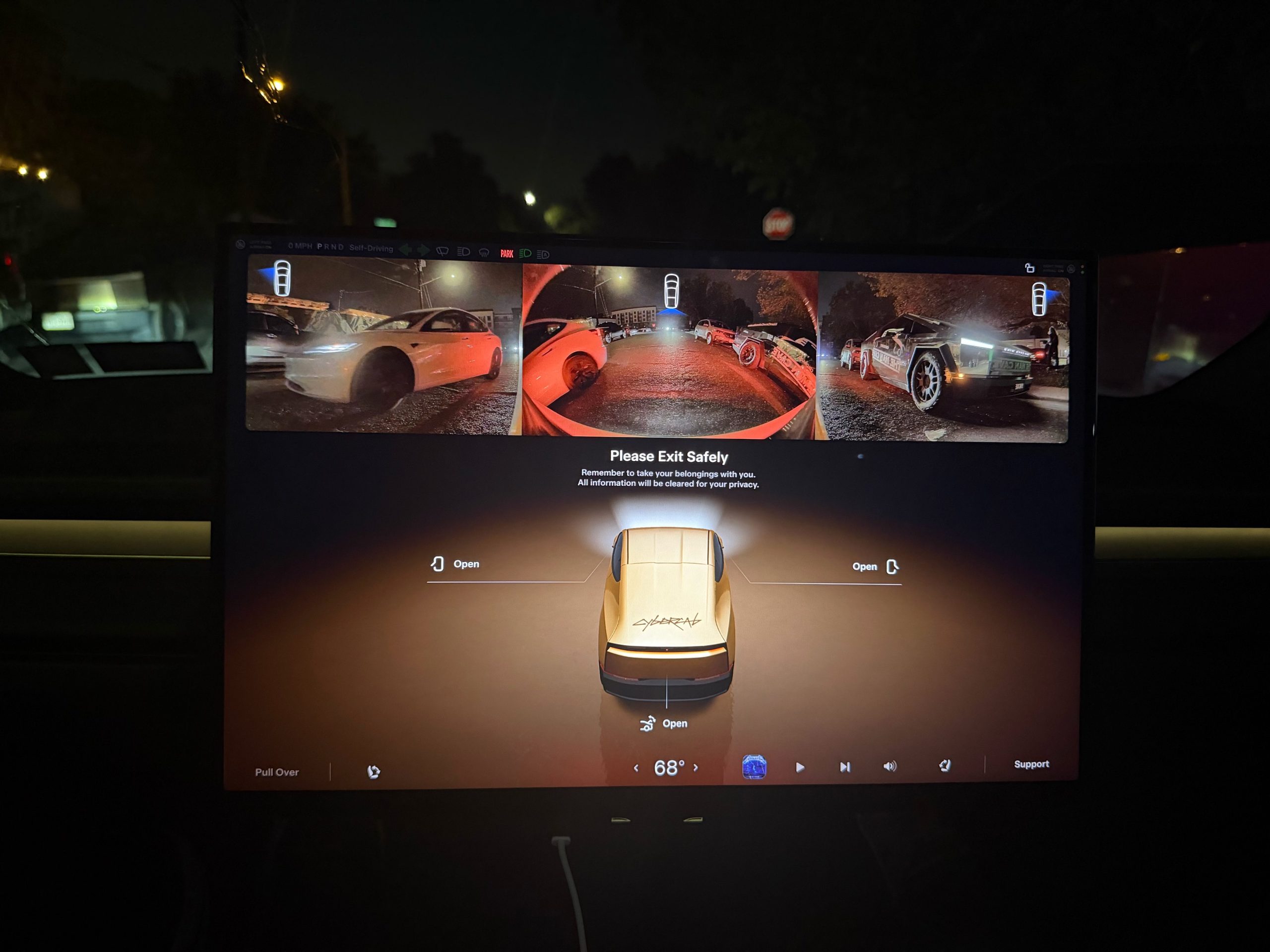
Tesla is working on a Cybercab update that would let passengers pull up the vehicle’s rear and side cameras on demand, and the request came straight from a rider.
The exchange played out on X late Friday. Cybercab rider Dan Burkland shared photos of the two-seater’s cabin screen after an evening ride, praised the UI team’s work, and left one request: let riders open the rear and repeater cameras whenever they want, “especially for peace of mind.” Tesla UI software engineer Evan (@CarCoder) answered with two words: “In development.”
The Tesla UI team absolutely crushed it with the infotainment software. Nicely done @CarCoder!
One feature request: Allow folks to pull up the rear & repeater cameras on demand. This would be great especially for peace of mind. https://t.co/mNAOSLx6pE
— Dan Burkland (@DBurkland) October 10, 2026
The idea fits a pattern Teslarati has tracked since public rides began. Days after paid Cybercab service opened in Austin, Tesla sent riders a survey that asked them to rate the touchscreen, the app and the cabin, and to pick the features they wanted most. We reported on that survey in September, and a camera view is the kind of small software change Tesla can push quickly if riders keep asking.
It also speaks to something unique about the vehicle. With no steering wheel, no pedals and no driver, passengers have no mirror to check and no way to see behind them. The hardware is clearly built for camera awareness, from the repeater cameras to the rear camera. Letting a passenger look through those same cameras would give a nervous first time rider a way to confirm what is around the car.
The timing matters because the fleet is growing fast. Tesla’s Robotaxi account said on Saturday that more than 300 Cybercabs are now serving Austin, an eightfold increase in 30 days, and Tesla AI chief Ashok Elluswamy named Dallas as the next city. More cars and more cities mean more people riding in a driverless vehicle for the first time, which is exactly when small trust features carry weight.
For now, the feature is confirmed only as in development. If Tesla follows its usual pattern with Cybercab software, riders could see it appear in a point release without any announcement, and Teslarati will watch for it.

Tesla Roadster owners to get “Flying Stunt Mode” and looping track access

How to use Grok Bot to block spam calls and texts

Tesla’s flying Roadster just revealed something bigger than the car

SpaceX reveals how its 1 Million AI satellite network will work and prevent space collisions

Elon Musk’s Boring Company lands a new Middle East deal, and Nashville is about to get faster


