Lifestyle
Top 5 Tips to Maintaining EV Battery Life

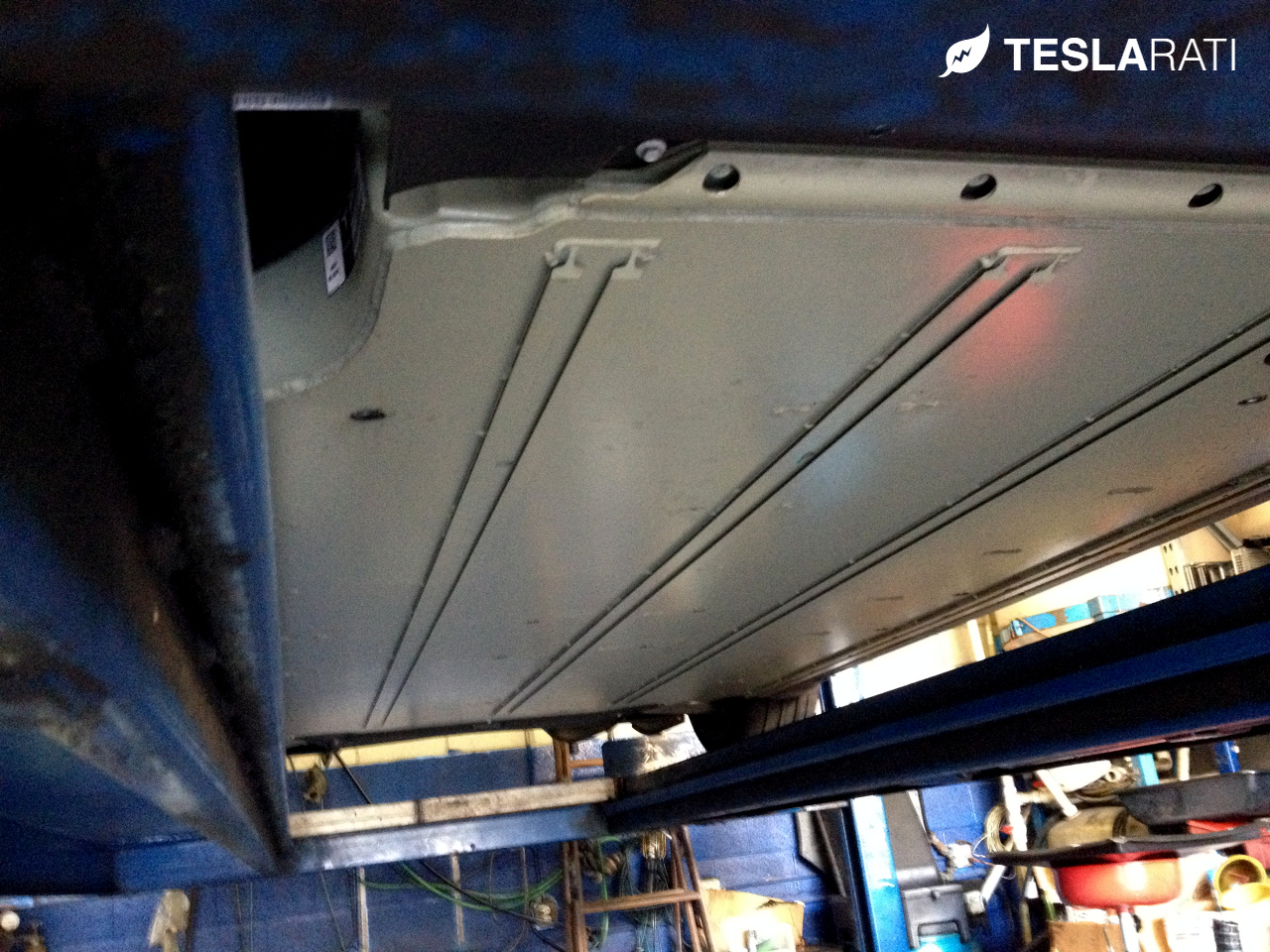
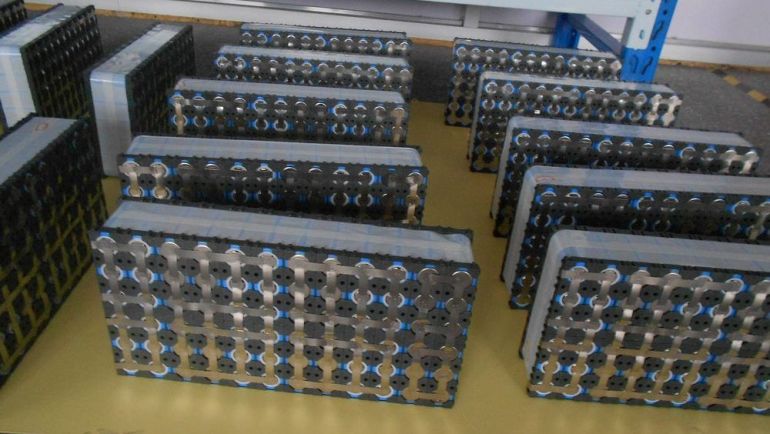 Electric vehicles are a joy to own but this new technology using advanced Lithium-ion battery packs requires a different type of maintenance than your traditional gasoline engine.
We countdown the top 5 maintenance steps that can be taken to extend the life of your EV battery.
5. Don’t leave your battery sit at a 100% state of charge
Most EVs have an option for a “Standard” charge or a “Range” or “Max” charge. By all means, do the maximum charge when you need it, but do it right before you start using the battery for the trip. Most EVs have charge timers to help you plan for this. If your EV doesn’t have that, do an overnight standard charge and then charge the last 10-20% in the AM before departure. Leaving a battery pack at max charge for even relatively short periods of time can possibly affect its life. As a rule of thumb, try to never let your battery sit at maximum state of charge for longer than 8 hours.
While you may be able to time your max charge and departure times well, daily charging to 100% is stressful to your battery. This is why most vendors offer “standard” or “normal” charge levels which wont help you achieve the maximum EPA range rated for your vehicle. If you don’t need the max charge, then don’t use it. Generally lithium-ion batteries do best when they operate in the 30% to 90% range for state of charge. Although a bit extreme, prolonging the time spent above or below that range theoretically may lead to a shorter pack life
Tesla Model S TIP: For overnight charging that requires a 100% MAX charge (ie prior to a Tesla road trip), set your “start charge time” to a time that will result in a full charge roughly 60 minutes before your departure.
4. Avoid deep discharging of the battery pack
Conversely, leaving your battery in a discharged state for an extended period may also impact its life. Most vendors protect batteries from becoming completely discharged as that can effectively “brick” the battery and leave it completely useless. The general rule of thumb is to plug in and charge whenever you can. That doesn’t mean going out of your way for a few kW of charge, but it does mean plugging your car in nightly and maintaining a reasonable charge level. What is a low state of charge? Under 30% charge is generally considered low and thus you should not let your EV sit at that low state of charge for an extended period.
MUST SEE: Decoding Your Tesla Battery Pack Version
Also beware that EVs consume power even when not being driven. With the Model S, it loses about 1% of its charge per day.
3. Be mindful of extreme temperature conditions
This is less applicable to the Tesla Model S which has its own built in thermal management system that pre-conditions the battery (ie. warms the pack when too cold and vice versa), but the general rule of thumb for batteries of Lithium-ion composition is to keep the battery pack between 20F – 85F.
Heat is the enemy of Lithium-ion and may increase battery degradation when consistently exposed to high temperatures. This phenomenon was enough to motivate Nissan to produce a “hot climate battery” for their LEAF after owners within hotter climates complained of battery loss.
Conversely, extreme cold weather can impact performance for a battery of lithium-ion chemistry while lowering the discharge capacity.
2. Plan ahead for extended storage
If you’re going away on vacation or for a business trip the best thing for your car is to set the charge level to 50% and leave it plugged in. If you’re leaving your EV at the airport or somewhere where you can’t leave it plugged in beware that you’re going to lose some charge per day. Charge to a level where you can get to the airport, let it sit for the trip and then still have enough charge with buffer to get home. Don’t let it sit unplugged at an airport for days on end at a 90% charge state if possible. Still, leaving it at 90% is better for the battery (and you) than leaving it at 10% and coming back to find the battery completely discharged.
1. Periodically fully charge and “balance” your battery
Lithium-ion batteries are designed to minimize the “memory” issues often found in older battery technologies, however the battery packs in EVs are more complex and often comprised of multiple individual batteries packed together into removable modules. There’s as many as 7,000 individual cells in the Model S.
Battery balancing is about maximizing your battery’s capacity and evening out the charge distribution. Modern EV battery packs include an automatic battery balancing component, but there’s steps that you can take to help the process along.
While you may never need the maximum range that your battery can provide and you may never take long trips, a periodic range or max charge is helpful to your battery’s management system. I’d suggest doing this about once every 3 months or so and keep in mind that after you fully charge you should not let it sit, that would be a violation of battery management rule #5.
Disclaimer: We’re dealing with expensive components. Read the manual for your EV, search your EV forums, develop your own rules, be consistent, but adjust as needed. The rules above are general rules for any EV that may help extend the life and health of your battery. Your own mileage (range!) may vary.


Elon Musk
How to use Grok Bot to block spam calls and texts
Musk told users to ask Grok Bot to scrub their phone numbers from spam lists.

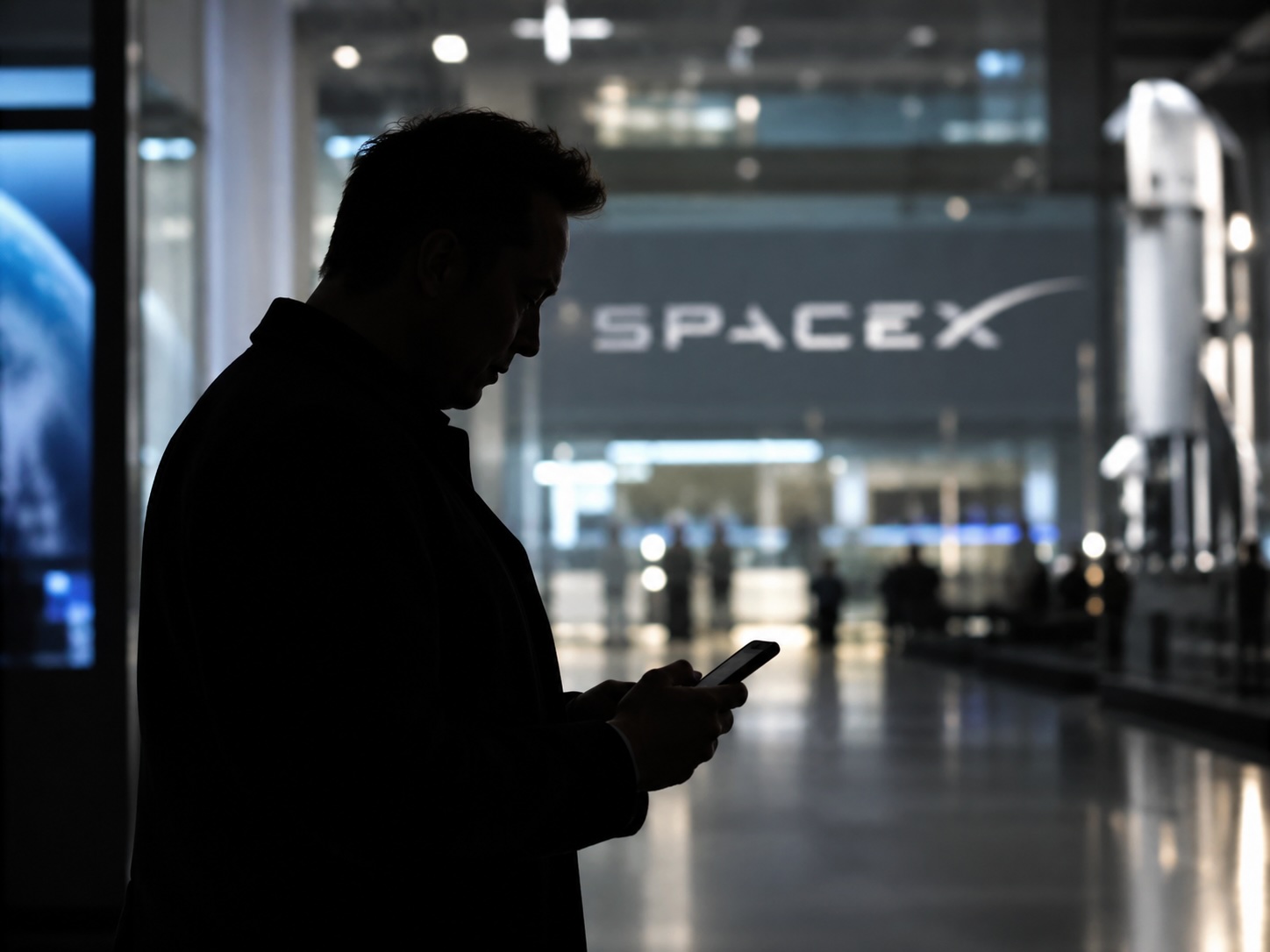
Elon Musk has a new use case for Grok Bot, and it is the spam call. On Thursday he replied to an X user named Arash with a short instruction: “Ask your @Grok @Bot to remove your phone number from spam call & text lists!” Arash had said he got tired of the calls, had an AI bot find his number on listing sites and file removal requests, and packaged the process as a free skill for others.
The skill is called Spam-Call Scrubber, which is described to find a phone number on people search sites and data brokers, submits the opt outs, completes the confirmation emails those sites send back, and rechecks on a schedule the user picks. Using it requires the Grok Bot app. The pitch is time saved, since most broker opt outs sit behind separate forms on separate sites.
Ask your @Grok @Bot to remove your phone number from spam call & text lists!
— Elon Musk (@elonmusk) October 15, 2026
Musk said Grok Bot now gives each bot its own email address, and that it can detect scam emails. On Thursday he also said SpaceX would make users whole if the bot botches a purchase or leaks a card, then told users to shop away from Amazon after the retailer blocked the agent, as Teslarati reported. The terms of service we reviewed at the time put responsibility for what an agent does on the user.
For Tesla owners, Grok Bot is not just a phone app. Tesla brought Grok Bot into its vehicles on September 22, and we argued earlier this week that the Cybercab’s real advantage may be the errands it runs during a ride. Every Cybercab and the rest of the Model Y Robotaxi fleet has it enabled. The more routine tasks like this one become, the more a rider has reason to hand over something personal in the back seat.
The new Spam-Call Scrubber skill can be downloaded for free and works on sites that honor removal requests, while noting that listings can reappear, and illegal robocallers do not check any registry. Whether Spam-Call Scrubber cuts anyone’s call volume is something the first wave of users will find out, and Musk’s endorsement guarantees that wave is coming.
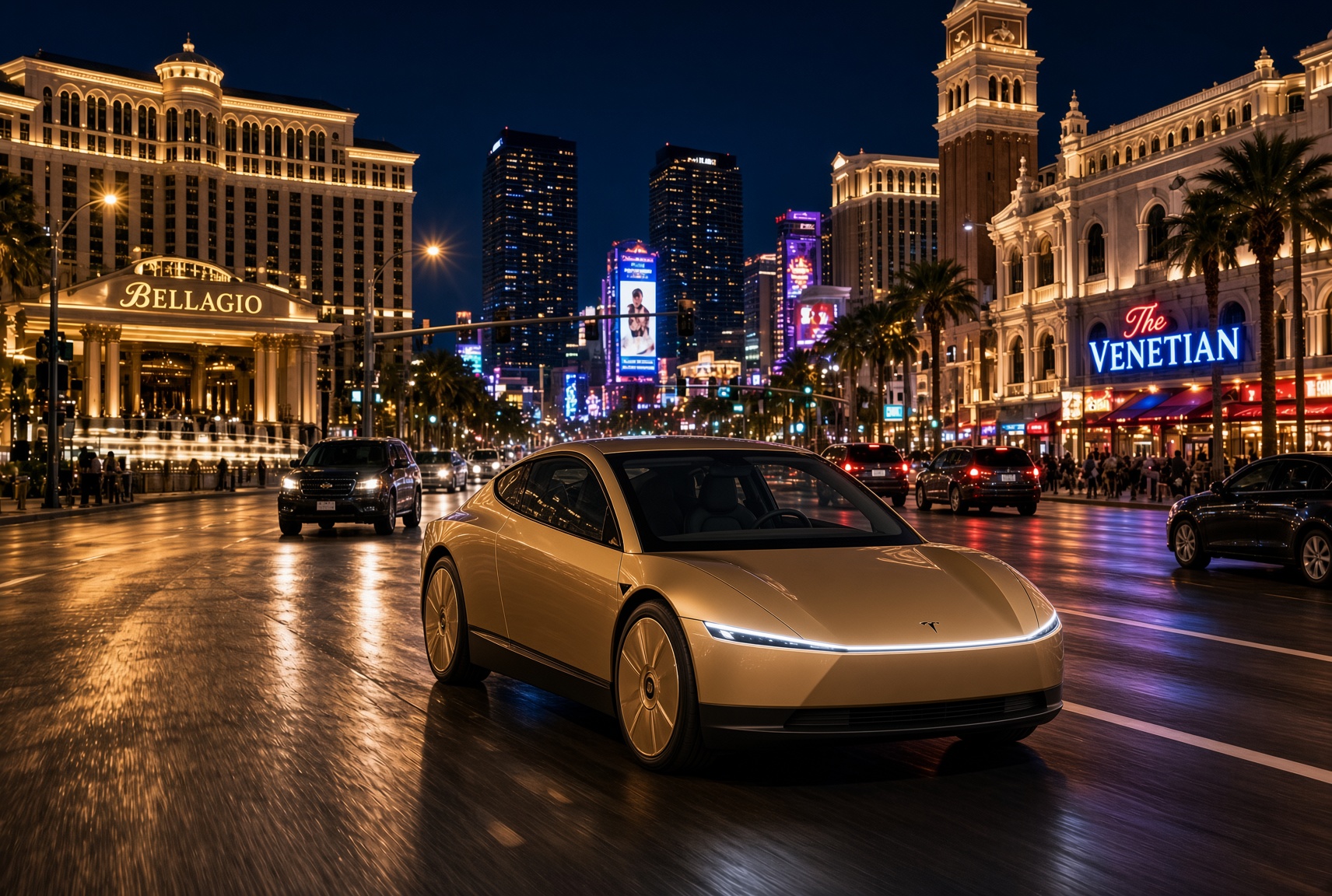
For a century, the car has asked the same thing of its owner, which is basically to pay attention. Even the best ride-hailing app like Uber or Lyft only moved the problem into someone else’s hands. You stopped driving, but you still sat in a stranger’s car, while half listening, and wondering whether to take a phone call in the car without being rude. The Cybercab has no wheel, no pedals and no driver. With Grok @bot now live inside it, it becomes something else entirely, and I think that matters more than the fleet count that everyone is tracking.
Grok @bot is an agent, not a voice assistant. A rider signs in once, and from then on can say what they need and watch it happen. Order dinner from a favorite restaurant. Fill the grocery cart. Move money, answer email, adjust a calendar, push a work project forward. Tesla engineer Yun-Ta Tsai confirmed it is enabled across every Cybercab and the rest of the Model Y fleet, and Tesla’s own pitch is that Full Self-Driving handles the commute while Grok handles the errands.
Think about what that does to a thirty minute ride. Uber sells you a trip, while Waymo sells you the same trip in a more private setting. Tesla is selling the thirty minutes themselves, returned to you with an assistant attached. Errands that used to eat a Saturday get done between pickup and drop off. The ride stops being dead time between two places and becomes a place of its own.
Tesla integrates Grok Bot into its vehicles for the ultimate personal assistant
Best of all, your Bots follow you into any Cybercab, and presumably your own Tesla, then logs you out automatically when you step out. Anyone can bolt a chatbot onto a screen, but much harder to own the vehicle, the autonomy stack and the assistant at once. It also quietly ties SpaceX’s Super Intelligence business to Tesla’s fleet, after Tesla converted its xAI stake into SpaceX equity. The relationship between those two companies is getting harder to describe as separate.
This is also where the hard questions start, because an agent that can spend your money in a vehicle other people also ride in needs some answers. How does it handle a voice it shouldn’t trust? What gets recorded, who can see it, and for how long? What happens when a rider leaves halfway through a task?
If Tesla gets those answers right, the scoreboard changes. We have been counting Cybercabs and wait times. The more telling number may be what riders accomplish per trip. That is data almost no one else will ever have, and it is the real reason to watch Grok @bot.
What do you think? Leave me a comment.
Lifestyle
Tesla’s mirrorless Cybercab will give riders a visibility upgrade
Tesla engineer confirms Cybercab update letting riders pull up rear and repeater cameras on demand.
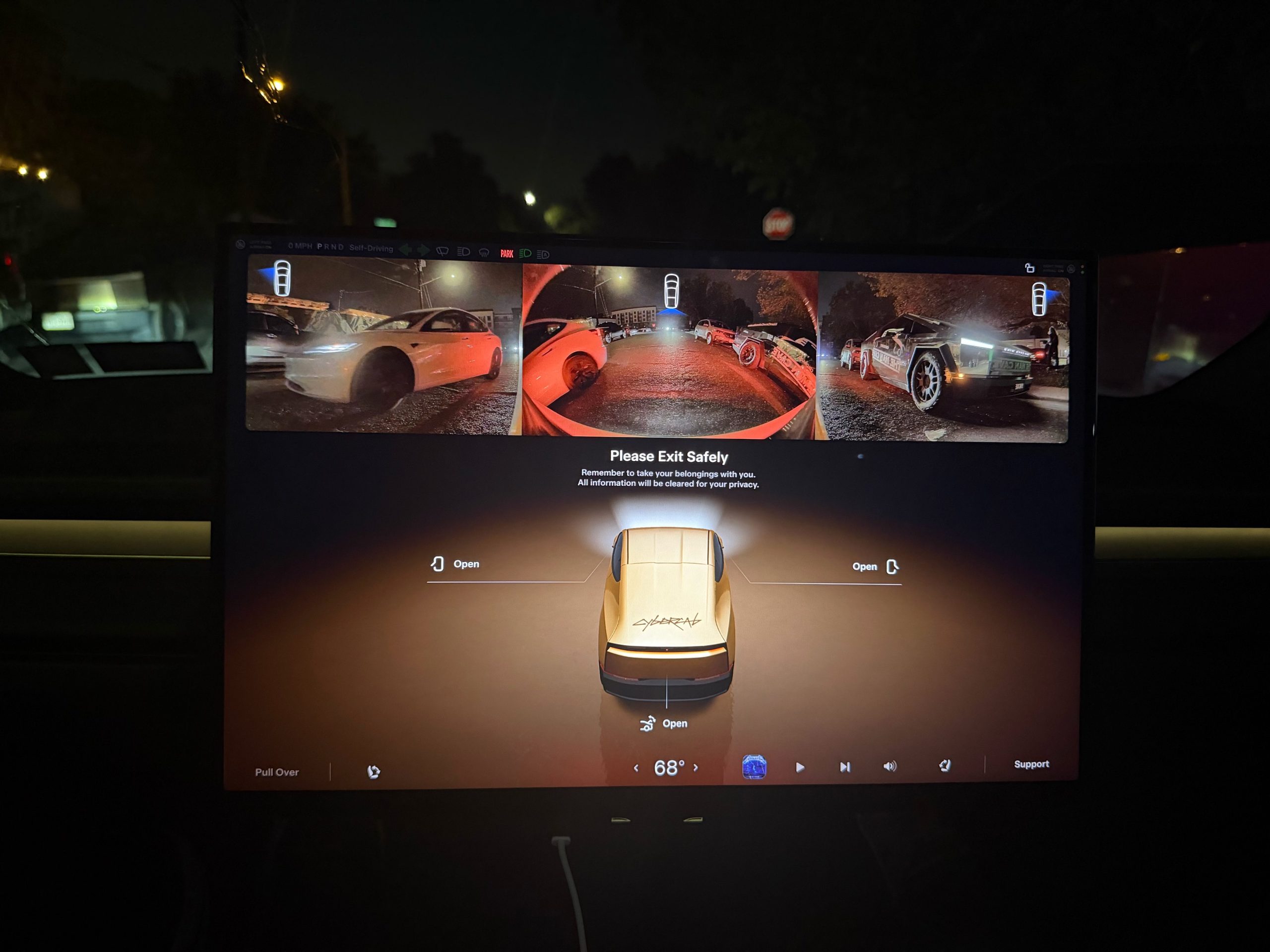
Tesla is working on a Cybercab update that would let passengers pull up the vehicle’s rear and side cameras on demand, and the request came straight from a rider.
The exchange played out on X late Friday. Cybercab rider Dan Burkland shared photos of the two-seater’s cabin screen after an evening ride, praised the UI team’s work, and left one request: let riders open the rear and repeater cameras whenever they want, “especially for peace of mind.” Tesla UI software engineer Evan (@CarCoder) answered with two words: “In development.”
The Tesla UI team absolutely crushed it with the infotainment software. Nicely done @CarCoder!
One feature request: Allow folks to pull up the rear & repeater cameras on demand. This would be great especially for peace of mind. https://t.co/mNAOSLx6pE
— Dan Burkland (@DBurkland) October 10, 2026
The idea fits a pattern Teslarati has tracked since public rides began. Days after paid Cybercab service opened in Austin, Tesla sent riders a survey that asked them to rate the touchscreen, the app and the cabin, and to pick the features they wanted most. We reported on that survey in September, and a camera view is the kind of small software change Tesla can push quickly if riders keep asking.
It also speaks to something unique about the vehicle. With no steering wheel, no pedals and no driver, passengers have no mirror to check and no way to see behind them. The hardware is clearly built for camera awareness, from the repeater cameras to the rear camera. Letting a passenger look through those same cameras would give a nervous first time rider a way to confirm what is around the car.
The timing matters because the fleet is growing fast. Tesla’s Robotaxi account said on Saturday that more than 300 Cybercabs are now serving Austin, an eightfold increase in 30 days, and Tesla AI chief Ashok Elluswamy named Dallas as the next city. More cars and more cities mean more people riding in a driverless vehicle for the first time, which is exactly when small trust features carry weight.
For now, the feature is confirmed only as in development. If Tesla follows its usual pattern with Cybercab software, riders could see it appear in a point release without any announcement, and Teslarati will watch for it.

SpaceX’s Gwynne Shotwell just made a quiet gesture toward Tesla

Tesla Roadster owners to get “Flying Stunt Mode” and looping track access

How to use Grok Bot to block spam calls and texts

SpaceX reveals how its 1 Million AI satellite network will work and prevent space collisions

Tesla Roadster: Three configs, one can fly, 0-60 in 0.8 seconds


