News
BMW’s potential EV program revival to be decided as Oliver Zipse nears new CEO post

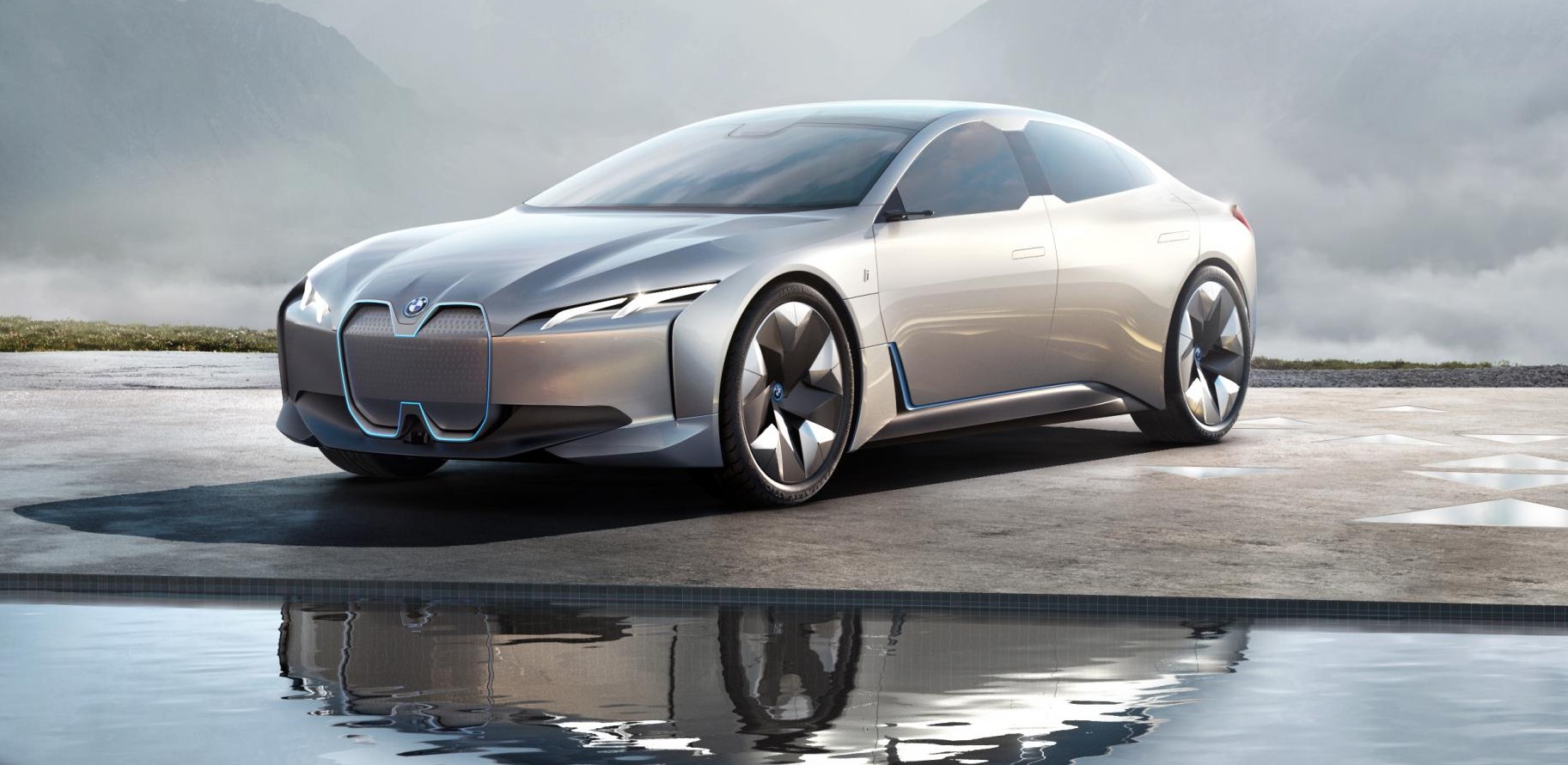
BMW’s electric car initiative is at a crossroads. After mostly being shelved by outgoing CEO Harald Krüger during his years leading the company, BMW’s EV program has the potential to see a revival with the naming of its new chief executive. Fortunately, recent reports indicate that BMW is set to name the rather understated Oliver Zipse over Klaus Fröhlich as the carmaker’s new CEO.
BMW’s supervisory board is expected to discuss the company’s new leadership at the Spartanburg, South Carolina plant on Thursday. So far, reports indicate that the 55-year-old Zipse is the favored candidate over the 59-year old Fröhlich, who serves as BMW’s Head of Development. Fröhlich had attracted a number of headlines as of late, particularly when he insisted that there was no demand for electric vehicles.
Zipse joined BMW as a trainee back in 1991, rising through the company’s ranks and holding several posts. Prior to becoming a board member for production, Zipse worked as the carmaker’s Head of Brand and Product Strategies. Over his years with the company, Zipse has shown proficiency in manufacturing efficiencies. BMW’s efficient production network, which was expanded in Hungary, China, and the United States, emerged under Zipse’s lead, and it has helped the carmaker deliver healthy profit margins.
Auto analysts and industry experts believe that it will take more than manufacturing expertise to lead BMW into the EV era. In a statement to Reuters, Carsten Breitfeld, a former BMW engineer who currently serves as the chief executive of China-based ICONIQ motors, noted that Zipse’s apparent appointment “goes far beyond optimizing an existing business.” “He needs to be able to build teams, to attract key talent, and to promote a culture which is increasingly oriented along consumer electronics and internet dynamics,” the former BMW engineer said.
One key aspect that Zipse would have to work on is BMW’s electric car program, which has lagged against rivals like Mercedes-Benz and Audi, both of which have already released, or a least unveiled, their own premium all-electric vehicles. BMW actually had an early lead with the i3, but the vehicle was practically abandoned by the company when it failed to get traction.
Silicon Valley-based Tesla, a newcomer on the market, has so far established a substantial lead in the EV space, and its Model 3 sedan has started eating into the sales of popular gas-powered four-doors like the BMW 3-Series. UBS analyst Patrick Hummel addressed this, stating that “Tesla has a lead of three to four years in areas like software and electronics. The millennials are much more focused on these things. There is a risk that the Germans can’t catch up.”
BMW had already made a mistake in electric vehicles once. During the time of the i3, it was reported that CEO Harald Krüger’s reluctance to push low-margin EVs ultimately led to an exodus of talented engineers. Among these are Christian Senger, who is now a board member responsible for software for Volkswagen, and Markus Duesmann, who is reportedly in line to be Audi’s CEO in the future. If BMW does decide on Zipse, it could have another chance at breaking through the emerging EV market, albeit late.
Now, if BMW elects the electric car-dismissing Klaus Fröhlich as its next CEO instead, the German carmaker could be looking into even more turbulent years ahead.



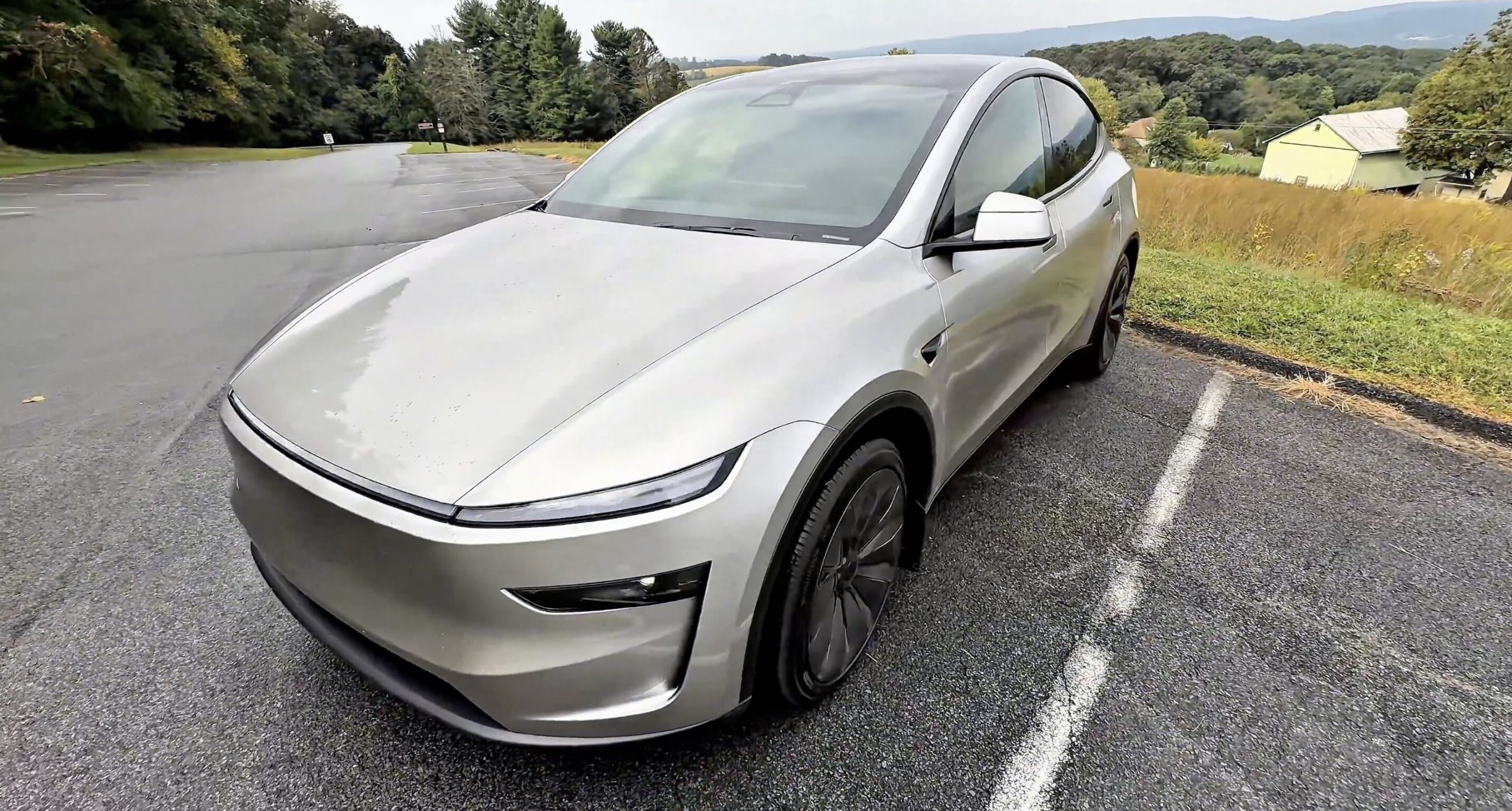
Last week, Tesla sent me the Model Y L for five days to test, assess, and enjoy for journalistic purposes. It’s always a treat when I get any media vehicle, and I’ve had the pleasure of working with Tesla and Ford for hands-on reviews of their products.
This one was exceptionally exciting for a few reasons: first, because it is the car I own, but bigger, so I was really excited to see if that extra space was worth it; and second, because my Fiancée (we’re down to just 18 days ’til she’s officially my wife!!!) and I plan to fill a car up with kids in the near future, so it was really nice to have a trial with a car that would potentially be in our driveway in a few years.
I did a full 10-minute video review of the Model Y L, which I will post at the bottom of this more condensed written version. If you prefer to watch a review, go ahead and skip to the bottom for that.
For those who prefer the writing, I’ll break down the big things about the Model Y L that I noticed, focusing on the big addition/difference that this car has from the Model Y: the third row. Tesla also added small-but-mighty changes to the Y L that I really wish were on my Model Y Premium, so I’ll be sure to mention those as well.
What Makes It Different from the Model Y?
Credit: TESLARATI
The first thing to note is that the interior of this vehicle, from the front row, is generally the same. It truly does feel like you’re in the same exact car with a slightly different seating layout. Of course, Tesla interiors do feel this way, at least with the Model 3 and Model Y, but there are no drastic differences between the Model Y L and the Model Y from the front row.
This should be expected, so definitely do not go into it thinking you’ll know you’re in a different car. It is a very similar experience to the Model Y.
Tesla Model Y L: new features that make it better than the standard Model Y
The true differences come from the back two rows. The only true difference from the front is the addition of a new Dynamics Feature that falls under the “Ride & Handling Priority” menu, which now allows you to adjust the suspension damping to prioritize a comfortable ride for everyone or one that is noticeably better from the rear two rows. In terms of ride comfort, the front rows definitely feel the impact of this; it is a noticeable difference and much stiffer in the driver’s seat with this setting turned to prioritize the rear occupants.
What changes from an engineering standpoint between these two settings @elonmusk @larsmoravy?
There is a very noticeable difference in comfort from the driver’s seat between these two settings https://t.co/62bdZJOr26 pic.twitter.com/KFP12jleHj
— TESLARATI (@Teslarati) September 14, 2026
There are also a series of small improvements, like the rear taillight is now up toward the spoiler, which must be a strategy for making the rear glass actually useful in the Y L compared to the regular Y.
Pretty crazy how much different the rear windshield is compared to the Model Y
Not even close in size https://t.co/62bdZJOr26 pic.twitter.com/IjNbWwMBcS
— TESLARATI (@Teslarati) September 14, 2026
Some other small changes are the addition of small magnets for the sub-trunk lid, which is a great addition and something I’d like to do in my Model Y; it sounds to me as if the Model Y L liftgate motor is less whiny than the one in my Model Y; and all three rows of climate are controllable from the front touchscreen.
I talk about them in a short video here:
🚨 Five things you might not know about the new Tesla Model Y L! pic.twitter.com/I42VTQoS5R
— TESLARATI (@Teslarati) September 14, 2026
Second and Third-Row Legroom
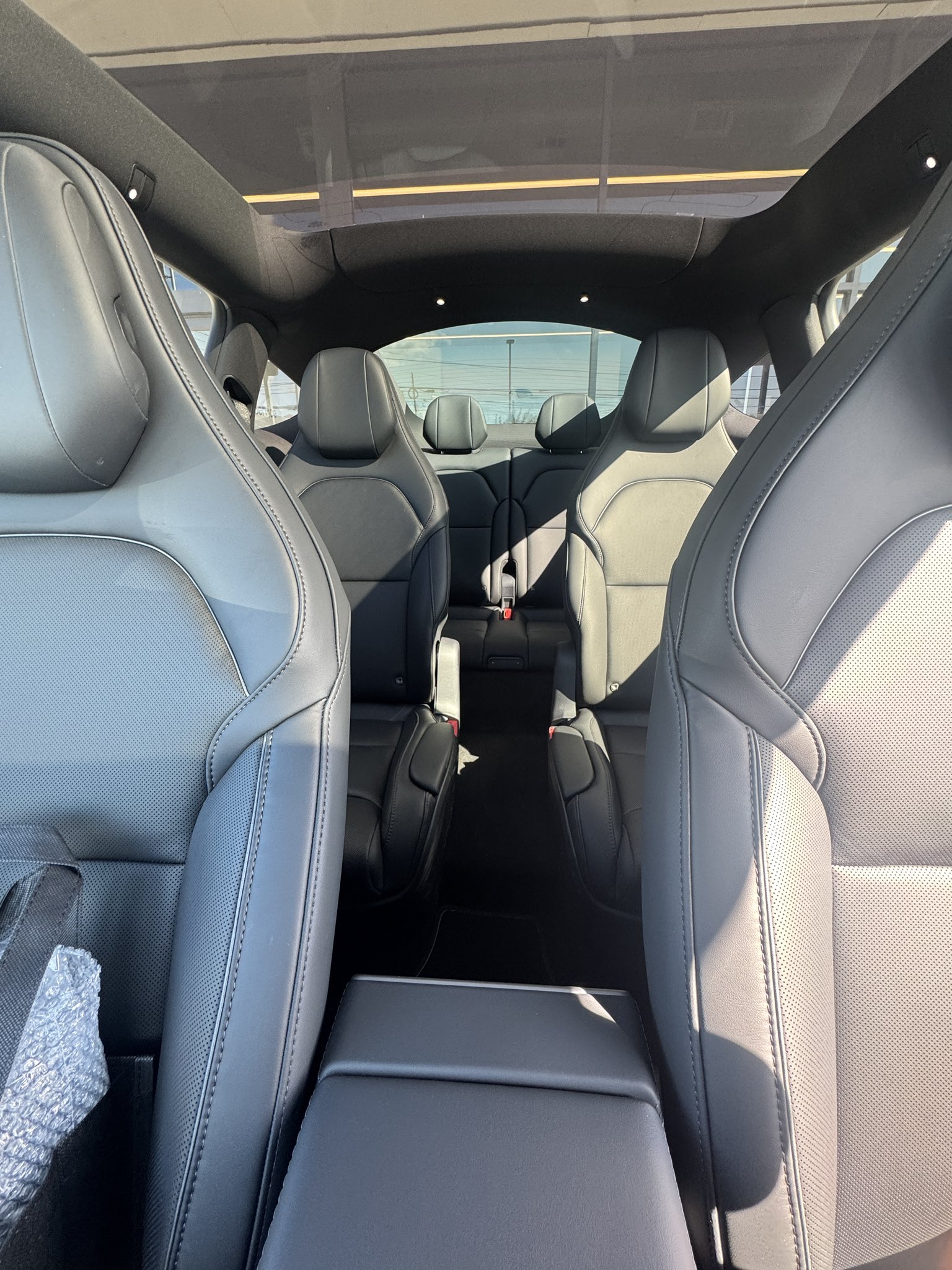
The major feature of the Model Y L is the third row, and Tesla did a great job of making it spacious enough for more than just your nine-year-old nephew. It actually does have a suitable amount of legroom for adults, but it is dependent on how tall the people are in the first- and second-row seats in front of you.
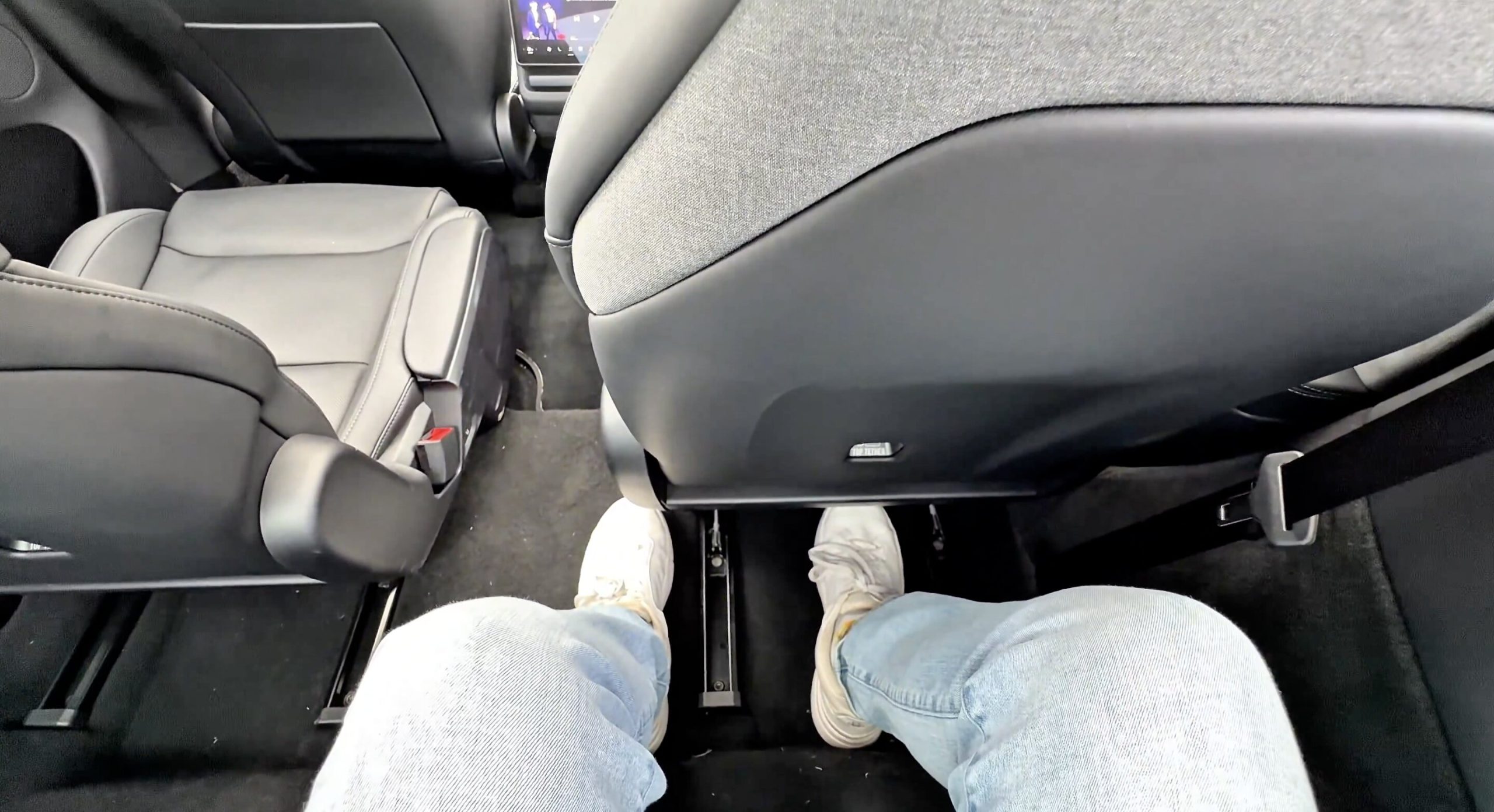
This is where I caught some slack from those who have also sat in the Model Y L and believe there is enough room for anyone of any height. I certainly believe that those who are not complainers could sit back there for a multiple-hour drive and not complain. I would enjoy sitting in the back row because I think it is comfortable; the vents for air are perfectly positioned on the C pillars for maximum comfort, and I found that there was enough room back there for me. I’m 5′ 8″, so I’m definitely not tall. However, I found that I had more than enough legroom:
Credit: TESLARATI
The picture above is where my Fiancèe could sit comfortably in the second row in front of me, and she is 5′ 1″. There is a lot of give and take with these seats, and I believe most groups could make it work. She was comfortable in the second-row seat in front in this position, and as you can see, I have plenty of room. She could easily come back a few inches, and I’d still be comfortable.
This is where I think people would truly benefit from seeing what the space in this car looks like for themselves. To me, I found it more than suitable for a group of friends to go out in and for everyone to be comfortable. There might be some strategy to it if you have some taller friends, but it’s definitely doable.
Overall, the space in the Y L in the back two rows is great: the second-row Captain’s Chairs have mechanical armrests that go down automatically when you exit the car, and come back up on their own when you return. The second row also has ventilated seats; you’ll only have the heat option in the third row.
Credit: TESLARATI
Overall Thoughts
It was really a great five days with the Model Y L, and I do believe that this is a great car for families. I do not believe it is the perfect one. It is really an excellent option for those who can make do with what is truly a compact crossover stretched out to make way for a third row. However, I think that more families simply want something large, like Tahoe or Expedition large, and the Model Y L does not necessarily answer that call.
I think it is more than reasonable for a family of six to have this car and make it work. It is safe, it has Full Self-Driving, which I believe will be a non-negotiable for me moving forward in car buying; and it is relatively affordable, with the Launch Edition coming in at a price of $61,990 before options. Not going to a gas station for the past year has really been a lifesaver for me, especially with home charging saving us so much money.
Tesla will need to have an answer for the families that want something like a Cyber SUV or simply something that qualifies as a full-size SUV. I just truly do not think that every family will see this as enough space, and I think that’s understandable. If someone were to want to take an overnight trip with their four kids, I don’t know if it would be the easiest cargo situation because without that third row folded down, that trunk space is confined to just 14.8 cubic feet. I couldn’t take four kids and a wife to Ocean City for a week with using only the trunk space. We’d likely have to get creative, and I think that’s what many families want to avoid.
For comparison’s sake, a Tahoe offers 25.5 cubic feet of trunk space, which is still tight, but much more manageable and forgiving.
With all that being said, the Model Y L is still a great option and I’d be willing to see past the cargo issues because of FSD and the safety of Tesla vehicles overall. For our full review, check out the video below:
Elon Musk
Why automakers keep turning down Elon Musk’s Tesla Full Self-Driving offer
Elon Musk confirms no automaker has ever accepted Tesla’s offer to license Full Self-Driving software.

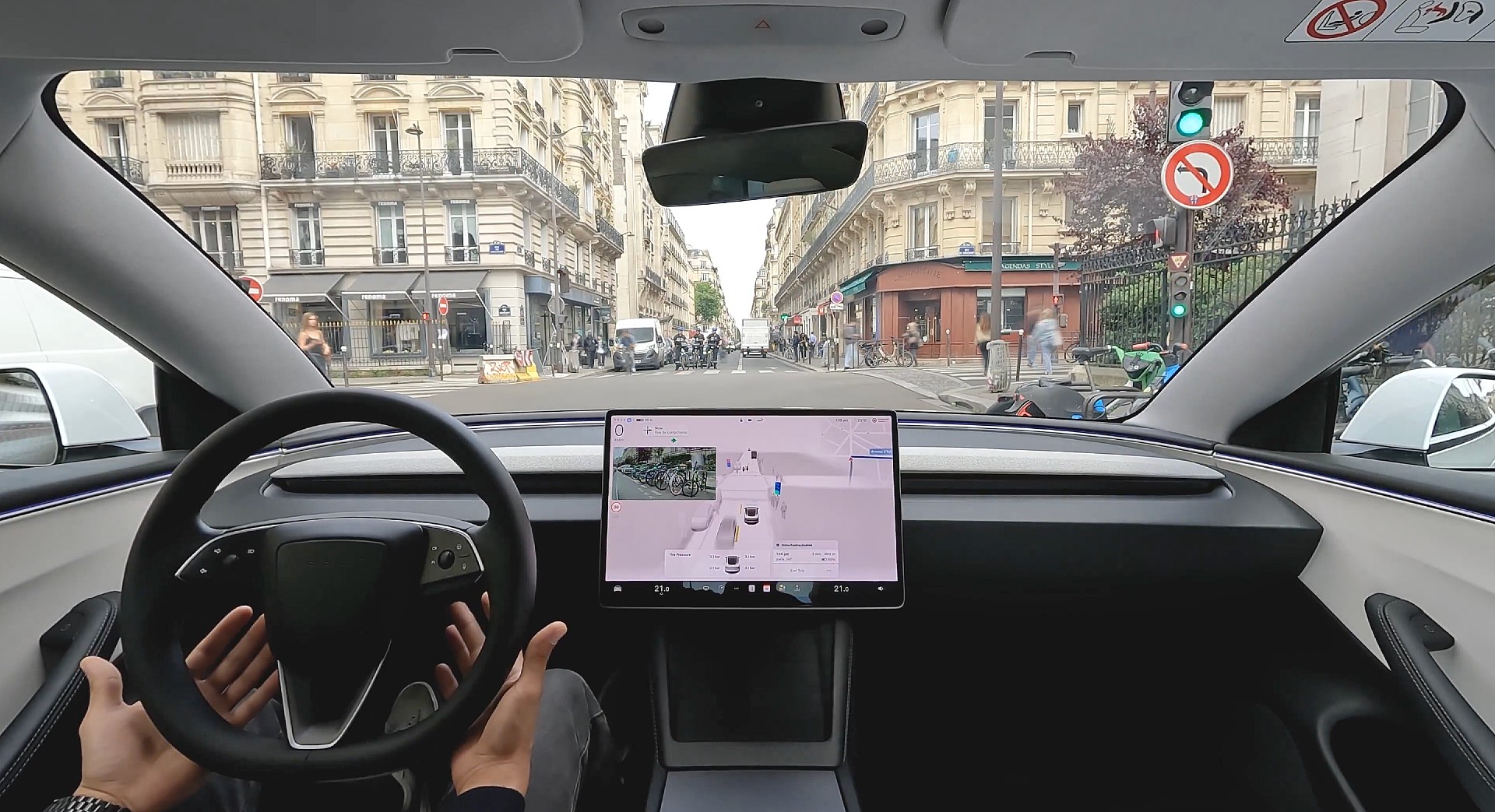
Elon Musk gave a brief answer on X Monday that confirmed that Tesla’s standing offer to license Full Self-Driving to other automakers still has zero takers. Sawyer Merritt wrote that “Tesla has for years openly invited other automakers to license FSD. None of them have accepted,” responding to a prediction from Boom Supersonic founder Blake Scholl that Tesla would eventually open FSD the way it opened its Supercharger network to rival brands. Musk’s reply to Merritt was one word: “Exactly.”
It is not the first time Musk has made this point. He said something similar in November, when he called legacy automakers reluctance to adopt FSD “crazy,” and Tesla has floated the offer publicly since at least 2021. Scholl’s prediction touches on something real. Once NACS became the de facto charging standard, adoption from Ford, GM, Rivian and others followed within about a year. FSD licensing was supposed to work the same way once Tesla built enough of a lead that switching made sense for everyone.
Tesla has for years openly invited other automakers to license FSD. None of them have accepted. https://t.co/kgz4idpoUM
— Sawyer Merritt (@SawyerMerritt) September 22, 2026
The case for licensing now is stronger than it was two years ago. Waymo and Zoox are logging hundreds of thousands of unsupervised autonomous miles, along with Tesla’s own Robotaxi fleet. Every automaker still selling driver assist systems that lag FSD has given the robotaxi conversation to Tesla, Waymo and Zoox by default. Licensing FSD would let a GM or a Ford compete on the same field without spending a decade and billions of dollars building a stack from scratch, the same argument Tesla made when it opened the Supercharger network to bring more EVs onto its chargers.
But FSD is not a connector standard. As one reply to Musk’s post pointed out, licensing FSD is not a software license the way NACS was a plug spec. It requires adopting Tesla’s eight camera layout and its onboard compute architecture, meaning a licensee’s cars would effectively become Tesla hardware wearing someone else’s badge. That is the visible obstacle. The less visible one is data. A licensed FSD stack would report back the same telemetry Tesla collects from its own fleet, giving Tesla a continuous read on how a competitor’s cars are actually driven, where they struggle, and how often drivers intervene. For an automaker trying to build its own autonomy program, or simply trying to keep its build quality and safety record private, handing Tesla that visibility could be a bigger cost than the hardware bill. It is the reason the Supercharger comparison only goes so far. Opening a charging plug cost Tesla very little. Opening FSD would cost a rival something it cannot get back.
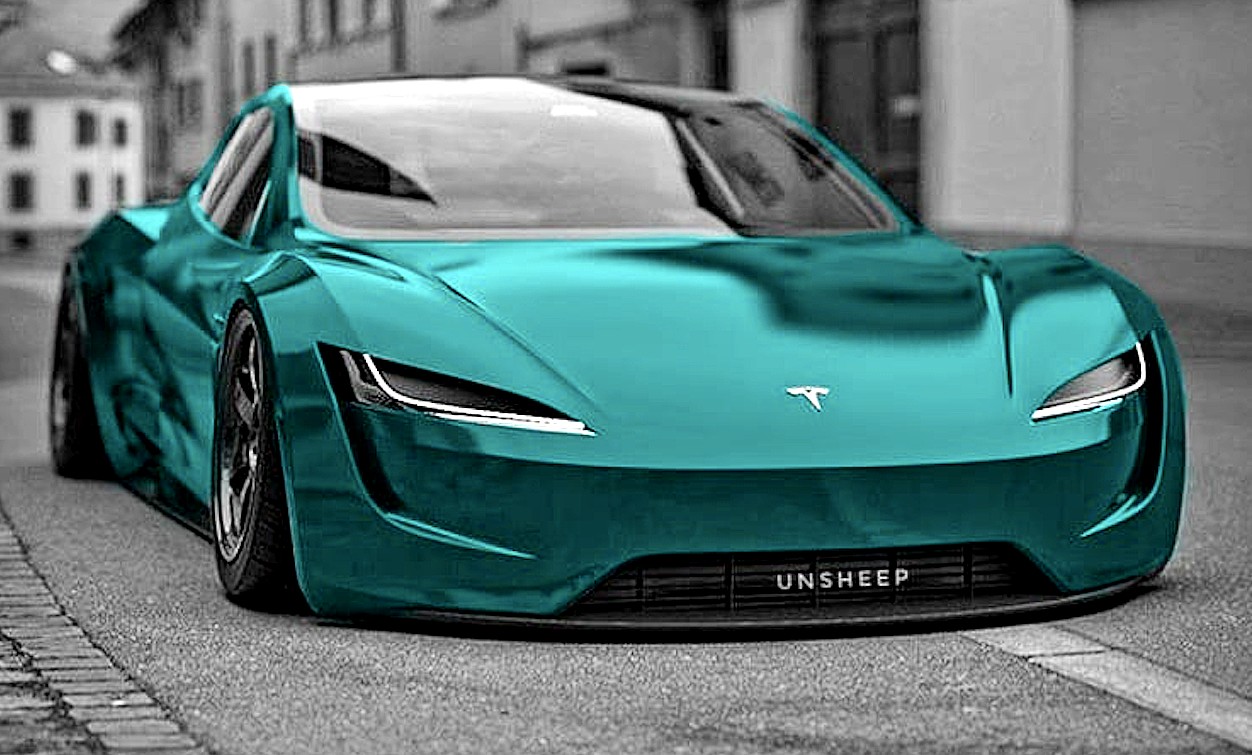
Tesla has reopened reservations for its long-delayed next-generation Roadster, asking buyers for a $50,000 deposit just days before an October 1 reveal event in Waco, Texas. The move revives a reservation process first launched in 2017 and later paused when Tesla pulled pricing from its website in 2021.
The reservation page requires an immediate $5,000 credit-card payment, described as fully refundable, followed by a $45,000 wire transfer due within 10 days, which is identical to what was expected previously. Reservations are not considered final until the wire clears.
The structure matches the 2017 terms Tesla used when it first collected deposits after unveiling a prototype. Tesla has not published a confirmed retail price or production start date on the order page.
Go buy a Roadster pic.twitter.com/n7rhouAmIS
— TESLARATI (@Teslarati) September 21, 2026
The October 1 event is scheduled in Waco, about 90 minutes north of Tesla’s Austin headquarters and near SpaceX’s McGregor rocket test site. Tesla sent invitations to existing reservation holders and posted a “Go for launch” teaser on September 12.
The Federal Aviation Administration (FAA) established a temporary flight restriction over the McGregor area from September 18 through October 2, consistent with plans for a demonstration involving SpaceX-designed cold-gas thrusters. Elon Musk has previously described the optional package as enabling extreme acceleration or brief hovering. Tesla has said the event will include pricing, specifications, and production targets.
The second-generation Roadster was first shown in November 2017 during Tesla’s Semi launch. Musk promised production in 2020, with claimed performance of 0-60 mph in 1.9 seconds, more than 250 mph top speed, and roughly 620 miles of range.
Those targets have slipped repeatedly.
Tesla later pointed to 2022, 2023, 2024, and 2025-2026 before indicating production would not begin until 2027 or 2028 at Gigafactory Texas. Design work has continued, with reports of a sharper, Cybertruck-influenced look replacing the original curvy prototype.
Original reservation holders who paid $50,000 in 2017, or $250,000 for the Founders Series, have waited nearly nine years without a production car. Some high-profile customers canceled. Tesla’s decision to reopen orders now, after previously shutting them down, tests whether new buyers will commit substantial funds before seeing a finalized production vehicle. The October 1 event is intended to answer remaining questions about what those buyers will actually receive and when.

Did Tesla make the perfect car for families? Tesla Model Y L Full Review

Why automakers keep turning down Elon Musk’s Tesla Full Self-Driving offer


