News
Did Tesla make the perfect car for families? Tesla Model Y L Full Review

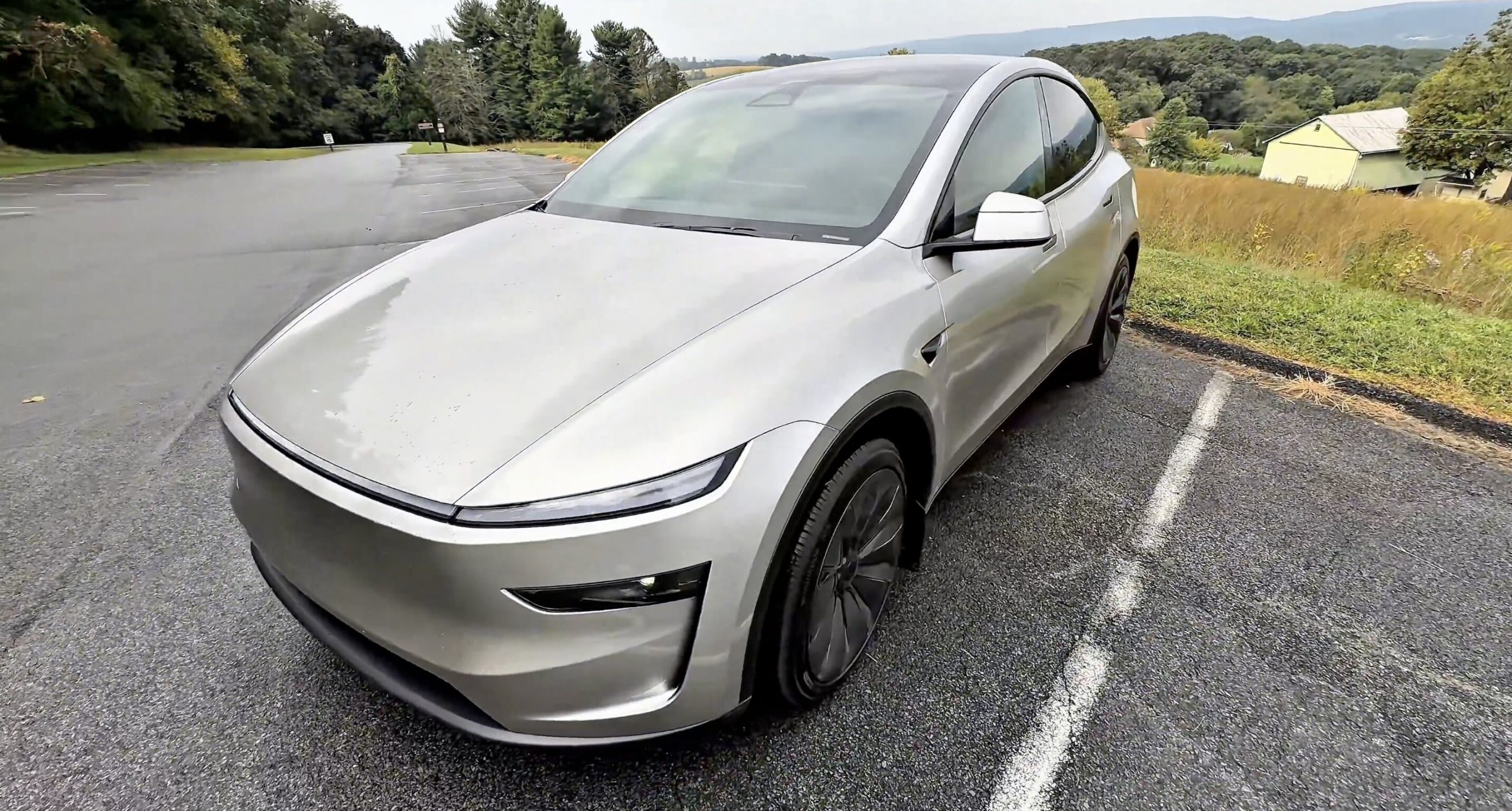
Last week, Tesla sent me the Model Y L for five days to test, assess, and enjoy for journalistic purposes. It’s always a treat when I get any media vehicle, and I’ve had the pleasure of working with Tesla and Ford for hands-on reviews of their products.
This one was exceptionally exciting for a few reasons: first, because it is the car I own, but bigger, so I was really excited to see if that extra space was worth it; and second, because my Fiancée (we’re down to just 18 days ’til she’s officially my wife!!!) and I plan to fill a car up with kids in the near future, so it was really nice to have a trial with a car that would potentially be in our driveway in a few years.
I did a full 10-minute video review of the Model Y L, which I will post at the bottom of this more condensed written version. If you prefer to watch a review, go ahead and skip to the bottom for that.
For those who prefer the writing, I’ll break down the big things about the Model Y L that I noticed, focusing on the big addition/difference that this car has from the Model Y: the third row. Tesla also added small-but-mighty changes to the Y L that I really wish were on my Model Y Premium, so I’ll be sure to mention those as well.
What Makes It Different from the Model Y?
Credit: TESLARATI
The first thing to note is that the interior of this vehicle, from the front row, is generally the same. It truly does feel like you’re in the same exact car with a slightly different seating layout. Of course, Tesla interiors do feel this way, at least with the Model 3 and Model Y, but there are no drastic differences between the Model Y L and the Model Y from the front row.
This should be expected, so definitely do not go into it thinking you’ll know you’re in a different car. It is a very similar experience to the Model Y.
Tesla Model Y L: new features that make it better than the standard Model Y
The true differences come from the back two rows. The only true difference from the front is the addition of a new Dynamics Feature that falls under the “Ride & Handling Priority” menu, which now allows you to adjust the suspension damping to prioritize a comfortable ride for everyone or one that is noticeably better from the rear two rows. In terms of ride comfort, the front rows definitely feel the impact of this; it is a noticeable difference and much stiffer in the driver’s seat with this setting turned to prioritize the rear occupants.
What changes from an engineering standpoint between these two settings @elonmusk @larsmoravy?
There is a very noticeable difference in comfort from the driver’s seat between these two settings https://t.co/62bdZJOr26 pic.twitter.com/KFP12jleHj
— TESLARATI (@Teslarati) September 14, 2026
There are also a series of small improvements, like the rear taillight is now up toward the spoiler, which must be a strategy for making the rear glass actually useful in the Y L compared to the regular Y.
Pretty crazy how much different the rear windshield is compared to the Model Y
Not even close in size https://t.co/62bdZJOr26 pic.twitter.com/IjNbWwMBcS
— TESLARATI (@Teslarati) September 14, 2026
Some other small changes are the addition of small magnets for the sub-trunk lid, which is a great addition and something I’d like to do in my Model Y; it sounds to me as if the Model Y L liftgate motor is less whiny than the one in my Model Y; and all three rows of climate are controllable from the front touchscreen.
I talk about them in a short video here:
🚨 Five things you might not know about the new Tesla Model Y L! pic.twitter.com/I42VTQoS5R
— TESLARATI (@Teslarati) September 14, 2026
Second and Third-Row Legroom
The major feature of the Model Y L is the third row, and Tesla did a great job of making it spacious enough for more than just your nine-year-old nephew. It actually does have a suitable amount of legroom for adults, but it is dependent on how tall the people are in the first- and second-row seats in front of you.
This is where I caught some slack from those who have also sat in the Model Y L and believe there is enough room for anyone of any height. I certainly believe that those who are not complainers could sit back there for a multiple-hour drive and not complain. I would enjoy sitting in the back row because I think it is comfortable; the vents for air are perfectly positioned on the C pillars for maximum comfort, and I found that there was enough room back there for me. I’m 5′ 8″, so I’m definitely not tall. However, I found that I had more than enough legroom:
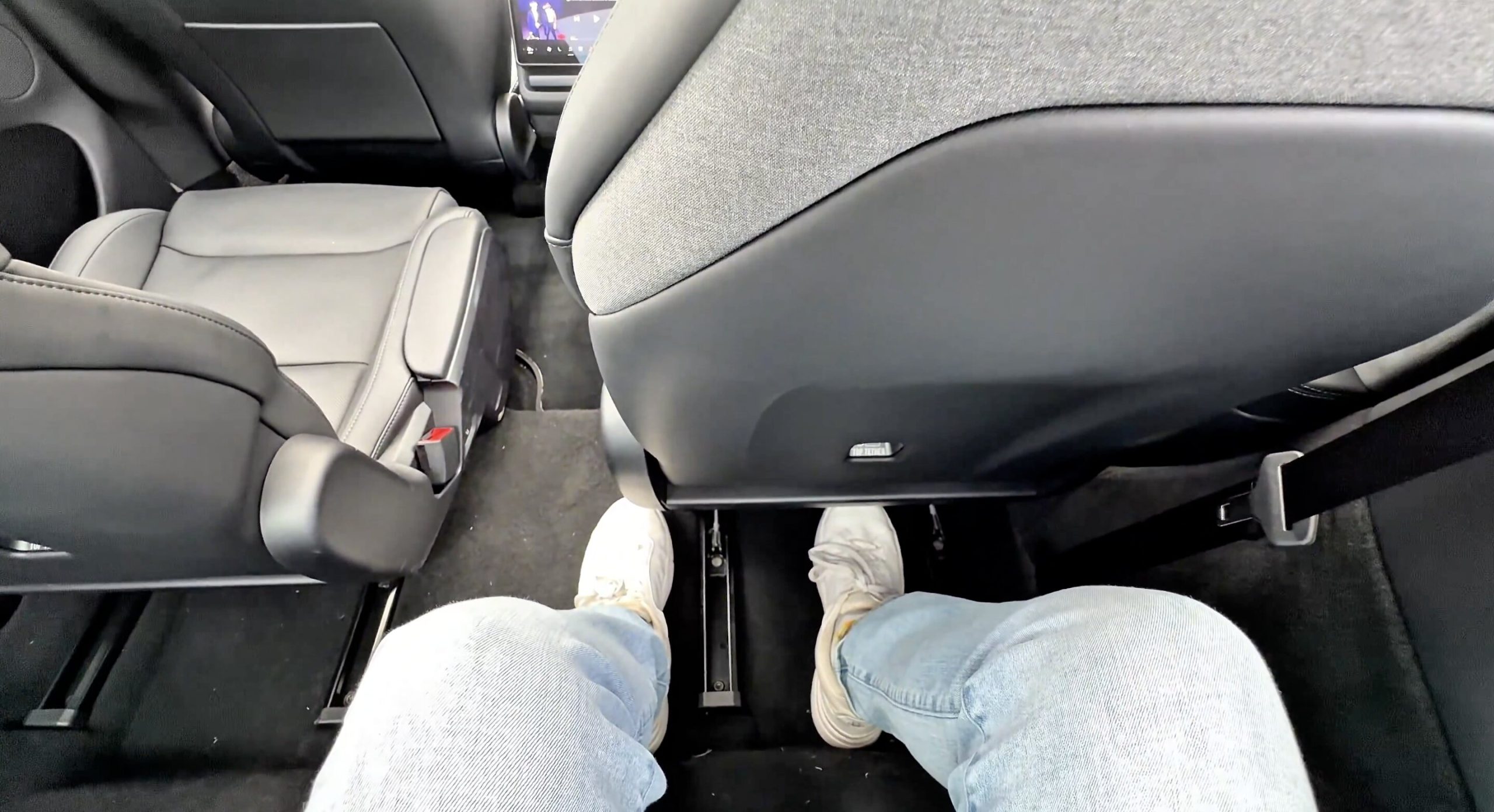
Credit: TESLARATI
The picture above is where my Fiancèe could sit comfortably in the second row in front of me, and she is 5′ 1″. There is a lot of give and take with these seats, and I believe most groups could make it work. She was comfortable in the second-row seat in front in this position, and as you can see, I have plenty of room. She could easily come back a few inches, and I’d still be comfortable.
This is where I think people would truly benefit from seeing what the space in this car looks like for themselves. To me, I found it more than suitable for a group of friends to go out in and for everyone to be comfortable. There might be some strategy to it if you have some taller friends, but it’s definitely doable.
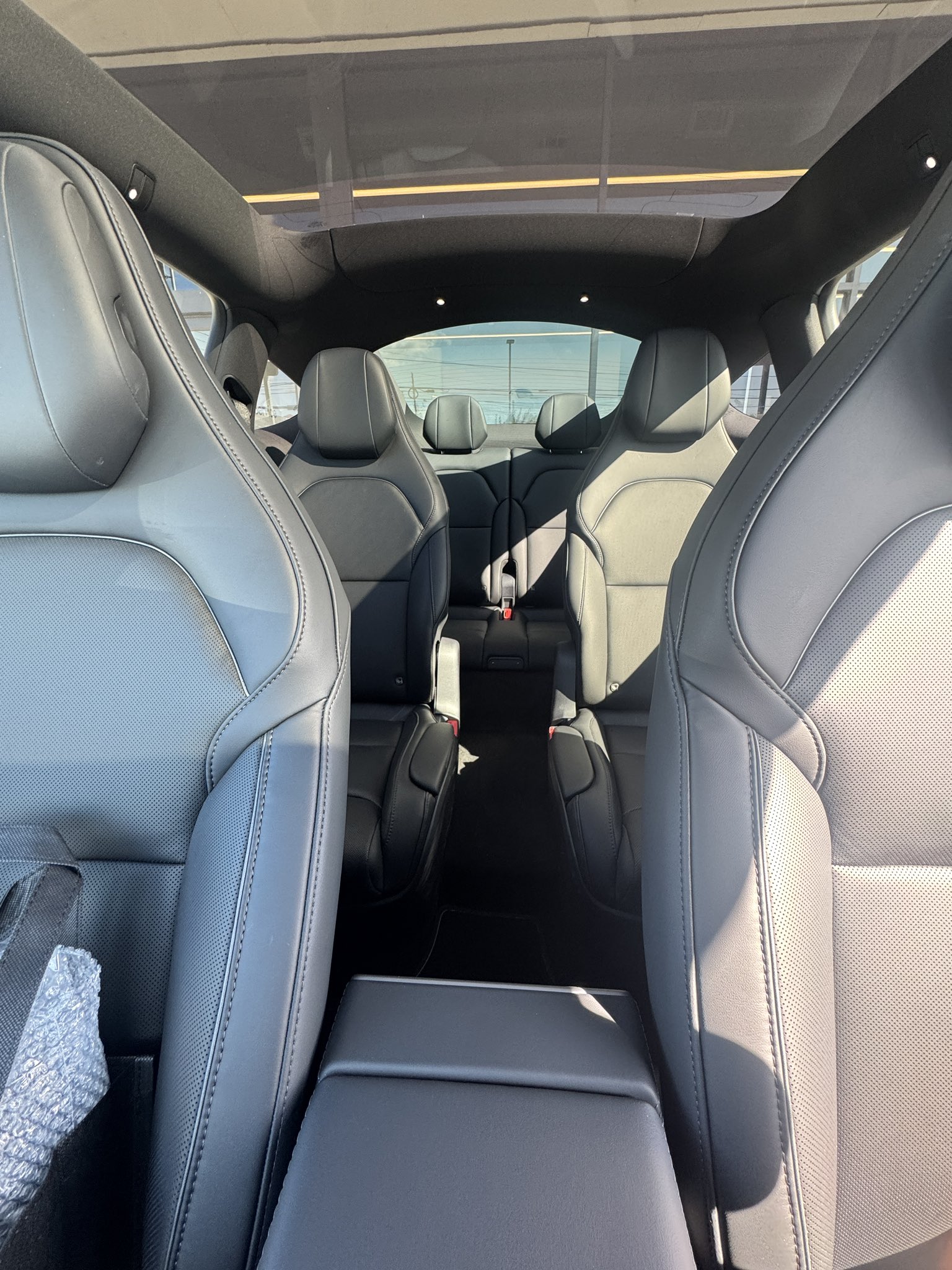
Overall, the space in the Y L in the back two rows is great: the second-row Captain’s Chairs have mechanical armrests that go down automatically when you exit the car, and come back up on their own when you return. The second row also has ventilated seats; you’ll only have the heat option in the third row.
Credit: TESLARATI
Overall Thoughts
It was really a great five days with the Model Y L, and I do believe that this is a great car for families. I do not believe it is the perfect one. It is really an excellent option for those who can make do with what is truly a compact crossover stretched out to make way for a third row. However, I think that more families simply want something large, like Tahoe or Expedition large, and the Model Y L does not necessarily answer that call.
I think it is more than reasonable for a family of six to have this car and make it work. It is safe, it has Full Self-Driving, which I believe will be a non-negotiable for me moving forward in car buying; and it is relatively affordable, with the Launch Edition coming in at a price of $61,990 before options. Not going to a gas station for the past year has really been a lifesaver for me, especially with home charging saving us so much money.
Tesla will need to have an answer for the families that want something like a Cyber SUV or simply something that qualifies as a full-size SUV. I just truly do not think that every family will see this as enough space, and I think that’s understandable. If someone were to want to take an overnight trip with their four kids, I don’t know if it would be the easiest cargo situation because without that third row folded down, that trunk space is confined to just 14.8 cubic feet. I couldn’t take four kids and a wife to Ocean City for a week with using only the trunk space. We’d likely have to get creative, and I think that’s what many families want to avoid.
For comparison’s sake, a Tahoe offers 25.5 cubic feet of trunk space, which is still tight, but much more manageable and forgiving.
With all that being said, the Model Y L is still a great option and I’d be willing to see past the cargo issues because of FSD and the safety of Tesla vehicles overall. For our full review, check out the video below:


News
Tesla owners who tap Emergency Drive Away for fun are in for a surprise
Tapping Activate on Tesla’s Emergency Drive Away reportedly triggers a $539 service bill without moving.

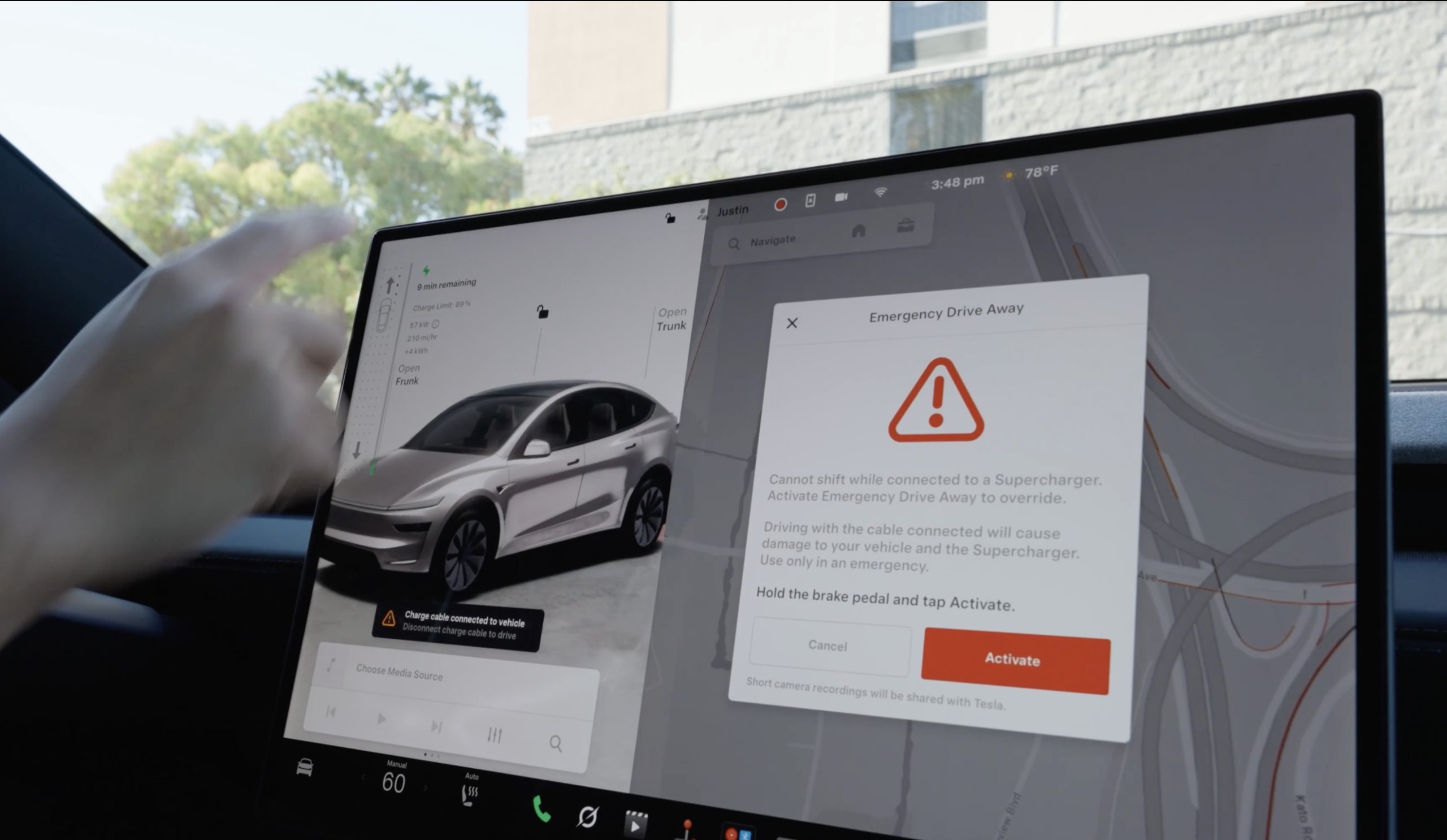
Tesla owners who press Activate on Emergency Drive Away may be on the hook for a service bill even if their car never leaves the Supercharger stall.
Yaro, who posts about Tesla service cases on X as @Tutrifour, said a customer called after tapping Activate while still plugged into a Supercharger. The owner was about to pull away, remembered the cable was still connected and stopped. The car never moved, but the touchscreen showed a red alert reading “Emergency Drive Away has been activated” with “Service is required” underneath. A Service Mode screenshot showed the active alert BMS_a228_EmergencyDriveAwayServiceRequired, which Yaro said only Tesla Service can clear.
Here is a lesson to Tesla owners. Don’t press Activate on the new Emergency Drive Away feature on your Tesla because service charges $539 to inspect the charge port and to clear the alert. Yes, even if you didn’t move the car an inch. https://t.co/NZJENw4SQv
— Yaro (@Tutrifour) October 30, 2026
The cost of clearing it was the bigger surprise. “Don’t press Activate on the new Emergency Drive Away feature on your Tesla because service charges $539 to inspect the charge port and to clear the alert. Yes, even if you didn’t move the car an inch,” Yaro wrote. The $539 figure comes from that single case, and Tesla has not published a set price for the inspection or commented on the post. Yaro also noted that the car would still charge with the alert on screen.
Tesla launched Emergency Drive Away on October 1 with software update 2026.38.3, letting drivers pull away from a U.S. Supercharger with the cable still attached, as Teslarati reported. To use it, a driver shifts into Drive while connected, holds the brake and taps Activate. The prompt warns that driving with the cable connected will damage the vehicle and the Supercharger, and that short camera recordings will be shared with Tesla.
Tesla Charging has been clear about what follows a real activation. Repairs to a Supercharger stall can run up to $25,000 depending on the site, a service visit for the car’s charge port is mandatory, and deliberate misuse “will invoke additional penalties.” What the company had not spelled out is that the service requirement is triggered the moment Activate is pressed, not the moment the cable breaks away.
From an engineering standpoint, that is the cautious choice. Once Activate is pressed, the car cannot be sure the charge port latch was not stressed, so flagging it for inspection removes the guesswork. It also means the button carries a price on its own, which is a stronger deterrent against casual use than any warning screen.
Customer called because they have an active alert after tapping ACTIVATE on the new Emergency Drive Away feature. They didn’t actually drive away but were about to until they “remembered” they had the charge cable connected.
This alert can only be cleared by Tesla Service. https://t.co/SkHyJJPFwU
— Yaro (@Tutrifour) October 28, 2026
The report follows the feature’s first known real world use, when a driver in Austin during F1 weekend appeared to trigger it by accident and dragged the Supercharger cable along with the car. The Reddit user who filmed it said the driver seemed to have only half read the prompts.
For owners, the takeaway is to treat the red prompt as a stop sign. If it appears after shifting out of Park by mistake, shift back and unplug the normal way from the touchscreen, the Tesla app or the button on the charge handle. Activate is meant for moments when staying at the stall is the bigger risk, and Tesla is now pricing it that way.
Elon Musk
Elon Musk calls Earth’s data centers “peanuts” next to what SpaceX is planning in orbit
Elon Musk says SpaceX capex efficiency is underestimated as orbital data centers loom by 2028.
Elon Musk is pushing back on one of the biggest worries hanging over SpaceX stock. In a reply on X on Sunday, Musk said the company’s capital expenditure efficiency is severely underestimated. He was responding to a Milk Road Stocks post citing analyst Kyle Reidhead, who estimates SpaceX will need to spend roughly $470 billion over the next five quarters.
Reidhead built that figure around the target SpaceX set on its third quarter earnings call: 13 gigawatts or more of compute by the end of 2027. In his breakdown, Nvidia captures 83 to 89 percent of the spending. SpaceX ended the quarter with 1.7 GW of nameplate compute and guided to $35 billion to $40 billion in fourth quarter capex, as Teslarati reported.
Musk did not attach a number to his claim, but the earnings call shows the argument. CFO Bret Johnsen said new compute currently pays for itself in under a year at today’s pricing, and Musk said that window could shrink to six months next year. Using that pace, Reidhead argues about $230 billion of the $470 billion could come from operating cash flow and about $60 billion from SpaceX’s roughly $90 billion cash pile, leaving around $180 billion to borrow. Musk confirmed last week that SpaceX had already closed a new $40 billion debt raise to buy GPUs.
The ground buildout is not the end goal. It is what is meant to pay for the move to orbit. Replying on Friday to charts built from Sequoia partner Shaun Maguire’s SpaceX model, Musk wrote that “Terrestrial compute will be peanuts compared to orbital compute,” adding that orbital compute deployed per month “probably exceeds terrestrial around the end of 2028 and then far exceeds it in 2029.”
Maguire’s model shows how steep that path is. It has capex climbing from $88 billion this year to $290 billion in 2027 and $369 billion in 2028, with SpaceX burning $77.8 billion in cash this year and $122.6 billion next year before turning $114.9 billion cash positive in 2028. Musk’s response to the model was, “I think we can do better.”
The orbital half runs through Starmind. SpaceX plans to operate up to 1 million AI satellites flying in clusters of about 10, linked by roughly 10 terabits of bandwidth, with deployment of thousands of units starting as soon as late 2027 out of its Gigasat factory in Bastrop, Texas, according to SpaceX’s space safety page. Musk has said each Starmind spacecraft will carry more than 250 kW of solar power.
Getting there depends on launch volume. Maguire’s model assumes 250 Starship flights in 2028, up from two this year and 38 next year. The nearer test is financial: SpaceX guided to $33 billion to $37 billion in first quarter 2027 revenue, more than double the $14.58 billion it booked in Q3, and Musk reposted that guidance again on Sunday morning.
Elon Musk
SpaceX President to gift Trump Accounts her SpaceX stock
Gwynne Shotwell’s 2 million SpaceX shares are headed to children’s Trump Accounts starting this December.
SpaceX President Gwynne Shotwell said Friday that more than 2 million SpaceX shares belonging to her and her husband, Robert, will be distributed to children’s Trump Accounts in December, turning a pledge she made over the summer into an actual transfer. “Robert and I are thrilled that our gift of over 2 million shares of SpaceX stock will be distributed to children’s Trump accounts in December!” Shotwell wrote on X, adding that the shares are “transferring to escrow as we speak.”
The first round goes to children aged 11 to 17 who live in ZIP codes where the median family income is $57,000 or less, along with kids in ZIP codes with too few residents for the Census to report that figure. Shotwell said those families should receive a notice by Monday, Reuters reported.
A second gift is expected to be finalized in the next few weeks. That round will cover eligible children in military families serving overseas, children in foster care, and more kids in Texas counties near the Shotwells’ home where median family income is $90,000 or less. Elon Musk replied to the announcement with “Cool” and a heart emoji.
Shotwell first announced the donation on July 6, less than a month after SpaceX priced its record IPO at $135 per share on the Nasdaq. IPO filings showed Shotwell owned about 12.6 million SpaceX shares, Quartz reported at the time, which makes the gift roughly one sixth of her stake. At the roughly $146 per share used to value Musk’s own pledge earlier this month, 2 million shares are worth about $290 million.
How the stock would actually reach the accounts had been an open question since July. Treasury guidance acknowledged that stock donations could flow into Trump Accounts, but it did not explain the mechanics for a program whose contributions default into an S&P 500 index fund. Shotwell thanked the Treasury, the IRS, the Dell Foundation, Greater Horizons, Invest America and the law firms Morgan Lewis and Gibson Dunn for “working over the past few months to make this happen.”
The transfer also works as a dry run for a far larger gift. On October 19, Musk said he would give one of his SpaceX shares to every kid in America next year and called it “the first of many.” With roughly 72 million children in the country, that pledge is worth about $10.5 billion. President Donald Trump thanked Musk the same day and said the shares would go through Trump Accounts, though neither SpaceX nor the Treasury has published how or when that distribution will happen.
Shotwell’s recipients also fill a gap in the program itself. Trump Accounts launched on July 4, and the $1,000 Treasury deposit only goes to babies born between 2025 and 2028. Teenagers aged 11 to 17 receive no government seed money, so for many of the families getting a notice on Monday, SpaceX stock will be the first asset in the account. The accounts convert into retirement accounts when the child turns 18.

Tesla owners who tap Emergency Drive Away for fun are in for a surprise

Elon Musk calls Earth’s data centers “peanuts” next to what SpaceX is planning in orbit


