
Tesla and Elon Musk’s followers on Twitter were able to see the two accounts take a subtle dig at Volkswagen and Porsche on Wednesday.
“Can we all just agree that pumping out carbon monoxide, carbon dioxide, particulate matter, nitrogen oxide, and sulphur dioxide from cars on all the streets around the world is maybe a bad idea,” Tesla tweeted just before 4 pm Eastern time.
It took Musk less than 20 minutes to add to the tweet, stating “In close traffic, poisonous gas spewing from the car in front of you goes straight into your AC intake. Good thing gas/diesel car makers didn’t cheat on their emissions or we’d be in real trouble,” ending the tweet with a smiling but sweating emoji.
In close traffic, poisonous gas spewing from the car in front of you goes straight into your AC intake. Good thing gas/diesel carmakers didn’t cheat on their emissions or we’d be in real trouble 😅
— Elon Musk (@elonmusk) September 4, 2019
The subtle dig at Volkswagen’s misconduct, more commonly known Dieselgate, reminded Twitter users of the 2015 scandal, when the EPA noticed a violation of the Clean Air Act from the German automaker. The company intentionally allowed TDI vehicles to manipulate emissions controls during laboratory testing. During actual real-world operation, the vehicles were found to have emitted up to 40 times the amount of greenhouse gasses.
As a result of the scandal, Volkswagen was ordered to pay a $2.8 billion criminal fine and $1.5 billion in civil penalties. As of August 2019, Volkswagen has paid out a total of $33 billion in penalties as a result of Dieselgate. Unfortunately, it appears that Dieselgate is not over just yet. Less than two weeks ago a German court found that Volkswagen hid a separate cheat device in a software update that was supposed to “fix” the automobiles that were affected by the 2015 scandal.
Musk’s twitter banter did not end with Volkswagen. Today at around 3:35 EST, the Tesla CEO commented on the Porsche Taycan’s “Turbo” label, stating that “Um @Porsche, this word turbo does not mean what you think it does”.
Um @Porsche, this word Turbo does not mean what you think it does
— Elon Musk (@elonmusk) September 5, 2019
While some may think that this is a jab at Porsche’s all-electric Taycan, it marks the first time that Musk has tweeted about a non-Tesla electric car while not responding to another user’s inquiry.
The Porsche Taycan’s Turbo and Turbo S trims will pack a dual-motor AWD setup with 670 and 750 horsepower, respectively. In comparison, the Model S Performance features a dual-motor AWD setup with 762 horsepower and 100 kWh battery with an EPA-estimated 345-mile range, where the Taycan Turbo S features 93 kWh battery and a WLTP-estimated 256 mile range. The Taycan Turbo, on the other hand, will get a WLTP-estimated 279 mile range.


Elon Musk
Tesla FSD is about to know your specific house and neighborhood better than any map
Tesla confirmed it is building a feature that lets you teach your car where to go.

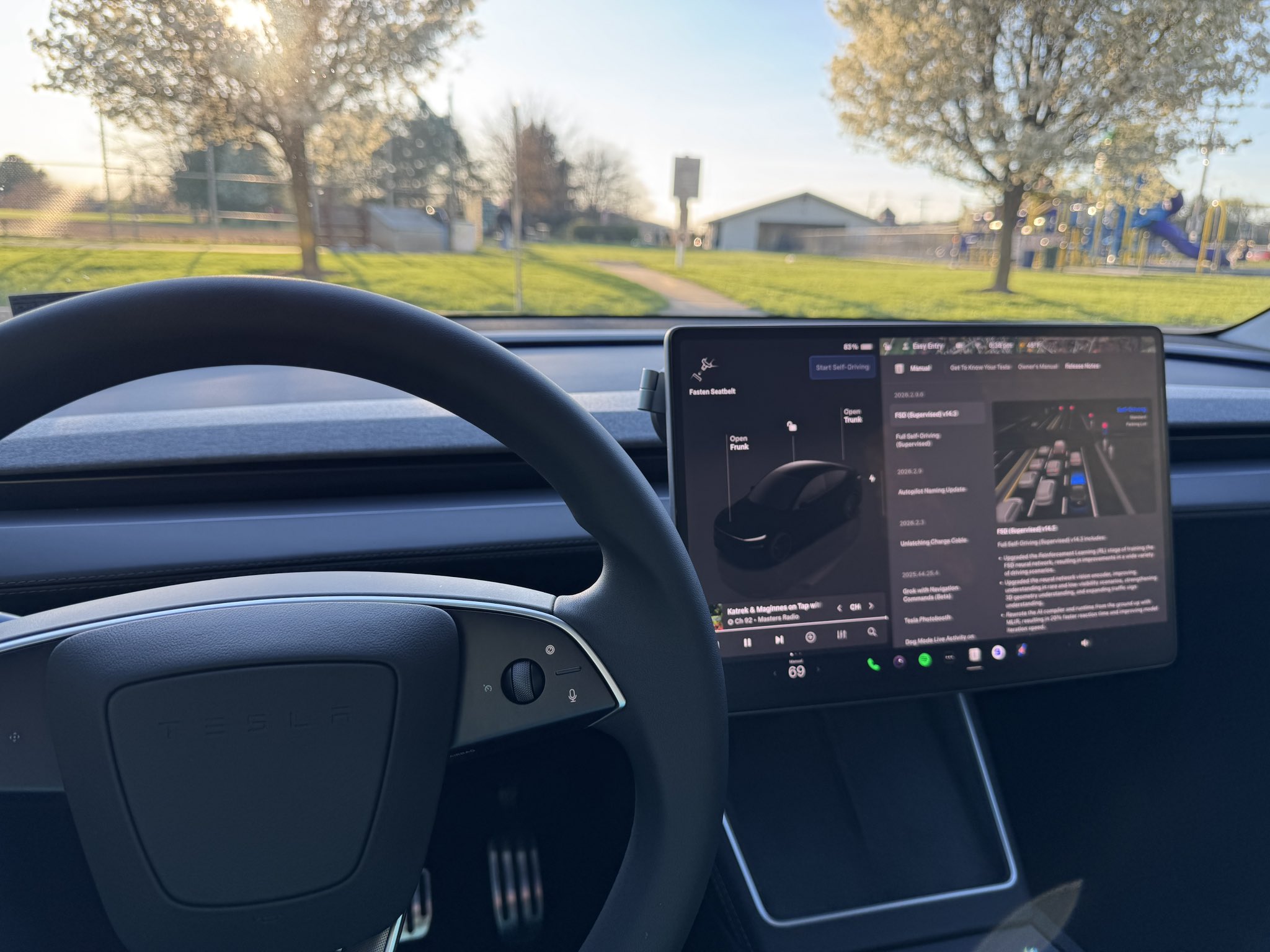
Tesla is building a feature that will let drivers talk to their car in plain language and teach it exactly what to do, with the vehicle remembering those instructions for every future trip. Tesla VP of AI Software Ashok Elluswamy confirmed it this week on X after a user pointed out one of FSD’s most persistent real-world limitations is that the system has no way to receive contextual instructions the way a human driver would.
“FSD would be twice as useful in neighborhoods if I could actually talk to the car and tell it which driveway to pull into, the same way I would with a person driving me home. Right now, there isn’t really an input for telling Tesla what color the house is or giving it specific context like that. Google Maps is also notorious for putting pins on houses that aren’t actually yours.” Tesla owner Chris further noted, “It would be so cool if I could talk to the car while going down my street and say something like, ‘It’s the white house on the left, just past that SUV,’ and then have FSD remember that for next time.”
FSD would be twice as useful in neighborhoods if I could actually talk to the car and tell it which driveway to pull into, the same way I would with a person driving me home.
Right now, there isn’t really an input for telling Tesla what color the house is or giving it specific…
— Chris (@ChrissGPT) July 8, 2026
This feature would carry more weight than it might seem. Grok has been available inside Tesla vehicles since July 2025, expanded to European vehicles in February 2026, and gained a hands-free “Hey Grok” wake word with location-based reminders and natural-language navigation in the Spring 2026 update. But up to this point, Grok has had no authority over how FSD actually drives. Lane changes, braking, speed, and parking maneuvers remain entirely within FSD’s autonomous decision-making loop. What Elluswamy confirmed is that the next step pushes Grok into a supervisor role, one that translates spoken intent directly into driving decisions.
Tesla teases greater Grok FSD integration and ‘Banish’ feature ‘in about 3 months’
Elluswamy acknowledged at a January 2026 conference that while fully integrated voice control is on Tesla’s roadmap, “it opens up an entire area of testing that we have to do. For example, you shouldn’t be able to tell the car to crash, and it shouldn’t crash.” Elon Musk subsequently confirmed on June 23 that Grok voice commands will pass to FSD’s planning layer by September 2026, a three month timeline from confirmation to deployment.
The deeper significance is what this does for Tesla’s AI training flywheel. Every time an owner corrects FSD with a spoken instruction and the car learns and remembers it, that interaction becomes a data point covering an edge case that no simulation or scripted test could have generated. A fleet of millions of Tesla vehicles crowdsourcing hyper-local contextual knowledge, which driveway, which gate entrance, which side of the street, builds a layer of geographic and behavioral intelligence that competitors without a comparable fleet simply cannot replicate at the same speed or scale.
As Teslarati has reported, Tesla’s Cybercab and robotaxi operations have expanded to Miami following the Austin launch, with rider profiles already collecting preference data. Voice-taught contextual instructions linked to individual rider profiles means a Cybercab could eventually know before it arrives exactly which entrance to use, where to wait, and how to navigate the final hundred feet of any trip it has made before.
Lifestyle
Tesla app update makes Robotaxi ownership make a lot more sense
Tesla’s app now shows a live indicator when your car is actively driving itself.
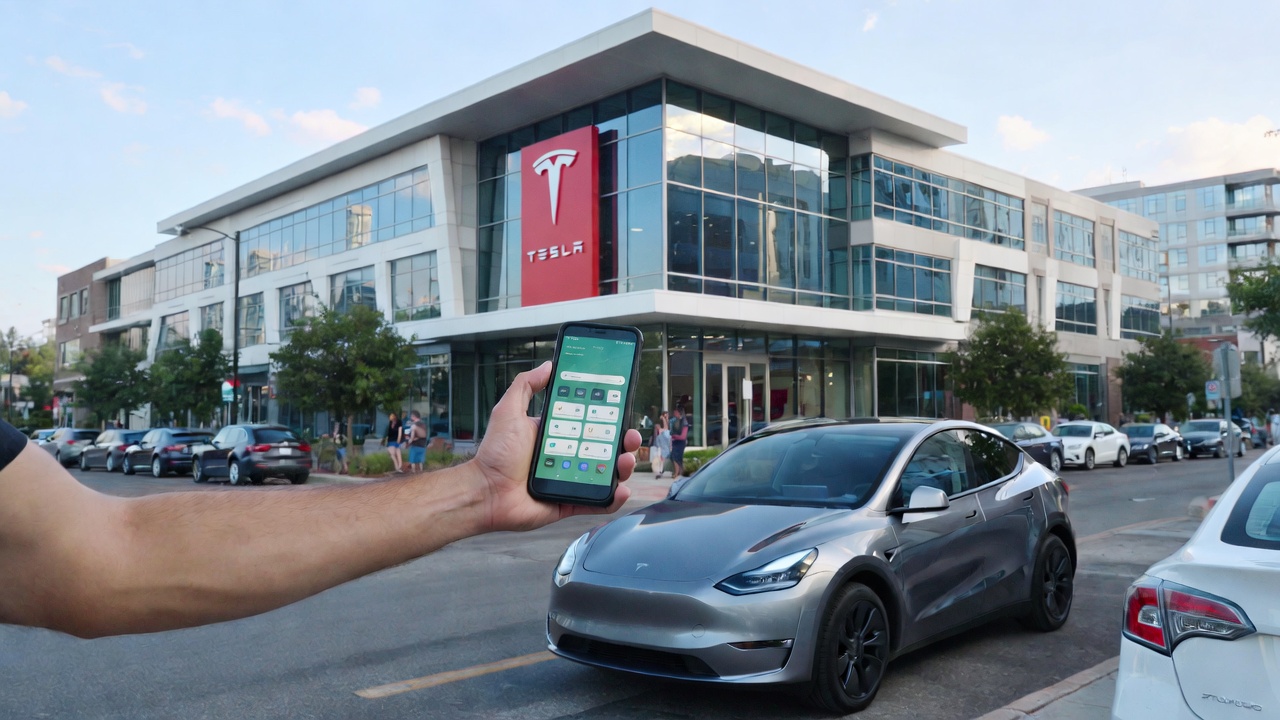
A recent Tesla app update, released last week (4.58.5), gives visibility on whether a vehicle is navigating in its semi-autonomous mode or being drive by a human driver. The updated app now displays a live “Self-Driving” indicator in bright blue text directly beneath the vehicle’s speed readout whenever Full Self-Driving is actively engaged, along with the signature glowing blue navigation path that FSD users see on the main touchscreen. It is a small visual update with meaningful implications for how Tesla owners monitor their vehicles remotely.
The feature was first spotted in the wild by X user Jordan Camina, who shared video of a Hardware 3 Model S displaying the new animation through the app while driving. That detail is significant because it confirms the update is not limited to newer HW4 vehicles. It works across hardware generations, and Tesla confirmed it will eventually support all vehicles regardless of chip platform once both the app and vehicle software are updated. The vehicle side requires software version 2026.20.6.1, which has reached nearly 40% of the fleet so far, as monitored by NotaTeslaApp.
The feature makes the most practical sense when viewed through the lens of Tesla’s expanding robotaxi operation. In a robotaxi context, the owner of a vehicle generating ride revenue has a direct financial and safety interest in knowing whether their car is operating under autonomous control at any given moment. The app’s new FSD indicator gives fleet owners exactly that visibility, the same way a logistics company monitors whether a delivery driver is following the planned route. It also carries implications for Tesla’s insurance model. Tesla’s own insurance product prices premiums in part based on FSD engagement rates, and real-time visibility into when FSD is active creates a feedback loop that could eventually tie directly into policy pricing. For individual owners who have opted their personal vehicles into the robotaxi network, the update effectively turns the Tesla app into a fleet management dashboard, one that tells you whether your car is earning money, whether it is driving itself to do it, and whether everything is operating the way it should from wherever you happen to be.
Tesla expands Robotaxi to Florida, marking its third state for autonomy
As Teslarati has reported, Tesla launched unsupervised robotaxi rides in Miami this summer, a milestone that makes a remote FSD status indicator significantly more practical than a cosmetic feature. When a vehicle is operating as a robotaxi without a driver present, the owner or fleet operator needs a reliable way to confirm autonomy is engaged. The app now provides exactly that.
As noted by NotATeslaApp, The update also arrived alongside a hint buried in the same app version that Tesla plans to use the cabin camera to verify driver identity before FSD can be activated. Pairing identity verification with a live autonomy status indicator points toward the infrastructure Tesla is building for a fleet of driverless vehicles that owners can monitor the way you would track a package delivery.
Elon Musk
The Boring Company just doubled its tunneling power in Nashville
The Boring Company’s Prufrock MB2 is commissioned and ready to mine beneath Nashville’s streets.
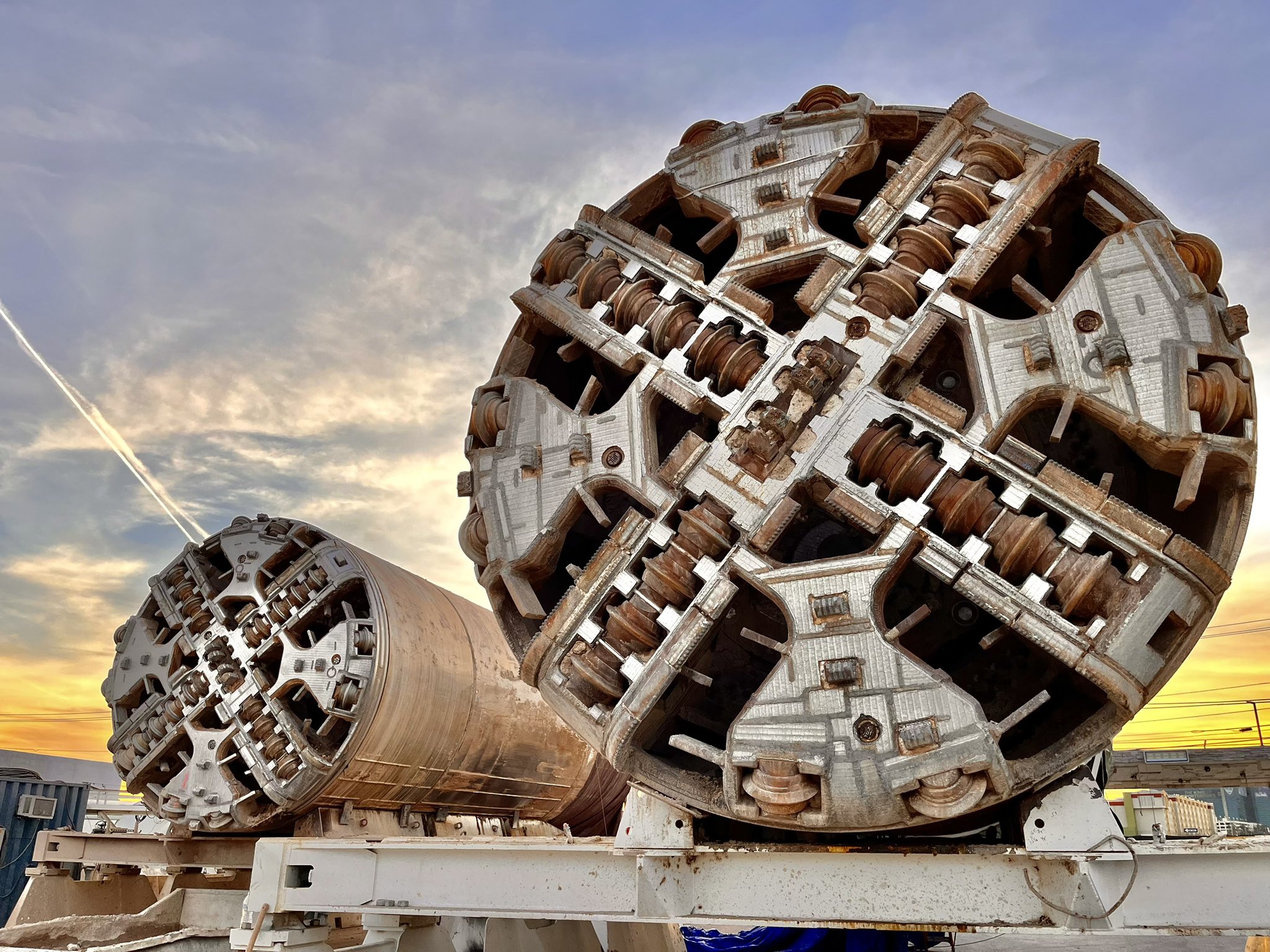
The Boring Company’s second tunnel boring machine, Prufrock MB2, is officially ready to dig in Nashville. The company confirmed the news on X, posting: “Prufrock-MB2 is ready to mine in Nashville! MB2 commissioning is complete, including the brief 11 rpm rotation shown here. Will MB2 catch up to MB1, who had quite the head start? And Prufrock-MB3 ships in August!”
MB2 arrives with meaningful improvements over its predecessor. Lessons learned from the launch and operation of MB1 have already been applied to MB2 to improve efficiency and prepare the machine for launch.
Traditional tunnel boring machines operate in a stop-and-go cycle, digging roughly five feet, halt, erect precast concrete segments to line the tunnel wall, then resume. That repeated interruption is one of the main reasons conventional tunneling is slow and expensive. Prufrock is designed to install the tunnel liner simultaneously with mining, eliminating the need to stop every five feet. The machine also skips the need for excavated launch pits. Prufrock arrives on a truck, tilts down, and launches into the ground within 24 hours. And when the tunnel is complete, it emerges from the ground and drives to its next launch site on a trailer, eliminating the need for expensive cranes or pit excavation. The machine is also fully electric and runs with zero people in the tunnel during normal operations, controlled remotely from a surface operations center.
Prufrock-MB2 is ready to mine in Nashville! MB2 commissioning is complete, including the brief 11 rpm rotation shown here.
Will MB2 catch up to MB1, who had quite the head start?
And Prufrock-MB3 ships in August! pic.twitter.com/TTrMql2aRg
— The Boring Company (@boringcompany) June 17, 2026
It won’t be long before we hear of another major update on The Boring Company’s Music City Loop project – a planned underground transit network beneath Nashville that would move passengers in electric vehicles through a series of tunnels at highway speeds, and bypassing surface traffic entirely. Nashville was selected in part because of its strong rock conditions that suits the Prufrock machines well, and relatively less regulatory hurdles.
Progress has been steady on multiple fronts. All 37 permits and approvals required ahead of tunneling have been obtained, out of 45 total. Key wins include a fully executed TDOT tunnel permit authorizing 25 miles of tunnel, unanimous airport authority approval for a Nashville International Airport station, and the city’s first residential station agreement serving downtown tower residents.
With MB1 already tunneling, MB2 now commissioned, and MB3 shipping in August, Nashville is becoming something of a live proving ground for scaled tunnel boring. The broader ambition is not limited to one city. The Boring Company’s stated goal is to make underground transportation a practical alternative to surface roads across major metro areas. Nashville is one of many cities, including a successful Las Vegas tunnel system, where that idea is being put to the test at real speed.

SpaceX reveals Starship Flight 13 launch date

Tesla shows rapid teardown of Model S and X lines, paving the way for Optimus at Fremont


