News
Tesla’s Elon Musk and Rivian CEO join legacy auto execs in Motortrend’s Person of the Year list

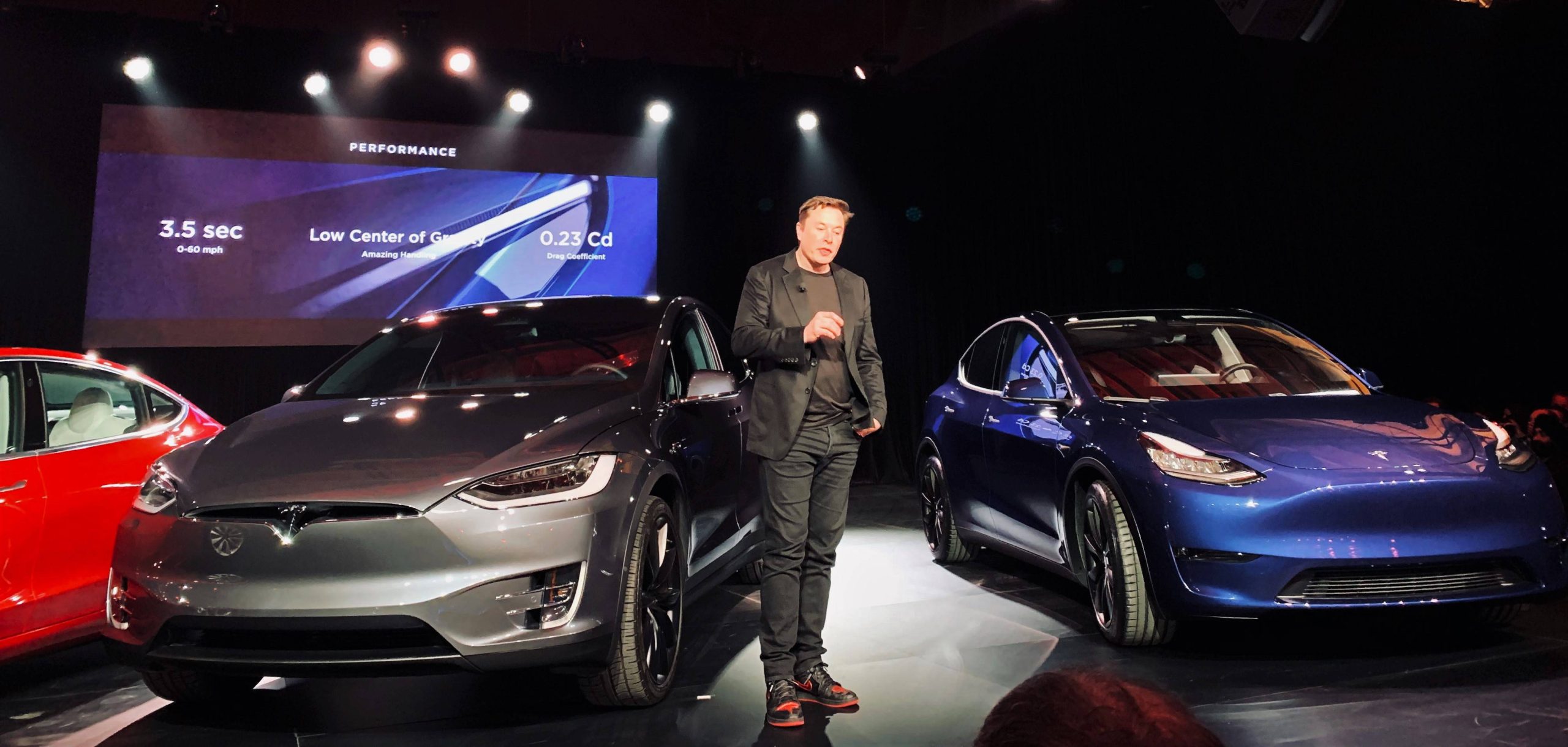
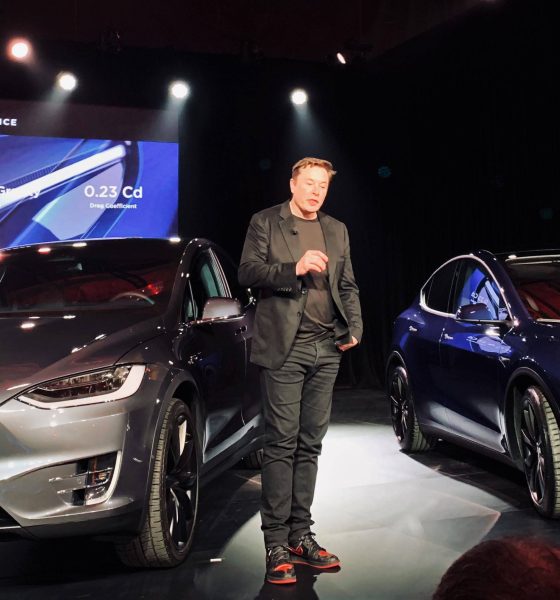
Tesla CEO Elon Musk ranks on Motortrend’s 2020 list of most crucial players in the automotive industry. Musk has been on the list since 2013 and gained recognition as Person of the Year in 2017.
Motortrend released its list 2020 Person of the Year on November 19, which recognized Hyundai President and Head of Design Management Peter Schreyer as its Person of the Year for 2020. Elon Musk came in the 24th spot in this year’s power rankings, improving from his recognition as the 42nd most influential figure in the auto industry from a year ago.
While Motortrend recognizes Musk as an influential figure for another year, the website’s description of his accomplishments this year takes an interesting approach, leading with a highlight of his lawsuits, conflicts with the SEC, and the successful release of the Model 3. “Another year of drama for Musk with lawsuits and SEC concerns over tweets. But sales continue to grow, affordable Model 3s are on the road, there’s a new plant in China, and promises of a pickup, compact crossover, roadster, and a big rig continue. Ever the boy at heart, his cars can now fart,” Motortrend said about the South African born CEO.
In 2019, Tesla and Musk have unveiled its first crossover, broke ground on Gigafactory 3 in Shanghai, and improved its Full Self-Driving software with the company’s V10 update. A monumental year for the Silicon Valley-based automaker in many regards, Musk’s vision for an environmentally-sustainable future by supplying people with affordable electric cars is becoming more of a reality. Tesla will unveil its Cybertruck on November 21, adding an all-electric pickup truck to its lineup of vehicles.
Musk was not the only Tesla member to make the list. Co-founder and Senior Adviser to the company J.B. Straubel came in at #13. “Straubel, the former chief technical officer at Tesla, has stepped back from day-to-day authority but will continue to apply his genius toward core technologies—especially around batteries, power electronics, and an expanding network of superchargers. He is essential to Tesla’s drive to retain EV tech leadership,” Motortrend said.
Rivian CEO RJ Scaringe was #3 on Motortrend’s 2020 power rankings. It has been a big year for Scaringe’s Rivian. The company gained notable financial backing from e-commerce giant Amazon, who invested $700 million and purchased 100,000 vans from the Plymouth, Michigan-based automaker to begin a more environmentally-conscious delivery process. Rivian also gained help from Ford Motor Company and Cox Automotive, who invested $500 million and $350 million, respectively. Rivian will begin production of the R1T pickup and R1S sport utility vehicle in late-2020.
Motortrend has recognized these three pioneers of the electric vehicle movement on its list of the 50 most crucial players in the industry today. The three sit among executives of legacy automotive groups, like Ford, GM, and Toyota, whose board members have made up Motortrend’s lists since the auto journal wrote its first power rankings in 2005. While those companies are working on electric cars to release as their own, Musk, Straubel, and Scaringe have all contributed toward the transition to make the automotive market geared more toward electric and battery-powered modes of transportation and away from the traditional petrol-powered machines that have dominated the U.S. car industry since its introduction in the 1890s, and they are gaining recognition for their efforts. Tesla and Rivian alike have a vision for the future, and it includes clean transportation for everyone, aimed at saving the Earth from the carbon-emissions that negatively affect the atmosphere and our general well-being.
The Top 10 of Motortrend’s Person of the Year 2020 list is as follows:
- 10. Alan Bethke, Senior VP of Marketing, Subaru of America. 2019: Unranked
- 9. Mate Rimac, Founder, Rimac Automobili. 2019: Unranked
- 8. Charles Gordon-Lennox, Founder, Goodwood Festival of Speed and Goodwood Revival. 2019: Unranked
- 7. Roger Penske, Founder and Chairman, Penske Corporation. 2019: Unranked
- 6. Mary Barra, Chairwoman and CEO, General Motors. 2019: 11
- 5. David Woodhouse, VP Of Nissan Design America, Nissan. 2019: 22
- 4. Tadge Juechter, Corvette Chief Engineer, General Motors. 2019: Unranked
- 3. RJ Scaringe, Founder and CEO, Rivian Automotive. 2019: Unranked
- 2.Kumar Galhotra, President, Ford North America. 2019: Unranked
- 1. Peter Schreyer, President, Head of Design Management, Hyundai Motor Group. 2019: 33


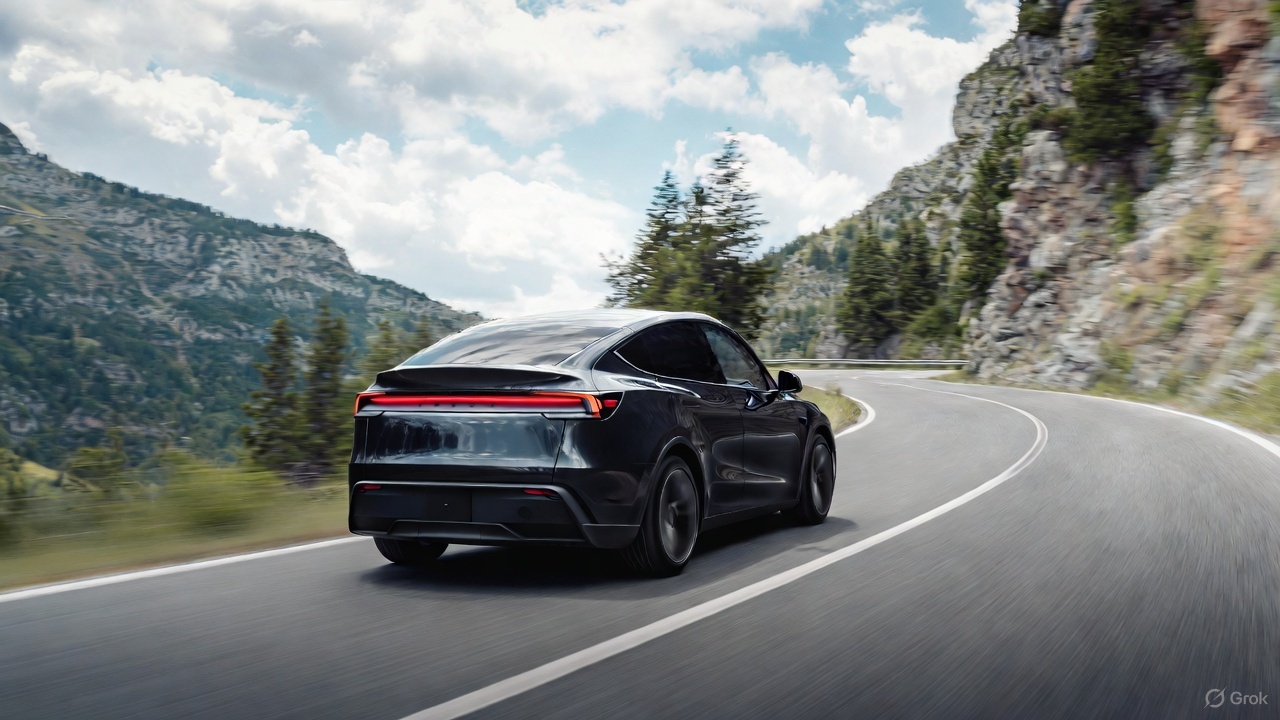
Tesla Full Self-Driving’s release in Europe is set to be delayed by at least a few months.
The European Union will not vote on Tesla’s Full Self-Driving (Supervised) on October 6. The draft agenda for the 119th meeting of the Technical Committee on Motor Vehicles lists only a 25-minute “continuation of discussions” on the Netherlands’ Article 39 request, not a decision. The next scheduled TCMV session is in December, which is now the earliest date a bloc-wide vote could occur.
Tesla Europe had pointed to October 6 as a possible EU-wide vote after the Dutch vehicle authority RDW granted the first European type approval on April 10.
That approval, under UN Regulation 171 plus an Article 39 exemption in EU Regulation 2018/858, is the legal file other member states have been recognizing one by one. The same committee has already discussed the request twice without voting.
Elon Musk’s reply to the delay was a single word: “Sigh.”
Sigh
— Elon Musk (@elonmusk) September 25, 2026
Seven EU countries have now cleared FSD Supervised on their own roads: the Netherlands, Lithuania, Estonia, Denmark, Belgium, Slovenia, and Czechia. Those seven states represent about 53 million people, or roughly 12 percent of the EU population. An EU-wide authorization still needs a qualified majority: at least 15 of 27 member states representing 65 percent of the bloc’s population, about 292 million people.
Germany, France, Italy, and Spain remain the decisive markets. France has already rejected the current system; several other governments have flagged speed-limit compliance as the main sticking point.
The safety case Tesla is putting in front of those governments is now public. On September 1, Tesla Europe said FSD Supervised was in use by more than 70,000 customers, covering over 1 million kilometers a day, and was 4.1 times less likely to be involved in a crash than manual driving across 100 million kilometers on EU public roads.
An earlier mid-year cut of the same fleet data, covering 65 million kilometers in five approved countries, put the collision advantage at 5.2 times, with zero highway collisions over 41.9 million kilometers. Tesla also reported far fewer automatic emergency braking events, harsh accelerations, and hard swerves than in comparable manual Tesla driving. Those figures are company-reported, not independently audited.
Tesla Full Self-Driving is taking over Europe: fourth country gets FSD approval
The public-health backdrop is harder to dispute. European countries recorded about 19,400 road deaths in 2025, or roughly 53 a day, most of them attributed to human error. FSD Supervised is not unsupervised autonomy; the driver remains legally responsible. But the software is already legal and in daily use across seven member states.
Until TCMV votes, the rest of the EU remains a patchwork: available in Prague and Amsterdam, locked behind review in Paris and Berlin. December is now the next chance to close that gap.
News
SpaceX readies Starship Flight 14 for a historic journey into uncharted territory
SpaceX finished Starship’s Flight 14 rehearsal, clearing the way for its first orbital flight Monday.

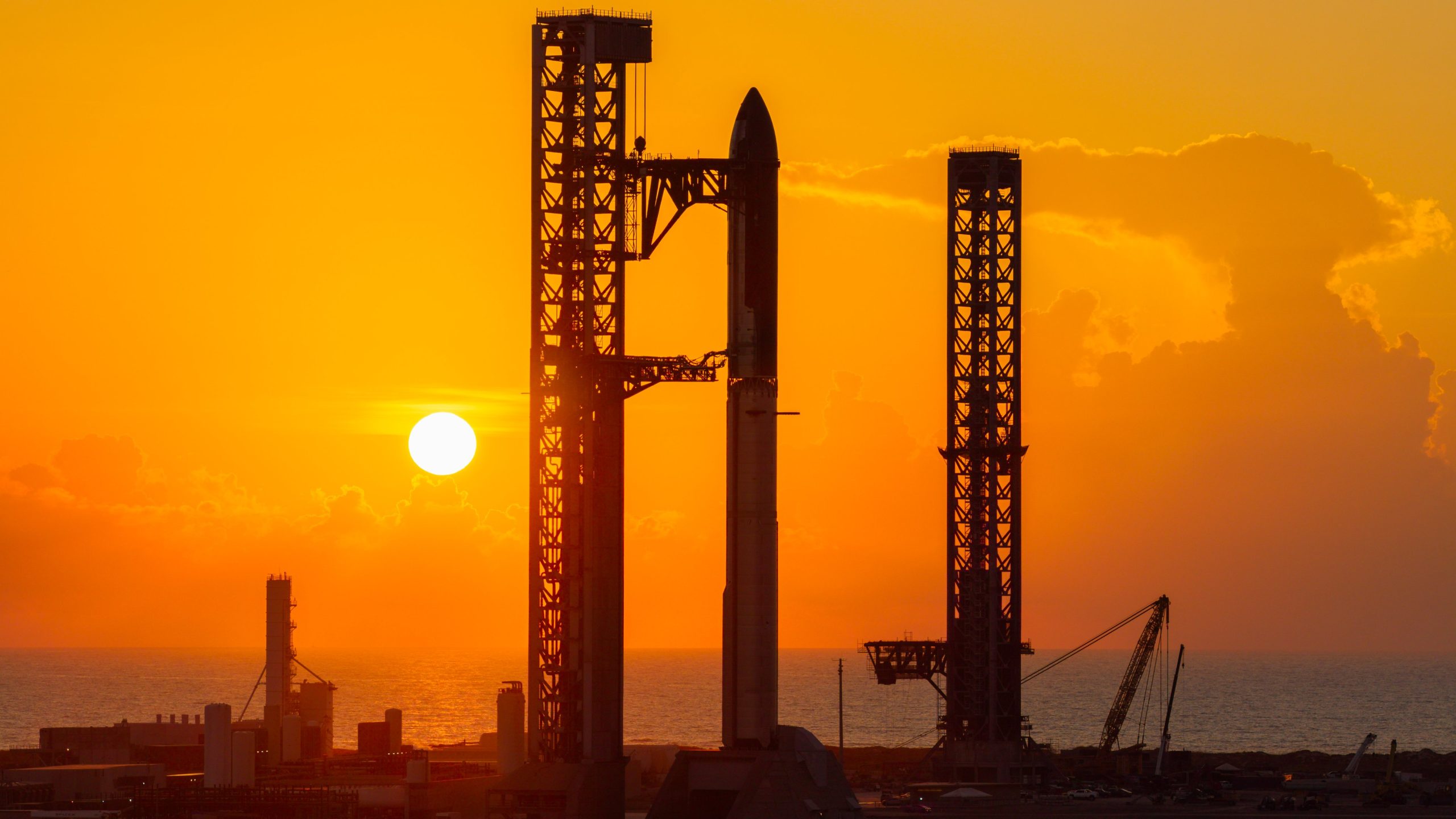
SpaceX has cleared one of the last hurdles before Starship’s first trip to orbit. The company posted on X Thursday afternoon that its launch rehearsal for Flight 14 was complete, keeping the mission on track for Monday, September 28. The launch window opens at 7:15 a.m. CT at Starbase, Texas, and runs for 75 minutes.
A wet dress rehearsal is essentially launch day without the launch. Crews fill Booster 21 and Ship 41 with thousands of tons of extremely cold propellant, run the countdown nearly to ignition, then drain everything back out. It lets engineers catch leaks or equipment problems before anything leaves the pad. SpaceX still needs a launch license from the FAA before the stack, which stands 407 feet tall, can fly.
Flight 14 matters because of where it is going. All 13 previous Starship flights followed a suborbital path, which works like throwing a ball extremely high and far: the vehicle reaches space, but it is always on a course that brings it back down within about an hour. This time, Ship 41 will perform a short engine firing called an orbital insertion burn roughly 25 minutes after liftoff, giving it enough speed to keep falling around Earth instead of back into it. SpaceX plans about six laps at an altitude near 275 kilometers (171 miles) over nearly 10 hours, as Teslarati detailed when the mission was first announced.
Launch rehearsal complete ahead of Starship Flight 14 pic.twitter.com/h5LBYyBqi4
— SpaceX (@SpaceX) September 24, 2026
Getting into orbit also means Starship has to prove it can get back out. The ship must relight a single Raptor engine in space to slow down for reentry. SpaceX says it will only attempt the orbital insertion burn after flight controllers confirm the hardware needed for that return burn has enough backup, and its flight plan includes health checks that could shorten the mission to two or five orbits.
Flight 14 is also the first to put working satellites into service. Flight 13 carried 20 Starlink V3 satellites in July, but they came back down with the ship because that mission never reached orbit. This time, 26 V3 satellites are meant to stay up and join the constellation within a few weeks. Together they add about 26 terabits per second of network capacity, which SpaceX says is roughly 10 times what a single Falcon 9 launch of older V2 Mini satellites adds. Three of them carry cameras that will photograph Starship’s heat shield in orbit to check for tile damage before reentry.
The hardware has changed too. Ship 41 flies with extra fasteners on tiles in the most vulnerable areas, fixes for gaps where superheated plasma slipped behind tiles, and curved tiles designed to reduce heating between them. Two tiles recovered from Ship 40 will fly again, the first reuse of any part of a Starship heat shield. Booster 21 carries better engine filtering and new relight software after ice clogged three center engines on the previous booster, leaving only eight of 13 engines to restart for its landing burn.
Ship 41 is targeting a splashdown in the Pacific Ocean west of Chile, a new recovery zone after several Indian Ocean landings, while Booster 21 aims for the Gulf. Neither will be caught by the tower on this flight. Elon Musk said in August that a ship catch was likely “in a few months.”
Elon Musk
Google just picked SpaceX for its first step into orbital AI
Google will launch its first Project Suncatcher AI satellite on SpaceX’s Transporter-18 rideshare next week.
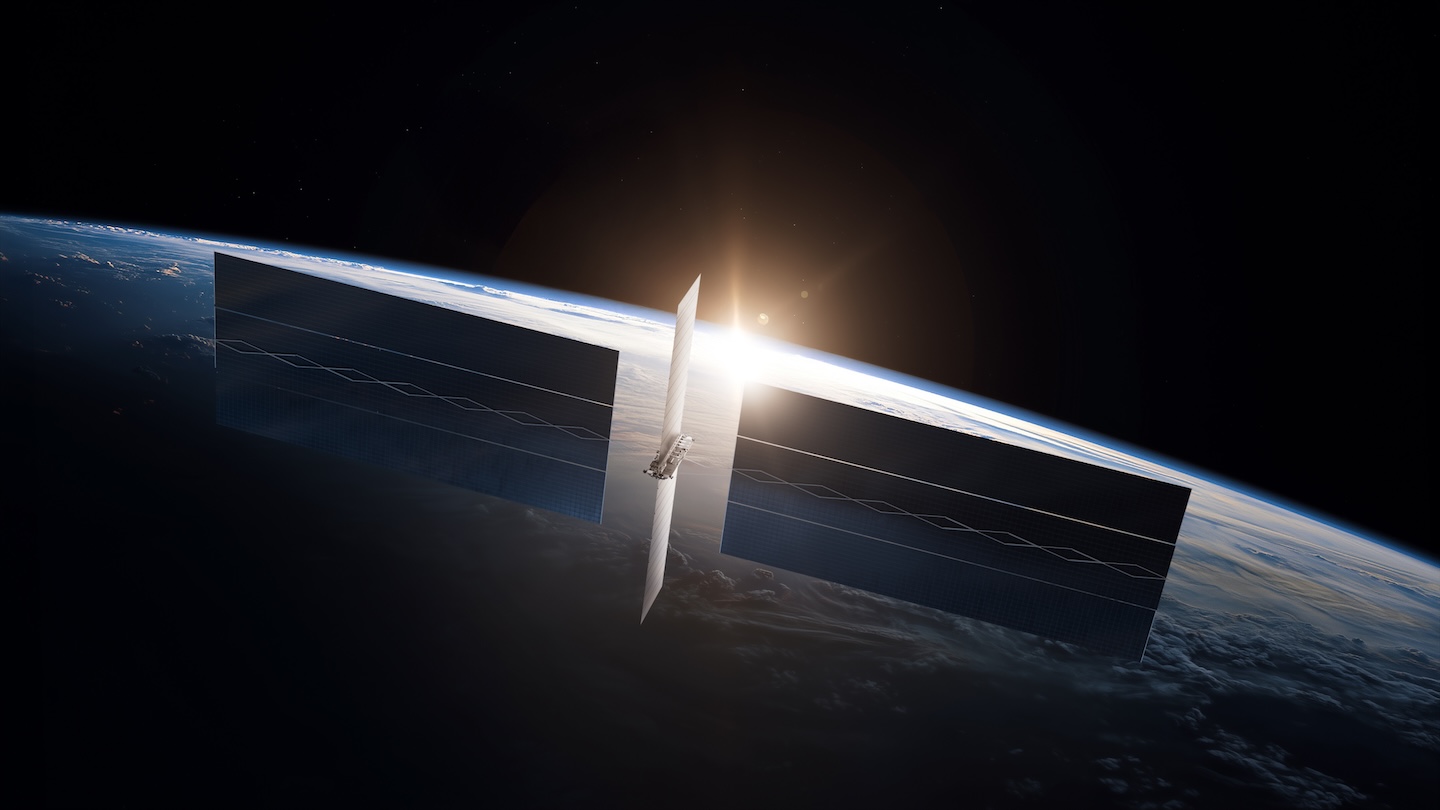
Google is about to put its own AI chips into orbit for the first time, and it is paying SpaceX to get them there.
The company said Thursday that the first in-orbit test of Project Suncatcher, its research effort to find out whether space can host large-scale AI computing, will fly next week on SpaceX’s Transporter-18 rideshare mission.
The satellite, called MVP, is about the size of a refrigerator and carries four of Google’s Tensor Processing Units, the same chips Google runs in its ground data centers. Google originally planned to launch two custom satellites in 2027, but chose to move faster by integrating its chips into a satellite.
MVP’s solar panels supply about one kilowatt of power, and Google will run Gemini models on the TPUs only in bursts of roughly 15 minutes before the chips shut down so the radiators can shed heat. In a blog post, Google said its Trillium TPUs survived vibration testing that mimicked sustained launch loads of up to 10g, with individual components seeing 50 to 100g, and handled a radiation dose greater than a five year mission would deliver.
SpaceX and Google mull massive partnership on Musk’s orbital data dream: report
Next week’s flight, slated for October 1, follows a relationship that became public in May, when Teslarati reported that Google was in talks with SpaceX for a launch deal tied to orbital data centers. Google also holds a stake of roughly 6% in SpaceX.
The two companies are chasing the same idea from very different starting points. SpaceX’s own orbital compute program is built around the AI1 satellite, a roughly 70 meter structure derived from Starlink V3 hardware that is designed for 150 kW of peak compute, about 150 times the power MVP will draw. Elon Musk has brushed off concerns about crowding orbit with those satellites, and SpaceX is building its Gigasat factory in Bastrop, Texas, to produce them, targeting an annualized rate of about 1 GW of space compute by the end of 2027.
Musk also posted on X on Thursday that “the amount of compute in space will obviously round up to 100% of all compute.”
Google has been more cautious in public. Its research estimates that launch prices need to fall below about $200 per kilogram before an orbital data center can compete with a ground facility on energy cost, a threshold the company believes could be reached around the mid 2030s. The Suncatcher team has said it expects the effort to remain a project rather than a product for years, which leaves the first real test of its hardware riding on a rocket from the company with the most aggressive timeline in the field.

Tesla Full Self-Driving release in the EU gets delayed

SpaceX readies Starship Flight 14 for a historic journey into uncharted territory


