Space
SpaceX, NASA ready for first crewed launch from US soil in almost a decade

On Wednesday, March 18th, NASA invited media to attend SpaceX’s highly anticipated upcoming Demo-2 mission confirming that SpaceX would be the first of NASA’s Commercial Crew Program (CCP) partners – and first private spaceflight company – to return crewed orbital spaceflight to American soil following an 8-year absence. In the media release, NASA states “this mission will be the return of human spaceflight launch capabilities to the United States and the first launch of American astronauts aboard an American rocket and spacecraft since the final space shuttle mission on July 8, 2011.”
NASA and SpaceX are “currently targeting no earlier than mid-to-late May” for the debut DM-2 crewed mission and final end-to-end test of SpaceX’s human spaceflight system and the Crew Dragon capsule. A successful DM-2 should certify SpaceX to support regular operational crew missions.
The confirmation of a mid-to-late May launch date aligns with what SpaceX President and chief operating officer, Gwynne Shotwell stated while speaking to reporters at the Satellite 2020 Conference in Washington D.C. earlier this month. Although the May time-frame does not meet the Q1 launch date previously anticipated by SpaceX CEO and founder Elon Musk, it does serve a greater purpose for NASA.
Long-duration end-to-end test
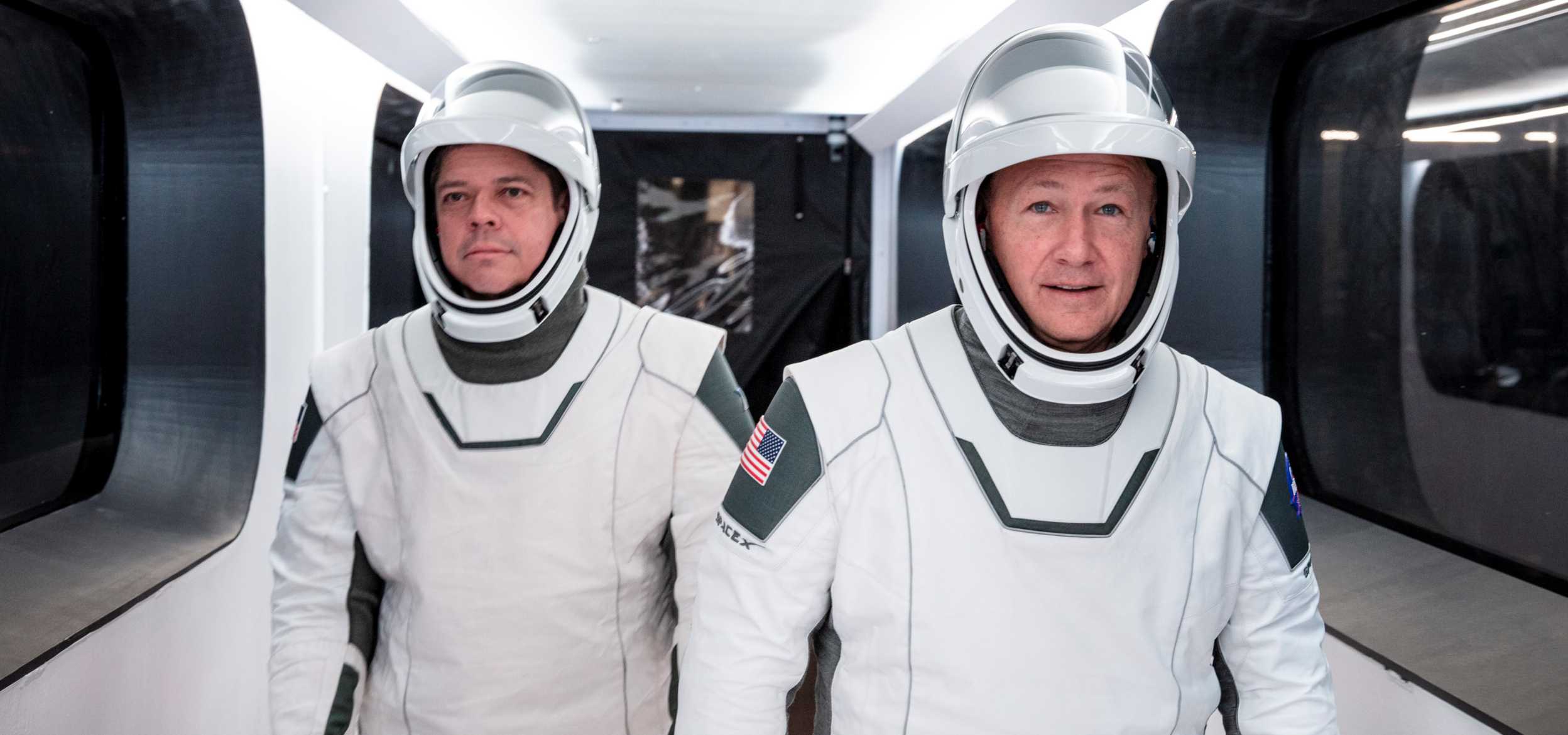
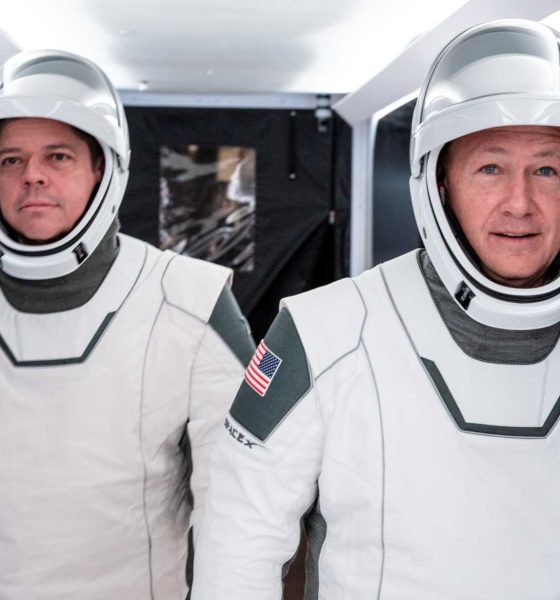
As previously reported by Teslarati, DM-2 will send NASA astronauts, Bob Behnken and Doug Hurley, to the International Space Station (ISS) for a suspected extended long-duration stay. Initially, the test demonstration flight was expected to only support a week or so stay at the ISS mirroring Crew Dragon’s previous DM-1 test flight in March of 2019. However, early in 2020, NASA and SpaceX discussed opening up the possibility of extending the duration of the test flight to reflect an operational length stay anywhere between 1.5 and 3 months. In support of a longer duration stay, Behnken and Hurley have spent the last few weeks continuously training for life and duty aboard the ISS at Johnson Space Center in Houston, Texas.
An extension in mission duration length would ensure that NASA is able to keep a presence of more than just one astronaut aboard the ISS when NASA astronaut crew members Jessica Meir and Drew Morgan depart the station in the late Spring of this year. According to Eric Berger of Ars Technica, a longer-duration mission not only ensures more NASA crew members on-station but could ensure that Behnken, a veteran spacewalker, could be there to support NASA astronaut Chris Cassidy with any extra-vehicular activity (EVA) should the need arise.
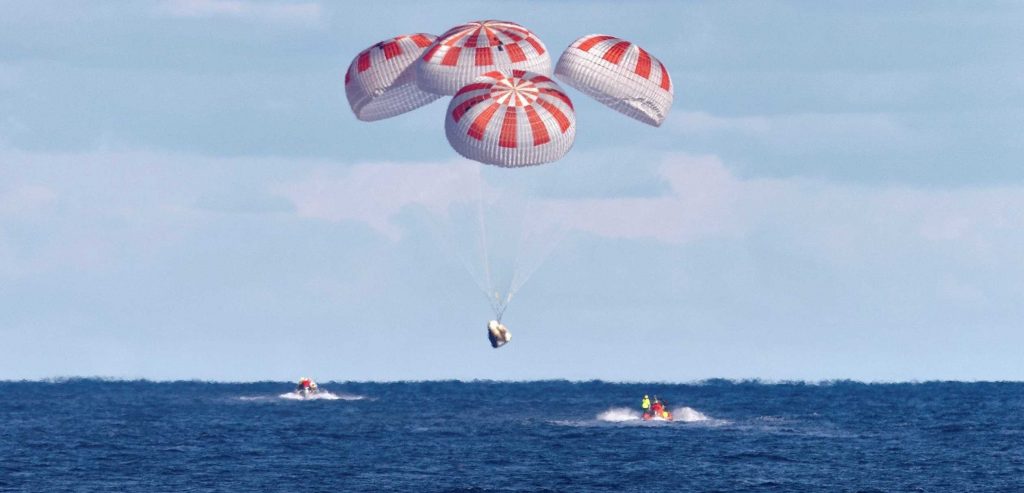
As a true end-to-end test to certify SpaceX’s human spaceflight capabilities, DM-2 will not only feature launch and autonomous docking operations with the ISS but splashdown landing and recovery procedures as well. DM-2 will serve as the ultimate test of Crew Dragon’s Mark 3 parachutes hopefully enabling Behnken and Hurley to return to Earth in gentle splashdown style in the Atlantic Ocean.
It had previously been debated which of the NASA CCP partners, SpaceX with the Crew Dragon or Boeing with its CST-100 Starliner crew capsule, would likely be the first to return astronauts to the ISS. However, Boeing’s debut Starliner orbital flight test to the ISS in December of 2019 resulted in some surprising errors and a subsequent extensive investigation and list of sixty-one suggested corrective actions. Now, it is apparent that SpaceX will be the first private company to return crewed spaceflight to American soil after an almost decade long hiatus. It will also be the first to support NASA astronaut orbital spaceflight with a privately built crew capsule and rocket in just two to three short months.
Check out Teslarati’s newsletters for prompt updates, on-the-ground perspectives, and unique glimpses of SpaceX’s rocket launch and recovery processes.



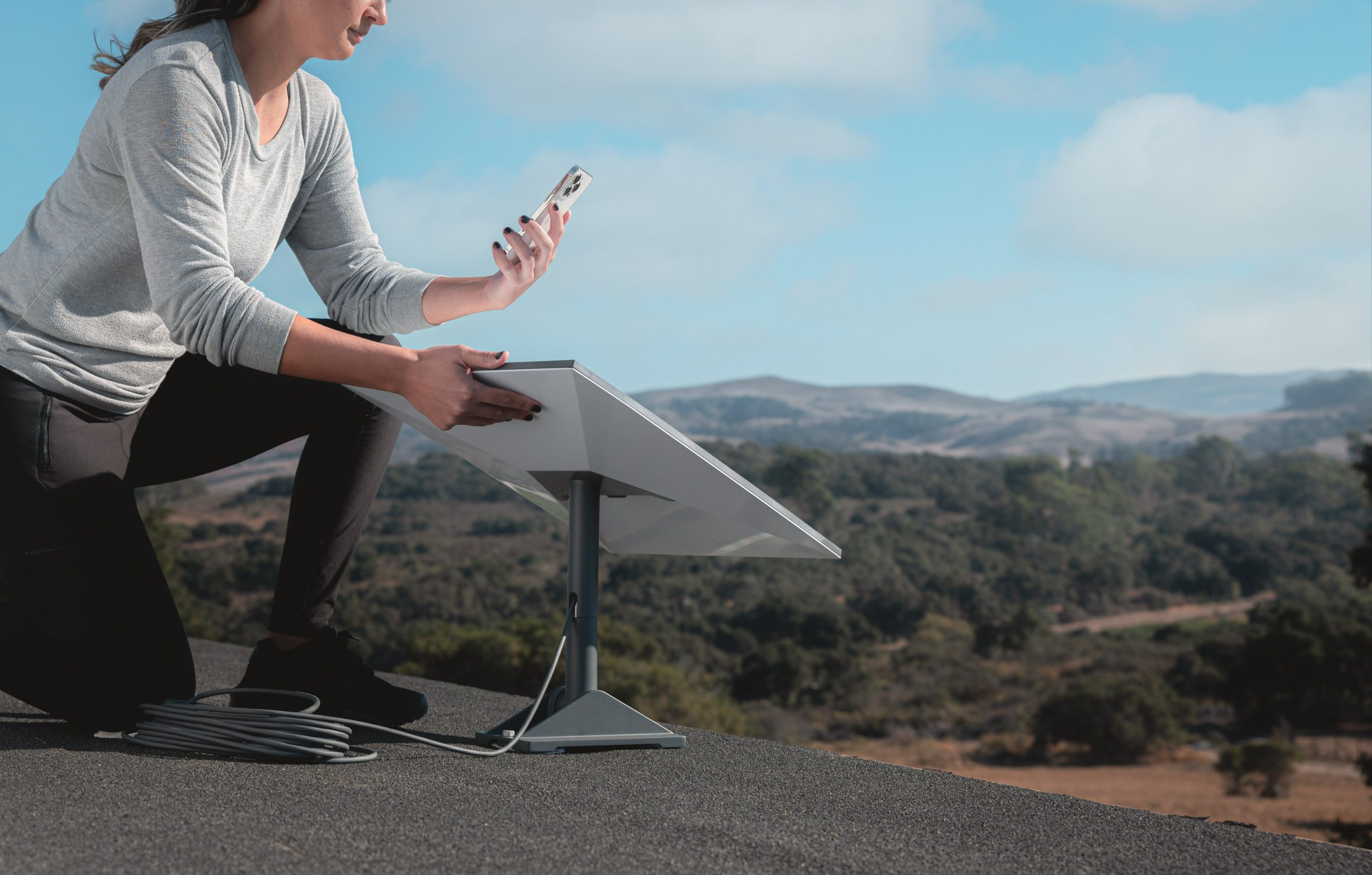
Starlink is launching a new beta path for ordinary property owners and local operators to turn a single Starlink kit into a small shared-access business for passive income.
Under the Starlink for Communities program, a host installs one dish and router setup in a location with nearby demand: an apartment complex, campground, rural crossroads, or event site. Neighbors or local users can buy short-term passes rather than full individual subscriptions, giving the Starlink provider a potential path to passive income.
Hour, day, and week passes cover one device. A month pass covers up to four. Starlink handles account creation, payments, access controls, and the satellite link itself. The host’s role is mainly placement, power, and basic upkeep, with earnings tied to each paid connection.
Big news! SpaceX is introducing a new @Starlink for Communities program that lets you earn money by providing Starlink internet to your neighbors or people nearby, who can pay for access by the hour, day, week, or month.
Neighbors pay for the access they need, while the person… pic.twitter.com/DtOUs0Ekvt
— Sawyer Merritt (@SawyerMerritt) October 1, 2026
The model echoes the passive-income vision long attached to Tesla’s Robotaxi plans, and it seems like it’s something Musk has hinted toward in the past as he believes AI will make the need to work relatively optional. In both cases, the platform owns the hard parts of matching, billing, and network management, while an individual supplies a physical asset that sits idle much of the time.
A Starlink host’s dish can serve multiple nearby users without each household buying and installing its own terminal. A Tesla owner, under the stated Robotaxi concept, would leave a vehicle enrolled in the fleet during unused hours so the car generates rides while the owner is at work or asleep.
Both arrangements convert under-utilized hardware into a revenue stream. They also let the company scale coverage or capacity without owning every endpoint.
Differences are practical. A Starlink kit is a fixed, relatively low-cost terminal whose main constraint is local congestion and line-of-sight. A Tesla Robotaxi is a mobile, high-value vehicle whose earnings depend on demand density, utilization rates, insurance, cleaning, and charging.
Starlink’s program is already accepting host applications in multiple countries and describes the revenue split as ongoing. Tesla’s owner-network version remains more aspirational.
The company currently operates a limited company-controlled robotaxi service in select areas and has solicited interest from fleet buyers for Cybercab vehicles, while private Full Self-Driving owners have not yet been able to dispatch their own cars for paid rides at scale.
Tesla primes Cybercabs for 4K streaming and high bandwidth gaming with Starlink integration
Starlink is a satellite broadband service operated by SpaceX that uses a constellation of low-Earth-orbit satellites to deliver internet to locations where terrestrial broadband is slow, expensive, or absent. It has grown to millions of subscribers worldwide by selling direct residential, mobile, and enterprise terminals, and have become widely available at a wide array at retail locations like Target and Best Buy.
The Communities program extends that reach by letting hosts resell short bursts of capacity to people nearby, while also providing high-speed internet access to those who are simply around a Starlink user.
News
SpaceX’s midnight spy satellite launch quietly set a new record
Falcon Heavy launched its first NRO mission while SpaceX landed four boosters in one day.

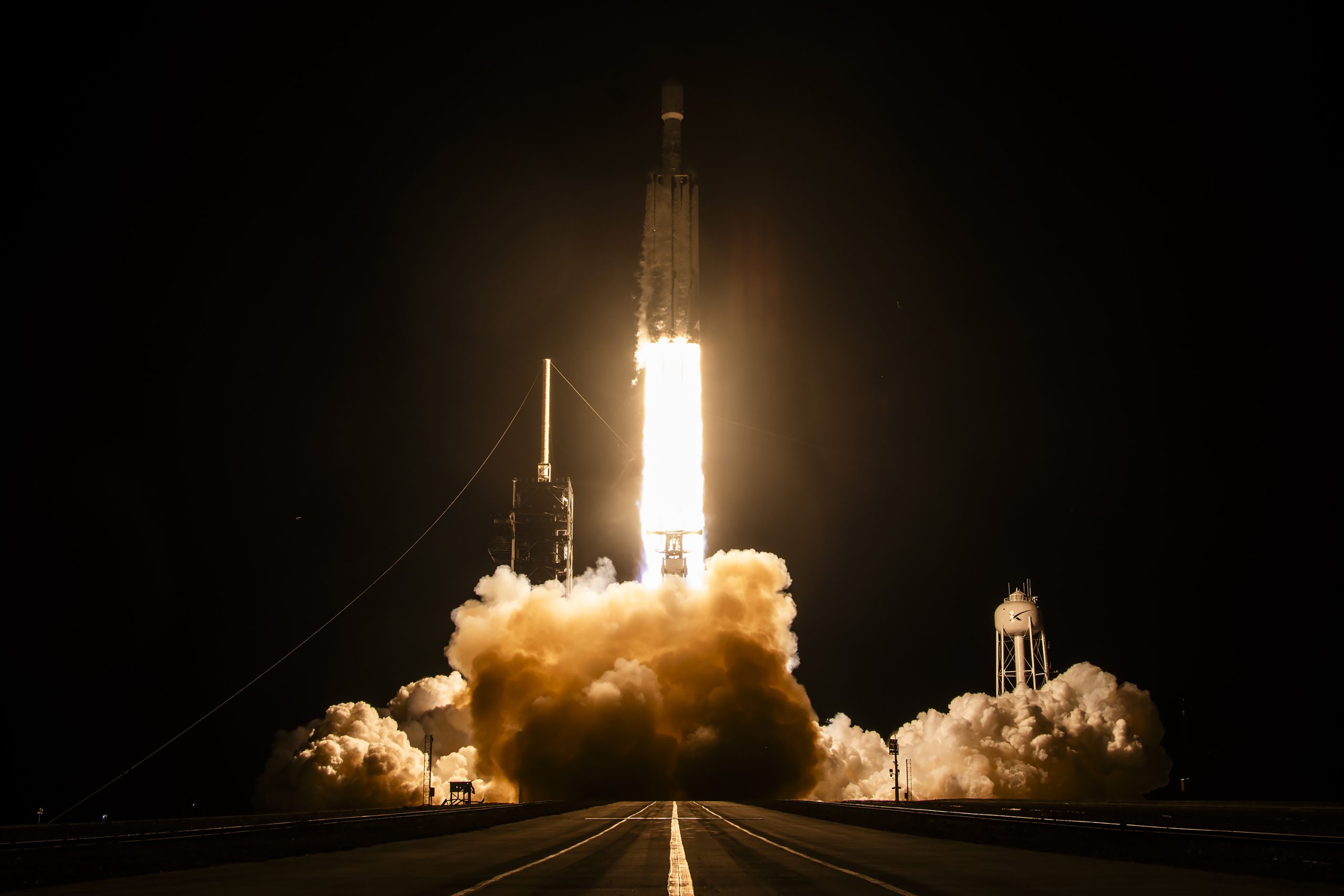
SpaceX closed out one of its busiest days ever with a midnight Falcon Heavy launch from Florida, and the rocket’s two side boosters came home to finish off a landing record the company had never set before.
Falcon Heavy lifted off from Launch Complex 39A at NASA’s Kennedy Space Center at 11:54 p.m. ET Thursday carrying NROL-97, a classified payload for the National Reconnaissance Office. It was the first time the NRO has flown on Falcon Heavy after 22 missions on Falcon 9, and the first NRO mission bought through the National Security Space Launch Phase 3 Lane 2 contract awarded in 2025, according to Spaceflight Now.
Falcon Heavy lifts off from pad 39A in Florida for the 14th time! pic.twitter.com/uuZLKNTdD7
— SpaceX (@SpaceX) October 2, 2026
Roughly eight minutes after liftoff, side boosters B1104 and B1072 touched down at Landing Zones 1 and 2 at Cape Canaveral Space Force Station, setting off double sonic booms across Brevard County. B1104 was flying for the second time and B1072 for the fourth. Both last flew on August 30 on NASA’s Nancy Grace Roman Space Telescope, making NROL-97 the quickest turnaround between Falcon Heavy missions to date. The brand new center core, B1106, was expended in the Atlantic so the payload could reach its high energy orbit, and SpaceX’s mission page noted the fairing had previously flown on the NROL-95 mission in July.
The two landings capped a record for SpaceX. Earlier Thursday, Falcon 9 booster B1101 returned to Landing Zone 40 after sending the Crew-13 astronauts to the International Space Station, and another Falcon 9 launched the Transporter-18 rideshare with 130 payloads from Vandenberg Space Force Base in California. Spaceflight Now reported it was the first time SpaceX has landed four boosters in a single day, wrapping up the triple header Teslarati previewed on Wednesday.
Falcon Heavy’s side boosters land on LZ-1 and LZ-2 pic.twitter.com/dBPcNeggFx
— SpaceX (@SpaceX) October 2, 2026
The mission also brought Landing Zone 1 back for what may be its final landing. SpaceX first landed an orbital class booster there in December 2015, but its lease on the former Launch Complex 13 site ended in 2025 as the company moved Florida landings to new pads at its own launch complexes. With LZ-40 already holding the Crew-13 booster, SpaceX brought LZ-1 back into service for one more night. Launch tracker Next Spaceflight listed NROL-97 as the final expected landing at the site.
NROL-97 adds to a fast growing stack of national security work for SpaceX. The company has flown four Space Force missions from Vandenberg since mid August, several believed to carry Starshield satellites, pushing its Pentagon contract total for 2026 past $8 billion. Elon Musk was also named this week to help lead the Pentagon’s Project Meridian study on the future of warfare.
The Florida doubleheader stood out for another reason. The Space Coast saw only one launch in all of September as SpaceX shifts more of its East Coast infrastructure toward Starship, which reached orbit for the first time on Flight 14 just three days earlier.
Elon Musk
The Pentagon taps Elon Musk to design the battlefield of the future
Hegseth named Elon Musk to help lead Project Meridian, a Pentagon study of future warfare.

Elon Musk has a new role in the Trump administration. Defense Secretary Pete Hegseth announced on war.gov Wednesday that Musk will help lead Project Meridian, a new Pentagon study meant to identify the weapons and technologies the U.S. military will need to fight wars decades from now.
Hegseth unveiled the project during his State of the Force address at Marine Corps Base Quantico in Virginia. Musk will direct the effort alongside Anduril founder Palmer Luckey and former House Speaker Newt Gingrich, working under Pentagon Chief Technology Officer Emil Michael. All three men were in attendance, and Hegseth said their first meeting would take place directly after the speech inside a secure compartmented facility, according to The Hill.
Hegseth said the group “will be focused on discovering, developing, and fielding the weapons and systems that our children and our grandchildren will need in their lifetimes, without any creative limitations or restrictions, on any future battlefield, from under the Earth to beyond the Moon.” He added that Meridian is not meant to produce new strategy or policy documents.
SpaceX to become America’s Military data backbone for missiles, drones, and warfighters
A memo released after the announcement gives Michael until January 28, 2027, to deliver findings, a window of 120 days. It names artificial intelligence, autonomy, directed energy, robotics and biotechnology as the fields expected to change how wars are fought. The results will come as a public report with a classified annex. The memo says the study will run through a partner organization it does not name, and it does not mention Musk directly. His role comes from Hegseth’s speech and a Pentagon press release.’
Musk had not commented publicly on the appointment as of Wednesday evening. This will be Musk’s first official advisory role in the administration since he left DOGE last year.
The mandate overlaps heavily with Musk’s companies. SpaceX is one of the Pentagon’s largest contractors, with 2026 defense awards topping $8 billion, much of it tied to launches and a suspected Starshield buildout out of Vandenberg. The Pentagon’s release says Meridian will examine domains “from subterranean depths to the cislunar frontier,” which maps onto The Boring Company’s tunneling and Starship’s lunar plans. Tesla’s work on autonomy and Optimus falls within the fields the memo lists.
Meridian was one of six initiatives Hegseth announced Wednesday. Another is a new Autonomous Warfare Command, which the department wants operating as a four-star combatant command by October 1, 2027.
The news lands a day before SpaceX is scheduled to fly a classified National Reconnaissance Office payload on Falcon Heavy, one of three launches the company has planned for Thursday.

Starlink launches Communities Program for passive income through internet sharing

Tesla just made its headlights even better through a software update


