News
Tesla Battery Day just got a concrete date, and it will be well worth the wait

It turns out that the long wait for Tesla’s highly-anticipated Battery Day event will be a bit longer, but it will certainly be well worth the wait. In a recent announcement on Twitter, Tesla CEO Elon Musk stated that the tentative date for Battery Day will be on September 15. But that’s not all, as the event will be held with the Annual Shareholder Meeting on September 15, 2020.
Musk posted the announcement this weekend, later adding that the event will be held in Fremont, California. Musk noted that Battery Day will include a tour of Tesla’s cell production system, among other things. Considering the location of the event, it appears that Tesla may be bringing investors to its secret and rumored skunkworks lab located at the company’s Kato Road facility, just a few minutes away from the Fremont plant.
Speculations are abounding about what Tesla would reveal in its Battery Day event. The last time Tesla held a similar event was Autonomy Day in April 2019, and that included a deep dive and discussion of the company’s custom Hardware 3 chip. Everything about HW3, from its design to its performance, was discussed intensively. This same amount of attention to detail is expected for Battery Day as well.
In classic Elon Musk fashion, Battery Day has experienced some delays, a lot of it due to the coronavirus pandemic. If Musk’s recent Twitter announcement is any indication, this delay is due, at least in part, to the fact that the company seems determined to show its shareholders what its battery cell technology is like firsthand. And considering how impressive Tesla’s batteries already are today, it’s pretty exciting to see what the company has in store for the future.
Previous reports point to Tesla discussing its next-generation battery cells at Battery Day. These cells are rumored to be capable of lasting a million miles if used in electric vehicles, and decades if deployed as battery storage devices. If Tesla does discuss cells that match these speculations, then the entire electric vehicle industry — and the shift to sustainability as a whole — will likely change forever.
Among the remaining roadblocks for widespread EV adoption are the limitations of the current generations of batteries. Batteries today are capable in their own right, but they are still more expensive compared to a traditional internal combustion engine. Tesla’s rumored million-mile batteries are expected to reach, and perhaps even go beyond price parity with gas-powered cars. By doing so, Tesla would be able to accelerate the EV transition even more.


Elon Musk
Elon Musk roasts India’s billionaire Mukesh Ambani as Starlink fight heats up
Elon Musk sarcastically calls Mukesh Ambani ‘Prime Minister’ as the Starlink India standoff escalates again.

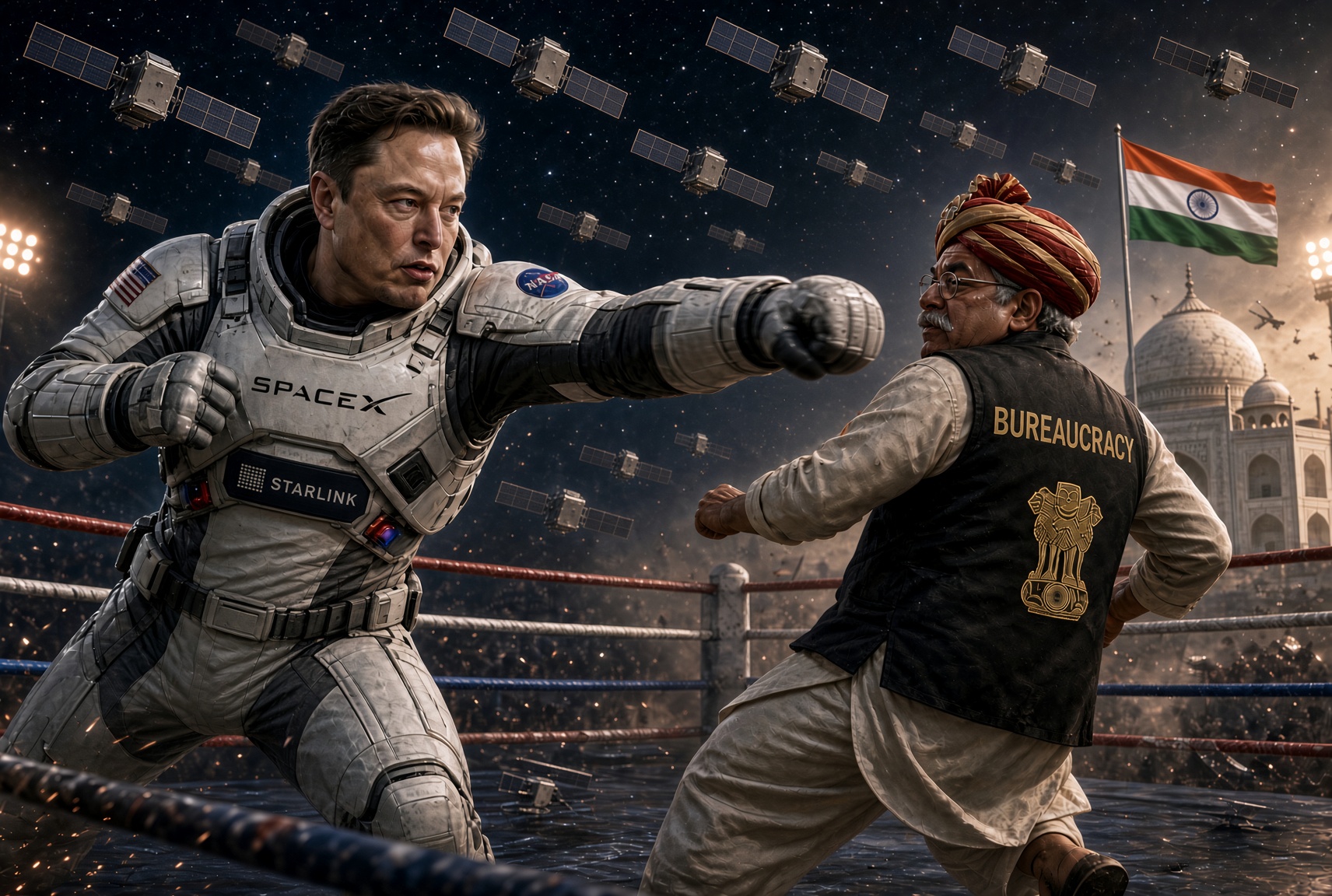
Elon Musk escalated his public fight over Starlink’s launch in India on Friday, addressing Reliance chairman Mukesh Ambani as “Prime Minister Ambani” in a sarcastic post on X. “Please accept my humble apologies for not realizing that you are the real boss of India,” Musk wrote, before accusing Ambani of “monopolistic exploitation” and asking whether he would “consider allowing Starlink to compete.” In follow up posts, he said Starlink has proven essential during natural disasters and would help parts of India with no internet access.
The post came two days into a fight that Musk sparked up on Wednesday, when he said Starlink was “being blocked by certain oligarchs in order to maintain their monopolistic chokehold on the Indian people.” He called it “a crime against the people of India” and left the names out, adding only, “You can guess who they are.” Jio and Airtel together hold more than 80% of India’s telecom market. On Thursday, Musk asked whether Ambani is “the real boss of India” and said Starlink has spent five years complying with “every single law and requirement” of the Indian government.
Dear Prime Minister Ambani,
Please accept my humble apologies for not realizing that you are the real boss of India.
Naturally, you would prefer to maintain your monopolistic exploitation of the great people of India, but would you nonetheless consider allowing Starlink to compete?
There are many areas of India, as there are in all countries, with no Internet access, which denies children the opportunity for education and for small businesses the opportunity to sell their goods to a global market. Starlink would change their lives for the better.
Thank you 🙏
— Elon Musk (@elonmusk) October 9, 2026
India’s government has pushed back each time. The Ministry of Communications called the suggestion that its framework is unfair or discriminatory “baseless and misconceived.” Communications Minister Jyotiraditya Scindia said Friday that three companies hold satcom licenses: Starlink, Jio Satellite Communications, and Bharti backed Eutelsat OneWeb. Amazon’s Kuiper, now Amazon Leo, is still going through the process. None can launch until regulators finalize satellite spectrum pricing and the Home Ministry signs off on each company’s security compliance. Scindia said the telecom regulator and the Department of Telecommunications are close to a decision on pricing, The Hindu reported. Bharti chairman Sunil Mittal also said OneWeb is still waiting on approvals.
Starlink received its operator license in 2025 after a three year wait, and the space regulator IN-SPACe granted what industry executives called the last approval needed in July. The holdup since then centers on security, particularly concern that foreign operators could bypass Indian gateways.
Musk and Ambani have been on opposite sides of this before. In late 2024, Ambani argued for auctioning satellite spectrum, which Musk criticized as out of step with the rest of the world, and India chose administrative allocation instead. By March 2025, the two sides had signed a deal to sell Starlink devices in Reliance stores, and Starlink secured its telecom license that June. That partner is now also a competitor. Jio is reportedly weighing a constellation of 1,600 to 1,650 satellites costing an estimated $10 billion to $15 billion, while Akash Ambani has told shareholders Jio plans to lease capacity from global providers to move quickly.
Elon Musk
Elon Musk’s surprise addition to the X Takeover lineup has fans talking
Elon Musk will join Saturday’s X Takeover at Giga Texas for a live virtual interview.
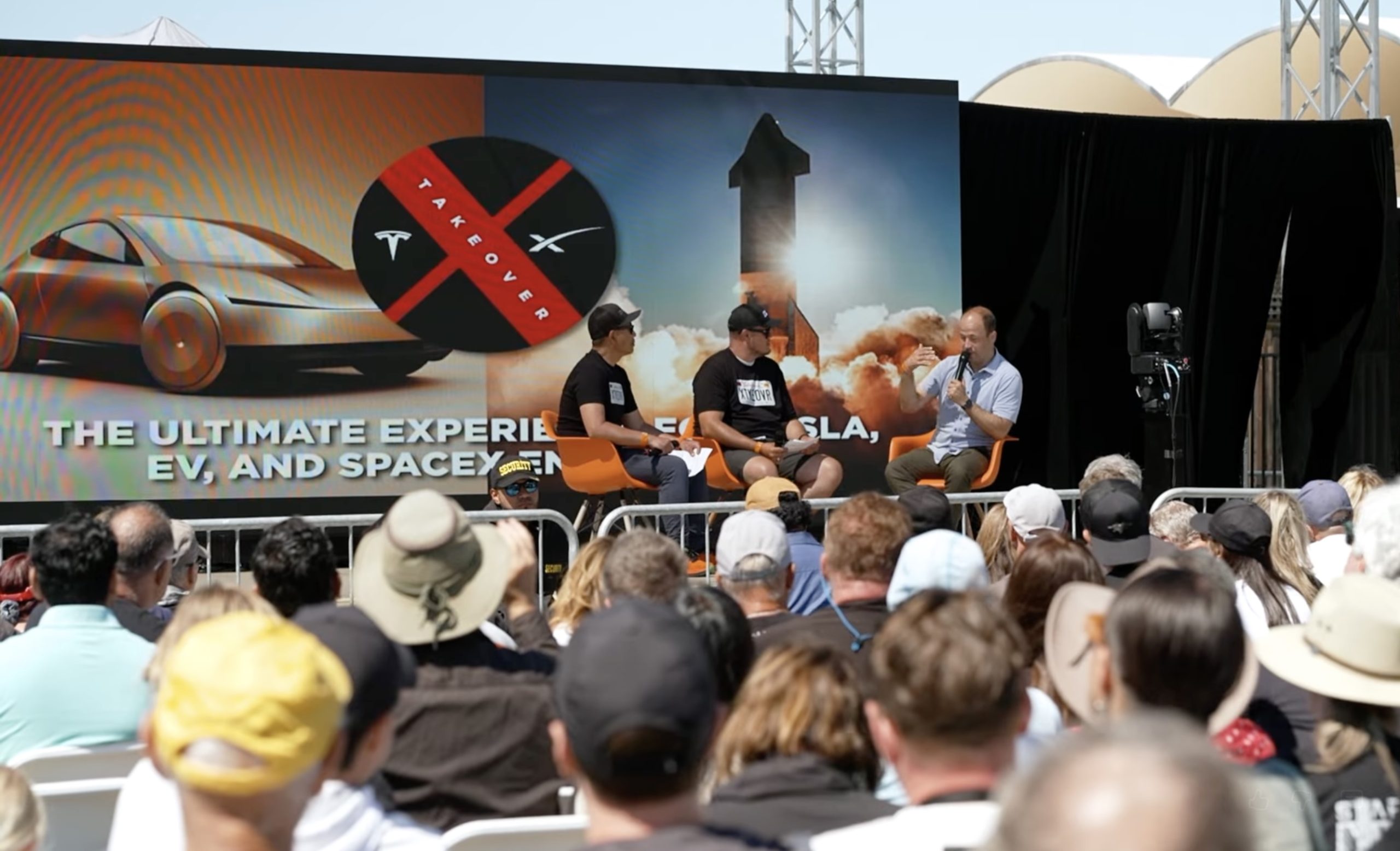
Elon Musk will join X Takeover at Giga Texas on Saturday for a live virtual interview, according to Sawyer Merritt, who shared the news late Thursday. Musk will not be on stage in Austin. The conversation is set to stream for free on the @teslaownersSV account on X.
Organizers had kept expectations in check. In a September update, Tesla Owners Silicon Valley said Musk had appeared at the event twice before but was not promising a third appearance, even as fans hoped he would walk the Giga Texas grounds in person. A virtual spot matches 2024, when Musk gave a surprise interview of about an hour to the crowd in San Luis Obispo, as Teslarati reported at the time.
Wasn’t expecting this 🫡
— Tesla Owners Silicon Valley (@teslaownersSV) October 9, 2026
This year’s edition is a first in several ways. It is the first X Takeover held outside California and the first at a Tesla facility, with tickets selling out in eight days. Tesla provides the venue, but the event is produced independently by Tesla Owners Silicon Valley. The main event runs from 10 a.m. to 6 p.m. CT, followed by a drone and light show at 9 p.m. Maye Musk is the keynote speaker, Franz von Holzhausen is set for a virtual keynote, and Nicki Minaj is the special guest. Joe Tegtmeyer, whose drone footage Teslarati used to track the Optimus factory steel frame at Giga Texas, is also on the speaker list.
Musk’s interview topics have not been revealed, but the backdrop is busy. Tesla doubled its Cybercab fleet in Austin in late September, and last week Musk explained why Robotaxi hours only moved from 10 p.m. to 11 p.m.. Merritt also reported Thursday that Texas DMV records now show 319 registered Cybercabs, up from 169. NHTSA’s deadline for Tesla’s sworn answers on Cybercab certification is October 30, and Tesla reports third quarter earnings on October 21.
Fans who cannot make it to Austin can watch the livestream on X. Musk tends to say more in unscripted settings than he does in prepared remarks, which is the reason this one is worth having open on Saturday.
News
It’s official: SpaceX takes aim at Verizon, AT&T, and T-Mobile
SpaceX is buying 800 MHz spectrum from Grain to turn Starlink Mobile into a carrier.
SpaceX has agreed to buy a nationwide block of low band wireless spectrum, a deal the company says will let Starlink Mobile operate as a full US carrier rather than a satellite add-on for someone else’s network.
The company announced the agreement on X on Thursday afternoon, saying it will “pave the way for @Starlink to become a major mobile carrier in the US.” The seller is Grain Management, a private investment firm that confirmed in a statement that SpaceX will acquire 100% of its nationwide 800 MHz portfolio. That covers up to 14 MHz of paired spectrum in the 817 to 824 MHz and 862 to 869 MHz bands. Neither side disclosed a price, and the deal still needs FCC approval.
We announced an agreement to acquire a nationwide low-band spectrum license portfolio that will pave the way for @Starlink to become a major mobile carrier in the US.
With this new spectrum and our Gen2 constellation, Starlink Mobile can ensure Americans have access to high-speed mobile broadband no matter where they are → https://t.co/1Uaf48v5pm
— SpaceX (@SpaceX) October 8, 2026
Grain only recently picked up the licenses itself. It bought the portfolio from T-Mobile in a transaction that closed in August, paying cash plus its own 600 MHz spectrum. Rival AST SpaceMobile had been testing satellites on the same bands before SpaceX stepped in.
SpaceX said its 2 GHz spectrum will handle high bandwidth capacity, while the new 800 MHz layer “ensures Starlink Mobile’s signal penetrates through obstacles, such as walls, and can provide service to customers’ devices even when they are in buildings.” The company added that most existing phones already support the band, so customers would not need new hardware to use it.
That 2 GHz spectrum came from SpaceX’s EchoStar acquisition last year, which gave the company exclusive S band rights in the US and global Mobile Satellite Service licenses. The Grain spectrum is different in an important way: it is tailored for service from ground towers, not satellites. SpaceX said that combination would make Starlink Mobile “the first network operator to deploy both satellite and terrestrial spectrum.”
The announcement also follows a key regulatory win. Earlier this week, the FCC approved SpaceX’s plan to deploy 15,000 second generation Starlink Mobile satellites, which the company has said will carry up to 100 times the data density of the current system, as Teslarati previously reported.
Shares of AT&T, Verizon and T-Mobile fell in extended trading after the announcement. T-Mobile is currently SpaceX’s launch partner for Starlink Mobile in the US, which makes its position the most complicated of the three.
SpaceX has not been subtle about its plans. During the company’s August earnings call, President and COO Gwynne Shotwell said she expected Starlink Mobile to win over customers from the major carriers. “I anticipate us to be able to acquire quite a few of their customers because I think our service will be better,” she said, pointing to dead zone coverage and resilience during disasters. Shotwell also described plans for low cost cellular base stations that could pair with existing Starlink dishes.
SpaceX has targeted 2027 for deployment of its next generation Starlink Mobile satellites, with upgraded service expected by the end of that year. The FCC review of the Grain deal now determines when the terrestrial half of that network can come online.

Elon Musk roasts India’s billionaire Mukesh Ambani as Starlink fight heats up

Elon Musk’s surprise addition to the X Takeover lineup has fans talking

It’s official: SpaceX takes aim at Verizon, AT&T, and T-Mobile

The Pentagon taps Elon Musk to design the battlefield of the future

Tesla Roadster’s new patent preps white-knuckle speeds, keeping it grounded


