Lifestyle
Tesla fan clones perfect Cybertruck but with one flaw

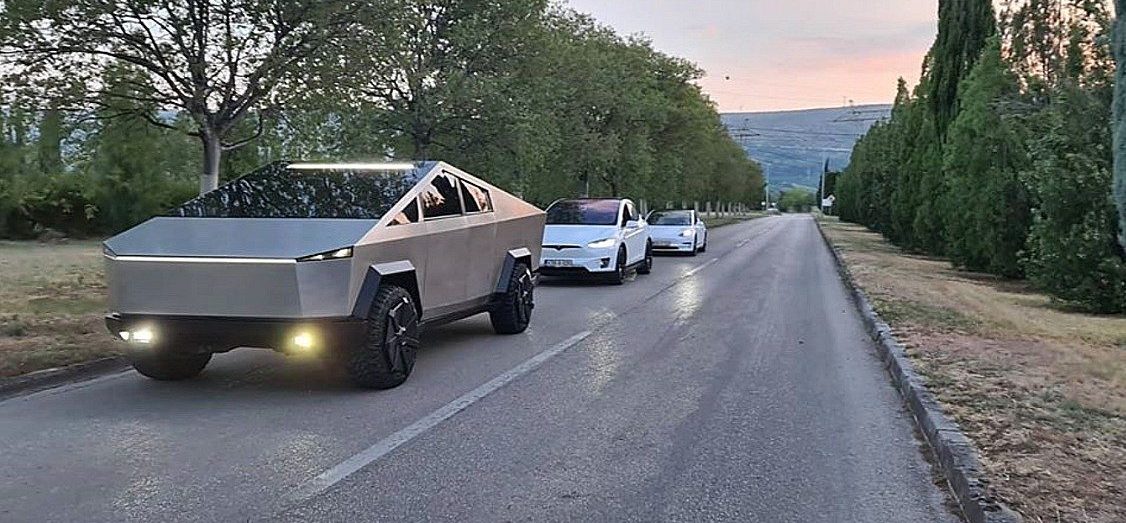
A Tesla Cybertruck fan has made one of the best clones to the all-electric pickup yet. However, there is one problem with his Cybertruck lookalike: it isn’t electric, it’s gas-powered.
The Cybertruck has not been released yet. Still, a Tesla enthusiast could have some people wondering if the unique pickup is randomly rolling around the streets ahead of its first deliveries, as he went the extra mile to create arguably the best Cybertruck clone yet.
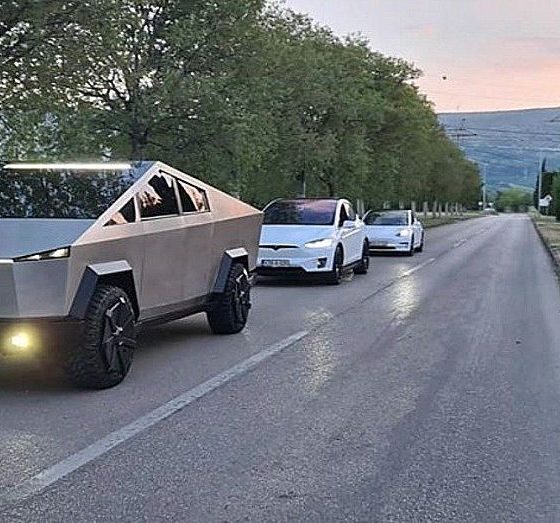
Someone known simply as “Jim” on Instagram has created what is perhaps the most realistic and accurate portrayal of the Tesla Cybertruck yet. The clone, both with its interior and exterior, seems to share all of the same qualities as the real Cybertruck that Tesla unveiled in late November.
Based on pictures and videos, it appears to be extremely close to what Tesla rolled out on stage in Hawthorne at the company’s unveiling event.
View this post on Instagram
However, “Jim” admitted that his Cybertruck clone is not powered by batteries or all-electric motors. Instead, the clone is powered by gas, which makes it as far away from a Tesla clone as one could get. Even though “Jim’s” Cybertruck may look like the real thing, it is powered by the opposite of what Tesla would use for any of its vehicles.
Many people have tried to build the Cybertruck themselves all over the world. The unique design of Tesla’s first all-electric pickup truck caught the world by storm because of its compelling shape and stainless steel exoskeleton, so much so that many have tried to replicate the car in their own garages.
While those who have strived to clone the electric pickup have done an excellent job in their own right, Jim’s seems to be the most accurate depiction thus far when it comes to aesthetics.
View this post on Instagram
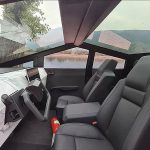
Not only does the car have an external look and what appears to be the correct dimensions of the real Cybertruck, but the interior detail is what is perhaps the most striking. It seems that Jim has done an incredible job with bringing the interior look to life, even including the “marble” dashboard, which is actually made of recycled paper composite materials.
Tesla used paper composite materials for the dashboard, which are cost-effective and provide a luxury look. The electric car company has focused on using environmentally friendly materials for the interior of their cars, starting with vegan interiors back in 2017.
The clone Cybertruck also has the same steering wheel, seat layout, large glass roof, and a similar dash screen to the real vehicle.
-
- (Credit: Tesla)
-
- Credit: Instagram | @268_others
Elon Musk has stated on several occasions that Tesla is working on modifying the Cybertruck to make it as high-quality as possible. Not only did the electric car company consider making the vehicle smaller and more compact, but Tesla is also changing the alloy that the exoskeleton will be made of in order to maintain a durable and sturdy exterior that is capable of handling dings and dents.
Although the truck “will be pretty much” the same size as its prototype, according to Musk, it is unknown what the Cybertruck will look like in its final design right now. Tesla works to improve its vehicles in all facets when they are still in development, and the Cybertruck is no different.
But regardless, the design that “Jim” came up with and managed to manufacture has a striking resemblance to the Cybertruck prototype that Tesla revealed last year. Had it not been for his use of a combustion engine to bring his DIY Cybertruck to live, it could have been considered one of the best attempts at remaking the vehicle. As far as looks are concerned, it is strikingly similar to what may be released at the tail end of 2021.
Let us know in the comments below what you think about the Cybertruck clone!


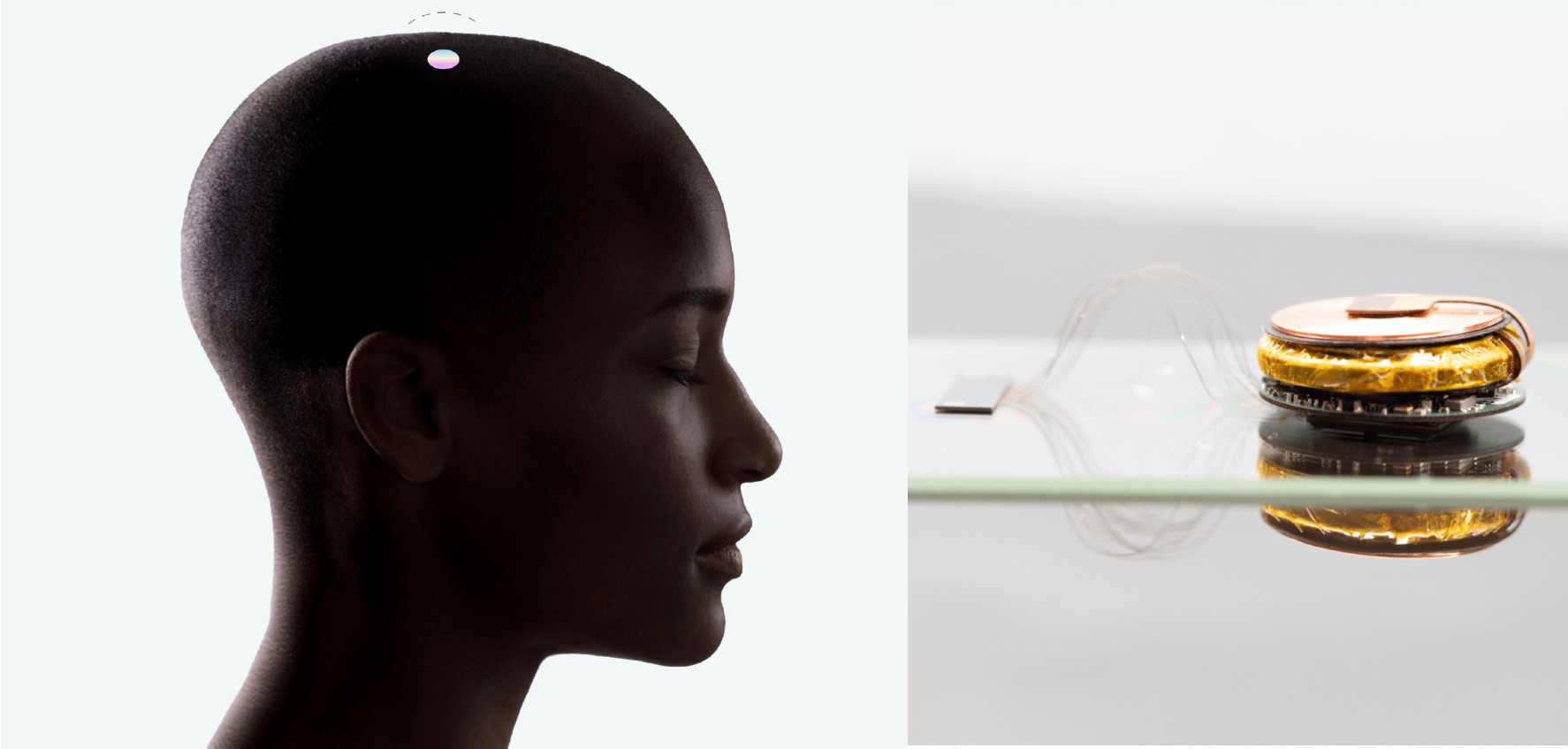
A former Vancouver police sergeant with ALS accounts his journey to become a patient for Elon Musk’s Neuralink wireless brain-computer interface technology.
“I’m texting you from my brain right now.” That was the first message Lee Marten sent after waking up from Neuralink surgery, five hours and one migraine after dozens of threads were stitched into his motor cortex.
Marten, a former Vancouver police sergeant, is one of the first Canadian ALS patients to receive Neuralink’s N1 brain implant, and the 26th recipient overall. He tells his story in a first-person account published by Maclean’s.
Marten recounts how he was a healthy, athletic Vancouver police sergeant until April 2022 when symptoms of muscle twitching and balance loss, were followed by a bad fall that broke his leg. He would eventually be diagnosed with ALS in early 2025 at the age of 47. ALS, also known as Lou Gehrig’s disease, is a fatal neurodegenerative disease that progressively destroys the motor neurons controlling voluntary muscle movement, eventually taking away a patient’s ability to walk, speak, swallow and breathe. There’s no cure, and most patients live two to five years after diagnosis.
He describes the devastation of the diagnosis and how he began preparing for it while connecting with other young ALS patients through a WhatsApp group called Young Guns. Through that group he learned about a Neuralink clinical trial at Toronto Western Hospital and, after a roughly seven-month vetting process (physical assessments, psychiatric evaluation, a final interview with the Neuralink team), was accepted this past April as the trial’s 26th recipient and the first Canadian ALS patient to get the N1 implant. He recounts the May surgery in detail, including the robotic system that stitched 64 threads into his brain, and describes the app, Link, translating his neural signals into cursor control, which he was using within hours of waking up.
Marten walks through what daily use looks like, including weekly “brain training” exercises, a real-time neural-activity display, charging the implant via a beanie-mounted MagSafe charger, and using the implant for emailing, texting, social media, and gaming via a “Magic Box” that connects it to other devices. He also gives brief context on brain-computer interface history and quite candid about Musk, calling him “divisive” but saying he found him “easy to admire.
The piece closes on a heavier note, with Marten seeking to pursue medical assistance in dying as his symptoms progressed, noting that he’ll be able to communicate his final words to his family through Neuralink rather than facing a silent decline. He expresses hope the data from his case will help future ALS patients, even without a cure in his own lifetime.
Investor's Corner
Tesla Robotaxi gets a massive upgrade in Nevada
Nevada regulators just approved a massive expansion of Tesla’s robotaxi fleet across the entire county.

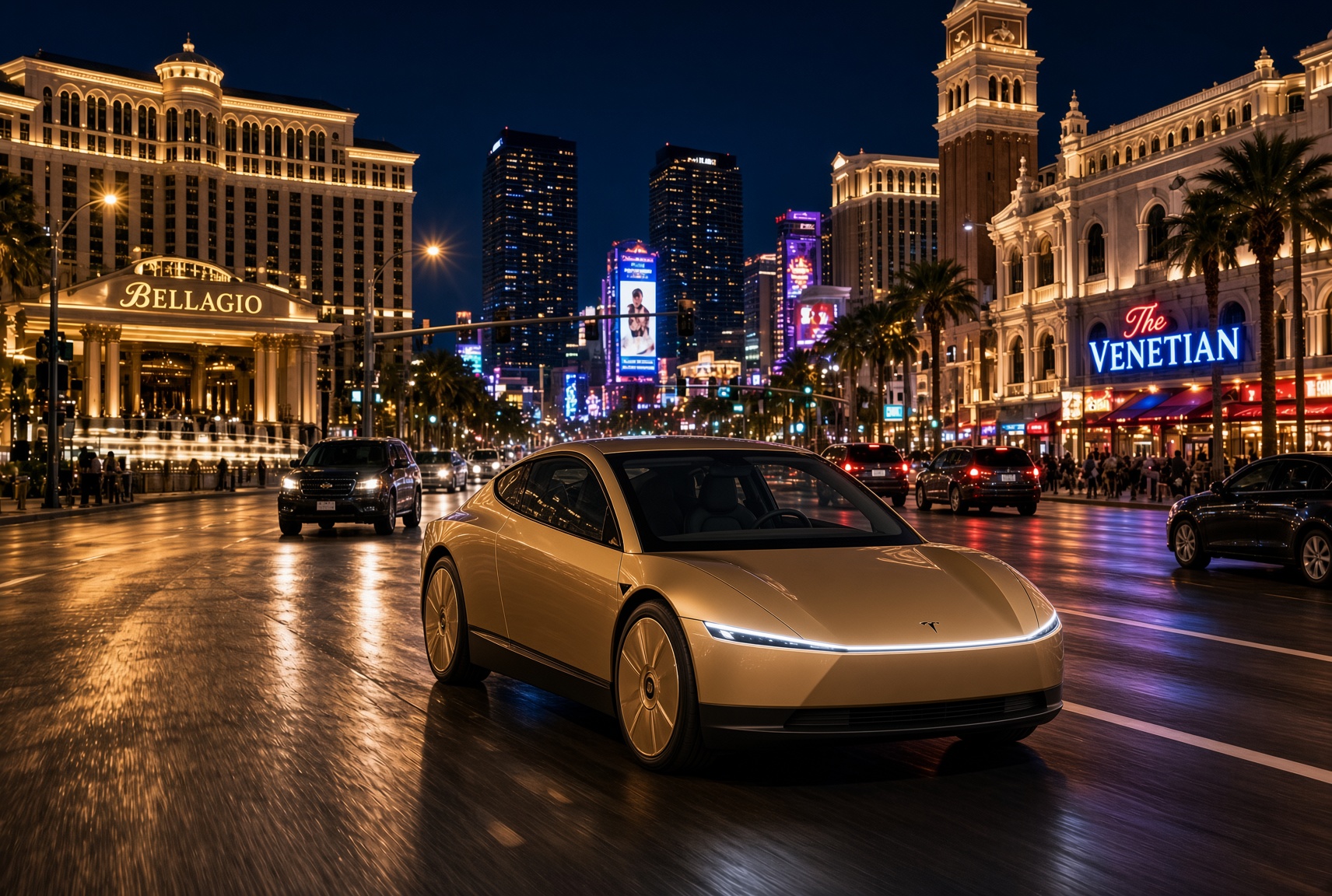
Tesla’s robotaxi footprint in Nevada just grew by roughly 500 times in a single regulatory vote.
The Nevada Transportation Authority approved Tesla’s full Autonomous Vehicle Network Company permit on Thursday, clearing the way for the company to deploy up to 5,000 driverless vehicles across Clark County over the next 12 months. The decision came during a four hour general session meeting that Tesla investor Sawyer Merritt watched live and reported on X, noting the vote replaces the interim order that had limited Tesla to just 10 robotaxis on a narrow stretch of the Las Vegas Strip.
EXCLUSIVE: Tesla has just officially received approval for its full Autonomous Vehicle Network Company permit in Nevada, clearing the way for Tesla to launch a paid public Robotaxi service in Las Vegas.
This officially allows @Tesla to deploy up to 5,000 robotaxis over the next… pic.twitter.com/DPs5UtUlrE
— Sawyer Merritt (@SawyerMerritt) August 20, 2026
That earlier cap, covered here after it surfaced on August 13, came with restrictions that looked stricter than what Tesla runs in Austin: a 45 mph speed ceiling, no airport pickups, and a geofence confined to the Strip corridor. The new approval extends Tesla’s operating authority to all of Clark County, with room to request an even wider geofence across the state.
Tesla representatives at the meeting said they have no intention of putting 5,000 cars on the road right away. Commercial rides are expected to start within 30 days, pending vehicle inspections, insurance filings, and fare approval, the standard steps every robotaxi operator in Nevada has had to clear.
Tesla’s own Robotaxi account replied to the news with a short line, The golden future is upon us.
The timing lines up with Tesla’s broader robotaxi push this month. The company is preparing to open Cybercab rides to the public in Austin as soon as this month, and it opened a sweepstakes for riders to win a seat at the launch event. Tesla filed its original application for a 5,000 vehicle Nevada fleet back in June, a request regulators trimmed to 10 vehicles when they issued the interim order in July. Thursday’s vote effectively grants the number Tesla asked for from the start.
Zoox, the Amazon owned robotaxi operator, has run in Nevada since 2025 and was capped at 100 vehicles before Thursday’s decision. Tesla’s new ceiling puts it well ahead of that comparison on paper, though the company has said its actual fleet size will depend on how quickly FSD v15 rolls out, the software update executives have called the gateway to scaling unsupervised robotaxi operations nationwide.
Elon Musk
India tells Elon Musk’s X to “Follow the Law” in latest censorship update
Elon Musk says X now exposes government censorship, but India’s secrecy laws complicate that promise.
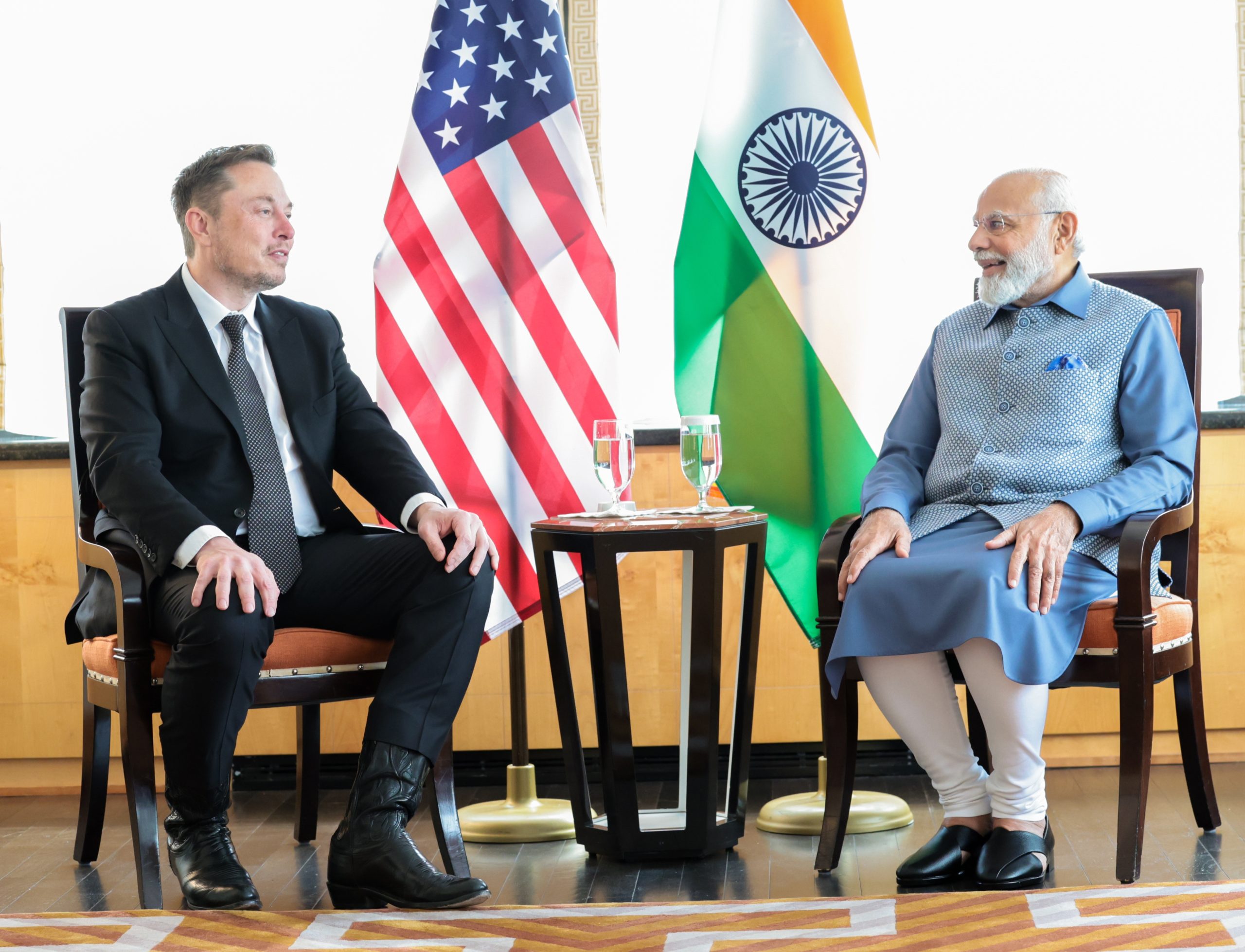
Elon Musk’s promise to make government censorship requests on X “clearly visible” is running into a wall in India, where the law forbids the very disclosure Musk is promising.
On August 15, Musk responded to an update from X’s open-source algorithm team by writing “Any censorship required by governments is now clearly visible.” The claim referred to a change X pushed two days earlier to its public xai-org/x-algorithm repository, which now includes a controversial filter written directly into the code. The filter suppresses posts from 665 accounts flagged by Brazil’s Superior Electoral Court from appearing in the For You feed of any viewer located in Brazil, unless the viewer already follows the account. The election tied to the filter is scheduled for October 4.
India’s government wasn’t as impressed, and responded on Monday that “X will have to follow the law of the land,” in response to Musk’s transparency push covered by the Times of India. The problem is structural rather than political. India issues content blocking orders under Section 69A of its IT Act, and Rule 16 of the accompanying 2009 Blocking Rules requires those orders to stay confidential. Publishing an India equivalent of the Brazil filter, naming specific accounts and citing specific government orders, would itself violate Indian law. Government use of Section 69A has grown from roughly 6,000 orders a year between 2018 and 2023 to about 24,300 in 2025, according to a Tech Times report.
The contrast puts Musk’s transparency pledge in an odd spot. It works largely as advertised in Brazil, where electoral law requires disclosure and X can point to specific account IDs and a specific court order in public code. It cannot work the same way in India, where the law requires the opposite. X users in India will keep seeing content disappear from search and their feeds without any public accounting of why, even as X tells the rest of the world that its censorship compliance is now inspectable.
This isn’t the first time X’s fights with a national government have shaped how the platform operates. Brazil’s Supreme Court ordered X to suspend the accounts of sitting lawmakers and journalists in 2024, a standoff that cost X its Brazilian revenue for months and froze Starlink’s local accounts before the investigation into Musk and X was closed in March with no evidence of wrongdoing found. X also sued California over a state law requiring moderation disclosures, arguing the mandate itself violated the First Amendment.
Whether India’s government pursues anything beyond a public statement remains to be seen. For now, the mismatch between what X can legally publish and what different governments legally allow it to publish is the real story behind Musk’s seven word claim.

OpenAI cites distrust of SpaceX in decision to drop Cursor partnership

Tesla Theater might be getting plenty more streaming platforms


