News
Tesla driver approaches stopped diesel truck, gets coal rolled

In Edmonton, Alberta, Canada, a Tesla driver was coal rolled in what could be the most obvious and deliberate attack against an EV yet.
Coal rolling is the act of modifying a diesel engine to increase the amount of fuel that enters the motor. When more fuel enters the engine, a thick, excessive amount of dark grey or black smoked emits into the air, filled with soot and toxic chemicals derived from gasoline or diesel fuel.
Illegal in many states, coal rolling is usually a form of anti-environmentalism and was first seen when the Toyota Prius Hybrid became a popular vehicle in the 2000s. In 2014, New Jersey became the first state to sign a bill into law that would prohibit the act of deliberately “rolling coal” into the air. Considering that it requires removing a particulate filter or an engine modification that would not allow it to pass an emissions inspection, the penalty can carry heavy fines and citations.
Since Tesla owners have become a more popular breed over the past several years, there have been plenty of drivers who have been subjected to coal roll attacks. While some are not so deliberate and could be argued as an accident, several have taken place that is too coincidental to be considered an accident. This may be the worst yet.
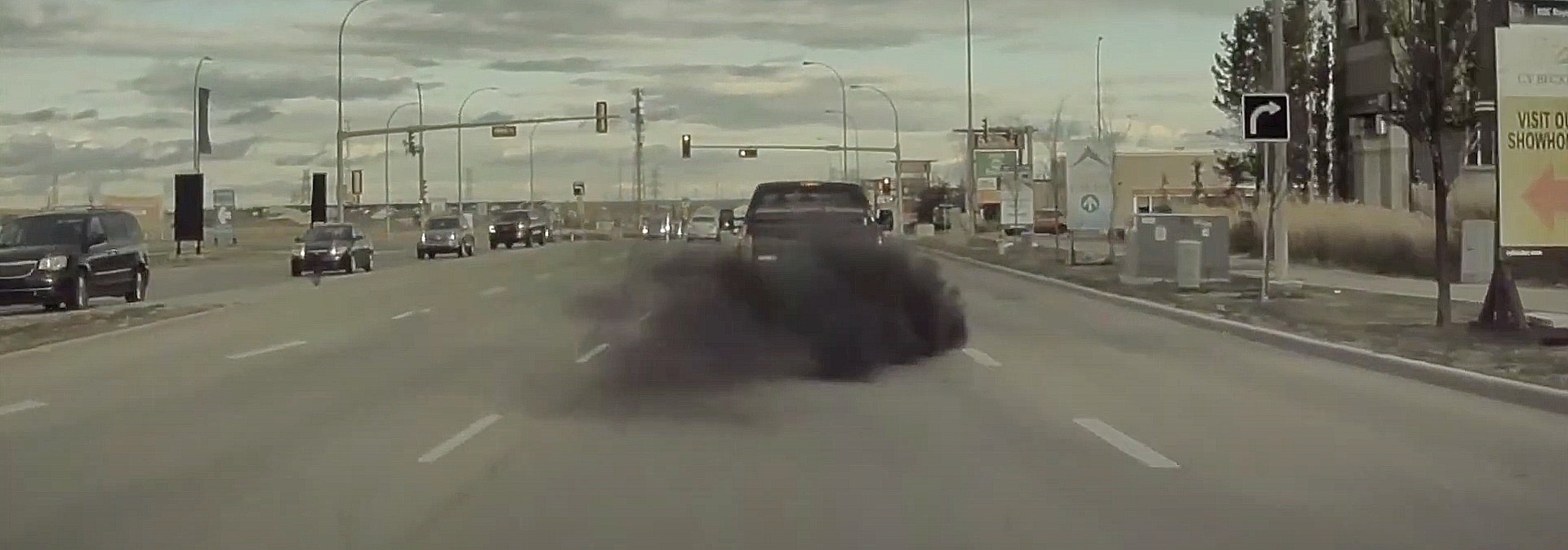
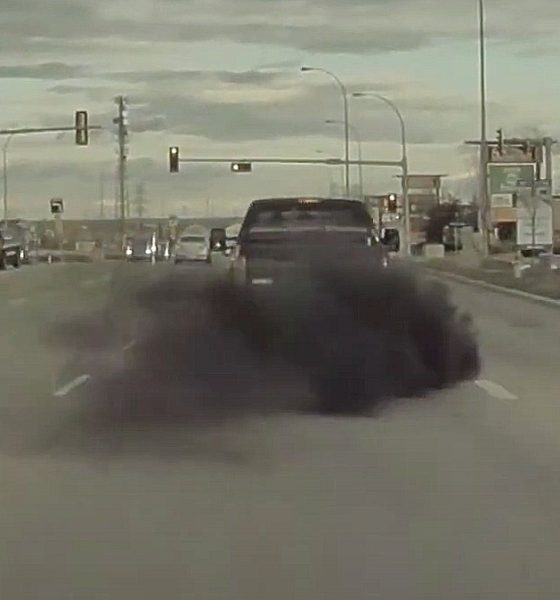
The video, uploaded by Drive Tesla Canada, shows a diesel GMC truck taking a right-hand turn. After the driver realized that behind him, sitting at a stoplight, was a Tesla, they come to a complete stop, waiting for the all-electric vehicle to approach him from the rear. When the Tesla gets close, the pickup driver smashes the gas, letting go of a large cloud of black soot, which lingers in front of the environmentally-friendly EV.
After sitting and waiting for the pollution to disperse, the Model 3 then pulls up to the rear of the truck once again, where the video ends.
The deliberate attack is far from an accident, especially considering the pickup driver made a clear and concise move to stop in the middle of the road to wait for the Tesla.
Tesla Model 3 owner targeted in road rage “coal roll” attack, caught on TeslaCam
Interestingly, the region that the video took place in of Edmonton is an oil-driven community. The city’s rich history in fossil fuels inspired the name of its National Hockey League team, the Oilers. According to the province’s website, Alberta, the province that Edmonton sits in, has the third-largest reserves behind Venezuela and Saudi Arabia.
While this is not the first time a Tesla has been coal rolled, it will certainly not be the last. Tesla owners have been subjected to these types of attacks, and worse, as a result of the anti-EV movement that is driven by oil companies and fossil fuel entities. However, the adoption of electric cars is growing and is becoming stronger than ever. As the number of EVs on the road continues to grow, eventually, the phasing out of diesel and petrol-powered engines will take place, leaving some drivers no choice but to use clean energy to transport themselves from one location to the next.
Watch the coal rolling video below.
H/t: Drive Tesla Canada


Elon Musk
How to use Grok Bot to block spam calls and texts
Musk told users to ask Grok Bot to scrub their phone numbers from spam lists.

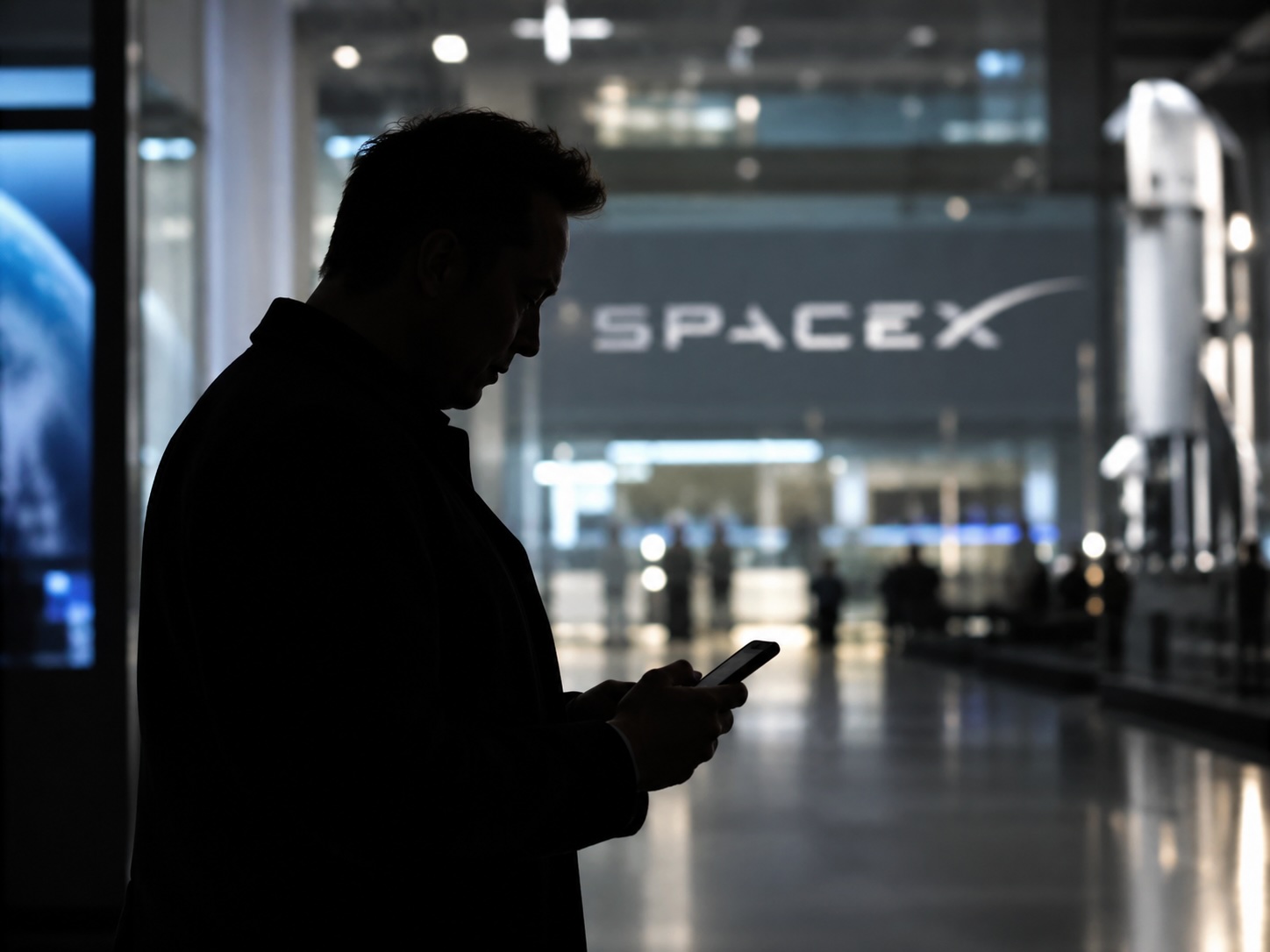
Elon Musk has a new use case for Grok Bot, and it is the spam call. On Thursday he replied to an X user named Arash with a short instruction: “Ask your @Grok @Bot to remove your phone number from spam call & text lists!” Arash had said he got tired of the calls, had an AI bot find his number on listing sites and file removal requests, and packaged the process as a free skill for others.
The skill is called Spam-Call Scrubber, which is described to find a phone number on people search sites and data brokers, submits the opt outs, completes the confirmation emails those sites send back, and rechecks on a schedule the user picks. Using it requires the Grok Bot app. The pitch is time saved, since most broker opt outs sit behind separate forms on separate sites.
Ask your @Grok @Bot to remove your phone number from spam call & text lists!
— Elon Musk (@elonmusk) October 15, 2026
Musk said Grok Bot now gives each bot its own email address, and that it can detect scam emails. On Thursday he also said SpaceX would make users whole if the bot botches a purchase or leaks a card, then told users to shop away from Amazon after the retailer blocked the agent, as Teslarati reported. The terms of service we reviewed at the time put responsibility for what an agent does on the user.
For Tesla owners, Grok Bot is not just a phone app. Tesla brought Grok Bot into its vehicles on September 22, and we argued earlier this week that the Cybercab’s real advantage may be the errands it runs during a ride. Every Cybercab and the rest of the Model Y Robotaxi fleet has it enabled. The more routine tasks like this one become, the more a rider has reason to hand over something personal in the back seat.
The new Spam-Call Scrubber skill can be downloaded for free and works on sites that honor removal requests, while noting that listings can reappear, and illegal robocallers do not check any registry. Whether Spam-Call Scrubber cuts anyone’s call volume is something the first wave of users will find out, and Musk’s endorsement guarantees that wave is coming.
Investor's Corner
Tesla’s flying Roadster just revealed something bigger than the car
Analysts say the Roadster demo puts a Tesla and SpaceX merger back on the table.
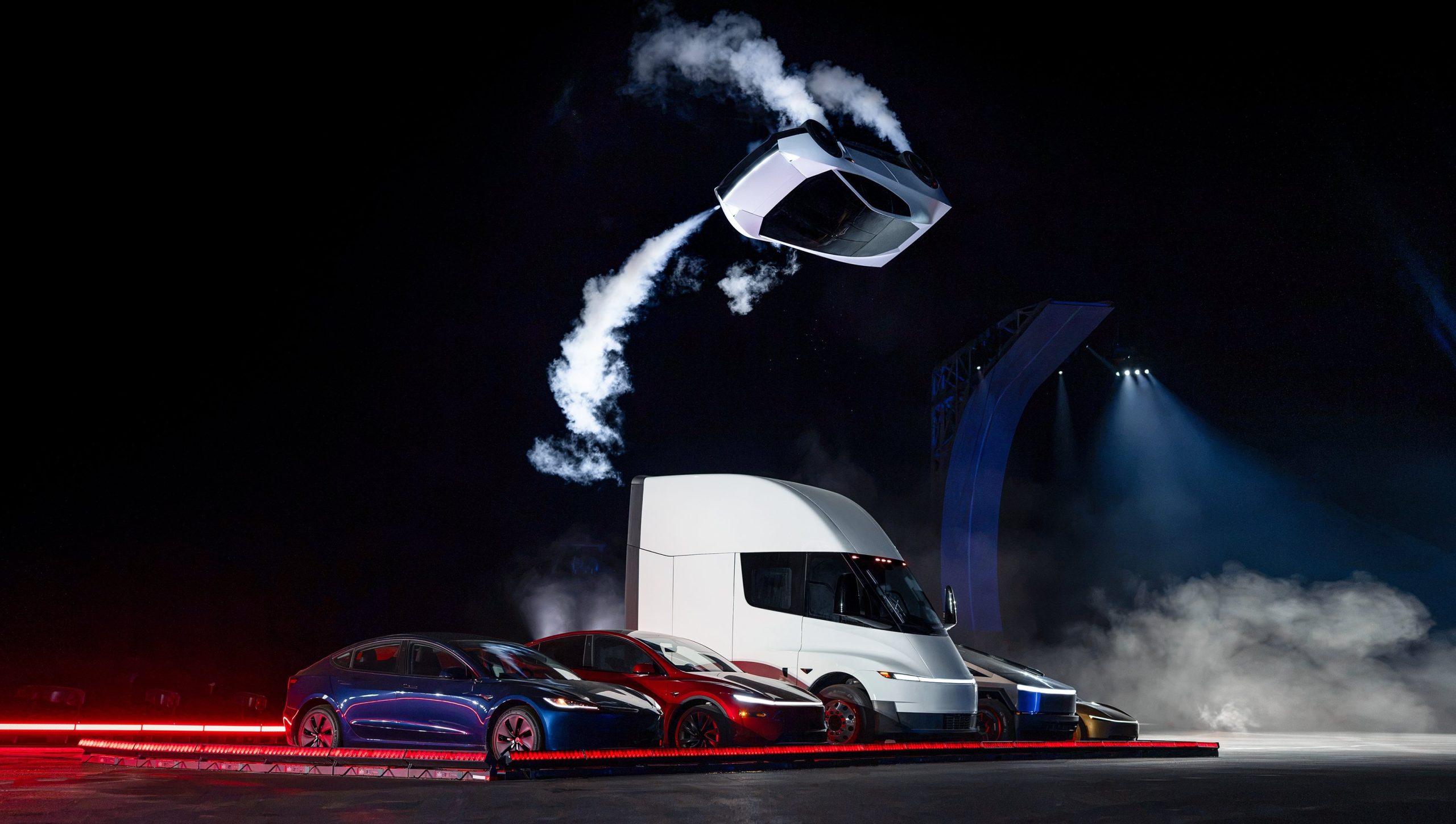
The Roadster unveiling near Waco ended Thursday night, and by Friday morning much of the investor reaction had less to do with the car than with who owns the rocket technology inside it.
Wedbush analyst Dan Ives said the event “puts the Tesla/SpaceX relationship on the table in a tangible way,” pointing to the propulsion, pressure vessel and control hardware sitting on a Tesla product. Gene Munster of Deepwater Asset Management called the demo “a ridiculous display of engineering” with “no commercial value” beyond embarrassing traditional automakers, though he said it showed Musk wants the two companies together.
The more specific forecast came a day earlier from Barclays. Analyst Dan Levy told clients a deal could be announced before Tesla’s annual meeting, which must happen by December 6, and that an announcement in late October or early November could make shareholder approval harder. Barclays expects SpaceX to be the buyer in an all stock deal, with Tesla holders receiving SpaceX shares at a premium, based on market values of roughly $2.1 trillion for SpaceX and $1.5 trillion for Tesla. If nothing lands around the meeting, the bank still sees an announcement within 6 to 12 months.
The Roadster demo just added more weight to merger speculations. Tesla’s demo used cold gas thrusters and pressure tanks of the kind SpaceX uses on Falcon 9, and Musk described the car as a collaboration between Tesla and SpaceX engineers, as we mentioned in our breakdown of the three Roadster configurations.
Musk has not publicly addressed a deal since the event, as far as we have seen. His most direct answer remains the one he gave at the All In Summit, when he said that with so much collaboration, “who can imagine what action one might take” without ruling anything out. Ives has held to a 2027 timeline since his March note, and Musk pushed back on the China piece of the speculation when ARK floated a year end announcement in August.
The next test is Tesla’s third quarter earnings call on October 21. However, we recall in July that Musk told analysts, “we can’t talk about combining companies and that kind of thing on an earnings call,” so a clear answer wouldn’t be expected.
News
How Tesla’s Roadster fan system and thrusters are built to dominate the corners
Tesla’s Roadster uses fans, active wings and cold gas thrusters to create grip at any speed.
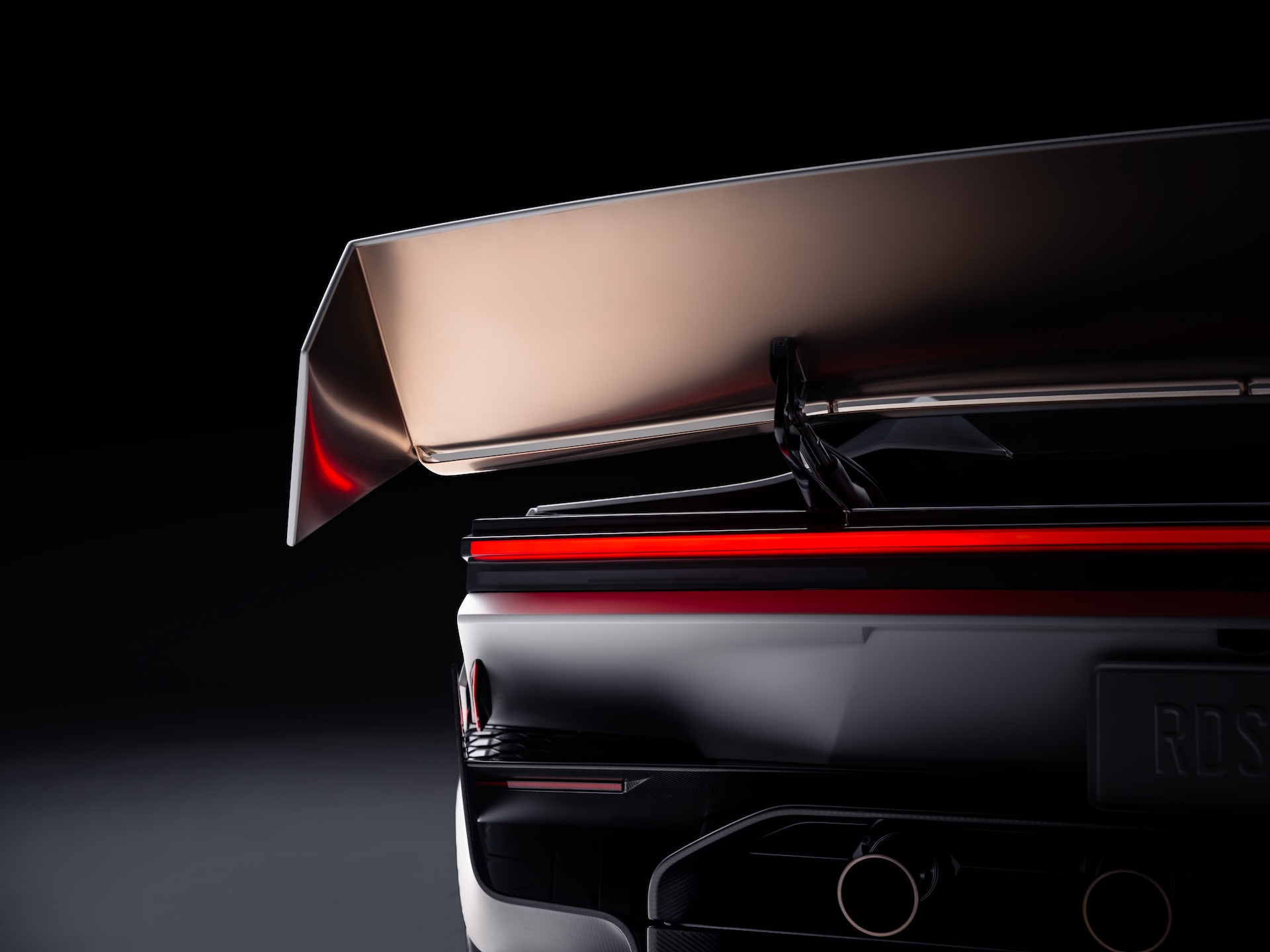
Tesla’s new Roadster is best known for flipping through the air in Texas, but the technology that matters most for a race track is the stuff that keeps it on the ground. Tesla’s Roadster page describes a multi-mode fan and ground sealing system that acts as a downforce generator, pulling air out from beneath the car. Tesla says it provides enough suction to hold the vehicle upside down, even when stationary.
That is the key difference from the wings and diffusers on a normal supercar. Conventional aero only makes downforce when the car is moving, and it grows with speed, so a car has the least grip in the slow corners and under hard braking. A fan system makes downforce at any speed. Tesla’s patent, which we covered last year, describes fans and deployable skirts that create sealed or partially sealed regions under the car, with the fans extracting air to lower the pressure and increase grip and stability.
Still processing this … the most unreal thing I’ve seen. https://t.co/HtEuvnkZjY
— TESLARATI (@Teslarati) October 16, 2026
Tesla pairs that with active wings, a next generation steer by wire system and a Track Mode that lowers the car and changes the suspension, with high downforce and low drag settings for the circuit. To keep weight down, Tesla points to magnesium, titanium and carbon fiber, manual controls and a fixed seat position, which it says lets the car respond to driver inputs almost instantly.
Tesla Roadster: Three configs, one can fly, 0-60 in 0.8 seconds
The cold gas thrusters are the other half. On the Thrust version they sit at the rear and Tesla says they take the car from 0 to 60 mph in under 0.9 seconds, while the Rocket version adds perimeter thrusters for forward, upward and lateral rotational movement. Tesla says the all electric actuators make micro adjustments within a fraction of a second.
Roadster transforms in Track Mode
These aero features aren’t just for looks: they provide the best passive downforce package of any road car (approaching F1 levels!) with wing actuation driven by the @Tesla_Optimus actuator system https://t.co/AqrC4qUga9
— Tesla (@Tesla) October 16, 2026
Musk has been talking about records for years. In June 2019 he said, “We’re going to do things with the new Roadster that are kind of unfair to other cars.” That September, when a follower asked whether the Roadster would beat the Nürburgring production car record, he replied with one word, “Absolutely,” as we reported at the time. In February 2024 he said Tesla had “radically increased the design goals” for the car and that its sub one second 0 to 60 time would be “the least interesting part.”
There are caveats. Tesla has not published a lap time or a verified cornering figure, so the record talk is still a promise rather than a result. Tesla also says the car is not approved for public road use, and the thruster features are limited to the Rocket trim, which is invite only. Fan cars have also been banned or withdrawn before, and getting a sealed underbody to work on a rough public road is a harder problem than on a smooth track. The first real test will be an official lap at a circuit.

How to use Grok Bot to block spam calls and texts

Tesla’s flying Roadster just revealed something bigger than the car

How Tesla’s Roadster fan system and thrusters are built to dominate the corners

SpaceX reveals how its 1 Million AI satellite network will work and prevent space collisions

Elon Musk’s Boring Company lands a new Middle East deal, and Nashville is about to get faster


