News
SpaceX fires up Falcon 9 rocket after booster engine swap

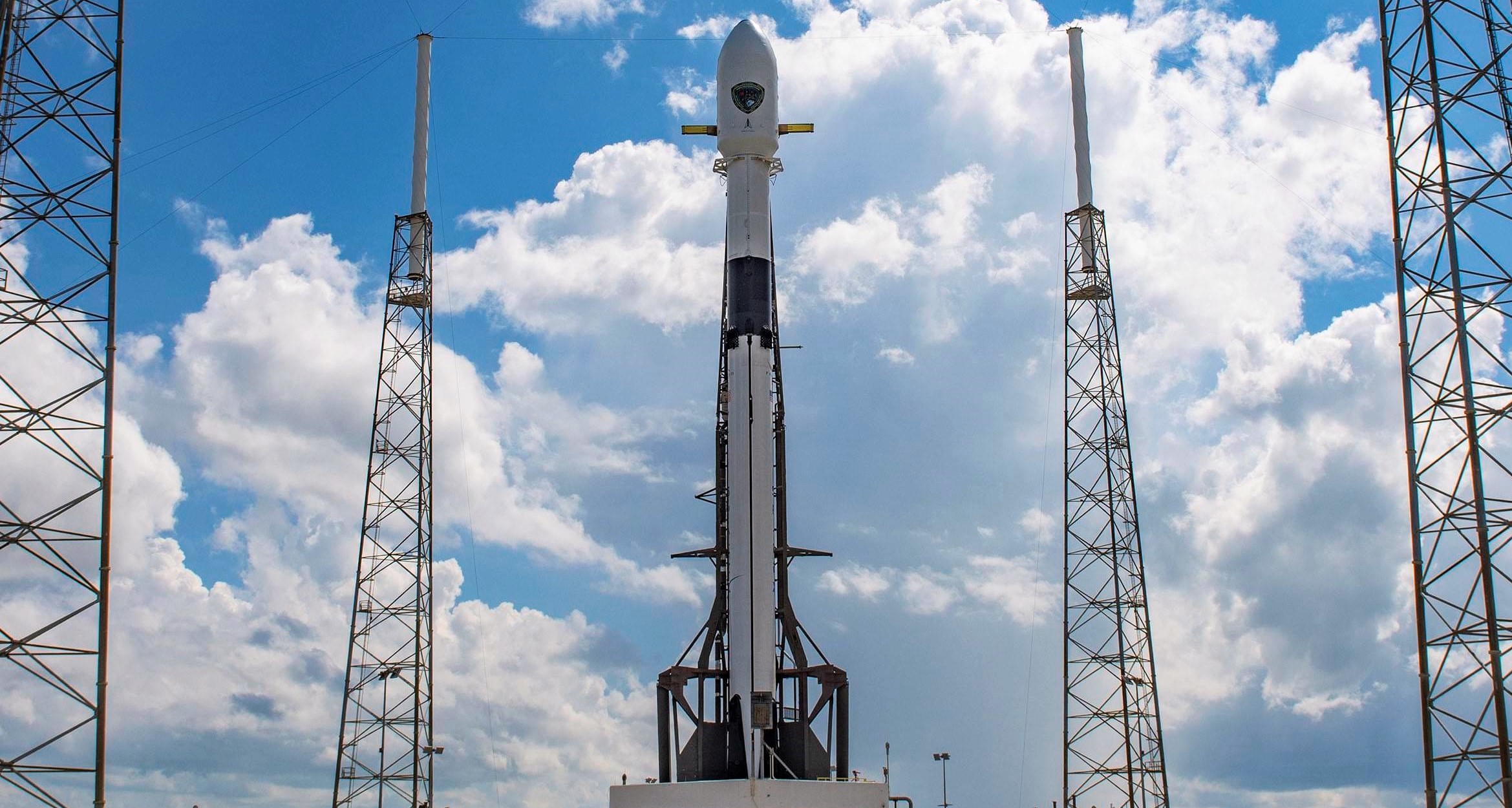
SpaceX confirms it has successfully fired up a Falcon 9 rocket after swapping two of its first stage (booster) engines, putting the company’s third US military GPS satellite launch back on track after about a month of delays.
Known as GPS III Space Vehicle 04 (SV04), SpaceX was initially scheduled to launch the upgraded civil and military navigation satellite as early as September 30th but was forced to stand down as competitor United Launch Alliance (ULA) worked through its own issues with a separate US military mission. SpaceX was ultimately able to get just two seconds away from liftoff on October 2nd before Falcon 9 automatically aborted the attempt, shutting down all nine Merlin 1D booster engines after detecting anomalous startup behavior.
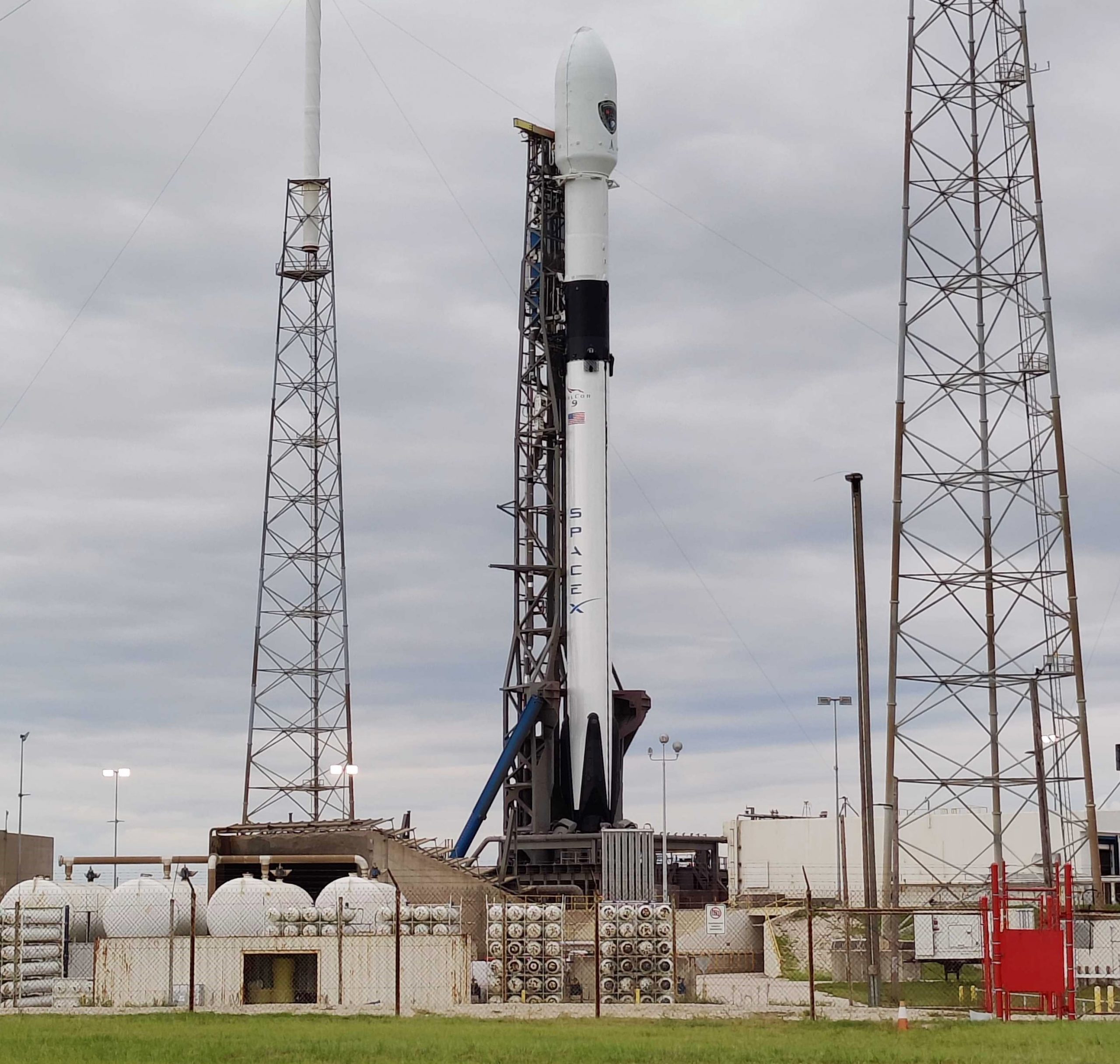
In the four weeks since that abort, SpaceX has managed to enact an extensive investigation, removing and testing affected engines in Texas to replicate the gas generator issue observed on the launch pad, narrowing down possible causes, fixing what was ultimately a quality assurance failure, and retesting the same fixed engines without issue. Falcon 9 B1062’s successful October 31st static fire (the booster’s second) further confirms that the fix was a success and thanks to that extensive effort, SpaceX says it’s now ready for its second GPS III SV04 launch attempt no earlier than (NET) 6:24 pm EST (23:24 UTC), Thursday, November 5th.
In anticipation of the next attempt, drone ship Of Course I Still Love You (OCISLY) departed Port Canaveral under tow on October 31st to ensure an on-time arrival at Falcon 9 B1062’s landing zone some 635 km (~395 mi) downrange. Support ship GO Quest followed not long after, while it remains to be seen if fairing catchers Ms. Tree and Ms. Chief will be ready to support GPS III SV04 fairing recovery after suffering minor damage during their otherwise successful Starlink-13 catches.
Departure! Of Course I Still Love You droneship is underway from Port Canaveral for the GPS III mission.
Tug Finn Falgout is towing OCISLY ~635 km downrange.
? @NASASpaceflight Fleetcam: https://t.co/UnRaZWfpgq pic.twitter.com/PXTxdY2FzD— Gavin – SpaceXFleet.com (@SpaceXFleet) October 31, 2020
At the same time, after being forced to return the GPS III satellite – encapsulated inside a Falcon 9 fairing – to a payload processing facility (PPF) for a likely battery recharge, the satellite and fairing once again made the trip from the PPF to Cape Canaveral Air Force Station (CCAFS) Launch Complex 40 (LC-40). Following Falcon 9’s successful static fire, the rocket will be lowered horizontal and rolled back to LC-40’s main hangar, where the encapsulated satellite will be installed atop its upper stage.
It really was quite a treat to stand this close to something that I get to see launch and then if things go right, return to port days later. #meforscale pic.twitter.com/nPYa4ogZY0— Julia (@julia_bergeron) November 1, 2020
As usual, SpaceX will host an official launch webcast that will begin some 15 minutes before liftoff. Stay tuned for more launch updates as we near T-0.



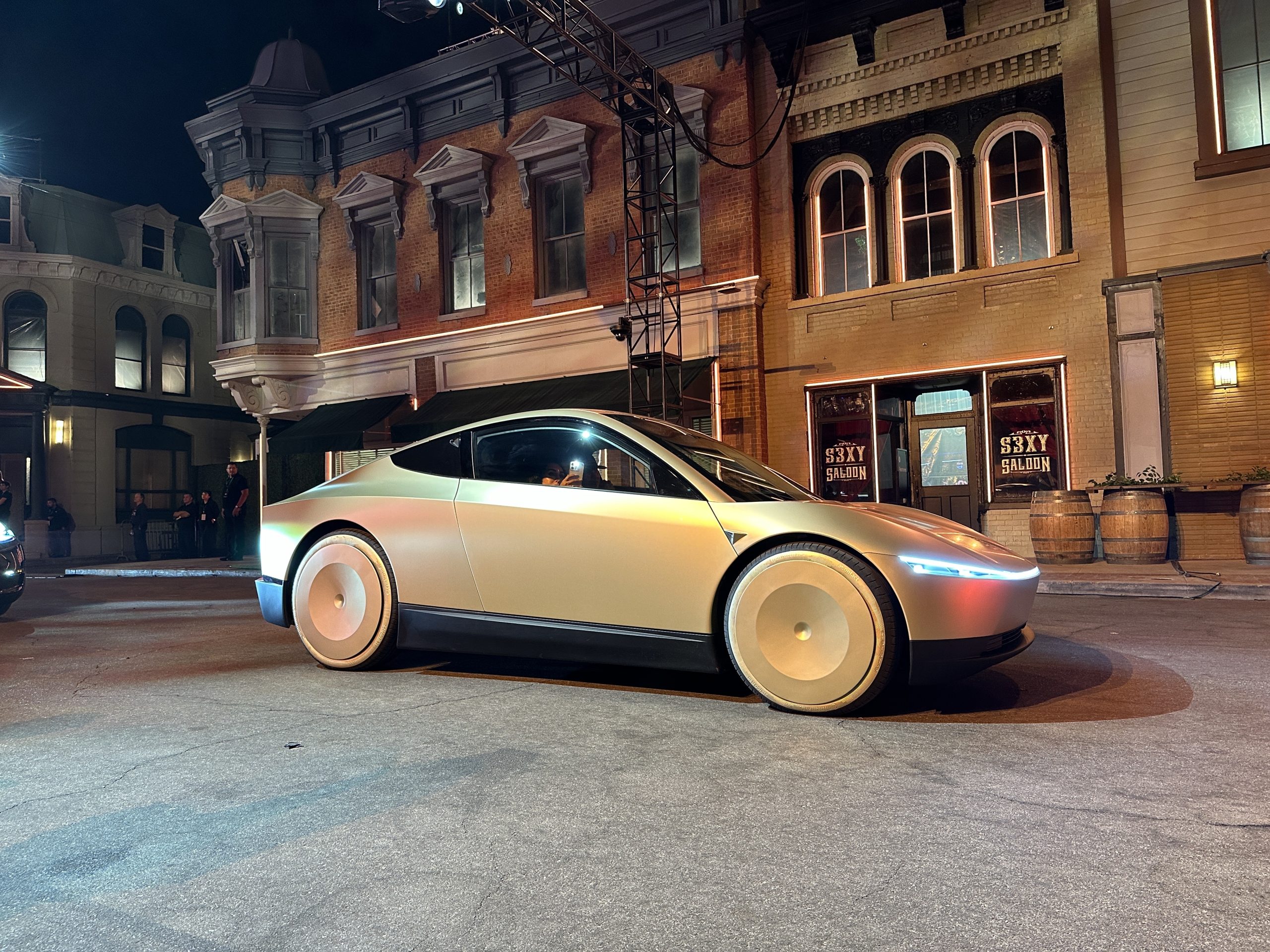
Tesla is bolstering its Cybercab fleet with the State of Texas’s regulatory bodies ahead of the planned launch of the all-electric ride-hailing vehicle this Thursday.
Seven purpose-built Tesla Cybercabs have been added to Texas’s official automated vehicle registry, appearing in the Texas Motor Carrier Credentialing System (TxMCCS) public lookup just three days before Tesla’s invite-only Cybercab launch event in Austin on September 3.
The records, visible through TxDMV’s Motor Carrier and Automated Motor Vehicle Operator Lookup, list seven 2026 Tesla Cybercabs under Tesla Robotaxi, LLC. Their VINs begin with the 5YJA prefix, distinct from the 7SAYG Model Y robotaxis that already dominate Tesla’s Texas fleet.
Community trackers that scrape the same public database recorded the new entries on August 31, bringing Tesla’s authorized Texas robotaxi total to 276 vehicles: 269 Model Ys and the seven Cybercabs:
🚨 There are now SEVEN Tesla Cybercabs registered with the state of Texas
We are just three days from Cybercab! pic.twitter.com/ndwhuFYsep
— TESLARATI (@Teslarati) August 31, 2026
Texas Senate Bill 2807, which took effect in late May 2026, created a self-certification framework for commercial Level 4 operations. Operators file through TxMCCS, attest to SAE Level 4 capability, maintain insurance, and keep an active vehicle list.
Tesla completed that process months earlier for its existing Model Y Robotaxi service, which has carried paying passengers in Austin, Dallas, Houston and other markets. Adding the Cybercabs to the same authorization means the new two-seat, steering-wheel-free vehicles are now legally recognized for commercial use on Texas roads.
The timing is deliberate as Tesla scheduled the September 3 event at its Austin campus after sending invitations to selected Robotaxi riders and other guests. The company has described the evening as a chance to “experience the future of full autonomy” and plans to livestream it.
Production Cybercabs, which lack pedals and a steering wheel, have been rolling off the Giga Texas line for months; some earlier examples still carried temporary driver controls for data collection. Registering a small fleet of the finished design immediately before the public event signals that Tesla intends to move the purpose-built vehicle from factory and test tracks into the same Robotaxi app already used by Model Y passengers.
The seven units remain a tiny fraction of Tesla’s overall Texas authorization and far smaller than competing fleets. Registration does not automatically equal unsupervised public rides; it is the legal prerequisite.
Still, the sudden appearance of Cybercab VINs in the state’s lookup system, after a year of Model Y-only listings, is the clearest official confirmation yet that Tesla’s dedicated robotaxi hardware is entering the regulatory pipeline at the same moment the company is preparing to show it to invited guests and a global livestream audience.
Whether those seven vehicles appear at the September 3 event or begin carrying passengers shortly afterward, their presence in TxMCCS marks a concrete regulatory step that has been anticipated since the Cybercab concept was first revealed.
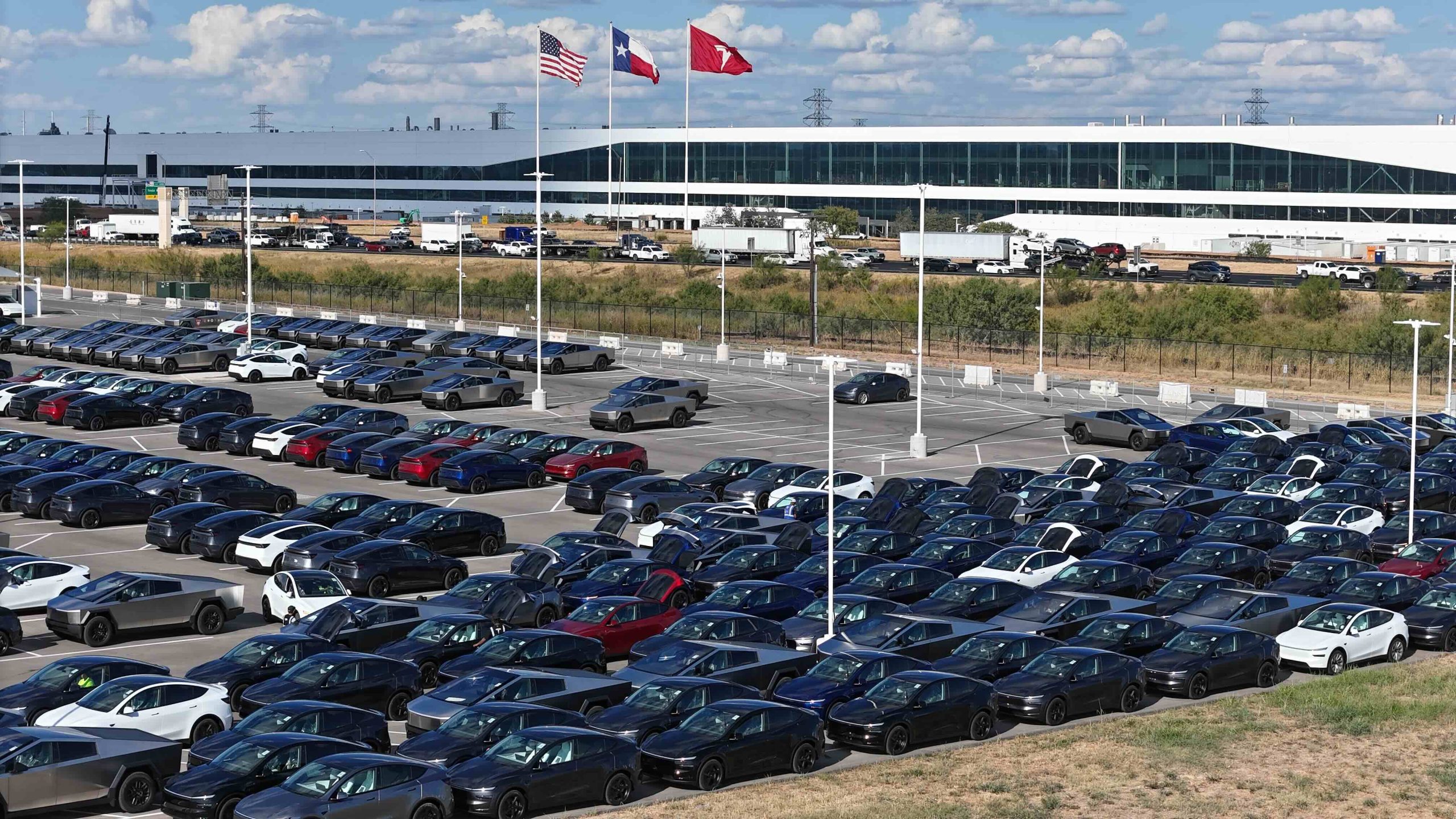
Tesla has expanded the operational geofence for its driverless Robotaxi service in Austin, Texas, marking the first such increase in some time. The updated Service Area for Robotaxi in Austin now spans about 288 square miles and is roughly 9 percent larger than the previous boundary.
This incremental growth adds approximately 24 square miles of coverage, bringing the prior zone of roughly 264 square miles into a broader footprint that better serves northern suburbs.
The expansion extends the geofence northward toward Pflugerville along the US 183 corridor, incorporating additional neighborhoods north of the Domain and areas such as Mesa Park. These additions include higher-end residential and commercial districts that previously sat just outside the allowed operating zone.
Riders can now request unsupervised trips that begin or end in these newly included locations, provided the entire route remains inside the digital boundary:
Tesla has just expanded its Robotaxi service area in Austin, Texas for the first time in 10 months.
The new service area is roughly 9% larger than the old one, and is about 288 square miles in total. pic.twitter.com/i4oBM1KfWS
— Sawyer Merritt (@SawyerMerritt) August 31, 2026
Tesla first launched public Robotaxi operations in Austin in mid-2025 with a modest initial zone of about 20 square miles. Subsequent enlargements in 2025 and early 2026 steadily grew the map until it covered much of the metropolitan area.
After the last major update roughly ten months earlier, the company held the boundary steady while it collected additional miles and refined the FSD suite.
The modest nine percent increase still matters for daily utility. Longer trips become possible, more residents gain access, and the fleet can accumulate more diverse real-world data across new road types and traffic patterns. Observers note that the added territory aligns with existing Tesla service infrastructure, which could support more efficient vehicle staging in the North end of Austin.
Although the geofence has grown, Tesla continues to operate a relatively small unsupervised fleet in the city. The company has emphasized safety and software readiness over rapid geographic scaling. This latest map update signals that Tesla remains committed to expanding Robotaxi availability in its home market as it prepares for further software improvements and potential Cybercab deployments.
The 288-square-mile zone now gives Austin riders one of the larger driverless service areas currently available in the United States.
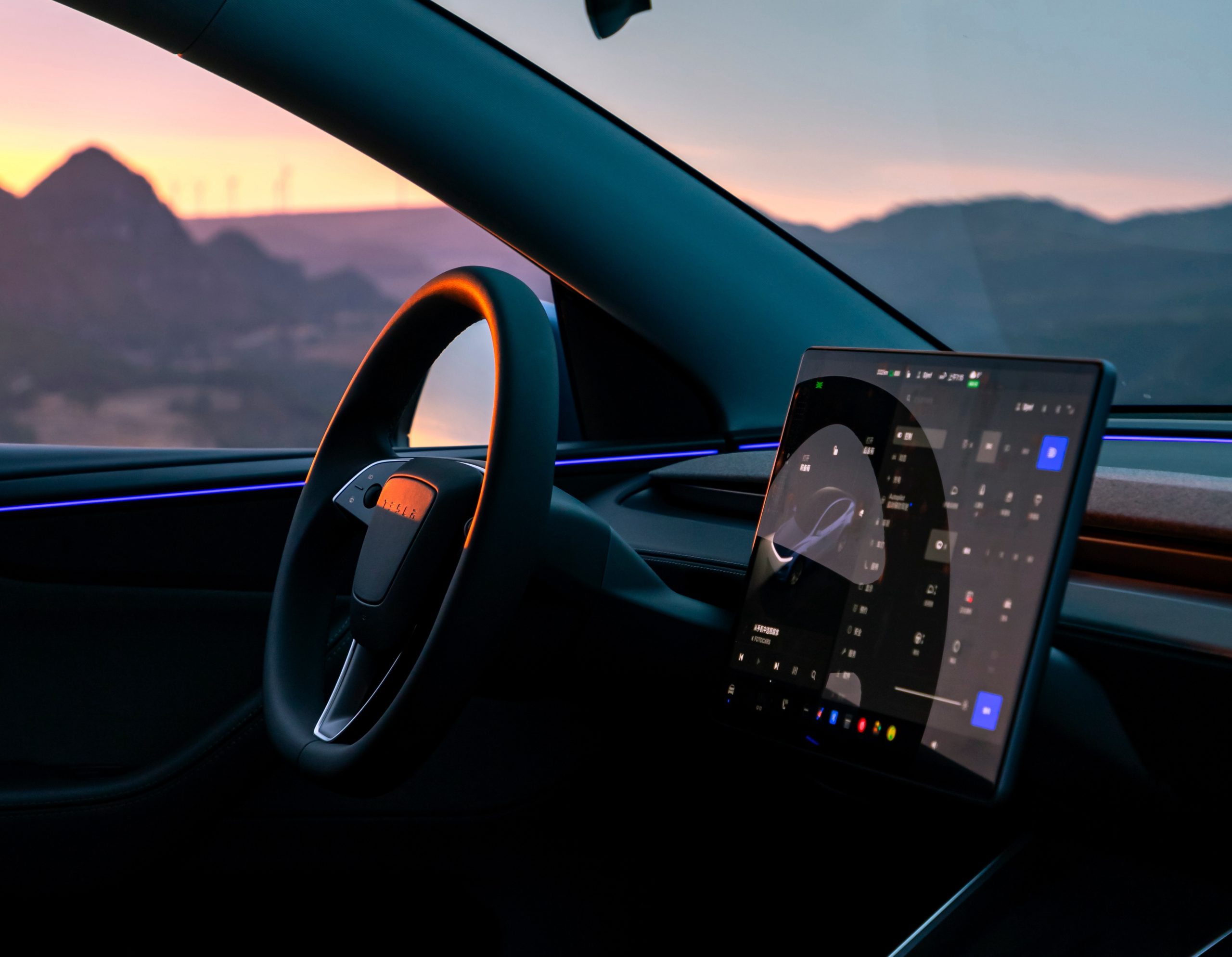
Tesla’s 2026 Summer Update turns Grok from a talking companion into a true in-car controller, with considerably expanded capabilities. Where the assistant once answered questions and handled navigation, it can now operate hardware and software through ordinary speech, including several requests at the same time.
Grok has become incredibly robust over the past few quarters, and this new ability that Tesla has included with its Summer Update is perhaps the clearest sign of just how capable it has become.
You can issue many commands to Grok at once, and each will be taken care of: anything from headlight control to climate adjustments to mirror folding can now all be taken care of with a simple sentence spoken toward Grok:
This is cool, you can now give Grok a ton of commands at once in your Tesla and it’ll do them all together.
The commands I gave:
• Fold mirrors
• Turn on wipers to fastest setting
• Change temp to 65°
• Open self-driving app
• Open gloveboxComes with Tesla’s 2026 Summer… pic.twitter.com/drZxoHrknv
— Sawyer Merritt (@SawyerMerritt) August 26, 2026
Here’s another example I used in my Model Y:
🚨 Using Grok to control the cabin temperature and turn on headlights in 2026 Model Y on FSD v14.3.8 and 2026.26.6.5 pic.twitter.com/7clgQkGABk
— TESLARATI (@Teslarati) August 27, 2026
Tesla’s official Release Notes list the core powers of Grok’s new capabilities: Grok can place phone calls from a paired phone, search a streaming service and queue music, adjust climate, and search the Controls panel. Drivers can also ask it questions about the vehicle or the latest features included in a recent software update.
It can also take care of driving settings, dynamics, and other relevant preferences that deal with how the car operates and handles.
Tesla Summer Update begins rolling out: a look at the new features
It’s also more of a use case than a novelty feature. Grok was great for learning about something that was being pondered while Full Self-Driving was taking care of the major automotive responsibilities, but it did have some useful functionality when it came to navigation.
Another less-noted improvement is the swift transition that Grok has from thinking of its answer to giving you one. In the past, it would take a few seconds for Grok to truly come up with a valuable response. It now seems that it is improving, at least slightly.

Tesla Cybercab fleet grows in Austin ahead of launch event

Tesla expands driverless Robotaxi geofence in Austin


