News
Tesla prepares for winter by selling Model Y tire and wheel package

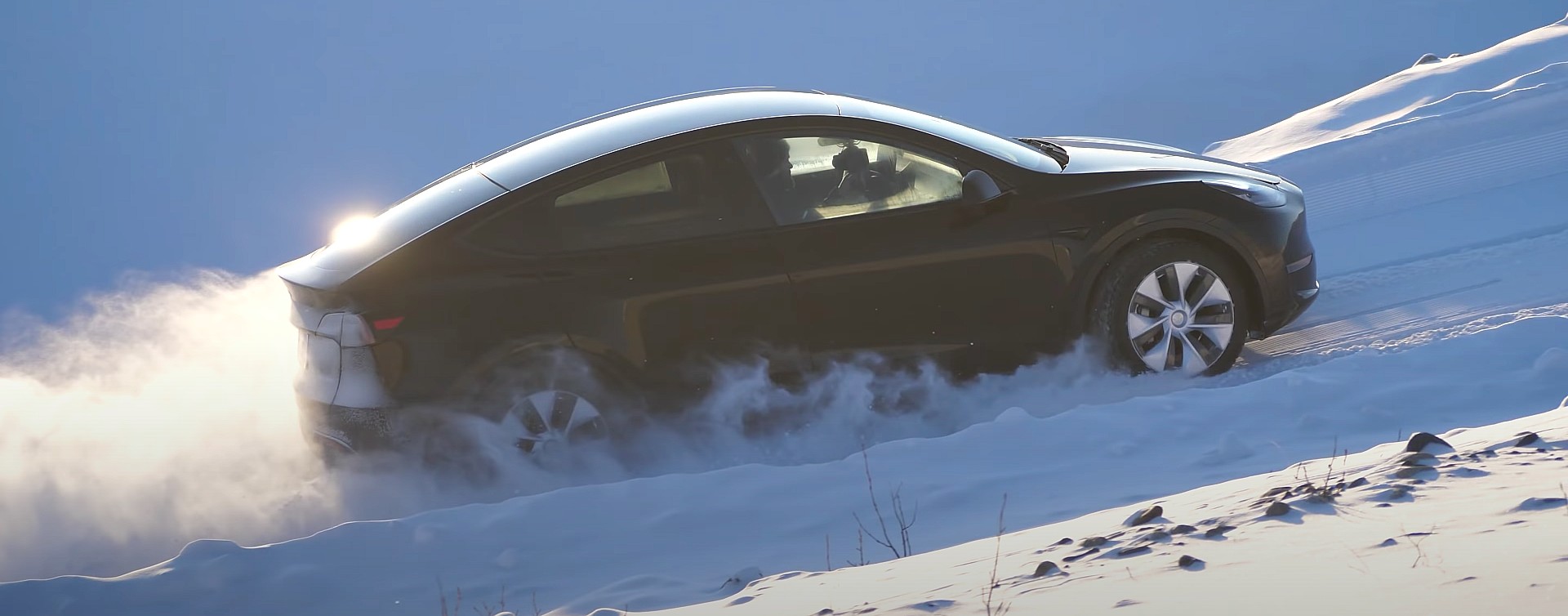
Tesla has added a Winter Tire and Wheel package for the Model Y crossover to its online shop as cold months approach.
The Model Y’s 19-inch Gemini Wheel and Winter tire package is geared toward providing increased safety and confidence as slippery and tricky roads begin to appear in several countries. The package available on Tesla’s online shop aims to increase traction, stability, and braking efficiency in colder temperatures, specifically under 45 degrees Fahrenheit (7.22 degrees Celsius).
The package includes 19×9.5J ET45 Gemini wheels, 4 255/45R19 Pirelli Winter Sottozero tires, and 4 tire pressure sensors. It costs $3,500.
Credit: Tesla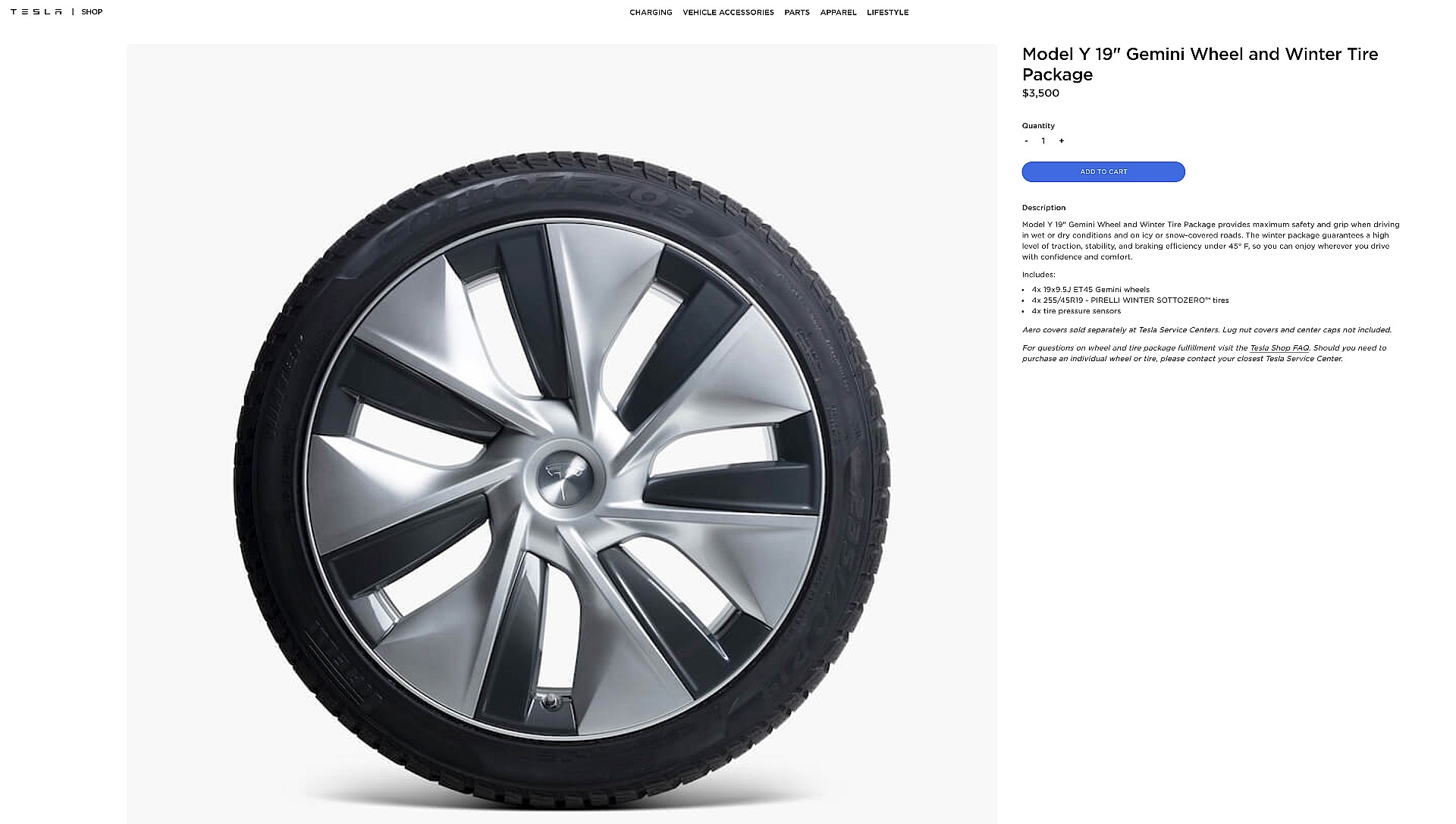
Tesla writes:
“Model Y 19″ Gemini Wheel and Winter Tire Package provides maximum safety and grip when driving in wet or dry conditions and on icy or snow-covered roads. The winter package guarantees a high level of traction, stability, and braking efficiency under 45° F, so you can enjoy wherever you drive with confidence and comfort.”
Despite Tesla being based in California’s warm climate, the company has increased its awareness of other drivers and their presence of challenging Winter conditions. The addition of several Winter kits has been made available by the automaker, enabling owners in cooler areas the opportunity to experience increased performance in these conditions.
Tesla Model Y efficiency exceeds Model 3 in real-world winter driving test
Tesla has gone further than just releasing tire and wheel kits to increase vehicle safety. The company has been attempting to increase efficiency in colder climates, which can be detrimental to EV range. A heat pump was added to the Model Y upon first deliveries of the vehicle, and now Tesla is also equipping it in the “refreshed” version of the Model 3.
In colder climates, Tesla recommends several options that can increase their electric cars’ safety and efficiency. While driving, Tesla recommends you keep an eye out for the Snowflake Icon, which can hint that your vehicle’s battery pack may be too cold. This can affect range and performance, and some features may be limited. Leaving your car plugged in and using Scheduled Departure or Precondition can also be advantageous for owners as it can keep your Tesla retain heat.
Using the recommended Tesla Winter tire and wheel kits are also recommended as increased traction and stability control can be the difference between having an accident and staying on course. Check out Tesla’s online shop to see what the automaker recommends for your vehicle during the winter months.


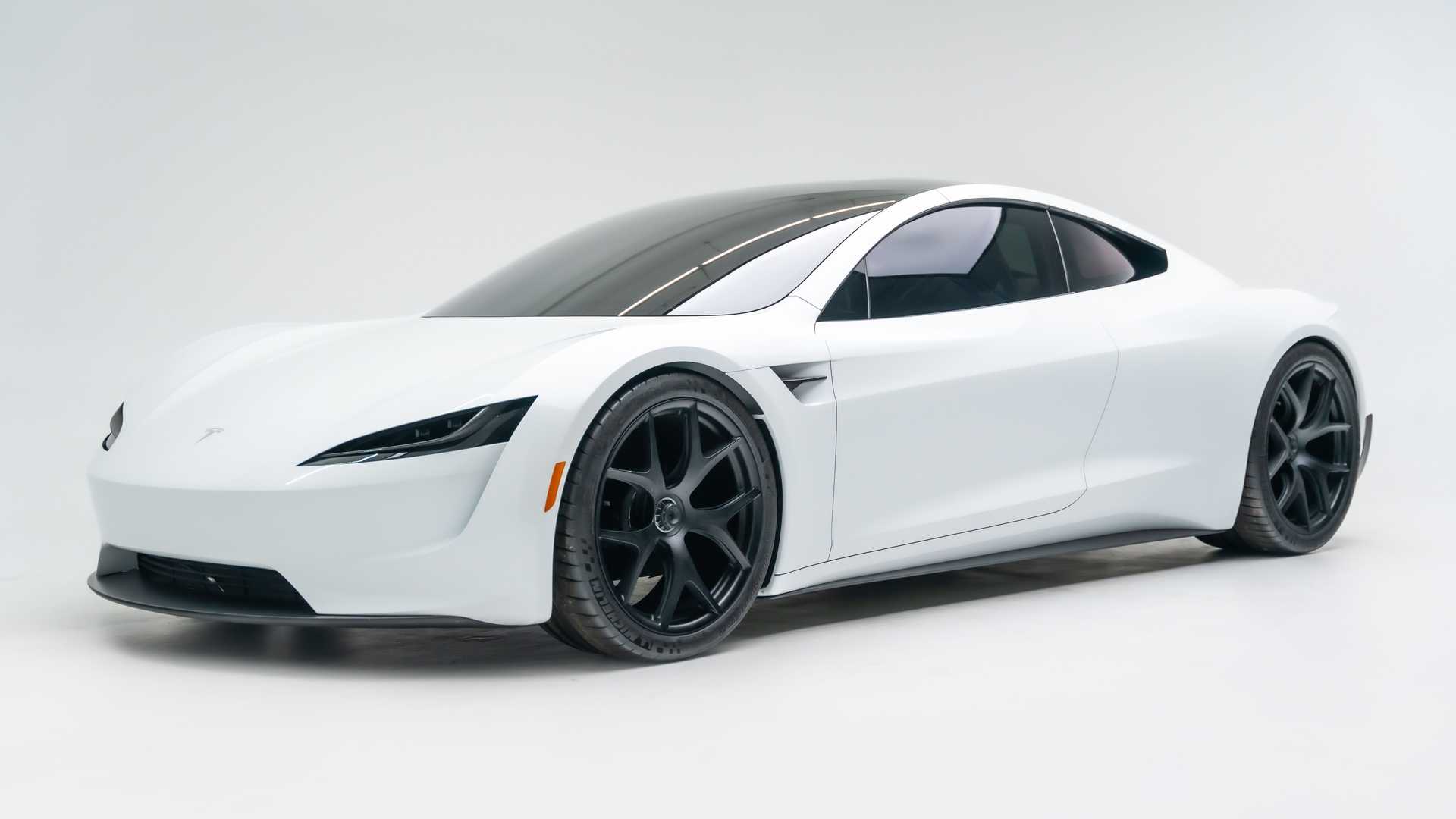
The Tesla Roadster unveiling is getting hyped up by the company’s CEO Elon Musk, who has been a big reason the product has such high expectations due to delayed timelines and a constant need to make it even more insane than before.
Tesla announced on September 12 that it would officially unveil the Roadster in Waco, Texas, on October 1, ending years of patience for fans and reservation holders who have waited for the all-electric supercar to enter production since 2017.
Musk has said that this event will be well worth the wait on several occasions, and last year on the Joe Rogan Experience, he said that there should be a closing chapter to supercars- the end of cars that aren’t focused on safety.
He said:
“Whether it’s good or bad, it will be unforgettable. My friend Peter Thiel once reflected that the future was supposed to have flying cars, but we don’t have flying cars. I think if Peter wants a flying car, he should be able to buy one. I think it has a shot at being the most memorable product unveil ever. This is some crazy technology in this car. Let’s just put it this way: if you took all the James Bond cars and combined them, it’s crazier than that.”
Musk’s teases have continued, and now that the event is roughly two weeks away, it seems like Roadster is finally going to show up and blow some minds:
It’s out of this world
— Elon Musk (@elonmusk) September 13, 2026
Excitement guaranteed
— Elon Musk (@elonmusk) September 13, 2026
Tesla has definitely dragged out the development of the Roadster, but there is a good reason for it.
Tesla has been working on many other projects, most notably self-driving efforts to increase passenger safety, and those simply took priority over the Roadster, a low-volume, high-performance sports car that has a lightning-fast acceleration rate of 0-60 MPH in just 1.1 seconds, could potentially fly, and contributes very little to the company’s mission.
However, many people have the Roadster on pre-order through the referral program or with their own money, and it is time that Tesla delivers on that.
Elon Musk
Elon Musk’s Boring Company has big plans for Las Vegas by year’s end
Elon Musk’s Boring Company says Vegas Loop stations will double by year end once again.

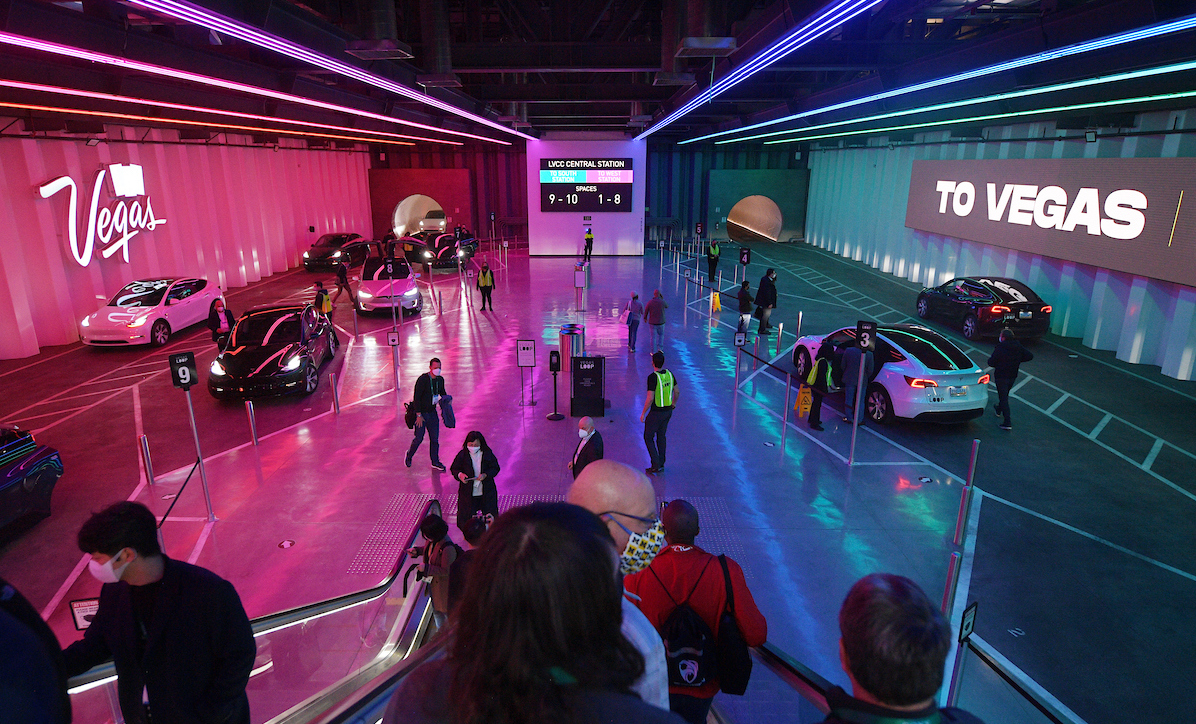
The Boring Company says the Vegas Loop’s station count will double by the end of the year, tying the target to a hiring push for drivers and operations managers in Las Vegas. “Vegas Loop is getting bigger – the station count will double by end of year!” the company wrote in a post on X, attaching listings for a Loop driver and a senior Loop operations manager.
The number checks out against what’s already public, with the Vegas Loop currently running 14 operational stations, while the Boring Company’s own project page lists 28 as the target for the end of 2026.
Vegas Loop is getting bigger – the station count will double by end of year!
Urgently hiring exceptional and enthusiastic Drivers and Ops Managers.
Apply here!
Driverhttps://t.co/ZUPXBYTONb
Senior Loop Ops Managerhttps://t.co/mV6V22V8jH pic.twitter.com/IZ9FqIw8WY
— The Boring Company (@boringcompany) September 14, 2026
Much of that growth is tied to tunnels that are already built and waiting on an opening date. A roughly two-mile dual tunnel system under Paradise Road, connecting Westgate to a planned station at 4744 Paradise Road, is expected to open in stages over the coming weeks, Las Vegas Convention and Visitors Authority chief executive Steve Hill told the Review-Journal last week. New stations at 4744 Paradise, Virgin Hotels Las Vegas, and the former Gordon Biersch site would come online with it, several of them built to speed up rides to Harry Reid International Airport ahead of Formula 1’s Las Vegas Grand Prix.
Clark County entitled Vegas Loop for 123 stations after approving 19 more in August, as Teslarati reported at the time. Entitlement and construction move at different speeds on this project, so county approval alone does not guarantee a station opens on any particular schedule.
Clark County approved 18 additional stations back in 2023, part of a plan that pushed the system’s target to 69 stations across 65 miles, doubling the network on paper for the first time. The target kept climbing after that, to roughly 93 stations by the end of that year and 104 by last year, before August’s vote pushed it to 123. This week’s announcement is the first time that doubling language has been attached to stations actually running rather than stations merely approved on a county map.
Ridership gives some sense of what a denser network could carry. Boring Company executive Mike Baier said in July that the Vegas Loop already moves around 40,000 passengers on busy convention days, a total that tops most light rail systems in the country despite the system running on a fraction of its planned tunnel mileage. Company leadership has projected ridership could triple or quadruple once the airport connector tunnels fully open.
Boring Company did not say which stations beyond those already under construction would open by year end, or whether the hiring push points to a fleet expansion alongside the new stops.
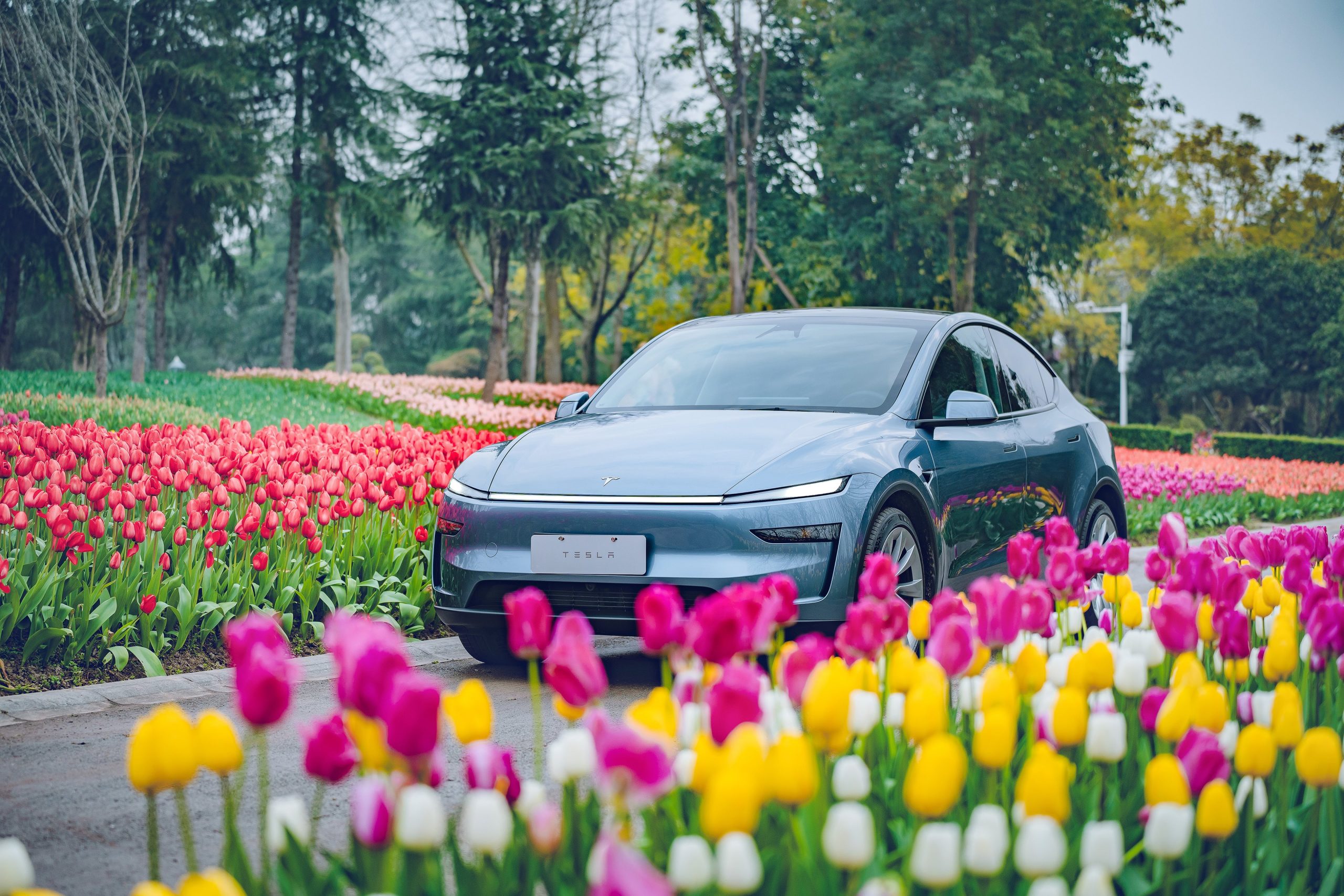
Tesla is looking to expand into a new Asian market, strengthening its presence in a region that has been bullish on electric vehicles as a whole.
Tesla officially filed to establish a subsidiary of its business in Vietnam, a report from Reuters suggests. Tesla named the entity “Tesla Motors Vietnam Limited Liability Company.”
The planned entrance into the Vietnamese market is a good sign and move for Tesla, as it has become one of the fastest-growing EV markets in Southeast Asia. It is already among the leaders in the region in both volume and electrification rate. In the first half of this year, Vietnam led Southeast Asia in battery-electric passenger car sales at about 116,000 units, up about 71 percent year over year.
Currently, Vietnamese EV drivers rely on VinFast’s V-Green network, which has about 150,000 ports, but these are primarily reserved for VinFast vehicles. Public third-party charging is fragmented and unreliable for those who do not own chargers that are dedicated to a certain manufacturer’s vehicles.
Tesla has had mixed results in Asia as a whole, and as China remains the core part of its story in Asia, the company is evidently working on expanding its footprint on the continent. Tesla’s domestic retail deliveries fell about 12 percent year over year through the first eight months of 2026.
Model Y remains a standout individual product, holding its position as one of, if not the, best-selling vehicles in the world. However, Model 3 has been weaker than it has been in past years.
Gigafactory Shanghai, the company’s Chinese production facility, still performs very well. Wholesale volumes in terms of exports have more than doubled and now exceed domestic retail sales; Giga Shanghai builds vehicles for Europe, South Korea, Japan, Australia, and other markets. South Korea has been an explicit bright spot, with registrations doubling year-to-date and Tesla frequently appearing as the top imported brand.
Tesla just did something in South Korea that no foreign carmaker has ever done
Tesla’s entrance into Vietnam signals a broader effort to take over the Asian market and grab more market share from rivals.

Tesla Roadster unveiling is getting hyped up by Elon Musk

Elon Musk’s Boring Company has big plans for Las Vegas by year’s end


