News
The Boring Co’s LVCC Loop capacity is still below target, but customers already love it

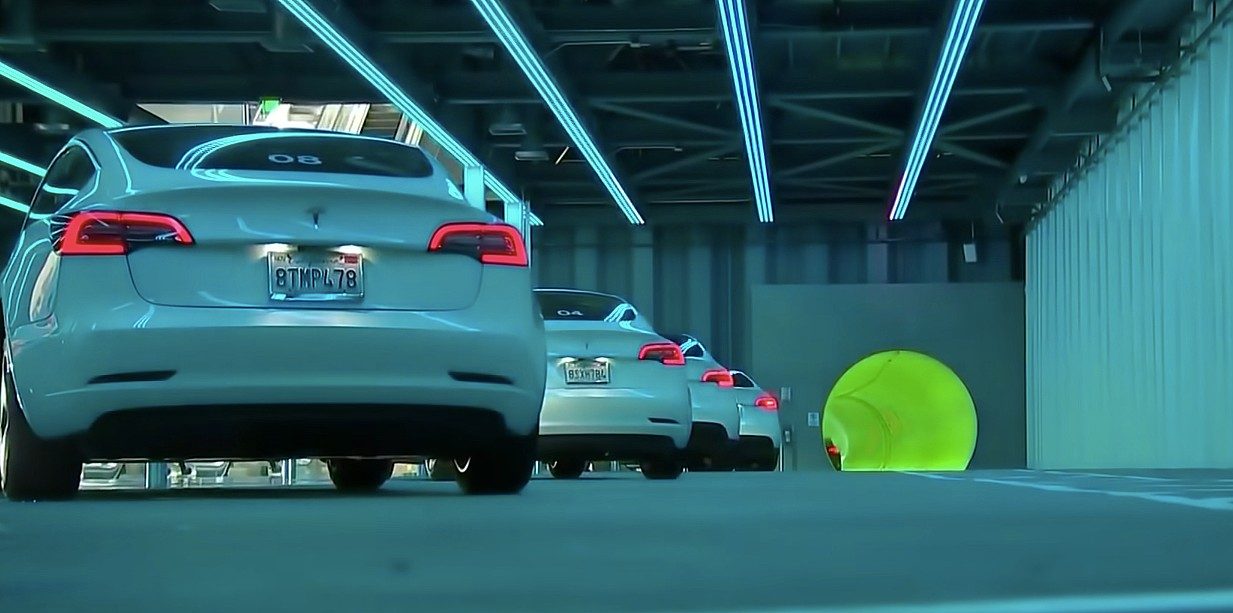
The Boring Company’s Las Vegas Convention Center (LVCC) Loop has been operating for some time now, and so far, the underground transport system has had its victories and challenges. But while the system still seems to be in the process of hitting its stride, one thing seems certain: the LVCC Loop has proven extremely popular among those that have tried it out.
Citing documents from the tunneling startup that were acquired through a public records request, TechCrunch noted that the LVCC Loop has so far been unable to hit its target of transporting people from one side of the Convention Center to the other in two minutes. In its first week of operations, for example, the system’s manually-driven Teslas took an average of nearly four minutes to transport its passengers.
Interestingly enough, the LVCC Loop did meet its capacity goal of 4,400 conference attendees per hour during a demonstration event in May. The Boring Company accomplished this by having each Tesla in the system hold three passengers. During that demonstration, a total of 62 Teslas comprised of Model 3, Model Y, and Model X were utilized. In early June to mid-July, however, the average number of passengers recorded in the LVCC Loop was just two per vehicle.
While the LVCC Loop has experienced its own fair share of challenges, the underground transport tunnel system has received positive reviews from its users to date. This was mentioned by Seth Hooper, director of Loop Operations in late June. “Customers really love the system, and it is clearly their preferred method of travel around the campus. Wait times are manageable to about two minutes max during the largest of surges,” Hooper said. Even the playful lights at the tunnels have become a permanent fixture in the LVCC Loop due to rider demand.
The Boring Company has some potential risks with the LVCC Loop. A contract signed by the tunneling startup in 2019 indicates a $300,000 penalty for each large convention where the tunneling startup fails to move around 4,000 people per hour. A likely test for the tunneling startup is coming this January, as the CES convention gets held in the Las Vegas Convention Center. Fortunately, The Boring Company has acquired the necessary permissions to operate 70 Teslas in its tunnels, which should help the LVCC Loop increase its output during the high-profile event.
Interestingly enough, one of the LVCC Loop’s biggest issues to date has become unauthorized visitors. Apart from a stray Tesla that accidentally entered the system earlier this year, the Loop has also seen several incursions by convention center employees who seem to be very interested in checking out the system. “The biggest culprits of unauthorized vehicles are LVCVA carts,” Hooper noted. Damages to the Teslas in the system have been extremely minor as well, and the only accident to date in the tunnels involved a passenger accidentally closing a vehicle door on a fellow rider’s hand.
Don’t hesitate to contact us with news tips. Just send a message to tips@teslarati.com to give us a heads up.



In a new interview on Wednesday, Tesla uber bull Ron Baron said that anyone looking to buy the company’s stock should do so as soon as they can.
Baron, founder and CEO of Baron Capital and one of Tesla’s most persistent institutional bulls, used a CNBC Squawk Box appearance on Wednesday to deliver a familiar message with fresh urgency: In his opinion, Tesla stock is a buy:
“The time to buy the stock is now. FSD is catching on, and it’s going to be bigger and bigger. 55% of new buyers are buying it (Teslas) with FSD. It’s going to be everywhere. It’s safer.”
The Baron Capital frontman’s case is built around Full Self-Driving. Tesla reported 1.48 million active FSD subscriptions in the second quarter, up 56 percent year over year, and company officials have said roughly 55 percent of new North American deliveries left with a subscription enabled.
Baron framed that attach rate as proof the product is moving from enthusiast extra to default expectation, and as a reason software, not just vehicle volume, should drive the next phase of value.
His conviction on Tesla shares is not theoretical, as Baron Capital made its first Tesla investment in 2014, after years of meetings that began around the 2010 IPO roadshow. The firm later built a large SpaceX position starting in 2017.
Ron Baron today in new interview on Tesla:
“The time to buy the stock is now. FSD is catching on, and it’s going to be bigger and bigger. 55% of new buyers are buying it (Teslas) with FSD. It’s going to be everywhere. It’s safer.” pic.twitter.com/Rv5PB0bVZ2
— Sawyer Merritt (@SawyerMerritt) September 16, 2026
Baron said those Musk-led bets have generated about $30 billion of the $71 billion in profits Baron Capital has produced for clients. He put the firm’s current exposure at roughly $25 billion in SpaceX and $5 billion in Tesla. Personally, he described SpaceX as his largest holding, at about $5 billion, with about $1.5 billion in Tesla and additional Tesla exposure through the firm’s funds.
That concentration is also a statement of loyalty. Asked about talk of a SpaceX-Tesla combination, Baron said he had already walked Elon Musk through arguments for and against a deal, then declined to repeat them on air. His public position was simpler: “Whatever you decide is better is what I’m going to support,” he said to Musk.
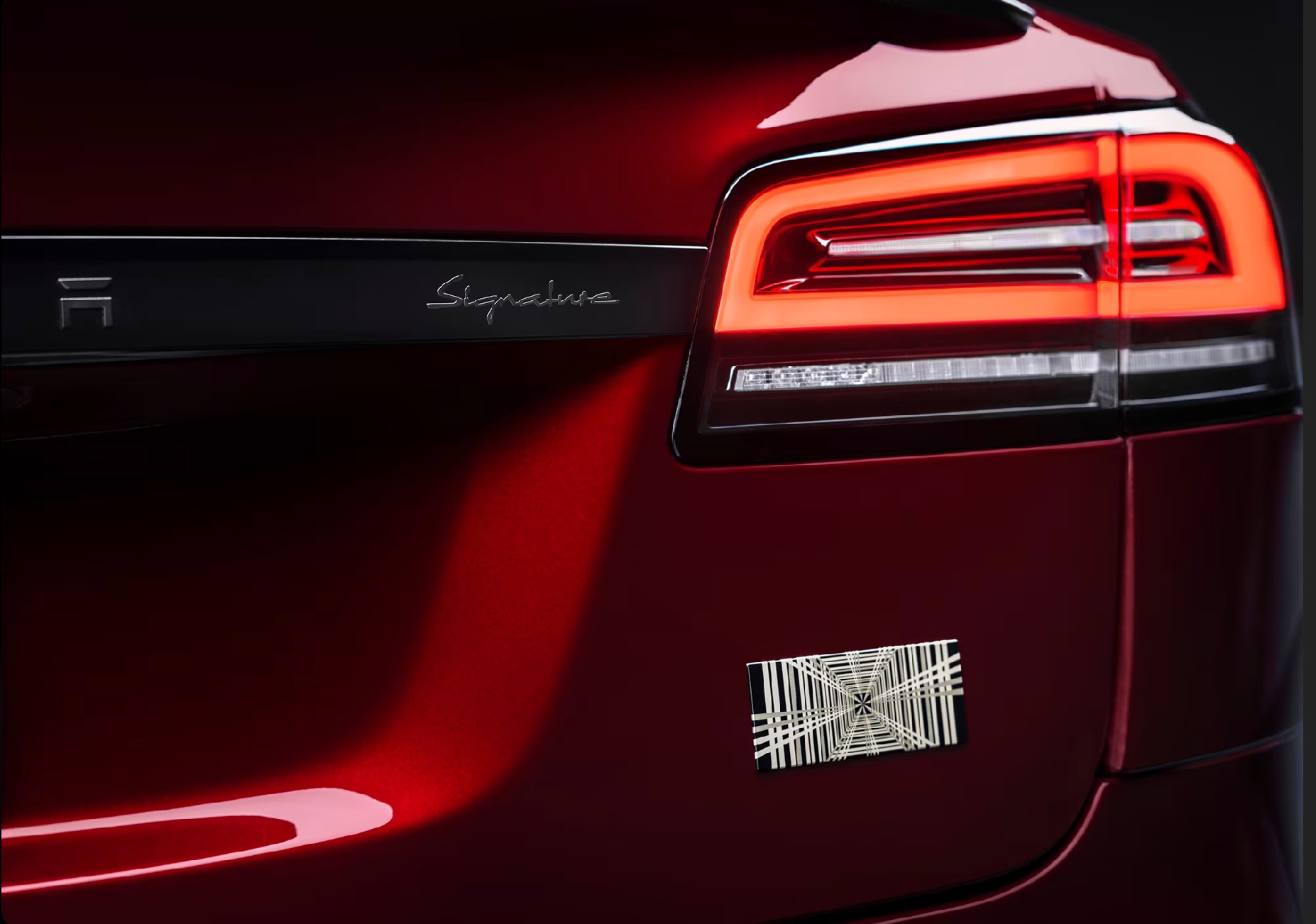
Baron also said that he picked up the farewell edition of the Model S after Tesla decided to sunset the vehicle earlier this year, calling it his favorite car he’s ever driven.
Elon Musk
SpaceX’s next Starship launch is about to attempt its biggest leap yet
SpaceX targets September 22 for Starship Flight 14, its first attempt to reach real orbit.

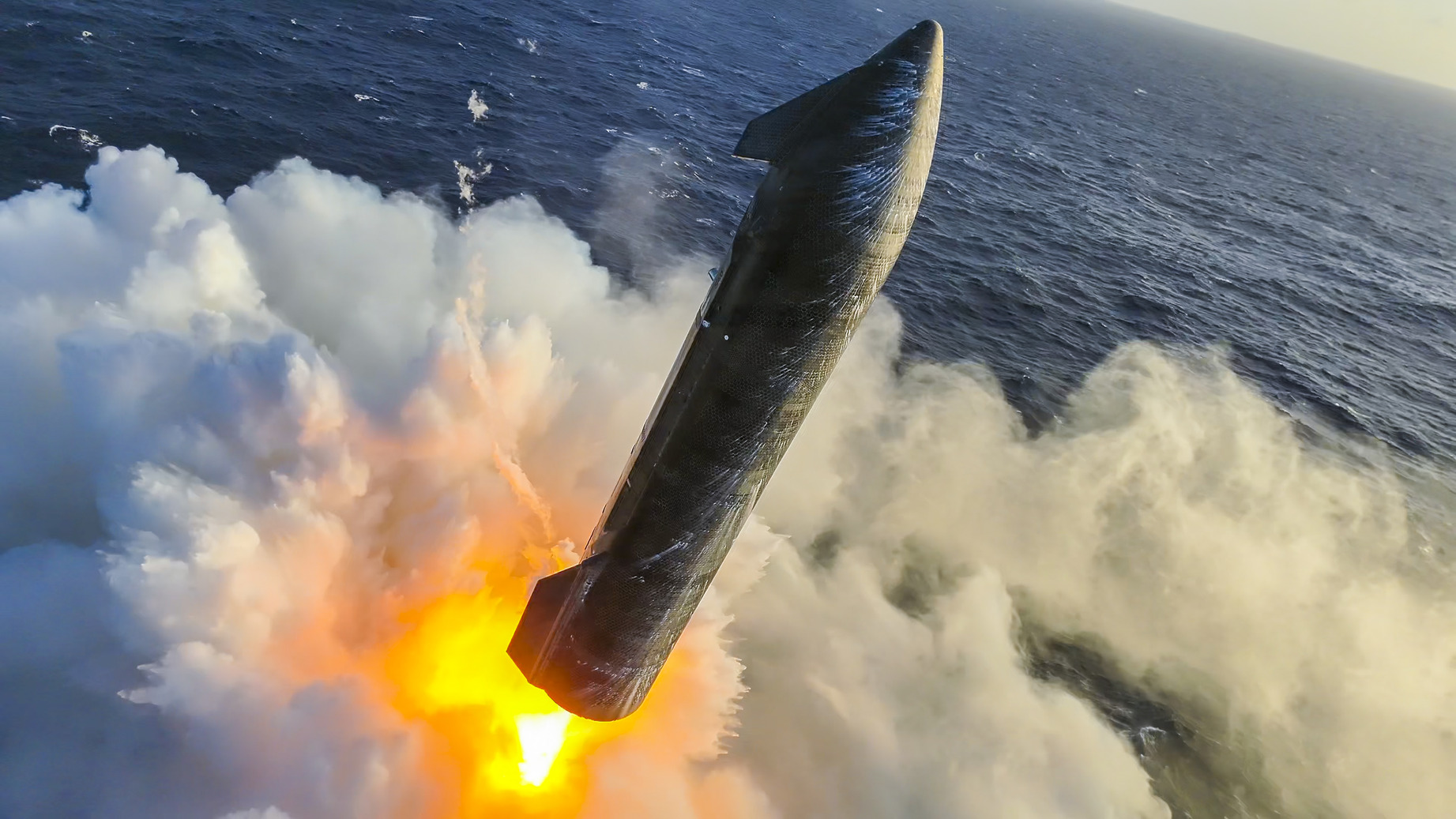
SpaceX has set September 22 as the target date for Starship’s 14th test flight, and this one carries a different goal than any of the 13 that came before it. Every previous Starship mission has intentionally flown a suborbital arc, reentering the atmosphere within the same hour it launched. Flight 14 is designed to send the craft into a genuine orbit around Earth for the first time.
The launch window opens at 7:15 a.m. Central time at Starbase in South Texas and runs for 75 minutes, pending regulatory approval, according to SpaceX’s mission description published Tuesday. If the flight goes as planned, Starship will circle the planet roughly six times at an altitude near 275 kilometers over about ten hours before a deorbit burn sends it toward a splashdown in the Pacific Ocean west of Chile, a departure from the Indian Ocean recoveries used on the last several flights.
The mission also marks the first attempt to put a working batch of Starlink V3 satellites into actual service. Flight 13 carried 20 of the new satellites in July, but because that mission never left a suborbital trajectory, the payload reentered along with the ship instead of separating into orbit.
SpaceX tells the FCC that Starship Flight 14 is going to orbit
Each V3 satellite is rated for roughly one terabit per second of downlink capacity, so a successful deployment on Flight 14 would be SpaceX’s largest single jump in network bandwidth since Starlink began flying on Falcon 9.
Flight 13 still did the heavier lifting on the technical side. That July mission flew a deliberately more stressful reentry profile to test Starship’s heat shield, and the ship survived its softest splashdown yet, intact enough for drone inspections shortly after landing. Elon Musk said the flight delivered “all the heat shield data we needed and then some,” a result Teslarati covered in detail when he later said SpaceX had solved the vehicle’s biggest reusability challenge. Flight 14 is where SpaceX starts spending that confidence on an actual orbital insertion rather than another controlled fall back to Earth.
One thing Flight 14 will not attempt is a tower catch of the ship. Musk floated the idea right after Flight 13, but walked the timeline back in August, saying a catch attempt was more likely “in a few months.” The Super Heavy booster will still aim for its own recovery, targeting an offshore landing point in the Gulf of America, the same approach used on recent flights.
September 22 is SpaceX’s own target, not a locked date. Starship’s schedule has slipped before over hardware readiness and FAA sign off, and the company has said as much in its own mission notes. But the plan itself represents the clearest marker yet that Starship is moving from a suborbital test program into something meant to carry paying payloads and, eventually, people.
Elon Musk
Elon Musk gives his most telling Tesla-SpaceX merger conversation yet
Elon Musk hinted a Tesla-SpaceX merger could be coming, and Wall Street is taking notice.
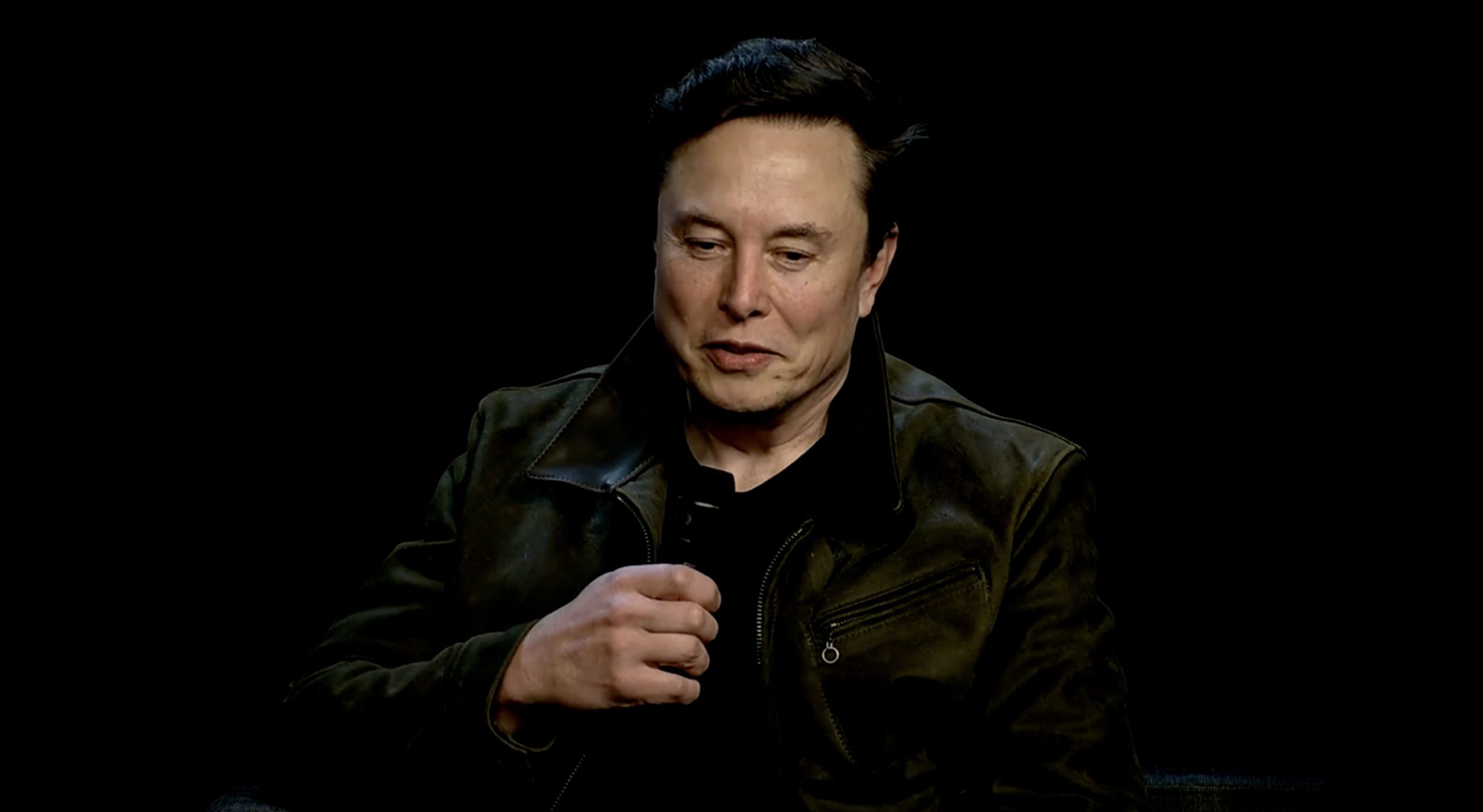
Elon Musk gave his clearest signal yet that Tesla and SpaceX could eventually combine, telling the All-In Summit in Los Angeles that the two companies’ deepening collaboration makes the question worth asking. Sawyer Merritt first surfaced the highlight on X Tuesday.
Asked directly why Tesla and SpaceX remain separate given how closely they already work together, Musk told hosts at the summit: “Great question there. With all this collaboration, on so many levels, who can imagine what action one might take when there’s so much close collaboration in so many areas.” SpaceX President Gwynne Shotwell, who joined Musk on stage, added that SpaceX personnel have already moved into xAI to fill leadership and engineering gaps, saying the businesses are integrating “faster than I thought,” though “not fully integrated yet,”
The comments landed on top of merger speculation that has been building on Wall Street for months. JPMorgan has called a tie-up “strategically coherent on paper,” pointing to overlapping ambitions in AI, robotics, energy, transportation and space. Jefferies went further, estimating Musk could retain roughly 55.3 percent voting control in a deal structured without a premium, a scenario that would still leave room for Tesla shareholders to come out ahead. On Kalshi, traders now put the odds of a merger before 2028 at 66 percent.
Tesla’s stake in SpaceX, still under one percent, traces back to its earlier investment in xAI, which converted to SpaceX equity after SpaceX absorbed the AI company. The two are also jointly building Terafab, a chip facility in Austin meant to serve both Tesla’s AI computing needs and SpaceX’s satellite ambitions. Wedbush analyst Dan Ives has stood by a 2027 merger timeline for months, and Cathie Wood’s ARK Invest recently floated a similar case, an idea Musk pushed back on directly at the time.
Another Tesla SpaceX merger prediction by ARK Invest has Elon Musk talking
The timing adds another layer. Tesla has scheduled an October 1 unveiling for its next generation Roadster at a venue near SpaceX’s McGregor, Texas test site, using the phrase “Go for launch” in its promotional material. Both stocks dipped roughly 2 percent Monday before recovering slightly in premarket trading Tuesday, with SpaceX shares up about 0.4 percent and Tesla essentially flat.
Musk stopped short of confirming anything is in motion. But unlike his past denials of a corporate restructuring, this response didn’t rule one out, and it came with Shotwell sitting next to him describing an integration that’s already underway.

Tesla uber bull Ron Baron says ‘the time to buy the stock is now’

SpaceX’s next Starship launch is about to attempt its biggest leap yet


