Lifestyle
Powering your Tesla and Home through SolarCity’s Solar Panel System
Solar power can get you some solar gains to reduce your electricity bill without costing you anything while helping to save the planet.

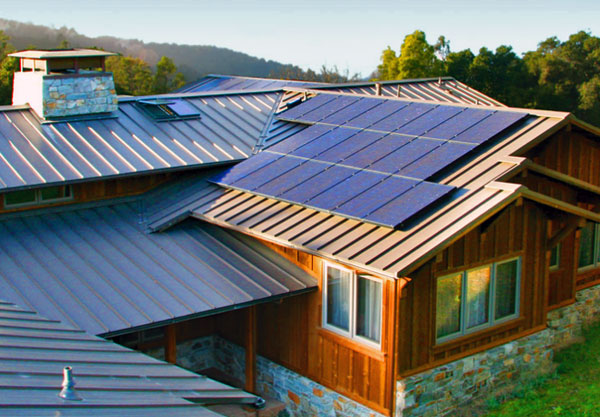
Solar Gains
Even with crazy electricity prices in Massachusetts, driving a Tesla is 38% of the cost of driving a gas-powered vehicle. But unlike oil and gasoline, you can generate your own power through renewable solar energy.
After ordering my Tesla Model S I started looking into solar panels for my home. I only looked at a single provider, SolarCity, for a couple of reasons. First, SolarCity is dominating the solar residential market with over 19% in market share. Second, it’s associated with Elon Musk and without him I wouldn’t even have the Tesla. I didn’t know much about SolarCity’s business model or approach – I simply filled out a contact form online and took it from there.

SolarCity Consultation & On-Site Evaluation
The process starts with a qualification call with a Solar City sales person to. They ask whether you own your home, what your electric usage is like, if you have a condo association and a few other random questions. They pull up your home address through Google maps and verify whether your location qualifies for their solar program. Here in Massachusetts only 1 in 7 (14%) of homes qualify for solar. Disqualification happens for reasons such as not having enough space on the roof for the panels, too much tree coverage or wrong facing roof lines.
The next step is to arrange an on-site visit of your property which for me lasted just over 2 hours. The SolarCity representative asked about our preference in solar panel placement (i.e. not on the front of the house for aesthetic reasons) and with that they were able to suggest areas of the roof where the solar panels would be most optimal. They pulled up a Google maps image of the home and produced a rendering of the home with the proposed solar cell placements. A custom report was generated that outlines the solar panel dimensions, numbers of solar cells to be installed, estimated production time and distribution of sunlight onto the solar panels while factoring in the direction of sunlight. It was quite an impressive report.
SolarCity analyzed my actual electricity usage history and was able to calculate the annual kWh consumed along with the cost for that energy. They use historical weather data in your city/state and look for weather patterns over the last several years, in order to estimate how much real coverage you will get from the solar panels.
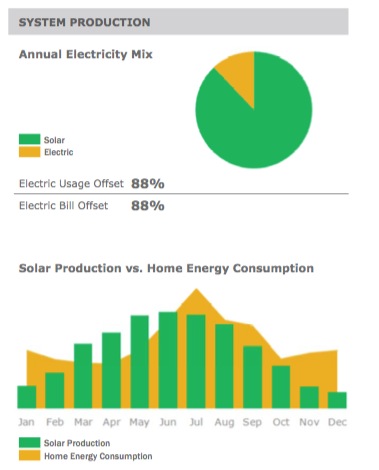 Based on SolarCity’s evaluation, their proposed solution would cover 88% of my electricity needs and cut my average monthly bill of $377 to $45. When the green line is above the yellow, you’re essentially producing more solar derived electricity than you need, and as a result you have to accumulate credits within your account. This big drop in monthly electricity cost is the “bait” portion of the sales pitch. Lots of focus is placed on the amount of energy that can be recouped, but this doesn’t all come for free.
The SolarCity system designed for our house costs about $144k in total. With green credits in place (going to SolarCity), the cost ends up to be approximately $68k.
They don’t give you $68k of hardware for free — SolarCity’s business model is pretty simple:
“Take dollars going to power companies and divert most of it to SolarCity while giving the homeowner enough incentive to do so.”
SolarCity provides you with free hardware and then charges you a rate based on the amount of solar power used. The amount of solar energy placed back into the grid offsets your electricity usage and bill, but can never exceed (at least in Massachusetts) the bill to the point where you are paid for generating energy. In other words, you’ll want to design a system that provides as close to 100% coverage of your electric bill as possible without going under or over. Going under means you’re paying the higher price per kWh through your standard electricity provider while going over means that you’re paying for excess generation of power while not being able to use it.
Reducing Electricity Bills with Solar Energy
SolarCity does not want to sell you a system. They want to enter into a long term (20 year) agreement with you that requires you to buy power from the solar panels they place into your home. They provide a few options to do this:
- Pay a medium rate for the generated power, but with no increase year over year.
- Pay a lower rate for the generated power, but with a 2.9% increase year over year.
- Pay nothing for generated power, but with a big up front pre-payment at the lowest rate.
All their rates start lower than your current electricity rate. Lets look at how a 2,500 kWh / month usage breaks down:
- With Electricity provider: 2,500 kWh x 16.7¢/kWh = $417.50
- With SolarCity: 2,500 kWh x 88% x 14.8¢/kWh + 2,500 kWh x 12% x 16.7¢/kWh = $373.60
The 88% offset number can vary when you get to the actual implementation, but the rep said the estimates are usually conservative.
Choosing option #1 would give an immediate 10.5% savings which is far from the 88% savings they claim to give. The utility company was receiving $417.50 for my energy usage, but with the proposed SolarCity system, the utility company’s cut would diminish to $48 while SolarCity would receive $325.60. SolarCity and the homeowner wins; the power company loses revenue, but gets relief on the grid and even more relief during the hotter months when the grid is the most strained.
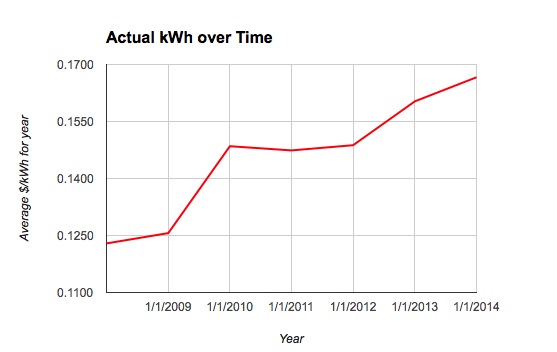 Electric companies are hiking rates year over year. The rep quoted an average annual rate hike of 4.8% in Massachusetts, but taking a deeper look at a historical rate chart for my area, I saw an annual increase of 5.7% since 2008. Assuming this same growth pattern over the next 10 years, SolarCity’s solar panel system should provide a 40% savings in energy costs in the later years.
The choice in SolarCity plans really depends on how long you expect to stay in your house. If you’re only staying for a few more years, go with the one with the lowest rate and no upfront payment. If this is the last house you’ll own and you can afford to, then pre-pay for the system. Otherwise (like me), go in the middle. The break-even point between plan 1 and plan 2 is 8 years.
SolarCity’s Solar Panel System in the Long Run
My system has an estimated production of 23,830 kWh per year with a fixed cost to me at 14.8¢/kWh. Total payout to SolarCity for use of the solar energy will be $70,536.80 over 20 years. Since the cost of the solar panel system costs them around $68K after credits, you’re essentially paying for the whole system over the 20 years, but at the end you don’t own it.
There are a few options that can be had after the 20 year mark:
- Renew for some additional 5 year periods with different numbers/rates.
- Upgrade system to something newer with different numbers/rates.
- Have them take it all away and put the house back to pre-solar state (this is totally free to do).
There are a few other things to note:
- They guarantee your entire roof from leaks for the first year after install.
- The entire system is insured, maintained, owned by them — anything breaks and they fix it for free (labor + parts).
- They’re incentivized to make it work, and work well, because they get paid on energy production and usage. That’s an expensive set of gear (almost $150K in our case) and something you don’t have to worry about.
- The agreements etc are fully transferable to a new home buyer.
- They have applications to monitor power generation through your mobile and desktop devices.
How does SolarCity make money? I don’t know their whole business model but there are a few things you can infer:
- I don’t buy the quoted costs of the gear and it seems others, like Forbes, don’t either. Perhaps the retail price for the solar set up would be $144K, but as the largest solar installer in the US, SolarCity undoubtedly is getting some huge price breaks.
- The power companies are mandated to produce a certain amount of green energy and when they can’t there are fines to be had. Similar to how Tesla sells their earned green credits back to the power companies. I’ve seen estimates that for every Tesla sold, 5 green credits are created worth a total of $35,000 that other auto companies buy from Tesla. So not only do they generate $100k in revenue from the car, they receive an additional $35k through the green credits.
 From the outside it’s really hard to tell what SolarCity’s long term business strategy will be. To me, it’s simple. I have some high value equipment on my roof offsetting real electric rates and a contract for a fixed price over the long term with no real downside. I’ll let them worry about their business and I’ll just worry about my house.
I started down this path because of the Tesla. I’ve averaged 90 miles a day over the last 6 months in my ICE car. Using Tesla’s calculator that’s equivalent to 29.7 kWh/day or 10,841 kWh/year of energy that I’ll be using (about $1,800 worth if I get it straight from the power company). Still a big savings over $6,000/year in gas and even more when combined with solar. The $1,800 goes to about $1,600 this year ($200 savings), and 10 years from now I’m saving 50% over what I’d normally be paying to my utility company.
Going solar for me was pretty much a no-brainer. Gas prices are going up and so are electricity prices. Solar provides cleaner power at less cost with no upfront fees and no upkeep that I’m responsible for, and it will help offset the additional cost of electricity from my new Tesla and make it even more cost effective over time.
RELATED: SolarCity Struggles: My Three Part Series on the Journey Taken with SolarCity


Lifestyle
Tesla Cybertruck targets job site crews with new Tailgate Utility Track and Bed Gear Box accessory
Tesla launched a $350 tailgate track and a $985 lockable Bed Gear Box for Cybertruck.

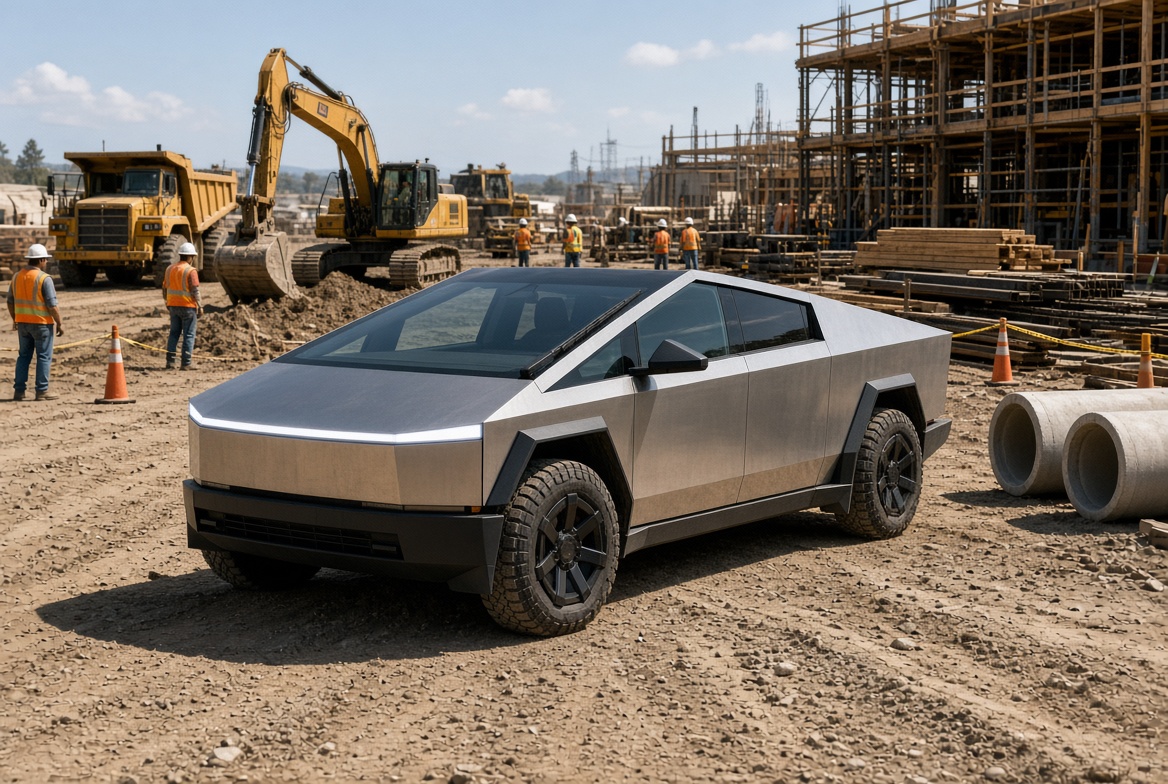
Tesla’s Cybertruck team added two more items to the Tesla Shop, targeting job site crews and owners who use the truck bed for actual work rather than just showing it off. The official Cybertruck X account posted the Tailgate Utility Track and the Bed Gear Box within minutes of each other, part of a five item batch that also included a reflective jacket, a spray paint hat and an updated reflective tee.
The Tailgate Utility Track runs $350 and turns the folded down tailgate into another mounting surface. It’s a single aluminum track with a T-slot for sliding accessories and two L-track attachment points, plus two load stops included in the box. The pitch is straightforward: strap down oversized cargo, like lumber or a cooler, that hangs off the back of the bed without it sliding out mid-drive. It bolts onto the existing tailgate and works on every Cybertruck trim.
Tailgate Utility Trackhttps://t.co/PCAYXlFBvS pic.twitter.com/sCV2NVxf1W
— Cybertruck (@cybertruck) September 3, 2026
The Bed Gear Box costs $985 and is a different kind of accessory. It’s a lockable aluminum storage box, 55.78 inches long, 19.8 inches wide and 7.79 inches tall, that mounts to the bed’s L-track rails and comes with two internal bins for smaller items. According to Tesla, at just over 57 pounds empty, it’s meant to stay in place rather than come in and out with each trip, giving owners a factory-fit alternative to loose totes for tools, recovery gear or emergency supplies. Tesla’s listing notes that Long Range and Dual Motor AWD Cybertrucks need the L-Tracks accessory installed separately before the Gear Box will mount, since L-tracks come standard only on certain configurations.
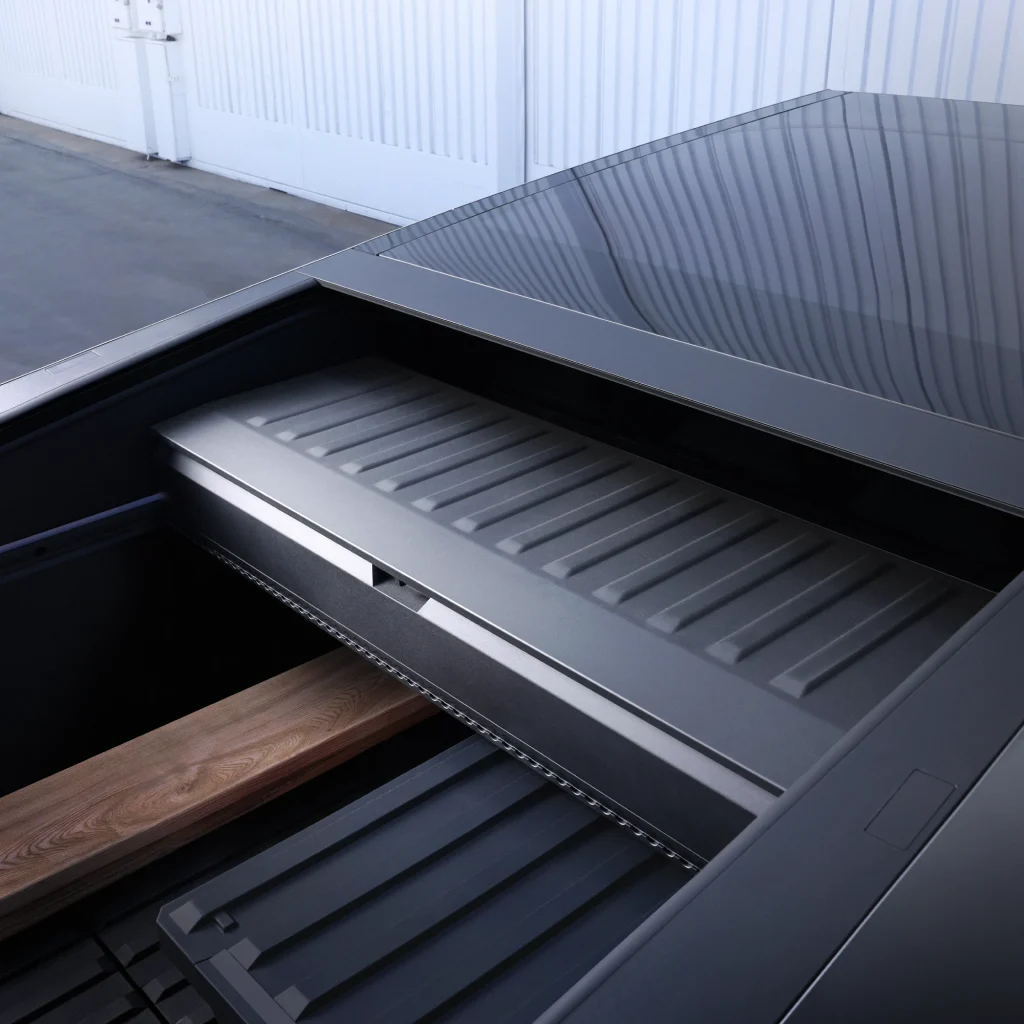
Tesla Cybertruck bed gear box accessory
Both accessories lean on the idea Tesla has been building toward since Elon Musk first described the Cybertruck’s third-party attachment strategy at the 2023 shareholder meeting, when he said the truck would ship with mounting points so outside companies, and Tesla itself, could keep adding gear without redesigning the bed. That’s the same L-track backbone underneath the tailgate shield and jumpseats Tesla launched last year, and the off-road armor package that arrived through the same X account in 2025.
Owners looking to round out the rest of the L-track ecosystem, cargo dividers, MOLLE panels, bed racks and similar gear, can find a wider range of options through our Cybertruck accessories collection.
Elon Musk
Elon Musk says he knows how to save Earth for a billion years
Elon Musk says sentient AI satellites launched from the Moon could keep Earth livable forever.
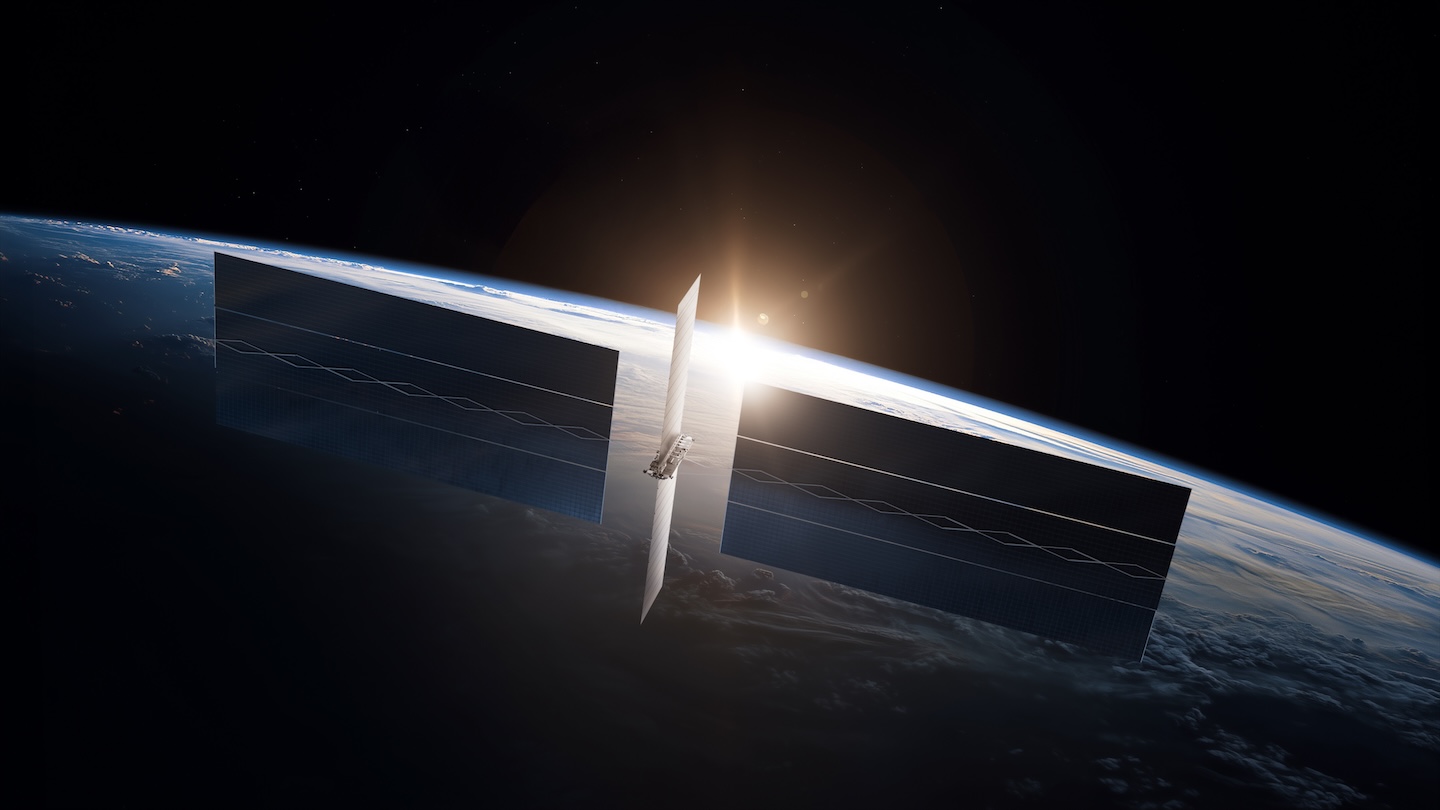
Elon Musk spent part of his weekend describing a plan to keep the planet livable for roughly a billion years, and it starts with satellites that can think for themselves.
In a post on X, Musk argued that swapping fossil fuels for solar and wind power will not be enough to protect humanity from what he called extremely severe extinction events, the kind that occur roughly every 100 million years. His fix is what he called sentient satellites, or solar-powered satellites, controlled by AI, that would sit in a fixed spot between Earth and the Sun after being launched off the Moon using a giant electromagnetic catapult instead of rockets.
The satellites’ onboard AI would make continuous, small adjustments rather than waiting on human instructions. The mass driver is Musk’s proposed way of getting the raw material there cheaply by using an electromagnetic launch track built on the Moon, where lower gravity and no atmosphere make it far easier to fling cargo into space than it is from Earth.
But we do need to act much faster than that if people still want to live where the beach is today. We have about 50 years or so to take action, which should be more than enough time for the space satellites to solve any heating problems. https://t.co/xhrVQALwQw
— Elon Musk (@elonmusk) August 30, 2026
Musk shared a Grok generated estimate suggesting roughly 5 percent of Florida’s land, or about 1.68 million acres, could face regular flooding by 2070 under a high sea level rise scenario, and said humanity has about 50 years to act before coastal living looks very different than it does today.
This is not the first time Musk has floated the idea. He raised a similar concept in November, describing a solar powered AI satellite constellation that could make tiny adjustments to incoming sunlight to fine tune Earth’s temperature. Musk has also tied planetary risk to his broader vision at SpaceX, where his compensation package is explicitly linked to establishing a self-sustaining Mars colony, one he has described as an insurance policy against the kind of extinction event he referenced this weekend, and where he has said humans could set foot within five to seven years.

A former Vancouver police sergeant with ALS accounts his journey to become a patient for Elon Musk’s Neuralink wireless brain-computer interface technology.
“I’m texting you from my brain right now.” That was the first message Lee Marten sent after waking up from Neuralink surgery, five hours and one migraine after dozens of threads were stitched into his motor cortex.
Marten, a former Vancouver police sergeant, is one of the first Canadian ALS patients to receive Neuralink’s N1 brain implant, and the 26th recipient overall. He tells his story in a first-person account published by Maclean’s.
Marten recounts how he was a healthy, athletic Vancouver police sergeant until April 2022 when symptoms of muscle twitching and balance loss, were followed by a bad fall that broke his leg. He would eventually be diagnosed with ALS in early 2025 at the age of 47. ALS, also known as Lou Gehrig’s disease, is a fatal neurodegenerative disease that progressively destroys the motor neurons controlling voluntary muscle movement, eventually taking away a patient’s ability to walk, speak, swallow and breathe. There’s no cure, and most patients live two to five years after diagnosis.
He describes the devastation of the diagnosis and how he began preparing for it while connecting with other young ALS patients through a WhatsApp group called Young Guns. Through that group he learned about a Neuralink clinical trial at Toronto Western Hospital and, after a roughly seven-month vetting process (physical assessments, psychiatric evaluation, a final interview with the Neuralink team), was accepted this past April as the trial’s 26th recipient and the first Canadian ALS patient to get the N1 implant. He recounts the May surgery in detail, including the robotic system that stitched 64 threads into his brain, and describes the app, Link, translating his neural signals into cursor control, which he was using within hours of waking up.
Marten walks through what daily use looks like, including weekly “brain training” exercises, a real-time neural-activity display, charging the implant via a beanie-mounted MagSafe charger, and using the implant for emailing, texting, social media, and gaming via a “Magic Box” that connects it to other devices. He also gives brief context on brain-computer interface history and quite candid about Musk, calling him “divisive” but saying he found him “easy to admire.
The piece closes on a heavier note, with Marten seeking to pursue medical assistance in dying as his symptoms progressed, noting that he’ll be able to communicate his final words to his family through Neuralink rather than facing a silent decline. He expresses hope the data from his case will help future ALS patients, even without a cure in his own lifetime.

Tesla Cybercabs narrowly miss deadly Amazon cargo plane crash

Tesla crosses major Unsupervised Self-Driving milestone


