News
Tesla files permit for Gigafactory Texas’ 500k-square-foot expansion

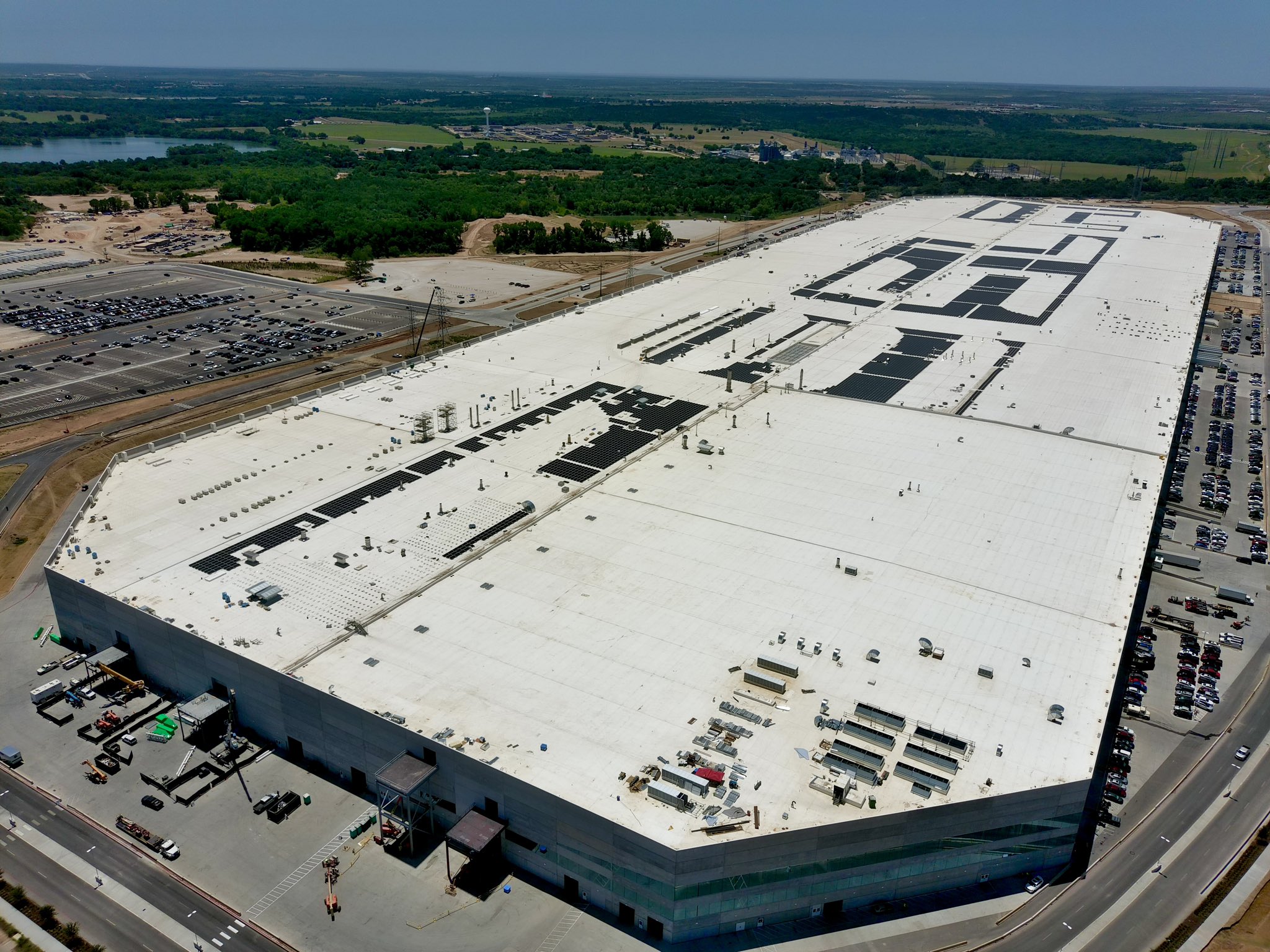
Tesla’s Gigafactory Texas is already a gigantic building. During the Cyber Rodeo, CEO Elon Musk quickly pointed out that the existing Giga Texas facility is already larger than any building in the world if it were put on its side. It is, as Musk noted, 15 city blocks long.
But despite its massive size, Giga Texas only consumes a small fraction of the land that Tesla acquired in Texas. It was then no surprise to see that Tesla had filed some paperwork for the expansion of Gigafactory Texas’ General Assembly 2 and General Assembly 3 areas.
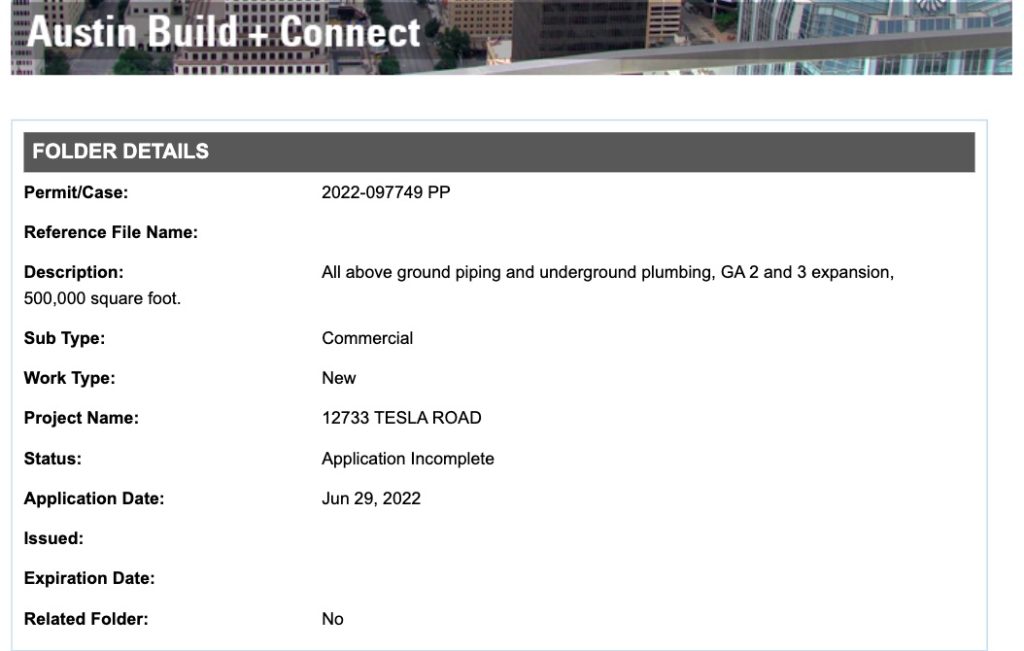
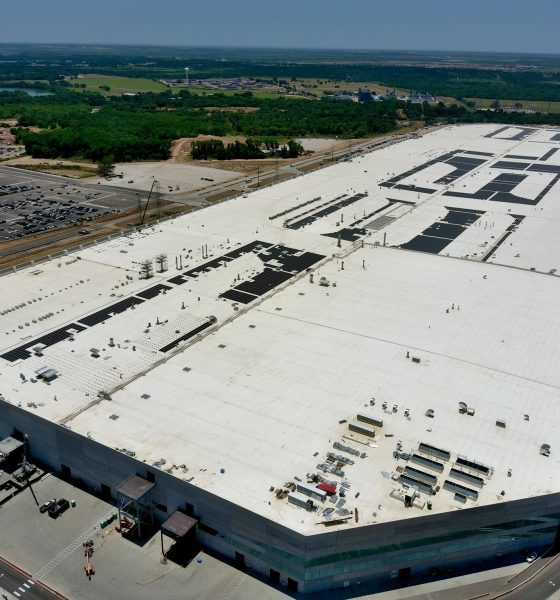
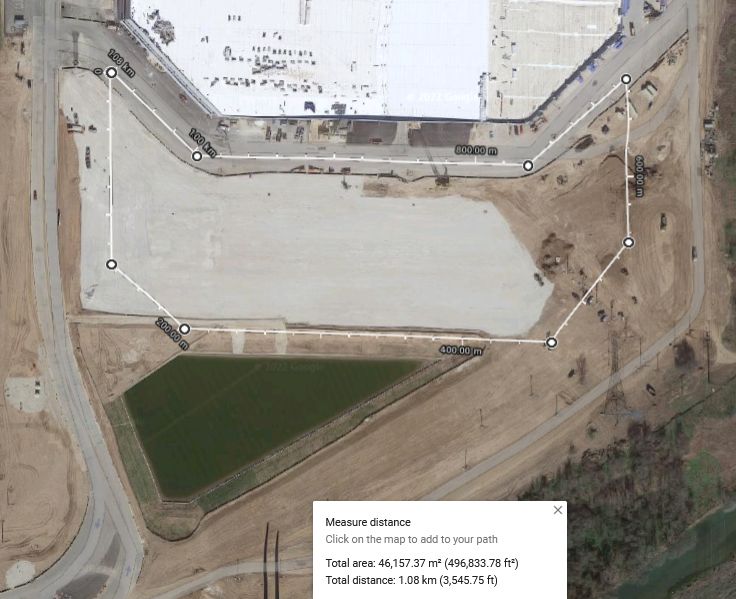
Based on the permit filed by the company to the city of Austin, the expansion would be quite substantial, covering a footprint of about 500,000 square feet. Images retrieved by members of the Tesla community suggest that the expansion will be done at one end of the existing Giga Texas building.
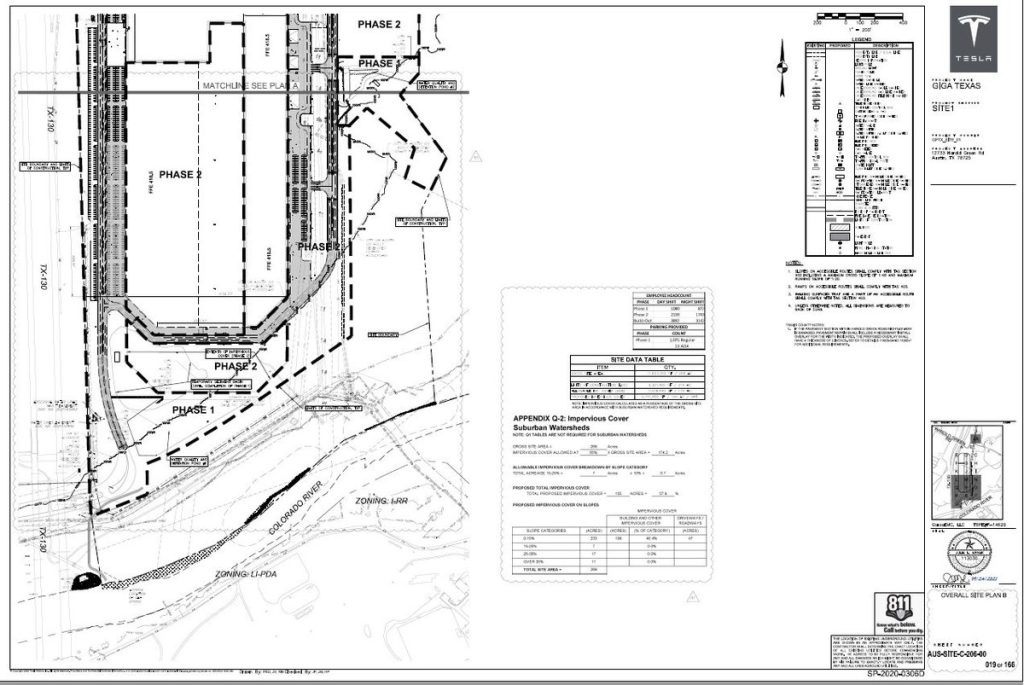
Considering that Tesla’s fillings referenced the factory’s General Assembly 2 and General Assembly 3 areas, it appears that the upcoming project may be related to the company’s vehicle production activities. This comes as no surprise, considering that Giga Texas is expected to produce not just the Model Y but other vehicles as well.
Elon Musk, for his part, has previously estimated that the production of upcoming vehicles like the Tesla Cybertruck and Tesla Semi should start sometime next year. And while the location of the Semi’s production facility is yet to be formally announced by the company, the Cybertruck’s production has been confirmed for Giga Texas since Day 1.
The 500,000 square foot expansion to Giga Texas should provide Tesla with additional space for its projects. And considering that Giga Texas is comprised of several floors, it would not be surprising if the upcoming expansion ends up providing Tesla with at least a million more square feet worth of working space.
Don’t hesitate to contact us with news tips. Just send a message to simon@teslarati.com to give us a heads up.


News
FCC green lights SpaceX’s move to a showdown with Verizon and AT&T
The FCC advanced plans opening 482 MHz to satellite phone service, boosting SpaceX’s Starlink Mobile.

The Federal Communications Commission voted Thursday to move forward with a proposal that would open an additional 482 MHz of spectrum to satellite service beamed directly to ordinary phones, a step that could widen the road for SpaceX’s Starlink Mobile to compete with the country’s largest wireless carriers.
The commission adopted the notice of proposed rulemaking at its October open meeting in Washington, Reuters reported. The proposal would raise the number of bands eligible for Supplemental Coverage from Space from five to 13, according to the FCC fact sheet. Commissioners also advanced a companion item proposing an auction of 25 MHz in the 1675 to 1695 MHz and 2020 to 2025 MHz bands, which could be used for terrestrial service, direct to device service or both.
Thursday’s vote does not hand any spectrum to SpaceX. It opens a public comment period, and final rules will come later. Under the draft, comments would be due 60 days after the notice is published in the Federal Register. The FCC had not released the adopted text at the time of writing, so it is not yet clear whether any bands were changed before the vote.
That question is where the fight now moves. AT&T, Verizon and T-Mobile, through industry group CTIA, asked the FCC to drop the 2.5 GHz and 3.45 GHz bands, which make up 290 MHz of the 482 MHz on the table, as Teslarati reported ahead of the vote. T-Mobile argued satellite interference could wipe out up to 96% of a cell site’s uplink coverage area. SpaceX asked the commission to go the other way and add the 902 to 928 MHz band.
The rule change that matters most to SpaceX may be a structural one. Today, a satellite operator must lease spectrum from every carrier holding co-channel licenses across an entire region such as the contiguous United States. The proposal would replace that with a certification that the operator has coexistence agreements covering only the areas it plans to serve, or that it holds the terrestrial licenses itself.
SpaceX has spent this year building that second path. It bought EchoStar’s AWS-4 and H-block licenses in a deal worth roughly $17 billion, and earlier this month agreed to acquire Grain Management’s nationwide 800 MHz portfolio, which the company said would pave the way for Starlink to become a major US mobile carrier. The FCC approved SpaceX’s purchase of three unused AWS-3 licenses from Tristar on October 21, and cleared its plan for 15,000 next generation direct to cell satellites on October 6.
The regulator has not always sided with SpaceX. In April, the FCC dismissed a SpaceX petition seeking access to Mobile Satellite Service spectrum held by incumbents, and it rejected 2.5 GHz for satellite coverage when it first adopted the framework in 2024.
The carriers are also building their own defenses. In May, the three companies agreed in principle to form a joint venture pooling spectrum for satellite service, and T-Mobile remains SpaceX’s US launch partner for Starlink Mobile even as it leads the push to keep satellites out of 2.5 GHz. SpaceX President Gwynne Shotwell has said service on SpaceX’s own airwaves is targeted for early 2028.
Elon Musk
Tesla’s Roadster appearance at SpaceX has merger watchers talking
Tesla’s next generation Roadster was spotted at SpaceX’s Hawthorne headquarters, two weeks after its unveiling.
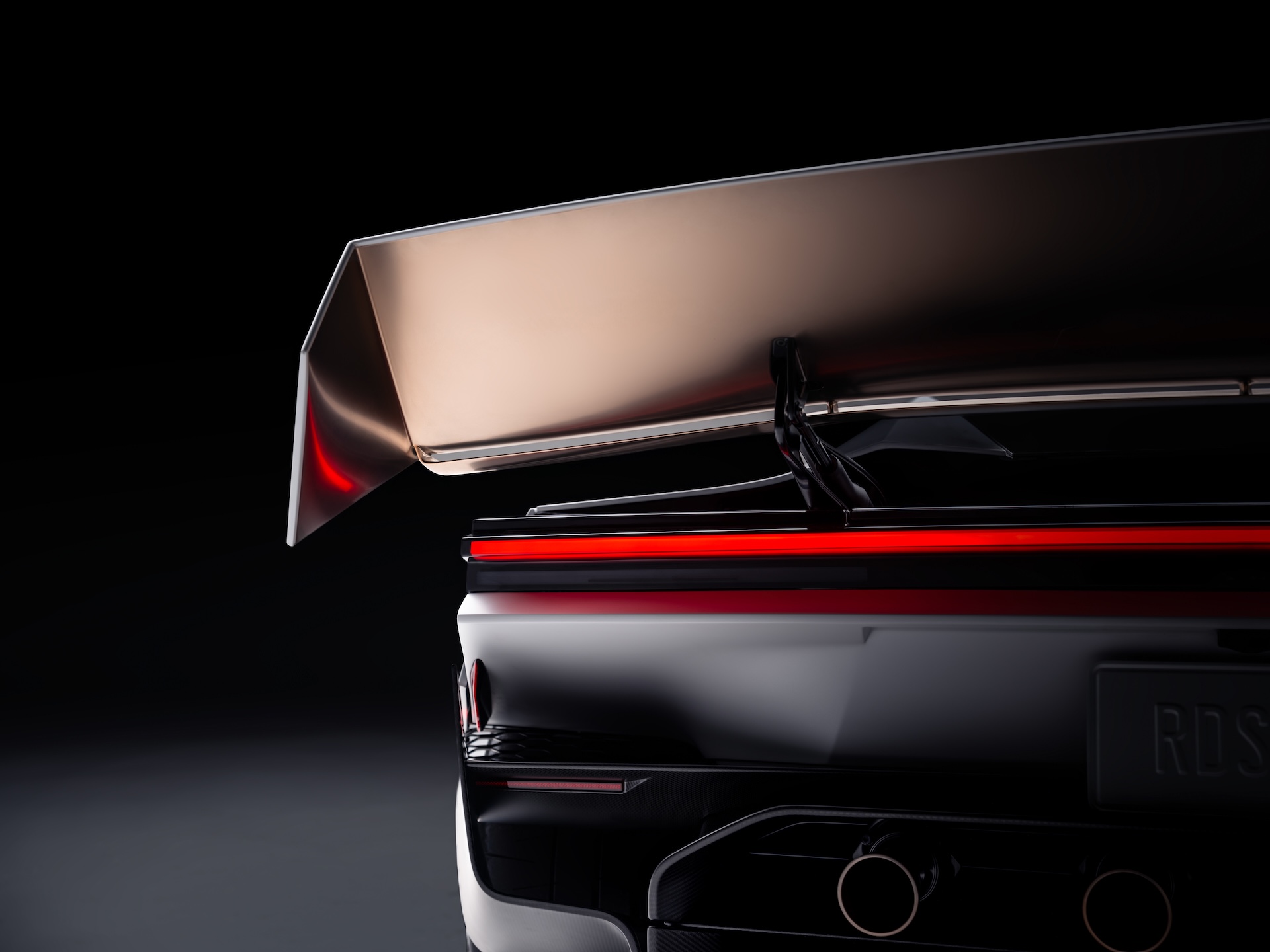
Tesla’s next generation Roadster turned up at SpaceX’s headquarters in Hawthorne, California on Wednesday, less than two weeks after the car flew off a ramp at its unveiling in Texas.
Photos shared on X by SpaceX Engineer (@DeannaRiceSPCX) show the new Roadster parked outdoors beside the famed Falcon 9 that stands outside company headquarters at the corner of Crenshaw Boulevard and Jack Northrop Avenue. Rocket B1019 was the first orbital-class booster ever to land after a launch on December 21, 2015 after it sent 11 Orbcomm satellites to orbit and then flew back to Landing Zone 1 at Cape Canaveral, which would be the first landing in what became SpaceX’s reusable rocket program. SpaceX chose not to fly it again. After a test fire in Florida, the booster was shipped to Hawthorne and raised upright as a permanent monument in August 2016, as Teslarati reported at the time. Putting the Roadster, which flies on SpaceX cold gas thrusters, next to the rocket that started SpaceX’s landings is symbolic in itself.
Small car, big rocket ambitions 🚀🚗 #roadster #falcon9 #spacex #tesla https://t.co/H32xUSXoCl
— Deanna Rice (@DeannaRiceSPCX) October 29, 2026
The Thrust and Rocket versions of the Roadster use cold gas thrusters fed by composite overwrapped pressure vessels, the same type of tank SpaceX flies on Falcon 9, and Elon Musk described the car as the work of Tesla and SpaceX engineers working together. Tesla lists 0 to 60 mph in under 0.9 seconds for Thrust and under 0.59 seconds for Rocket, while the base Performance model relies on a fan and ground sealing system for grip, as Teslarati detailed in its breakdown of the three Roadster configurations.
Tesla has kept the car in the spotlight since the October 15 event near Waco. Last week, the company posted a video of the Roadster’s fighter jet inspired cockpit, including a Track Mode screen with a “Thruster · 5,500 PSI” readout, which we covered in our look at the Roadster’s center display. Musk also said owners will be able to ask the car to perform the stunts autonomously, and promised a looping track at Tesla’s Texas headquarters.
The visit comes as special committees at Tesla and SpaceX weigh a possible merger, a step Musk confirmed on SpaceX’s third quarter earnings call. The Roadster, built on SpaceX hardware, has become one of the clearest examples of the two companies already building products together.
Musk said at the unveiling that Roadster production will begin in 2028. Reservations are open with a $50,000 payment, Thrust is listed as a limited release and Rocket is invite only. Tesla says the car is not approved for public road use.
News
Verizon, AT&T and T-Mobile are trying to shut Starlink out before FCC vote
AT&T, Verizon and T-Mobile want 290 MHz cut from an FCC satellite plan before Thursday.
AT&T, Verizon and T-Mobile are asking the Federal Communications Commission to pull nearly 300 MHz of spectrum out of a proposal that would let satellite companies like SpaceX offer cell service directly to ordinary phones. The request lands one day before the agency votes on it.
The FCC will vote Thursday, October 29, on a notice of proposed rulemaking that would make an additional 482 MHz available for direct to device service, expanding the number of eligible bands from five to 13, according to the FCC fact sheet. It would also scrap the rule requiring a satellite operator to lease spectrum from carriers, replacing it with a certification that the operator has coexistence agreements in place or holds the terrestrial license itself.
That second path matters for SpaceX. As Teslarati reported earlier this month, SpaceX agreed to buy Grain Management’s nationwide 800 MHz portfolio to turn Starlink Mobile into a full US carrier, adding to the spectrum it already bought from EchoStar.
The carriers want two bands removed, 2.5 GHz and 3.45 GHz, which make up 290 MHz of the 482 MHz on the table. Through industry group CTIA, they argued that about 300 million users depend on those bands and that satellite operations in them are not technically feasible. T-Mobile, which calls 2.5 GHz the foundation of its Ultra Capacity 5G network, said in its own filing that satellite interference could wipe out up to 96% of a cell site’s uplink coverage area and cut uplink speeds by 88% to 99%.
Executives from all three carriers met with FCC staff on October 20, and T-Mobile CEO Srini Gopalan met separately with FCC Chairman Brendan Carr. T-Mobile’s role stands out because it is still SpaceX’s US launch partner for Starlink Mobile. The three carriers have also teamed up on their own satellite joint venture to pool spectrum, a move widely seen as a response to Starlink.
SpaceX is asking for the opposite. In an October 23 filing after meetings with FCC staff and commissioners’ offices, the company asked regulators to add the 902 to 928 MHz band to the proposal. “Doing so now saves time later,” SpaceX wrote. The company also asked the FCC to modernize interference rules and align satellite deployment requirements with those for terrestrial cell networks, saying the goal is to let satellite and ground networks work together so Americans stay connected wherever they are.
The carriers have not been shy about how they view SpaceX as a competitor. On Verizon’s third quarter earnings call Monday, its chief executive said Starlink Mobile “just can’t compete with a terrestrial network” and estimated SpaceX would need four to six years and $300 billion to $500 billion to build a full US carrier network.
Thursday’s vote will not settle which bands survive. Adopting the notice opens a public comment period, with final rules to come later in the proceeding. The FCC already considered and rejected 2.5 GHz for satellite coverage once, in 2024. SpaceX also is not the only satellite player watching: the FCC approved Amazon’s $11.6 billion acquisition of Globalstar on October 27, giving its planned direct to device fleet its own mobile satellite spectrum.

FCC green lights SpaceX’s move to a showdown with Verizon and AT&T

Tesla’s Roadster appearance at SpaceX has merger watchers talking


