News
Read: Tesla’s full cease-and-desist letter to The Dawn Project over its anti-FSD campaign

After weeks of Dan O’Dowd’s The Dawn Project aggressively pushing its new anti-FSD ad, Tesla has sent a cease-and-desist letter demanding that the campaign be stopped immediately.
A full copy of Tesla’s cease-and-desist letter was recently shared online courtesy of FSD Beta tester @WholeMarsCatalog. As could be seen in the document, Tesla was quite thorough in its arguments against O’Dowd’s anti-FSD campaign. The electric vehicle maker also made it a point to highlight that its vehicles consistently rank among the safest in the industry, as validated by international testing agencies.
Following is the text of Tesla’s cease-and-desist letter.
AUGUST 11, 2022
VIA EMAIL AND OVERNIGHT MAIL
Mr. Daniel O’Dowd, Founder and CEO
The Dawn Project, Inc.
Re: Cease and Desist
Dear Mr. O’Dowd:
It has come to our attention that you, personally, and The Dawn Project have been disparaging Tesla’s commercial interests and disseminating defamatory information to the public regarding the capabilities of Tesla’s Full Self Driving (FSD) (Beta) technology. We demand that you immediately cease and desist further dissemination of all defamatory information, issue a formal public retraction within 24 hours and provide Tesla with the below demanded documentation.
Californians soundly rejected a political campaign, which was based on the single issue of spreading misinformation about Tesla, with barely 1% of voters in California’s U.S. Senate Race showing support for this platform. Despite the public’s very clear rejection, you and The Dawn Project continue to spread misinformation about Tesla, by falsely claiming that Tesla’s FSD (Beta) technology will not recognize children and by falsely stating that the feature will run over children when it is engaged. The purported tests misuse and misrepresent the capabilities of Tesla’s technology, and disregard widely recognized testing performed by independent agencies as well as the experiences shared by our customers. In fact, unsolicited scrutiny of the methodology behind The Dawn Project’s tests has already (and within hours of you publicly making defamatory allegations) shown that the testing is seriously deceptive and likely fraudulent.
First, to be clear, FSD Beta incorporates safety by design and does recognize pedestrians, including children, and when utilized properly, the system reacts to prevent or mitigate a collision. In addition, every Tesla is equipped with Forward Collision Warning to warn drivers of an impending frontal collision; Automatic Emergency Braking to apply braking when an obstacle is detected that the Tesla may impact; and Obstacle-Aware Acceleration to reduce acceleration when an obstacle ahead is in the driving path.
Second, the totality of these safety features are the reason why Tesla vehicles have earned a reputation for being the safest on the road. Contrary to the obviously results-driven bias of your purported tests, independent safety agencies have rated Tesla’s safety at the highest levels. For example, the Insurance Institute for Highway Safety (IIHS), an independent nonprofit scientific organization dedicated to reducing death and injuries on the roadways, rates current tested Tesla models with “superior” Automatic Emergency Braking for both vehicle-to-pedestrian prevention and vehicle-to-vehicle collisions. Notably, the IIHS conducted tests simulating crossing children for the 2022 Tesla Model 3 and 2022 Tesla Model Y, and in the tests, both models avoided collisions with the child dummies.
In contrast, your testing and methodology have already received swift and public rebukes from multiple sources. For example, the commercial you released claims that the tests shown were performed with Tesla’s FSD Beta engaged. But Electrek reported that your our own videos clearly show that FSD Beta was not engaged at times. Similarly, Electrek reports that The Dawn Project manipulated its video after being confronted with the defamatory nature of its advertisement. Despite your clear knowledge of the misleading nature of the advertisements, you continue to promote and disseminate these advertisements on multiple mediums.
While you and The Dawn Project purport to advocate for safety, the videos portray unsafe and improper use of FSD Beta and active safety features. Your actions actually put consumers at risk.
Accordingly, we demand the following:
1. Immediately cease and desist the dissemination of all defamatory advertisements;
2. Immediately remove the videos under the caption “Test Track” from The Dawn Project
website and any website where you or The Dawn Project disseminated a copy;
3. Issue a public retraction of all defamatory and false claims within 24 hours of receipt of this correspondence;
4. Disclose all sources of funding for the purported “tests” in the commercial, including whether any campaign funds were used or whether you were funded by Tesla’s competitors;
5. Disclose all recognized regulatory agencies that endorsed your testing methodology and/or results.
Furthermore, you and The Dawn Project, including any and all employees, officers, directors, and agents, are hereby placed on notice that Tesla demands that you preserve all documents, including communications, videos, and data, related to your purported tests and advertisements (including print and video) along with any and all communications surrounding the same. Tesla will exercise all legal remedies available to it in the event of your non-compliance with the above and reserves all rights. Please adjust your actions accordingly.
Very truly yours,
Dinna Eskin, Esq.
Sr. Director and Deputy General Counsel
Tesla, Inc.
Cc: The Dawn Project, Inc. Registered Agent
1505 Corporation
986
National Registered Agents, Inc.
🦇 💩 crazy
— Elon Musk (@elonmusk) August 25, 2022
While Tesla’s cease-and-desist letter shows that Tesla is dead serious about stopping The Dawn Project’s anti-FSD campaign, Elon Musk himself appears to be taking the events in stride, at least for now. In a response on Twitter, Musk simply posted a couple of emojis suggesting that the whole scenario is “bat sh*t crazy.”
Don’t hesitate to contact us with news tips. Just send a message to simon@teslarati.com to give us a heads up.


Elon Musk
SpaceX President to gift Trump Accounts her SpaceX stock
Gwynne Shotwell’s 2 million SpaceX shares are headed to children’s Trump Accounts starting this December.

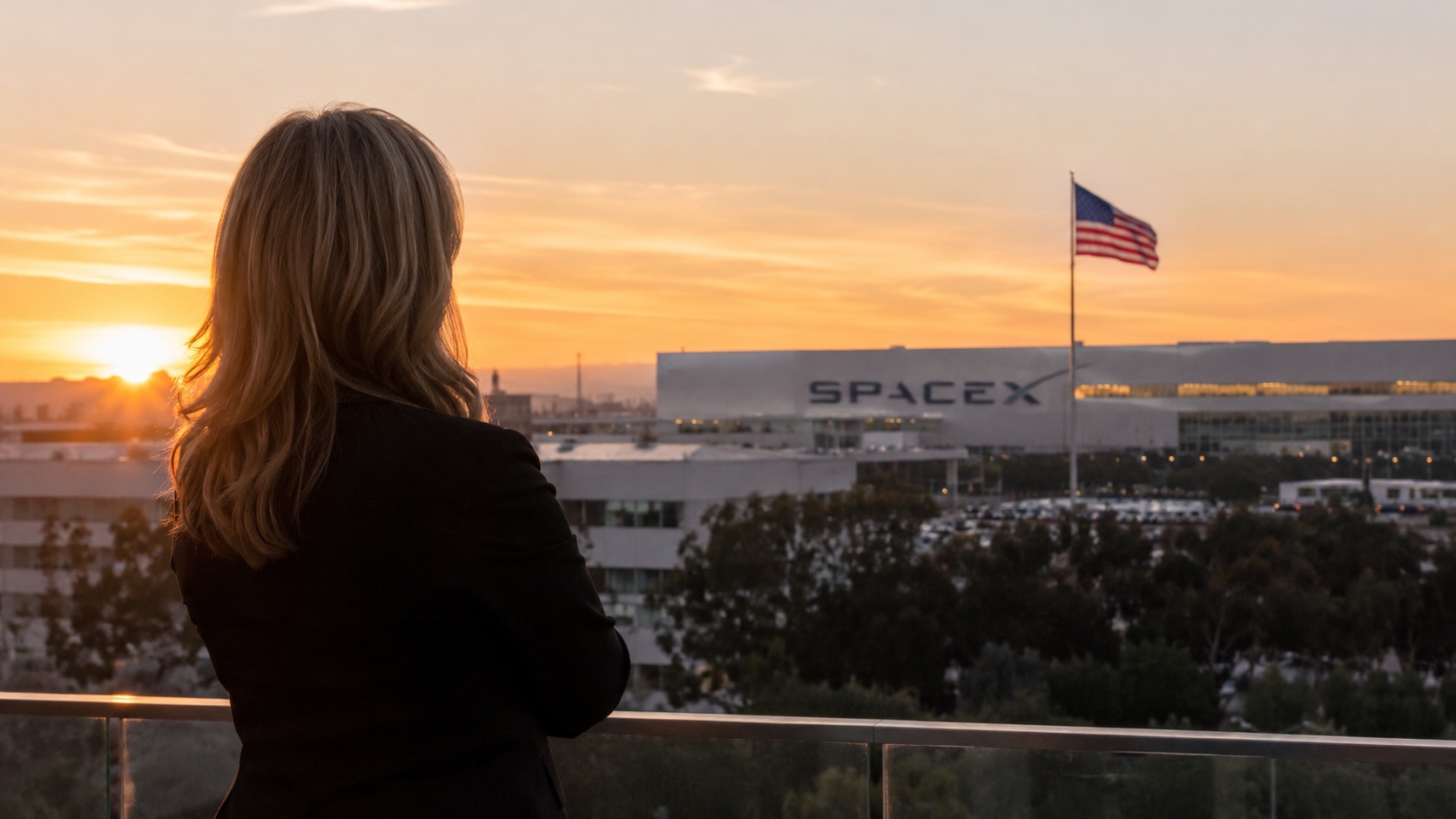
SpaceX President Gwynne Shotwell said Friday that more than 2 million SpaceX shares belonging to her and her husband, Robert, will be distributed to children’s Trump Accounts in December, turning a pledge she made over the summer into an actual transfer. “Robert and I are thrilled that our gift of over 2 million shares of SpaceX stock will be distributed to children’s Trump accounts in December!” Shotwell wrote on X, adding that the shares are “transferring to escrow as we speak.”
The first round goes to children aged 11 to 17 who live in ZIP codes where the median family income is $57,000 or less, along with kids in ZIP codes with too few residents for the Census to report that figure. Shotwell said those families should receive a notice by Monday, Reuters reported.
A second gift is expected to be finalized in the next few weeks. That round will cover eligible children in military families serving overseas, children in foster care, and more kids in Texas counties near the Shotwells’ home where median family income is $90,000 or less. Elon Musk replied to the announcement with “Cool” and a heart emoji.
Shotwell first announced the donation on July 6, less than a month after SpaceX priced its record IPO at $135 per share on the Nasdaq. IPO filings showed Shotwell owned about 12.6 million SpaceX shares, Quartz reported at the time, which makes the gift roughly one sixth of her stake. At the roughly $146 per share used to value Musk’s own pledge earlier this month, 2 million shares are worth about $290 million.
How the stock would actually reach the accounts had been an open question since July. Treasury guidance acknowledged that stock donations could flow into Trump Accounts, but it did not explain the mechanics for a program whose contributions default into an S&P 500 index fund. Shotwell thanked the Treasury, the IRS, the Dell Foundation, Greater Horizons, Invest America and the law firms Morgan Lewis and Gibson Dunn for “working over the past few months to make this happen.”
The transfer also works as a dry run for a far larger gift. On October 19, Musk said he would give one of his SpaceX shares to every kid in America next year and called it “the first of many.” With roughly 72 million children in the country, that pledge is worth about $10.5 billion. President Donald Trump thanked Musk the same day and said the shares would go through Trump Accounts, though neither SpaceX nor the Treasury has published how or when that distribution will happen.
Shotwell’s recipients also fill a gap in the program itself. Trump Accounts launched on July 4, and the $1,000 Treasury deposit only goes to babies born between 2025 and 2028. Teenagers aged 11 to 17 receive no government seed money, so for many of the families getting a notice on Monday, SpaceX stock will be the first asset in the account. The accounts convert into retirement accounts when the child turns 18.

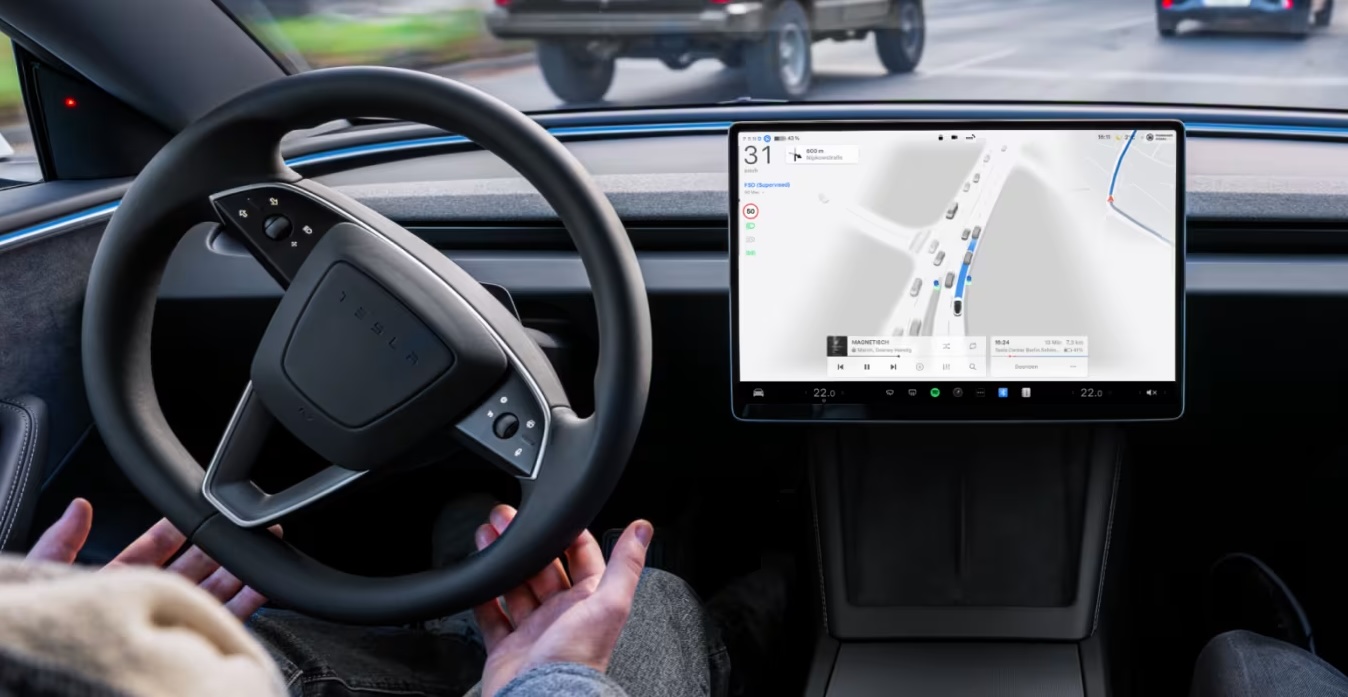
Tesla Full Self-Driving is now the centerpiece of the company’s newly revised Referral Program, which launched on October 29.
Instead of referring people to purchase vehicles and the referrer receiving $250 in Tesla Credit, the new program now incentivizes Full Self-Driving subscriptions.
If a Tesla owner is on an FSD trial and uses a referral code to subscribe to Full Self-Driving, the person whose Referral Link was used will receive one month of FSD (Supervised). Their code can be utilized 12 times per year, with January 1 marking the reset date.
Realistically, this means that if your Referral Code is used by 12 Tesla owners on an FSD trial, you will receive a full year of FSD for free.
🚨 Here is Tesla’s new Referral Program for Full Self-Driving (Supervised):
When someone subscribes to FSD using your link, you’ll get a month free. Up to a year of FSD is available to you for free!
If you’d like to use my link: https://t.co/g00IX9OCE3 https://t.co/GFBzEO2jjS
— TESLARATI (@Teslarati) October 30, 2026
The previous program made it pretty difficult to get referrals; buying a vehicle is obviously a much larger financial strain than subscribing to Full Self-Driving for a month.
Of course, the previous Referral Program also offered a tangible benefit: $250 in credits you could use on Service, Supercharging, or anything in the Tesla Shop. It truly could pay for someone’s travel for a year. It recently bought me a new backpack and a T-shirt.
However, this new program is much more attainable for those who do not have a massive online presence of a slew of friends in the Tesla community who will use the code and max out subscriptions for vehicle purchases.
Woke up to maxed out Referrals! Thank you guys, that’s awesome!
Share your referral link below so others can use it! https://t.co/kesbwTcoTV
— TESLARATI (@Teslarati) October 30, 2026
The Full Self-Driving suite will now be the keystone of the Referral Program, which makes it more inclusive and more fun for everyone with an awesome benefit.
It also gives the impression that Tesla is truly focused on FSD subscriptions, something that saw a tremendous increase in volume in Q3, as 75 percent of deliveries for the quarter came with an FSD subscription attached.
Full Self-Driving data is so instrumental to the suite’s improvement that this kind of program benefits Tesla as much as it does the consumer.
Elon Musk
Tesla made napping in a Robotaxi easier with its latest update
Tesla’s quiet mode reaches Model Y Robotaxis, blacking out the screen for riders wanting rest.
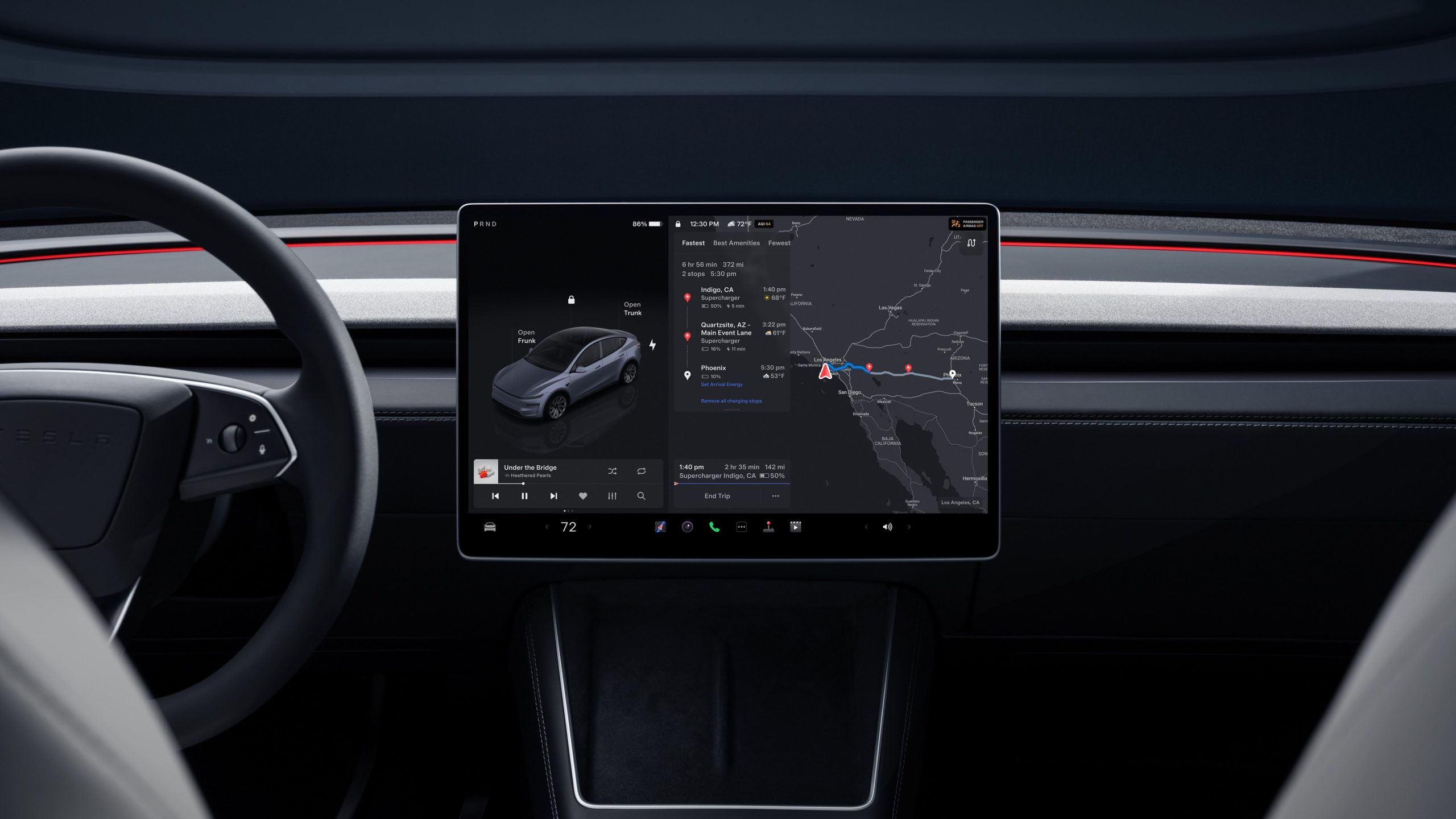
Tesla’s quiet mode, the setting that blacks out the screen for riders who want to rest, has moved beyond the Cybercab. A video posted Thursday by Spencer (@scotsrule08) shows the feature running in a Model Y Robotaxi on a night ride that appears to be in Dallas.
New quiet mode now on @Robotaxi https://t.co/2cM2eM9NeN — Spencer (@scotsrule08) October 29, 2026
The rider taps a small crescent moon icon in the bottom right corner of the map screen. The map, media player, app shortcuts and Grok prompt disappear, leaving a dark display with “Arriving soon,” the destination and a line reading “Tap display to exit quiet mode.” Controls a passenger may still need, including Pull Over, cabin temperature, volume and Support, stay visible. One tap anywhere brings the full map back.
Quiet mode first showed up in the Cybercab last week, which Teslarati reported alongside a new rear camera view. Tesla has been trimming cabin noise in other ways too. On October 25, Spencer reported that Robotaxi turn signals now chime for the first four blinks and then go silent. Tesla has not published release notes for either change.
Elon Musk has been pitching this use for more than a decade. In October 2014, he said that “maybe five or six years from now I think we’ll be able to achieve true autonomous driving where you could literally get in the car, go to sleep and wake up at your destination,”
By 2017 he was setting a higher bar. Speaking at TED, Musk said the hard part was not making self-driving work 99.9 percent of the time, “because, like, if a car crashes one in a thousand times, then you’re probably still not going to be comfortable falling asleep. You shouldn’t be, certainly.”
Owners asked for something similar in their own cars. In December 2019, a Tesla owner requested a Nap Mode that would keep the climate running and wake the occupant with an alarm, and Musk answered “Ok,” as Teslarati covered at the time.
The line returned when the Cybercab was unveiled at the We, Robot event in October 2024. “We’ll move from supervised Full Self-Driving to unsupervised Full Self-Driving, where you can fall asleep and wake up at your destination,” Musk said. On Tesla’s first quarter earnings call in April 2025, he called it the deciding measure: “The acid test is, can you go to sleep in your car and wake up in your destination and I’m confident that will be available in many cities in the US by the end of this year,”
Tesla has run driverless Model Y rides in Dallas and Houston since April, so a passenger dozing off on the way home is now a realistic use of the button. Tesla is also offering new riders a free first trip in both cities, according to an in-app screen shared by tracker Ethan McKanna, and said on its third quarter call that Cybercab rides would launch in Dallas next month.

SpaceX President to gift Trump Accounts her SpaceX stock

Tesla Full Self-Driving becomes main pillar of new Referral Program


