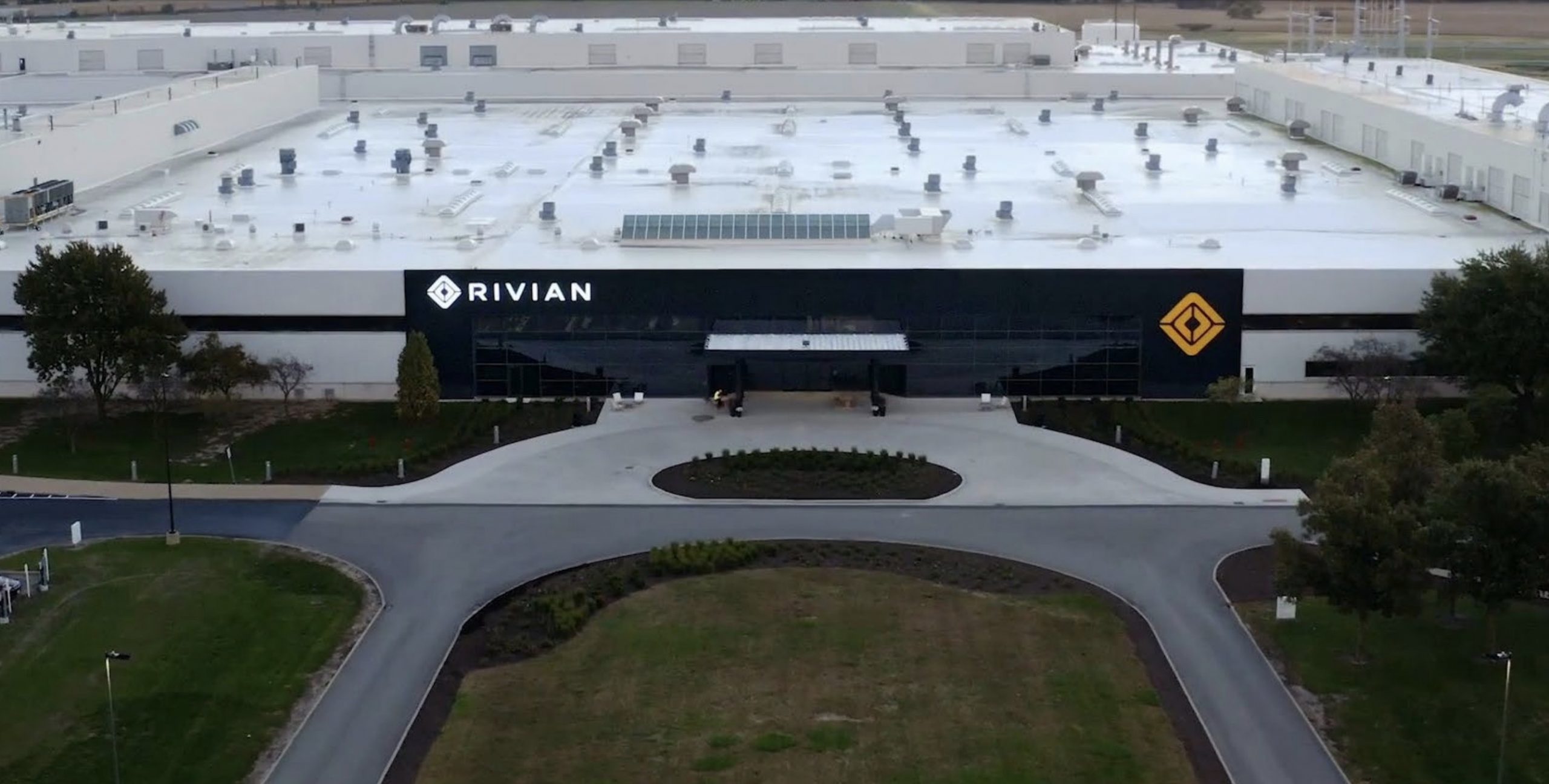

Rivian has debuted its latest generation of the R1T pickup and R1S SUV, and CEO RJ Scaringe recently told one publication about the company’s massive cost-savings efforts in recent months, following the retooling of its Illinois factory.
During a media tour of Rivian’s Illinois factory this month, CEO RJ Scaringe told Reuters that the automaker’s retooling of the plant has resulted in a 35 percent drop in the cost of materials for its Amazon delivery vans, alongside savings of a “similar magnitude” for its other production lines.
Rivian shut down the Illinois factory to re-tool its production lines in April, keeping the factory closed for about 25 days.
According to Scaringe, the electric vehicle (EV) maker has removed more than 100 steps in battery production, along with the removal of 52 pieces of equipment from its body shop, and over 500 from the updated R1T and R1S design. Scaringe and others are hoping the culmination of these cost-cutting measures and design simplifications can lead Rivian to profitability, with the CEO adding that the costs to build its EVs have now “improved dramatically.”
“We did a similar process of really going through and redesigning a number of components for cost, so we took over 35% of the material cost out of the vans,” Scaringe said.
Meet the new R1. Reengineered and redesigned for more efficiency and higher performance. What’s our favorite thing about the new R1T and R1S? Hard to choose!
Read more about our second generation vehicles: https://t.co/cgYpeq9p1c pic.twitter.com/EtOzZAFZvr
— Rivian (@Rivian) June 6, 2024
Rivian has since updated the software, drive units, and battery packs used to build its R1 vehicles, with the battery modules now coming in one piece rather than in separate parts that would require assembly. Additionally, the new R1 units have become lighter, partially due to the use of substantially fewer wires.
“The design of the parts and the design of the plant facilitate making the vehicle easier to build,” Scaringe noted.
Ultimately, these changes have also decreased necessary labor time, and improved the time assembly takes by around 30 percent. Rivian VP of Manufacturing Tim Fallon highlights the company’s hopes that the changes can result in turning a profit on its EVs.
“All of that together leads to us being able to get to our path to profitability and be gross-margin positive,” Fallon said.
Rivian reported a loss of $38,784 per vehicle delivered in the first quarter, down from the previous quarter, in which that figure landed at $43,372.
What are your thoughts? Let me know at zach@teslarati.com, find me on X at @zacharyvisconti, or send us tips at tips@teslarati.com.



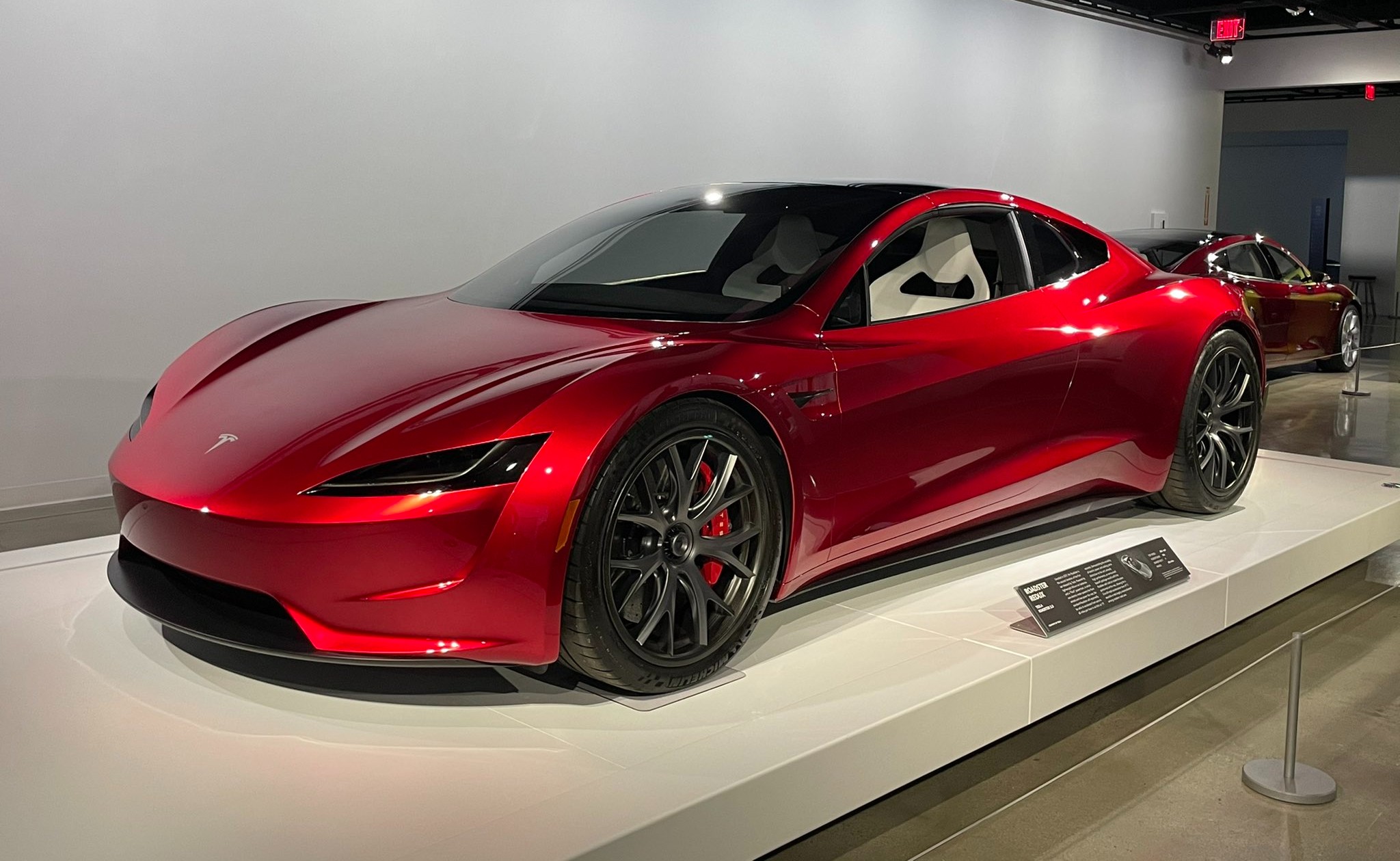
Ahead of its highly anticipated unveiling, Tesla’s upcoming Roadster received a new patent that aims to keep it grounded while enabling white-knuckle speeds.
The patent, which was granted on September 29, is titled “Electric Car Fan,” bluntly stating its design but not its purpose, which is further detailed in the text of the application. Interestingly, it comes two weeks before the Roadster event, which was delayed due to unfavorable weather on Thursday, which could cause issues, as Tesla revealed the event must be held outdoors.
🚨 The design uses electrically driven ducted fans, typically shown as a row of four at the rear, powered by the vehicle’s high-voltage battery.
The fans pull air from an underbody inlet, route it through ducts, and expel it from a larger rear outlet that functions as a… https://t.co/CHQB9u9UA3 pic.twitter.com/QVXmWTdggh
— TESLARATI (@Teslarati) September 29, 2026
The purpose is to solve a problem that is relatively unique to high-performance electric cars. Instant motor torque is useless if the tires cannot plant that force, and conventional wings and underbody tunnels generate downforce only when air is already rushing past the car. At launch, in slow corners, and under hard braking from modest speed, passive aerodynamic additions contribute essentially very little to downforce.
Tesla’s filing says that its fans can produce the downforce needed, independent of vehicle velocity, then ease off so the same hardware does not pile on drag at highway speeds, an issue that can come from excessive body modifications.
The hardware outlined in the patent is a ducted-fan package that is placed into the rear of the vehicle. An underbody inlet between the rear wheels feeds a duct that rises to a wide outlet in the diffuser. In that outlet are four axial fans, which are divided by vertical strakes. They will pull air from under the floor and press the chassis onto the pavement.
The language in the patent claims it can cut drag rather than add to it while simultaneously increasing downforce.
Tesla Roadster event requires restricted airspace, and the FAA obliges
The fans run from the high-voltage battery and a vehicle control system, so output can be modulated rather than left on as a fixed penalty.
There are additional strengths that can come from this design, like extra tire load at low speed, which can contribute to even more face-melting acceleration rates, decrease stopping distance, and sharper turn-in before a wing has air to work with. Adjustable fan speed lets the car add grip only when needed, so it can be catered to the force of a turn or acceleration.
These designs were previously used, and banned, in some competitive settings. The Brabham BT46B was banned in F1 competition for using a similar fan design and being labeled as too effective.
Tesla still lists the Roadster as having a sub-two-second 0-60 MPH time and a 250-plus-MPH top speed, and there are expectations for a SpaceX cold-gas thruster package that could not only increase acceleration but potentially cause the vehicle to hover.
It is important to note that a patent is not a production part, and packaging four fans in a rear diffuser, managing noise, and potential debris are all things Tesla must consider. With that being said, the patent being granted shows Tesla is designing the Roadster to go fast, but it is also attempting to use unique strategies to combat any issues it might have at those speeds.
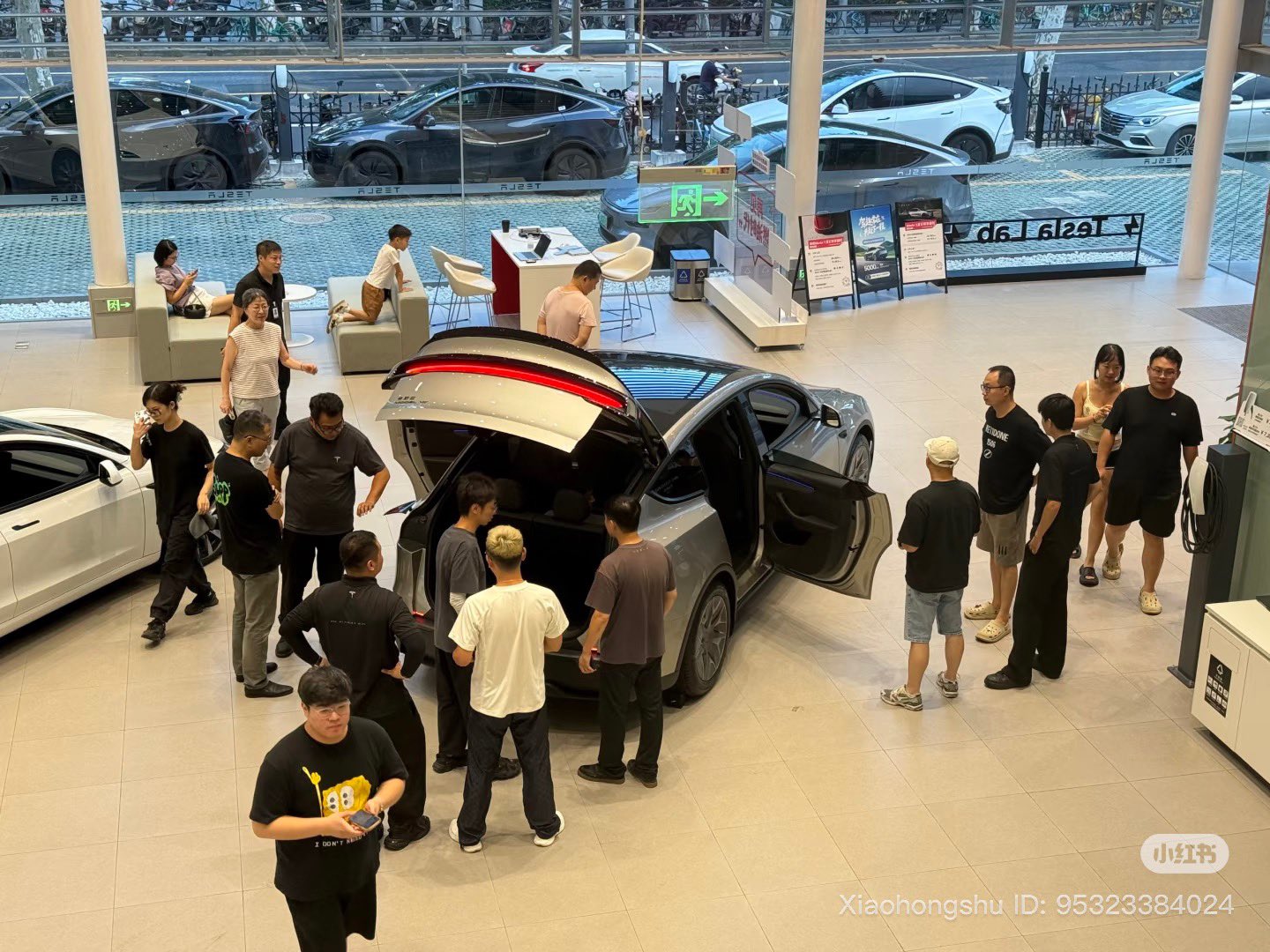
Tesla (NASDAQ: TSLA) showrooms have been picked clean ahead of the end of the third quarter of the year, as demand looks to be strong and delivery estimates for new vehicles are pushed into late 2026 and early 2027.
Tesla appears to have sold out of many of its Model 3 and Model Y trim levels in the United States, as only the Model Y RWD and Model Y All-Wheel-Drive are available for delivery before the end of the year.
Additionally, many showrooms are either completely empty or void of all but just one demo unit within the buildings themselves in an effort to bolster what could be one of Tesla’s best quarters in vehicle deliveries in recent memory.
I’m at Tesla right now and when I walked into their showroom I was shocked to see it basically empty.
I asked one of the people working there where all of the cars are “Gone – it’s the end of the quarter and we’ve sold out of everything… including the display vehicles”So… pic.twitter.com/rN7s3gE6sJ
— Devin Olsen (@DevinOlsenn) September 25, 2026
All the cars are gone from Tesla Century City!
All they have is Model Y L, a self-driving video playing on the background. I guess the best product is no product. Either that or they just sold the showroom cars. pic.twitter.com/mzCjWaXwww
— Whole Mars Catalog (@wholemars) September 26, 2026
Show room is empty. I asked and they have sold the demo cars too. Delivery numbers better be outstanding! pic.twitter.com/jq5N28Q6tZ
— Electric Brawl (@3lectricBrawl) September 22, 2026
Additionally, when I spoke to the guys at Tesla Mechanicsburg two weeks ago, when I returned the Model Y L, their third hauler of the week had just arrived, and every vehicle on it, along with every vehicle in their delivery lot, was accounted for and had a name attached to it for delivery.
Talking to the guys at the Mechanicsburg showroom on Friday, they couldn’t believe they had ANOTHER hauler coming in of cars for delivery—and each was accounted for
No car just sitting in inventory. They’re expecting a BIG quarter, and this is more than just the Y L https://t.co/ce801GkKVv
— TESLARATI (@Teslarati) September 21, 2026
Tesla saw a 25 percent increase in deliveries in Q2 compared to the same quarter the year before. The vast majority of the 480,126 units it delivered, 467,762 vehicles to be exact, were the Model 3 and Model Y.
In Q3 2025, Tesla delivered 497,099 vehicles, once again a figure that was dominated by the company’s two mass-market vehicles. Analysts have unusually wide predictions for this quarter, likely because so many firms missed the Q2 delivery figure by such a substantial margin; Wall Street predicted 408,000 cars, while Tesla delivered 480,000.
Goldman Sachs has Tesla slotted for 435,000 deliveries in Q3, while JPMorgan said it anticipates 482,000. The median guess is about 449,000 deliveries for Q3.
Interested in ordering a Tesla? Use my referral code for three free months of Full Self-Driving (Supervised) here.

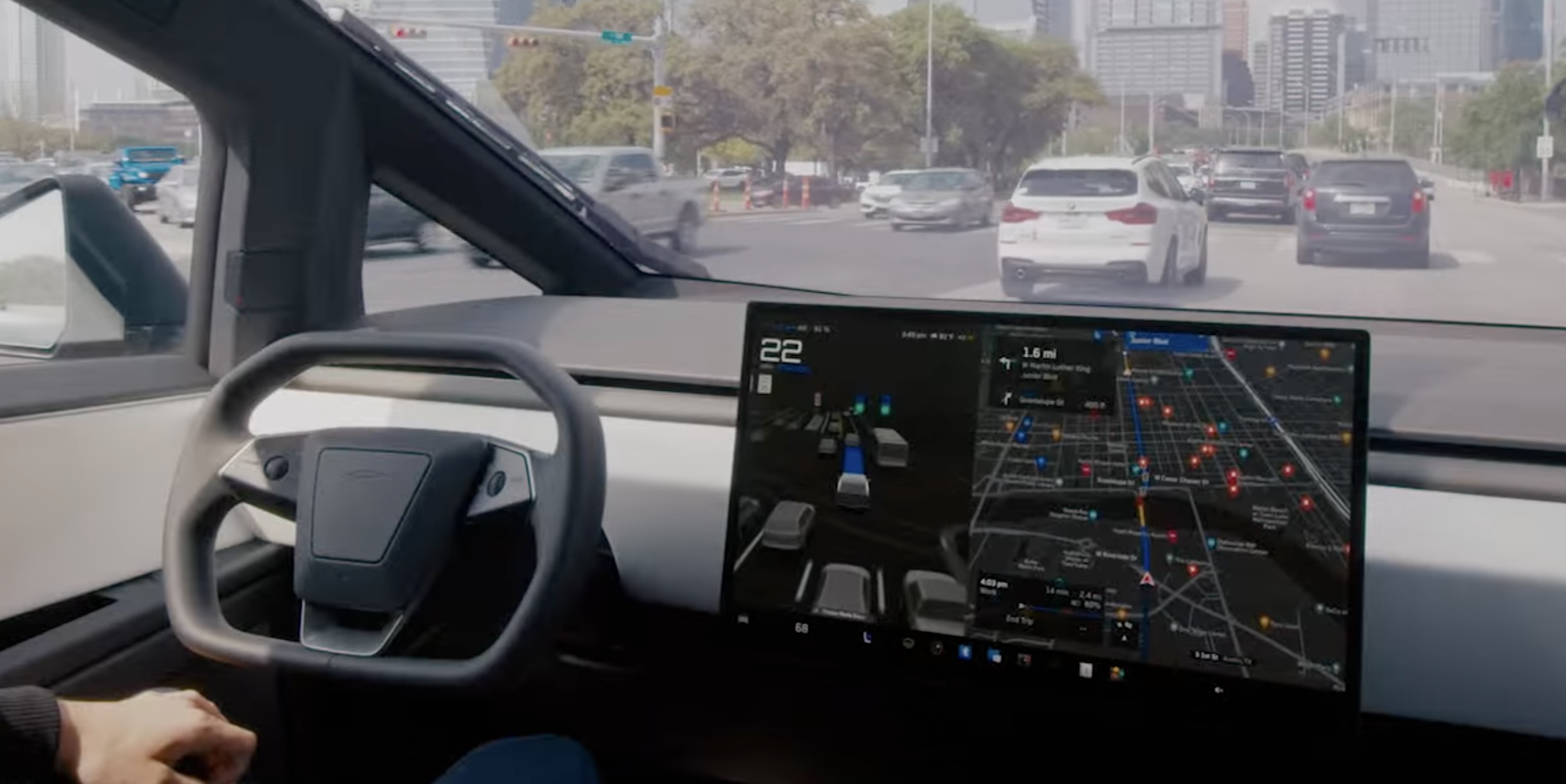
Tesla’s Automatic Collision Evasion feature can be seen in one of the first owner videos of it in action.
Tesla owner Spencer (@scotsrule08) posted on Monday that the feature “worked flawlessly,” saying FSD reengaged itself just as he was about to hit a curb. Ashok Elluswamy, who leads Tesla’s AI team, shared the clip and wrote, “A guardian angel always looking out for you.”
The video arrives in the middle of a staged rollout. Tesla first shipped Automatic Collision Evasion with FSD (Supervised) v14.3.9 in software update 2026.27.6 earlier this month, which Teslarati covered as it reached cars. Update 2026.27.10, which began going out on September 19, carried the feature improvements with FSD v14.3.10, according to release notes tracked by Not a Tesla App. The newer 2026.27.11 build is now reaching another wave of vehicles.
The new Automatic Collision Evasion feature worked flawlessly! FSD reengaged itself just as I was about to hit a curb.
Kudos @Tesla_AI team! 👏 pic.twitter.com/Fbp15HhpL2
— Spencer (@scotsrule08) September 28, 2026
The feature only runs on HW4 vehicles, and it requires an active FSD purchase or subscription with both FSD (Supervised) and Automatic Emergency Braking enabled. HW3 owners receive FSD v14.2 Lite in the same updates, but that build does not include collision evasion.
Tesla’s release notes describe two triggers. The first is an imminent frontal collision that braking alone may not prevent, in which case the car can activate FSD to steer, brake or accelerate around the hazard. That scenario is limited to highways below 85 mph, with no pedestrians or cyclists detected and no slippery road surface. The second covers a driver who appears inattentive, such as reaching into the back seat, or who seems to have switched off FSD by accident. Spencer’s curb clip appears to fall into that second category.
Tesla plans big safety improvements for Full Self-Driving v15
Once the system takes over, the accelerator is muted and light brake input will not cancel the maneuver. Drivers need to apply firm, deliberate steering force to take back control, and the car chimes to hand control back once the danger has passed.
Elluswamy recently noted that earlier hazard prediction, faster reaction time and better collision avoidance would arrive with FSD v15, the next major version.

Tesla Roadster’s new patent preps white-knuckle speeds, keeping it grounded

Tesla showrooms picked clean ahead of Q3 end as demand looks strong


