News
Tesla Model Y Standard: first impressions from a Premium owner

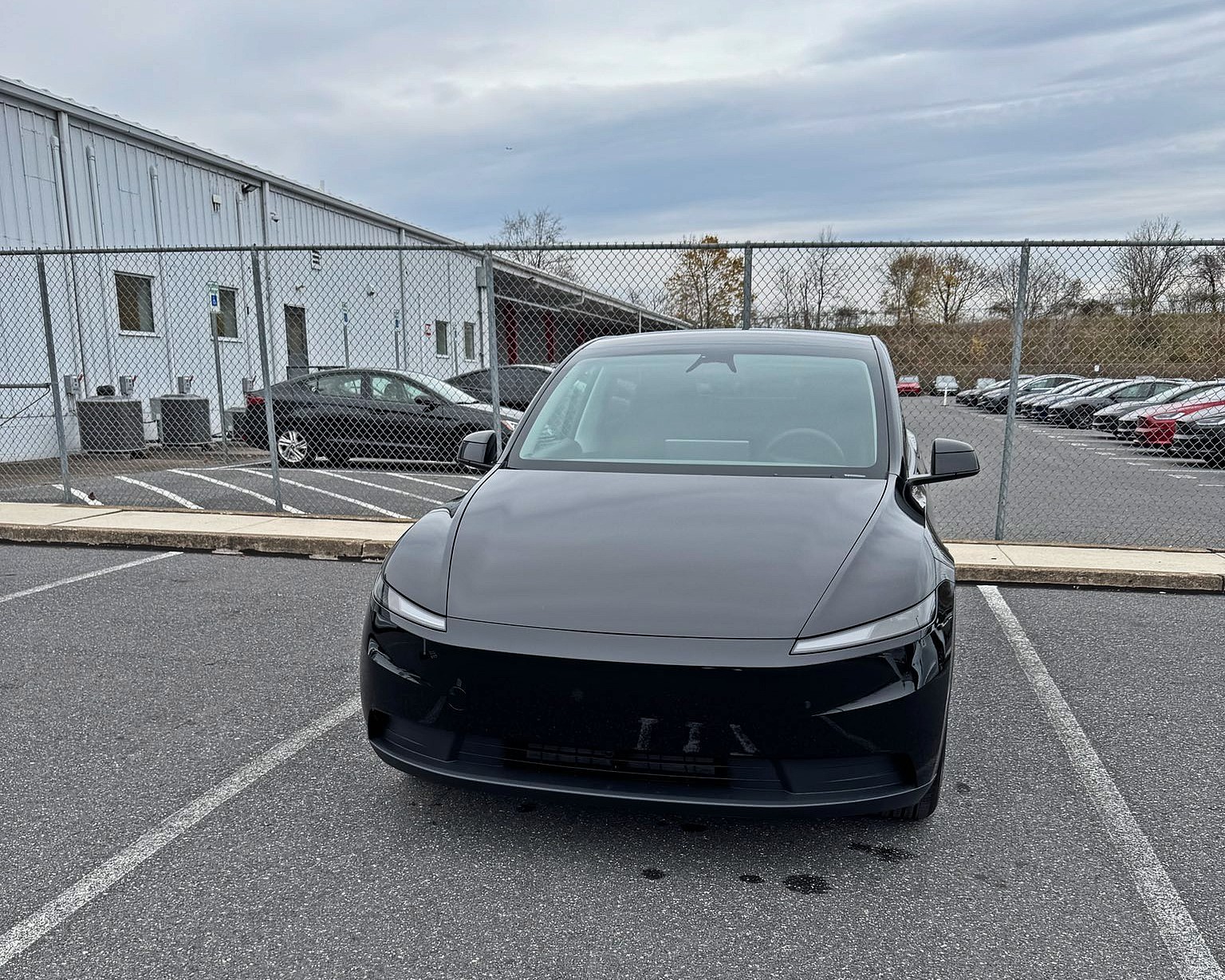
Tesla was nice enough to hook us up with the new Model Y “Standard” trim for a few days, and while we’ll be sure to fill you in on the full experience in the coming days, there are a lot of differences we noticed right off the bat, which make the ownership experience different from the “Premium” configuration level.
I purchased a Model Y Long Range All-Wheel-Drive back in August and took delivery just two weeks later. Through the first three months of owning my car, I’ve come to love so many things about the Tesla experience.
I traded my ICE vehicle for a Tesla Model Y: here’s how it went
However, I was interested in experiencing the affordable trim and seeing whether I would miss any of the voided features of the “Premium” Model Y.
Through the first 24 hours, here are my first impressions of the Model Y Standard as a Premium trim level owner:
Overall Aesthetic
The lack of a light bar is not something that is a dealbreaker. In fact, I would argue that the Model Y Standard’s more traditional headlight design is just as pleasing from an aesthetic standpoint.
The car is great looking from top to bottom; there are not a substantial number of differences besides the lack of a lightbar on both the front and the back of the car.
Overall, it is a very sleek vehicle, but the major changes are obviously with the interior.
Interior Changes
This is where the big differences are, and some of the things I’ve gotten used to in the Premium are not included. If I didn’t have a Premium Model Y already, I’m not sure I’d miss some of the things that are not present in the Standard trim, but I believe I’d get annoyed with it.
First impressions:
✅ Interior is excellent. I definitely miss the additional storage already that is available in my Premium. I could definitely get over it though
✅ Noticeable step down in sound system. Long Time by Boston absolutely cranks in the Premium; it’s still very… https://t.co/JNWvxTd8p1
— TESLARATI (@Teslarati) November 25, 2025
Storage
The Premium has a large storage compartment between the cupholders and the wireless charger, which is not present in the Standard trim. Instead, it is more like the Cybertruck, as there is a pass-through and floor storage.
I think that the pass-through is nice, but the additional storage is something I take advantage of, especially as someone who films Full Self-Driving videos, which requires hauling mounts, GoPros, and other accessories.
The sleekness of the Premium trim is also something I prefer; I really enjoy having the ability to close those compartments and cover the cupholders.
Obviously, this is a really trivial issue and not something that is substantially impactful from an ownership experience. If I weren’t already an owner, I am not sure I’d even have something to complain about.
Material Differences
The Premium trim seats are completely Vegan Leather, which I really do like, even as someone who doesn’t really love leather seats due to their temperature dependency.
The Standard trim features a Textile and Vegan hybrid, which has half of the seat a different material than the other.
The material is very similar to what I had in my previous car, a Bronco Sport. It was very durable, easy to clean, dried quickly, and hid a lot of things that leather does not, like oils from your skin, which constantly require attention to keep your interior looking fresh.
The wireless charger is also a different material, as the Premium features an Alcantara material on that. The Standard has a rubberized and textured backing, which looks good, too. They’re both more than suitable.
Other Missing Features
The Standard lacks a few minor things, most noticeably is the ambient lighting. The biggest change, however, and something I really miss, is the glass roof.
A lot of people told me that when I got my Model Y, I wouldn’t even notice the glass roof after a few weeks. That could not be further from the truth. I look out of it all the time, and it’s one of my family’s favorite parts of the car.
My Fiancè and I really love parking and watching Netflix when we pick food up, especially when it’s raining, because the glass roof gives such a great view.
We also loved it as Fall arrived, because it was great to look at the foliage.
Buy the Tesla.
Enjoy the glass roof. pic.twitter.com/r2GDyOEEWu
— TESLARATI (@Teslarati) October 28, 2025
Bigger Differences
There are also a handful of very noticeable differences from the overall cabin experience, especially with the sound system.
Much Weaker Sound System
The Model Y Standard has just 7 speakers and 1 amp, with no subwoofer. This is a significant step down from the 13-15 speakers in the Premium Long Range AWD Model Y, the 2 amps it comes with, and 1 subwoofer in the trunk.
I usually like to listen to Long Time by Boston to test out a sound system, and it was noticeably weaker in the Standard. It was missing a big portion of the umph that is provided by the Premium’s sound system.
Cabin Noise
It feels like the Cabin Noise is definitely more noticeable in the Standard, which is something I really love about my Model Y. It is able to dampen so much road noise from louder cars, and I don’t feel as if it is very quiet in the Standard.
This is perhaps the biggest make-or-break for me with this car. I truly have been spoiled by how quiet the cabin is in the Premium, and it’s due to the lack of acoustic-lined glass in the Standard.
I will be doing a more in-depth review of the Model Y Standard, especially with ride quality, later this week.


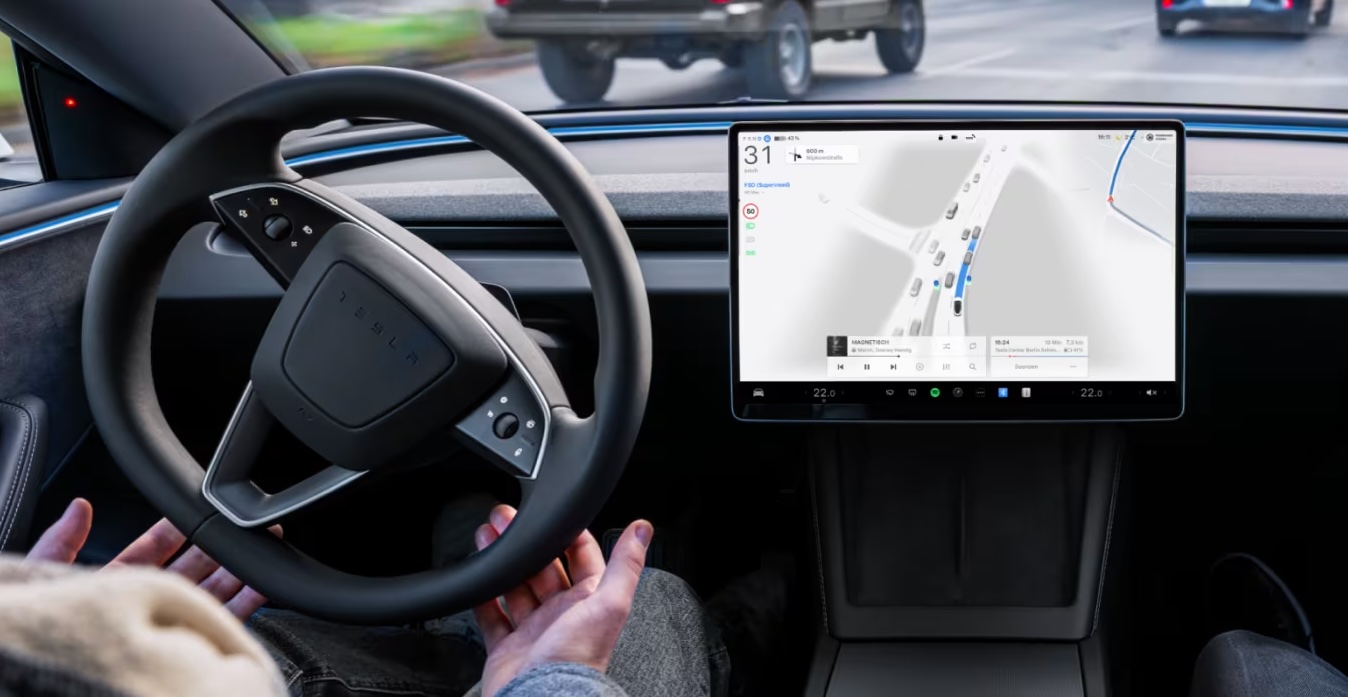
A new report from Reuters claims that a transport authority in Sweden is pushing back against the approval of Tesla’s Full Self-Driving suite because it will travel over speed limits.
The report says the Swedish Transport Administration (TRV) recommends the European Union votes against FSD’s approval. TRV believes it should not be approved until Tesla disables FSD’s ability to speed.
TRV sent a letter to the European Union’s Technical Committee on Motor Vehicles (TCMV), which is set to meet on June 30 to discuss the potential approval of the Tesla FSD suite in the country. Tesla, which has received various approvals in Europe over the past two months, has not provided a comment.
Teslas operating on FSD do travel over the speed limit, depending on the Speed Profile that is chosen. Drivers have the ability to disengage FSD at any point; Tesla specifically states that those supervising the suite are responsible for its actions.
Let’s cut to the chase: humans operating any vehicle speed almost daily in the United States. Realistically, speed limits in the U.S. are more frequently treated as speed minimums. However, other countries are different, and driving behaviors are less aggressive.
TRV believes that “allowing automated systems to systematically exceed legal speed limits…risks undermining both the legal framework and the expected safety benefits of vehicle automation,” the report stated. It’s surprising that Tesla has not received this claim from other countries previously.
This could be a good argument to bring Max Speed back, the setting that previously allowed the driver to choose the absolute fastest the car would travel.
This would still put the responsibility of supervision in the hands of the driver. It would allow the driver to choose whether the car would travel over the speed limit or not, acknowledging that they set the speed, and if they get pulled over, there would be no ability to argue it.
However, it does not seem as if this is something Tesla will do, especially considering many U.S. drivers have requested the feature in an effort to eliminate speeding or at least tone it down. The company has not shown any interest in bringing it back.
Tesla has approvals for FSD in Europe in Estonia, Lithuania, Denmark, the Netherlands, and Belgium.
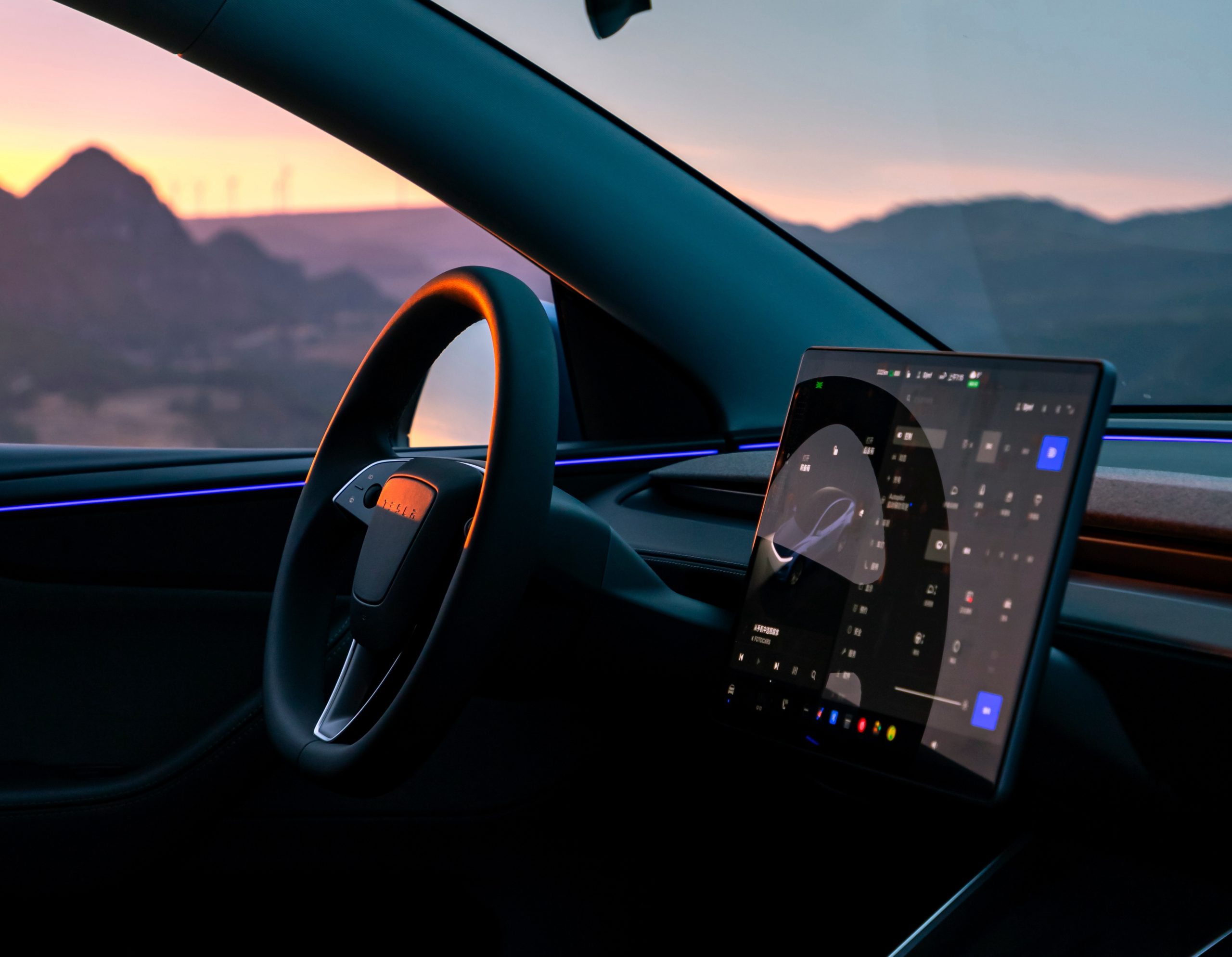
Tesla is going to let you guide Full Self-Driving with Grok in 3 months, CEO Elon Musk confirmed on X.
The response from Musk, which revealed Tesla plans to allow drivers to effectively control the car and its navigation more explicitly using Grok, puts the feature for about September.
A Tesla owner said that Full Self-Driving is great, but owners should be able to “converse with Grok like we can with an Uber driver.” She then used examples like, “Grok, turn right here,” and “Drop us off right here, we’ll walk due to traffic,” and finally,” Drop at entrance first, then park far away.”
Coincidentally, the final piece of dialogue would also mean features like Banish are potentially on the way soon.
This functionality will be there in about 3 months or so
— Elon Musk (@elonmusk) June 18, 2026
Banish is also referred to as “Reverse Summon,” and would enable the car to self-park while dropping occupants off at their destination.
This would be a great way to improve the overall experience while supervising FSD. Navigation is already a major painpoint that many owners complain about. Manual overrides when a maneuver is requested or canceled (like using the turn signal stalk to override a navigation route), do not always work.
The feature could be especially useful in street parking scenarios in a city, where spots are sometimes tough to come by. Many of us who grab dinner in a more populated area will park a street or two over from wherever we’re going, because sometimes you know that’s the best you will get. If a driver using FSD could say, “Hey Grok, turn right here on Queen St. and park in that open spot on the right,” it could save a lot of confusion FSD might have on its own.
Musk teased that a similar feature was “coming” back in February:
Tesla Full Self-Driving set to get an awesome new feature, Elon Musk says
It is certainly surprising that Tesla is doing it at this point. The company’s more recent moves have been more evident of taking control and inputs away from humans and putting them in the AI’s hands more frequently. The biggest example of this was taking away Max Speed in AI4 cars, giving us Speed Profiles, and not having any input on the fastest speed the car will travel.
Of course, giving navigation preferences to Grok is availble already in Teslas, but not at the drop of a hat. Instead, you can suggest a certain route at the beginning of your drive.
Here’s an example of that from December:
🚨🏈 I am taking my parents and Fiancee to the @Ravens game next weekend and asked @Grok to help me route my @Tesla through a specific neighborhood to reach the correct Lot we will park in.
This is a great example of the new @grok nav integration with the Tesla Holiday Update: pic.twitter.com/rPp4I7q8Yv
— TESLARATI (@Teslarati) December 13, 2025
Finally, the original post that Musk responded to mentioned a parking preference after dropping off the occupants, which describes the Banish feature that Tesla has teased for years.
We’re not sure if Musk was responding more to the ability to guide the car with Grok, or whether he also was including Banish in the three-month prediction timeframe.
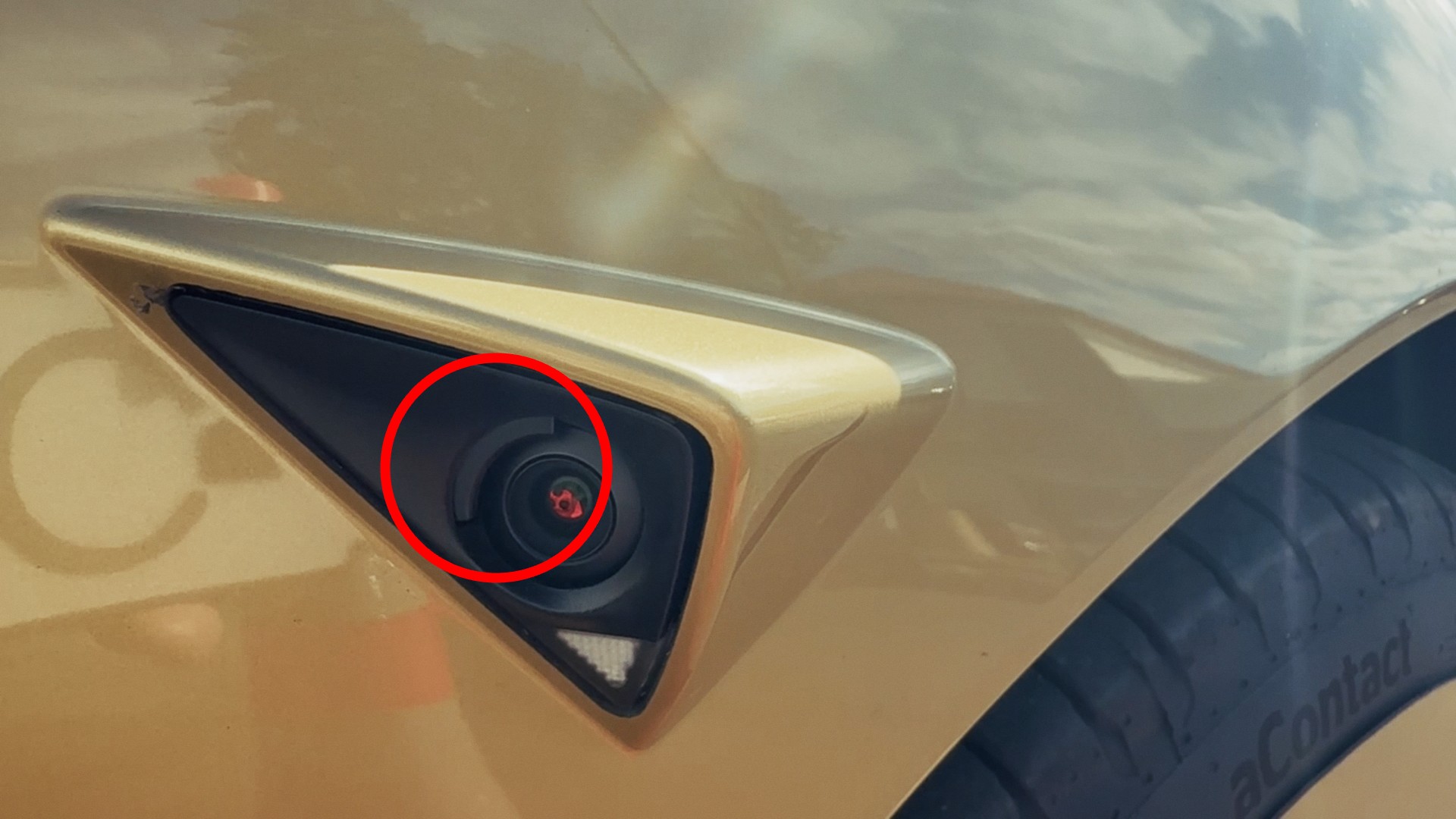
A close-up image of a Cybercab engineering vehicle in Peabody, Massachusetts, reveals a compact triangular side repeater camera housing equipped with an integrated washer mechanism.
This seemingly small hardware addition could prove to be one of the most critical components for achieving reliable, unsupervised Full Self-Driving (FSD) — not just for the dedicated Robotaxi but potentially for existing AI4-equipped vehicles as well.
The washer system’s importance cannot be overstated in Tesla’s vision-only autonomy approach. Cameras are the sole sensory input for the neural networks powering FSD, constantly interpreting the environment for safe navigation. In real-world conditions, however, lenses quickly accumulate rain, snow, mud, dust, or road spray.
Many of us Tesla owners, especially those who deal with any sort of winter weather at all, know the all-too-common alert that pops up when cameras are obstructed:
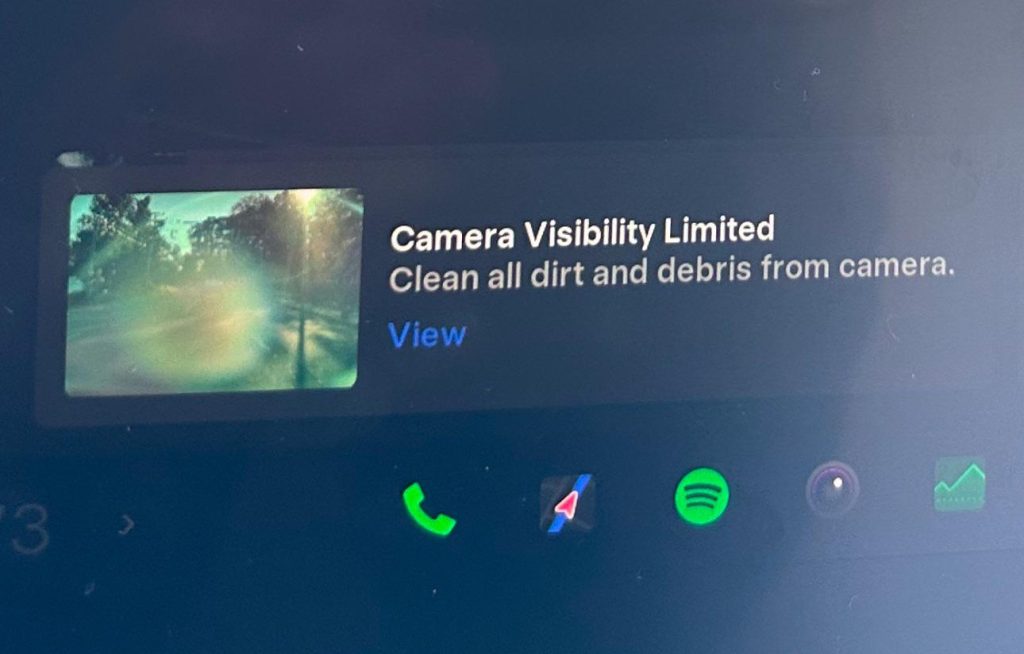
Even brief obstructions can drop perception confidence, trigger safety disengagements, or force the vehicle to pull over, although these are relatively rare. Instead, most of the time, the camera will need a wipe from the owner next time they stop the car.
But unlike human drivers who can manually clear their view, a Robotaxi operating 24/7 without a steering wheel or mirrors must maintain pristine vision autonomously. The Cybercab’s side repeater washer delivers targeted cleaning bursts precisely where needed for merging, lane changes, and blind-spot monitoring — functions that demand uninterrupted visibility from the external cameras:
And this is how the side camera and washer look like on a Cybercab. This is from an Engineering vehicle in Peabody MA. pic.twitter.com/Re8VknpmLM
— Tobias Goebel (Unsupervised) (@tpgoebel) June 17, 2026
This hardware directly tackles a known pain point in current FSD deployments. Owners frequently report camera-related alerts during inclement weather, which is understandable, but needs to be solved for a true autonomous experience.
For a production Robotaxi fleet aiming for high utilization and minimal downtime, robust washer systems represent a foundational reliability upgrade; essentially, they’re a must-have. Early sightings suggest the design may extend to rear cameras as well, creating a comprehensive cleaning architecture that keeps the entire vision suite operational in harsh environments.
Without it, even the most advanced neural nets struggle when their “eyes” are compromised.
What Does This Mean for AI4 Cars?
This Cybercab detail raises timely questions for AI4 cars already on the road. While Hardware 4 delivers superior compute and camera resolution compared to earlier versions, production models typically lack dedicated side and rear washers. Tesla has included them on Model Y robotaxis that it is using in the fleet:
Tesla Robotaxi has a highly-requested hardware feature not available on typical Model Ys
As Tesla refines unsupervised FSD for broader release, the gap in environmental resilience becomes evident. Software improvements can help mitigate issues, but they cannot fully replace physical cleaning in heavy rain or muddy conditions. Analysts and owners increasingly speculate that AI4 vehicles may eventually require similar washer retrofits — or a future AI4.5 variant — to match the Cybercab’s all-weather readiness and support the same level of autonomy.
As testing progresses, the Cybercab’s washer mechanism highlights Tesla’s pragmatic focus on real-world robustness. It may well become the hardware piece that determines how quickly and reliably FSD scales from prototypes to everyday vehicles.

Tesla faces Full Self-Driving pushback in EU over ‘speeding’

Tesla teases greater Grok FSD integration and ‘Banish’ feature ‘in about 3 months’


