News
Tesla files lawsuit against well-loved accessory maker over safety concerns

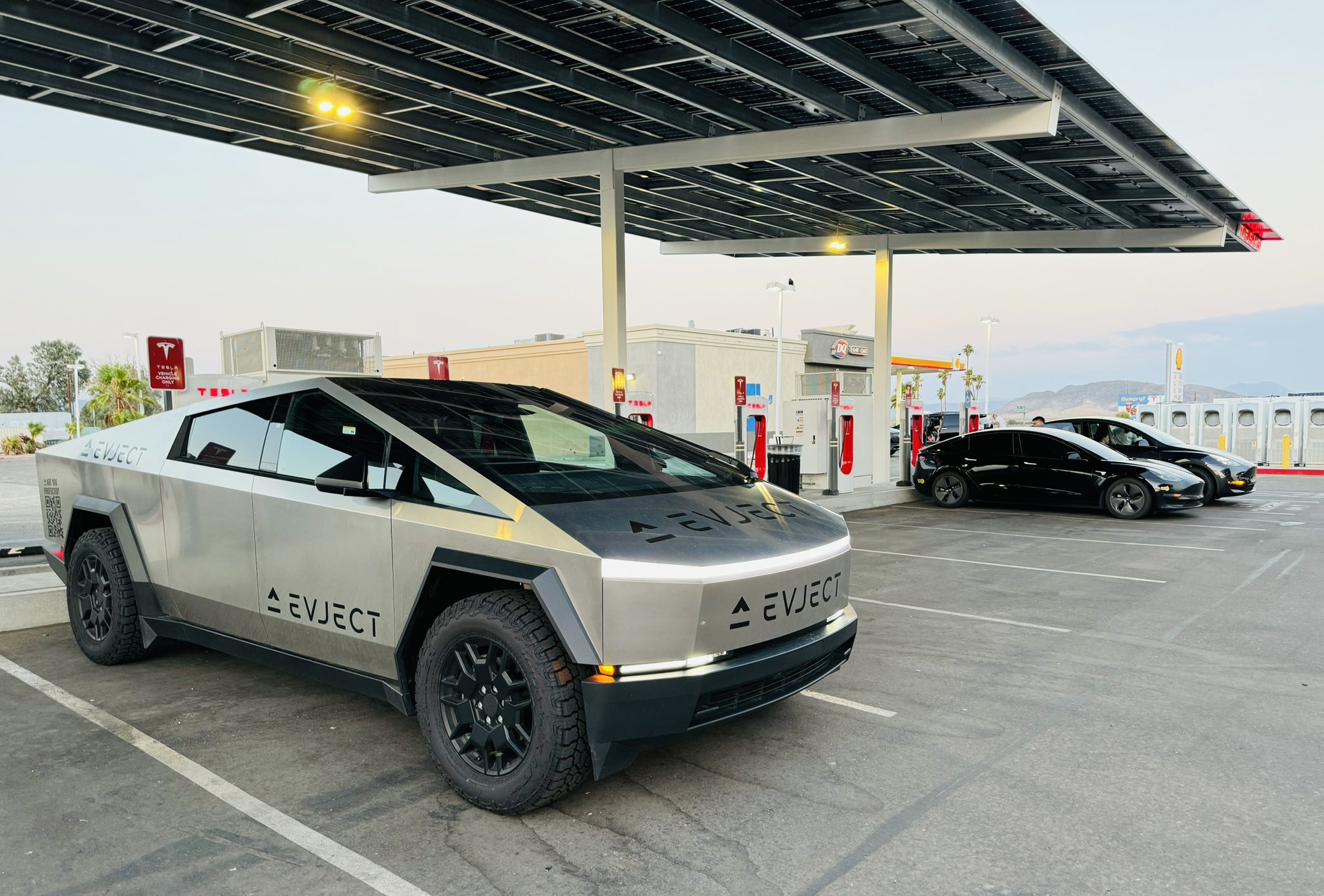
Tesla has filed a lawsuit against EVject, an aftermarket safety escape connector maker that’s received wide acclaim and appreciation from the electric vehicle community. In its complaint, Tesla claimed that the escape connector poses a high safety risk, and it has harmed Tesla’s brand.
Tesla operates the most expansive electric vehicle charging network in North America. Such a wide coverage means that some of these Supercharger sites are built in isolated places that may not necessarily be the safest at night. As per EVject, drivers could find themselves at risk during emergencies because Teslas cannot be driven away without the Supercharger plug being disconnected.
So glad to give you a new option to get away!
"My shadiest SC was in Shreveport, LA. I was the only one charging in the back of an abandoned mall parking lot with what seemed to be a drug deal going on about 100' away." from @sperlarky2116 on YT
Thanks @ItsKimJava
for all… pic.twitter.com/DlehkiRqOr— EVject (@EVjectOfficial) July 27, 2024
As per the product’s official website, the EVject device allows drivers to disconnect and drive away from a Supercharger without leaving their cabin. The connector’s breakaway feature also helps keep a Tesla’s charge port and the Supercharger plug from getting damaged during a getaway. EVject has thus become widely appreciated by EV owners, especially women and young drivers, some of whom have noted that some late night Supercharging sessions have made them feel unsafe.
Tesla, however, argued in its lawsuit that EVject is falsely marketing its product as safe, but the product’s lack of overtemperature protection creates a safety risk. As per Tesla’s lawsuit, which was filed in the US District Court for the Northern District of California:
Thank you @teslaownersSV and @SjvTesla for another epic @theXtakeover. Already excited for next year! pic.twitter.com/WXd9cs1hlM— EVject (@EVjectOfficial) July 29, 2024
“In the event of an over-temperature condition in the Connector, the lack of overtemperature protection creates a safety risk. Testing of high-current simulated charging through the Connector, utilized in conjunction with a Tesla Supercharger cable and Tesla EV charge port, demonstrated that surface temperatures of the Connector may reach as high as 100C, after 30 minutes of charging at 420 ADC.
“During an over-temperature event, a user of the Connector may be burned during (or following) charging by touching or grabbing the Connector. Additionally, the high temperature present in the Connector poses a risk of fire and ignition of other combustible materials in the charger cable, the vehicle connected to the Connector, and the Supercharger infrastructure,” Tesla noted.
We’ve already been working with several police departments and have already provided them EVject units for their EVs.— EVject (@EVjectOfficial) July 30, 2024
Tesla’s lawsuit against EVject has been received with polarizing reactions from the electric vehicle community. Some who support the EV maker’s legal action have noted on social media that EVject’s product pitch creates fear, uncertainty, and doubt. Supporters of the aftermarket escape connector, however, have argued that instead of suing EVject, Tesla should instead work with the aftermarket accessory maker to make sure that its product is safe.
Tesla, after all, has made a reputation for being an automaker that puts safety above all else. It would then be quite out of character for Tesla to throw down a product that helps protect drivers–especially one that does not have an alternative from the official Tesla Shop.
Don’t hesitate to contact us with news tips. Just send a message to simon@teslarati.com to give us a heads up.



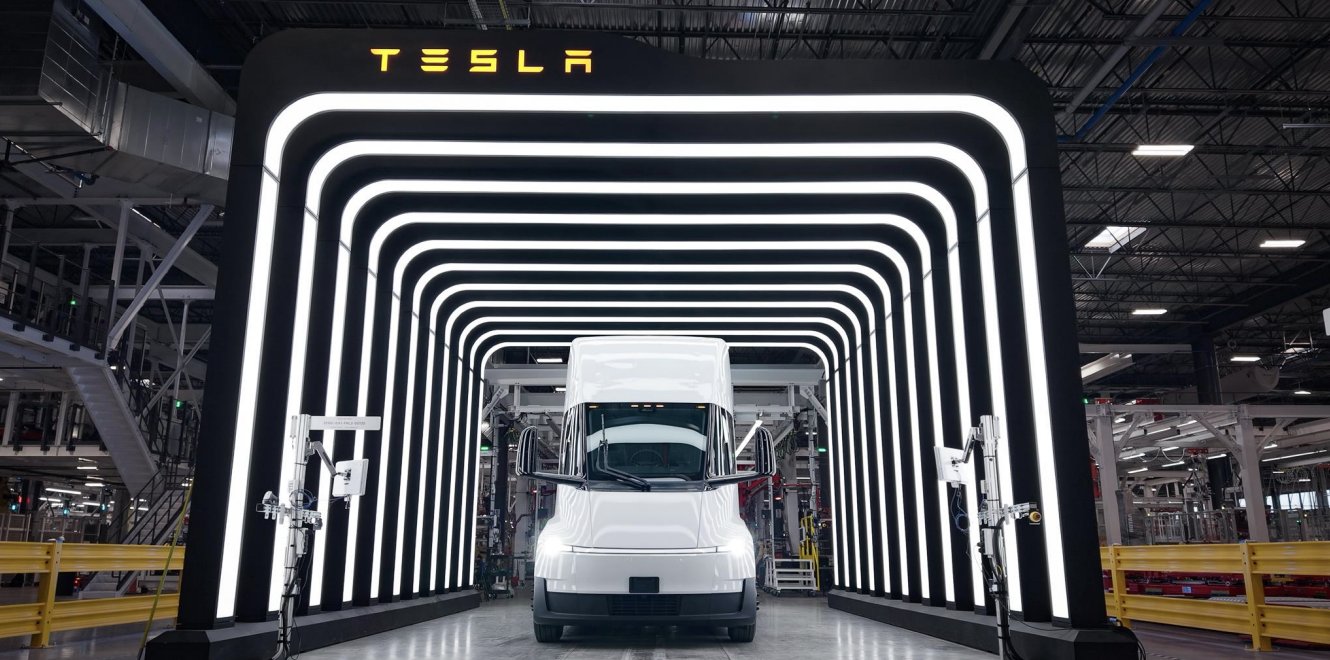
Tesla is advancing a fully automated pipeline for the 4680 battery cells used in its all-electric Semi, spanning production from Giga Texas through shipment and direct consumption on the line at the new dedicated Semi Factory in Sparks, Nevada.
The approach was outlined by Tesla at its September 24 Semi Handover event, which launched high-volume production at its new 1.8-million-square-foot plant in Nevada, which sits adjacent to Gigafactory Nevada and is designed for an annual production rate of 50,000 trucks per year.
After years of pilot builds and what was a four-year-long redesign of the truck, Tesla moved the Semi from 2170 batteries to its in-house 4680 cells, which are made in Austin. The change cuts battery mass and total energy while holding range, a key step in making volume production a realistic possibility.
Cells will leave Giga Texas in trailers, and at the Nevada Semi plant, Tesla intends for a dedicated line to unload those trailers automatically, station the cells, and feed them straight into pack and vehicle assembly.
🚨 Tesla plans to use a completely automated unloading process for cells coming from Giga Texas arriving at the Semi factory in Nevada
A line will “consume” cells from the trailer
The goal is to have zero human touch point throughout the entire process. Insane! pic.twitter.com/wdBFM8LC3F
— TESLARATI (@Teslarati) September 25, 2026
Both Lars Moravy, Tesla’s VP of Vehicle Engineering, and Dan Priestley, the Head of Tesla’s Semi program, described the goal as a “zero human touch point” from the moment the trailer arrives in Texas until a finished Semi drives off the production line in Nevada.
The unloading system that Moravy and Priestley described is just one piece of a much broader automation push. The plant uses what Tesla calls the highest-capacity electric monorail conveyance in vehicle manufacturing, carrying frames-in-white simultaneously. Powder-coating replaces conventional paint, and many processes that would normally require operators have been designed out.
Tesla has repeatedly said that “the best part is no part,” and the cell-handling plan extends that philosophy from the cell factory floor in Texas all the way to final assembly in Nevada.
If executed as described, the closed-loop flow would reduce labor, handling damage, and inventory buffers while tightening quality control on a component that represents a large share of the truck’s cost and weight. It also shortens the physical and organizational distance between two factories separated by more than 1,200 miles. The Semi itself now shares a bar-wound stator and other components with the Cybertruck, further linking Tesla’s passenger and commercial production systems.
High-volume output is expected to ramp gradually after the first trucks left the new line in April 2026. Early customers include PepsiCo, DHL, and U.S. Foods. Whether the automated trailer-to-line process reaches the promised zero-touch standard will be visible in the coming months as production scales. For Tesla, the Semi factory is another test of how far it can push “the machine that builds the machine” across sites.
Elon Musk
Elon Musk’s AI Grok Bot can now handle banking while your Tesla FSD handles the road
Elon Musk says Grok Bot can manage your finances through linked bank and investment accounts.

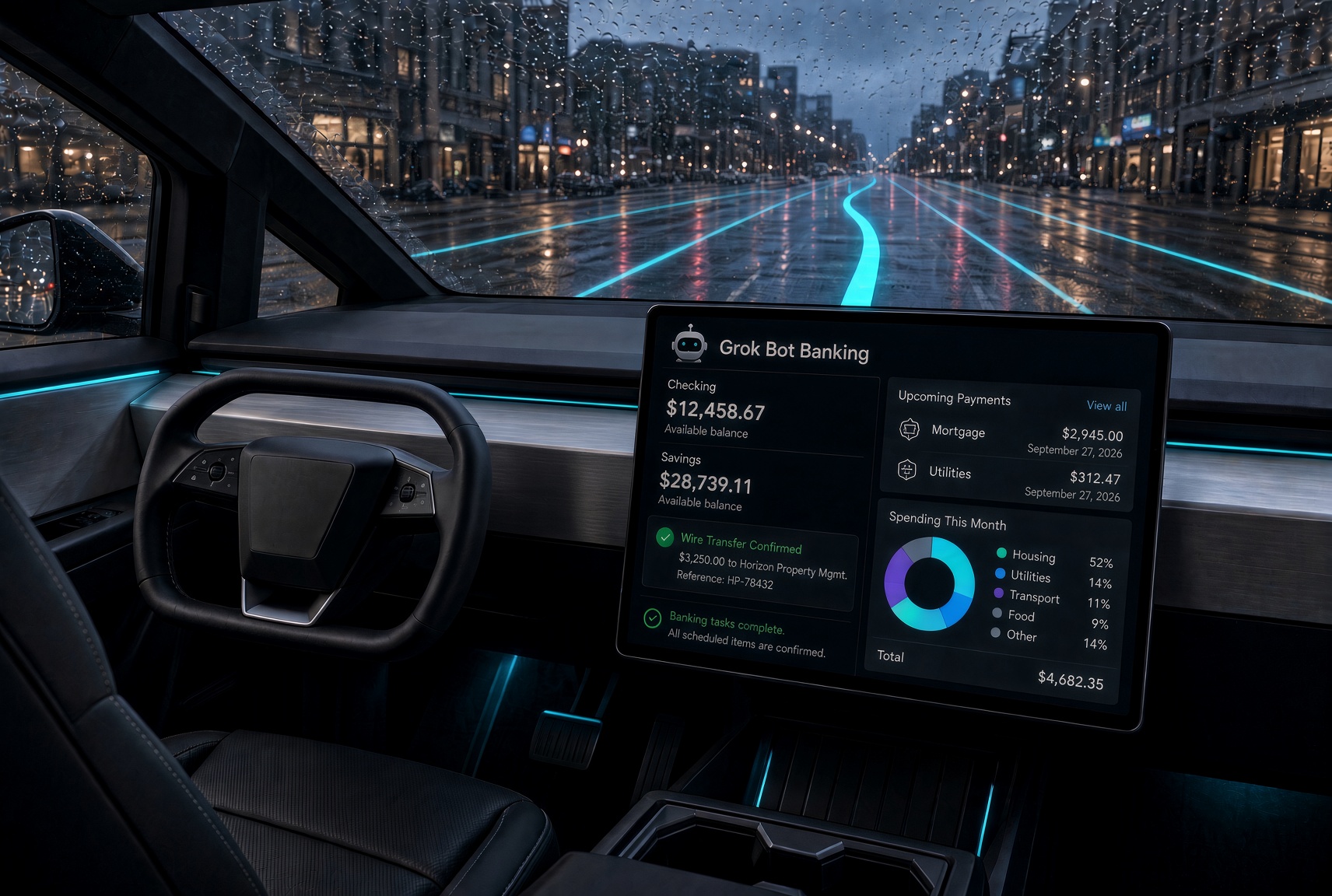
Grok Bot now wants access to your wallet, with SpaceXAI rolling out a new Finance integration for its agent platform that lets users link bank, credit card and investment accounts thereby letting their Bots help manage spending, investments and more. Elon Musk amplified the announcement on X with a short endorsement, “Grok Bot can manage your finances.”
The feature builds on two earlier steps. In early September, Grok gained the ability to answer questions about spending, savings, investments and cash flow using accounts connected through Plaid, starting with users in the U.S. Before that, on August 28, SpaceXAI let Grok Bot buy things online through Link, with users approving every spend request and the Bot receiving a single use card for each payment.
Musk has already shown how far he wants users to push it. In late August, when Tesla investor account Teslaconomics said he was weighing whether to give Grok Bot access to his bank accounts, Musk replied, “Try it out. If Grok Bot messes up, we will make you whole.” That promise goes beyond SpaceXAI’s consumer terms, which make users responsible for what their agents do and generally cap the company’s liability at the greater of fees paid or $100. SpaceXAI’s own documentation recommends requiring approval for purchases and financial transfers.
For Tesla owners, the update lands five days after Tesla brought Grok Bot into its vehicles, letting drivers hand off errands by voice while FSD (Supervised) handles the road. Bot access inside the car is currently limited to SuperGrok Heavy subscribers, though Connectors are open to anyone signed into Grok. With Finance linked, a driver could ask for a spending summary or a check on upcoming bills during the commute.
Grok’s role in the car has grown quickly since Tesla’s Summer Update let it control cabin features by voice. We have been using Grok Bot in our own Tesla for several weeks, and here’s how our latest test went.
Elon Musk
SpaceX just got the green light Starship has waited years for
The FAA has cleared Starship Flight 14, setting up SpaceX’s first orbital attempt on Monday.
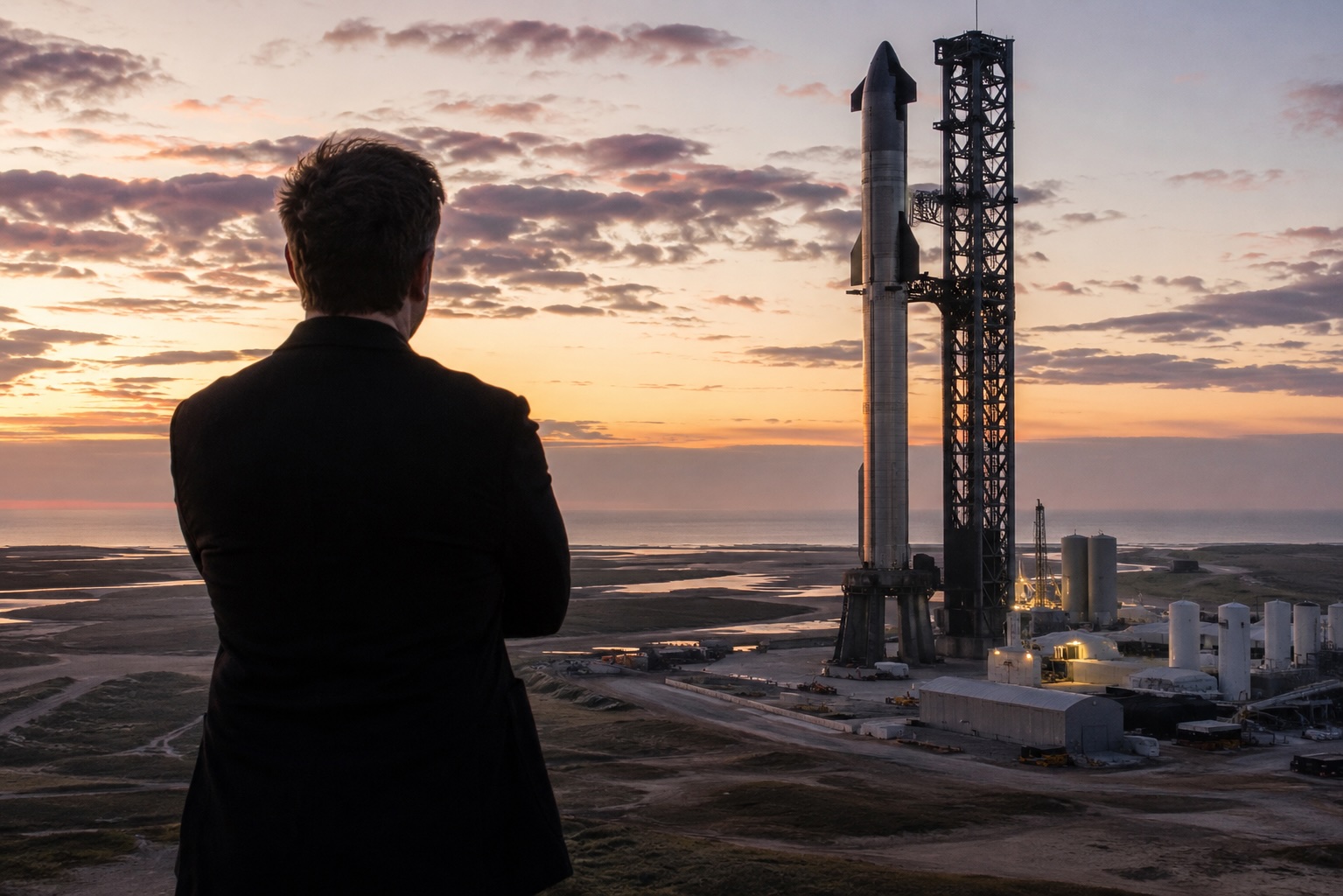
SpaceX has cleared the last regulatory hurdle standing between Starship and its first trip to orbit. The Federal Aviation Administration issued the launch license for Starship Flight 14 late Saturday, keeping the mission on track for liftoff Monday, September 28, from Pad 2 at Starbase, Texas.
The 75 minute launch window opens at 7:15 a.m. Central, and Boca Chica Beach closures are also scheduled for September 29 and 30 as backup dates. This will be Starship’s first revenue generating mission.
The license was the missing piece after SpaceX completed a full wet dress rehearsal with Booster 21 and Ship 41 on September 24. At the time, the company said the flight remained on track pending regulatory approval. Because Flight 14 flies an orbital profile, the FAA had to sign off on a modified license that met its safety, payload and financial responsibility requirements.
Observers combing through the new FAA paperwork also noticed that lightning no longer appears among Starship’s listed launch hazards. If that holds, it matters more for where Starship is headed than for Monday’s attempt. Florida and Louisiana, home to LC-39A and the planned Starbase Louisiana site, see some of the most frequent lightning in the United States.
SpaceX tells the FCC that Starship Flight 14 is going to orbit
Flight 14 is the mission SpaceX has been building toward for months. Ship 41 will carry 26 Starlink V3 satellites, the first operational V3 units to be deployed, and attempt roughly six orbits at about 275 kilometers over a flight lasting just under 10 hours. SpaceX says the ship will only perform its orbital insertion burn after flight controllers confirm enough hardware redundancy remains for the deorbit burn at the end of the mission. Ship 41 is targeting a splashdown in the Pacific west of Chile, while Super Heavy will return to the Gulf of Mexico.
The date carries some symbolism as well. A Monday launch would come 10 years and one day after Elon Musk first presented the Interplanetary Transport System, the design that became Starship, at the International Astronautical Congress in Guadalajara, Mexico.
SpaceX has not announced what comes next, but air traffic planning slides reported this week, list Flight 15 no earlier than October 19 and a first Starship launch from LC-39A in Florida no earlier than October 30. Both dates depend on how Monday goes.

Tesla has a ‘no human contact’ approach for Semi production

Elon Musk’s AI Grok Bot can now handle banking while your Tesla FSD handles the road


