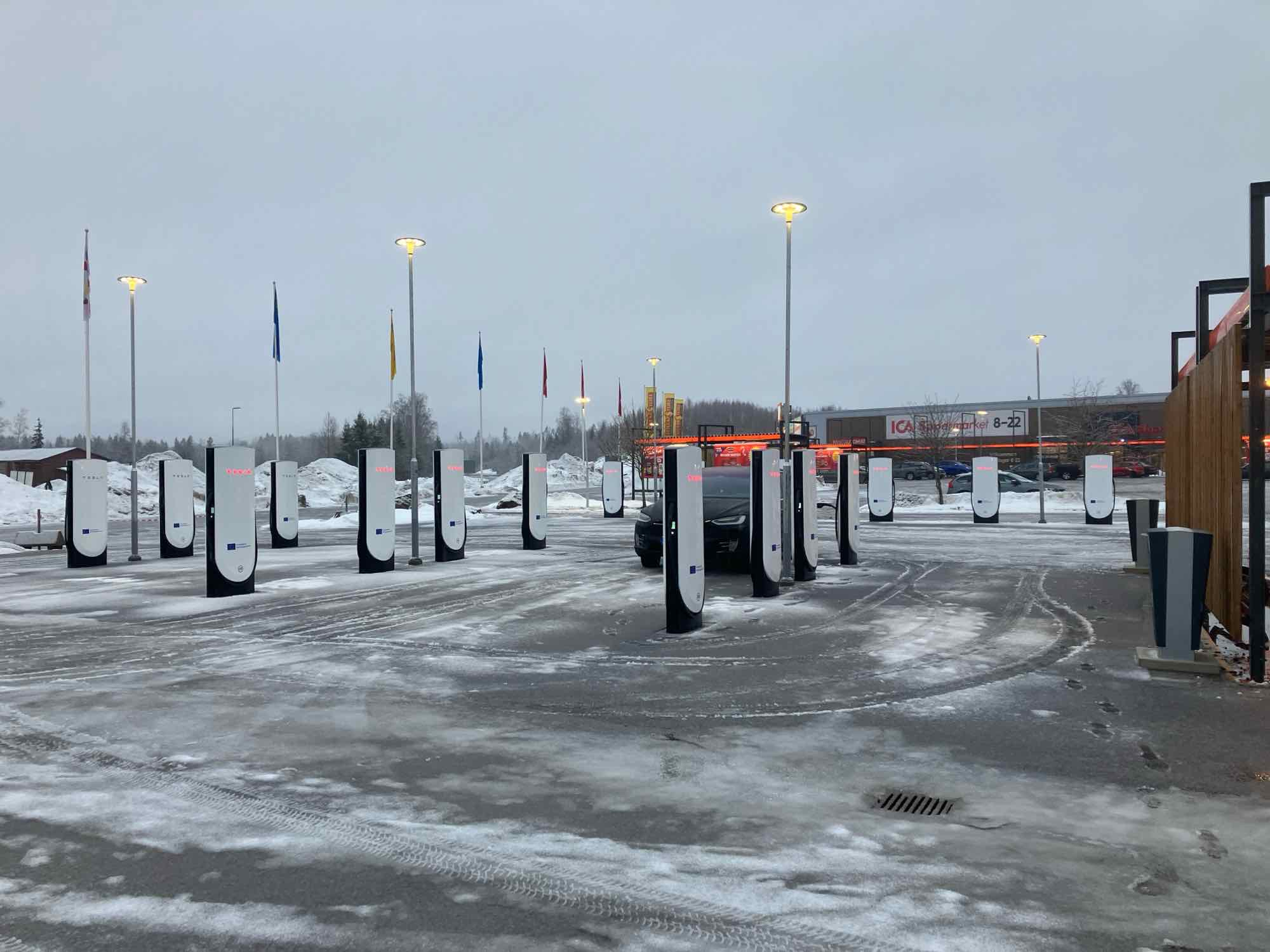

Tesla Sweden recently took a stand against union IF Metall using its Superchargers.
Tesla Sweden highlighted just how much the union’s actions and protests are inconveniencing everyone—even drivers outside the electric vehicle maker.
Tesla Sweden vs IF Metall
- IF Metall’s strike against Tesla Sween has been going on for over a year now.
- The EV maker is not just in conflict with IF Metall either, as other unions have implemented sympathy strikes to disrupt Tesla Sweden’s operations.
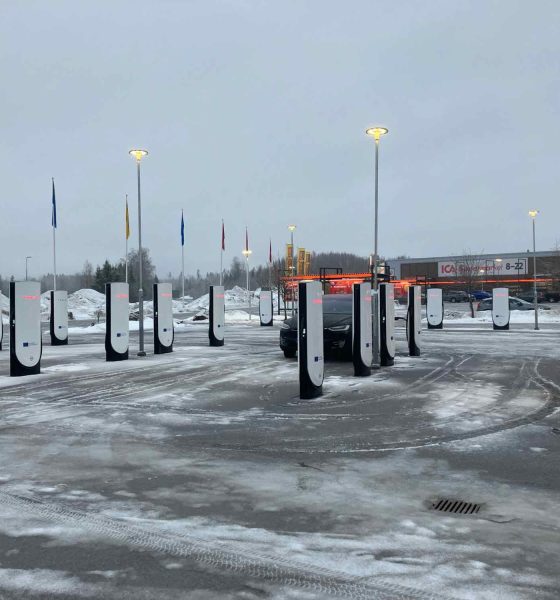
- As a result of these sympathy strikes, some Supercharger stations that have been built by Tesla remain inactive even if the sites themselves are completed.
- This was because some employees of companies responsible for connecting the Superchargers to the grid are forbidden from working with Tesla due to their collective agreements.
- There are currently five new, completed Supercharger stations with 72 stalls that remain inactive across the country.
Ready for Connection – But When?
A single Supercharger in Sweden helps avoid approximately 60,000 kg of CO2 emissions annually.
Today, there are more than 1,200 Superchargers across Sweden, and Tesla is eager to continue expanding the network to ensure smoother and more… https://t.co/G2izdxq9ij pic.twitter.com/EqT5rRpGiU— Nicklas ???T??♻️? (@NicklasNilsso14) December 20, 2024
Tesla Sweden’s jab
- In what appears to be a jab against IF Metall and its allies, Tesla opted to post a clear message on its completed but inactive Superchargers.
- “Here, all EV drivers could charge for emission-free travel, contributing to a sustainable Sweden,” Tesla wrote on its inactive Supercharger sites. The fact that the Superchargers are “Ready to Connect” was also highlighted.
- Other Tesla Superchargers featured a message stating that one Supercharger in Sweden helps avoid approximately 60,000 kg of CO2 emissions annually.
- Tesla also included a graphic of the company’s hedgehog mascot, which was wearing a vest that stated, “Thanks, I’m good.” The vest was worn by Tesla Sweden employees who did not participate in the union’s protests against the electric vehicle maker.
We're ready to turn on 72 Supercharger stalls for the holidays for all Swedish EV drivers. Superchargers are the most affordable charging, support all EVs, and are critical infrastructure to support peak travel days. Important for EV adoption in Sweden that current & future… https://t.co/fapfkHH3sp— Max de Zegher (@MdeZegher) December 20, 2024
A potential Tesla lifeline
- The refusal of local energy companies to connect Tesla’s completed Superchargers is reportedly under investigation by the Swedish Energy Markets Inspectorate, as noted in a report from Allt Om Elbil.
- As noted by the publication, local energy companies typically only deny the connections of installations like EV charging stations due to issues like lack of network capacity or other “specific reasons.”
- It then remains to be seen if IF Metall’s protests against Tesla qualify as valid “specific reasons.”
- The investigation is expected to be completed by spring 2025.
Between December to March, Ljusdal, located in central Sweden records over 1600 charging sessions per month, enabling emission free travel for drivers during the skiing season just off route 84. During this busy period, drivers often experience ques & last year, over 300 vehicles… pic.twitter.com/7iClQ0CT4V— Oliver Dodd (@Olliedodd) December 21, 2024
What they’re saying:
- Jerker Sidén, an analyst at the Energy Markets Inspectorate, shared some insights about the matter.
- “That’s what we are investigating. Historically, we haven’t had many cases about denied connections. This is what we’re assessing now,” the analyst noted.
- Tesla Director of Charging Max de Zegher also shared his thoughts on the matter in a post on X.
- “We’re ready to turn on 72 Supercharger stalls for the holidays for all Swedish EV drivers. Superchargers are the most affordable charging, support all EVs, and are critical infrastructure to support peak travel days. Important for EV adoption in Sweden that current & future Superchargers get energized asap by utilities currently blocking us from opening them,” the Tesla executive wrote.
Don’t hesitate to contact us with news tips. Just send a message to simon@teslarati.com to give us a heads up.



Give the gift of Tesla upgrades.
Shop for someone else or treat yourself. Get more shopping power with a Teslarati gift card.

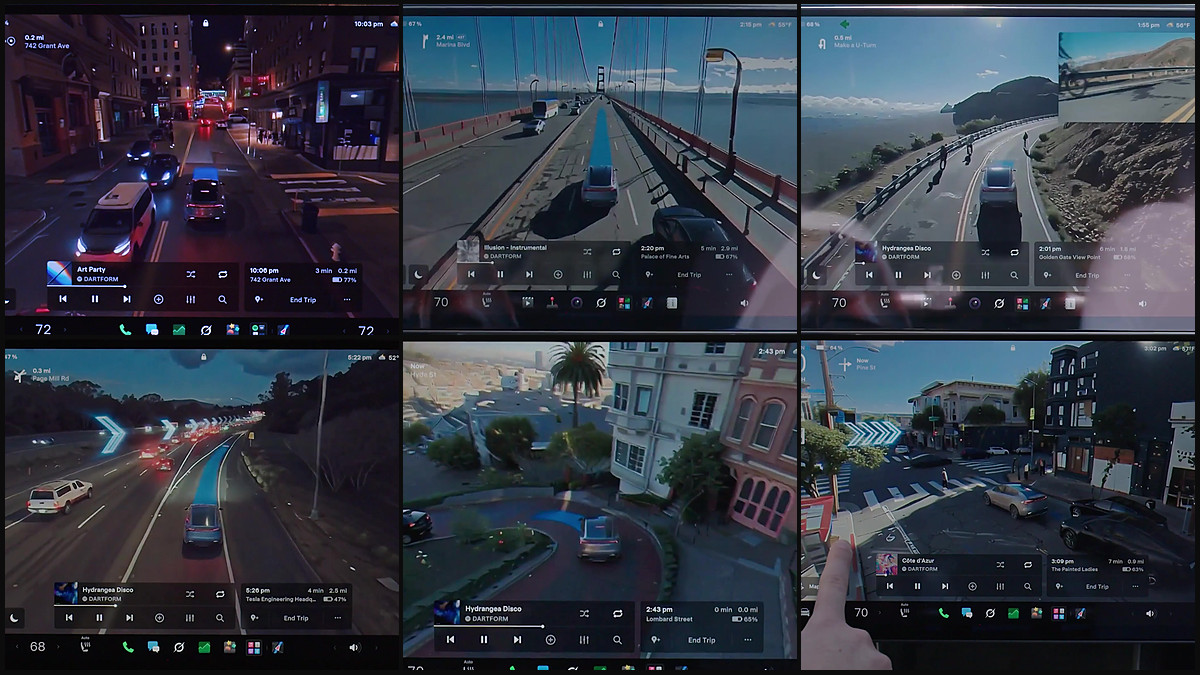
Tesla Full Self-Driving version 15’s biggest feature, “Reality View,” has one complaint, but in typical fashion, CEO Elon Musk already announced a solution.
Upon the release of the v15 Full Self-Driving suite on Saturday, one of the first impressions of the new Reality View feature is that there is a bit of input lag on the screen when dragging your finger to change perspectives. The rendering is also a fraction of a second behind what you would see out of your windshield.
Tesla Full Self-Driving v15: Reality View review, new features explained
Here’s my first impressions of the Reality View feature. You can hear me explicitly mention that it is not quite as responsive as past Driver Visualization techniques that Tesla has used:
🚨 Tesla Reality View – First Impressions https://t.co/uSTS94P8Qg
— TESLARATI (@Teslarati) November 22, 2026
Upon the initial impressions that we and many other Tesla owners put out, Musk was able to show that the company is aware of the slight latency in FSD v15, but it can be easily combatted.
He already has a solution that will resolve any lag or latency that is present:
“Currently, the latency is a bit high due to compute constraints, but we have ways to interleave newer UVE features along the diffusion transformer layers to cut roughly 35% of the latency.”
The primary near-term fix does not require new hardware. Tesla plans to interleave newer UVE features along the layers of the diffusion transformer. By injecting fresher encoder data deeper into the denoising process rather than relying solely on earlier features, the model can converge on accurate visualizations faster.
Musk estimated this change will cut roughly 35 percent of the latency.
Reality View is produced by a roughly 1-billion-parameter diffusion model that runs separately from the main driving stack. It draws on the same sequence of Tesla Universal Vision Encoder (UVE) features used by the larger 3-billion-parameter model that outputs driving actions. The system takes the previous Reality View frame, adds noise, and denoises it into the current visualization.
It generates short video chunks, eight images at 36 frames per second at UI-screen resolution, using half of one TRIP accelerator engine, processing every UVE frame at 18 Hz and spreading the work across four cycles.
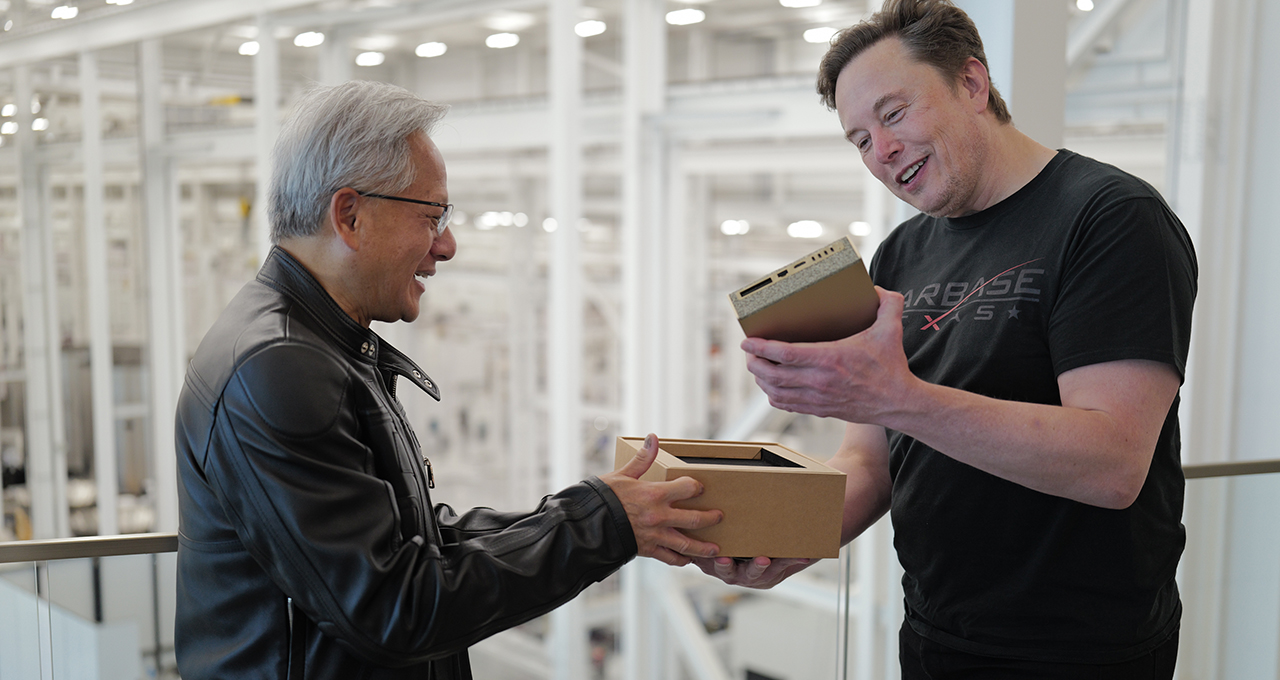
Tesla and SpaceXAI CEO Elon Musk has reacted to Jensen Huang’s return to NVIDIA as President, CEO, and Board Director, a move that Musk has been calling for since Huang was removed by the chip maker’s board.
“The mistake has been corrected,” Musk said as NVIDIA announced in a press release this morning that it would reinstate Huang as President, CEO, and Board Director:
The mistake has been corrected
— Elon Musk (@elonmusk) November 23, 2026
NVIDIA said that it “believes Jensen is the right person to lead NVIDIA, and that his reinstatement is in the best interests of our stockholders, employees, partners and customers,” according to Harvey C. Jones, Chair of the Board.
Huang said he was “honored” to return to the company and said he take his role “with the greatest humility and renewed commitment.”
After Huang was accused of having an affair with a Chinese spy and selling chips to China illegally, he was removed from NVIDIA’s CEO, President, and Board Chair role. This decision was met with a lot of pushback from NVIDIA’s partners, including Tesla and SpaceX, both of which utilize NVIDIA products for its SI efforts.
NVIDIA said it has recently formed a National Security and Export Control Committee to “oversee trade compliance and national security risks. The committee is engaging counsel with experience in national security matters, and such counsel will be retaining advisors with expertise in national security matters.”
The search for a Chief Compliance Officer is also underway, the company said in its release.
The broader implications for Tesla and SpaceXAI as Jensen’s return is now official are positive. Musk and Huang have a great relationship, so their partnership momentum sees a lot of benefits from his reinstatement. Additionally, SpaceXAI is building AI compute exclusively on NVIDIA GPUs.
Musk has said on various occasions that Huang is the best option for NVIDIA, stating that “there’s no one that can really replace Jensen.”
The biggest win for the three parties in the near-term is supply and delivery certainty is now restored. With proper management and Huang’s guidance, it is hard to believe NVIDIA will not pick right back up where it left off.
This gives Tesla and SpaceXAI time for their own chip efforts, and also keeps them locked into what Musk’s views as the leading architecture versus going to competitors or alternatives.
However, there are still some risks and uncertainty, especially considering the underlying investigations into Huang continue, and any residual national security scruitny could complicate government-related work or exports.
Elon Musk
Tesla’s Unsupervised FSD future likely to bring Starlink to every model
Elon Musk says every Tesla could get built-in Starlink next year, and AI4.5 is changing.

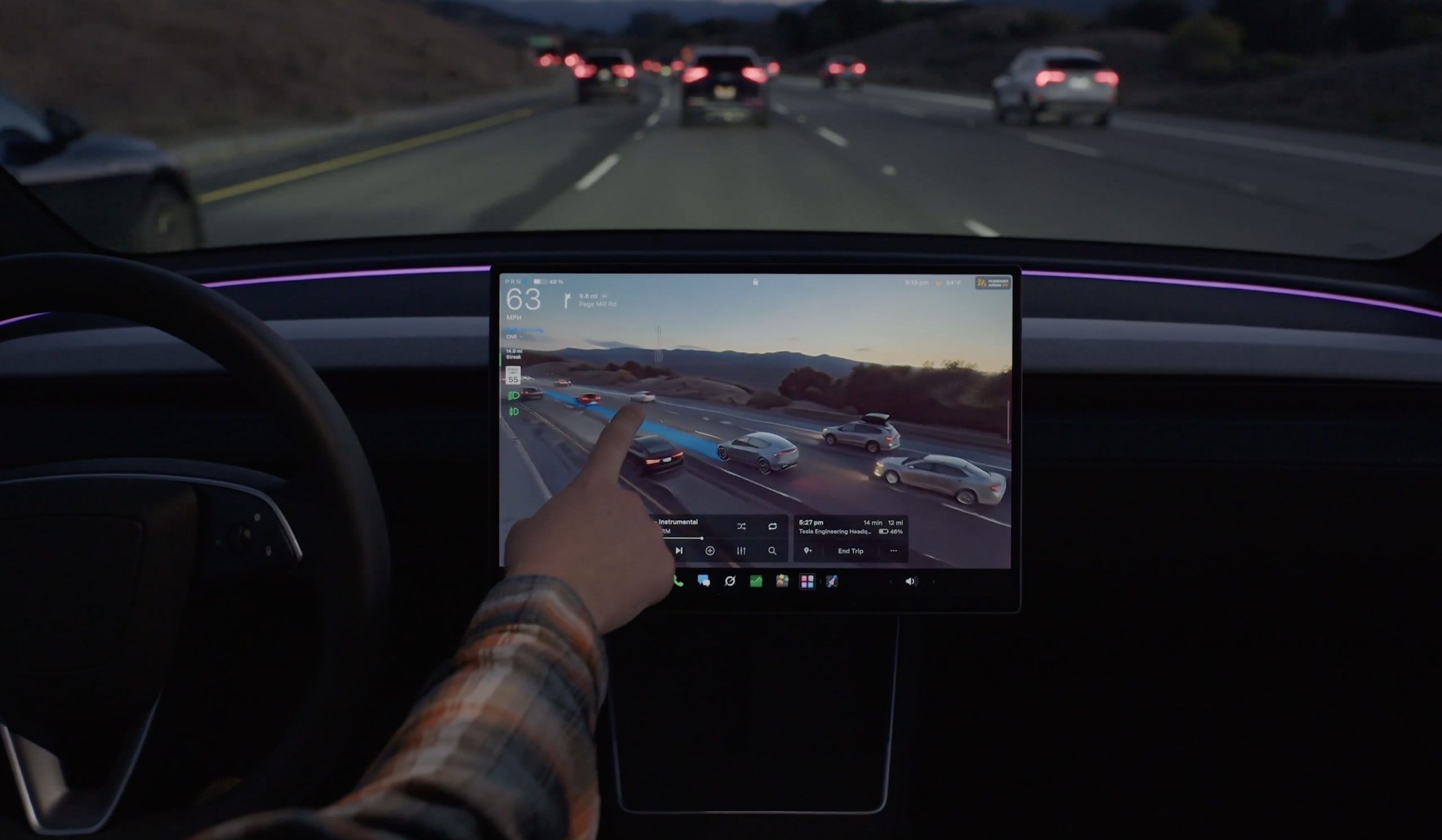
Elon Musk says Starlink could be built directly into every Tesla model by the end of next year, and he is tying it to the company’s push toward unsupervised Full Self-Driving. Replying on X Sunday to PayPal co-founder David Marcus, who said he could not wait for an embedded Starlink option beyond the Cybercab, Musk wrote: “Hopefully available towards the end of next year. This will be important for unsupervised FSD, so passengers have high bandwidth everywhere for work and entertainment.”
He added one exception: “Except in China, as Starlink is illegal there.”
The Cybercab is the only Tesla with Starlink today. The two-seater carries a flush-mounted Starlink V5 terminal on its rear hatch, and the newest units began giving public rides in Dallas this week. Riders do not yet appear to be able to connect to it, and Tesla AI chief Ashok Elluswamy has said the link is used mainly for navigation, customer service and fleet management rather than safe driving, as Teslarati reported. Musk’s comments suggest passenger connectivity is part of the plan once the hardware spreads to the rest of the lineup.
The timing lines up with Tesla’s goal of letting owners add their own cars to its Robotaxi network. Musk said last week that trials could start as soon as next month, as Teslarati covered, and the company began rolling out FSD v15 to customers on Saturday. Tesla says the release is 25 times better at handling safety critical cases than v14, according to its release notes.
Musk also shared new details on Tesla’s next vehicle computer. “AI4.5 is a relatively small performance improvement that is mostly due to needing to upgrade RAM to LPDDR5X,” he wrote in a reply to Sawyer Merritt. In a follow-up post, he said Tesla had trimmed the memory to save money: “RAM is super expensive, so we reduced AI4.5 from 32GB to 24GB. That will be fine. It’s hard to use 32GB anyway, given memory bandwidth constraints.”
That marks a change from earlier this year, when Musk said on Tesla’s first quarter call that an interim upgrade would double RAM on each chip from 16GB to 32GB. Memory prices have climbed sharply as AI data centers absorb supply, and Musk said Sunday that “AI4 costs twice as much now due to memory and storage price hikes.” He also confirmed the next generation chip will not go into cars for now. Asked when AI5 would arrive in new vehicles, he replied, “It’s going to Optimus. Cars will remain at AI4. That’s enough to solve superhuman driving.” He has said AI5 has roughly 12 times the compute of AI4.
Musk also gave a rare look at how the v15 driving software is built. Tesla has had “a ~pixel-perfect world model since last year, which is critical for synthetic data generation,” he wrote, while “the (much) smaller version of that in the car is a conditional mean-flow model, based on the recent sequence of Tesla Universal Vision Encoder.” In practice, Tesla trains on a large model that can generate realistic driving scenes, then runs a compact version that predicts what happens next from recent camera input.
Tesla has not said which vehicles will get AI4.5 or when, and Musk gave no price for adding Starlink to cars outside the Cybercab.

Tesla FSD v15’s ‘Reality View’ has one complaint and Musk has the solution

Tesla and SpaceXAI CEO Elon Musk reacts to Jensen Huang’s NVIDIA return


