Investor's Corner
LIVE BLOG: Tesla (TSLA) Q1 2025 Company Update and earnings call
The following are live updates from Tesla’s Q1 2025 earnings call.

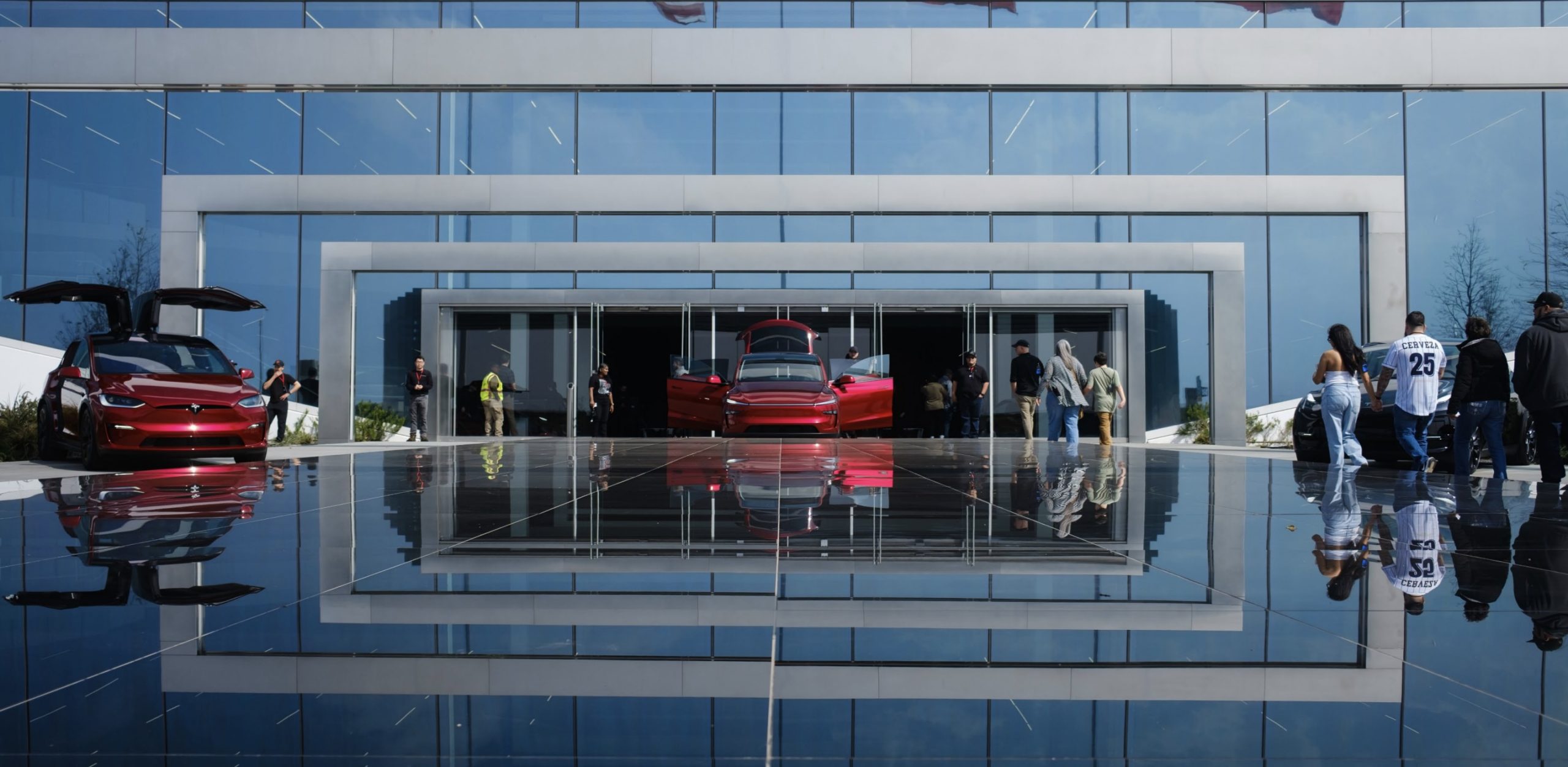
Tesla’s (NASDAQ:TSLA) Q1 2025 earnings call comes on the heels of the company’s Q1 2025 Update, which was released after the closing bell on April 22, 2025.
Tesla’s Q1 2025 Results:
- Total Revenues: $19.3 billion
- Total automotive revenues: $13.967 billion
- Total GAAP gross margin: 16.3%
- Gross Profit: $3.15 billion
- EPS non-GAAP: $0.27 per share
- Free cash flow: $664 million
The following are live updates from Tesla’s Q1 2025 earnings call. I will be updating this article in real time, so please keep refreshing the page to view the latest updates on this story.
16:20 CT – Hello, and happy earnings day to everyone! While Tesla missed the Street’s expectations, the stock has not shown its typical volatility at all. That being said, this earnings call is quite interesting due to the upcoming “Company Update.”
Tesla also reiterated its section about new vehicles that “remain on track for start of production in the first half of 2025” in its Update Letter. What are these vehicles? Just variants of the Model 3 or Model Y? Was the Cybertruck LR RWD one of them already? Or are they actually new cars that we’ve just never seen before?
Either way, ten minutes and counting.
16:27 CT – Now I’m just curious if the Company Update will be a video. The thumbnail Tesla is using on X and YouTube shows an “Audio Webcast Only” graphic though. Three minutes and counting.
16:28 CT – And there’s the music. Wonder if it’s going to be on time.
16:34 CT – Annd we’re now on the Elon time threshold. Tesla stock is actually up 4% in after-hours today. Pretty nutty considering that the Q1 earnings are a miss.
16:36 CT – The earnings call is formally starting. Here we go.
Elon Musk takes the stage. “There’s never dull moment these days,” he said. He admits to the blowback from his work with DOGE. He also admitted that those against DOGE are bound to attack him and his companies, such as Tesla. Musk reiterates his belief that it’s important to fight waste and fraud. “I think it’s critical work,” Musk said.
16:40 CT – Musk discusses the protests against Tesla. He alleges that the protests are not organic. “The actual reason for the protests is that those who are receiving the waste and fraud want to continue receiving the waste and fraud,” he said.
Musk notes that starting next month, in May, his time allocation for DOGE will drop significantly. He will continue to spend a day or two on government matters or as long as the U.S. President wishes him to. “Starting next month, I will be allocating more of my time with Tesla,” Musk stated.
16:43 CT – Musk noted that Tesla is no stranger to challenges, but Tesla has been through the ringer several times in the past. “We’re not on the ragged edge of death….not even close,” he said.
He also highlighted that Tesla is on the cusp of autonomous cars and autonomous humanoid robots. Musk expects unexpected bumps this year, but he remains confident on the future of Tesla. The idea of Tesla potentially being the most valuable company in the world by far was reiterated. “Maybe as valuable than the next five companies combined,” he said.
“We expect to be selling fully autonomous rides in June in August,” Musk stated. He also stated that autonomy in cars will affect the bottom line by mid-2026.
16:47 CT – Musk discusses Tesla’s supply chain, highlighting that Tesla is the least affected automaker by the Trump tariffs. That being said, Tesla has been working to localize its supply chains for years. He admitted that tariffs are tough on companies where the margins are so low. Musk also clarified that he continues to advocate for lower tariffs, but that’s all he can do. Trump has the decision.
“The tariff decision is entirely up to the President of the United States. I will weigh in on the decision, but its primarily up to the President. I continue to advocate for lower tariffs rather than higher tariffs,” Musk said.
16:50 CT – Musk noted that he would now explain why he is very excited for Tesla’s future. He noted that Tesla is laser-focused on bringing autonomy in June in Austin, Texas. He highlights Tesla’s general approach to autonomy.
“We have a general solution (to autonomy) rather than a specific solution,” Musk said.
He also noted that Tesla expects to use thousands of Optimus robots in its factories this year. He expects Optimus’ ramp would be one of the fastest. By 2030, or 2029, a million Optimus per year is plausible.
16:52 CT – Musk highlighted that the Tesla Energy unit is doing very well. “We expect the stationary energy storage to scale to terawatts per year,” he said.
16:54 CT – Musk stated that Tesla chose to update the Model Y in Q1 because the first quarter tends to be the weakest. People do not usually buy a lot of cars in winter, after all. He highlighted that the Model Y is the world’s best-selling cars.
“We picked Q1 to cut over to the production of the new Model Y…at the same time in factories across the world,” Musk stated, adding that, “In conclusion, while there are many headwinds, the future of Tesla is brighter than ever.”
He thanks the Tesla team and stated that he is looking forward to leading the team.
16:56 CT – Tesla CFO Vaibhav Taneja takes the stage. He explained the company’s reduced vehicle deliveries, which were caused by the changeover to the new Model Y across its factories. He also noted that the negative effects of vandalism and unwarranted hostility towards Tesla and its staff affected sales in some areas.
The CFO noted that even with these challenges, Tesla was able to sell out legacy Model Y in Q1. “We have an extremely competitive vehicle lineup and after that we have FSD,” he said.
17:03 CT – Taneja noted that the Powerwall 3 has been received well by customers and Tesla is currently supply constrained.
He also discusses the effects of tariffs, though he highlighted that Tesla is a very American automaker. Tesla is not immune to the tariffs, but the company could navigate the challenging landscape better than other automakers. That said, Tesla’s US lineup complies with USMCA by 85%. The company is working on non-China battery suppliers as well.
17:06 CT – Say Questions begin. First up is a question about the highest risk items on the critical path to robotaxi launch and scaling. Elon stated that robotaxis in June in Austin will be comprised of a Model Y fleet.
“Teslas that will be fully autonomous in Austin will be Model Ys,” Musk said, adding that Tesla’s paid autonomous rides will be coming to other cities later this year. “I predict there will be millions of Teslas operating fully autonomously in the second half of next year [in the US].”
Musk did state that there will be some localized parameters for Tesla’s paid autonomous rides in different regions, like snowy areas. A good driver in California won’t be as good in the middle of a blizzard in winter, after all.
17:09 CT – Ashok Elluswamy, VP of Autopilot/AI Software at Tesla, noted that localized parameters still follow Tesla’s general approach to autonomous cars. He also highlighted that validation is still critical for robotaxi operations. In Tesla’s factories today alone, there could be many days without interventions, making it hard to figure out if FSD Unsupervised is working as intended.
Musk and Taneja joked that Tesla customers in China are really pushing FSD to its limits. People in China “putting [FSD] to the real test,” Musk stated.
Cybercab is also in sample validation now, and it’s still scheduled for production next year.
17:12 CT – Another question is asked, this time about when FSD Unsupervised will be released. “Before the end of this year” in the United States, Musk stated, adding that FSD Unsupervised must be meaningfully safer than human drivers before it is released.
17:15 CT – A question about Tesla’s new cheaper models is asked, and if the company is focused on simplified versions to enhance affordability, similar to the RWD Cybertruck.
Tesla VP of Vehicle Engineering Lars Moravy noted that these cheaper vehicles are still on track. The ramp is slower than we hoped but nothing is blocking the company from initial production.
17:21 CT – Another question is asked, this time about how FSD Unsupervised will compete against Waymo’s offering, especially regarding pricing, geofencing and regulatory flexibility.
“The issue with Waymo’s cars is that it cost waayy more money,” Musk joked. He also stated that Teslas cost a quarter or 20% what a Waymo cost, and the company’s vehicles are made in large volume.
Musk predicts 99% market share for robotaxi unless other companies can deploy the same amount of vehicles on the roads as Tesla. “I don’t see anyone being able to compete with Tesla at present,” he stated.
By the end of the year Musk is confident that the Model Y will drive itself all the way to the customer autonomously from the factory.
17:25 CT – A question about the unboxed method and how that is progressing was also asked. Tesla notes that the company’s unboxed process is progressing. “You’ll see it on tests and roads in the coming months.” Tesla is also focused on improving the method, like marrying sub-assembly areas together. “This is a revolutionary production system,” Musk noted.
When describing the Cybercab line, Musk stated that “it will ultimately achieve a cycle time of 5 seconds or less.” So far, Tesla is fastest at 33 seconds in Giga Shanghai.
17:29 CT – A question about tariffs and political biases was asked. The executives noted that Tesla is very localized already. Localization for Tesla is 85% in North America and 95% in China. “We’re ridiculously vertically integrated,” Musk stated.
Tesla makes lithium, cathode and cells. Only thing left is the anode. Musk also stated that Tesla’s in-house cells are the most competitive.
17:34 CT – A question was asked if Tesla has battery supply constraints. Tesla executives noted that while tariffs pose a challenge, Tesla is prepared to face it. Tesla is also not battery constrained for vehicles.
17:36 CT – Another question was asked, this one about “brand damage.” Executives highlighted that Q1 was all about the new Model Y changeover, and the company is still dominating its segments. “Tesla is not immune to the macro demand for cars,” executives noted.
17:39 CT – A question is asked about Optimus’ production line. Musk noted that Optimus is still in development, so most of its production will be at the end of the year. He also noted that most things for Optimus production is new, so it’s ramp has its challenges.
Musk noted that Optimus is affected by the Trump administration’s tariffs against China since the humanoid robot uses robots from the country. Elon Musk also reiterated the idea that Tesla will produce 5,000 Optimus robots this year.
17:40 CT – Analyst questions begin. Pierre Ferragu of New Street Research discussed the market share of Tesla’s cars. Musk noted that “the reality is in the future most people aren’t going to buy cars.” The CEO recalled that when the iPhone came out, veteran phone makers like Nokia opted to continue making legacy products. Consumers, however, wanted the most intelligent product available.
17:43 CT – Emmanuel Rosner from Wolfe asked about the FSD and its required number of human interventions. What still needs to happen for FSD to be Unsupervised? Tesla noted that it is aware of aware of the interventions happening in public FSD, and the robotaxi service rolling out in a couple of months will be focused on key areas. “We really working through a long tail of unusual interventions,” Tesla executives noted.
When asked if Tesla will need remote operators, Tesla noted that the robotaxi service in Austin will use use them, but only if absolutely needed.
17:46 CT – Edison from Deutsche Bank asked how Optimus’ supply chain will look like. Musk noted that Tesla is focused on localization, especially considering geopolitical uncertainty. The analyst followed up with the number of robotaxis in Austin in June. Musk noted that Day 1, there will probably be 10 cars to observe.
17:49 CT – A Cannaccord analyst asked about FSD pricing. Tesla executives noted that people who bought FSD typically believe that FSD is too cheap, especially its monthly subscription. Granted, FSD is insistent that drivers pay attention to the road, which affects the pricing. But when FSD is already fully unsupervised, that monthly fee will feel very affordable.
When asked about the Indian market, Tesla explained that India is a very hard market because of its taxes.
17:53 CT – Colin Langan from Wells Fargo asked about Tesla’s vision based approach and how the company plans to get around issues like sun glare and dust. Musk noted that Tesla uses Direct Photon Counting to see clearly through fog, dust, and sun glare. With this, Teslas can drive directly facing the sun or in extremely dark environments.
The analyst asked if the affordable cars will just be a cheaper Model Y. In response, Lars Moravy noted that Tesla is using its existing lines, limiting the design of the cheaper model. The new cars will depend on existing lines, so least their form factor will be familiar.
17:57 CT – Adam Jonas of Morgan Stanley asked about the Trump tariffs. Musk highlighted that he is just one of many advisers, and he does not make decisions. “I am an advocate for predictive tariff structures,” Musk noted.
As a follow up, Jonas asked if Musk believes the US or China is ahead in the development of AI humanoids and drones. Musk laughed and noted that it’s obvious which one is ahead in drones. America sadly cannot manufacture its own drones, and China holds a notable amount of the supply chain. Musk highlighted that US should not depend so much on China to make drones.
He noted that Tesla and SpaceX will be at the top of companies’ rankings, but he is apprehensive that ranks 1 through 10 will all be Chinese companies.
18:02 CT – And that wraps up Tesla’s Q1 Company Update and earnings call! Tesla really answered a lot of questions in this call, making it one of the longest Q&A sessions to date.
With that, till the next time, everyone!
Tesla’s livestream of its Q1 2025 Company Update and earnings call can be viewed below.


Elon Musk
OpenAI cites distrust of SpaceX in decision to drop Cursor partnership
OpenAI will cut SpaceX-owned Cursor’s model access in November, citing Musk’s history of broken contracts.

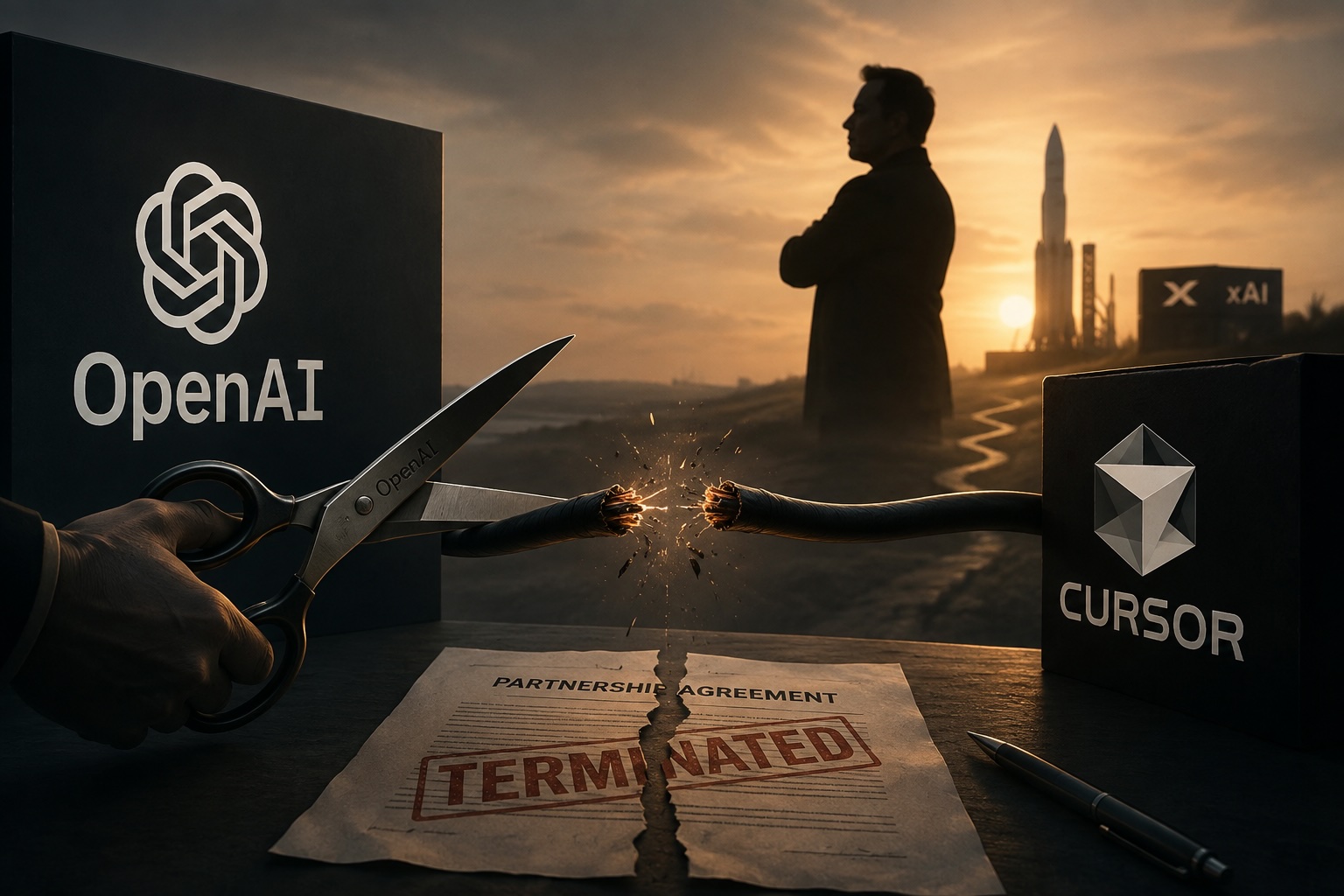
OpenAI, the company behind ChatGPT, announced late Friday that it is ending its partnership with Cursor, cutting off the coding tool’s access to its models on November 12. The move comes two weeks after SpaceX completed its $60 billion acquisition of Cursor’s parent company, Anysphere, folding the popular AI coding assistant into Elon Musk’s growing SpaceXAI division.
In a post on its website, OpenAI said the decision came down to trust, not technology. “We cannot be confident that SpaceX will use our technology within our terms of service, based on our experience with Elon Musk’s companies violating contracts,” the company wrote. OpenAI pointed to two specific incidents: X, now part of SpaceX, allegedly breaking the terms of an existing OpenAI contract after Musk bought Twitter.
That lawsuit is the backdrop for all of this. Musk cofounded OpenAI in 2015, left the board in 2018, and sued Sam Altman and Greg Brockman in 2024, arguing they abandoned the company’s nonprofit mission for profit. A federal jury sided with OpenAI in May, finding Musk waited too long to sue rather than ruling on the merits of his claims. Musk said at the time he would appeal to the Ninth Circuit, calling the outcome a “calendar technicality” rather than a real judgment.
SpaceX’s interest in Cursor predates that verdict by weeks. The company first struck a deal with Cursor in April, securing an option to acquire it for $60 billion or pay $10 billion for joint development work instead. As Teslarati reported at the time, the logic was straightforward: Cursor was paying retail prices to Anthropic and OpenAI, two of its most direct competitors, every time a developer used its product, while SpaceX had idle capacity on its Colossus supercomputer, roughly the equivalent of a million Nvidia H100 GPUs, that Cursor could use to train its own models instead. SpaceX exercised the option in June, days after its own IPO, and the deal closed in mid-August.
Once it closed, Musk moved fast. On an all-hands call with more than 1,000 Cursor employees, he reportedly told staff that SpaceXAI’s Grok was playing catchup in the AI race, unlike Tesla and SpaceX in their own markets, and singled out Anthropic as the company to catch. Cursor CEO Michael Truell now reports directly to Musk inside SpaceXAI.
Losing OpenAI’s models leaves Cursor leaning harder on Anthropic’s Claude, which has its own compute agreement with SpaceX, and on Cursor’s in-house Composer model, the one SpaceX’s compute was supposed to accelerate in the first place. OpenAI framed the November deadline as maximum notice under its contract, and said it wants to “go above and beyond” to help developers through the transition. Whether Anthropic makes the same call is now the open question in AI coding.
Investor's Corner
Tesla Robotaxi gets a massive upgrade in Nevada
Nevada regulators just approved a massive expansion of Tesla’s robotaxi fleet across the entire county.
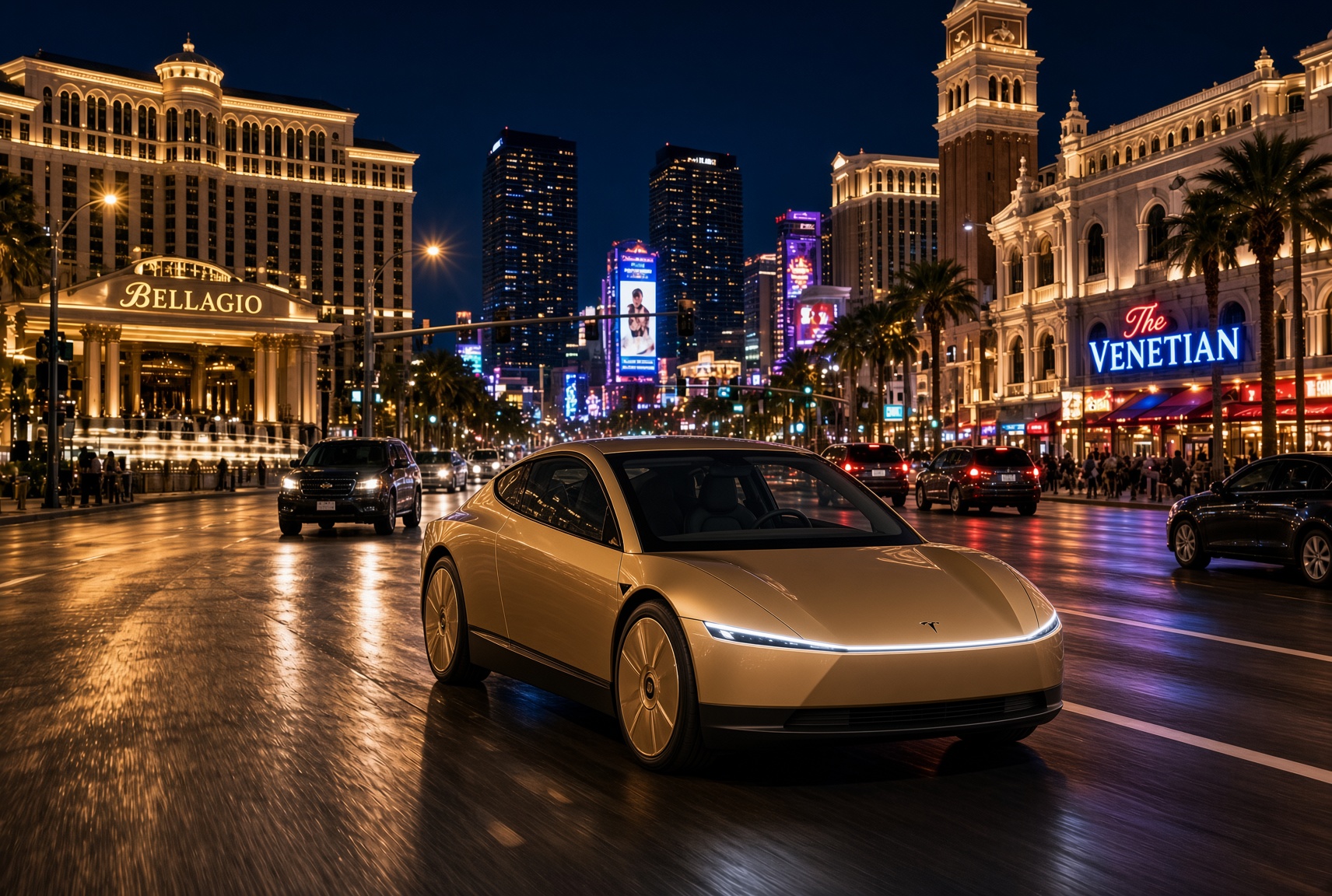
Tesla’s robotaxi footprint in Nevada just grew by roughly 500 times in a single regulatory vote.
The Nevada Transportation Authority approved Tesla’s full Autonomous Vehicle Network Company permit on Thursday, clearing the way for the company to deploy up to 5,000 driverless vehicles across Clark County over the next 12 months. The decision came during a four hour general session meeting that Tesla investor Sawyer Merritt watched live and reported on X, noting the vote replaces the interim order that had limited Tesla to just 10 robotaxis on a narrow stretch of the Las Vegas Strip.
EXCLUSIVE: Tesla has just officially received approval for its full Autonomous Vehicle Network Company permit in Nevada, clearing the way for Tesla to launch a paid public Robotaxi service in Las Vegas.
This officially allows @Tesla to deploy up to 5,000 robotaxis over the next… pic.twitter.com/DPs5UtUlrE
— Sawyer Merritt (@SawyerMerritt) August 20, 2026
That earlier cap, covered here after it surfaced on August 13, came with restrictions that looked stricter than what Tesla runs in Austin: a 45 mph speed ceiling, no airport pickups, and a geofence confined to the Strip corridor. The new approval extends Tesla’s operating authority to all of Clark County, with room to request an even wider geofence across the state.
Tesla representatives at the meeting said they have no intention of putting 5,000 cars on the road right away. Commercial rides are expected to start within 30 days, pending vehicle inspections, insurance filings, and fare approval, the standard steps every robotaxi operator in Nevada has had to clear.
Tesla’s own Robotaxi account replied to the news with a short line, The golden future is upon us.
The timing lines up with Tesla’s broader robotaxi push this month. The company is preparing to open Cybercab rides to the public in Austin as soon as this month, and it opened a sweepstakes for riders to win a seat at the launch event. Tesla filed its original application for a 5,000 vehicle Nevada fleet back in June, a request regulators trimmed to 10 vehicles when they issued the interim order in July. Thursday’s vote effectively grants the number Tesla asked for from the start.
Zoox, the Amazon owned robotaxi operator, has run in Nevada since 2025 and was capped at 100 vehicles before Thursday’s decision. Tesla’s new ceiling puts it well ahead of that comparison on paper, though the company has said its actual fleet size will depend on how quickly FSD v15 rolls out, the software update executives have called the gateway to scaling unsupervised robotaxi operations nationwide.
Elon Musk
SpaceX’s next trillion dollar bet has nothing to do with rockets, Musk tells staff
Elon Musk told SpaceX staff AI revenue will soon dwarf rockets and Starlink combined entirely.
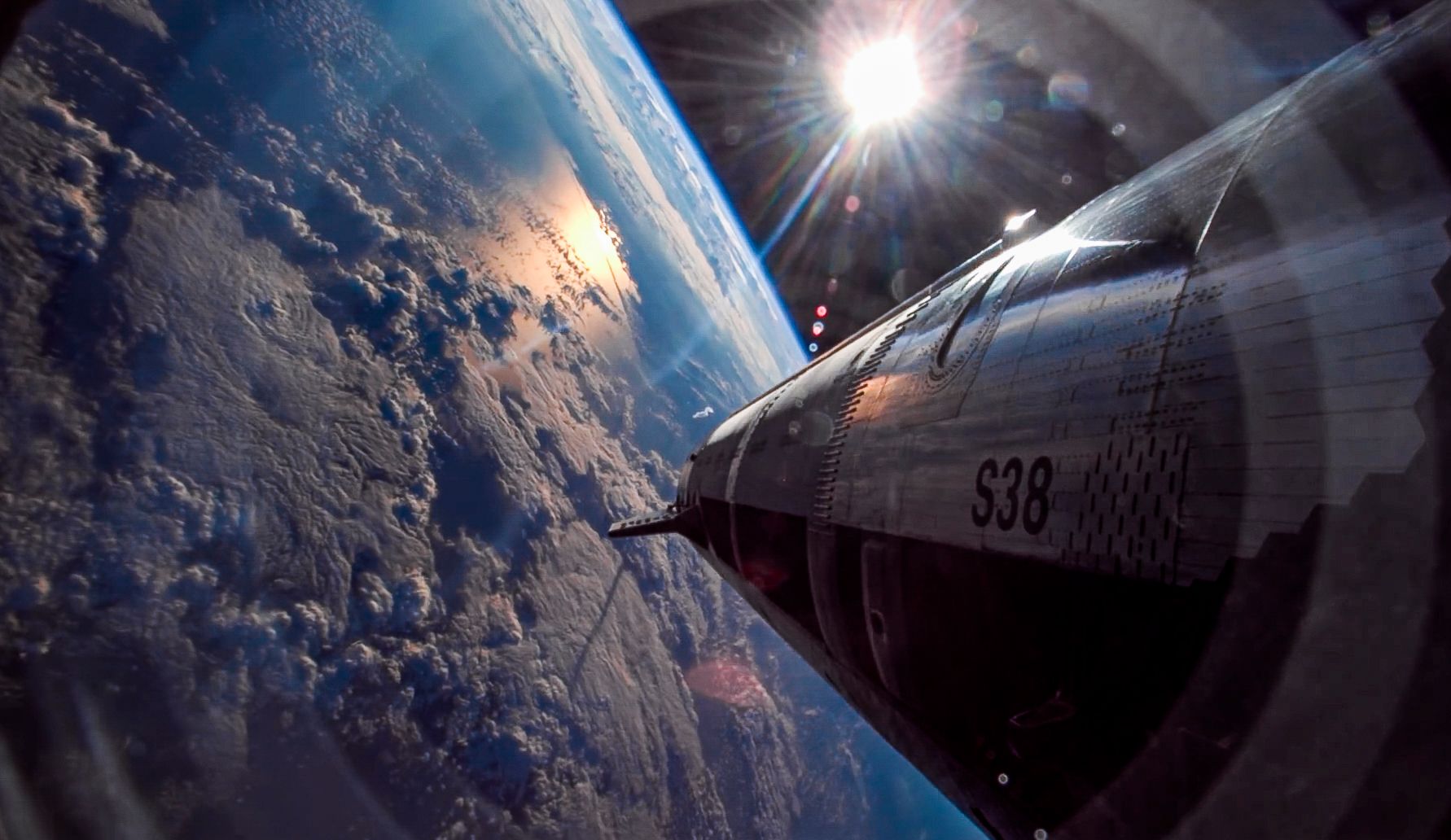
Elon Musk told SpaceX employees this week that artificial intelligence, not rockets, will soon carry the company’s revenue. In a roughly 29 minute internal address posted on SpaceX’s X account on Tuesday, Musk said AI revenue will pass every other line of business at SpaceX “probably in September” and pull further ahead by the fourth quarter.
The numbers he gave are specific. SpaceX currently runs 1.4 gigawatts of AI compute capacity. Musk wants that at 10 gigawatts by the end of 2027, a jump he tied directly to revenue: “if we bring 10GW of AI online by the end of next year, it will be $300 billion to $500 billion a year in revenue.” He called those “big numbers,” which undersells a projection larger than what most countries produce in a year.
We made rockets reusable and are rebuilding the internet in space. The next challenge: making life multiplanetary and understanding the true nature of the universe
Watch @ElonMusk deliver a company update to @SpaceX employees pic.twitter.com/5c8rxoCQfu
— SpaceX (@SpaceX) August 11, 2026
Musk went further on where AI fits into SpaceX’s future. “Probably in four or five years, AI will be 99% of the value of SpaceX,” he told staff, adding that digital intelligence would eventually run “a trillion times” ahead of biological intelligence as computing scales. He tied that growth to the company’s founding mission, telling employees “we must win on AI, because the future is overwhelmingly AI and robots,” with the payoff meant to help fund Starship and a Mars program that increasingly runs through Terafab, the joint Tesla, SpaceX and xAI chip plant.
Elon Musk launches TERAFAB: The $25B Tesla-SpaceXAI chip factory that will rewire the AI industry
None of this is entirely new territory. SpaceX told investors much the same story during its first earnings call as a public company on August 4, where Musk moved the company’s $1 trillion revenue target up a year to 2030 and said Starlink could someday carry a majority of the world’s internet. What the all hands video adds is a hard deadline and a specific power figure Musk had not given publicly before, along with a franker pitch to his own workforce that AI, not launch cadence, is now the thing SpaceX is betting its future on.
The AI revenue itself is not coming from SpaceX training its own models. It is largely Starlink acting as the network layer for xAI’s workloads, plus SpaceX renting out compute capacity directly, the same approach behind the roughly $16 billion the company spent on AI infrastructure in a single quarter.
Musk closed the video with a pitch aimed at recruiting and retention rather than investors, telling employees that anyone who helps SpaceX win the AI race will eventually get the chance to go to the moon or Mars themselves. Whether SpaceX can turn 1.4 gigawatts into 10 in seventeen months is the more immediate question, and one that will show up in quarterly numbers well before anyone leaves Earth.

Tesla Cybercab sightings broaden well outside of Austin with autonomy in focus

Tesla Model Y L gets suspension complaints in over odd issue China


