Elon Musk
Tesla proves once more that its factories are its best product
Tesla’s factories are the company’s biggest products–literally.

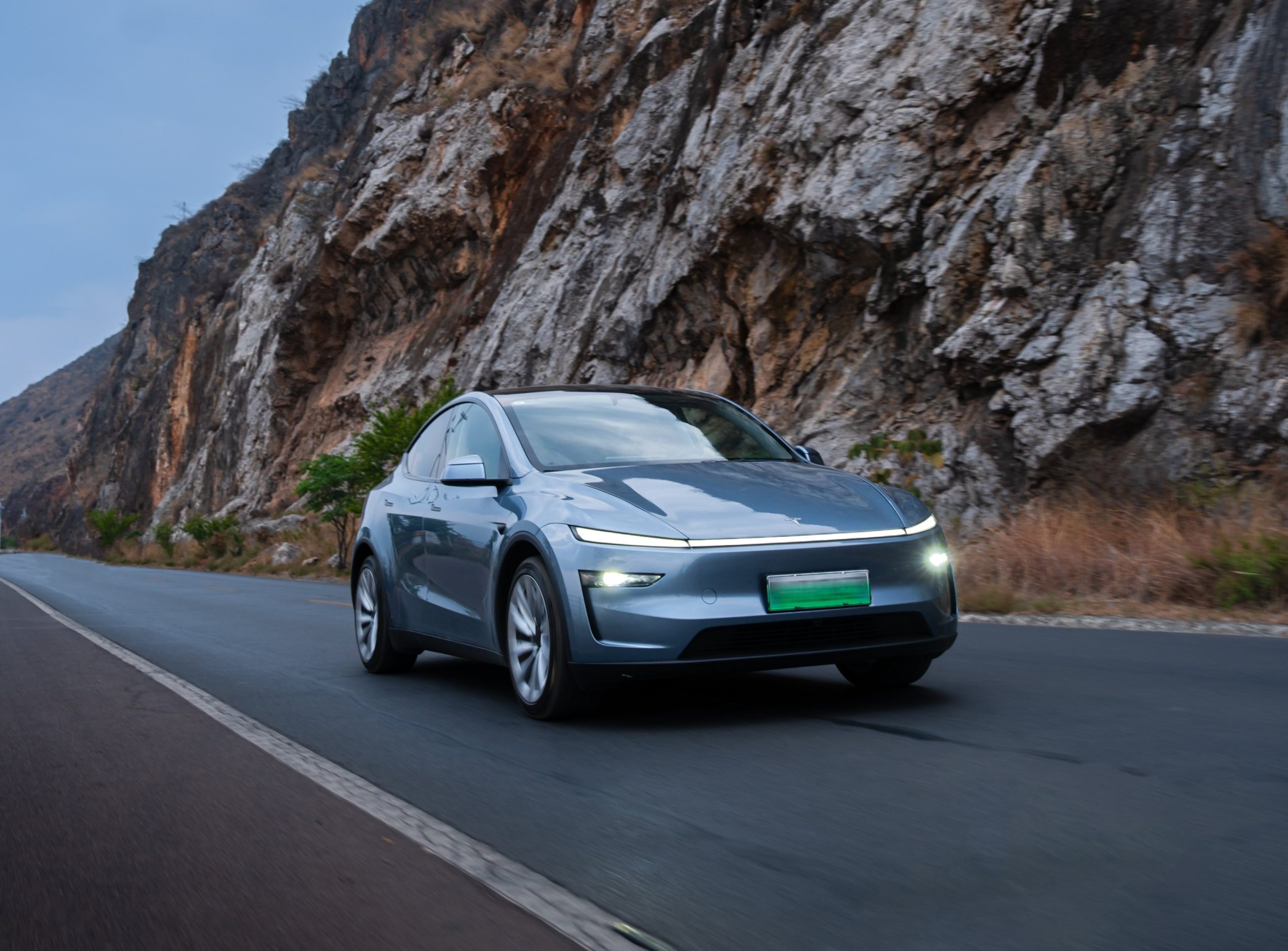
Tesla’s factories are not just the company’s biggest assets. They are also its best product. This is, at least, as per Tesla China’s recent post on social media platform Weibo.
Tesla China’s Weibo post was shared to celebrate Giga Shanghai’s changeover to the new Model Y, which is currently being delivered to consumers globally.
Tesla’s Best Product
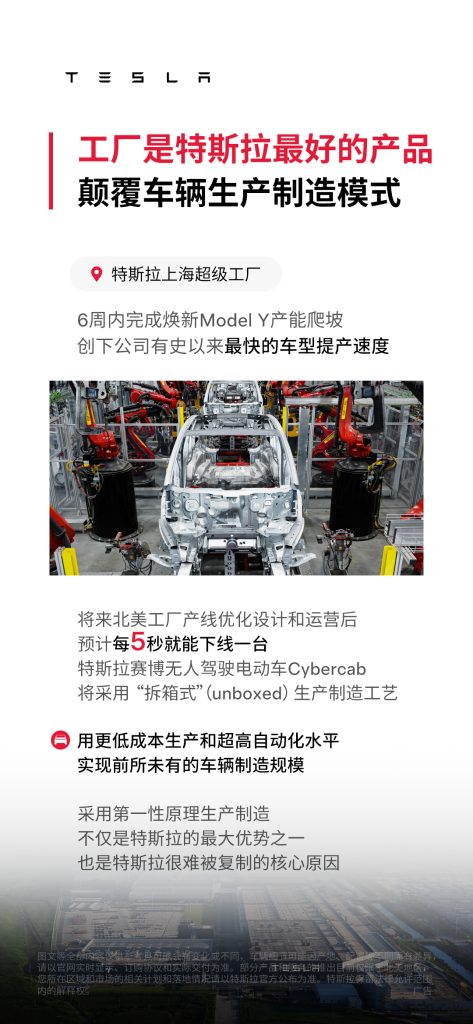
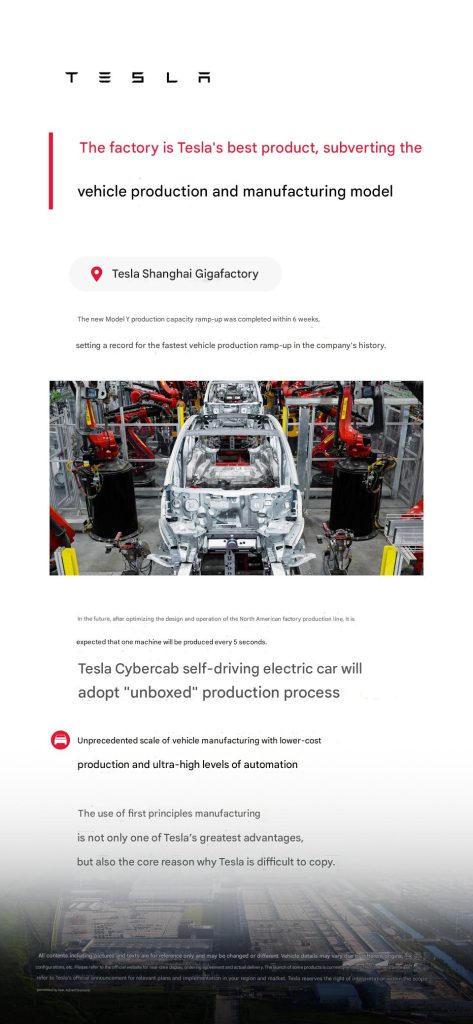
In its post, Tesla China noted that Gigafactory Shanghai was able to complete its new Model Y production ramp up in just six weeks. This is a new record for Tesla, and it speaks to the company’s intense focus on efficiency. Tesla also highlighted the Cybercab’s production line in its Weibo post, stating that the upcoming vehicle will see “ultra-high levels of automation” when it gets produced.
“The factory is Tesla’s best product—Tesla Shanghai Super Factory completed the new Model Y production capacity ramp-up within 6 weeks, setting a record for the company’s fastest model production speed. In the future, the North American factory is expected to roll out a Tesla self-driving electric Cybercab every 5 seconds to subvert the vehicle production and manufacturing model. Adhering to the first principle of car manufacturing is Tesla’s core advantage that is difficult to copy,” Tesla China wrote in its post.
Tesla’s Factories
Tesla’s factories are among the best in the world. Tesla only operates four vehicle factories for its entire vehicle lineup today, which is quite impressive for a company that has so far sold up to 1.8 million vehicles per year. Tesla is expected to improve its factories’ output with its future vehicles as well, with Elon Musk stating during the company’s Q1 2025 All-Hands Meeting that the Cybercab’s factory will look more like a high-speed consumer electronics line than a car production line. These innovations, Musk noted, should allow Tesla to ramp the Cybercab’s production to 2 million units per year.
Musk highlighted the importance of Tesla’s factories in the first quarter earnings call as well. While discussing the Cybercab’s line, Musk noted that with Tesla, the factory is as much a product as its cars. “The factory is the product as much as the car is the product. So, this really is the first principles approach to manufacturing that will ultimately allow us, I think, to… achieve a cycle time, meaning a unit every five seconds or less, off a single line,” Musk stated.


Elon Musk
Why automakers keep turning down Elon Musk’s Tesla Full Self-Driving offer
Elon Musk confirms no automaker has ever accepted Tesla’s offer to license Full Self-Driving software.

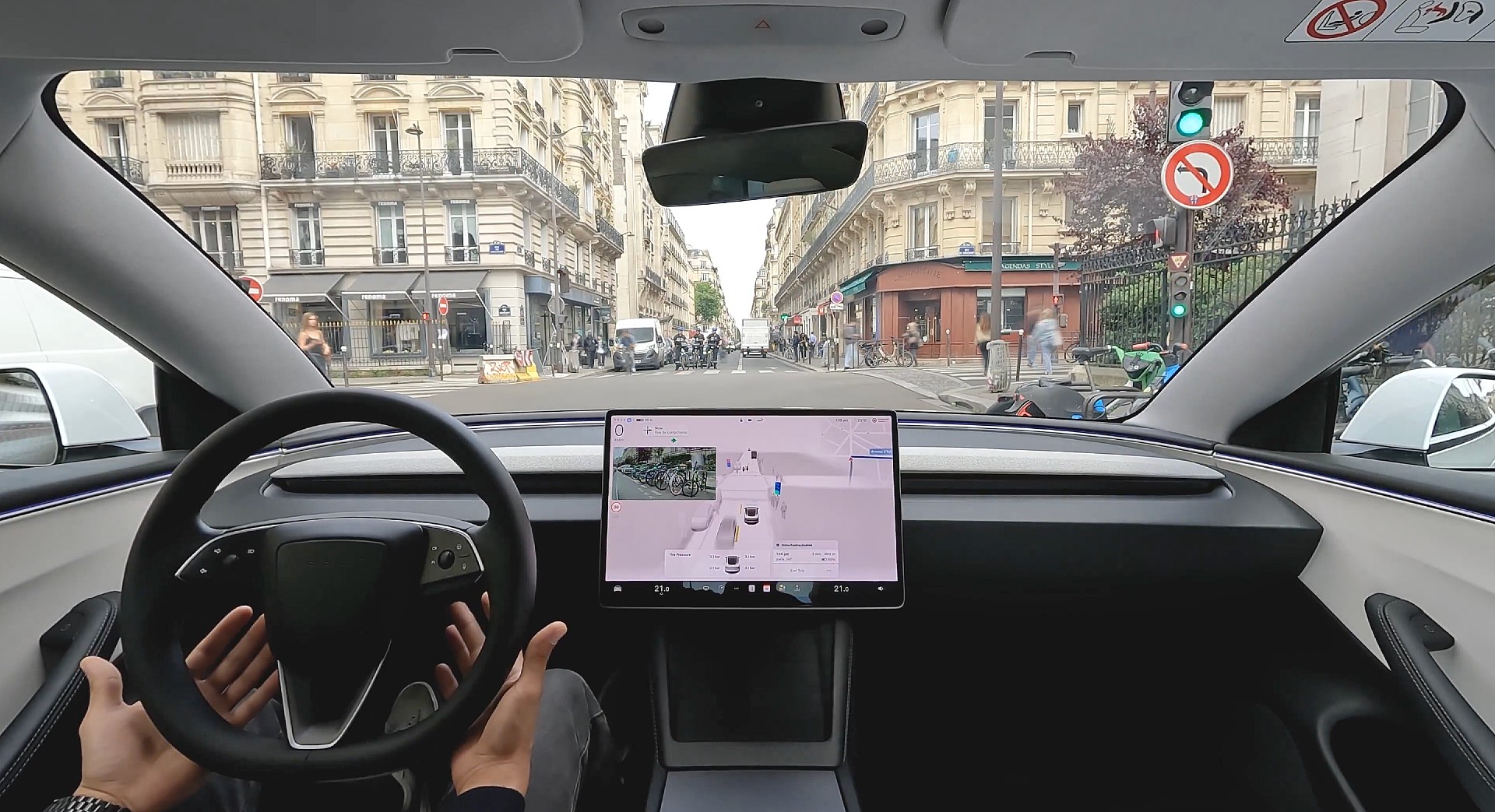
Elon Musk gave a brief answer on X Monday that confirmed that Tesla’s standing offer to license Full Self-Driving to other automakers still has zero takers. Sawyer Merritt wrote that “Tesla has for years openly invited other automakers to license FSD. None of them have accepted,” responding to a prediction from Boom Supersonic founder Blake Scholl that Tesla would eventually open FSD the way it opened its Supercharger network to rival brands. Musk’s reply to Merritt was one word: “Exactly.”
It is not the first time Musk has made this point. He said something similar in November, when he called legacy automakers reluctance to adopt FSD “crazy,” and Tesla has floated the offer publicly since at least 2021. Scholl’s prediction touches on something real. Once NACS became the de facto charging standard, adoption from Ford, GM, Rivian and others followed within about a year. FSD licensing was supposed to work the same way once Tesla built enough of a lead that switching made sense for everyone.
Tesla has for years openly invited other automakers to license FSD. None of them have accepted. https://t.co/kgz4idpoUM
— Sawyer Merritt (@SawyerMerritt) September 22, 2026
The case for licensing now is stronger than it was two years ago. Waymo and Zoox are logging hundreds of thousands of unsupervised autonomous miles, along with Tesla’s own Robotaxi fleet. Every automaker still selling driver assist systems that lag FSD has given the robotaxi conversation to Tesla, Waymo and Zoox by default. Licensing FSD would let a GM or a Ford compete on the same field without spending a decade and billions of dollars building a stack from scratch, the same argument Tesla made when it opened the Supercharger network to bring more EVs onto its chargers.
But FSD is not a connector standard. As one reply to Musk’s post pointed out, licensing FSD is not a software license the way NACS was a plug spec. It requires adopting Tesla’s eight camera layout and its onboard compute architecture, meaning a licensee’s cars would effectively become Tesla hardware wearing someone else’s badge. That is the visible obstacle. The less visible one is data. A licensed FSD stack would report back the same telemetry Tesla collects from its own fleet, giving Tesla a continuous read on how a competitor’s cars are actually driven, where they struggle, and how often drivers intervene. For an automaker trying to build its own autonomy program, or simply trying to keep its build quality and safety record private, handing Tesla that visibility could be a bigger cost than the hardware bill. It is the reason the Supercharger comparison only goes so far. Opening a charging plug cost Tesla very little. Opening FSD would cost a rival something it cannot get back.
Elon Musk
Elon Musk drops a surprise update on Boring Company’s next big dig
Musk says Boring Company could shrink the Austin to San Antonio drive to just minutes.
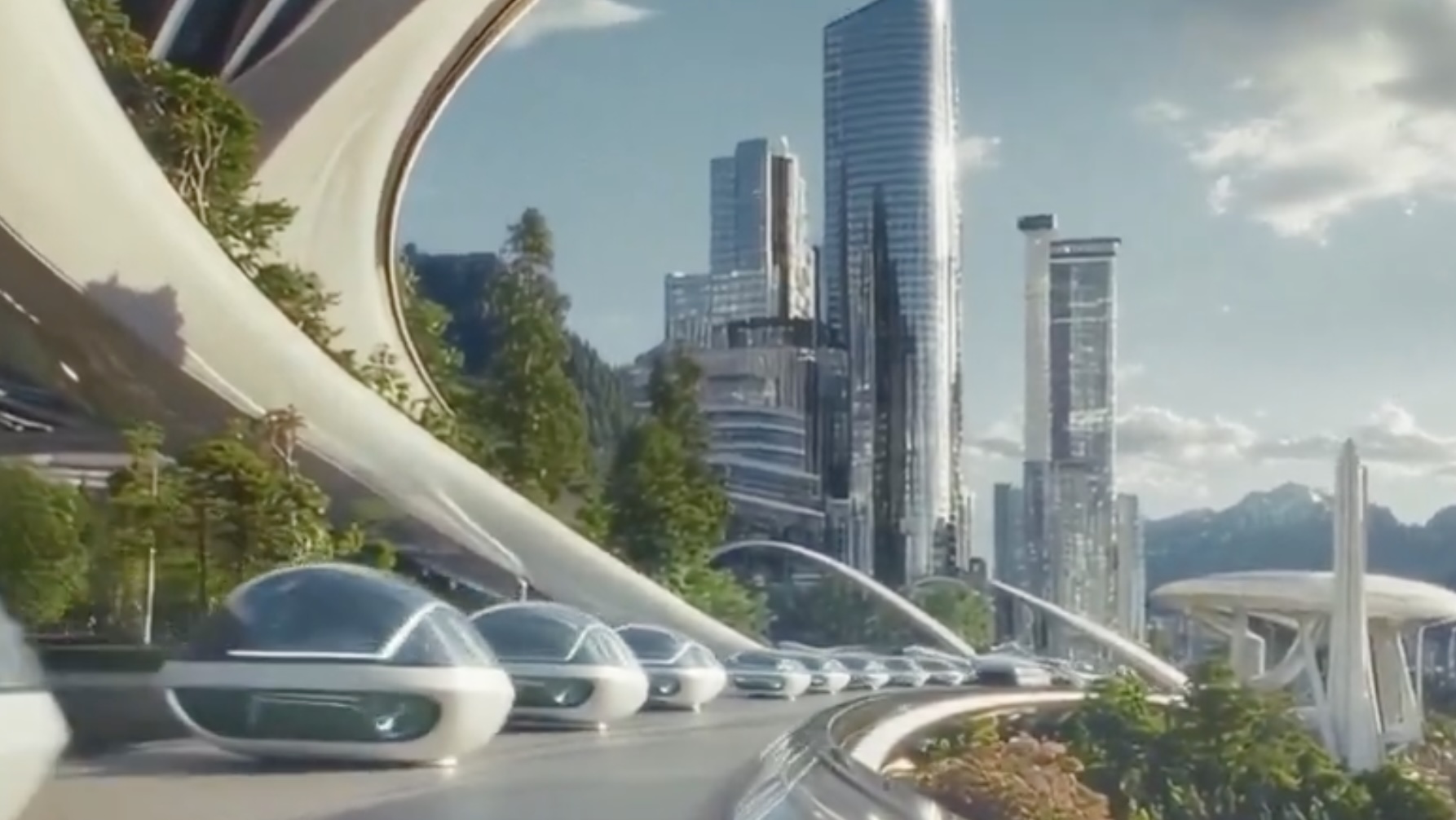
Elon Musk says The Boring Company is working on what he called “a simple, precursor Hyperloop” tunnel connecting Austin and San Antonio, targeting speeds above 200 mph and cutting a drive that can take up to two and a half hours down to a consistent under 30 minutes. Musk posted the idea on X Sunday, in a reply to a repost of an AI generated video imagining a science fiction future with human colonies on other worlds, which he shared with the line “This is the future we shall bring into being.”
This is the future we shall bring into being pic.twitter.com/8aD0w8MDVc
— Elon Musk (@elonmusk) September 20, 2026
The Boring Company’s own account picked up the idea in the same thread, adding a detail about how the trip would actually work: “Because Loop/Hyperloop is express (i.e. no intermediate stops), one could travel from an Austin parking lot to a favorite San Antonio restaurant in about 30 minutes. As long as they both have Loop stations.” That framing ties the proposed intercity link to the same station model the company already runs in Las Vegas, where riders enter the tunnel network through small, garage style stops rather than one central terminal.
This is not the company’s first run at the Austin to San Antonio corridor. Boring Company floated tunnels between the two cities as far back as 2021, and later competed for a separate San Antonio Loop project tied to the airport before that specific bid stalled. Pitches for tunnels in Chicago, Los Angeles, and a New York to Washington corridor have followed a similar pattern of big announcement without a shovel in the ground.
What is different this time is the balance sheet, especially since The Boring Company closed a 3 billion dollar funding round led by investors in the United Arab Emirates earlier this month at a valuation near 23 billion dollars, giving the tunneling company more capital to chase speculative projects than it had during its earlier Texas pitches. The company is also mid-build on two other intercity systems it has actually broken ground on, inc;luding a Nashville tunnel linking downtown to the airport, where a second boring machine finished commissioning in June, and its Las Vegas network, where the station count keeps climbing on paper faster than tunnels get dug.
That gap between announcement and execution is the reason to treat Sunday’s post as an opening bid rather than a project. A tunnel spanning roughly 80 miles between two metro areas, running at speeds Boring Company has not demonstrated over any real distance, would dwarf anything the company has built. For now, the Austin to San Antonio Hyperloop exists as a caption under an AI generated space video.
Elon Musk
Tesla eyes supply partners for Optimus mass production
Tesla certified three Chinese suppliers for Optimus mass production, signaling its robot timeline is accelerating.
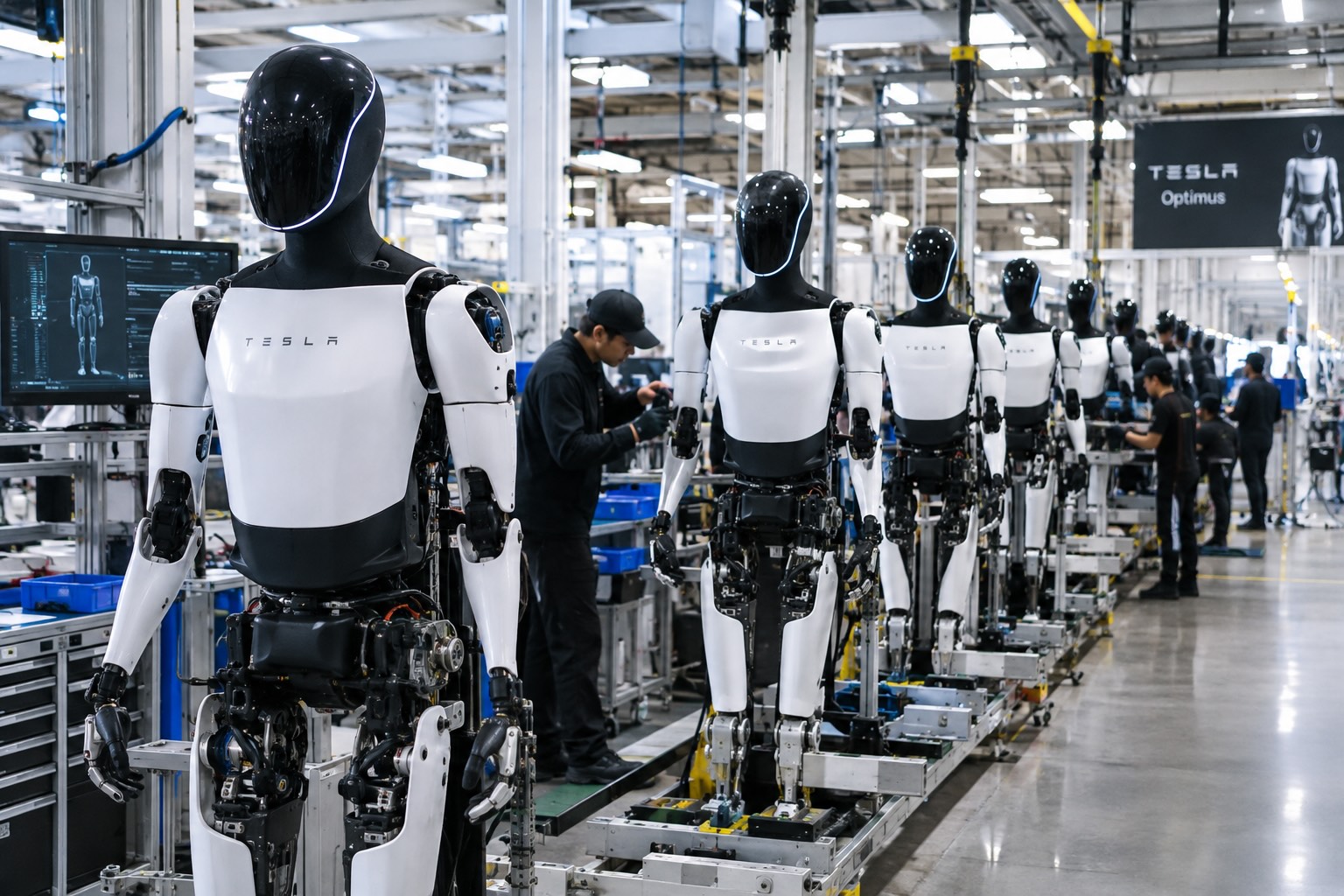
Tesla’s robotics team traveled to Ningbo, in China’s Zhejiang province, on September 16 and spent the following day auditing component suppliers for Optimus, according to a Bloomberg report cited by RobotAIGeek. The visit moved three manufacturers from provisional status to certified mass production partners: Tuopu Group, which handles actuators and chassis components, Ningbo Joyson Electronic, a sensor supplier, and Zhejiang Sanhua Intelligent Controls, which builds thermal management systems. All three already supply parts to Tesla’s electric vehicles, and the audit reportedly came with fresh orders that supply chain reports put at an initial batch of roughly 5,000 units.
Tuopu, Joyson, and Sanhua built their manufacturing base serving the automotive industry, where tolerances and volume requirements are already close to what a mass produced humanoid robot demands. Sanhua in particular has history here. Teslarati reported last October that the company had received a roughly $685 million order for linear actuators tied to Optimus, a volume industry watchers estimated could cover around 180,000 robots once production ramped.
Supply chain reports tied to this week’s audit put Tesla’s near term production goal at about 1,000 Optimus units a week by late September, rising to 2,000 to 2,500 units a week by the end of the year. That pace would put real weight behind the timeline Tesla has been building toward since May, when it wound down Model S and Model X production at Fremont to convert that floor space into a dedicated Optimus line targeting one million units annually. JPMorgan analysts who toured the factory in August confirmed the conversion took roughly four months, a pace Musk has called unprecedented for a facility that size.
New drone video shows Tesla’s Optimus Factory reaching a turning point
Fremont is only the first phase. A second, larger Optimus plant is rising at Gigafactory Texas, where drone footage shared by Joe Tegtmeyer last week showed the structural steel nearing completion on the north end of the building. Tesla has said that facility is meant to eventually support production of up to 10 million units a year, though volume output there is not expected before 2027.
Commercial sales of Optimus are still targeted for the second half of 2027, but production is expected to start well before then. JPMorgan analyst Rajat Gupta has said Tesla’s “Optimus Academy” program, which uses early units to collect real world training data inside Tesla’s own facilities, is expected to be running later this year. Bloomberg Intelligence analyst Ian Ma described the Ningbo audits as “a positive commercialization signal for China’s humanoid supply chain,” noting that sentiment could improve further if the visit leads to confirmed supplier nominations and larger orders. The Solactive China Humanoid Robotics Index rose about 1.4% on the news, though it remains down roughly 30% for the year.

Why automakers keep turning down Elon Musk’s Tesla Full Self-Driving offer

Tesla Roadster is available for order once again following brief hold


