Elon Musk
Elon Musk reveals Tesla’s next Robotaxi expansion in more ways than one
Tesla Robotaxi is growing in more ways than one. Tesla wants to expand and hopes to reach half the U.S. population by the end of the year.

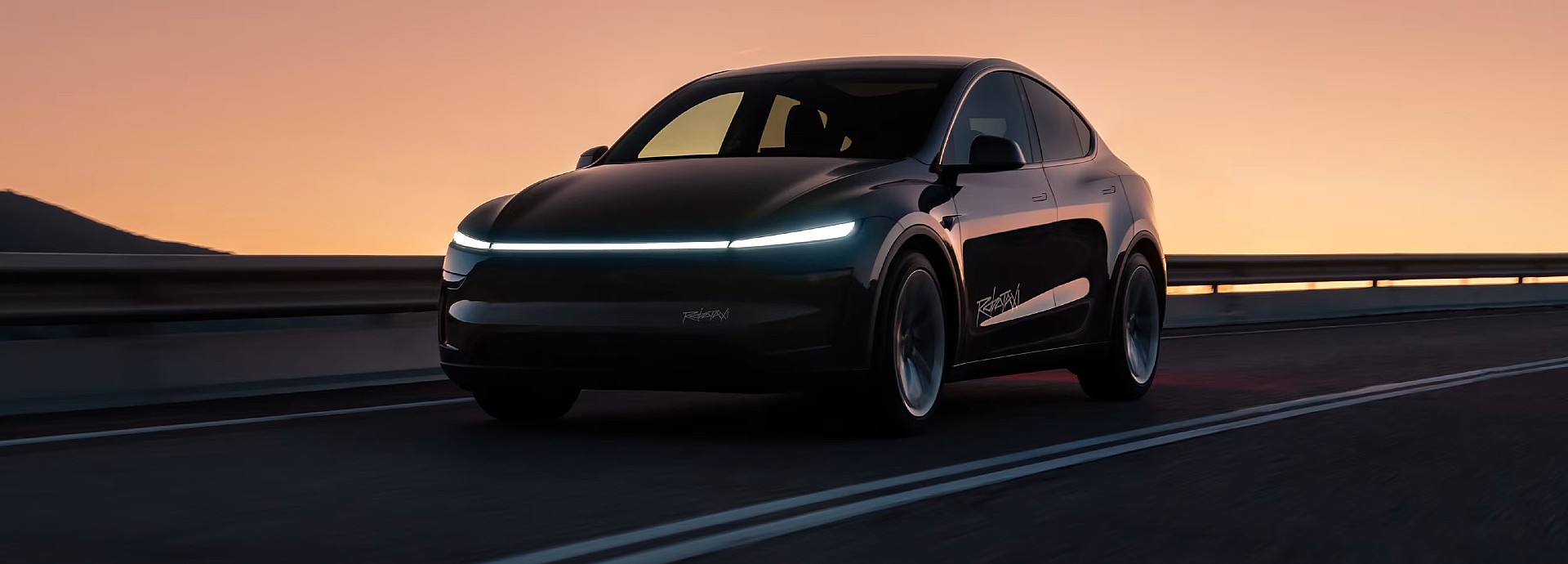
Tesla CEO Elon Musk revealed the company’s plans for its next expansion of the Robotaxi in terms of both the geofence in Austin and the platform overall, as it looks to move to new areas outside of Texas.
Tesla launched the Robotaxi platform last month on June 22, and has since expanded both the pool of users and the area that the driverless Model Y vehicles can travel within.
The first expansion of the geofence caught the attention of nearly everyone and became a huge headline as Tesla picked a very interesting shape for the new geofence, resembling male reproductive parts.
🚨 Elon Musk says Tesla’s Robotaxi geofence in Austin will get “even bigger and longer” in “a couple weeks or so” pic.twitter.com/0gLeKfURMi
— TESLARATI (@Teslarati) July 23, 2025
The next expansion will likely absolve this shape. Musk revealed last night that the new geofence will be “well in excess of what competitors are doing,” and it could happen “hopefully in a week or two.”
Musk’s full quote regarding the expansion of the geofence and the timing was:
“As some may have noted, we have already expanded our service area in Austin. It’s bigger and longer, and it’s going to get even bigger and longer. We are expecting to greatly increase the service area to well in excess of what competitors are doing, hopefully in a week or two.”
The expansion will not stop there, either. As Tesla has operated the Robotaxi platform in Austin for the past month, it has been working with regulators in other areas, like California, Arizona, Nevada, and Florida, to get the driverless ride-hailing system activated in more U.S. states.
Tesla confirmed that they are in talks with each of these states regarding the potential expansion of Robotaxi.
Musk added:
“As we get the approvals and prove out safety, we will be launching the autonomous ride-hailing across most of the country. I think we will probably have autonomous ride-hailing in probably half the population of the US by the end of the year.”
We know that Tesla and Musk have been prone to aggressive and sometimes outlandish timelines regarding self-driving technology specifically. Regulatory approvals could happen by the end of the year in several areas, and working on these large metros is the best way to reach half of the U.S. population.
Tesla said its expansion of the geofence in Austin is conservative and controlled due to its obsession with safety, even admitting at one point during the Earnings Call that they are being “paranoid.” Expanding the geofence is necessary, but Tesla realizes any significant mistake by Robotaxi could take it back to square one.


Elon Musk
Tesla made napping in a Robotaxi easier with its latest update
Tesla’s quiet mode reaches Model Y Robotaxis, blacking out the screen for riders wanting rest.

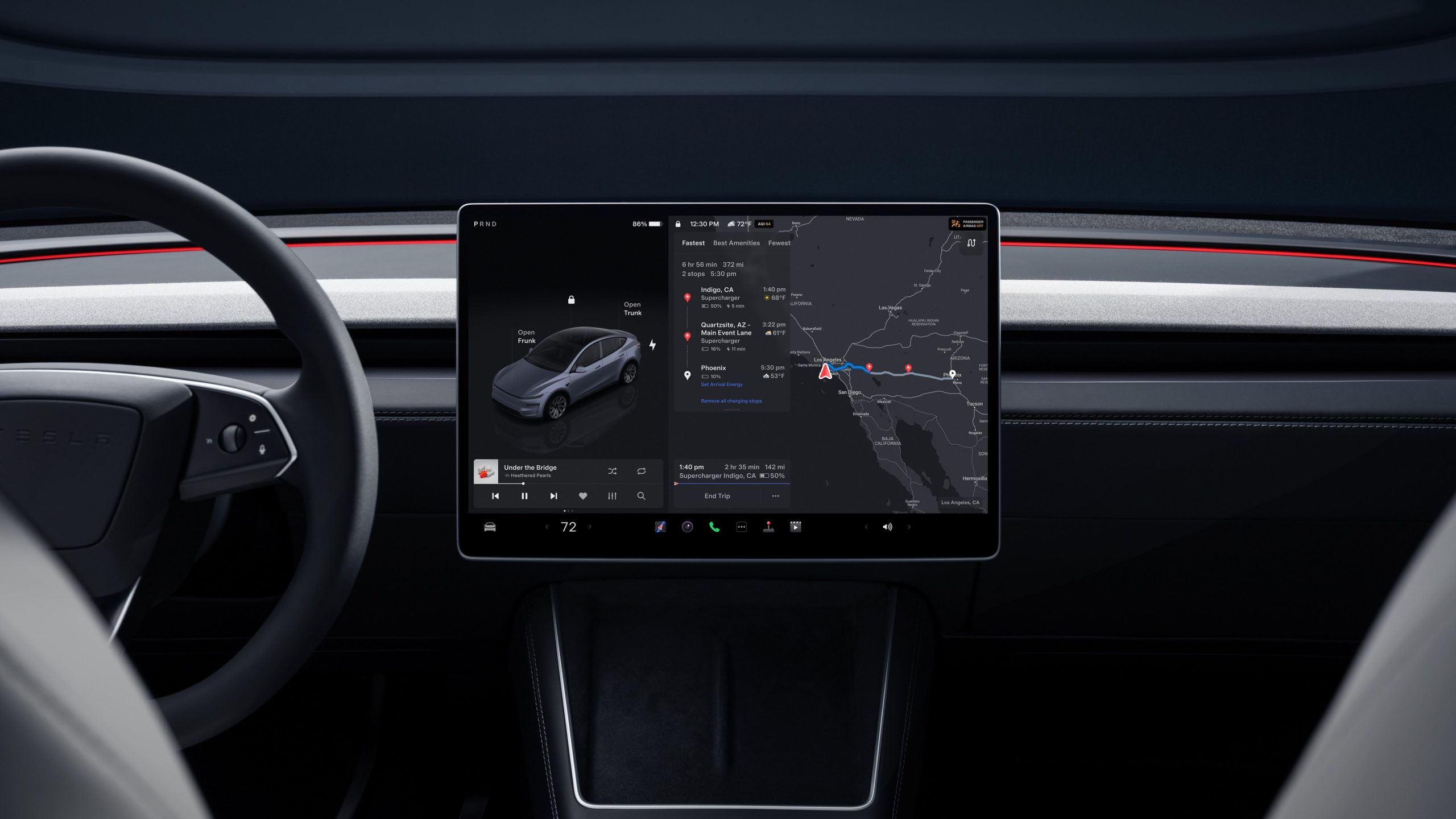
Tesla’s quiet mode, the setting that blacks out the screen for riders who want to rest, has moved beyond the Cybercab. A video posted Thursday by Spencer (@scotsrule08) shows the feature running in a Model Y Robotaxi on a night ride that appears to be in Dallas.
New quiet mode now on @Robotaxi https://t.co/2cM2eM9NeN — Spencer (@scotsrule08) October 29, 2026
The rider taps a small crescent moon icon in the bottom right corner of the map screen. The map, media player, app shortcuts and Grok prompt disappear, leaving a dark display with “Arriving soon,” the destination and a line reading “Tap display to exit quiet mode.” Controls a passenger may still need, including Pull Over, cabin temperature, volume and Support, stay visible. One tap anywhere brings the full map back.
Quiet mode first showed up in the Cybercab last week, which Teslarati reported alongside a new rear camera view. Tesla has been trimming cabin noise in other ways too. On October 25, Spencer reported that Robotaxi turn signals now chime for the first four blinks and then go silent. Tesla has not published release notes for either change.
Elon Musk has been pitching this use for more than a decade. In October 2014, he said that “maybe five or six years from now I think we’ll be able to achieve true autonomous driving where you could literally get in the car, go to sleep and wake up at your destination,”
By 2017 he was setting a higher bar. Speaking at TED, Musk said the hard part was not making self-driving work 99.9 percent of the time, “because, like, if a car crashes one in a thousand times, then you’re probably still not going to be comfortable falling asleep. You shouldn’t be, certainly.”
Owners asked for something similar in their own cars. In December 2019, a Tesla owner requested a Nap Mode that would keep the climate running and wake the occupant with an alarm, and Musk answered “Ok,” as Teslarati covered at the time.
The line returned when the Cybercab was unveiled at the We, Robot event in October 2024. “We’ll move from supervised Full Self-Driving to unsupervised Full Self-Driving, where you can fall asleep and wake up at your destination,” Musk said. On Tesla’s first quarter earnings call in April 2025, he called it the deciding measure: “The acid test is, can you go to sleep in your car and wake up in your destination and I’m confident that will be available in many cities in the US by the end of this year,”
Tesla has run driverless Model Y rides in Dallas and Houston since April, so a passenger dozing off on the way home is now a realistic use of the button. Tesla is also offering new riders a free first trip in both cities, according to an in-app screen shared by tracker Ethan McKanna, and said on its third quarter call that Cybercab rides would launch in Dallas next month.
Elon Musk
Tesla’s Roadster appearance at SpaceX has merger watchers talking
Tesla’s next generation Roadster was spotted at SpaceX’s Hawthorne headquarters, two weeks after its unveiling.
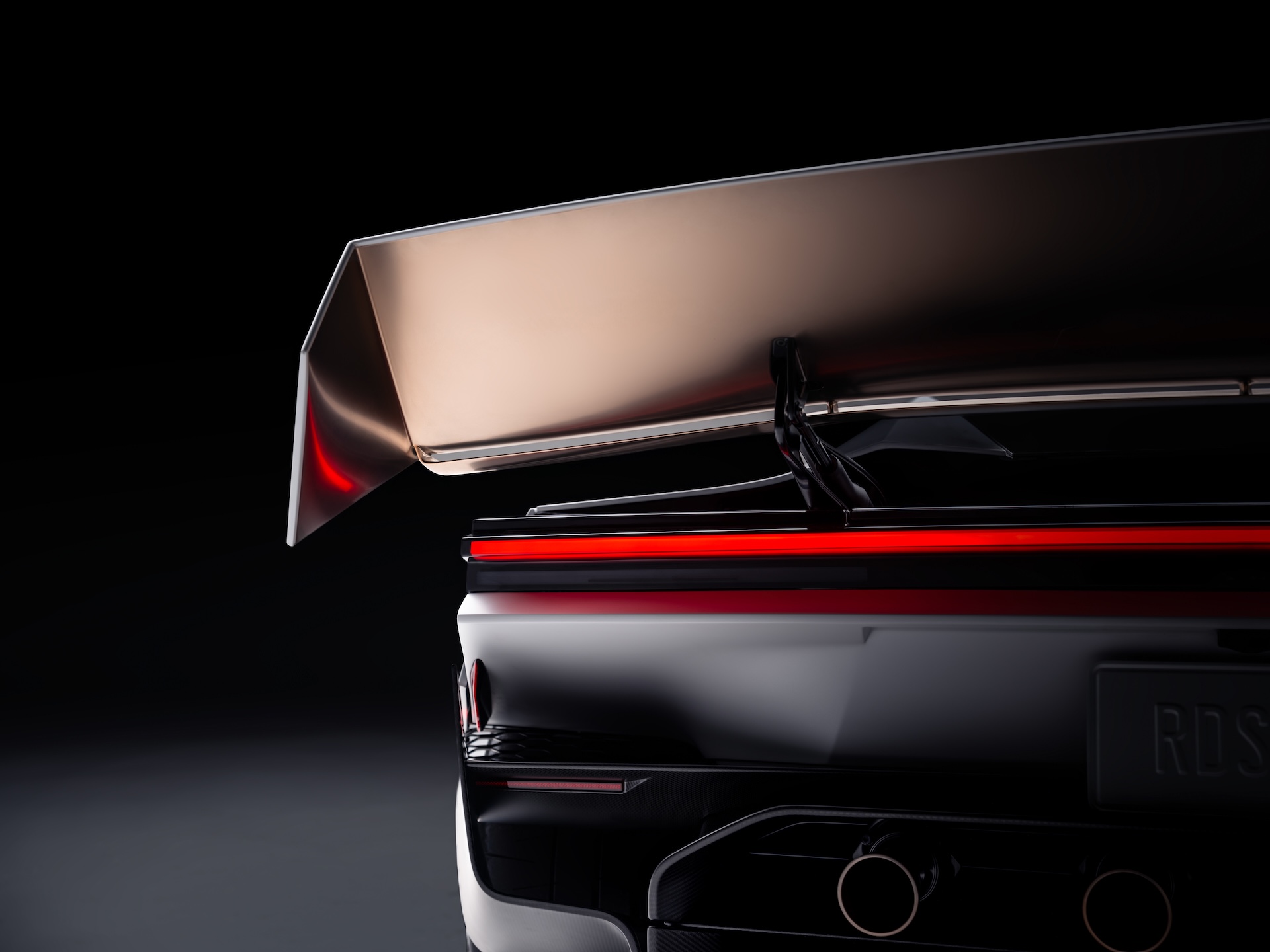
Tesla’s next generation Roadster turned up at SpaceX’s headquarters in Hawthorne, California on Wednesday, less than two weeks after the car flew off a ramp at its unveiling in Texas.
Photos shared on X by SpaceX Engineer (@DeannaRiceSPCX) show the new Roadster parked outdoors beside the famed Falcon 9 that stands outside company headquarters at the corner of Crenshaw Boulevard and Jack Northrop Avenue. Rocket B1019 was the first orbital-class booster ever to land after a launch on December 21, 2015 after it sent 11 Orbcomm satellites to orbit and then flew back to Landing Zone 1 at Cape Canaveral, which would be the first landing in what became SpaceX’s reusable rocket program. SpaceX chose not to fly it again. After a test fire in Florida, the booster was shipped to Hawthorne and raised upright as a permanent monument in August 2016, as Teslarati reported at the time. Putting the Roadster, which flies on SpaceX cold gas thrusters, next to the rocket that started SpaceX’s landings is symbolic in itself.
Small car, big rocket ambitions 🚀🚗 #roadster #falcon9 #spacex #tesla https://t.co/H32xUSXoCl
— Deanna Rice (@DeannaRiceSPCX) October 29, 2026
The Thrust and Rocket versions of the Roadster use cold gas thrusters fed by composite overwrapped pressure vessels, the same type of tank SpaceX flies on Falcon 9, and Elon Musk described the car as the work of Tesla and SpaceX engineers working together. Tesla lists 0 to 60 mph in under 0.9 seconds for Thrust and under 0.59 seconds for Rocket, while the base Performance model relies on a fan and ground sealing system for grip, as Teslarati detailed in its breakdown of the three Roadster configurations.
Tesla has kept the car in the spotlight since the October 15 event near Waco. Last week, the company posted a video of the Roadster’s fighter jet inspired cockpit, including a Track Mode screen with a “Thruster · 5,500 PSI” readout, which we covered in our look at the Roadster’s center display. Musk also said owners will be able to ask the car to perform the stunts autonomously, and promised a looping track at Tesla’s Texas headquarters.
The visit comes as special committees at Tesla and SpaceX weigh a possible merger, a step Musk confirmed on SpaceX’s third quarter earnings call. The Roadster, built on SpaceX hardware, has become one of the clearest examples of the two companies already building products together.
Musk said at the unveiling that Roadster production will begin in 2028. Reservations are open with a $50,000 payment, Thrust is listed as a limited release and Rocket is invite only. Tesla says the car is not approved for public road use.
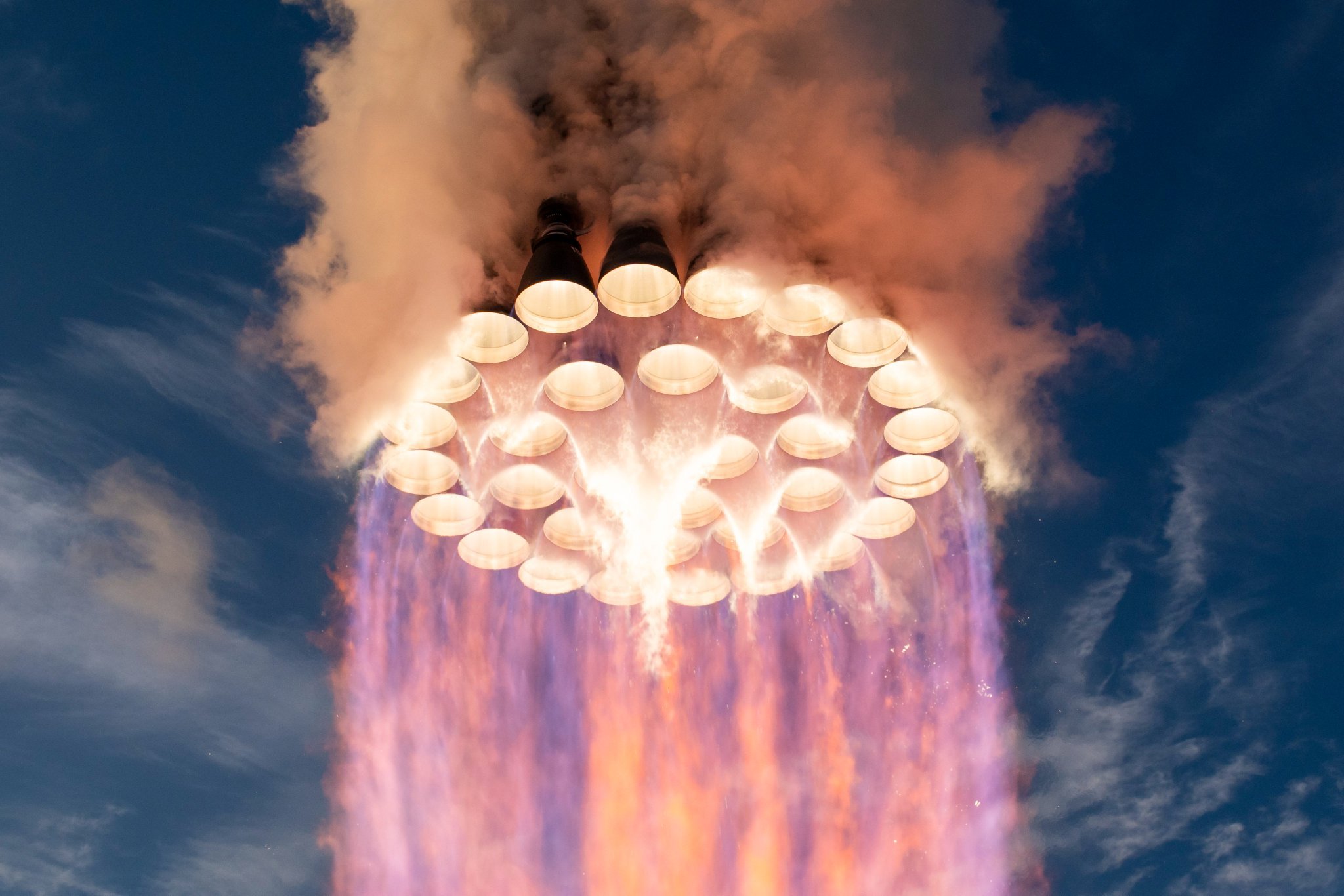
SpaceX’s Raptor engine family has steadily increased sea-level thrust while simultaneously reducing mass, turning iterative engineering gains into substantially higher performance for the Super Heavy booster. CEO Elon Musk shed more light on how powerful Raptor 4 will be, and it’s pretty crazy.
Raptor 1 delivered 185 metric tons of thrust at roughly 2,080 kilograms, while Raptor 2 raised that to 230 tons while cutting mass to about 1,630 kilograms. SpaceX data for Raptor 3 lists a target of 280 tons at 1,525 kilograms (with further reductions in associated vehicle hardware), while operational flight ratings have been cited near 250 tons.
This morning, Elon Musk stated that Raptor 4 is expected to reach 300 tons of sea-level thrust at roughly the same mass as Raptor 3. Across these versions, thrust has risen by more than 60 percent from the first engines while engine mass has fallen, producing a sharp improvement in thrust-to-weight ratio. This is a true testament to how great SpaceX engineering has been:
🚀 Elon says Raptor 4 will make 300 tons of thrust at sea level at roughly the same mass as Raptor 3.
How far Raptor has come:
Raptor 1: 185 tf, 2,080 kg
Raptor 2: 230 tf, 1,630 kg
Raptor 3: 250 tf, 1,525 kg
Raptor 4: 300 tf33 on Super Heavy = ~9,900 tf, nearly 3x Saturn V https://t.co/HQDswZhyvL
— TESLARATI (@Teslarati) October 26, 2026
With 33 engines on SuperHeavy, the jump from earlier versions to a 300-ton Raptor 4 would produce roughly 9,900 metric tons of total liftoff thrust, nearly three times the Saturn V’s approximately 3,400 metric tons from its five F-1 engines.
This is not just a larger number on a data sheet, either, as sea-level thrust is the force available the moment the vehicle leaves the pad. This is when it is heaviest and still deep in Earth’s gravity well and dense atmosphere.
Higher levels of sea-level thrust directly improves the initial thrust-to-weight ratio of the full stack. A higher ratio produces faster acceleration off the pad, which shortens the time the rocket has to spend fighting gravity, and gravity losses during the first minute or two of the flight are a major drain on total available delta-v. Every second shaved off of that early climb preserves more propellant energy for reaching orbital velocity or for carrying extra payload.
Because Super Heavy’s engine count is constrained by vehicle diameter and packing density, increasing thrust per engine is the most straightforward way to raise total liftoff performance without redesigning the booster structure or design.
The same-mass target for Raptor 4 is equally important. Holding engine mass roughly constant while raising thrust improves the engine’s own thrust-to-weight ratio and reduces the structural and propellant mass fraction that must be carried solely to support the engines.
Earlier Raptor iterations also simplified or eliminated extensive vehicle-side hardware such as heat shields. These gains compound: more force for less installed mass leaves additional capacity for propellant, payload, or operational margins such as engine-out capability.
For Starship’s architecture, the practical effects are large. Greater liftoff thrust supports heavier vehicles, larger propellant loads, and higher payloads to low Earth orbit, figures SpaceX has targeted in the 100-plus-ton reusable range. That capacity underpins orbital refueling, lunar missions, and eventual Mars cargo and crew flights.
Continued growth in sea-level thrust therefore tightens the gap between theoretical rocket performance and the high flight rates and reusability needed to make large-scale space transport practical.

Tesla Full Self-Driving becomes main pillar of new Referral Program

Tesla made napping in a Robotaxi easier with its latest update


