News
SpaceX reaches incredible milestone with Starlink program

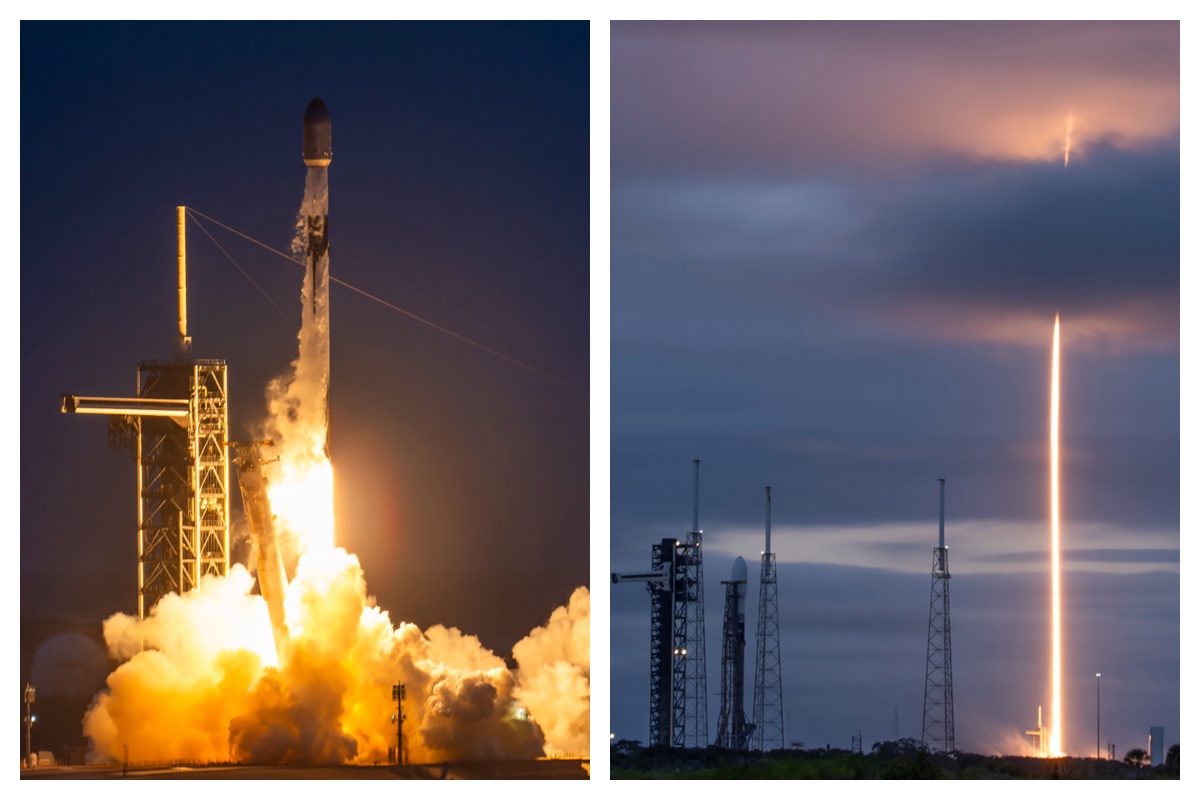
SpaceX reached an incredible milestone with its Starlink program with a launch last night, as the 3,000th satellite of the year was launched into low Earth orbit.
On Monday, SpaceX also achieved its 32nd flight with a single Falcon 9 rocket from NASA’s Kennedy Space Center.
The mission was Starlink 6-92, and it utilized the Falcon 9 B1067 for the 32nd time this year, the most-used Falcon booster. The flight delivered SpaceX’s 3000th Starlink satellite of the year, a massive achievement.
There were 29 Starlink satellites launched and deployed into LEO during this particular mission:
Falcon 9 launches 29 @Starlink satellites from Florida pic.twitter.com/utKrXjHzPN
— SpaceX (@SpaceX) December 9, 2025
SpaceX has a current goal of certifying its Falcon boosters for 40 missions apiece, according to Spaceflight Now.
The flight was the 350th orbital launch from the nearby SLC-40, and the 3,000 satellites that have been successfully launched this year continue to contribute to the company’s goal of having 12,000 satellites contributing to global internet coverage.
There are over five million users of Starlink, the latest data shows.
Following the launch and stage separation, the Falcon 9 booster completed its mission with a perfect landing on the ‘Just Read the Instructions’ droneship.
The mission was the 575th overall Falcon 9 launch, highlighting SpaceX’s operational tempo, which continues to be accelerated. The company averages two missions per week, and underscores CEO Elon Musk’s vision of a multi-planetary future, where reliable connectivity is crucial for remote work, education, and emergency response.
As Starlink expands and works toward that elusive and crucial 12,000 satellite goal, missions like 6-92 pave the way for innovations in telecommunications and enable more internet access to people across the globe.
With regulatory approvals in over 100 countries and millions of current subscribers, SpaceX continues to democratize space, proving that reusability is not just feasible, but it’s also revolutionary.


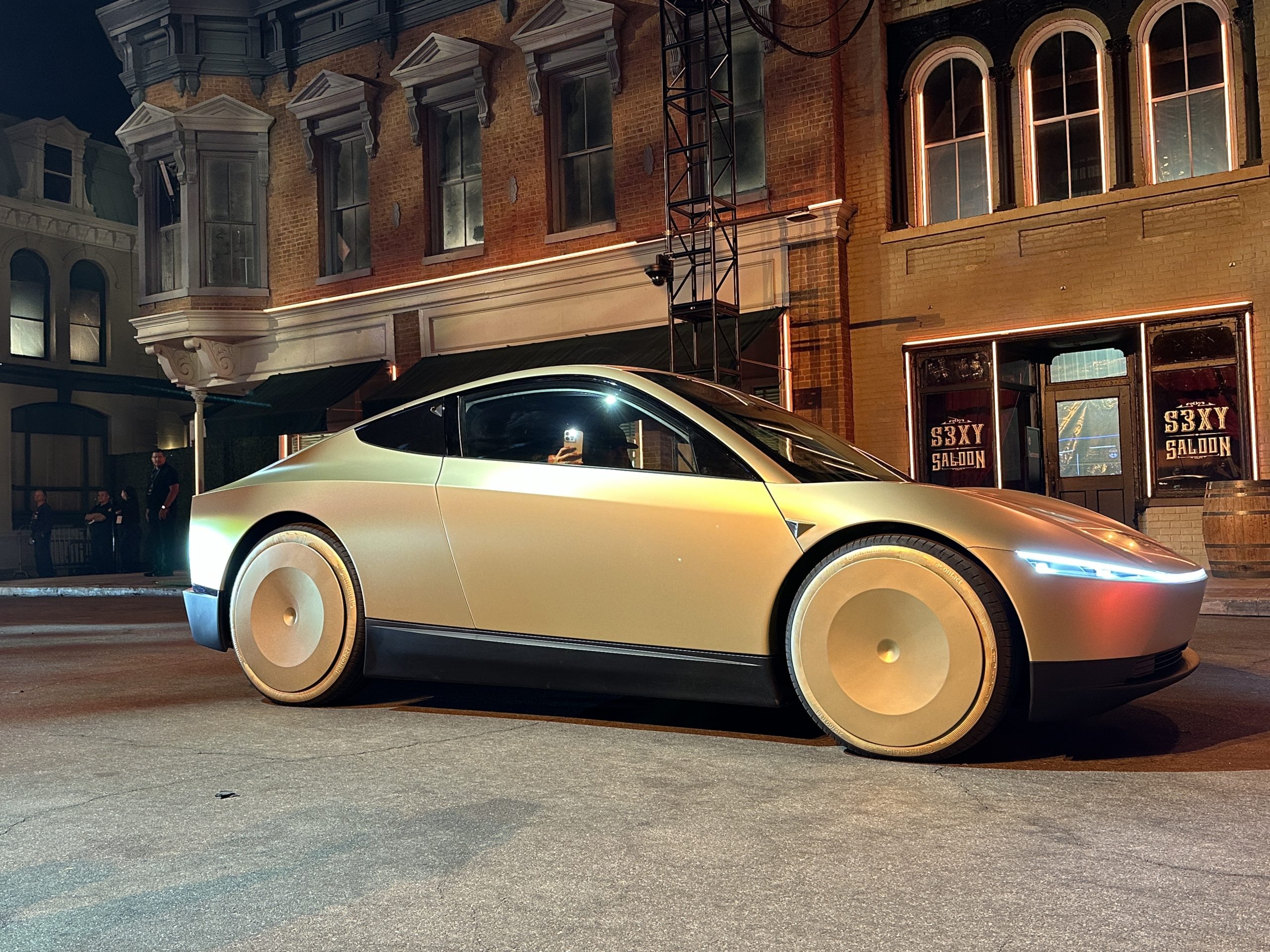
After launching in Austin, Texas, last week, Tesla is looking to expand the Cybercab to new parts of the United States in an effort that will see the driverless, steering wheel-less, and pedal-less vehicle chauffeur people around as part of the Robotaxi ride-hailing service.
However, the expansion will go far beyond the United States, and CEO Elon Musk revealed he hopes Europe will be the next market where Cybercab will be operational.
Musk has publicly expressed hope that Tesla’s Cybercab robotaxi will reach Europe in the near future.
On September 8, Tesla’s Chief Executive quoted a German rider who had just completed a trip in Austin, Texas, and wrote that he hoped the vehicle would not take years to arrive in Germany. Musk replied with a short but notable message: “Hopefully soon in Europe too.”
Hopefully soon in Europe too https://t.co/vqQ69bLJuN
— Elon Musk (@elonmusk) September 8, 2026
The comment arrived only days after Tesla opened Cybercab ride-hailing to the public in Austin. The two-seat vehicle has no steering wheel or pedals and relies entirely on Tesla’s Full Self-Driving software. Early passengers have described the rides as quiet, smooth, and more stylish than competing robotaxis such as Waymo.
Austin is currently the only city where members of the public can hail a Cybercab through Tesla’s Robotaxi app. The initial fleet is small; Texas registration records show only a few dozen of the purpose-built vehicles on the road.
Tesla set to open Cybercab rides to the public, with no steering wheel or pedals
Tesla has also been operating a larger number of conventional Model Y robotaxis in the same area, but the Cybercab itself represents the company’s first dedicated, controls-free taxi design.
Europe presents a different regulatory picture. The European Union does not permit manufacturers to self-certify vehicles the way Tesla did in the United States.
Type-approval rules and a small-series limit of 1,500 automated vehicles per type per year apply across the bloc.
Supervised Full Self-Driving has gained provisional approval in several member states through national recognition of Dutch certification, yet unsupervised robotaxi operation remains a separate and more distant step. Tesla has not announced a European launch city, date, or approval pathway for the Cybercab.
Musk himself has previously cautioned that the company does not control European regulators. In an earnings call earlier in 2026, he noted that even supervised FSD took an “immense amount of time” to clear and that unsupervised service would be “somewhat at the mercy of the governments in Europe and the EU.”
The latest social-media remark therefore functions more as an expression of intent than a timetable.
If the Cybercab eventually reaches European streets, it would mark a significant expansion of Tesla’s robotaxi ambitions beyond the United States. For now, the vehicle remains an Austin-only experience, and the gap between Musk’s hope and actual deployment will be decided by regulators rather than by engineering alone.
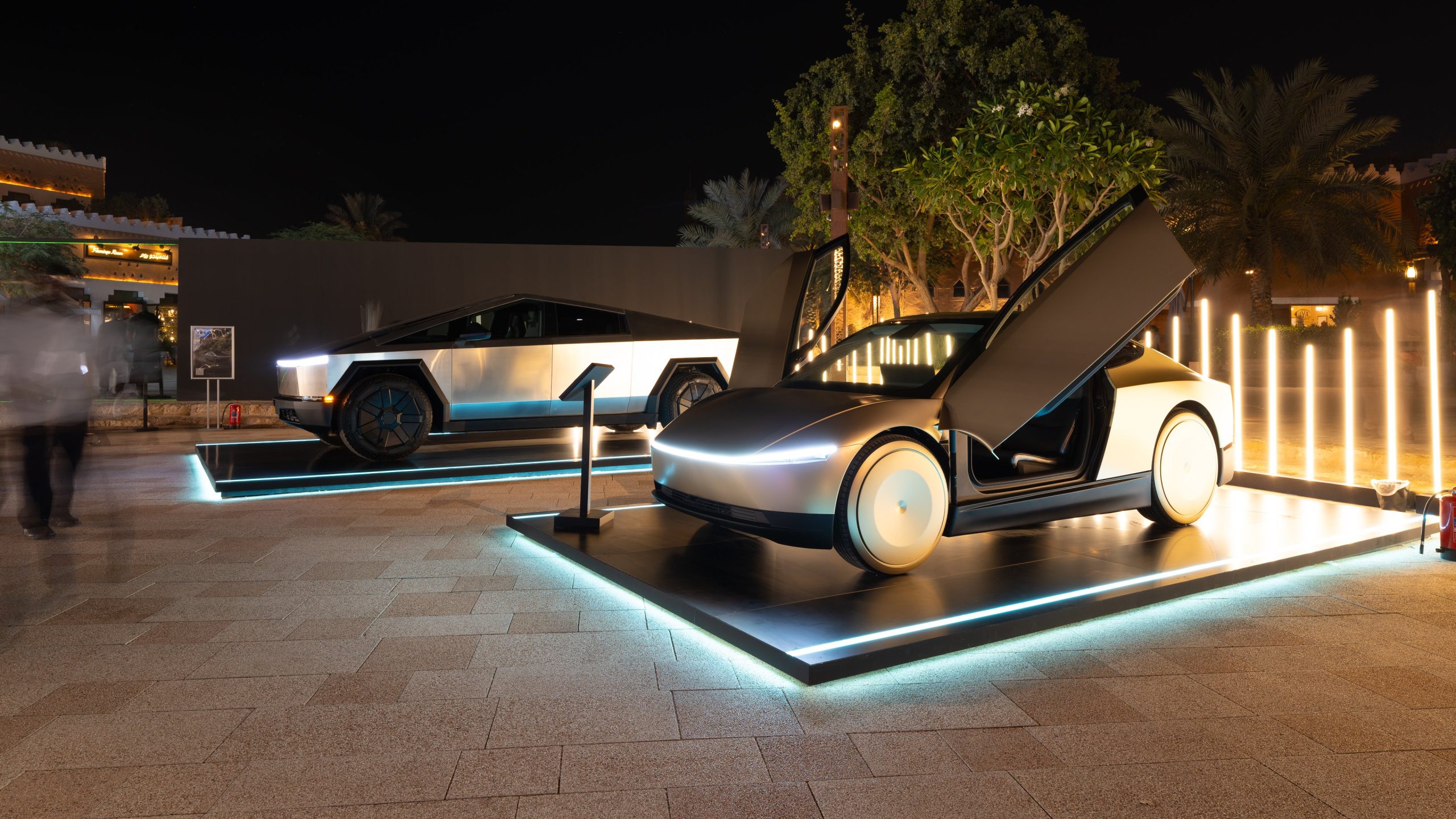
Tesla Cybercab might have just rolled out to the public as it entered the company’s Robotaxi suite in Austin this past week. However, the vehicle might already be on its way to becoming even better, as the company is asking riders to describe what they’d like to see improved with the Cybercab.
Tesla sent a rider experience survey to Cybercab passengers only days after paid rides began in Austin. The questionnaire asks how satisfied riders were with the overall trip. Then it requests star ratings for availability and wait time, door functionality, vehicle touchscreen, mobile app experience, seat comfort, interior space, ride comfort, cleanliness, and cargo space.
A later section asks which features riders would most like to have and allows selection of up to three items from a list that includes heated seats, ventilated seats, fully reclining seats, a tray table, a wireless phone charger, a better sound system, and more storage. Respondents may also choose none of these or write in another idea. The survey closes with a recommendation score from zero to ten.
Tesla just sent out a Cybercab rider experience survey so you can give feedback to the team. pic.twitter.com/YsU5OYdAjW
— Sawyer Merritt (@SawyerMerritt) September 8, 2026
This rapid request for input illustrates Tesla’s habit of treating early users as collaborators rather than mere customers. The company has long refined vehicles through software updates and hardware changes informed by real-world use across its passenger cars.
Collecting structured opinions so soon after commercial service started shows the same mindset applied to a purpose-built autonomous taxi. The questions themselves reveal an openness to cabin changes even after the first vehicles reached public streets, which is no surprise.
Tesla has always hoped to cater a great experience to anyone in its vehicles, which is why so many fan-requested features have made it into its vehicles.
Replies already circulating online favor reclining seats, tray tables, wireless charging, improved audio, and extra room when seats fold back.
Tesla Cybercabs narrowly miss deadly Amazon cargo plane crash
Those preferences point toward comfort upgrades that Tesla can implement in later production batches or through cabin revisions. Because the Cybercab is designed around software first principles, many requested amenities can arrive faster than in traditional automakers.
Tesla’s willingness to survey riders immediately after launch therefore makes near-term cabin and experience improvements likely as the team reviews responses and iterates toward a more refined robotaxi people will choose daily.
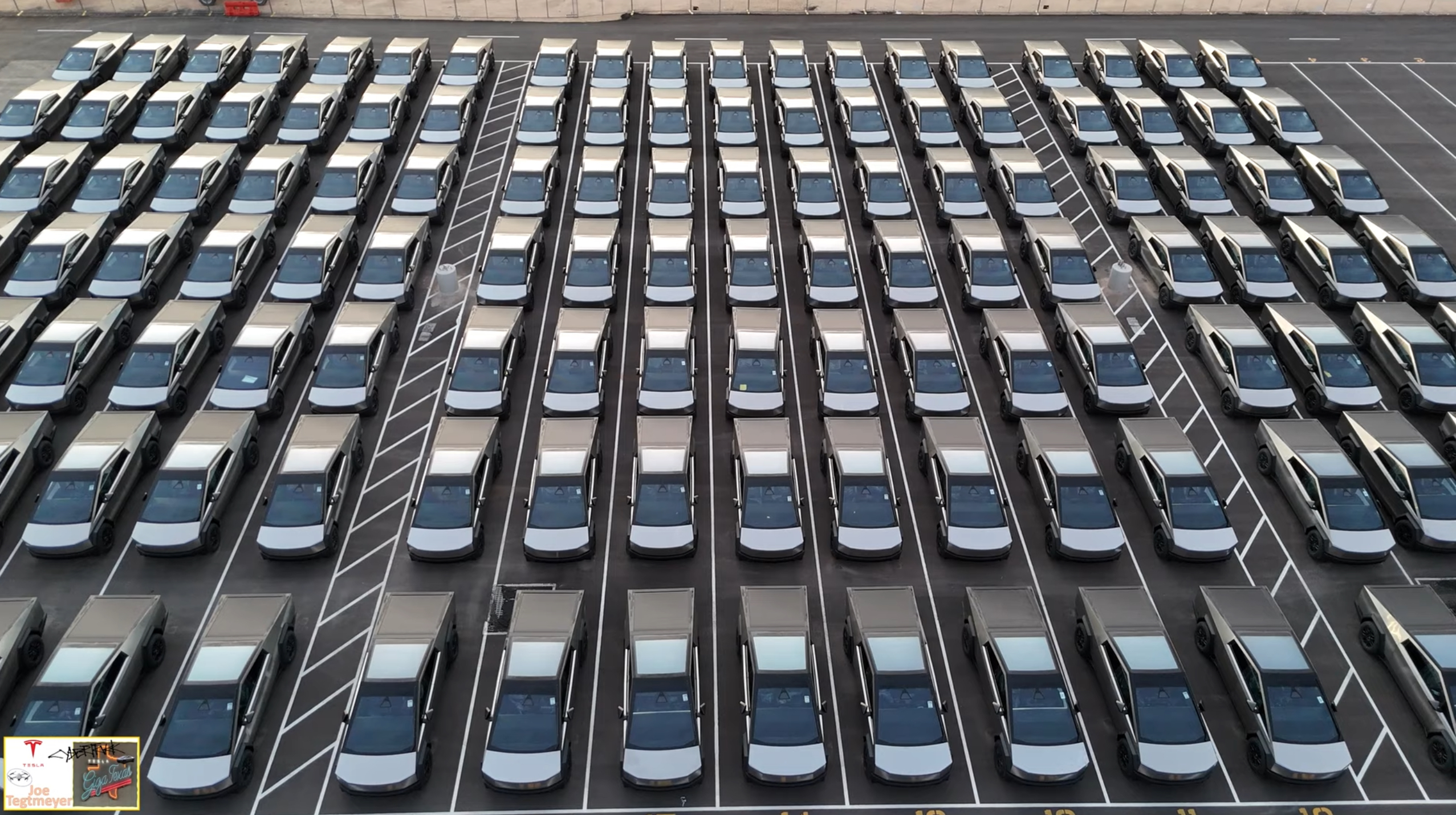
Tesla Cybertruck Lead Engineer Wes Morrill revealed the company has made several changes to the all-electric pickup, which he calls a “living thing, constantly evolving and improving.”
Cybertruck is manufactured at Tesla’s Gigafactory Texas just outside of Austin, and over the past few years, Tesla has continued to make small changes to the pickup to improve everything from cost, reliability, serviceablility, and manufacturability.
“The finish line isn’t getting to production. A product is a living thing, constantly evolving and improving,” Morrill added.
RELATED:
Tesla Cybertruck AWD is a steal at $60k, is it still at $75k? Full Review
Some of those changes are yet to be revealed, but perhaps the most notable one was the change Tesla made to the aero shield that sits underneath the truck. In the past, it was aluminum, but now the Cybertruck is using a self-reinforcing polypropylene.
Morrill said that the polypropylene is “stretched into fibers and then laminated into the form,” and is much more durable, much lighter, and significantly cheaper than aluminum when it is manufactured this way.
It also enabled some improvements in the geometry of the Cybertruck, improving the manufacturing around the bolts and edges, in addition to minor form changes. These all benefitted the Cybertruck in more ways than one: specifically with durability and improved drag.
I was surprised by how interested people were to find out we made a relatively benign change to the Cybertruck aero shield, a part of the car most people never even see. So I’ll share some more details.
Here are two photos, the left is one of the latest trucks off the… pic.twitter.com/F5cZo2CZKf
— Wes (@wmorrill3) September 7, 2026
Typically, Teslas are not necessarily identified by model year because these changes are fluid and occur when the company sees fit to implement them. It is not like other automotive companies, which usually make sweeping manufacturing changes when building a new model year.
Instead, Teslas are recognized by their “generation” or “era.” For example, those with a newer Model Y might refer to their car as a “Juniper.” This is the same with Model 3, as many refer to the new body style as the “Highland.”
Tesla’s manufacturing changes are proof of the company’s constant need to improve its products and move things forward with its vehicles. There is no need to drag one’s feet and wait until next year if the product can be made better right now, and that’s precisely what Tesla did with the Cybertruck.

Elon Musk hints at Tesla Cybercab’s next market

Tesla Cybercab improvements are already on the minds of company engineers


