Elon Musk
Delaware Supreme Court reinstates Elon Musk’s 2018 Tesla CEO pay package
The unanimous decision criticized the prior total rescission as “improper and inequitable,” arguing that it left Musk uncompensated for six years of transformative leadership at Tesla.

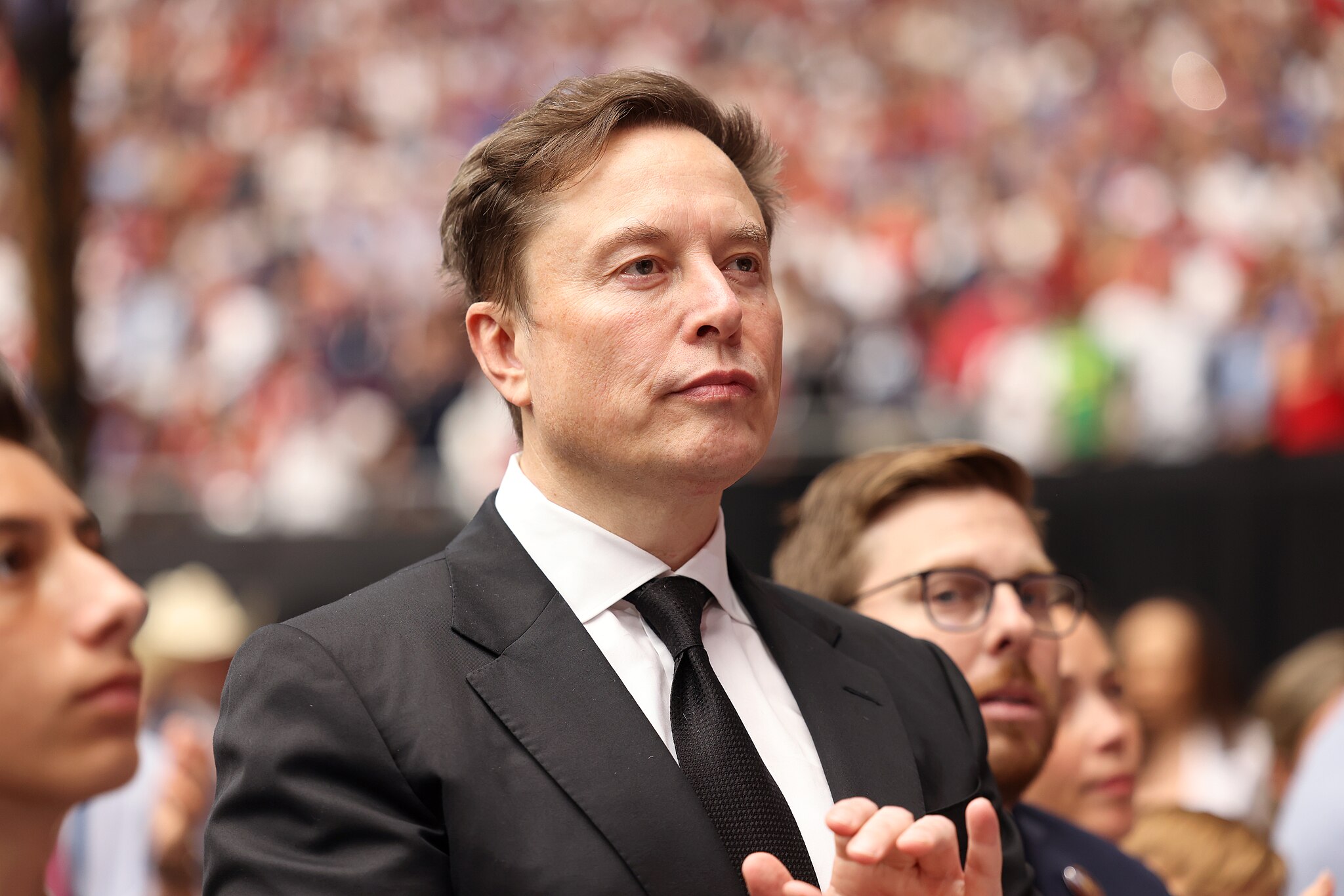
The Delaware Supreme Court has overturned a lower court ruling, reinstating Elon Musk’s 2018 compensation package originally valued at $56 billion but now worth approximately $139 billion due to Tesla’s soaring stock price.
The unanimous decision criticized the prior total rescission as “improper and inequitable,” arguing that it left Musk uncompensated for six years of transformative leadership at Tesla. Musk quickly celebrated the outcome on X, stating that he felt “vindicated.” He also shared his gratitude to TSLA shareholders.
Delaware Supreme Court makes a decision
In a 49-page ruling Friday, the Delaware Supreme Court reversed Chancellor Kathaleen McCormick’s 2024 decision that voided the 2018 package over alleged board conflicts and inadequate shareholder disclosures. The high court acknowledged varying views on liability but agreed rescission was excessive, stating it “leaves Musk uncompensated for his time and efforts over a period of six years.”
The 2018 plan granted Musk options on about 304 million shares upon hitting aggressive milestones, all of which were achieved ahead of time. Shareholders overwhelmingly approved it initially in 2018 and ratified it once again in 2024 after the Delaware lower court struck it down. The case against Musk’s 2018 pay package was filed by plaintiff Richard Tornetta, who held just nine shares when the compensation plan was approved.
A hard-fought victory
As noted in a Reuters report, Tesla’s win avoids a potential $26 billion earnings hit from replacing the award at current prices. Tesla, now Texas-incorporated, had hedged with interim plans, including a November 2025 shareholder-approved package potentially worth $878 billion tied to Robotaxi and Optimus goals and other extremely aggressive operational milestones.
The saga surrounding Elon Musk’s 2018 pay package ultimately damaged Delaware’s corporate appeal, prompting a number of high-profile firms, such as Dropbox, Roblox, Trade Desk, and Coinbase, to follow Tesla’s exodus out of the state. What added more fuel to the issue was the fact that Tornetta’s legal team, following the lower court’s 2024 decision, demanded a fee request of more than $5.1 billion worth of TSLA stock, which was equal to an hourly rate of over $200,000.
Delaware Supreme Court Elon Musk 2018 Pay Package by Simon Alvarez


Elon Musk
Elon Musk says he knows how to save Earth for a billion years
Elon Musk says sentient AI satellites launched from the Moon could keep Earth livable forever.

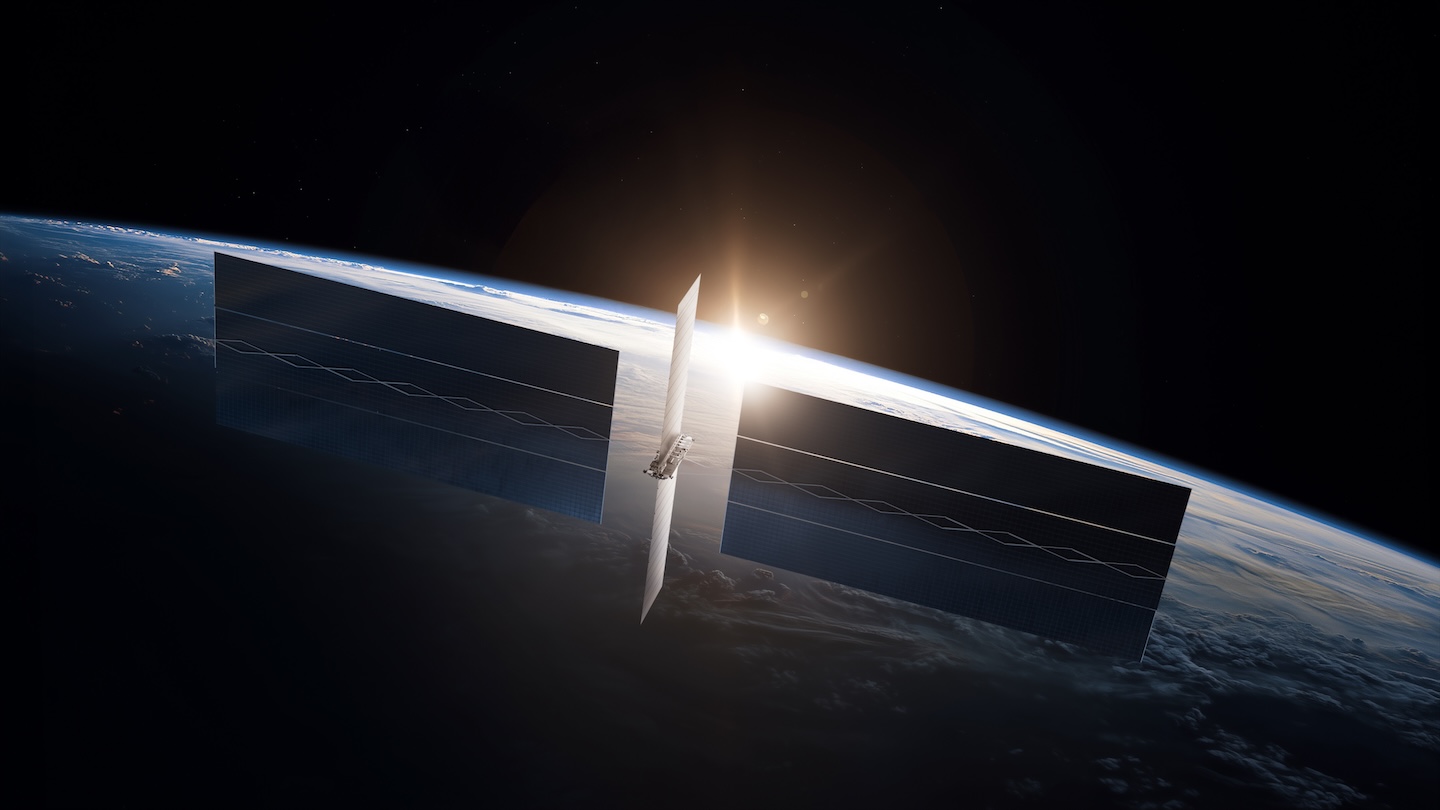
Elon Musk spent part of his weekend describing a plan to keep the planet livable for roughly a billion years, and it starts with satellites that can think for themselves.
In a post on X, Musk argued that swapping fossil fuels for solar and wind power will not be enough to protect humanity from what he called extremely severe extinction events, the kind that occur roughly every 100 million years. His fix is what he called sentient satellites, or solar-powered satellites, controlled by AI, that would sit in a fixed spot between Earth and the Sun after being launched off the Moon using a giant electromagnetic catapult instead of rockets.
The satellites’ onboard AI would make continuous, small adjustments rather than waiting on human instructions. The mass driver is Musk’s proposed way of getting the raw material there cheaply by using an electromagnetic launch track built on the Moon, where lower gravity and no atmosphere make it far easier to fling cargo into space than it is from Earth.
But we do need to act much faster than that if people still want to live where the beach is today. We have about 50 years or so to take action, which should be more than enough time for the space satellites to solve any heating problems. https://t.co/xhrVQALwQw
— Elon Musk (@elonmusk) August 30, 2026
Musk shared a Grok generated estimate suggesting roughly 5 percent of Florida’s land, or about 1.68 million acres, could face regular flooding by 2070 under a high sea level rise scenario, and said humanity has about 50 years to act before coastal living looks very different than it does today.
This is not the first time Musk has floated the idea. He raised a similar concept in November, describing a solar powered AI satellite constellation that could make tiny adjustments to incoming sunlight to fine tune Earth’s temperature. Musk has also tied planetary risk to his broader vision at SpaceX, where his compensation package is explicitly linked to establishing a self-sustaining Mars colony, one he has described as an insurance policy against the kind of extinction event he referenced this weekend, and where he has said humans could set foot within five to seven years.
Elon Musk
OpenAI cites distrust of SpaceX in decision to drop Cursor partnership
OpenAI will cut SpaceX-owned Cursor’s model access in November, citing Musk’s history of broken contracts.
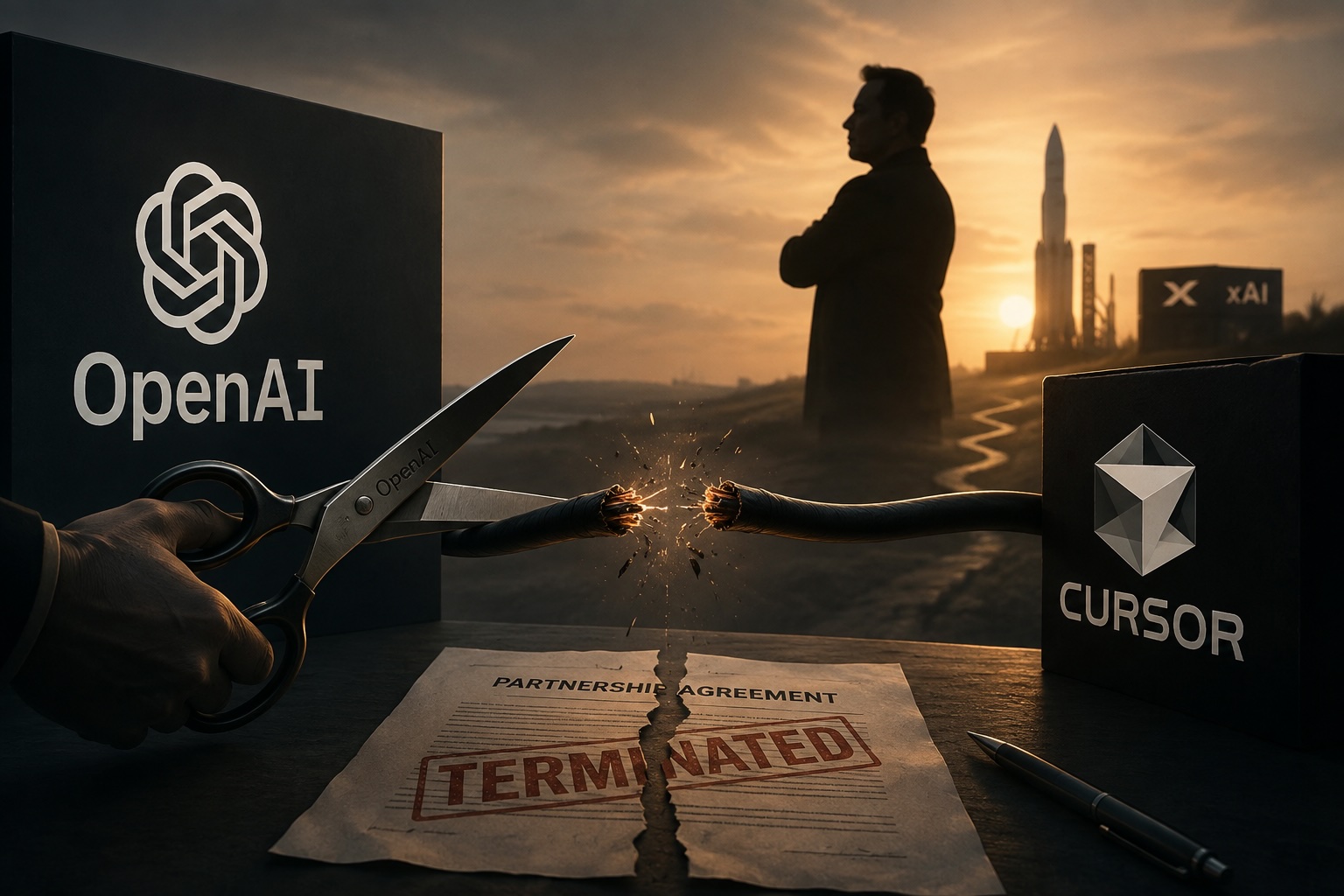
OpenAI, the company behind ChatGPT, announced late Friday that it is ending its partnership with Cursor, cutting off the coding tool’s access to its models on November 12. The move comes two weeks after SpaceX completed its $60 billion acquisition of Cursor’s parent company, Anysphere, folding the popular AI coding assistant into Elon Musk’s growing SpaceXAI division.
In a post on its website, OpenAI said the decision came down to trust, not technology. “We cannot be confident that SpaceX will use our technology within our terms of service, based on our experience with Elon Musk’s companies violating contracts,” the company wrote. OpenAI pointed to two specific incidents: X, now part of SpaceX, allegedly breaking the terms of an existing OpenAI contract after Musk bought Twitter.
That lawsuit is the backdrop for all of this. Musk cofounded OpenAI in 2015, left the board in 2018, and sued Sam Altman and Greg Brockman in 2024, arguing they abandoned the company’s nonprofit mission for profit. A federal jury sided with OpenAI in May, finding Musk waited too long to sue rather than ruling on the merits of his claims. Musk said at the time he would appeal to the Ninth Circuit, calling the outcome a “calendar technicality” rather than a real judgment.
SpaceX’s interest in Cursor predates that verdict by weeks. The company first struck a deal with Cursor in April, securing an option to acquire it for $60 billion or pay $10 billion for joint development work instead. As Teslarati reported at the time, the logic was straightforward: Cursor was paying retail prices to Anthropic and OpenAI, two of its most direct competitors, every time a developer used its product, while SpaceX had idle capacity on its Colossus supercomputer, roughly the equivalent of a million Nvidia H100 GPUs, that Cursor could use to train its own models instead. SpaceX exercised the option in June, days after its own IPO, and the deal closed in mid-August.
Once it closed, Musk moved fast. On an all-hands call with more than 1,000 Cursor employees, he reportedly told staff that SpaceXAI’s Grok was playing catchup in the AI race, unlike Tesla and SpaceX in their own markets, and singled out Anthropic as the company to catch. Cursor CEO Michael Truell now reports directly to Musk inside SpaceXAI.
Losing OpenAI’s models leaves Cursor leaning harder on Anthropic’s Claude, which has its own compute agreement with SpaceX, and on Cursor’s in-house Composer model, the one SpaceX’s compute was supposed to accelerate in the first place. OpenAI framed the November deadline as maximum notice under its contract, and said it wants to “go above and beyond” to help developers through the transition. Whether Anthropic makes the same call is now the open question in AI coding.
Elon Musk
County vote hands Elon Musk’s Vegas tunnel network a huge new target
Clark County approved 19 more Vegas Loop stations, pushing Boring Company’s entitled total to 123.
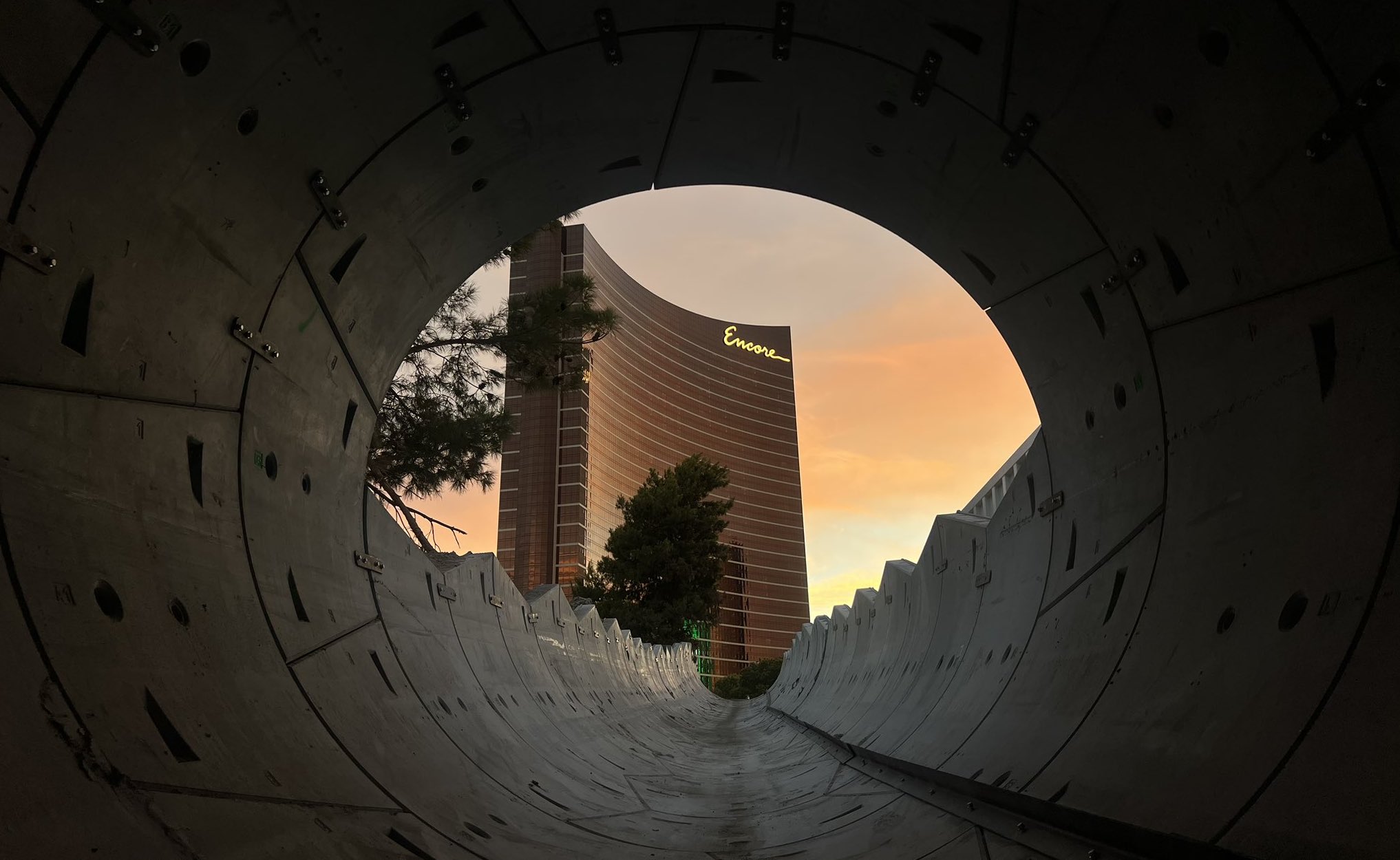
The Boring Company just got permission to nearly double how far Vegas Loop can reach. Clark County commissioners approved 19 additional stations for the underground transit system, bringing the total entitled to 123, the company said in a post on X thanking the county for the vote. Elon Musk’s tunneling company also flagged the direction it sees the project heading long term. “Because Loop is point-to-point with no intermediate stops, in the limit, one could have a Loop station in every driveway,” the company wrote.
That framing captures how far the ambitions have moved. The Vegas Loop opened its first stretch of tunnel in 2021 and has grown its footprint through a string of county approvals since. In 2023, commissioners signed off on 18 additional stations, part of a plan that later doubled the system’s target to 69 stations across 65 miles. By the end of that year the company was describing a build out closer to 93 planned stations. Last year the long term design called for 104 stations across 68 miles of tunnel. The new approval pushes that number to 123, another jump in a project that keeps outgrowing its own blueprints.
The Boring Company gets approval for more stations in Las Vegas
Station count on paper is still well ahead of what riders can actually use. As Teslarati reported earlier this month, the network has about 11 open stations and has carried more than 4 million passengers since it began running, with newer stops at Fontainebleau and Sahara among the latest additions to the Strip corridor. A tunnel connection to Harry Reid International Airport remains under construction and has already slipped past its original first quarter target. The company is also racing to finish a Westgate to Paradise Road segment that Las Vegas Convention and Visitors Authority CEO Steve Hill has said it hopes to have running in time for November’s Formula 1 race.
The gap between entitled stations and operating ones is where the real story sits. Regulatory approval gives Boring Company the legal runway to keep tunneling toward new resorts, residential pockets and eventually the airport, but building each connection still comes down to boring machines, fire safety sign offs and construction timelines that have slipped before. The company’s Prufrock series machines set an internal record in March with a 2.28 mile tunnel near Westgate, evidence that construction has been picking up even as the list of approved destinations grows faster than the tunnels themselves.
Musk’s driveway comment reads as aspirational rather than a near term plan, but it fits how Boring Company has talked about Vegas Loop from the start: treat every approval as a floor, not a ceiling, and keep pushing county officials for room to dig.

Elon Musk says he knows how to save Earth for a billion years

OpenAI cites distrust of SpaceX in decision to drop Cursor partnership


