News
Uber forced to stop self-driving pilot program in San Francisco by DMV

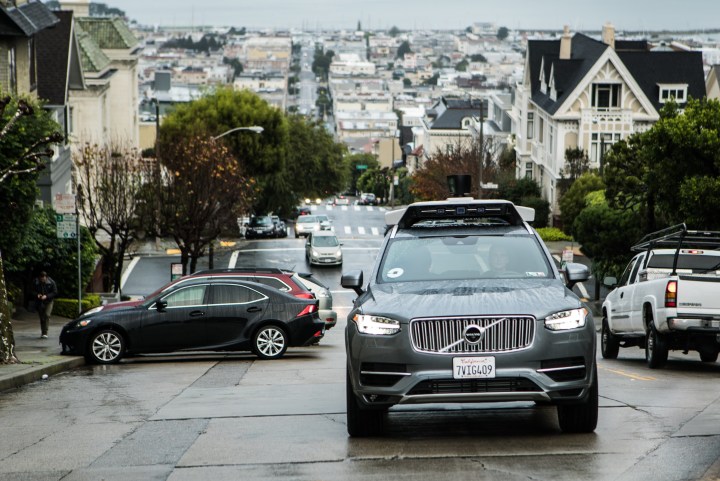
No longer will Uber’s self-driving cars be seen on San Francisco’s streets. The company announced on Wednesday that it was ending its autonomous car service, which began just a week ago, after clashes with state regulators and amidst much public concern.
The state’s Department of Motor Vehicles revoked Uber’s registrations, saying they “were improperly issued for these vehicles because they were not properly marked as test vehicles.” While competitors such as Tesla Motors, Google, and Nvidia have complied with state testing requirements, Uber claimed it didn’t need a permit, as it says its cars were not fully autonomous.
The sixteen Uber Volvo XC90s were equipped with a suite of roof-mounted sensors and dual driver controls. Two humans were onboard, one who was required to keep hands on the steering wheel at all times and another who monitored the technology.
Self-driving vehicles steer and brake independently but generally operate with a human in the driver’s seat who is prepared to assume driving responsibilities should the situation merit it. California law defines autonomous vehicles as those that drive “without the active physical control or monitoring of a natural person.” Under threat of legal action, Uber shut down the pilot program.
From the moment that Uber’s small self-driving fleet entered San Francisco’s traffic patterns, controversy arose. Videos emerged of Uber pilot cars running a red light and stopped in the middle of an intersection. Uber blamed red light incidents on human driver error, not the cars’ technology.
Brian Wiedenmeir, executive director of the San Francisco Bicycle Coalition, wrote on the organization’s website that, prior to Uber’s official launch, he encountered self-driving Ubers make multiple illegal and unsafe “right-hook” turns across bicycle lanes. “Those vehicles are not yet ready for our streets.” Uber, however, countered, explaining that a software fix for right hooks “has already been fixed operationally.” In other words, the two humans aboard were instructed to assume vehicle control when making these more complicated turns.
San Francisco Mayor Ed Lee commended the DMV for taking enforcement action against Uber. “I have always been a strong supporter of innovation and autonomous vehicle development and testing,” he wrote Wednesday in an emailed statement, “but only under conditions that put human, bicyclist, and pedestrian safety first.”
In a letter to Uber, DMV Director Jean Shiomoto assured the company that the department is a proponent of autonomous technologies. “We are committed to assisting Uber in their efforts to innovate and advance this ground-breaking technology.”
“Uber is welcome to test its autonomous technology in California like everybody else, through the issuance of a testing permit that can take less than 72 hours to issue after a completed application is submitted,” a DMV spokesman wrote in an emailed statement. “The department stands ready to assist Uber in obtaining a permit as expeditiously as possible.”
“We’re now looking at where we can redeploy these cars,” an Uber spokeswoman said in a provided statement, “but remain 100 percent committed to California and will be redoubling our efforts to develop workable statewide rules.”
Uber’s reveal of its San Francisco self-driving car rollout was quite the spectacle, intended to position the company as a keen rivals to its competitors. Anthony Levandowski, vice president for Uber’s self-driving technology, blogged that “the promise of self-driving is core to our mission of reliable transportation, everywhere for everyone.”
Now Pittsburgh is the only U.S. city which allows Uber’s self-driving carshare service. No major incidents have been reported from the Pittsburgh test program, which began in September.


News
SpaceX tells the FCC that Starship Flight 14 is going to orbit
SpaceX filed with the FCC for Starship Flight 14, its first true orbital launch attempt.

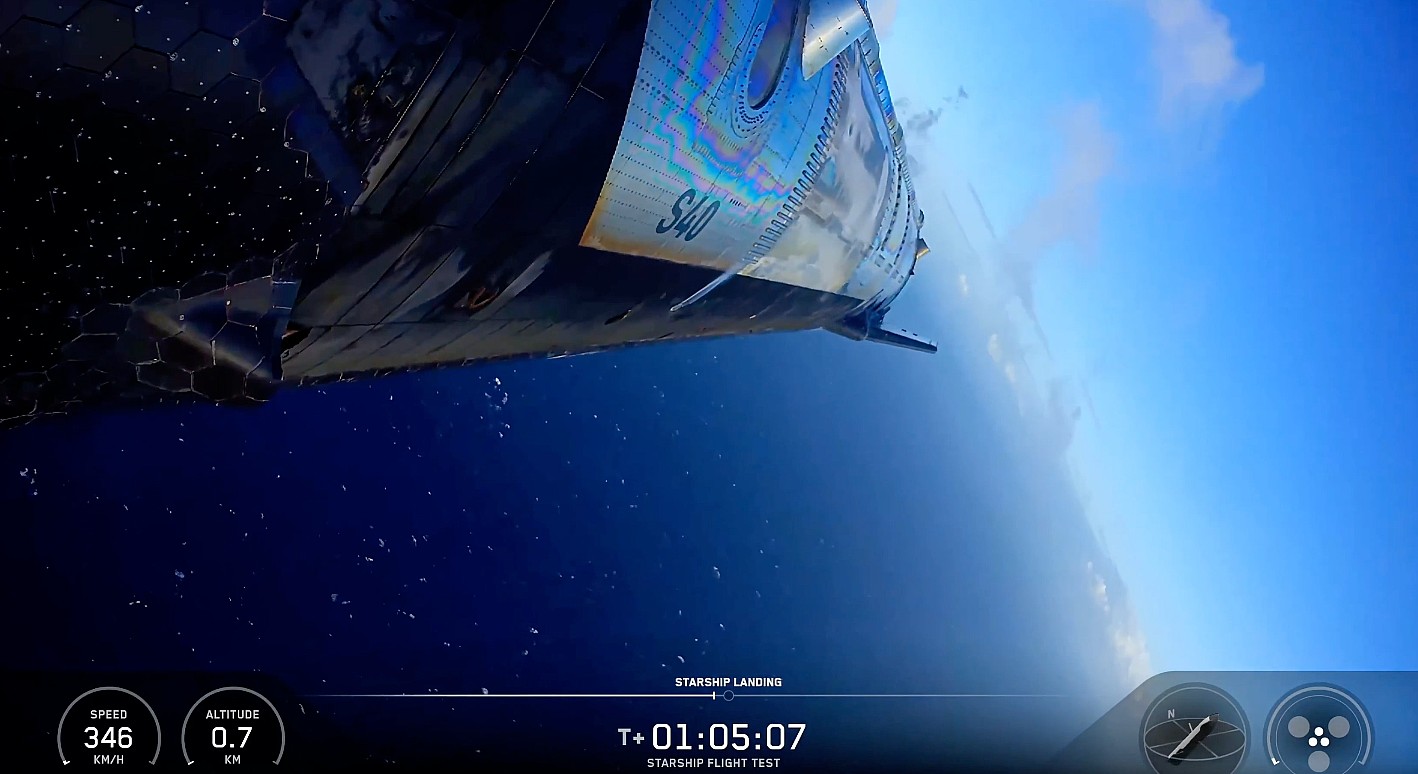
SpaceX has asked the Federal Communications Commission for permission to fly Starlink terminals during Starship’s fourteenth flight test, and the filing lays out a genuine trip to orbit, something the program has never attempted.
Every Starship flight so far, including Flight 13’s successful splashdown in the Indian Ocean on July 24, has flown a suborbital arc that ends with the ship reentering the atmosphere within the same hour it launches. The FCC paperwork describes a mission profile built around an actual orbital insertion instead.
The payload is the other half of the story. Flight 13 carried 20 production Starlink V3 satellites, but because that mission never reached orbit, the satellites reentered along with the ship rather than joining the constellation, something Teslarati covered in detail after SpaceX released footage shot from one of those satellites as it drifted away from Starship in space. Flight 14 is designed to close that gap. If the orbital insertion holds, the roughly 20 V3 satellites onboard would separate into an operational orbit and could eventually go into service, each one rated for about 1 terabit per second of downlink capacity by SpaceX’s own account.
SpaceX announces new Starbase for ‘thousands of Starship launches annually’
Elon Musk first flagged the orbital attempt during SpaceX’s August 4 earnings call, the company’s first as a public entity following its June IPO under the ticker SPCX. He also floated catching the ship with the Starbase tower on the same flight, an idea he walked back on August 20, saying the catch attempt would more likely come “in a few months,” as Teslarati reported at the time. Flight 14 will instead target a splashdown for the ship in the Indian Ocean, the same recovery method used since Flight 12.
Hardware has been catching up to the ambition. Booster 21 completed a full 33-engine static fire on August 28, and Ship 41 finished its own six-engine test the week before. An airspace briefing circulated to pilots on August 20 listed September 15 as the target date, later than the end of August window Musk mentioned on the earnings call, though SpaceX has not confirmed a launch date publicly and Starship schedules routinely slip while hardware and FAA paperwork line up.
The FCC filing itself does not guarantee a launch date. It covers communications authority, and not flight readiness, considering SpaceX still needs Ship 41 fully stacked and cleared by the FAA before Flight 14 can fly. But the filing is a real marker of intent and it puts a specific regulatory process behind what had so far only been Musk’s word on the earnings call.

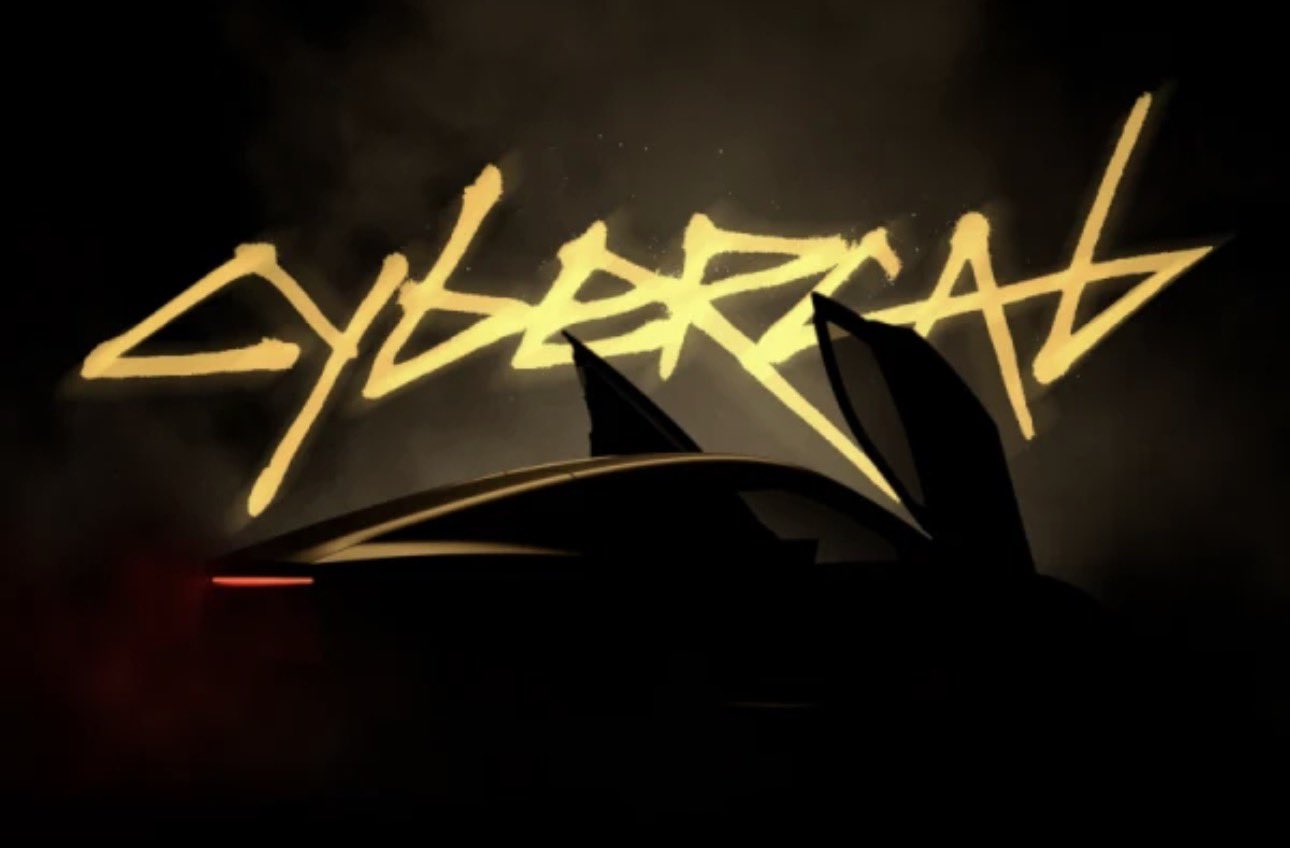
Tesla is set to launch Cybercab on Thursday at an event in Austin, Texas, which will officially bring the company’s first steering wheel-less and pedal-less vehicle to a limited number of consumers for the first time.
The event, which is invite-only, is still thin on details: we’ll be there, and it seems the event will be held at Gigafactory Texas, but the launch of this vehicle truly relies on it being operational outside of the factory and on public roads.
🚨 Close-Up look at Tesla Cybercab without steering wheel: pic.twitter.com/9TXCDeDCz7
— TESLARATI (@Teslarati) July 3, 2026
Nevertheless, there are some big things to expect, and other things to temper expectations on. For what it’s worth, we believe this event could be perhaps the biggest indication that Tesla is ready to truly enter a new phase and chapter in its historic story.
Tesla Cybercab’s First Foray into the Public with Real-World Riders
Cybercab will likely hit the streets of Austin and the surrounding areas, likely in the established geofence that Tesla has expanded on for the past 14 months. Just yesterday, Tesla expanded it once again by 9 percent.
Tesla will put, for the first time, a vehicle without any manual controls on public roads, likely without any help from teleoperators. This is a truly groundbreaking development if it comes through in this fashion: it would be groundbreaking for Tesla to roll out a truly driverless ride-hailing vehicle.
Cybercab Has Already Been Unveiled
This is not an unveiling event. Cybercab has been released for nearly two years, as Tesla first showed it to the public on October 10, 2024.
FIRST LOOK: Tesla ‘Cybercab’ Robotaxi makes its global debut
While there is some small speculation that Tesla could release the Roadster at the event as a surprise, it seems more likely the focus will be on the Cybercab and the huge accomplishment that will come with releasing a vehicle with no manual controls.
There Will Be a Lot of Hype
What’s important to remember about the Cybercab event is that Tesla will continue to prioritize safety and the rollout will likely be slow, just as it has been with Robotaxi.
One of the biggest complaints about Robotaxi is vehicle population, and the fact that the wait for a ride, at least in some instances, has been longer than most want to admit.
It will take time for this project to truly scale. It will take time for Tesla to roll this out in a large fashion. The important thing to note is that they are doing it, and they’re doing it with a vehicle that is completely engineered and built internally. That’s something no other ride-hailing service can say.
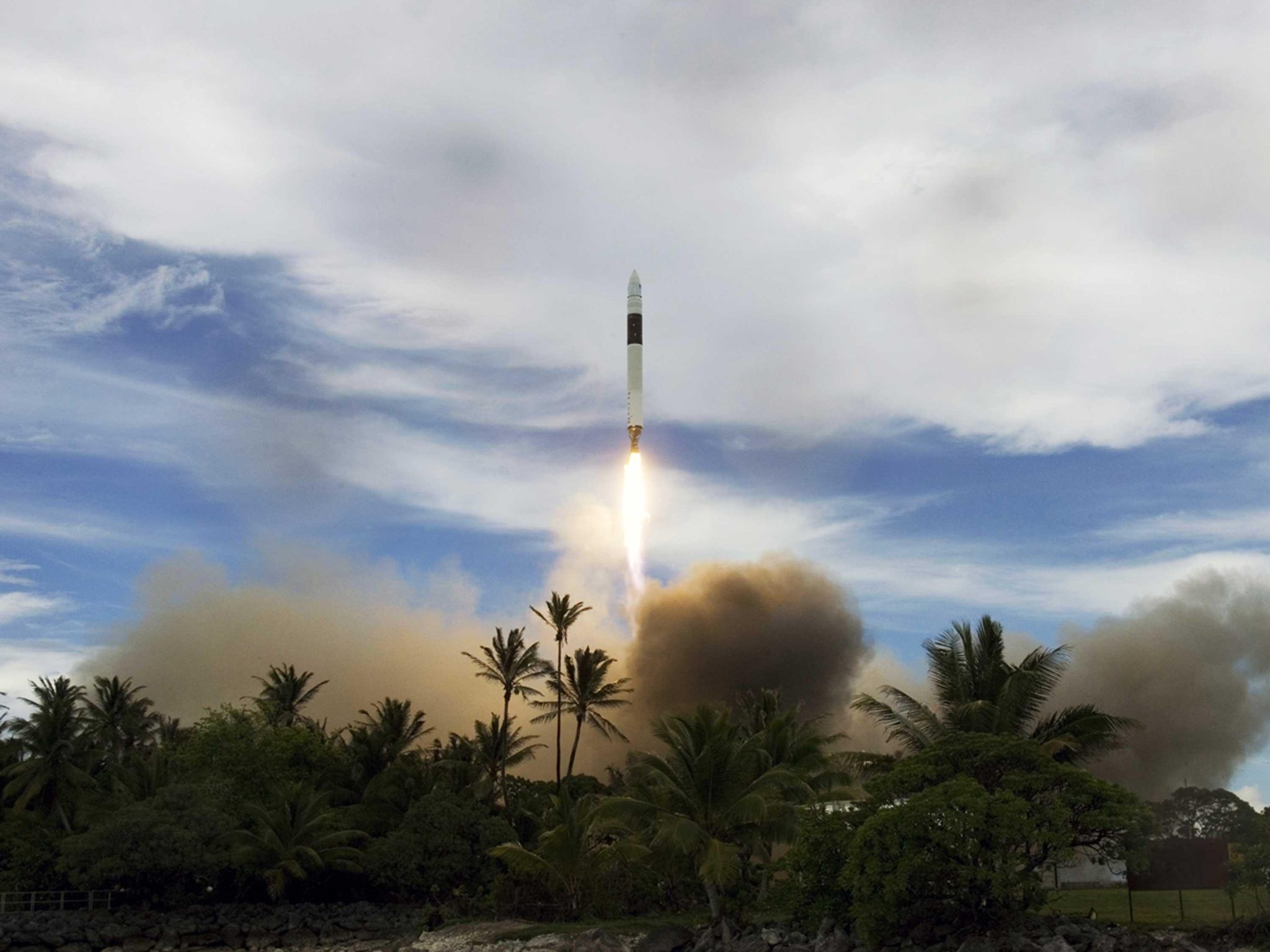
Elon Musk recently restated a fact that still defines SpaceX’s origin story: if Falcon 1’s fourth launch had failed, the company would not exist. The comment answered a reminder that after three consecutive losses, SpaceX had money for only one more attempt.
On X, Peter Diamandis said that the present-day acknowledgement of SpaceX’s success does not discount the rough start the company had. “Almost nobody remembers that Elon’s first rocket failed three times, and there was money for exactly only one more attempt.”
Musk said, “If the 4th launch had failed, SpaceX would not exist.”
If the 4th launch had failed, SpaceX would not exist
— Elon Musk (@elonmusk) August 30, 2026
In late 2008, the firm was nearly out of cash. Another failure would have ended payroll, closed the Hawthorne factory, and left the Falcon 9 and Dragon programs as unfinished drawings.
The first flight lifted off from Omelek Island on 24 March 2006. Thirty-three seconds later, a corroded aluminum fitting on a fuel line leaked. Kerosene ignited around the Merlin engine, control was lost, and the vehicle came apart. The small DARPA payload, FalconSAT-2, survived the short flight only to land on a storage shed near the pad. Investigators later traced the fitting to a materials mix-up that should never have reached the rocket.
Flight 2, on 21 March 2007, looked far better at first. The first stage burned cleanly and handed off to the Kestrel-powered upper stage. The vehicle crossed 100 kilometers and reached a peak of about 289 kilometers. Then propellant slosh in the second-stage tank started a circular coning motion that grew until the engine shut down. Telemetry faded as the stage tumbled, and SpaceX had reached space but not orbit. Over the next year, the team redesigned everything from the ground up, including tanks, baffles, and the new regeneratively cooled Merlin 1C.
That engine flew on Flight 3 on 2 August 2008. The first stage performed almost perfectly and reached 217 kilometers. After main-engine cutoff, leftover fuel in the cooling channels produced a faint residual thrust, roughly 10 pounds per square inch of chamber pressure. On a Texas test stand, the effect was invisible beneath ambient air pressure. In vacuum it was enough to push the spent first stage back into the second stage after separation. The stages collided, the upper stage spun, and the mission was lost. Musk later said a slightly longer delay before staging would have saved the flight.
Six weeks later, the team assembled Flight 4 from remaining parts and flew it on 28 September 2008 at 23:15 UTC. The payload was Ratsat, a 165-kilogram aluminum mass simulator built in-house. Staging was delayed so residual thrust could decay. The Kestrel ignited, the fairing split away, and nine and a half minutes after liftoff the vehicle was in orbit. After a coast, the second stage restarted, settling into a 621-by-643-kilometer path at 9.35 degrees inclination. Falcon 1 became the first privately developed liquid-fueled rocket to reach Earth orbit. Musk called the insertion “middle of the bull’s-eye.”
SpaceX restores a Falcon 1 rocket for 10th anniversary of first launch success
That success unlocked NASA’s Commercial Resupply Services award later that year. Without it, there would have been no Falcon 9, no reusable first stages, and no Dragon cargo or crew flights to the International Space Station. Launch prices would have remained far higher. Starlink’s constellation would not exist; broadband from low Earth orbit would still be a paper concept.
Ride-share markets, high launch cadence, and the current pace of lunar and Mars hardware would be years behind. Communications, Earth observation, and the cost of putting anything into space would look more like the 2000s than the 2020s.
One extra second of residual thrust in August 2008 would have written a different decade.

SpaceX tells the FCC that Starship Flight 14 is going to orbit

Tesla Cybercab Event: what to expect from Austin


