News
Tesla Model X gets a 20″ Sonic Carbon Wheel and Center Console option

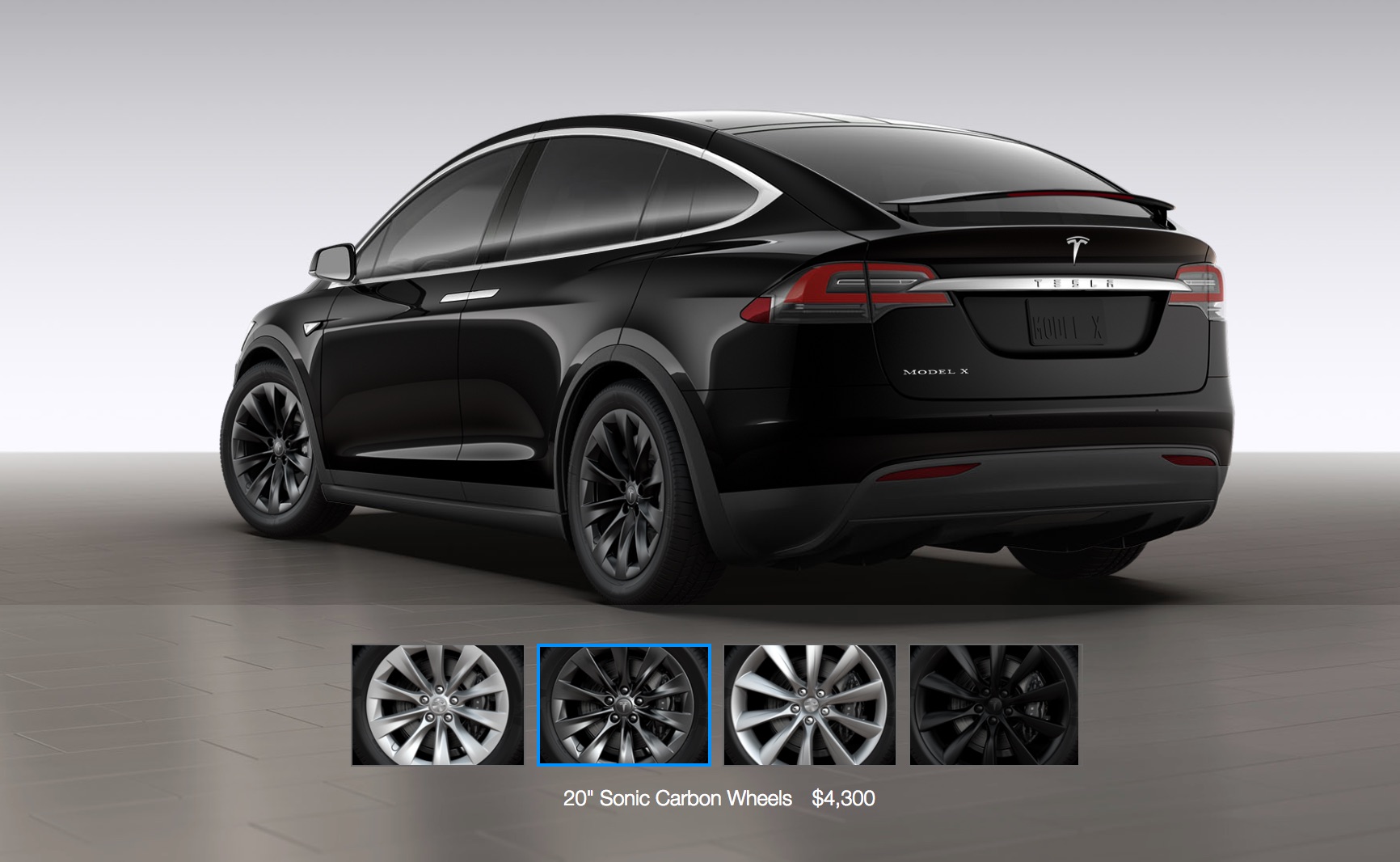
Tesla has introduced a new ‘Sonic Carbon Wheel’ option and a new six seat configuration with center console for the Model X. The new addition was one of many updates made over the weekend to the Model S and Model X Design Studio to better reflect buyers’ preferences, according to a statement issued by Tesla.
Until recently, Model X buyers who preferred a darker colored wheel had to either purchase the optional $7,800 Onyx Black Turbine wheel which is only available in a 22″ set up, or take it upon themselves to paint the standard 20″ silver Slipstream wheels on their own. Buyers of the 22″ Black Onyx Wheels sacrificed driving range for aesthetics and improved performance. Tesla originally noted on the Model X Design Studio that 22″ wheels “exchange 10-15% range for enhanced handling”.
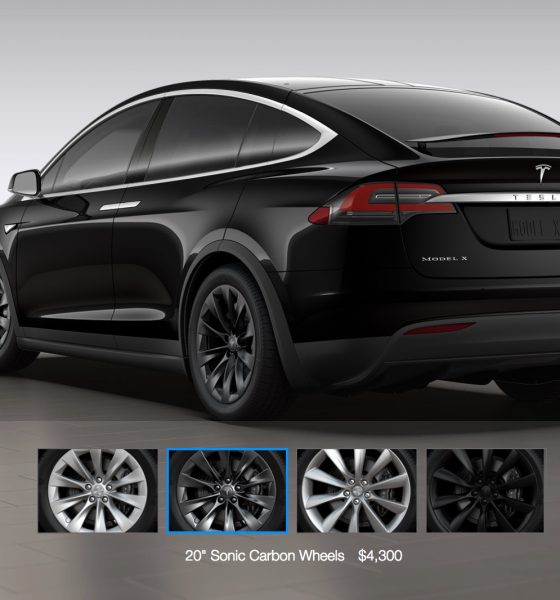
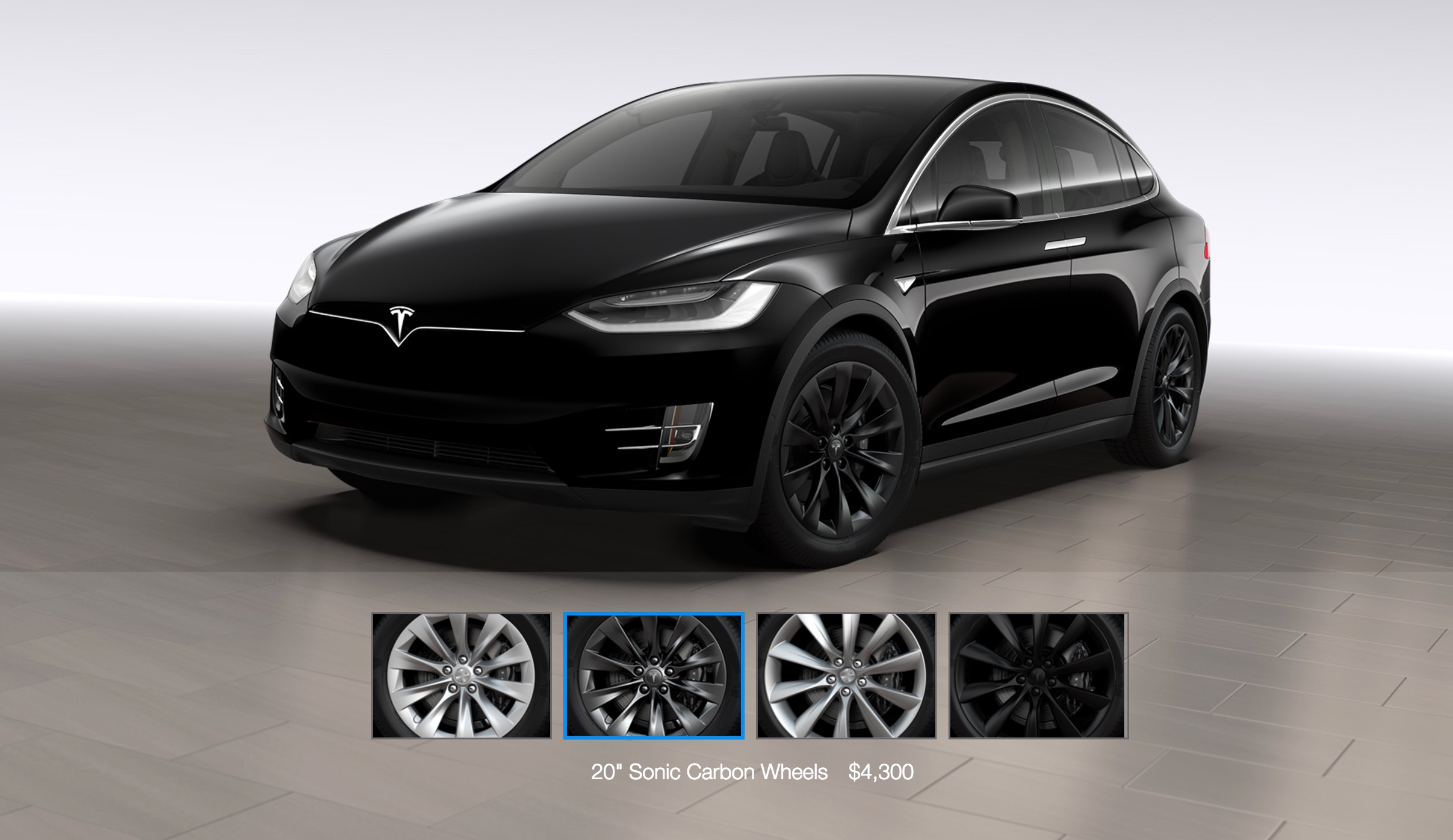
The new Sonic Carbon Wheels, being offered as a $4,300 upgrade, comes as a relief to buyers looking for maximum driving range and have a darker wheel color.
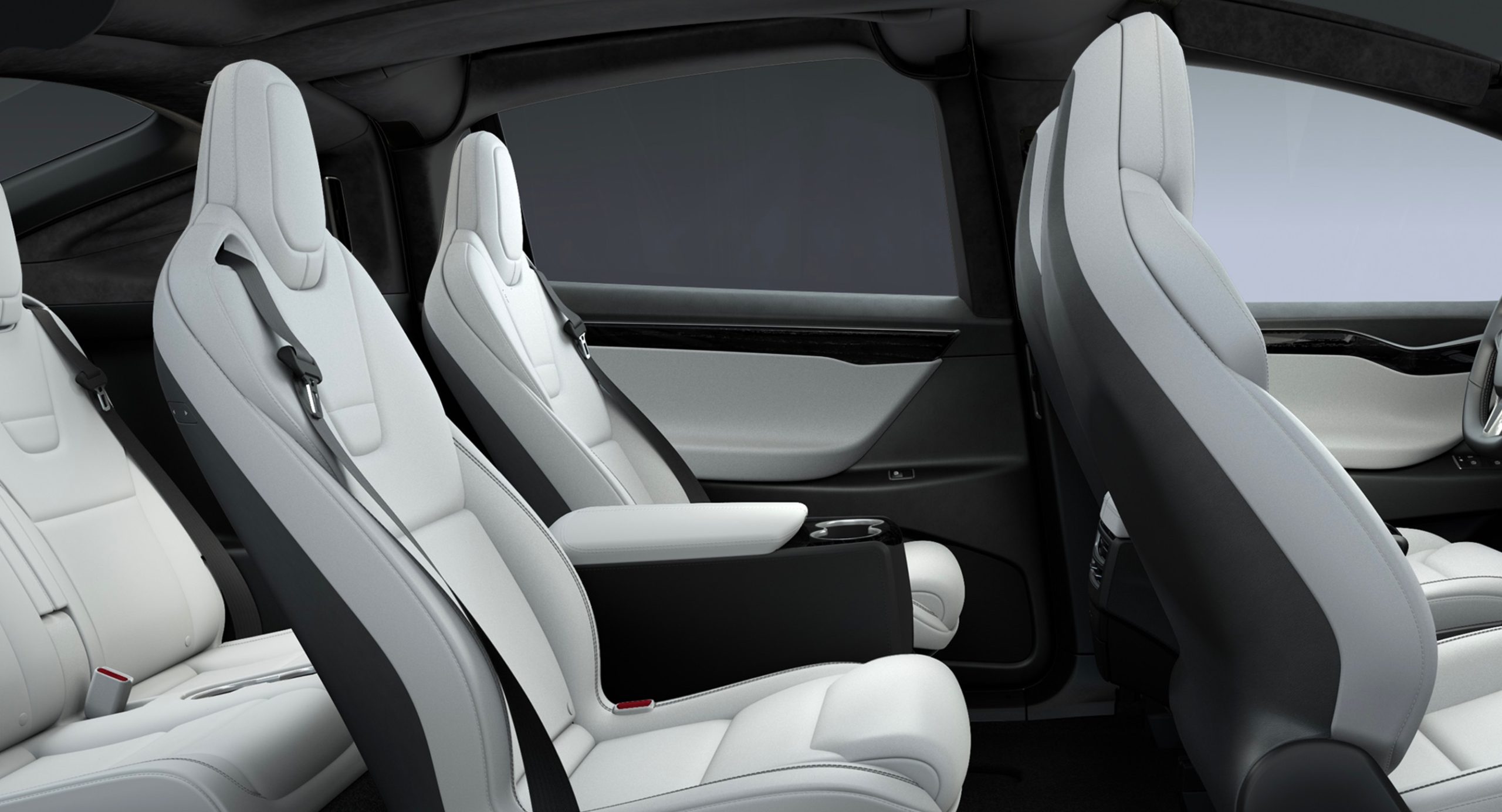
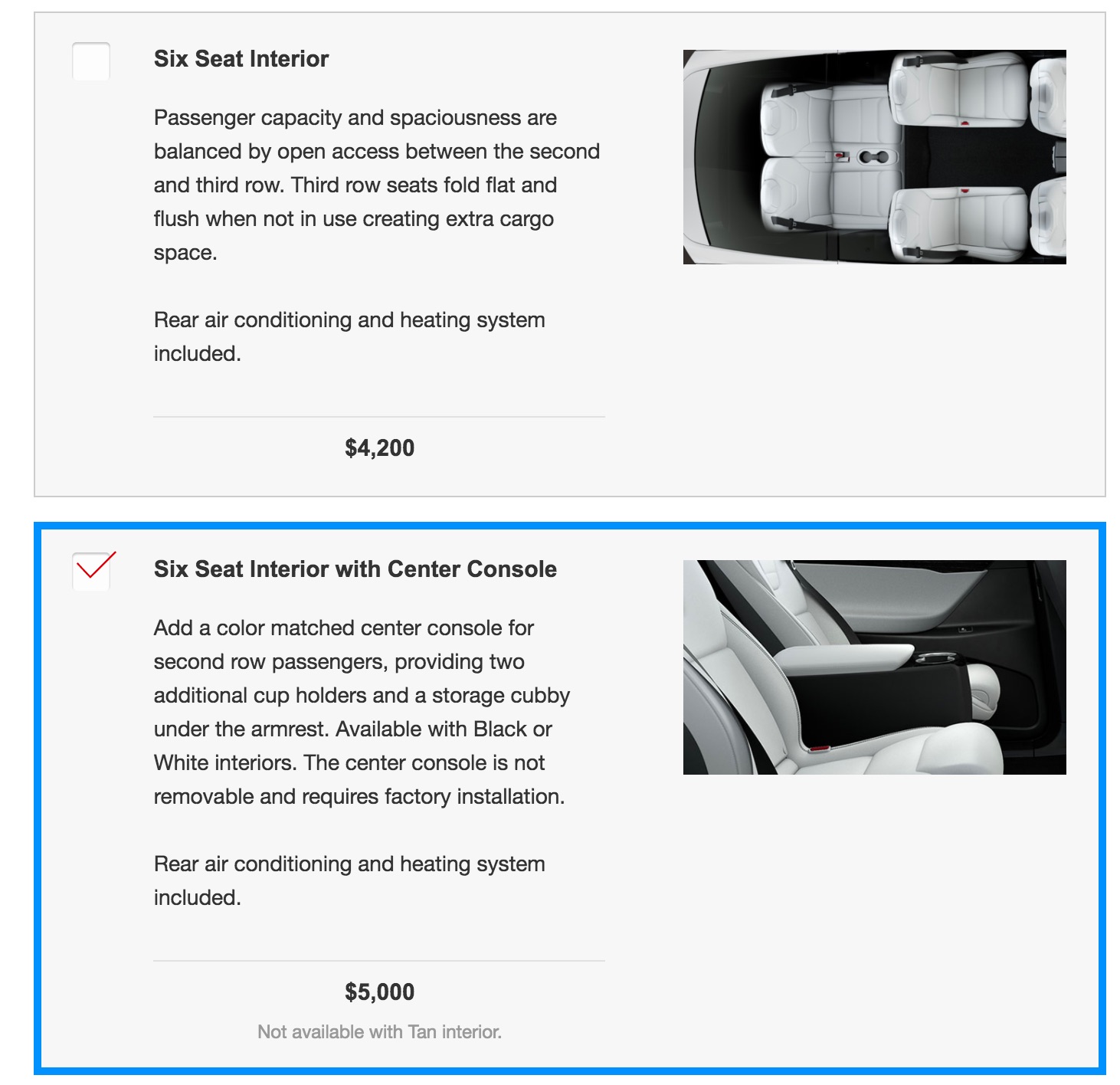
Tesla also introduced a new center console option for Model X equipped with the six seat configuration. A new color-matched center console is installed between the two second row seats, which the company says will provide two additional cup holders and a storage cubby under the armrest. Based on the photos published in the Model X Design Studio, it appears that the center console is very similar in form and functionality as the optional Model S Rear Premium Console which Teslarati reviewed when it was first introduced.
The new center console adds $800 to the six seat configuration, bringing the total cost of the upgrade to $5,000. Model X’s seven seat interior upgrade is currently priced at $5,600. All Model X now come with a matte seat back, replacing the previous glossy finish.


News
Tesla surges Robotaxi fleet ahead of Cybercab launch event
Tesla’s unsupervised robotaxi fleet quietly grew sevenfold in three weeks just before Cybercab Day arrives.
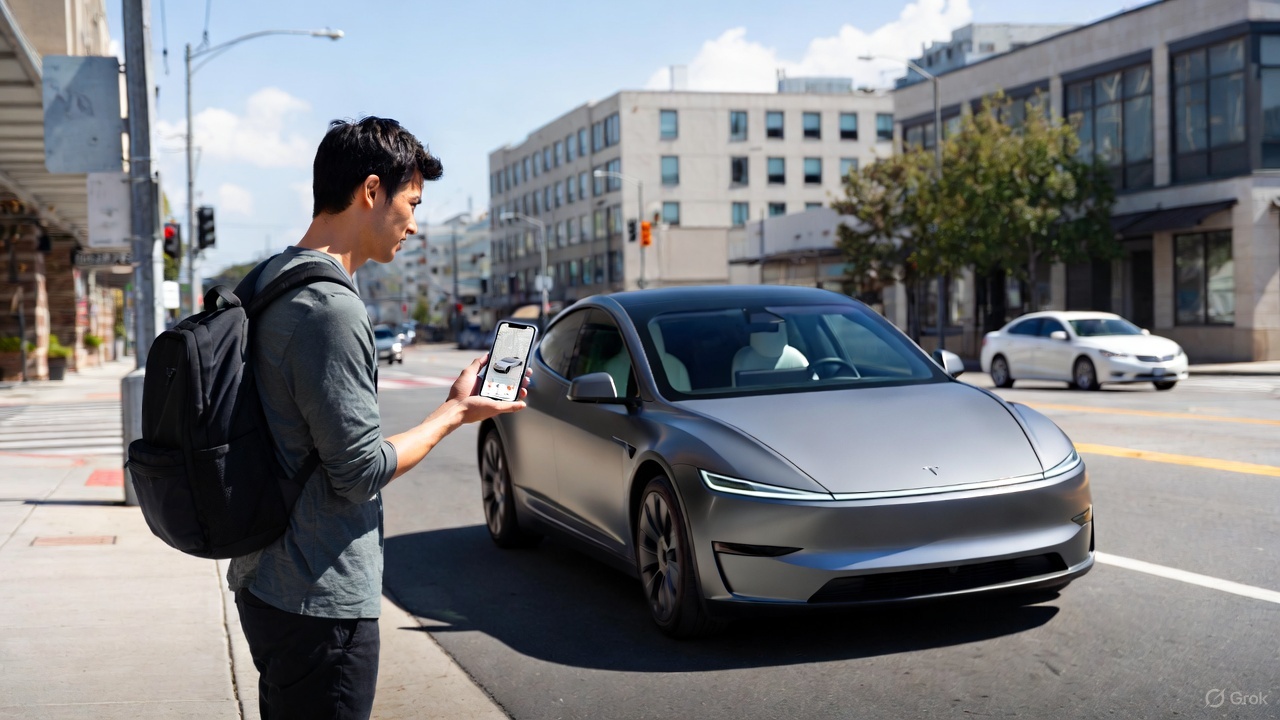
Tesla’s unsupervised Robotaxi fleet has grown far faster than the public numbers suggested, and the timing lines up with the company’s biggest autonomy showcase yet. According to data compiled by the crowdsourced Robotaxi Tracker, Tesla now has nearly 200 vehicles operating without a safety monitor across Austin, Dallas and Houston, yielding a roughly 7X increase in about three weeks.
The jump lands four days before this week’s Tesla Cybercab launch event in Austin, where the company plans to show off its purpose-built, two-seat robotaxi with no steering wheel or pedals in a live commercial setting for the first time. Stick with us on X and Facebook for live reporting from the event.
The strategic logic is straightforward. Tesla has spent the past year scaling Robotaxi in small, deliberate steps, first widening geofences, then extending operating hours, then quietly growing fleet size, usually with little advance notice. Ashok Elluswamy told investors on the Q2 earnings call that the program had logged more than 380,000 unsupervised miles with zero notable incidents, a safety record the company has leaned on to justify moving slowly. Critics have used the flip side of that caution, a fleet that appeared stuck around two dozen vehicles for months, as evidence that Tesla’s driverless ambitions were outrunning its actual deployment.
A fleet quietly scaling to nearly 200 vehicles right before Cybercab Day undercuts that argument without Tesla having to say anything about it directly. It also sets up the event to do double duty. Rather than simply introducing new hardware, Tesla can point to an operating base of unsupervised Model Ys already running at meaningful scale, then argue the Cybercab, which uses the same underlying Full Self-Driving stack according to earlier coverage of the fleet’s software upgrades, is a natural next steps. Tesla has separately been registering the two-seat Cybercabs with Texas regulators this week, with the count climbing from seven to 45 in a matter of days.
The two ramps, one in software-driven Model Y deployment and one in physical Cybercab registrations, are happening in parallel rather than in sequence. That suggests Tesla wants Thursday’s event to land as proof that the robotaxi business is already running at scale, not just a reveal of a new vehicle shape. Whether the unsupervised numbers hold up once Cybercabs start mixing into the same fleet is the detail worth watching once the event wraps.

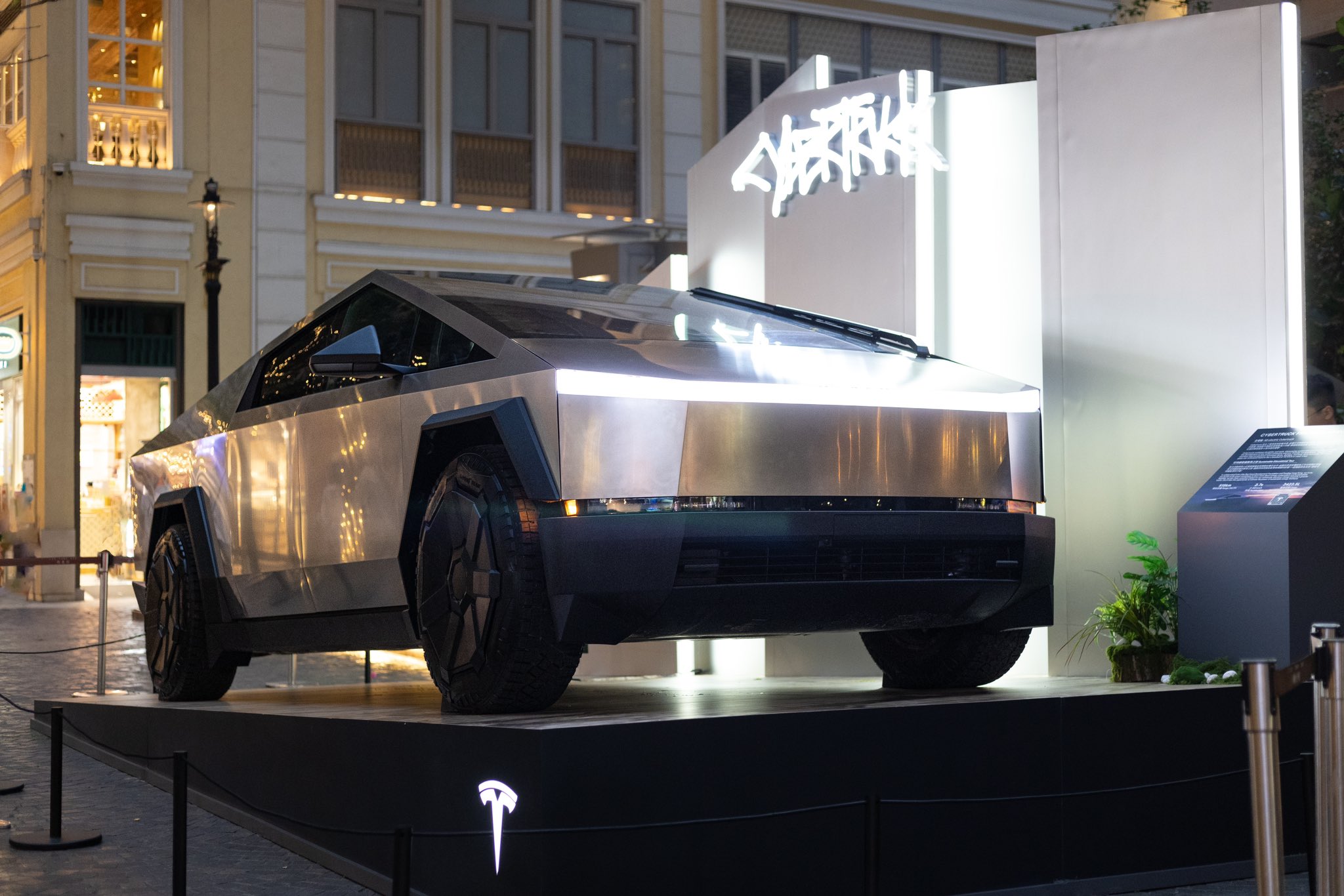
Tesla is lowering the monthly price of its Cybertruck Windshield Protection Plan from $35 to $25. The new rate will apply to the first payment on or after October 1, 2026. Tesla has told subscribers that all other benefits stay the same.
The plan covers unlimited repairs for chips and minor cracks on the front windshield. It also includes one full replacement every 12 months at no extra charge. Additional replacements in the same year carry a $100 deductible. Service is performed with Tesla glass and camera calibration, which matters because Autopilot and Full Self-Driving rely on those lenses behind the windshield.
Looks like Tesla is decreasing the Cybertruck windshield protection plan price from $35 to $25
Awesome https://t.co/MRlTU1XTbf pic.twitter.com/PWkMZt1H7G
— TESLARATI (@Teslarati) August 28, 2026
There is no long-term contract. Coverage applies only to the front glass and does not include collision, vandalism, or weather damage.
The Cybertruck’s large, complex windshield has been more expensive to replace than glass on Tesla’s cars, which is why the pickup started at a higher subscription price. The $10 monthly cut reduces the annual cost from $420 to $300. Tesla has not publicly explained the change. The timing coincides with a year of claims data after the plan was extended to the Cybertruck.
Tesla sells several related protection products as monthly subscriptions through the Tesla app. The Windshield Protection Plan is also offered on other models. Model 3 and Model Y currently cost $16 a month. Those passenger-car rates are unchanged in the latest Cybertruck notice.
The Wheel and Tire Protection Plan covers road-hazard damage such as potholes, nails, and debris. Repairs are unlimited. Each wheel or tire replacement appointment has a $25 deductible. Pricing varies by model and whether the vehicle is a Performance version. Tesla is raising some of those rates on the same October 1 date.
Reported examples include Model 3 Performance moving from $16 to $24 and Model Y Performance from $20 to $24. Cybertruck wheel-and-tire coverage has been listed at $20 a month for the standard configuration.
A separate Luxe Package bundles four years of windshield coverage, wheel-and-tire coverage, and recommended maintenance on certain new Model S, Model X, and Cyberbeast orders, although the Model S and X are now defunct.
Tesla also offers an Extended Service Agreement after the basic vehicle warranty ends. That product covers many Tesla-manufactured parts rather than glass or tires. Together, the plans give owners a menu of targeted, cancel-anytime coverage instead of relying only on auto insurance.
UPDATE: The number has now been updated to 45 units, up from 7!
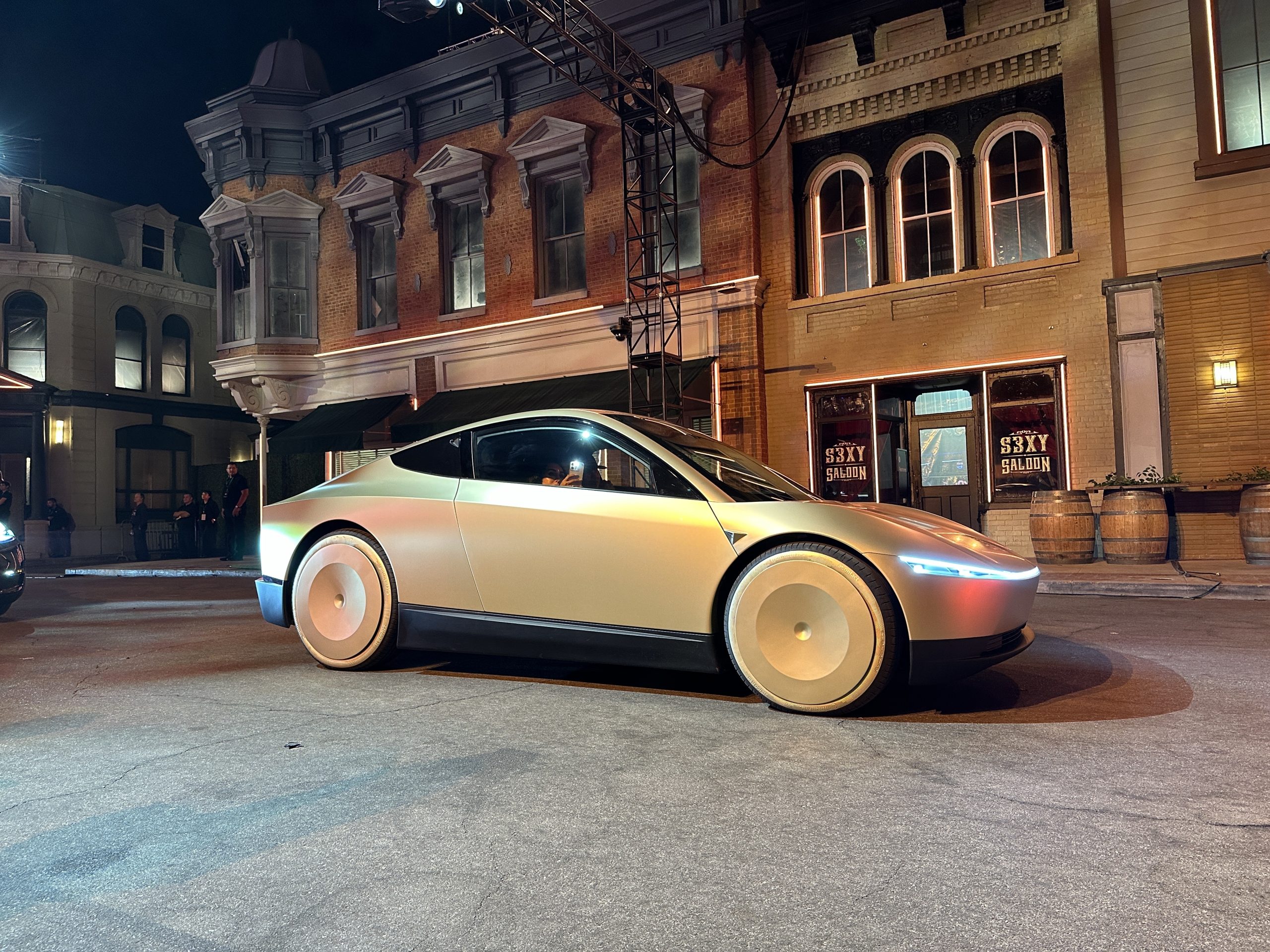
Here we go! Tesla has just added another 38 Cybercabs to its Robotaxi fleet, bringing the total up to 45, according to the Texas DMV.
Robots on robots on robots! This Thursday’s launch event is gonna be awesome🤖🤖🤖 pic.twitter.com/3HF24rHK4T
— Sawyer Merritt (@SawyerMerritt) August 31, 2026
Tesla is bolstering its Cybercab fleet with the State of Texas’s regulatory bodies ahead of the planned launch of the all-electric ride-hailing vehicle this Thursday.
Seven purpose-built Tesla Cybercabs have been added to Texas’s official automated vehicle registry, appearing in the Texas Motor Carrier Credentialing System (TxMCCS) public lookup just three days before Tesla’s invite-only Cybercab launch event in Austin on September 3.
The records, visible through TxDMV’s Motor Carrier and Automated Motor Vehicle Operator Lookup, list seven 2026 Tesla Cybercabs under Tesla Robotaxi, LLC. Their VINs begin with the 5YJA prefix, distinct from the 7SAYG Model Y robotaxis that already dominate Tesla’s Texas fleet.
Community trackers that scrape the same public database recorded the new entries on August 31, bringing Tesla’s authorized Texas robotaxi total to 276 vehicles: 269 Model Ys and the seven Cybercabs:
🚨 There are now SEVEN Tesla Cybercabs registered with the state of Texas
We are just three days from Cybercab! pic.twitter.com/ndwhuFYsep
— TESLARATI (@Teslarati) August 31, 2026
Texas Senate Bill 2807, which took effect in late May 2026, created a self-certification framework for commercial Level 4 operations. Operators file through TxMCCS, attest to SAE Level 4 capability, maintain insurance, and keep an active vehicle list.
Tesla completed that process months earlier for its existing Model Y Robotaxi service, which has carried paying passengers in Austin, Dallas, Houston and other markets. Adding the Cybercabs to the same authorization means the new two-seat, steering-wheel-free vehicles are now legally recognized for commercial use on Texas roads.
The timing is deliberate as Tesla scheduled the September 3 event at its Austin campus after sending invitations to selected Robotaxi riders and other guests. The company has described the evening as a chance to “experience the future of full autonomy” and plans to livestream it.
Production Cybercabs, which lack pedals and a steering wheel, have been rolling off the Giga Texas line for months; some earlier examples still carried temporary driver controls for data collection. Registering a small fleet of the finished design immediately before the public event signals that Tesla intends to move the purpose-built vehicle from factory and test tracks into the same Robotaxi app already used by Model Y passengers.
The seven units remain a tiny fraction of Tesla’s overall Texas authorization and far smaller than competing fleets. Registration does not automatically equal unsupervised public rides; it is the legal prerequisite.
Still, the sudden appearance of Cybercab VINs in the state’s lookup system, after a year of Model Y-only listings, is the clearest official confirmation yet that Tesla’s dedicated robotaxi hardware is entering the regulatory pipeline at the same moment the company is preparing to show it to invited guests and a global livestream audience.
Whether those seven vehicles appear at the September 3 event or begin carrying passengers shortly afterward, their presence in TxMCCS marks a concrete regulatory step that has been anticipated since the Cybercab concept was first revealed.

Tesla surges Robotaxi fleet ahead of Cybercab launch event

Tesla Cybertruck windshield protection just got cheaper


