News
SpaceX’s Falcon Heavy roars to life for the first time in history

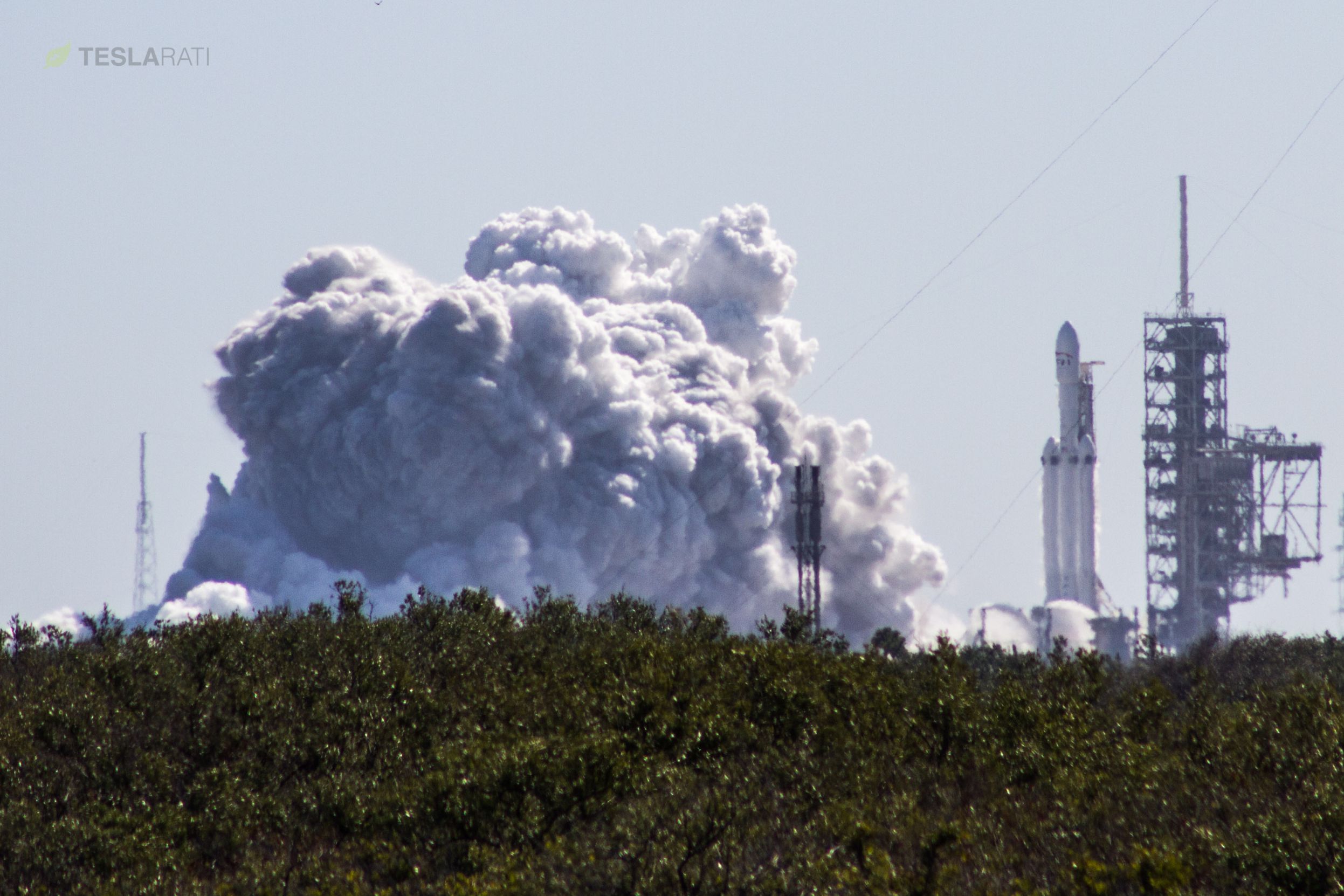
After several weeks of concerted and intensive testing, SpaceX’s massive Falcon Heavy rocket has conducted a static fire for the first time ever. Preceded by a series of dry fit checks, wet propellant loading tests, and many other bug-fixing operations at Pad 39A, today’s inaugural Falcon Heavy ignition has been years in the making.
Today’s static fire test saw Falcon Heavy ignite its 27 Merlin 1D rocket engines and presumably throttled those engines up to or near the vehicle’s max thrust, in this case around 92% of its unhindered capabilities, according to Elon Musk. This achievement bodes quite well for Falcon Heavy’s inaugural launch sometime in the near future: a Kennedy Space Center source in contact with CNBC reporter Michael Sheetz provided a tentative launch date of February 6, assuming all went well with the static fire attempt today.
Max thrust at lift-off is 5.1 million pounds or 2300 metric tons. First mission will run at 92%.
— Elon Musk (@elonmusk) December 20, 2017
This is a momentous achievement for SpaceX, and whether the results of the test are positive or negative, experience with Falcon Heavy will almost directly translate into knowledge that can be used to better design, manufacture, and operate the BFR and BFS vehicles SpaceX intends to transport humans and cargo throughout the solar system. While BFR will be something like a factor of three (or more) larger and more powerful than Falcon Heavy, SpaceX’s Falcon Heavy testing already easily makes them the first private company to genuinely fund, develop, and operate a super-heavy launch vehicle. More generally, Falcon Heavy’s payload capabilities and sheer thrust make the vehicle second in power only to Saturn V in the US, and worldwide fourth, behind Saturn V and the Soviet Union’s N-1 and Energia launch vehicles.
Still, some uncertainty inevitably remains. Falcon Heavy’s static fire was expected to be an exceptional 12 seconds in duration, compared to the more common 3-second test Falcon 9s routinely undergo at the launch pad. At this point in time, it appears that the full intended duration was completed, and the next crucial event will be a successful analysis of the data it produced, as well as the physical status of both Falcon Heavy and the ground support equipment (GSE) that fueled the vehicle and prepared it for launch. Stay tuned, as SpaceX is likely to provide an update soon for the imminent launch following their (hopefully successful) static fire.
Follow along live as launch photographer Tom Cross and I cover these exciting proceedings as close to live as possible.
Teslarati – Instagram – Twitter
Tom Cross – Instagram
Eric Ralph – Twitter




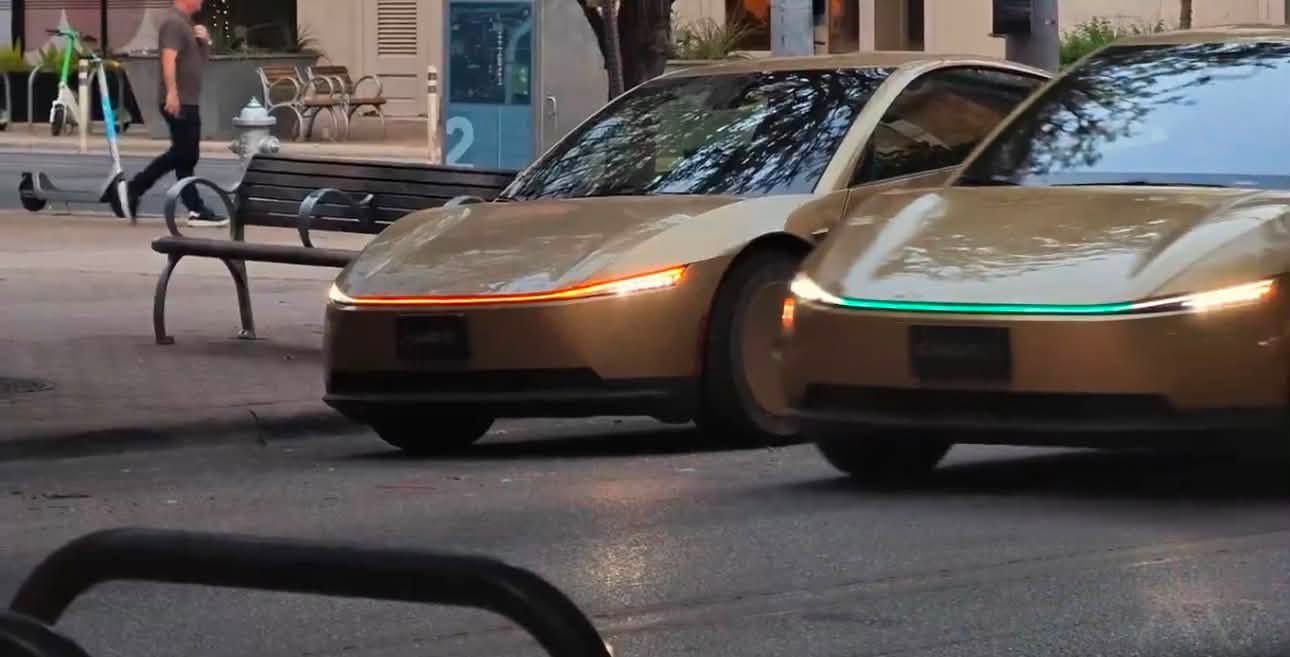
Tesla Cybercab is using a unique strategy for picking up the correct rider, which is a crucial part of ride-hailing to ensure people end up in the right place and are charged the correct price.
Cybercab will utilize an RGB strip in its front light bar that will illuminate in a variety of different colors to mark itself.
This identifying mark will also appear in the Robotaxi app, giving riders in the same location a notable distinction in an effort to avoid any confusion regarding who should get in each vehicle.
🚨 Tesla is using different light bar colors to help riders understand which vehicle is theirs
Pretty cool strategy pic.twitter.com/eGMpEMeRpc
— TESLARATI (@Teslarati) August 27, 2026
Other ride-hailing services use similar strategies: Lyft and Uber rides are recognizable through driver identity, vehicle type and color, as well as license plate. Waymo will display the rider’s initials on top of the vehicle, letting them know that the specific vehicle for them has arrived.
Tesla’s strategy is unique and interesting, but there are some flaws. Cybercab’s main purpose is aimed toward being an autonomous ride for all, including those who have disabilities like being blind or even color blind.
Tesla will likely have something in the pipeline for those who cannot see colors or have limited vision. There will definitely be multiple ways to identify which vehicle is the one that “you” specifically ordered.
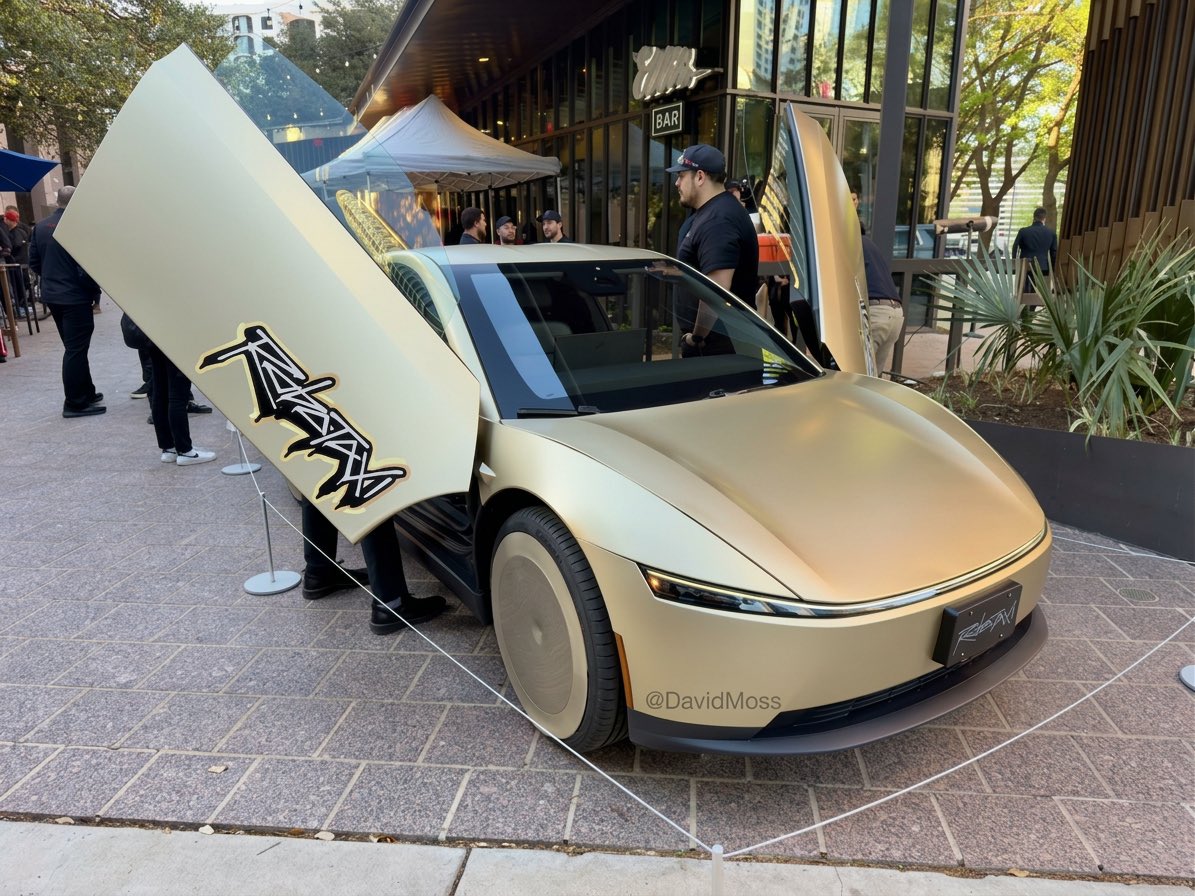
Cybercab is set to start giving public rides next Thursday, September 3, in Austin, as it announced a dedicated event last week and invited many members of the Tesla community.
Additionally, members of the public will be invited as well. Tesla has been offering employee rides in Cybercab for nearly two months.

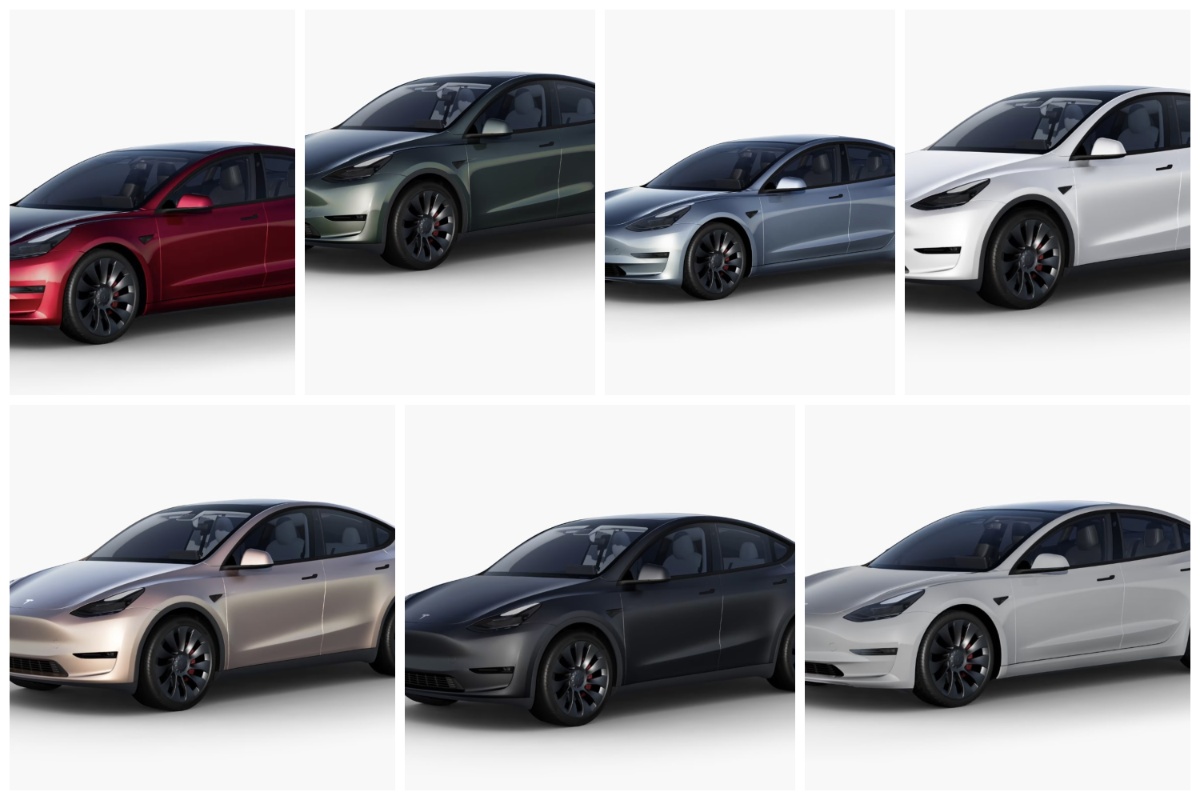
Tesla has said goodbye to one customization option for its vehicles: the wrap service it launched several years ago.
After launching an in-house wrap service in August 2020 for the first time in China. In the U.S., it launched in October 2023. Tesla continued to expand the program and adjust it with better pricing and fewer options for the Cybertruck.
By December 2023, it was giving owners of the Model 3, Model Y, and the Cybertruck the opportunity to give their vehicle a fresh look with a vinyl wrap.
Tesla revamps in-house vinyl wrap service with better pricing
It was only available in five locations: Costa Mesa, Oceanside, Santa Clara, West Covina, all in California, and Seattle, Washington.
However, Tesla made some big adjustments to its shop, and the wrap service is officially gone:
Tesla has made a LOT of changes to its online shop recently — price increases, price cuts, new options, and several products being removed entirely.
Some of the biggest increases are wheel covers. 👀
📈 PRICE INCREASES
• 2017-2023 | Model 3 Aero Wheel Cover — Style: Refresh…— Phoenix Self-Driving 🐦🔥 (@PhoenixFSD) August 25, 2026
Wraps are very popular across the Tesla lineup, especially since the company offers relatively few colors. Many choose to wrap their Teslas with interesting colors, patterns, or even finishes, turning their cars from glossy to satin or matte.
However, Tesla’s wrap service was so limited geographically that it never really had a chance to get off the ground or compete with local shops. Every area in the United States is now overflowing with detailing shops, mobile detailers, and other automotive specialists, many of whom perform wrap services.
Tesla’s service was confined to the Pacific time zone and only spanned across two states. It was never going to be something Tesla was a major competitor in, nor was it going to disrupt the wrapping industry. Now that the program has ended, it seems pretty ideal to believe it was always going to be a short-term thing.
Along with the wrap service, Tesla removed several other products, but nothing too crazy. The Model 3 Door Pocket and Cupholder Liners, the Model S 19″ Magnetite Wheel and Winter Tire Package, Model X/Y Ski/Snowboard Carrier for Hitch Rack, Tesla’s Electric Summer Party Tee, and the Electric Summer Tee were the other items the company totally eliminated from its online shop.

News
Tesla Robotaxi fleet gets a brain upgrade ahead of Cybercab launch event
Tesla’s Robotaxi service now runs longer hours nationwide as its unsupervised fleet quietly grows larger.

Tesla’s Robotaxi service just got easier to catch, with the company’s official Robotaxi account noting that rides are now available from 6 a.m. to 10 p.m., seven days a week, across its operating footprint. The account also said its unsupervised fleet is “a lot bigger” than before, though without specifics. The bigger change is what Tesla says upgraded intelligence in vehicle distribution and routing is what’s actually cutting wait times, not a new Full Self-Driving version.
While Tesla did not name the team behind the upgrade, the language points to its AI and fleet software group rather than the driving stack itself. Vehicle distribution and routing in Robotaxi has functioned mostly as a dispatch problem with the software deciding which idle car goes to which rider, and how far it has to travel to get there. “Upgraded intelligence” suggests a smarter version of that dispatch logic, likely using demand forecasting to position idle cars near where riders are about to request them rather than reacting once a request comes in. Tesla’s AI division has built similar prediction systems for other parts of the business, including the neural networks that power FSD itself, so applying that same approach to fleet logistics would be a natural extension rather than a new discipline for the team.
Robotaxi now runs 6am to 10pm, 7 days/week
Unsupervised fleet is a lot bigger
Also, upgraded intelligence in vehicle distribution & routing means you wait less pic.twitter.com/UFZ4bqg2dZ
— Tesla Robotaxi (@robotaxi) August 26, 2026
Tesla is also about a week away from a separate robotaxi milestone. The company plans to launch Cybercab, its purpose built two seat robotaxi with no steering wheel or pedals, in Austin on September 3. Cybercab has been giving employees rides on public and private roads for weeks, and the September event is expected to fold those vehicles into the existing Robotaxi fleet within days of the launch.
Thank you so much @Tesla for inviting us to the Cybercab launch in Austin! 🤠 pic.twitter.com/F1rAR8zd5O
— TESLARATI (@Teslarati) August 22, 2026
Austin previously ran Robotaxi from 6 a.m. to 2 a.m. as of last September, a schedule set before the service expanded into Dallas, Houston, Miami, Tampa, Orlando and the Bay Area. Wednesday’s post did not specify whether that extended overnight window still applies in Austin specifically or whether 6 a.m. to 10 p.m. is now the standard across every market. Tesla’s post, visible on its official Robotaxi account, framed the change simply as fewer riders waiting around for a car.
Whether the wider hours hold once Cybercab enters the fleet next week is the next thing worth watching. Tesla has tended to expand Robotaxi in increments, first geofence, then hours, then fleet size, and each step so far has arrived without much advance notice.

Police sergeant recounts his Neuralink journey with Elon Musk’s brain chip

Tesla Cybercab uses a unique strategy for picking up the right rider


