Investor's Corner
Tesla (TSLA) shows recovery as Musk seemingly confirms positive August sales

Tesla shares (NASDAQ:TSLA) are showing some recovery after taking a tumble yesterday amidst Elon Musk’s apparent support of a positive report estimating the sales figures of the Model 3, S, and X in August 2018, as well as an announcement of new orders for the Tesla Semi.
Musk’s Twitter update was posted as a retweet of sales estimates published by electric vehicle-themed website InsideEVs, which posted its monthly US EV sales scorecards for August. The website estimates that Tesla’s entire line of vehicles dominated the country’s electric car sales during the month, with the Model 3 being 1st, the Model S being 2nd, and the Model X being the 3rd best-selling EV in the US.
Tesla 1st, 2nd & 3rd in August sales https://t.co/npDKC9QEpP
— Elon Musk (@elonmusk) September 6, 2018
While InsideEVs‘ scorecards do not include the official August sales figures from Tesla and other vehicles like the Chevy Bolt EV, the publication’s estimates appear to have been approved by Musk in his tweet. This seems to have positively affected investor sentiment, as the company’s shares recovered as much as 2.05% in Thursday’s pre-market.
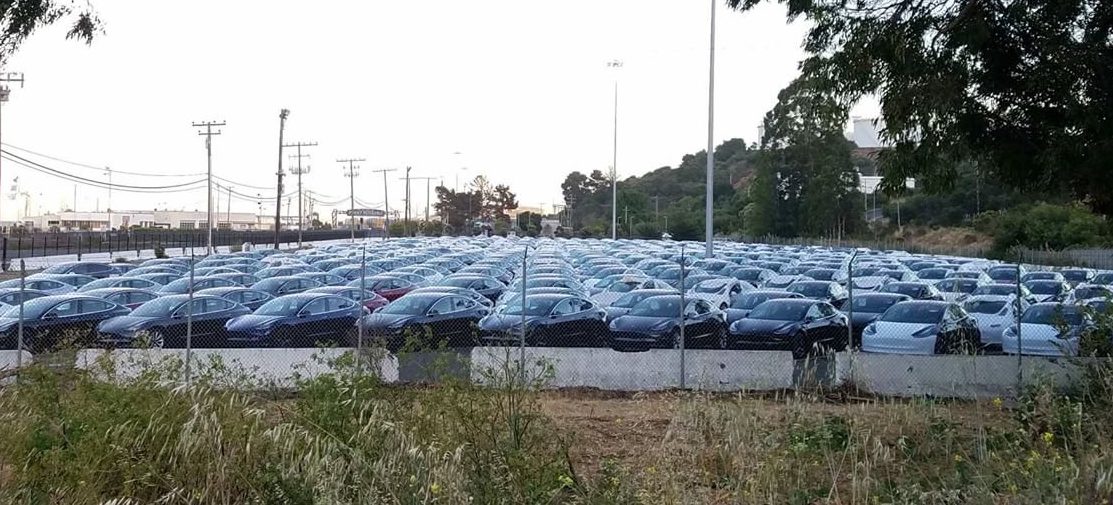
Tesla might have hit a breakthrough with Model 3 production after the end of Q2 2018, but the company is still only around halfway through its target of ultimately manufacturing 10,000 Model 3 per week. Evercore ISI analysts who visited the Fremont factory last month noted that Tesla would likely be able to ramp to 7,000-8,000 Model 3 per week with minimal CapEx, and with the $35,000 base Model 3 still on the horizon, it appears that Tesla’s electric sedan is just getting started in its disruption of the passenger car market.
Apart from the positive August sales estimates for the Model 3, S, and X, Tesla also received a new set of orders for a vehicle that is still waiting for release. In an update on Thursday, Walmart Inc’s Canadian unit announced that it would be buying an additional 30 units of the Tesla Semi as part of its initiative to launch an emissions-free fleet by 2028. The 20 new orders for the Tesla Semi are set to be added to the 5 trucks Walmart ordered for its US fleet and the first 10 it ordered for its Canadian unit back in November. Walmart Canada noted that it is planning to utilize 20 Tesla Semis to support its fleet base in Mississauga, Ontario. The remaining 20 left for the Canadian fleet will be moved to Surrey, British Columbia.
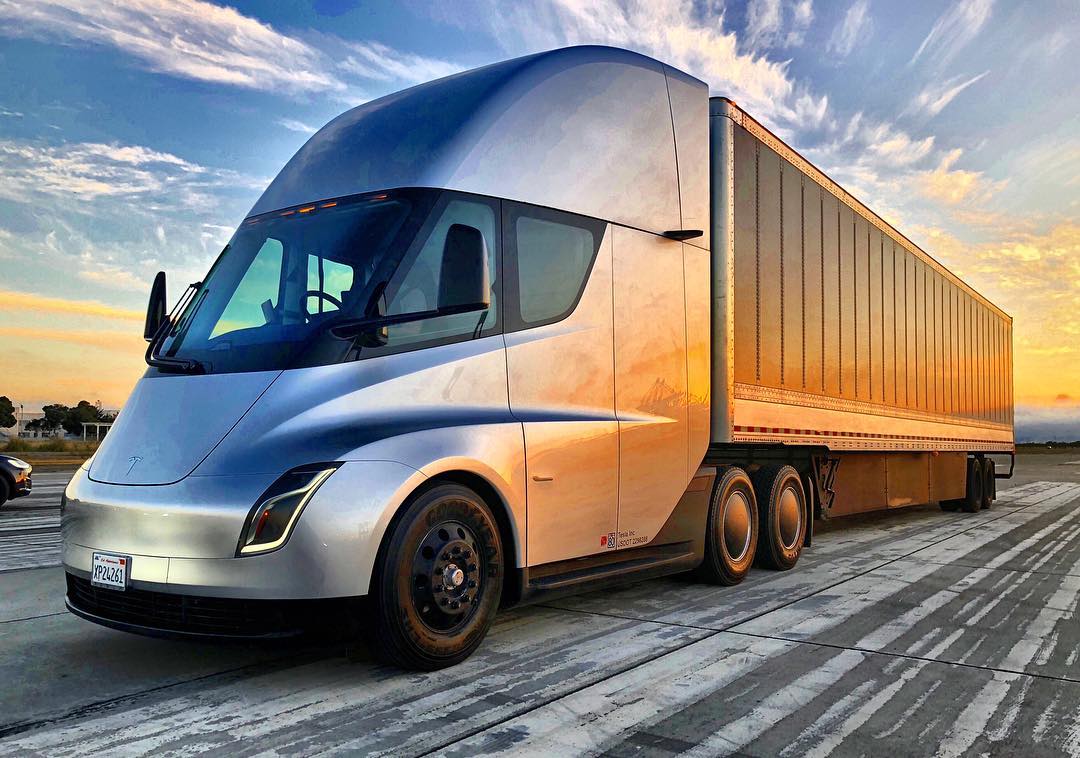
The Tesla Semi is expected to begin production sometime in 2019, and Tesla is already on full throttle testing the vehicle on America’s roads. The Semi’s hand-built, carbon-fiber prototype has been making the rounds in several states lately, and it even visited some of the companies that have placed reservations for the vehicle, such as UPS, Ruan Transportation Management Systems, and J.B. Hunt.
The Tesla Model 3 is already disrupting the US’ passenger car market. GoodCarBadCar, an auto sales tracking website, ranked the electric sedan as the country’s 5th best-selling passenger car in August, up two places from its rank last July. The Model 3 is also the only electric vehicle that made it to GCBC‘s overall Top 20 best-selling vehicles list for the past month, which includes trucks like the Ford F-150 and SUVs like the Honda CR-V.
In the same way that the Model 3 is disrupting the passenger car segment, the Tesla Semi also has the potential to disrupt the US’ trucking industry. The trucking market is vast, handling the transportation of 71% of food, retail goods, construction supplies, and other cargo delivered every day — and it is still growing. The American Trucking Associations’ American Trucking Trends 2018 report, for one, revealed that the US trucking market generated $700.3 billion in economic activity in 2017, 3.5% more compared to 2016 when the trucking industry generated $676.6 billion. If Tesla can tap into this market with the Semi, the all-electric truck could prove to be a very lucrative vehicle for the company.
As of writing, Tesla shares are up 3.36% at $290.16 per share.
Disclosure: I have no ownership in shares of TSLA and have no plans to initiate any positions within 72 hours.


Elon Musk
SpaceX’s Anthropic deal has a catch, and Elon Musk just addressed it
Elon Musk says SpaceX’s Anthropic compute deal cuts both ways after Chamath floats higher prices.

Elon Musk pushed back on Sunday against the idea that SpaceX’s compute contract with Anthropic is a one way bet, after venture capitalist Chamath Palihapitiya argued the company could use a termination clause to charge the AI lab far more.
“It works both ways, of course. If compute becomes plentiful and cheap, SpaceX revenue will drop. No crying in the casino for either party,” Musk wrote on X Sunday evening, replying to a clip of Palihapitiya’s comments shared by AI commentator Rohan Paul.
On the All-In podcast released Sunday, Palihapitiya said either side can walk away from the agreement on 90 days’ notice. If data center supply tightens, he argued, SpaceX could exercise that option and bring the contract back at two to three times the current price, and Anthropic would have little choice but to accept. He called it “the kingmaking move,” according to BigGo Finance.
The clause itself is not new. SpaceX disclosed in its IPO filings in May that Anthropic would pay $1.25 billion per month for dedicated capacity at its Colossus clusters through May 2029, nearly $45 billion in total, with both companies able to terminate on 90 days’ notice, as Teslarati reported at the time. SpaceX’s later compute deals with Google and Reflection AI carry similar exit terms.
What has changed is the political backdrop. Palihapitiya’s thesis rests on incoming Democratic governors pulling tax incentives for data centers and slowing new construction. In Texas, Gov.-elect Gina Hinojosa campaigned on a moratorium on new data center approvals, and Deutsche Bank analysts warned last week that SpaceX’s Texas compute capacity could face delays. SpaceX and Tesla shares both fell after the midterm results.
A slowdown would favor companies that already own capacity. SpaceX acquired xAI in February and has been renting data centers to outside AI labs before the space is needed for Grok. At the Baron Investment Conference on Friday, Musk said SpaceX was “getting 50 billion a year for 35 billion dollar investments” and that it can bring a data center online in eight or nine months, compared to two and a half years for competitors. He also said SpaceX is tracking toward an annualized revenue rate above $100 billion in December, with a “best guess” of $500 billion by December 2027.
Musk’s reply points to the other side of the clause. Anthropic has signed large compute agreements with Amazon, Google and Microsoft, and if that capacity comes online faster than new construction slows, the AI lab would have its own leverage to renegotiate or leave. Musk has called Anthropic “obviously currently the leader in AI,” and it remains one of SpaceX’s largest compute customers.
SpaceX shares rose more than 2 percent in overnight trading late Sunday after closing Friday at $134.27, according to Stocktwits.

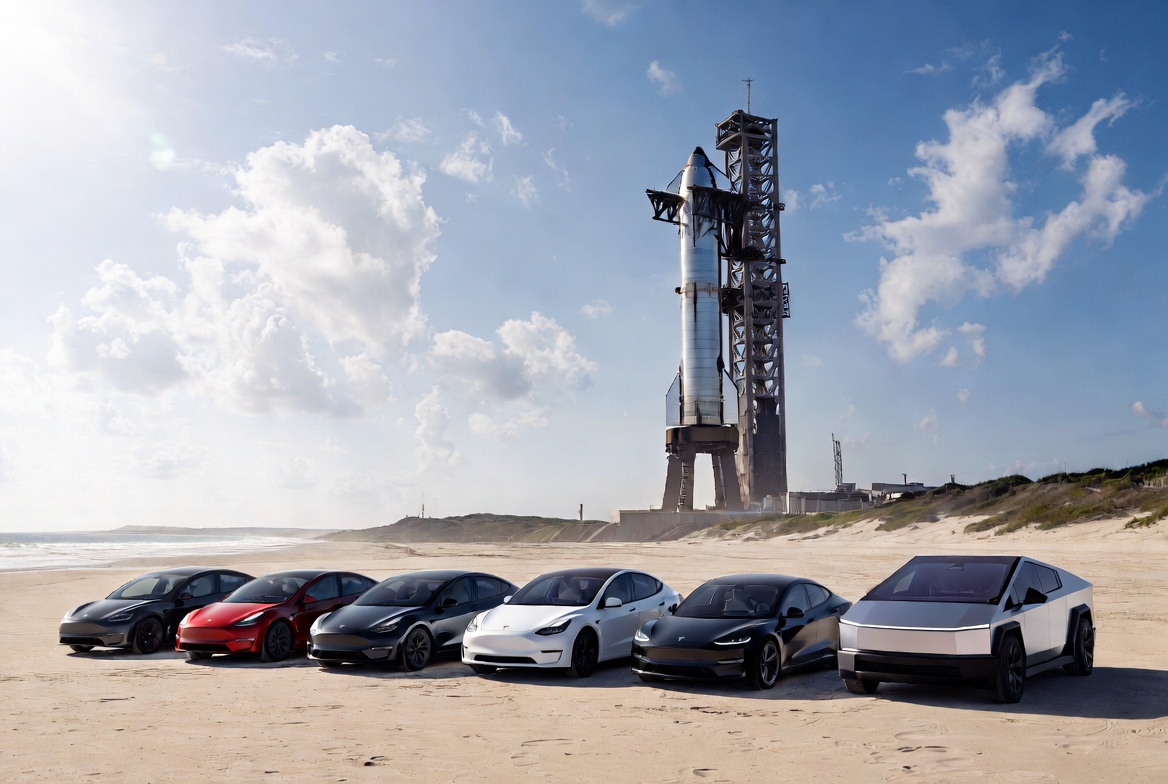
Tesla and SpaceX shares fell on Wednesday after Democrats swept both chambers of Congress. The decline stood out as broader market securities recovered and turned positive, while both of Musk’s publicly traded companies lagged.
CEO Elon Musk already joked about the unsuccessful campaigning for the Republicans, but now the new party will make pretty drastic changes to how it handles Tesla and SpaceX, and those companies will adjust their outlook.
Let’s take a deeper look.
Tesla ($TSLA)
Tesla shares traded lower during the regular session after Democrats secured both the House and Senate. The stock was down 2.32 percent at around 1:45 p.m. on the East Coast, trading at around $389.30.
The pressure is tied to more than the raw scale of Musk’s political spending, estimated at $450–474 million this cycle with roughly $224 million directed at Texas. In that state, Tesla now faces a Democratic governor and a Democratic senator after Gina Hinojosa unseated Greg Abbott and James Talarico defeated Ken Paxton.
The Austin Gigafactory, Robotaxi pilot programs in multiple Texas cities, and any related AI compute expansion sit under a new state executive who campaigned against certain corporate subsidies and floated a moratorium on new data-center construction.
Federally, Democratic control of key committees opens the door to deeper examination of Tesla’s autonomous-driving safety record, federal energy-storage and manufacturing incentives, and the national-security implications of any combination with SpaceX.
Investors are also weighing whether the company’s historically close alignment with the prior Republican leadership will invite slower permitting, additional hearings, or tighter rules on Full Self-Driving deployment.
For Tesla, the political shift adds near-term friction around state permitting and federal regulatory approvals for autonomy and energy storage. A potential merger with SpaceX may face slower review even if it proceeds.
Core growth drivers such as vehicle deliveries, energy deployments, and robotaxi rollout remain intact, yet the stock now carries a higher political-risk premium that could weigh on valuation until the company demonstrates workable relationships with the new Texas leadership and congressional majorities.
SpaceX ($SPCX)
SpaceX shares also declined in live trading on November 4 following the Democratic midterm sweep. The stock traded at $134.97, down 4.49 percent. The drop occurred even as broader indexes stabilized, highlighting a company-specific reaction to the election outcome.
Musk’s large contributions, concentrated in Texas races that both companies lost, place SpaceX’s Starbase launch facility and headquarters under a new Democratic governor.
At the federal level, Democratic control of Congress enables greater scrutiny of NASA, the Department of Defense, and other contracts that support a meaningful share of revenue, along with reviews of Starlink national-security uses and any Tesla merger. Analysts have noted that empowered committees can hold hearings and request documents on these relationships.
For SpaceX, the results raise the risk of delayed contract awards, higher compliance costs, and tighter constraints on AI and satellite infrastructure expansion, particularly in Texas where a data-center moratorium has been discussed.
A merger with Tesla could encounter political friction that slows integration of launch, connectivity, and autonomy capabilities.
While Starlink growth and launch cadence continue as primary drivers, the company faces a more contested path for federal funding and state-level operations, requiring management to rebuild ties with the new congressional majorities and Texas leadership to limit the overhang.
Elon Musk
Elon Musk calls Earth’s data centers “peanuts” next to what SpaceX is planning in orbit
Elon Musk says SpaceX capex efficiency is underestimated as orbital data centers loom by 2028.
Elon Musk is pushing back on one of the biggest worries hanging over SpaceX stock. In a reply on X on Sunday, Musk said the company’s capital expenditure efficiency is severely underestimated. He was responding to a Milk Road Stocks post citing analyst Kyle Reidhead, who estimates SpaceX will need to spend roughly $470 billion over the next five quarters.
Reidhead built that figure around the target SpaceX set on its third quarter earnings call: 13 gigawatts or more of compute by the end of 2027. In his breakdown, Nvidia captures 83 to 89 percent of the spending. SpaceX ended the quarter with 1.7 GW of nameplate compute and guided to $35 billion to $40 billion in fourth quarter capex, as Teslarati reported.
Musk did not attach a number to his claim, but the earnings call shows the argument. CFO Bret Johnsen said new compute currently pays for itself in under a year at today’s pricing, and Musk said that window could shrink to six months next year. Using that pace, Reidhead argues about $230 billion of the $470 billion could come from operating cash flow and about $60 billion from SpaceX’s roughly $90 billion cash pile, leaving around $180 billion to borrow. Musk confirmed last week that SpaceX had already closed a new $40 billion debt raise to buy GPUs.
The ground buildout is not the end goal. It is what is meant to pay for the move to orbit. Replying on Friday to charts built from Sequoia partner Shaun Maguire’s SpaceX model, Musk wrote that “Terrestrial compute will be peanuts compared to orbital compute,” adding that orbital compute deployed per month “probably exceeds terrestrial around the end of 2028 and then far exceeds it in 2029.”
Maguire’s model shows how steep that path is. It has capex climbing from $88 billion this year to $290 billion in 2027 and $369 billion in 2028, with SpaceX burning $77.8 billion in cash this year and $122.6 billion next year before turning $114.9 billion cash positive in 2028. Musk’s response to the model was, “I think we can do better.”
The orbital half runs through Starmind. SpaceX plans to operate up to 1 million AI satellites flying in clusters of about 10, linked by roughly 10 terabits of bandwidth, with deployment of thousands of units starting as soon as late 2027 out of its Gigasat factory in Bastrop, Texas, according to SpaceX’s space safety page. Musk has said each Starmind spacecraft will carry more than 250 kW of solar power.
Getting there depends on launch volume. Maguire’s model assumes 250 Starship flights in 2028, up from two this year and 38 next year. The nearer test is financial: SpaceX guided to $33 billion to $37 billion in first quarter 2027 revenue, more than double the $14.58 billion it booked in Q3, and Musk reposted that guidance again on Sunday morning.

Tesla exec hints at a wild fix for Robotaxi’s biggest weather problem

Tesla Robotaxi enters its newest city, reaching San Antonio


