Investor's Corner
Tesla’s (TSLA) fundamentals ‘underappreciated,’ says analyst amid canceled privatization drama

Tesla stock (NASDAQ:TSLA) is showing its trademark volatility on Monday’s early morning trading, as the company deals with the aftermath of Elon Musk’s decision to walk back on his efforts to take the company private. While the electric car maker’s shares dropped as low as 6% during Monday’s premarket, Tesla nonetheless opened at $318 per share, not too far from Friday’s $322.82 close.
Tesla’s stock has been characteristically volatile, but after Musk’s fateful tweet earlier this month when he suggested that funding was “secured” for the company going private at $420 per share, TSLA has experienced even wilder swings than usual. The company’s privatization efforts eventually came to a head on Friday night, when Elon Musk published a blog post on Tesla’s official website stating that the privatization efforts would no longer be pursued. Musk’s decision was met with strong reactions, with many Tesla supporters lauding the CEO’s decision and critics voicing out their frustrations.
Tesla’s abandonment of its go-private initiative has resulted in a wave of criticism from the company’s naysayers. Prominent short-seller Jim Chanos, who believes that TSLA is worth $0, described the company as a “corporate-governance disaster.” Jeffrey Osborne of Cowen Group noted that he sees “mounting obstacles for the company” in the near future such such shareholder lawsuits and SEC investigations over Elon Musk’s behavior.
That said, some of Tesla’s supporters on Wall Street believe that there is a silver lining to the entire go-private drama. Baird analyst Ben Kallo, for one, stated in note on Monday that Baird remains optimistic about Tesla, especially since the company’s fundamentals, which have been steadily improving, might be “underappreciated.” Kallo did admit that a potential SEC penalty would likely weigh against Tesla, though if this does happen, Elon Musk himself would probably be the one who would bear the consequences.
“We expect shares to appreciate over the intermediate term as the focus shifts back to fundamentals, which we believe may be underappreciated. We are buyers on weakness as we expect shares to move higher ahead of third-quarter deliveries and results. A potential SEC penalty will remain an overhang; while it is extremely difficult to predict the outcome of an investigation, historical settlements may demonstrate perceived risks could be overblown. Additionally, we think any penalties will likely be borne by Musk.”
Kallo still maintained his Outperform rating for Tesla, setting a price target of $411 for the electric car maker.
Oppenheimer’s Colin Rusch also maintained his Outperform rating for the company. According to the analyst, stepping away from the go-private initiative “removes a large distraction that had significant chance of failure and the potential to severely limit Tesla’s access to capital while attempting to execute on its ambitious product strategy.” RBC Capital Markets analyst Joseph Spak also noted that while Tesla and Elon Musk’s credibility have taken a hit due to the CEO’s behavior on Twitter, the firm believes that “the story will come back to the Model 3 ramp — not just the units but the profitability.”
The Model 3 ramp has been showing encouraging signs this August. Apart from Elon Musk confirming during the Q2 2018 earnings call that Tesla was able to hit a production rate of 5,000 Model 3 per week during “multiple weeks” in July, the company also passed the 100,000-mark in its VIN registrations for the electric sedan. Analysts from Evercore ISI who toured the Fremont factory also released a favorable report, stating that Tesla has the potential to ramp production to 7,000-8,000 Model 3 per week with “very little incremental capital expenditure.”
As of writing, Tesla stock is trading -3.15% at $312.73 per share.
Disclosure: I have no ownership in shares of TSLA and have no plans to initiate any positions within 72 hours.



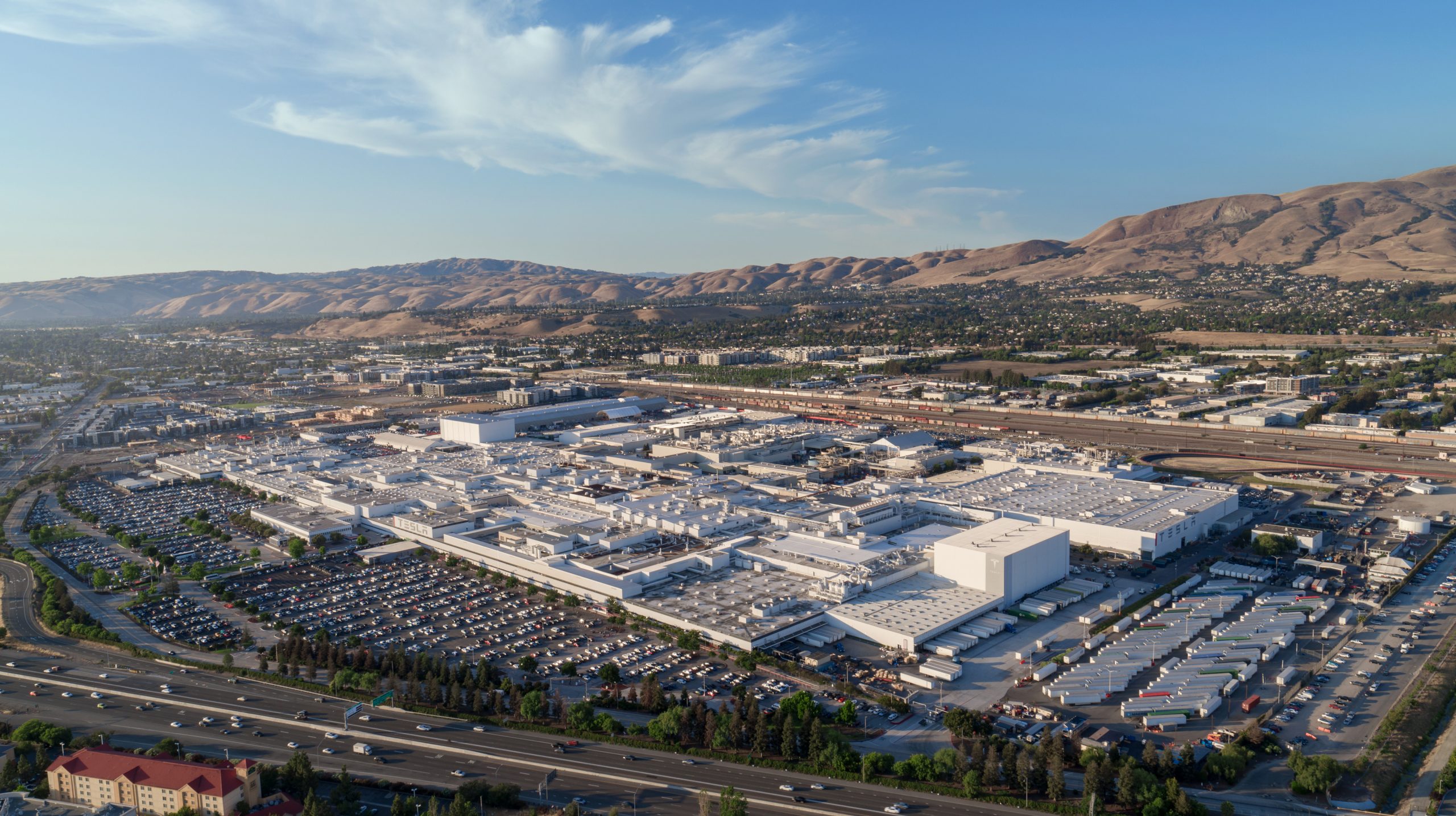
Tesla deliveries got a big boost in expectations from Wall Street firm Goldman Sachs, who believes the company will report some stronger-than-expected numbers when the second quarter comes to an end in the coming weeks.
Goldman Sachs has raised its vehicle delivery forecast for Tesla (NASDAQ: TSLA) in the second quarter of 2026, signaling growing confidence in the electric vehicle leader’s near-term momentum despite mixed market signals. Analyst Mark Delaney lifted the bank’s Q2 estimate to 420,000 units from a previous 405,000, surpassing the Visible Alpha consensus estimate of 400,000.
The upward revision stems from stronger-than-expected sales data across key regions. Europe stands out with projected year-over-year growth of 85-90 percent, driven by robust demand for Tesla’s Model Y and refreshed offerings. China posted high single-digit gains, while markets like South Korea and Australia also contributed positive momentum. These gains help offset mid-teens declines in U.S. deliveries through May, where broader EV market headwinds and competition persist.
Goldman extended its optimism to the full year, increasing its 2026 delivery projection to 1.73 million vehicles from 1.72 million. Longer-term forecasts remain unchanged, with 1.88 million units expected in 2027 and 1.96 million in 2028. The bank also nudged its 2026 earnings-per-share estimate higher to $1.35 from $1.30, reflecting anticipated margin benefits from higher volumes and operational efficiencies.
Despite these positive adjustments, Goldman maintained its Neutral rating and $375 price target on Tesla shares. At current trading levels near $411, the stock sits about 8-9 percent above the target, highlighting ongoing valuation concerns even as delivery momentum builds. Tesla’s Q1 2026 deliveries totaled 358,023 units, setting a baseline for recovery expectations in the current period.
This update arrives as Tesla prepares to report official Q2 figures shortly after June 30. Investors and analysts will closely watch not only headline delivery numbers but also regional breakdowns, average selling prices, and progress on energy storage deployments and autonomous technology initiatives.
The move by Goldman Sachs underscores a broader narrative for Tesla: while legacy auto markets face softening demand and tariff uncertainties, Tesla’s global footprint and product pipeline provide resilience. Europe’s surge reflects pent-up demand and policy support for EVs, while China’s steady growth highlights Tesla’s competitive positioning against local rivals.
Tesla still has its work cut out for it, including U.S. price sensitivity and intensifying competition. Yet Goldman’s revision adds to a series of analyst notes suggesting Q2 could mark a turning point. As Tesla pushes toward higher production rates at facilities in Fremont, Shanghai, and Berlin, sustained execution will be key to validating these higher forecasts.
We have said numerous times that deliveries are becoming a less important metric in the grand scheme of things, as AI truly takes precedence in the company’s thesis.
For Tesla bulls, the Goldman note reinforces faith in underlying demand trends. For skeptics, the unchanged rating serves as a reminder that delivery beats alone may not immediately resolve valuation debates in a high-interest-rate environment. Tesla’s stock reaction will likely hinge on the official numbers and management commentary in the coming weeks.
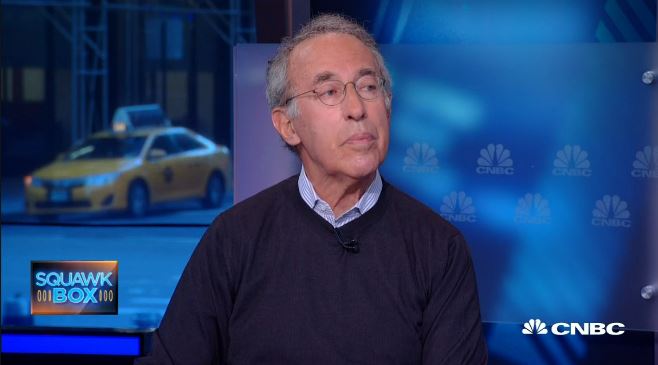
Renowned investor Ron Baron, founder and CEO of Baron Capital, has once again demonstrated his unwavering faith in Elon Musk’s ventures.
Just after SpaceX’s record-breaking IPO, Baron announced he purchased an additional $1 billion in SpaceX (NASDAQ: SPCX) shares. This move pushes Baron Capital’s total holdings in the company to a staggering $25 billion in market value, underscoring one of the most successful private-to-public investment stories in recent history.
Baron’s relationship with SpaceX dates back to 2017, when his firm began investing approximately $1.75–2 billion through secondary markets and employee tender offers at valuations around $20–22 billion.
By the time of the IPO, which valued SpaceX at over $2 trillion with shares closing near $161, those early stakes had generated more than $13 billion in unrealized gains. Post-IPO, Baron’s position ballooned further, reflecting the company’s meteoric rise driven by reusable rocketry, Starlink’s global satellite internet constellation, Starshield defense applications, and ambitious plans for orbital infrastructure.
In a recent interview, Baron articulated his bullish outlook with characteristic enthusiasm.
Ron Baron said today that he bought $1 billion of @SpaceX IPO shares last Friday, and said that all of Baron Capital’s $SPCX holdings are now worth $25 billion.
“I think we’re going to make hundreds of billions of dollars; If you read the prospectus, you realize what they… pic.twitter.com/U8F471KtJS
— Sawyer Merritt (@SawyerMerritt) June 15, 2026
“I think we’re going to make hundreds of billions of dollars,” he stated, emphasizing that SpaceX’s achievements in rocketry and satellite technology are “not possible for anyone else to accomplish.” He envisions the company as a cornerstone of humanity’s multi-planetary future, potentially reaching valuations of $10–30 trillion within 10–15 years.
Baron has repeatedly affirmed he has no plans to sell, viewing SpaceX as a “lifetime investment” alongside Tesla.
Tesla bull Ron Baron reveals $100M SpaceX investment, sees 3-5x return on TSLA
This conviction stems from SpaceX’s unparalleled execution. The company has revolutionized access to space with Falcon 9 reusability, deployed thousands of Starlink satellites, and is advancing Starship for Mars missions and point-to-point Earth transport.
Baron highlights emerging opportunities like space-based AI data centers and direct-to-cell satellite connectivity, positioning SpaceX at the forefront of a new space economy projected to generate trillions in value.
Critics may question the lofty projections amid high valuations and execution risks, but Baron’s track record speaks volumes. His Tesla holdings, initiated in the mid-2010s, have also delivered outsized returns. As one of the largest institutional holders of SpaceX pre-IPO, Baron Capital’s funds, such as Baron Partners, benefited immensely from valuation markups.
Baron’s $1 billion IPO purchase signals deep confidence in SpaceX’s post-IPO trajectory. In an era of short-term market noise, his strategy exemplifies patient capital: backing visionary leadership and transformative technology.
For investors watching the space sector, it serves as a powerful endorsement that the final frontier may indeed yield the next great wealth-creation engine. As Baron puts it, SpaceX isn’t just building rockets—it’s trying to “save humanity” by expanding our horizons beyond Earth.
Elon Musk
SpaceX (SPCX) IPO is live today at $135: Here’s exactly what you need to know
SpaceX priced its historic IPO at $135 per share today, raising a record $75 billion.

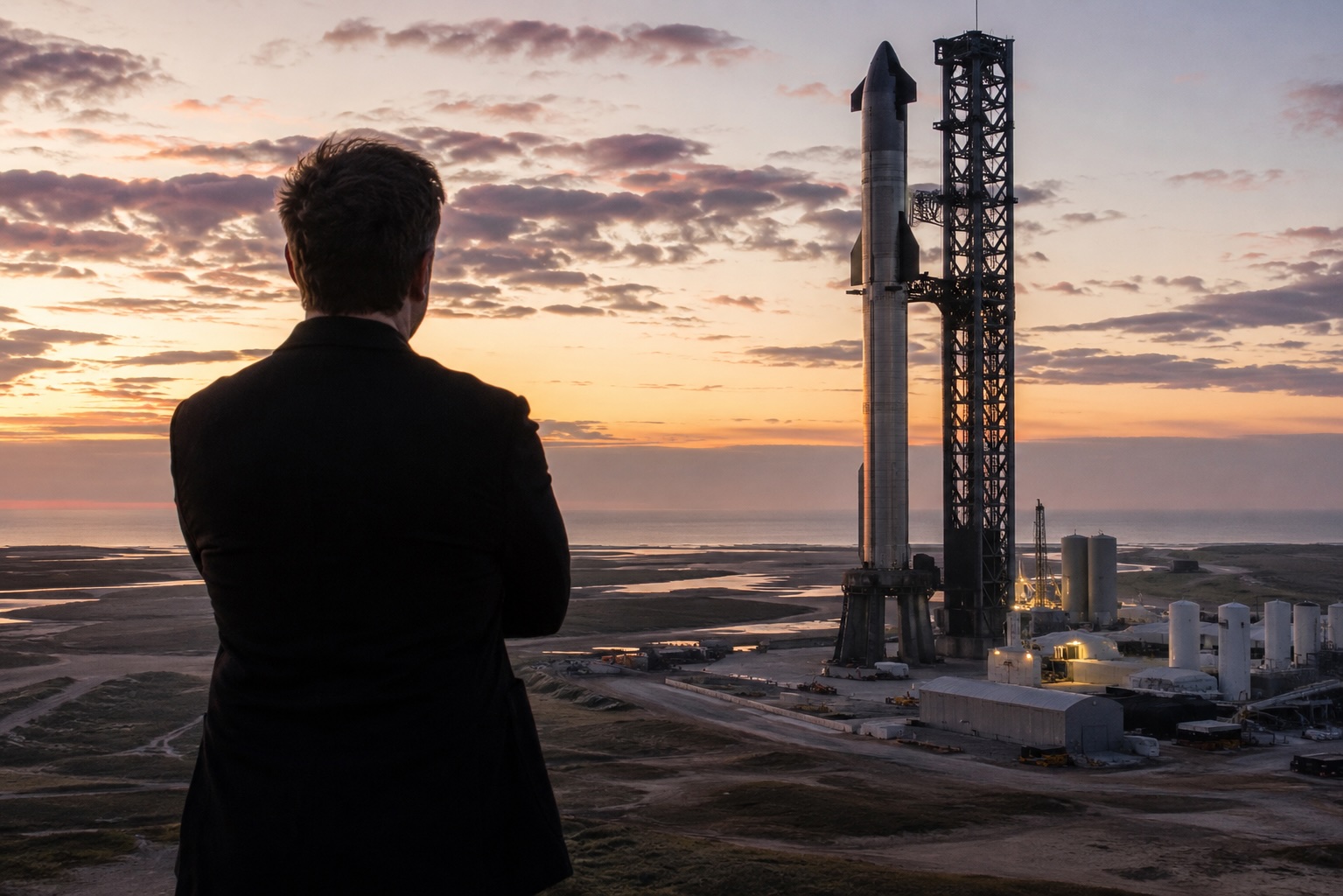
SpaceX officially priced its initial public offering at $135 per share, offering 555,555,555 shares of Class A common stock and raising $75 billion in what is the largest IPO in stock market history. Shares are set to begin trading on the Nasdaq Global Select Market on Friday, June 12, under the ticker symbol SPCX. The previous record holder was Saudi Aramco’s 2019 offering at $29 billion, followed by Alibaba’s $22 billion offering in 2014.
At $135 per share and roughly 555.6 million shares, the implied valuation sits near $1.75 trillion, which would make SpaceX roughly the seventh largest company in the United States, just above Tesla’s current market cap. Regular investors can request shares at the IPO price through Robinhood, Fidelity, Charles Schwab, SoFi, and E*TRADE, though the deal is heavily oversubscribed and most retail allocations will be partial or unfilled. Once trading opens June 12, anyone with a brokerage account can buy SPCX on the open market.
SpaceX’s amended S-1 is sparking a major Tesla merger conversation
The valuation is anchored primarily by Starlink. Starlink crossed 10 million subscribers as of February 2026 and is adding 750,000 to 1.5 million new users per month, with the connectivity segment already posting a $1.19 billion profit last quarter. The offering also bundles in xAI following SpaceX’s all-stock merger earlier this year, adding Grok and the Colossus supercomputer to the investment thesis. As Teslarati reported, Starlink ended 2025 with $10 billion in revenue, a figure analysts project could reach $24 billion by end of 2026.
Wedbush analyst Dan Ives has been vocal in his support. “I think the time is right,” Ives said, adding that the offering expands the Elon Musk ecosystem rather than competing with Tesla. An average 12-month price target of $165 per share represents roughly 22% upside from the IPO price. Not everyone agrees – Motley Fool noted xAI is spending $1 billion per month playing catch-up to OpenAI and Anthropic.
Musk founded SpaceX in 2002 with a single stated purpose. “Elon founded SpaceX with a goal to change humanity, to make us a multi-planet species,” CFO Bret Johnsen said in the company’s retail roadshow video this week. Musk himself has been more direct: “We are building the systems and technologies necessary to provide global connectivity on Earth and beyond, to understand the true nature of the universe, and to extend the light of consciousness to the stars.”

Tesla urges New Jersey owners to oppose new bill that could block Robotaxi

Tesla’s Navigation Nightmare: Why the easiest part of FSD might be the hardest


