
News
Tesla Semi ‘speed & agility’ praised by professional driver after electric truck encounter

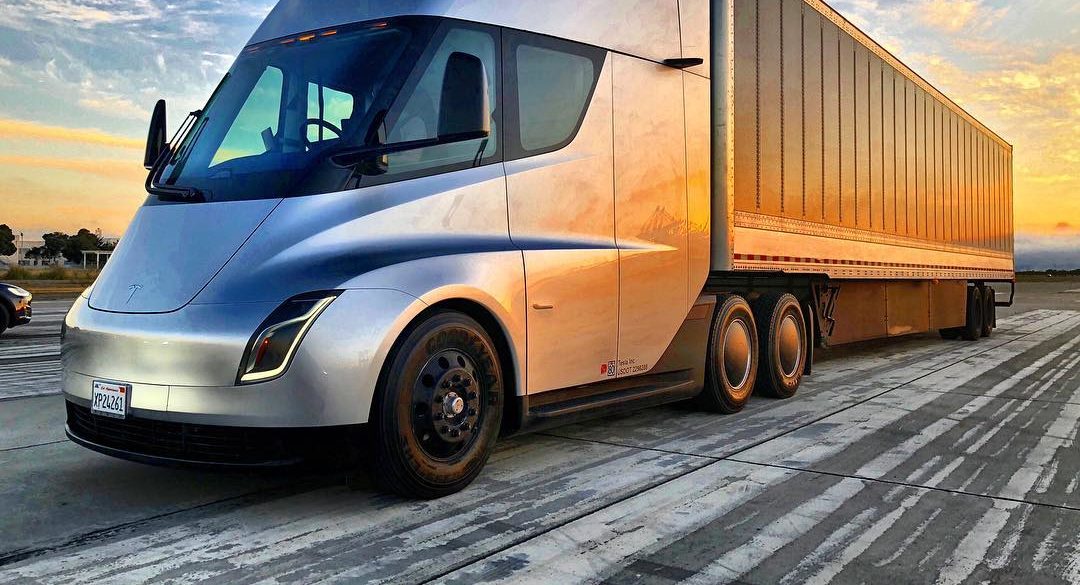
The Tesla Semi is currently traveling across the United States to gather real-world data and refine its systems before it gets released next year. Tesla seems to have brought the Semi over to be test driven by professional driver and 28-year auto veteran Emile Bouret recently as well, who walked away from the experience thoroughly impressed.
Emile Bouret is a professional test driver who has worked with Tesla for years. Bouret is a close friend of Tesla chief designer Franz von Holzhausen, and he has been asked to test drive the company’s vehicles from the Model S to the original Tesla Roadster. He was also the man who conducted test drives in the next-generation Tesla Roadster during the vehicle’s unveiling last November.
The professional driver recently posted an update on his Instagram about the Tesla Semi, lauding the electric long-hauler for its speed and agility, stating that the truck’s performance is practically at odds with its size. Bouret’s caption on his Instagram post suggests that he actually got some hands-on time with the electric long-hauler.
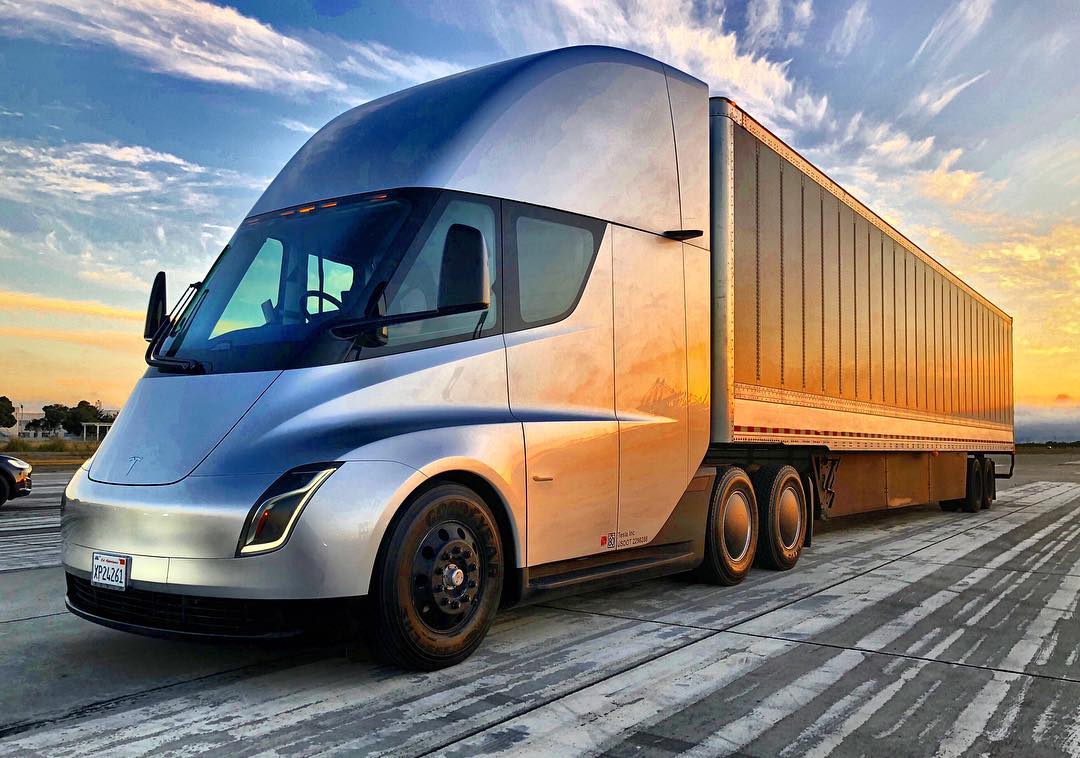
“Blurring The Line | Coworker Edition – I’m clearly very lucky to do what I do & to work with many talented people. As if they could ever be overlooked, the inanimate coworkers I get to work with also tend to be incredibly capable. And that was certainly true with this one, which made a surprise appearance at a recent work site. To see this thing coming down the road in near silence & with speed & agility seemingly at odds with something of its size makes you feel as if you’re living in the future. Kickass cool & crazy in equal measure… the Tesla Semi.”
Tesla loves bending the rules of markets that it disrupts. When the company started selling cars, its business model did away with dealerships, shaking the very idea of how brand new cars are sold. When it seemed like GA3 would not be enough to build 5,000 Model 3 per week by the end of Q2 2018, Tesla built another assembly line inside a sprung structure at the grounds of the Fremont factory.
Now, Tesla is attempting to break into another market that is ripe for disruption — the American trucking industry — and its weapon of choice is the Tesla Semi. The Tesla Semi, just like CEO Elon Musk and the company itself, has attracted its own set of disbelievers and critics. Martin Daum, Daimler’s head of trucks, even suggested that the Tesla Semi defies the laws of physics, considering the specs announced by Musk. Jon Mills, a spokesman for engine maker Cummins Inc., largely dismissed the electric truck and its chances at the long-haul market as well, citing weak demand.
That has not stopped Tesla from pushing the Semi, though. Over the past few weeks, multiple sightings of the Semi have been reported across the United States, and during this time, the vehicle was seen visiting some of the companies that placed pre-orders for the long-hauler. Among these are UPS, J.B. Hunt, and Ruan Transportation Management Systems, all of which shared their enthusiasm for the truck online.
Just like Tesla’s other vehicles, the Semi is designed to be a long-hauler that could be driven well. This is a trademark of all Tesla electric cars to date, as the Model S, Model X, and Model 3 have all been hailed for their ride and drive. The vehicles themselves might attract criticism over their design (such as the Model X’s overcomplicated Falcon Wing Doors and the first-production Model 3’s build quality), but when it comes to drivability and performance, Tesla’s electric cars usually pass with flying colors.
This is what happened with the Model 3 during Detroit veteran Sandy Munro’s teardown and analysis of the vehicle. Munro spared no criticism when he talked about the Model 3’s panel gaps and overall build quality, but when he actually drove the electric sedan, he was impressed. Munro later noted that the person who tuned the suspension for the Model 3 could easily have been an “F1 Prince” — no small compliment coming from a man with decades of experience in the auto industry.
If Emile Bouret’s praise for the Tesla Semi is any indication, it appears that the electric long-hauler would be able to impress even its staunchest critics when it comes to the way it drives and its overall performance. Tesla, after all, has noted that it is in the process of improving the truck before it enters mass production. Elon Musk has already teased that the long-range variant of the vehicle will have closer to 600 miles of range. Making the Telsa Semi impressive to drive is just more icing on the cake.





Elon Musk
Tesla investors will be shocked by Jim Cramer’s latest assessment
Jim Cramer is now speaking positively about Tesla, especially in terms of its Robotaxi performance and its perception as a company.

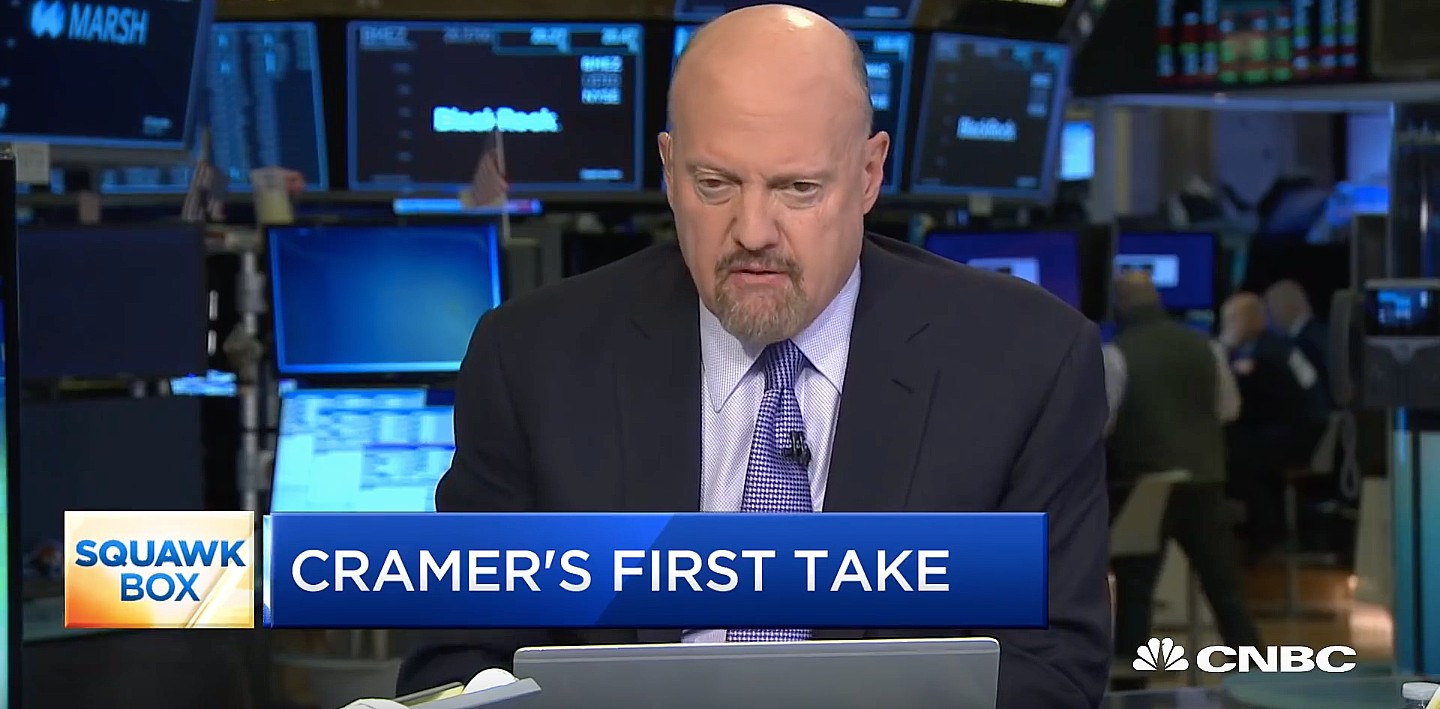
Tesla investors will be shocked by analyst Jim Cramer’s latest assessment of the company.
When it comes to Tesla analysts, many of them are consistent. The bulls usually stay the bulls, and the bears usually stay the bears. The notable analysts on each side are Dan Ives and Adam Jonas for the bulls, and Gordon Johnson for the bears.
Jim Cramer is one analyst who does not necessarily fit this mold. Cramer, who hosts CNBC’s Mad Money, has switched his opinion on Tesla stock (NASDAQ: TSLA) many times.
He has been bullish, like he was when he said the stock was a “sleeping giant” two years ago, and he has been bearish, like he was when he said there was “nothing magnificent” about the company just a few months ago.
Now, he is back to being a bull.
Cramer’s comments were related to two key points: how NVIDIA CEO Jensen Huang describes Tesla after working closely with the Company through their transactions, and how it is not a car company, as well as the recent launch of the Robotaxi fleet.
Jensen Huang’s Tesla Narrative
Cramer says that the narrative on quarterly and annual deliveries is overblown, and those who continue to worry about Tesla’s performance on that metric are misled.
“It’s not a car company,” he said.
He went on to say that people like Huang speak highly of Tesla, and that should be enough to deter any true skepticism:
“I believe what Musk says cause Musk is working with Jensen and Jensen’s telling me what’s happening on the other side is pretty amazing.”
Tesla self-driving development gets huge compliment from NVIDIA CEO
Robotaxi Launch
Many media outlets are being extremely negative regarding the early rollout of Tesla’s Robotaxi platform in Austin, Texas.
There have been a handful of small issues, but nothing significant. Cramer says that humans make mistakes in vehicles too, yet, when Tesla’s test phase of the Robotaxi does it, it’s front page news and needs to be magnified.
He said:
“Look, I mean, drivers make mistakes all the time. Why should we hold Tesla to a standard where there can be no mistakes?”
It’s refreshing to hear Cramer speak logically about the Robotaxi fleet, as Tesla has taken every measure to ensure there are no mishaps. There are safety monitors in the passenger seat, and the area of travel is limited, confined to a small number of people.
Tesla is still improving and hopes to remove teleoperators and safety monitors slowly, as CEO Elon Musk said more freedom could be granted within one or two months.
News
Tesla launches ultra-fast V4 Superchargers in China for the first time
Tesla has V4 Superchargers rolling out in China for the first time.
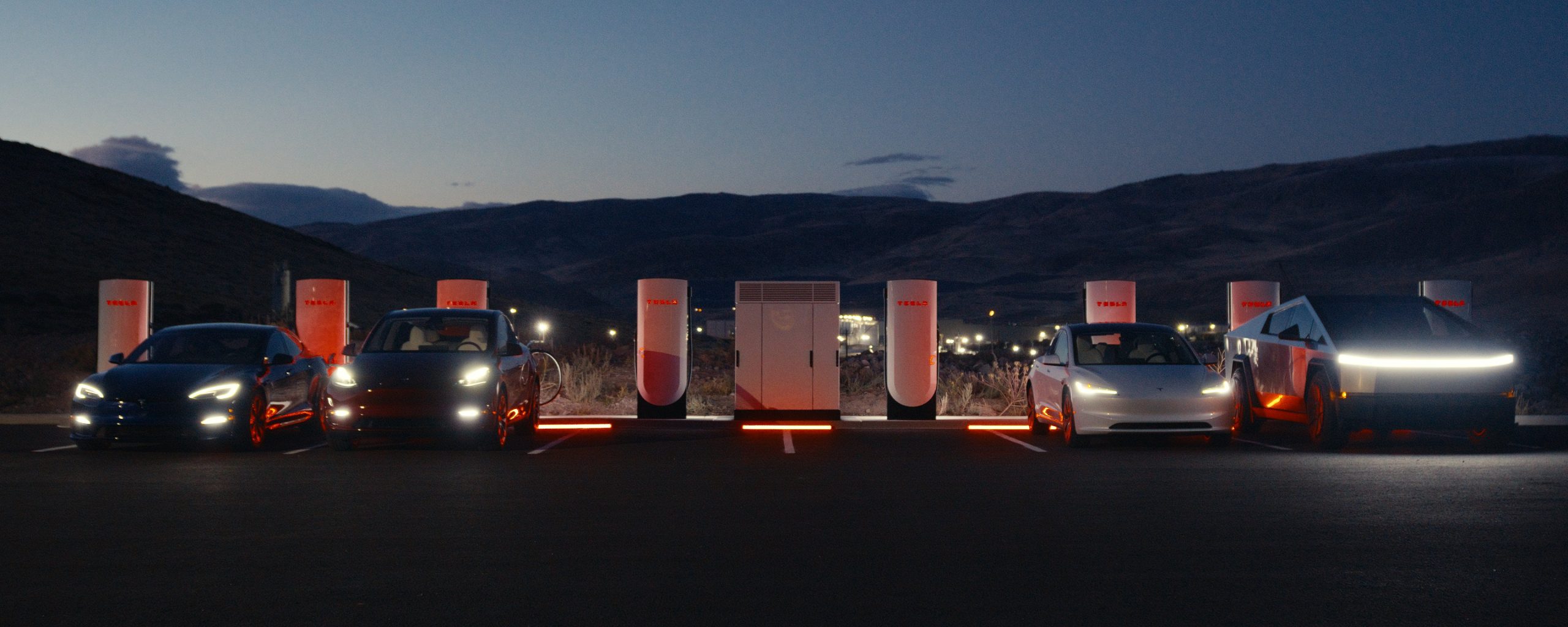
Tesla already has nearly 12,000 Supercharger piles across mainland China. However, the company just initiated the rollout of the ultra-fast V4 Superchargers in China for the first time, bringing its quick-charging piles to the country for the first time since their launch last year.
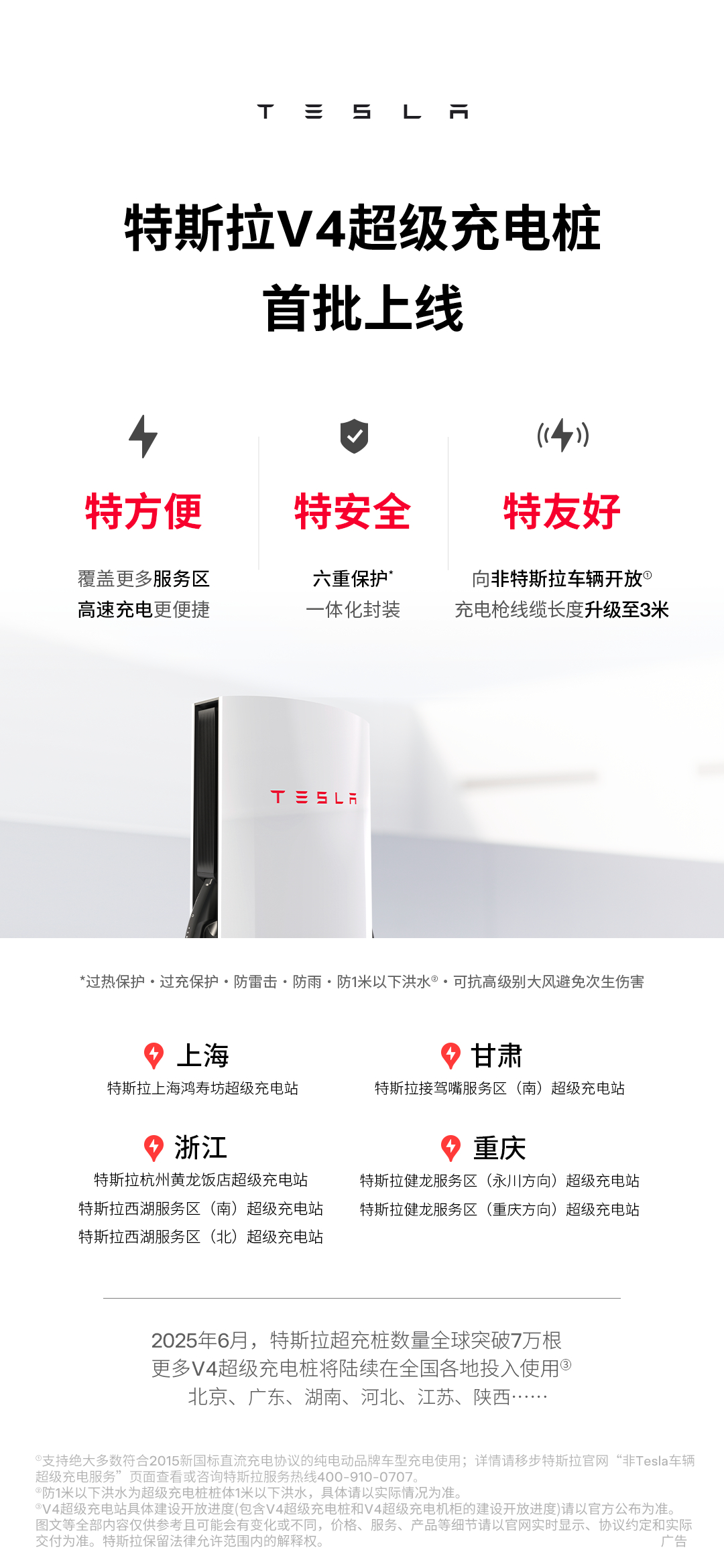
The first batch of V4 Superchargers is now officially up and running in China, the company announced in a post on Chinese social media outlet Weibo today.
The company said in the post:
“The first batch of Tesla V4 Superchargers are online. Covering more service areas, high-speed charging is more convenient, and six-layer powerful protection such as rain and waterproof makes charging very safe. Simultaneously open to non-Tesla vehicles, and other brands of vehicles can also be charged. There are more than 70,000 Tesla Superchargers worldwide. The charging network layout covers 100% of the provincial capitals and municipalities in mainland China. More V4 Superchargers will be put into use across the country. Optimize the charging experience and improve energy replenishment efficiency. Tesla will accompany you to the mountains, rivers, lakes, and seas with pure electricity!”
The first V4 Superchargers Tesla installed in China are available in four cities across the country: Shanghai, Zhejiang, Gansu, and Chongqing.
Credit: Tesla China
Tesla has over 70,000 Superchargers worldwide. It is the most expansive and robust EV charging network in the world. It’s the main reason why so many companies have chosen to adopt Tesla’s charging connector in North America and Europe.
In China, some EVs can use Tesla Superchargers as well.
The V4 Supercharger is capable of charging vehicles at speeds of up to 325kW for vehicles in North America. This equates to over 1,000 miles per hour of charging.
Elon Musk
Elon Musk hints at when Tesla could reduce Safety Monitors from Robotaxi
Tesla could be reducing Safety Monitors from Robotaxi within ‘a month or two,’ CEO Elon Musk says.
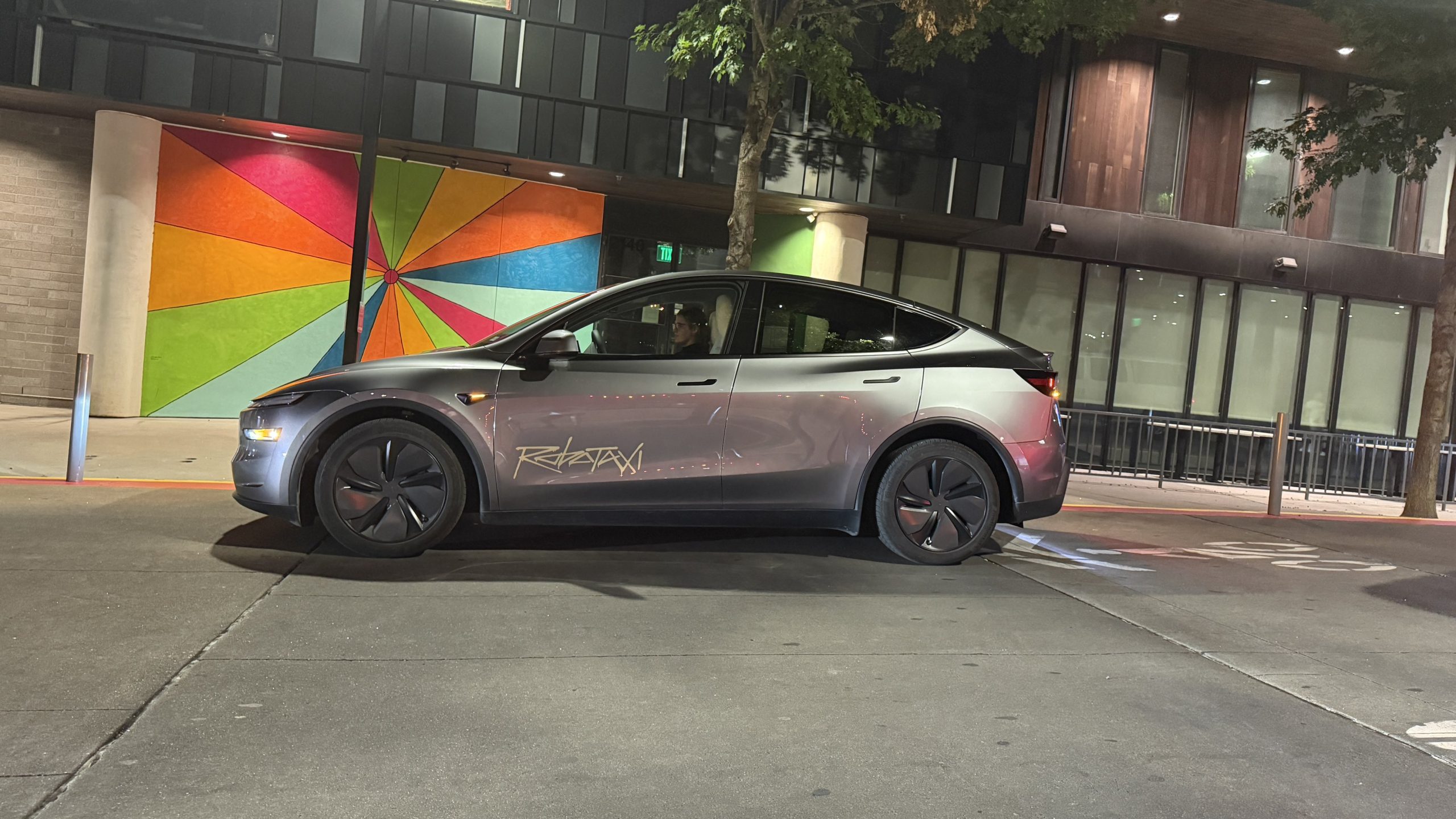
Elon Musk hinted at when Tesla could begin reducing Safety Monitors from its Robotaxis. Safety Monitors are Tesla employees who sit in the front passenger seat during the driverless rides, and are there to ensure safety for occupants during the earliest rides.
Tesla launched its Robotaxi fleet in Austin last Sunday, and after eight days, videos and reviews from those who have ridden in the driverless vehicles have shown that the suite is safe, accurate, and well coordinated. However, there have been a few hiccups, but nothing that has put anyone’s safety in danger.
A vast majority — close to all of the rides — at least according to those who have ridden in the Robotaxi, have been performed without any real need for human intervention. We reported on what was the first intervention last week, as a Safety Monitor had to step in and stop the vehicle in a strange interaction with a UPS truck.
Watch the first true Tesla Robotaxi intervention by safety monitor
The Tesla and UPS delivery truck were going for the same street parking space, and the Tesla began to turn into it. The UPS driver parallel parked into the spot, which was much smaller than his truck. It seemed to be more of an instance of human error instead of the Robotaxi making the wrong move. This is something that the driverless cars will have to deal with because humans are aggressive and sometimes make moves they should not.
The Safety Monitors have not been too active in the vehicles. After all, we’ve only seen that single instance of an intervention. There was also an issue with the sun, when the Tesla braked abnormally due to the glare, but this was an instance where the car handled the scenario and proceeded normally.
With the Robotaxi fleet operating impressively, some are wondering when Tesla will begin scaling back both the Safety Monitors and Teleoperators that it is using to ensure safety with these early rides.
CEO Elon Musk answered the inquiry by stating, “As soon as we feel it is safe to do so. Probably within a month or two.”
As soon as we feel it is safe to do so.
Probably within a month or two. We continue to improve the Tesla AI with each mile driven.
— Elon Musk (@elonmusk) June 30, 2025
Musk’s response seems to confirm that there will be fewer Teleoperators and Safety Monitors in the coming months, but there will still be some within the fleet to ensure safety. Eventually, that number will get to zero.
Reaching a point where Tesla’s Robotaxi is driverless will be another significant milestone for the company and its path to fully autonomous ride-sharing.
Eventually, Tesla will roll out these capabilities to consumer-owned vehicles, offering them a path to generate revenue as their car operates autonomously and completes rides.
For now, Tesla is focusing on perfecting the area of Austin where it is currently offering driverless rides for just $4.20 to a small group of people.

Tesla investors will be shocked by Jim Cramer’s latest assessment

Tesla launches ultra-fast V4 Superchargers in China for the first time

Elon Musk hints at when Tesla could reduce Safety Monitors from Robotaxi


-
 News5 days ago
Tesla Robotaxi’s biggest challenge seems to be this one thing
-
 News2 weeks ago
Tesla confirms massive hardware change for autonomy improvement
-
 Elon Musk2 weeks ago
Elon Musk slams Bloomberg’s shocking xAI cash burn claims
-
 News2 weeks ago
Tesla features used to flunk 16-year-old’s driver license test
-
 News2 weeks ago
Tesla China roars back with highest vehicle registrations this Q2 so far
-
 News2 weeks ago
Texas lawmakers urge Tesla to delay Austin robotaxi launch to September
-
 News2 weeks ago
Tesla dominates Cars.com’s Made in America Index with clean sweep
-

 News2 weeks ago
Tesla’s Grok integration will be more realistic with this cool feature