News
Nvidia CEO Jensen Huang explains difference between Tesla FSD and Alpamayo
“Tesla’s FSD stack is completely world-class,” the Nvidia CEO said.

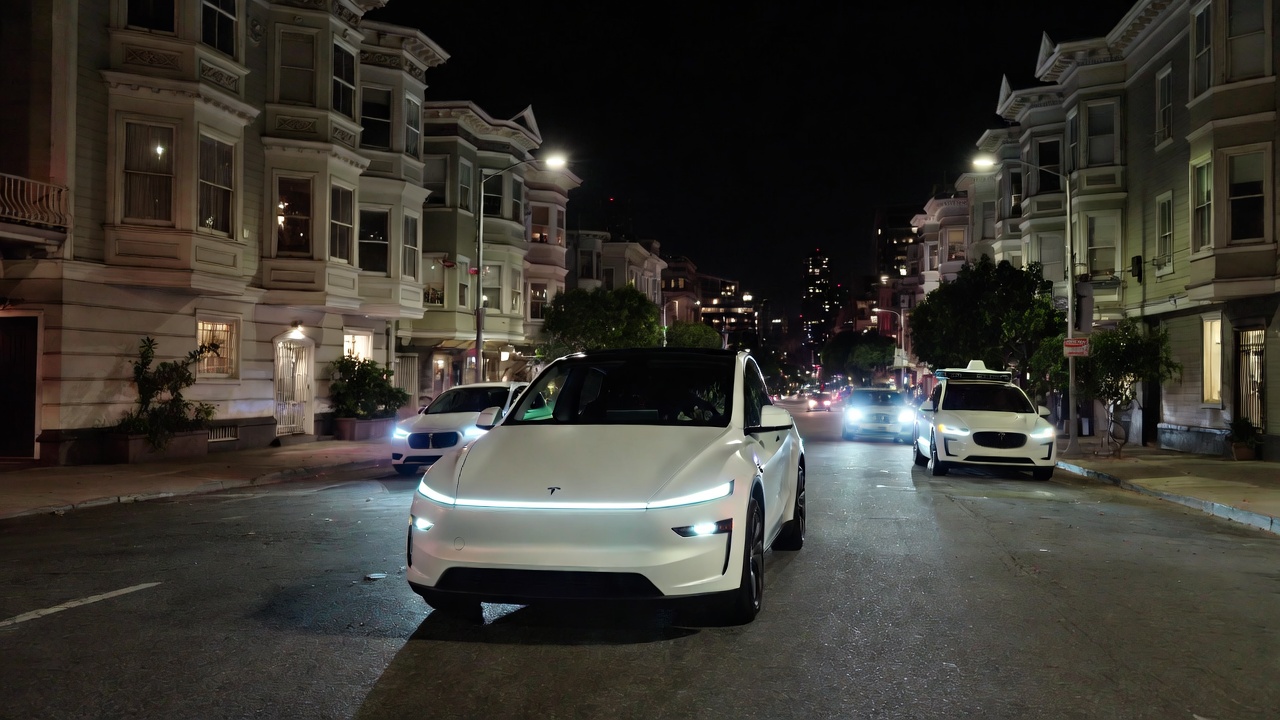
NVIDIA CEO Jensen Huang has offered high praise for Tesla’s Full Self-Driving (FSD) system during a Q&A at CES 2026, calling it “world-class” and “state-of-the-art” in design, training, and performance.
More importantly, he also shared some insights about the key differences between FSD and Nvidia’s recently announced Alpamayo system.
Jensen Huang’s praise for Tesla FSD
Nvidia made headlines at CES following its announcement of Alpamayo, which uses artificial intelligence to accelerate the development of autonomous driving solutions. Due to its focus on AI, many started speculating that Alpamayo would be a direct rival to FSD. This was somewhat addressed by Elon Musk, who predicted that “they will find that it’s easy to get to 99% and then super hard to solve the long tail of the distribution.”
During his Q&A, Nvidia CEO Jensen Huang was asked about the difference between FSD and Alpamayo. His response was extensive:
“Tesla’s FSD stack is completely world-class. They’ve been working on it for quite some time. It’s world-class not only in the number of miles it’s accumulated, but in the way it’s designed, the way they do training, data collection, curation, synthetic data generation, and all of their simulation technologies.
“Of course, the latest generation is end-to-end Full Self-Driving—meaning it’s one large model trained end to end. And so… Elon’s AD system is, in every way, 100% state-of-the-art. I’m really quite impressed by the technology. I have it, and I drive it in our house, and it works incredibly well,” the Nvidia CEO said.
Nvidia’s platform approach vs Tesla’s integration
Huang also stated that Nvidia’s Alpamayo system was built around a fundamentally different philosophy from Tesla’s. Rather than developing self-driving cars itself, Nvidia supplies the full autonomous technology stack for other companies to use.
“Nvidia doesn’t build self-driving cars. We build the full stack so others can,” Huang said, explaining that Nvidia provides separate systems for training, simulation, and in-vehicle computing, all supported by shared software.
He added that customers can adopt as much or as little of the platform as they need, noting that Nvidia works across the industry, including with Tesla on training systems and companies like Waymo, XPeng, and Nuro on vehicle computing.
“So our system is really quite pervasive because we’re a technology platform provider. That’s the primary difference. There’s no question in our mind that, of the billion cars on the road today, in another 10 years’ time, hundreds of millions of them will have great autonomous capability. This is likely one of the largest, fastest-growing technology industries over the next decade.”
He also emphasized Nvidia’s open approach, saying the company open-sources its models and helps partners train their own systems. “We’re not a self-driving car company. We’re enabling the autonomous industry,” Huang said.


News
Tesla influencers argue company’s polarizing Full Self-Driving transfer decision
Tesla maintains it will honor transfers for orders with initial delivery windows before the deadline and offers full deposit refunds otherwise, citing longstanding fine print that the program is “subject to change at any time.”

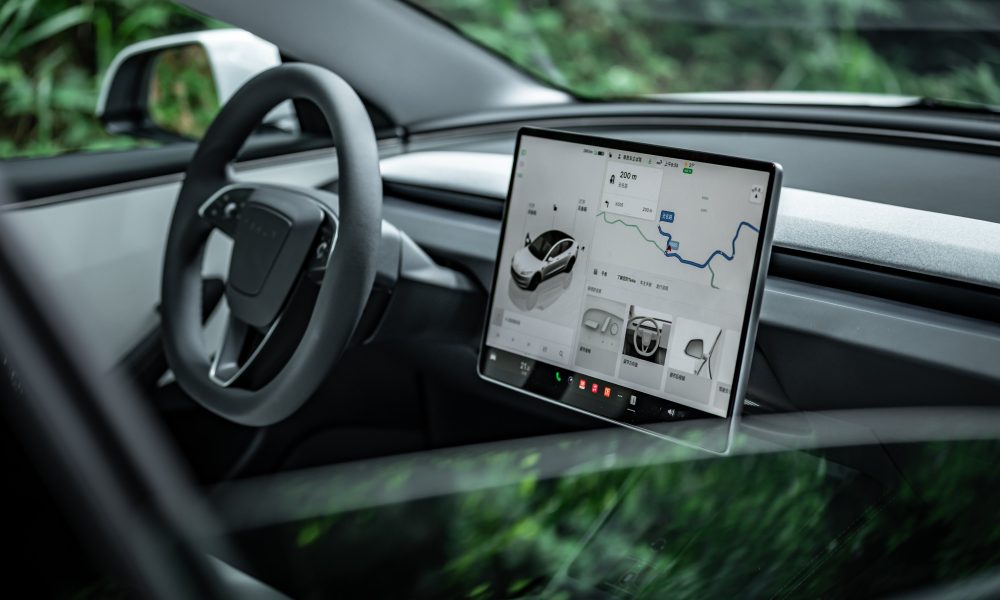
Tesla’s decision to tighten its Full Self-Driving (FSD) transfer promotion has ignited fierce debate among owners and enthusiasts.
The company quietly updated its terms in late February 2026, changing the eligibility from “order by March 31, 2026” to “take delivery by March 31, 2026.”
What began as a flexible incentive to boost sales, allowing buyers to transfer their paid FSD (Supervised) to a new vehicle, now excludes many, particularly Cybertruck owners facing delivery delays into summer or later.
Tesla maintains it will honor transfers for orders with initial delivery windows before the deadline and offers full deposit refunds otherwise, citing longstanding fine print that the program is “subject to change at any time.”
The reversal has polarized the Tesla community, with accusations of a “bait-and-switch” clashing against defenses of corporate pragmatism. Many owners who placed orders under the original wording feel betrayed, especially as production backlogs and new unsupervised FSD rollout complicate timelines.
However, Tesla has allowed them to cancel their orders and receive a refund.
Critics of the decision argue that the change disadvantages loyal customers who helped fund FSD development, calling it poor communication and a revenue grab as Tesla pivots toward subscriptions.
Popular influencers have amplified the divide. Whole Mars Catalog struck a measured but firm tone, acknowledging the original “order by” language but emphasizing Tesla’s right to adjust terms. He has continued to defend Tesla in this particular issue:
Sad to see so many fans trashing Tesla with such extreme language.
LIARS!!! PATHETIC!!! And if you aren’t as furious and angry as they are they are you’re “worshipping” and saying “they can do no wrong”.
Let’s get real here. They’re not liars. They offered FSD transfer to us… https://t.co/3Ay7vGaVR6
— Whole Mars Catalog (@wholemars) March 3, 2026
He criticized extreme backlash as “dramatization” and “spoiled kids,” noting the unsupervised FSD era and broader sales challenges make blanket transfers financially risky. Whole Mars advocated for polite outreach to CEO Elon Musk over the issue.
Rather than “calling them out”, I would simply say “Hey Elon, really hoped to be able to do FSD transfer on my cybertruck but the terms changed. Would really appreciate if Tesla could extend this to everyone who ordered before the terms changes”
that would probably work
— Whole Mars Catalog (@wholemars) March 3, 2026
In a contrasting perspective, Dirty TesLA voiced sharper frustration, posting that blocking transfers feels “crazy” and distancing himself from “people that want to worship a corporation and say they can do no wrong.” His stance resonated with owners who view the policy flip as disrespectful to early adopters.
Popular Tesla influencer Sawyer Merritt captured the frustration felt by thousands. In a widely shared thread viewed over 700,000 times, Merritt detailed how pre-change Cybertruck orders now risk losing FSD eligibility unless their initial delivery window falls before March 31.
It’s not a contradiction, it’s a change in policy that Tesla just made an hour ago. I am trying to check if the change is retroactive to all existing orders, including Cybertruck AWD orders, because if it is, that sucks big time.
— Sawyer Merritt (@SawyerMerritt) February 28, 2026
The controversy underscores deeper tensions—between Tesla’s need for revenue discipline and owners’ expectations of goodwill. As FSD evolves toward unsupervised capability, the community remains split: some see the change as necessary business, others as a broken promise. Whether Tesla reconsiders under pressure or holds firm remains to be seen, but it does not appear they are planning to budge.
News
Tesla Semi’s latest adoptee will likely encourage more of the same
Public visibility matters. When shoppers see a trusted name like Ralph’s running clean, high-tech trucks on public roads, skepticism fades. Competitors such as Albertsons, which pre-ordered Semis years ago, and other chains chasing ESG targets now have proof that electric autonomy works in real-world grocery fleets.
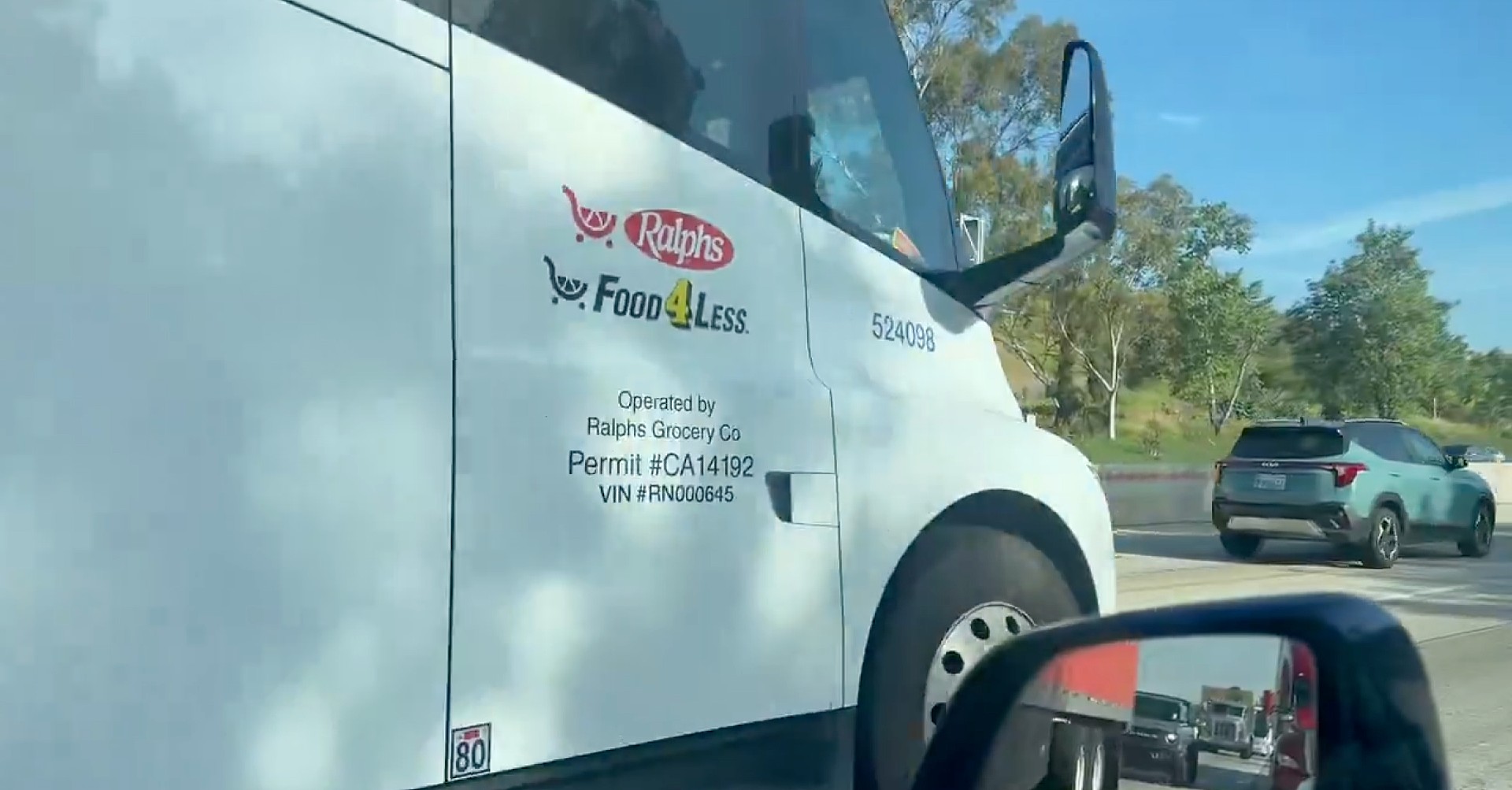
The latest adoptee of the Tesla Semi will likely encourage more businesses in the same realm to adopt the all-electric Class 8 truck, as a new company utilizing the Semi has been spotted in Southern California.
A sleek, futuristic Tesla Semi truck branded for Ralph’s Supermarkets was spotted cruising a Los Angeles highway in a viral 13-second dashcam video posted March 2, by X user ChargePozitive.
Tesla Semi Truck in the wild pic.twitter.com/SnQY8ShMMJ
— ChargePozitive ⚡️➕ (@ChargePozitive) March 2, 2026
This sighting confirms Kroger’s March 2025 partnership with Tesla to deploy up to 500 autonomous electric Semis.
While the initial announcement targeted Midwest supply chains, the California appearance under the Ralph’s banner shows the program expanding to Kroger’s West Coast operations. Ralph’s, a staple for millions of Southern California shoppers, is now hauling groceries with the Semi, which has zero tailpipe emissions and claims up to 500 miles of range per charge.
Tesla Semi pricing revealed after company uncovers trim levels
The timing could not be better for sustainable logistics. Traditional trucking accounts for a massive share of retail emissions, but Tesla’s Semi slashes fuel and maintenance costs while leveraging full autonomy to ease driver shortages and improve safety.
Tesla’s expanding Megacharger network, including new sites along major freight corridors and partnerships like the recently-announced one with Pilot Travel Centers, is removing range anxiety and making nationwide scaling realistic. There’s still a long way to go, but things are moving in the right direction.
Public visibility matters. When shoppers see a trusted name like Ralph’s running clean, high-tech trucks on public roads, skepticism fades. Competitors such as Albertsons, which pre-ordered Semis years ago, and other chains chasing ESG targets now have proof that electric autonomy works in real-world grocery fleets.
PepsiCo’s successful pilots already demonstrated viability, and Ralph’s sighting adds retail credibility.
As Tesla ramps high-volume Semi production through 2026, this isn’t an isolated curiosity. Instead, it’s a catalyst. More grocers adopting the platform will accelerate industry-wide decarbonization, cut operating expenses, and deliver tangible environmental wins.
The future of sustainable supply chains is already on the highway, and Ralph’s just made it impossible to ignore.
Moving forward, Tesla hopes to expand the Semi program into other regions, including Europe, which CEO Elon Musk recently said is a total possibility next year.
Elon Musk
Tesla ramps Cybercab test manufacturing ahead of mass production
Tesla still has plans for volume production, which remains between four and eight weeks away, aligning with Musk’s statements that early ramps would be deliberately measured given the Cybercab’s novel architecture and full reliance on Tesla’s vision-based Full Self-Driving technology.
Tesla is seemingly ramping Cybercab test manufacturing ahead of mass production, which is scheduled to begin next month, the company said.
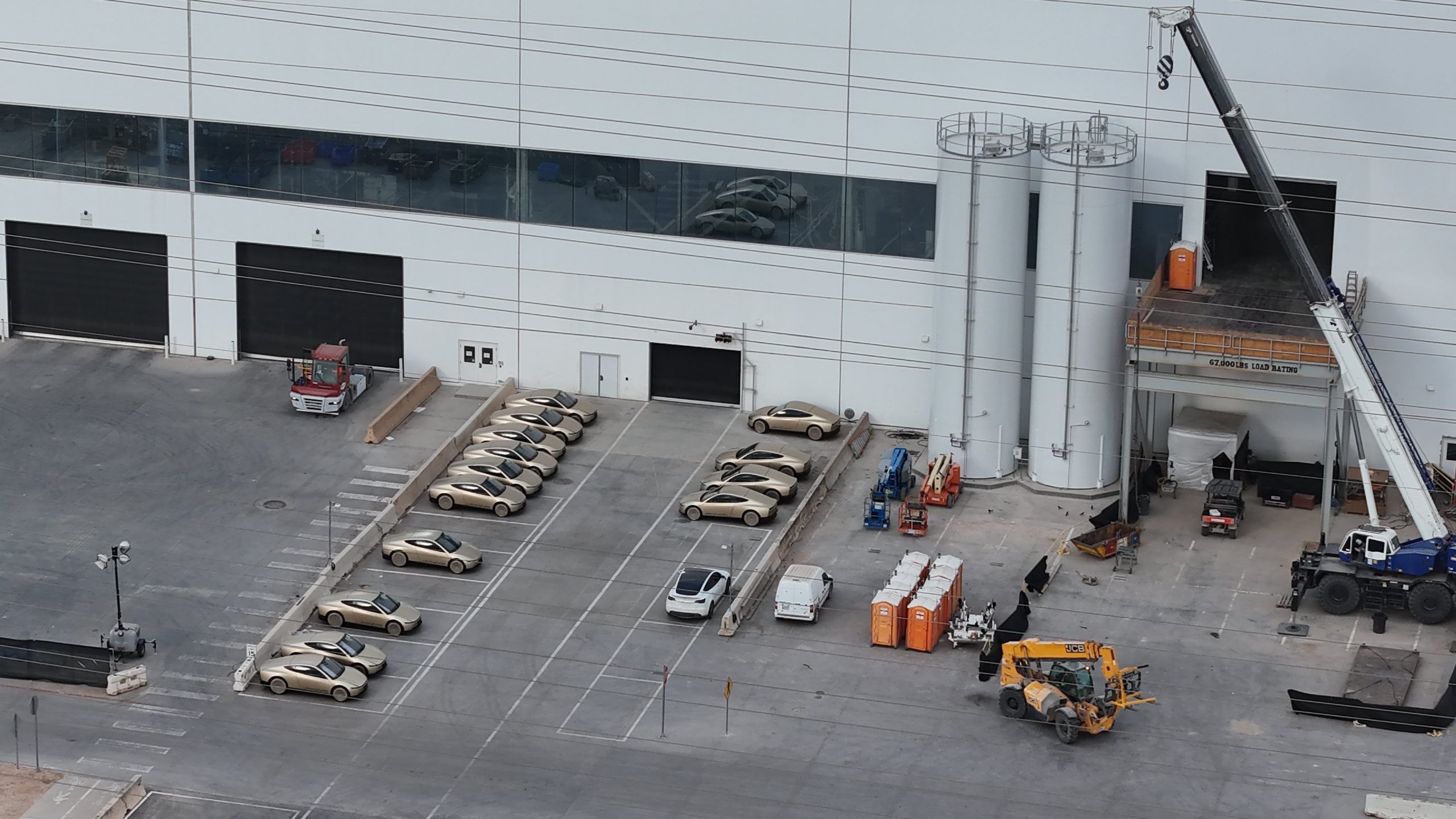
At Tesla’s Gigafactory Texas, production of the Cybercab, the company’s groundbreaking purpose-built Robotaxi vehicle, is accelerating markedly. Drone footage from Joe Tegtmeyer captured striking aerial footage today, revealing what appears to be the largest public sighting of Cyebrcabs to date.
A total of 25 units were observed by Tegtmeyer across the Gigafactory Texas property, marking a clear step-up in testing and validation activities as Tesla prepares for a broader output.
Tesla Cybercab production begins: The end of car ownership as we know it?
In the footage, 14 metallic gold Cybercabs were parked in a tight formation outside the factory exit, showcasing their sleek, autonomous-only design with no steering wheels, pedals, or traditional controls. Another 9 units sat at the crash testing facility, likely undergoing structural and safety validations, while two more appeared at the west end-of-line area for final checks.
Big day for Cybercab at Giga Texas today! Actually, yesterday to kick off March, the production line went into a higher volume & today we see 25 at three main locations, and there were several others I observed driving around too!
I think this may be the largest single grouping… pic.twitter.com/HZDMNv57lJ
— Joe Tegtmeyer 🚀 🤠🛸😎 (@JoeTegtmeyer) March 3, 2026
Tegtmeyer noted additional Cybercabs driving around the complex, hinting at active movement and real-world testing beyond static parking.
This surge follows the first production Cybercab rolling off the line in mid-February 2026, several weeks ahead of the originally anticipated April start.
That milestone, celebrated by Tesla employees and confirmed by CEO Elon Musk, kicked off low-volume builds on the dedicated “unboxed” manufacturing line, a modular process designed to slash costs, reduce factory footprint, and enable faster assembly compared to conventional methods.
Industry observers interpret the jump to dozens of visible units in early March as evidence that Tesla has transitioned into higher-volume test manufacturing.
Tesla still has plans for volume production, which remains between four and eight weeks away, aligning with Musk’s statements that early ramps would be deliberately measured given the Cybercab’s novel architecture and full reliance on Tesla’s vision-based Full Self-Driving technology.
The Cybercab, envisioned as a sub-$30,000 autonomous two-seater for robotaxi fleets, represents Tesla’s bold pivot toward scalable autonomy and robotics.
Tesla fans and enthusiasts on X praised the imagery, with many expressing excitement over the visible progress toward deployment. While challenges remain, including software maturity, regulatory hurdles, and supply chain scaling, the increased factory activity underscores Tesla’s momentum in turning the Cybercab vision into reality.
As Giga Texas continues expanding and refining the manufacturing process of the Cybercab, the coming months will prove to be a pivotal time in determining how quickly this revolutionary vehicle reaches roads in the U.S. and internationally.

Tesla influencers argue company’s polarizing Full Self-Driving transfer decision

Tesla Semi’s latest adoptee will likely encourage more of the same


