Elon Musk
Elon Musk teases huge merger: ‘Trending towards convergence’
“My companies are, surprisingly in some ways, trending towards convergence.”

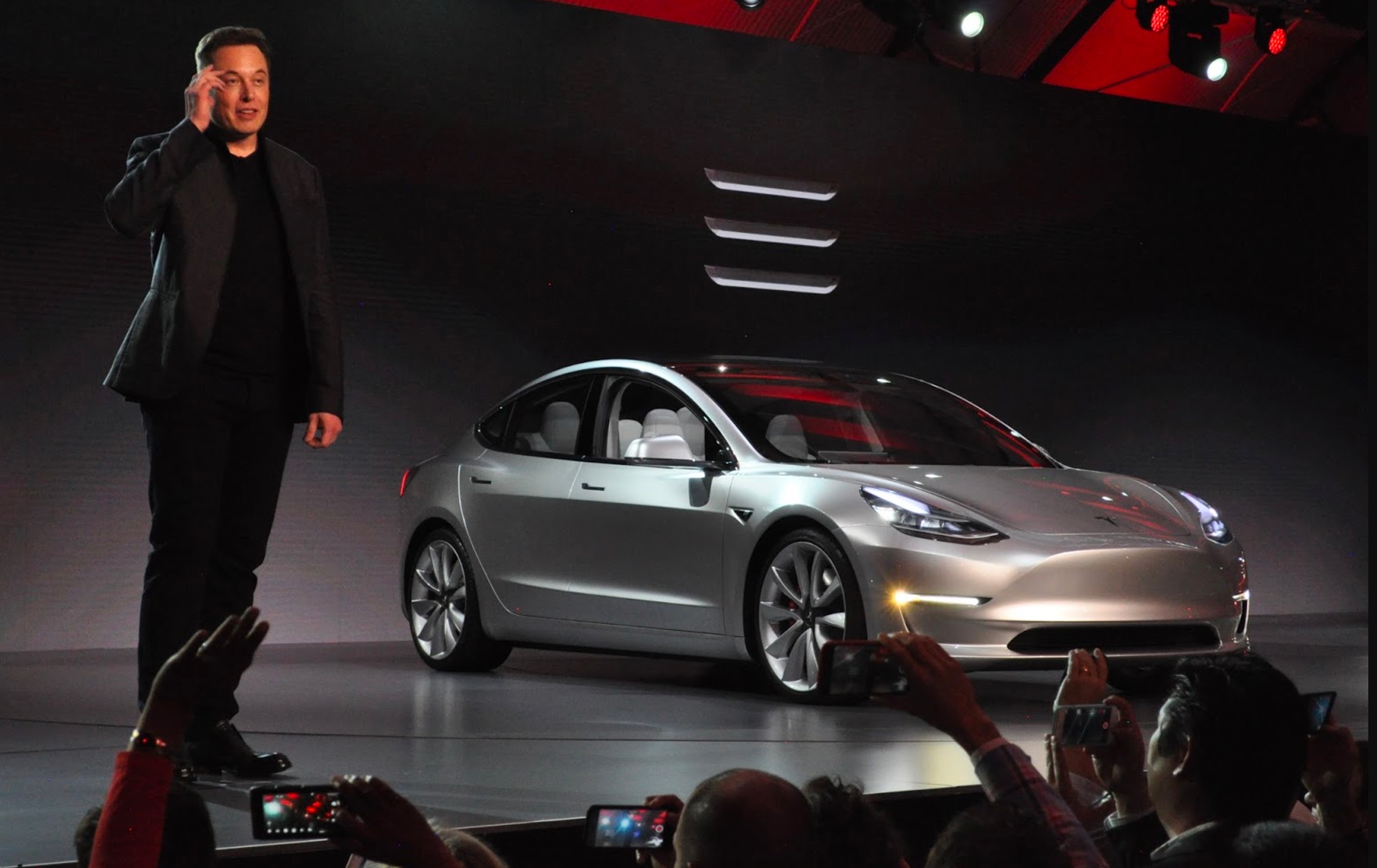
Elon Musk recently amplified the thoughts of Morgan Stanley analyst Adam Jonas, who had insight into the “Muskonomy” of his potentially interconnected ventures, something that was proposed at the recent Tesla Shareholder Meeting with xAI.
Musk’s words indicate a potential strategic fusion that could serve as a blueprint for future innovation–but it is dependent on a conglomeration between the many entities the CEO serves.
As Tesla grapples with scaling Optimus and preparing for its imminent production and the development of the Full Self-Driving suite, xAI’s computational edge could provide leverage for the millions of miles of data the company accumulates, providing a more stable and accurate development strategy for the autonomous and AI efforts it has put its chips all in on.
After Tesla Shareholders voted to deny Tesla and xAI’s potential financial partnership through an investment, Jonas said it was an issue that would have to be revisited due to its importance.
xAI has the opportunity to provide an incredible strategic and financial bolstering to Tesla, especially with how important a role data plays in the development of the company’s biggest products.
Jonas wrote in a note to investors:
“They’re gonna have to revisit this. We don’t think investors understand just how important xAI is to Tesla and the broader Muskonomy. Tesla’s relationship with xAI (financially and strategically) is deterministic to the long-term success of Tesla due in part to the natural synergies of data, software, hardware, and manufacturing in recursive loops. The values (and value systems) of both Tesla and xAI are endowed by the values of their shared creator. We believe this co-determination becomes more obvious in the next phases of physical AI/ autonomy for Tesla in the year ahead.”
Musk said, in response to Jonas’ note, that his companies are “surprisingly in some ways, trending toward convergence.”
My companies are, surprisingly in some ways, trending towards convergence
— Elon Musk (@elonmusk) November 10, 2025
Mergers and shared ecosystems between companies are not new moves out of Musk’s playbook, as it has been done in the past, especially with Tesla acquiring other entities.
It did it with SolarCity in 2016 and with Maxwell Technologies in 2019. Investments between Musk companies have occurred before, too, as SpaceX dumped $2 billion into xAI last July.
He’s also said on several occasions that he could eventually bring everything together into some sort of single entity. In July 2024, he said:
“I’m not opposed to the idea in principle, but I’m not sure there is a pragmatic or legal way to merge them. There is also value in equity incentives of people at the companies being tied to that company’s accomplishments.”
This point is especially relevant now with Musk’s recently approved compensation package.
He also said in June, during an interview with CNBC , that “It’s not out of the question” for xAI to merge with Tesla, but it would have to be approved by shareholders. Just a few days later, he said he would not support xAI merging with Tesla; however, he put it in investors’ hands.
It’s more than just a deal; it’s symbiotic. Musk being at the helm of various companies, all intertwined with one another, helps foster recursive innovation. Despite these advantages, there are still a handful of things to consider, especially from a regulatory perspective.
However, it is not competition; it’s convergence. In Musk’s universe, especially from a business sense, mergers are not endpoints, but instead launchpads for ambitions that aim to take each company from Earth to lands beyond our atmosphere.


Elon Musk
What is Digital Optimus? The new Tesla and xAI project explained
At its core, Digital Optimus operates through a dual-process architecture inspired by human cognition.
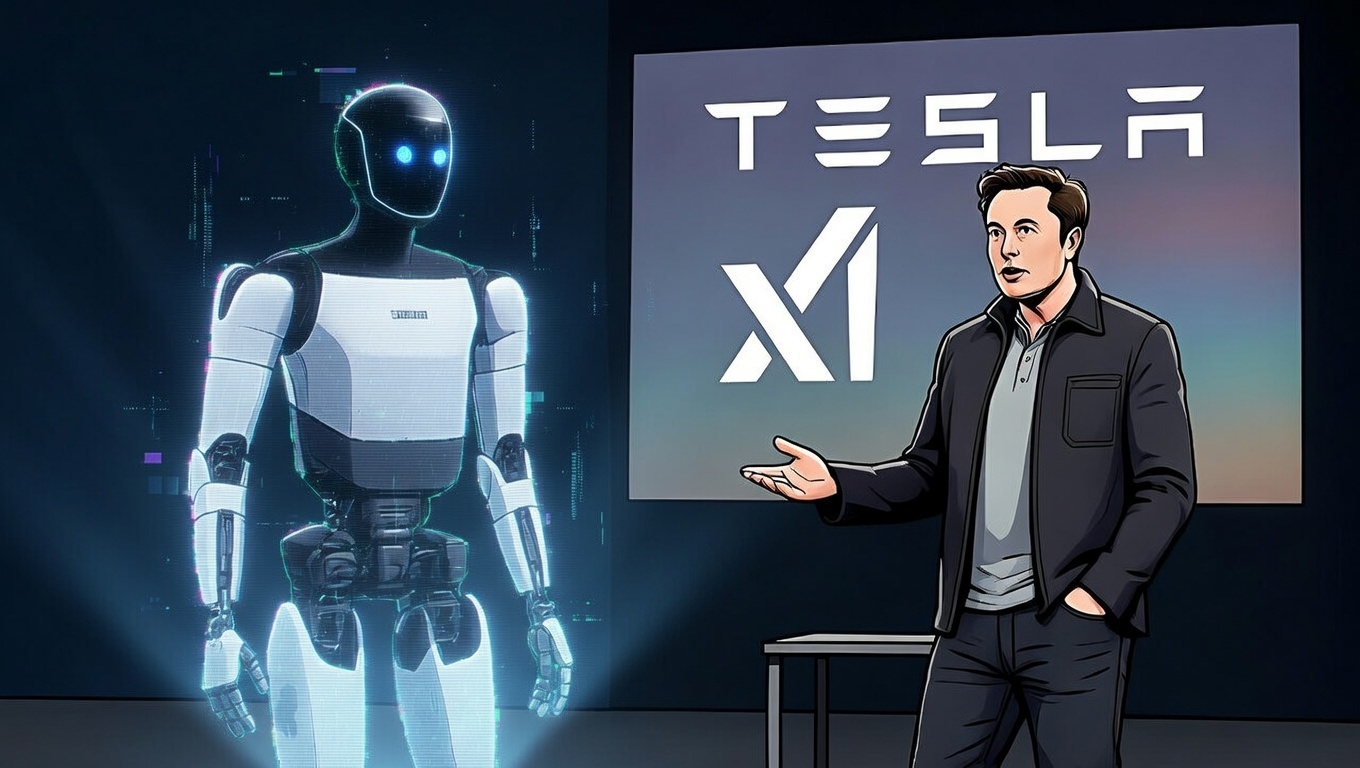
Tesla and xAI announced their groundbreaking joint project, Digital Optimus, also nicknamed “Macrohard” in a humorous jab at Microsoft, earlier this week.
This software-based AI agent is designed to automate complex office workflows by observing and replicating human interactions with computers. As the first major outcome of Tesla’s $2 billion investment in xAI, it represents a powerful fusion of hardware efficiency and advanced reasoning.
At its core, Digital Optimus operates through a dual-process architecture inspired by human cognition.
Macrohard or Digital Optimus is a joint xAI-Tesla project, coming as part of Tesla’s investment agreement with xAI.
Grok is the master conductor/navigator with deep understanding of the world to direct digital Optimus, which is processing and actioning the past 5 secs of…
— Elon Musk (@elonmusk) March 11, 2026
Tesla’s specialized AI acts as “System 1”—the fast, instinctive executor—processing the past five seconds of real-time computer screen video along with keyboard and mouse actions to perform immediate tasks.
xAI’s Grok model serves as “System 2,” the strategic “master conductor” or navigator, providing high-level reasoning, world understanding, and directional oversight, much like an advanced turn-by-turn navigation system.
When combined, the two can create a powerful AI-based assistant that can complete everything from accounting work to HR tasks.
Will Tesla join the fold? Predicting a triple merger with SpaceX and xAI
The system runs primarily on Tesla’s low-cost AI4 inference chip, minimizing expensive Nvidia resources from xAI for competitive, real-time performance.
Elon Musk described it as “the only real-time smart AI system” capable, in principle, of emulating the functions of entire companies, handling everything from accounting and HR to repetitive digital operations.
Timelines point to swift deployment. Announced just days ago, Musk expects Digital Optimus to be ready for user experience within about six months, targeting rollout around September 2026.
It will integrate into all AI4-equipped Tesla vehicles, enabling parked cars to handle office work during downtime. Millions of dedicated units are also planned for deployment at Supercharger stations, tapping into roughly 7 gigawatts of available power.
Oh and it works in all AI4-equipped cars, so your car can do office work for you when not driving.
We’re also deploying millions of dedicated Digital Optimus units in the field at Superchargers where we have ~7 gigawatts of available power.
— Elon Musk (@elonmusk) March 12, 2026
Digital Optimus directly supports Tesla’s broader autonomy strategy. It leverages the same end-to-end neural networks, computer vision, and real-time decision-making tech that power Full Self-Driving (FSD) software and the physical Optimus humanoid robot.
By repurposing idle vehicle compute and extending AI4 hardware beyond driving, the project scales Tesla’s autonomy ecosystem from roads to digital workspaces.
As a virtual counterpart to physical Optimus, it divides labor: software agents manage screen-based tasks while humanoid robots tackle physical ones, accelerating Tesla’s vision of general-purpose AI for productivity, Robotaxi fleets, and beyond.
In essence, Digital Optimus bridges Tesla’s vehicle and robotics autonomy with enterprise-scale AI, promising massive efficiency gains. No other company currently matches its real-time capabilities on such accessible hardware.
It really could be one of the most crucial developments Tesla and xAI begin to integrate, as it could revolutionize how people work and travel.
Elon Musk
Brazil Supreme Court orders Elon Musk and X investigation closed
The decision was issued by Supreme Court Justice Alexandre de Moraes following a recommendation from Brazil’s Prosecutor-General Paulo Gonet.

Brazil’s Supreme Federal Court has ordered the closure of an investigation involving Elon Musk and social media platform X. The inquiry had been pending for about two years and examined whether the platform was used to coordinate attacks against members of the judiciary.
The decision was issued by Supreme Court Justice Alexandre de Moraes following a recommendation from Brazil’s Prosecutor-General Paulo Gonet.
According to a report from Agencia Brasil, the investigation conducted by the Federal Police did not find evidence that X deliberately attempted to attack the judiciary or circumvent court orders.
Prosecutor-General Paulo Gonet concluded that the irregularities identified during the probe did not indicate fraudulent intent.
Justice Moraes accepted the prosecutor’s recommendation and ruled that the investigation should be closed. Under the ruling, the case will remain closed unless new evidence emerges.
The inquiry stemmed from concerns that content on X may have enabled online attacks against Supreme Court justices or violated rulings requiring the suspension of certain accounts under investigation.
Justice Moraes had previously taken several enforcement actions related to the platform during the broader dispute involving social media regulation in Brazil.
These included ordering a nationwide block of the platform, freezing Starlink accounts, and imposing fines on X totaling about $5.2 million. Authorities also froze financial assets linked to X and SpaceX through Starlink to collect unpaid penalties and seized roughly $3.3 million from the companies’ accounts.
Moraes also imposed daily fines of up to R$5 million, about $920,000, for alleged evasion of the X ban and established penalties of R$50,000 per day for VPN users who attempted to bypass the restriction.
Brazil remains an important market for X, with roughly 17 million users, making it one of the platform’s larger user bases globally.
The country is also a major market for Starlink, SpaceX’s satellite internet service, which has surpassed one million subscribers in Brazil.
Elon Musk
FCC chair criticizes Amazon over opposition to SpaceX satellite plan
Carr made the remarks in a post on social media platform X.
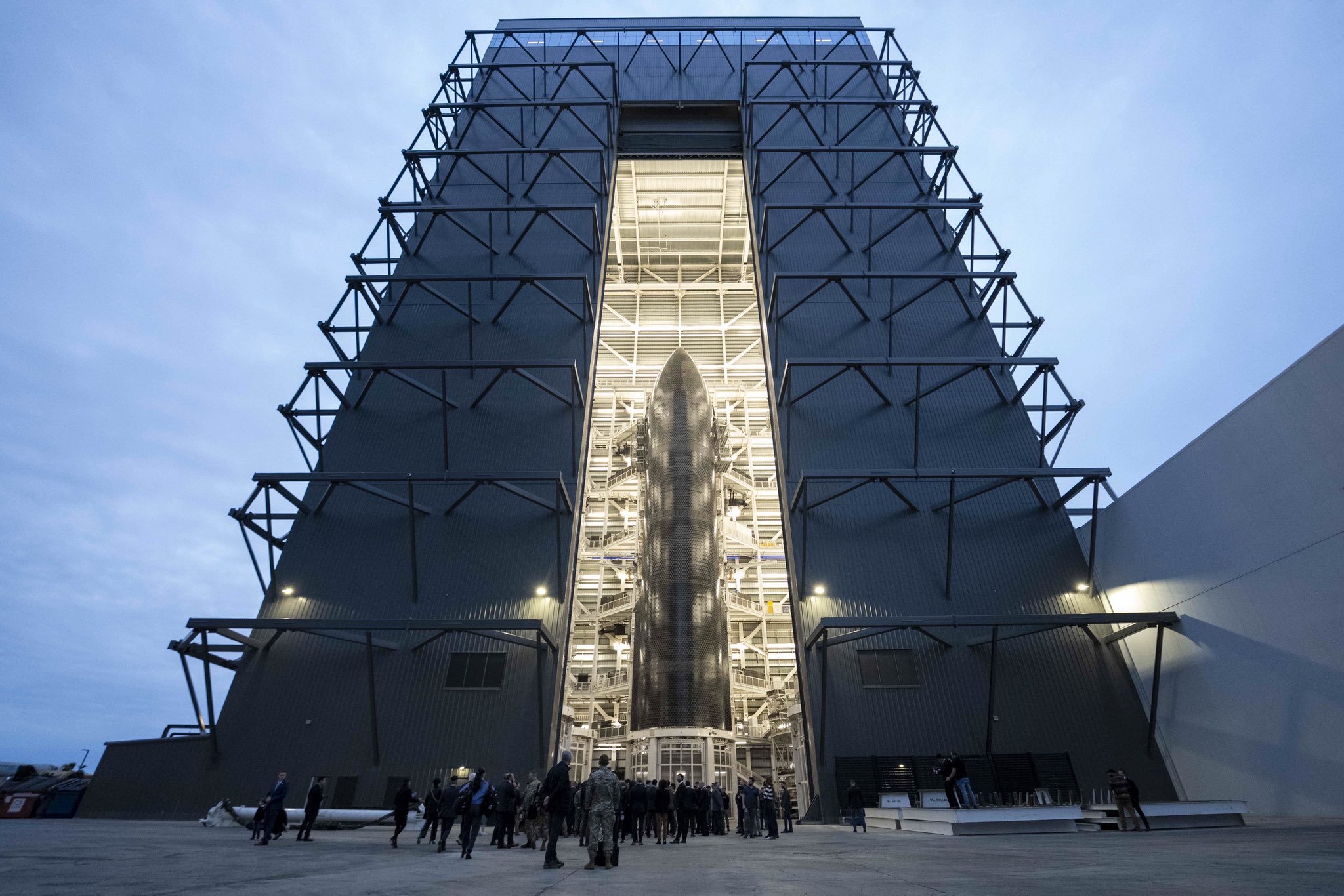
U.S. Federal Communications Commission (FCC) Chairman Brendan Carr criticized Amazon after the company opposed SpaceX’s proposal to launch a large satellite constellation that could function as an orbital data center network.
Carr made the remarks in a post on social media platform X.
Amazon recently urged the FCC to reject SpaceX’s application to deploy a constellation of up to 1 million low Earth orbit satellites that could serve as artificial intelligence data centers in space.
The company described the proposal as a “lofty ambition rather than a real plan,” arguing that SpaceX had not provided sufficient details about how the system would operate.
Carr responded by pointing to Amazon’s own satellite deployment progress.
“Amazon should focus on the fact that it will fall roughly 1,000 satellites short of meeting its upcoming deployment milestone, rather than spending their time and resources filing petitions against companies that are putting thousands of satellites in orbit,” Carr wrote on X.
Amazon has declined to comment on the statement.
Amazon has been working to deploy its Project Kuiper satellite network, which is intended to compete with SpaceX’s Starlink service. The company has invested more than $10 billion in the program and has launched more than 200 satellites since April of last year.
Amazon has also asked the FCC for a 24-month extension, until July 2028, to meet a requirement to deploy roughly 1,600 satellites by July 2026, as noted in a CNBC report.
SpaceX’s Starlink network currently has nearly 10,000 satellites in orbit and serves roughly 10 million customers. The FCC has also authorized SpaceX to deploy 7,500 additional satellites as the company continues expanding its global satellite internet network.

What is Digital Optimus? The new Tesla and xAI project explained

Tesla adds awesome new driving feature to Model Y


