Lifestyle
Review: Meze 11 Deco Designer Earphones

The attributes that Tesla owners are attracted to are known as the Tesla Lifestyle. But these things can be found in many places.
The hallmarks are simplicity in design and the desire to abandon the comprehensive and abbreviated and focus on the essential. I borrowed that last part from a 12th century Japanese philosopher. Seems to fit perfectly. Teslarati is always on the lookout for items that embody this approach. This week we ran across the Meze 11 Deco ear monitors.
 Antonio Meze is a Romanian born industrial designer, creative thinker and musician with many awards in his portfolio. He founded Meze Headphones in 2012 in London because he was not happy with the spectrum of headphones on the market. He leveraged his design skills, ability to think beyond the “box” and passion for music to create a distinctive line of headphones and earbuds. Meze blends classic design with technology and encases them in wood, which brings out a richer, more natural sound. The line of headphones is absolutely beautiful. For this post I’ll focus on the Meze 11 Deco ear monitors.
DESIGN
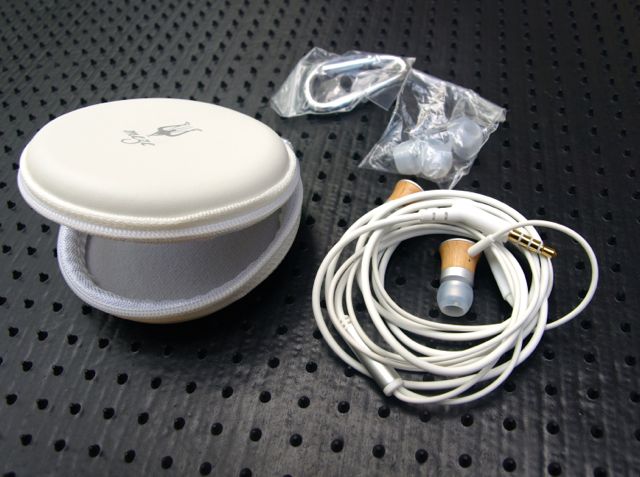
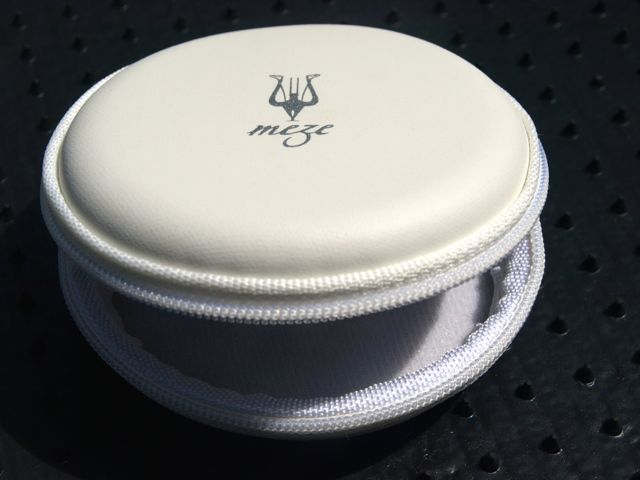
The earbuds come in a round case that evokes a woman’s make-up compact. Pure white with a full zipper that’s well stitched on both the top and bottom. The only markings are the Meze logo, a custom designed element that seems to be a cross between a person, earbuds and a classic string instrument. The typeface is lowercase and cursive. Everything is a silver-gray. Subtle and compelling. Using white is a departure from the standard black we see from so many other manufacturers. My study workspace at home is always packed with technology and my wife ignores all of them. But when this case arrived and I left it on my desk, it attracted her like a moth to a flame.
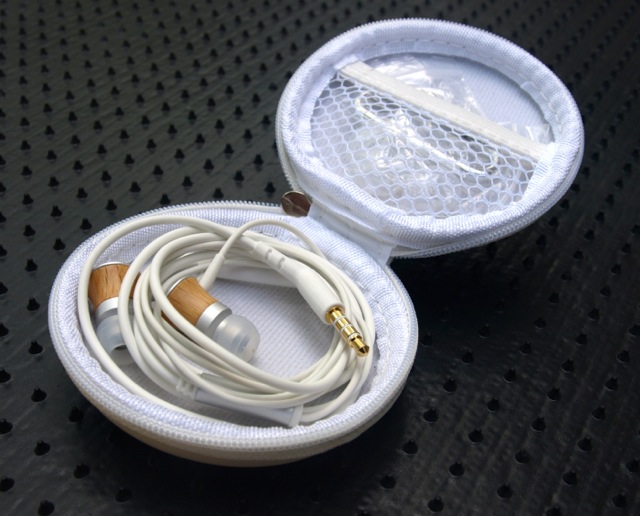
Unzipping the clamshell reveals the earbuds, two sets of cushions in case you’ve got freakish-size ears and a silver hook allowing attachment to a backpack for fast access. Easy enough. Plug them in and spin up the tunes.
PERFORMANCE
 When trying out speakers or headphones it’s important to mix up the sounds. Most people want to listen to familiar tracks to compare what they’re used to hearing. They will of course sound different, because it’s a different set-up. Do you hear something you’ve never heard before? That’s an indication. Don’t forget to try unfamiliar tracks and genres. Classical, jazz, soundtracks and even spoken word such as podcasts should be sampled. I also used the built-in mic and made some phone calls.
I was more than satisfied with the quality of the sound. Good highs and lows separation. I put them to the voice test by listening to the distinct vocal stylings of Peter Gabriel, Lana Del Rey, Agnes Obel, David Albarn and Goyte. The delivery was crisp and clean. The bass seemed to be a bit more pronounced than I normally listen to, but this is a minor complaint.
COMFORT
They also score well on the comfort level. I used them for over an hour while penning this post. At times I forgot I even had them in. The length of the cord is sufficient and the plug has a slight offset which serves as yet another design choice, but seems to allow for more material and perhaps more durable. Time will tell. As mentioned the built-in microphone was excellent for phone conversations, but lacks a volume control.
These are not meant for workout or sports. They remain in your ears under normal movements, but will not work well on your morning run. More quiet, calm spaces are perfect for these ear monitors. Obviously electing the correct ear cushion size makes a big difference. The R and L notations on the buds are difficult to find. I’m a stickler for following those directions as it aligns the music to how the artist intended to deliver it. Mr. Meze’s design sense likely pushed him to display these cues in a very subtle manner.
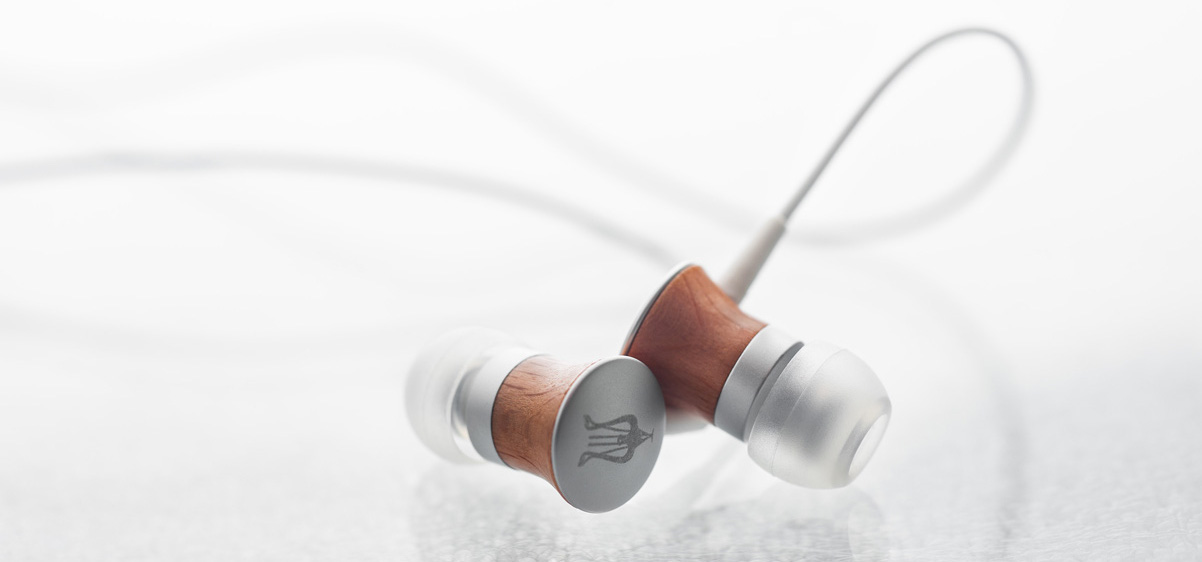
Meze calls these earbuds,
“An earphone for those who already have a musical identity.”
I’m used to noise canceling headphones, especially while traveling. That means lugging around a much larger case and remembering to have an extra battery. I’ve got a flight to NY tomorrow and I’m going to forego my usual headphones in favor of the Meze 11 Deco ear monitors. At $79.00, these earbuds are a bargain.
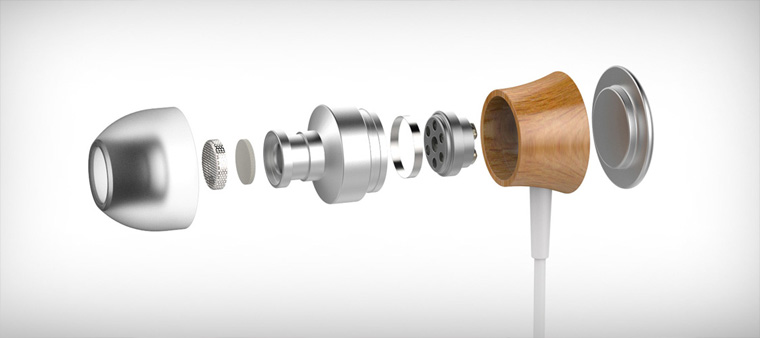
Photos taken with an Olympus E-510 SLR. Exploded view of the Meze 11 Deco ear monitors courtesy of Meze.


Elon Musk
Tesla Optimus Gen 3 is coming to the Tesla Diner with new ambitions
Tesla’s Optimus robot left the Hollywood Diner within months of opening. Now Musk is planning its return with a bigger role and a major Gen 3 upgrade underway.

![Tesla Optimus Gen 3 [Credit: Tesla]](https://www.teslarati.com/wp-content/uploads/2026/03/tesla-optimus-gen3-diner.jpg)
Tesla’s Optimus robot was one of the most talked-about features when the Tesla Diner opened on Santa Monica Boulevard in Hollywood on July 21, 2025. Dubbed “Poptimus” by Tesla fans, the Gen 2 robot stood upstairs at the retro-futuristic, drive-in theater and Tesla Supercharging station, scooping popcorn into bags and handing them to guests with a wave.
The diner itself had been years in the making. Elon Musk first floated the idea in 2018 with a tweet about building an “old-school drive-in, roller skates & rock restaurant” at a Hollywood Supercharger. What eventually opened was a unique two-story neon-lit space, with 80 EV charging stalls, and Optimus serving as a live demonstration of where Tesla’s ambitions were headed.
If our retro-futuristic diner turns out well, which I think it will, @Tesla will establish these in major cities around the world, as well as at Supercharger sites on long distance routes.
An island of good food, good vibes & entertainment, all while Supercharging! https://t.co/zmbv6GfqKf
— Elon Musk (@elonmusk) July 21, 2025
But Optimus did not stay long, and was gone by December 2025.
Now, the robot is set to return with a more demanding job. Musk has ambitions for Optimus to take on a food runner role in 2026, delivering meals directly to cars at the Supercharger stalls. While the latest Gen 3 Optimus is likely to initially take on its previous popcorn-serving role, it wouldn’t be out of the question for Optimus to see a quick promotion. With improved hand dexterity that features 50 total actuators and 22 degrees of freedom per hand, and significantly more powerful processing through Tesla’s latest AI5 chip that includes Grok-powered voice interaction, Musk described Optimus at the Abundance Summit on March 12, 2026, as “by far the most advanced robot in the world, Nothing’s even close.”
Back to work
See you at Tesla Diner tomorrow pic.twitter.com/H3tTajrUbu
— Tesla Optimus (@Tesla_Optimus) March 30, 2026
That confidence is backed by a major manufacturing shift. At the Q4 2025 earnings call in January, Musk announced Tesla would discontinue the Model S and Model X and convert those Fremont production lines to build Optimus. “It’s time to basically bring the Model S and X programs to an end,” he said, calling for a pivot that reflects where the Tesla’s future lies.
Elon Musk
The Boring Company clears final Nashville hurdle: Music City loop is full speed ahead
The Boring Company has cleared its final Nashville hurdles, putting the Music City Loop on track for 2026.
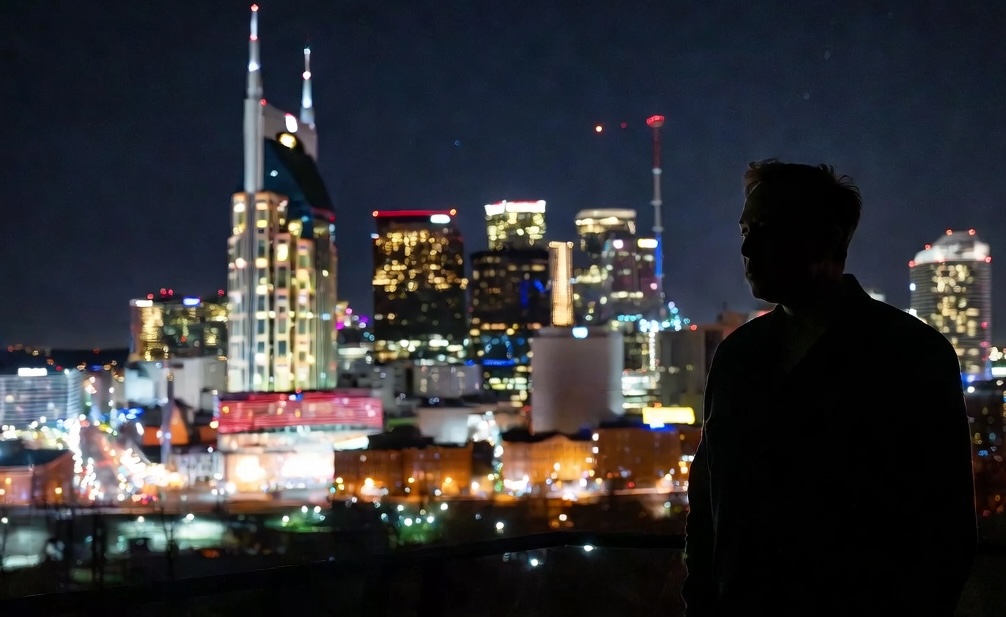
The Boring Company has cleared one of its most significant regulatory milestones yet, securing a key easement from the Music City Center in Nashville just days ago, the latest in a series of approvals that have pushed the Music City Loop project firmly into construction reality.
On March 24, 2026, the Convention Center Authority voted to grant The Boring Company access to an easement along the west side of the Music City Center property, allowing tunneling beneath the privately owned venue. The move follows a unanimous 7-0 vote by the Metro Nashville Airport Authority on February 18, and a joint state and federal approval from the Tennessee Department of Transportation and the Federal Highway Administration on February 25. Together, these green lights have cleared the path for a roughly 10-mile underground tunnel connecting downtown Nashville to Nashville International Airport, with potential extensions into midtown along West End Avenue.
Music City Loop could highlight The Boring Company’s real disruption
Nashville was selected by The Boring Company largely because of its rapid population growth and the strain that growth has placed on surface infrastructure. Traffic has become a persistent problem for residents, convention visitors, and airport travelers alike. The Music City Loop promises an approximately 8-minute underground transit time between downtown and the Nashville International Airport (BNA), removing thousands of vehicles from surface roads daily while operating as a fully electric, zero-emissions system at no cost to taxpayers.
The project fits squarely within a broader vision Musk has championed for years. In responding to a breakdown of the Loop’s construction costs, Musk posted on X: “Tunnels are so underrated.” The comment reflected a longstanding belief that underground transit represents one of the most cost-effective and scalable infrastructure solutions available. The Boring Company has claimed it can build 13 miles of twin tunnels in Nashville for between $240 million and $300 million total, a fraction of what comparable projects cost elsewhere in the country.
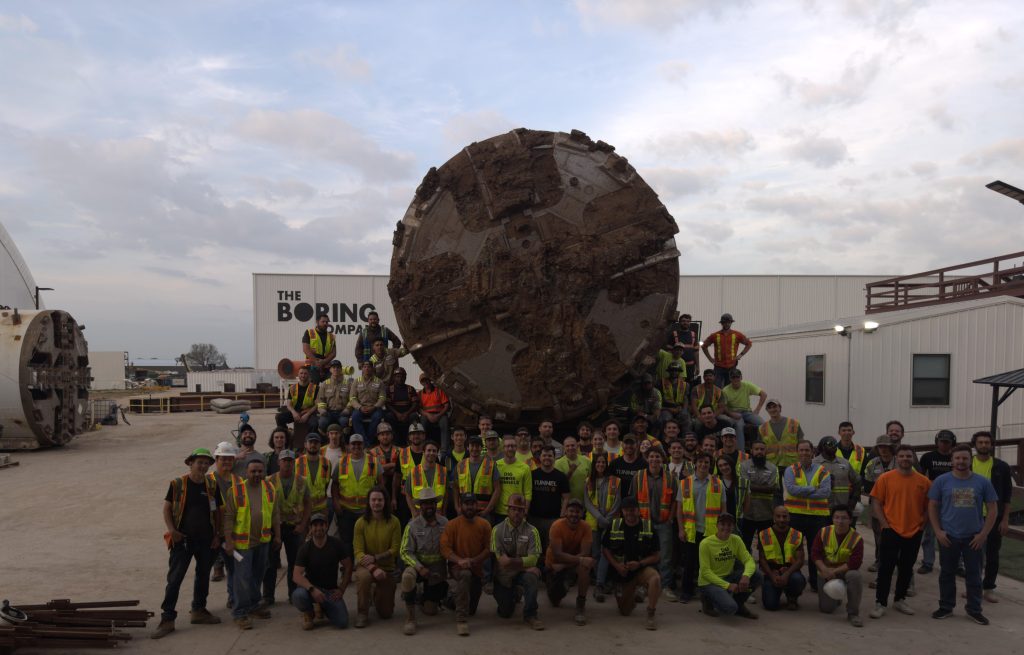
Image Credit: The Boring Company/Twitter
The Las Vegas Loop, The Boring Company’s first operational system, has served as a proof of concept. During the CONEXPO trade show in March 2026, the Vegas Loop transported approximately 82,000 passengers over five days at the Las Vegas Convention Center, demonstrating the system’s capacity during large-scale events. Nashville draws millions of convention visitors and tourists each year, and local business leaders have pointed to that same capacity as a major draw for supporting the project.
The Music City Loop was first announced in July 2025. Construction began within hours of the February 25 state approval, with The Boring Company’s Prufrock tunneling machine already in the ground the same evening. The first operational segment is targeted for late 2026, with the full route expected to be complete by 2029. The project represents one of the largest privately funded infrastructure efforts currently underway in the United States.
Elon Musk
Elon Musk’s $10 Trillion robot: Inside Tesla’s push to mass produce Optimus
Tesla’s surging Optimus job listings reveal a company sprinting from prototype to one million robot production.
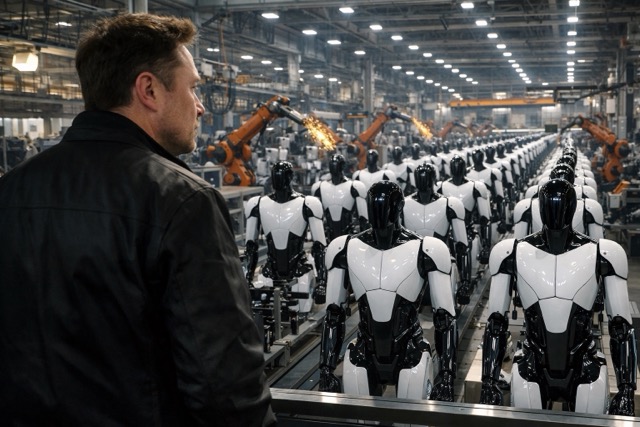
Tesla is accelerating its push to bring the Optimus humanoid robot to high volume production, and its recent job listings tells the story as clearly as any earnings call.
With well over 100 Optimus related job openings now posted across its U.S. facilities, Tesla is signaling a critical pivot for the program, moving it from a captivating tech demo to a serious manufacturing endeavor. Roles span the full spectrum of the product lifecycle, from Robotics Software Engineers and Manufacturing Engineers to Mechanical Integration Engineers and AI Engineers focused on world modeling and video generation. One active listing for a Software Engineer on the Optimus team asks candidates to build scalable and reliable data pipelines for Optimus manufacturing lines and develop automation tools that accelerate analysis and visualization for mass manufacturing.
Tesla is racing toward a one million unit annual production target. The clearest signal yet that Tesla is treating Optimus as its primary business came on January 28, 2026, during the company’s Q4 2025 earnings call. Musk announced that Tesla is ending production of the Model S and Model X, and will repurpose those lines at its Fremont, California factory to build Optimus humanoid robots.
A production intent prototype of Optimus Version 3 is planned to be ready in early 2026, after which Tesla intends to build a one million unit production line with a targeted production start by the end of 2026. To support that ramp, Tesla broke ground on a massive new Optimus manufacturing facility at Gigafactory Texas in late 2025, with ambitions to eventually reach 10 million units per year.
Tesla Giga Texas to feature massive Optimus V4 production line
The business case for scaling this aggressively is rooted in labor economics. Musk has stated that “Optimus has the potential to be the biggest product of all time,” reasoning that if Tesla can produce capable humanoid robots at scale and reasonable cost, every task currently performed by human labor becomes a potential application. In a separate statement, Musk framed Optimus’s long term importance even more bluntly, saying it could surpass Tesla’s vehicle business in scale with the potential to generate $10 trillion in revenue.
The industries Tesla is targeting first are those most burdened by repetitive physical labor. Early applications include manufacturing assembly, material handling and quality inspection, as well as logistics tasks like loading, unloading, sorting, and transporting goods in warehouses and distribution centers. Longer term, Tesla’s vision is for Optimus to penetrate household, medical, and logistics scenarios at the scale of a smartphone rollout.

Elon Musk hints at “official ceremony” with throwback photo to close Tesla Model S, Model X chapter

Elon Musk announces disappointing Tesla Optimus update

Countdown: America is going back to the Moon and SpaceX holds the key to what comes after

Elon Musk says Tesla is developing a new vehicle: ‘Way cooler than a minivan’

Elon Musk launches TERAFAB: The $25B Tesla-SpaceXAI chip factory that will rewire the AI industry


