News
Nvidia CEO Jensen Huang regrets not investing more in Elon Musk’s xAI
The CEO stated that Nvidia is already an investor in xAI, but he wished he had given the artificial intelligence startup more money.

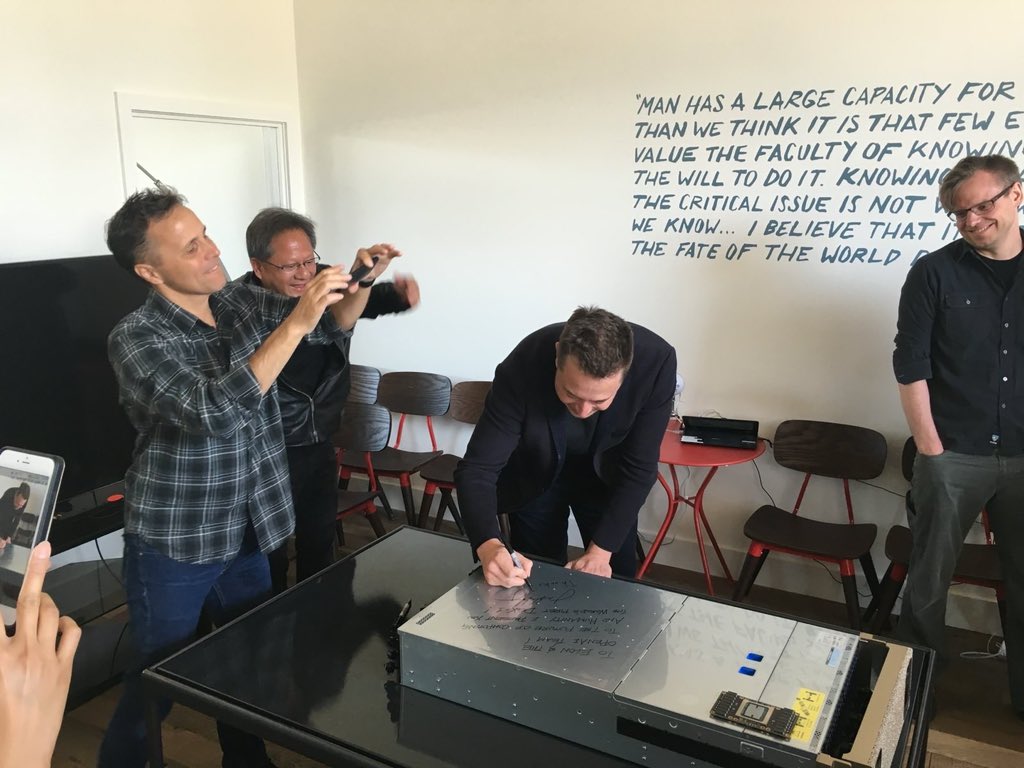
Nvidia CEO Jensen Huang revealed that one of his investment regrets is not putting more money into Elon Musk’s artificial intelligence startup, xAI.
Speaking in a CNBC interview, Huang said Nvidia is already an investor in xAI but wished he had given the artificial intelligence startup more money. This was due to Musk’s record of building transformative companies such as Tesla and SpaceX.
A new wave of transformative AI firms
Huang said he’s very excited about xAI’s latest financing round. He described Musk’s company as part of a powerful new generation of AI developers, alongside OpenAI and Anthropic. that are reshaping the computing landscape.
“I’m super excited about the financing opportunity they’re doing. The only regret I have about xAI, we’re an investor already, is that I didn’t give him more money. You know almost everything that Elon’s pat of, you really want to be part of as well,” the Nvidia CEO stated.
The CEO also clarified Nvidia’s investment in xAI, revealing that Elon Musk had offered the investment opportunity to the chipmaker. “He (Musk) gave us the opportunity to invest in xAI. I’m just delighted by that,” Huang stated.
AI investment boom
Huang contrasted today’s AI-driven economy with the early days of the internet. “Back then, all the internet companies combined were maybe $30 or $40 billion in size,” he said. “If you look at the hyperscalers now, that’s about $2.5 trillion of business already operating today.”
He also stated that the ongoing shift from CPU-based computing to GPU-powered generative AI represents a “multi-trillion-dollar buildout” that Nvidia is looking to support. Huang added that every Nvidia engineer now works with AI coding assistants such as Cursor, which he called his “favorite enterprise AI service,” and it has led to a major productivity boost across the company.
Watch Nvidia CEO Jensen Huang’s CNBC interview in the video below.


News
Tesla Cabin Camera gets an incredible new feature for added driver safety
The company quietly expanded the capabilities of its in-cabin camera with the rollout of Software Update 2026.8.6. Tesla hacker greentheonly revealed that coding for the software version provides details on now tracking the age of the driver.

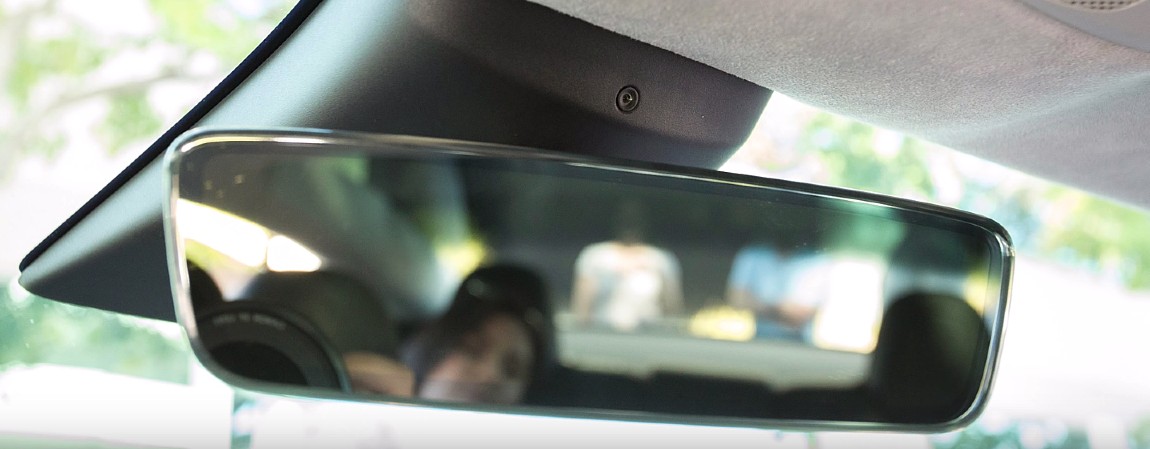
Tesla’s interior Cabin-facing Camera just got a brand new feature that is an incredible addition, as it provides yet another layer of added safety.
The company quietly expanded the capabilities of its in-cabin camera with the rollout of Software Update 2026.8.6. Tesla hacker greentheonly revealed that coding for the software version provides details on now tracking the age of the driver.
The camera, which is positioned just above the rearview mirror, is now performing facial analysis to estimate the driver’s age. While not yet user-facing, the feature is the latest example of Tesla’s ongoing push to refine its driver monitoring system for both everyday safety and future Robotaxi operations.
Ha, interesting, cabin camera / driver monitor is now (2026.8.6) doing “driver age” checking.
I wonder if it’s going to filter out children or elderly too?
— green (@greentheonly) April 10, 2026
The cabin camera already processes images entirely onboard the vehicle for privacy, sharing data with Tesla only if owners enable it during safety-critical events.
Age estimation likely uses computer vision to classify facial features, similar to existing attention-tracking algorithms. Potential applications include preventing underage drivers from engaging Full Self-Driving (FSD) or shifting into drive, acting as a secondary safety lock.
It could also be linked to Robotaxi readiness: the upcoming Cybercab will need robust occupant verification to ensure children cannot hail or ride unsupervised.
In consumer vehicles, it could enable tailored FSD behaviors—more conservative acceleration and braking for elderly drivers, for instance—or simply block unauthorized use by minors.
Beyond age checks, the cabin camera powers Tesla’s comprehensive driver monitoring system, introduced years earlier and continuously improved. It first gained prominence for detecting inattentiveness. When Autopilot or FSD is active, the camera tracks eye gaze, head position, and steering inputs in real time.
If the driver looks away too long or fails to keep their hands ready, the system issues escalating visual and audible alerts before disengaging assistance. This has dramatically reduced misuse cases and helped Tesla meet stricter regulatory demands for hands-on supervision.
The camera also monitors for drowsiness. Activated above roughly 40 mph (65 km/h) after at least 10 minutes of manual driving, the Driver Drowsiness Warning analyzes facial cues—frequency of yawns and blinks—alongside driving patterns like lane drifting or erratic steering.
When fatigue is detected, a clear on-screen message and chime prompt the driver to pull over and rest, or even to activate Full Self-Driving. Tesla explicitly states this feature enhances active safety without relying on facial recognition for identity.
These layered capabilities create a robust safety net. Inattentiveness detection alone has curbed distracted driving during assisted operation. Drowsiness alerts address a leading cause of highway crashes by intervening before impairment escalates.
Adding age verification extends this protection: it could flag inexperienced young drivers for extra caution or restrict high-autonomy features, while preparing vehicles for a future where robotaxis must safely manage passengers of all ages.
With privacy safeguards intact and processing done locally, Tesla’s cabin camera continues evolving from a simple attention monitor into a sophisticated guardian—advancing safer roads today and autonomous mobility tomorrow.
Elon Musk
Tesla’s Semi truck factory is open with a detail that changes everything
Tesla’s dedicated Nevada Semi factory has opened, targeting 50,000 trucks per year as fleet adoptions accelerate nationwide.

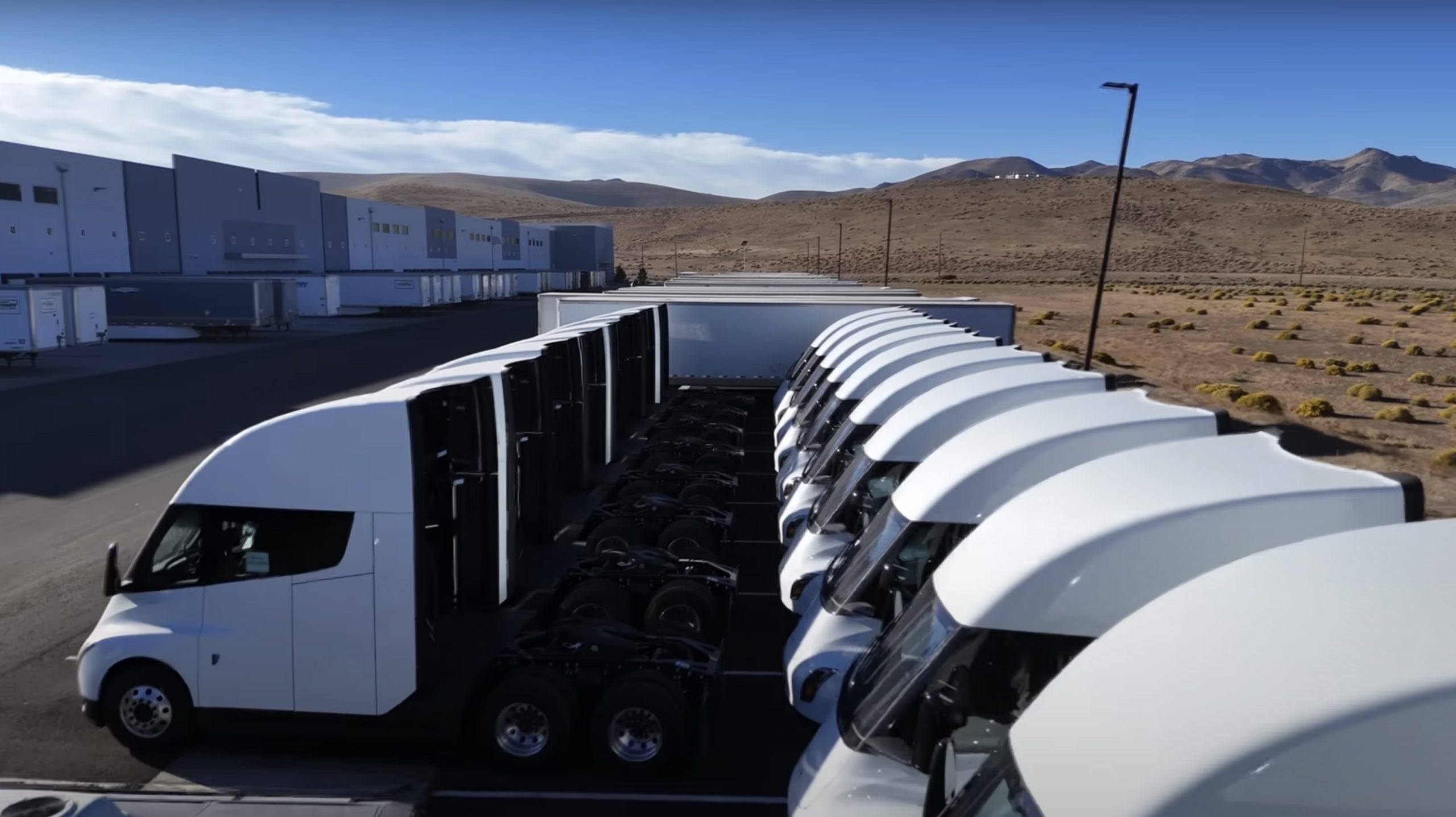
Nearly nine years after Elon Musk unveiled the Tesla Semi in November 2017, the company is now opening a dedicated factory just outside of Reno, Nevada, and ramping toward mass production of 50,000 trucks per year.
Volume production began in March 2026 at the new Tesla Semi factory, with the competitive advantage not being the factory itself. Rather, it’s where Tesla built it. By constructing the 1.7 million square foot facility directly adjacent to Gigafactory Nevada in Sparks, Tesla closed the one supply chain loop that had delayed the Semi program for years. The 4680 battery cells that power the Semi are manufactured in the same complex, which significantly streamlines supply logistics. That single decision eliminates the bottleneck that forced Tesla to prioritize battery supply for passenger cars over the Semi throughout 2020, 2021, and 2022, which is precisely why the first deliveries slipped three years past the original target. Every other electric truck manufacturer sources its battery cells from a separate supplier, ships them to a separate factory, and absorbs the cost and delay that comes with that. Tesla built its Semi factory around its battery factory, and that vertical integration is what makes 50,000 trucks per year a realistic number rather than an aspirational one.
At the 2025 Annual Shareholder Meeting, Musk was direct about where things stood, stating “Starting next year, we will manufacture the Tesla Semi. We already have a lot of prototype Semis in operation – PepsiCo and other companies have been using them for some time. But in 2026, we’ll begin volume production at our Northern Nevada factory.” Full ramp to volume output is targeted before June 30, 2026.
🚨 Awesome new video showing the new Tesla Semi factory in Sparks, Nevada
The future of sustainable logistics is being built here: pic.twitter.com/dbiGV8FYn3
— TESLARATI (@Teslarati) April 10, 2026
The first limited deliveries happened in December 2022 to PepsiCo, which eventually doubled its fleet to 50 trucks out of its California distribution facility. Since then the Semi has been showing up in more corporate fleets. As Teslarati noted in March, a Ralph’s Supermarkets branded Semi was spotted on a Los Angeles highway, confirming Kroger’s partnership with Tesla to deploy up to 500 electric Semis. Walmart, Costco, Sysco, US Foods, DHL, Hight Logistics and WattEV are among the companies actively running or receiving units. DHL logged real-world efficiency of 1.72 kWh per mile under a full 75,000 pound load over 388 miles, matching Tesla’s targets closely.
The 2026 production model arrives with meaningful upgrades over the original, with a 1,000 pound weight reduction, updated aerodynamics, and support for 1.2 MW Megacharger speeds that can restore 60% of range in around 30 minutes during a mandatory driver rest break. Tesla opened its first public Megacharger in Ontario, California in March, positioned near the I-10 and I-15 interchange serving the Ports of Los Angeles and Long Beach. The company plans 37 Megacharger sites by end of 2026 and 66 total across 15 states by early 2027, with construction beginning at the nation’s largest truck stop operator in the first half of this year.
Tesla reveals various improvements to the Semi in new piece with Jay Leno
Musk has described the Semi’s economics as a straightforward case. “The Semi is a TCO no-brainer,” he said, noting the total cost of ownership is “much, much cheaper than any other transportation you could have.” At under $300,000, the truck costs roughly double a comparable diesel, but California’s $200,000 per vehicle subsidy has driven over 1,000 state orders alone. As Teslarati has tracked, the prototype fleet accumulated over 13.5 million miles with 95% fleet uptime before production ever scaled. The factory opening now turns that proof of concept into a production program.
News
Tesla Full Self-Driving gets first-ever European approval
Tesla owners in the Netherlands with a Full Self-Driving subscription will receive a software update “shortly,” the company said, activating the operation of the company’s semi-autonomous driving tech for the first time in Europe.
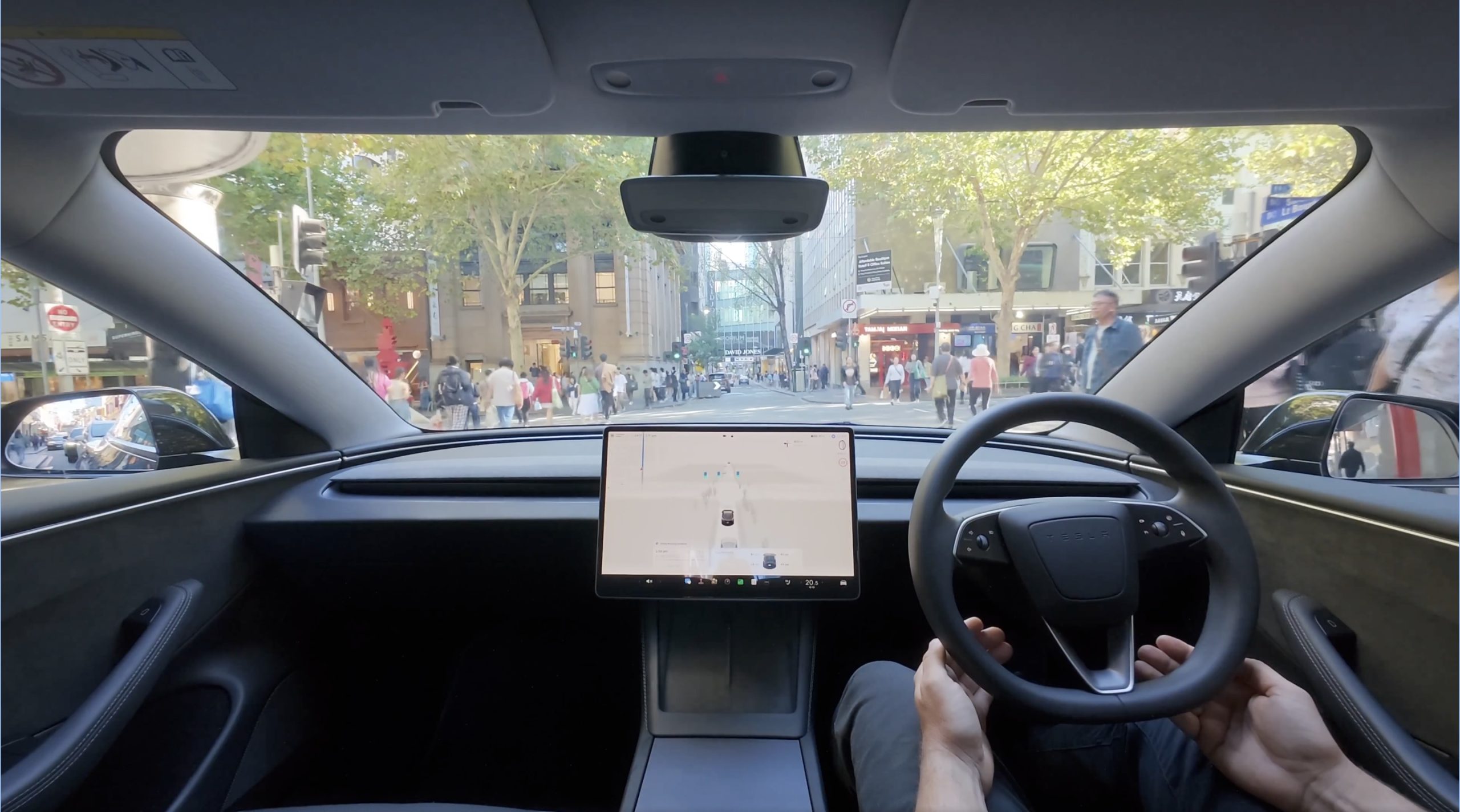
Tesla Full Self-Driving (Supervised) got its first-ever European approval, as the Netherlands gave the suite the green light to begin operation.
Tesla owners in the Netherlands with a Full Self-Driving subscription will receive a software update “shortly,” the company said, activating the operation of the company’s semi-autonomous driving tech for the first time in Europe.
The Dutch vehicle authority RDW granted the type approval after more than 18 months of rigorous testing on both closed tracks and public roads. FSD Supervised complies with UN R-171 standards and benefits from Article 39 exemptions under EU Regulation 2018/858. Importantly, it is not a fully autonomous vehicle.
The RDW stressed that the driver remains fully responsible and must maintain attention at all times. “Safety is paramount for the RDW,” the authority stated. “Proper use of this driver assistance system contributes positively to road safety.” Sensors monitor driver alertness, issuing warnings if eyes leave the road or hands are unavailable to take control immediately.
CEO Elon Musk also commented on the approval in a post on X, saying:
“First (supervised) FSD approval in Europe! Congratulations to the Tesla team and thank you to the regulatory authorities in the Netherlands for all of the hard work required to make this happen.”
First (supervised) FSD approval in Europe!
Congratulations to the Tesla team and thank you to the regulatory authorities in the Netherlands for all the hard work required to make this happen. https://t.co/8hidEOPSxm
— Elon Musk (@elonmusk) April 10, 2026
Trained on billions of kilometers of real-world driving data, FSD Supervised allows the vehicle to handle residential streets, dense city traffic, and highways under constant supervision. Tesla’s post declared:
“It can drive you almost anywhere under your supervision – from residential roads to city streets & highways. No other vehicle can do this.”
The company added that it is “excited to bring FSD Supervised to more European countries soon.”
This national approval paves the way for broader EU adoption. Other member states can recognize the Dutch certification individually, with a potential bloc-wide rollout via European Commission committee vote anticipated by this Summer. The decision underscores Europe’s stricter safety and documentation requirements compared to U.S. self-certification.
Tesla Europe shares FSD test video weeks ahead of launch target
The Netherlands’ approval represents a pivotal step for Tesla in Europe, where complex regulations and mixed traffic have delayed rollout. Musk added that the RDW was “rigorous” in its assessment of FSD.
By proving the system’s safety in one of the continent’s most bicycle- and tram-heavy nations, Tesla positions itself to transform mobility across the EU—delivering greater convenience while keeping drivers firmly in control.
As the first domino falls, anticipation builds for FSD Supervised to reach additional countries soon.

Tesla Cabin Camera gets an incredible new feature for added driver safety

Tesla’s Semi truck factory is open with a detail that changes everything


