SpaceX
SpaceX targets Falcon 9 reusability milestone on first dedicated rideshare launch

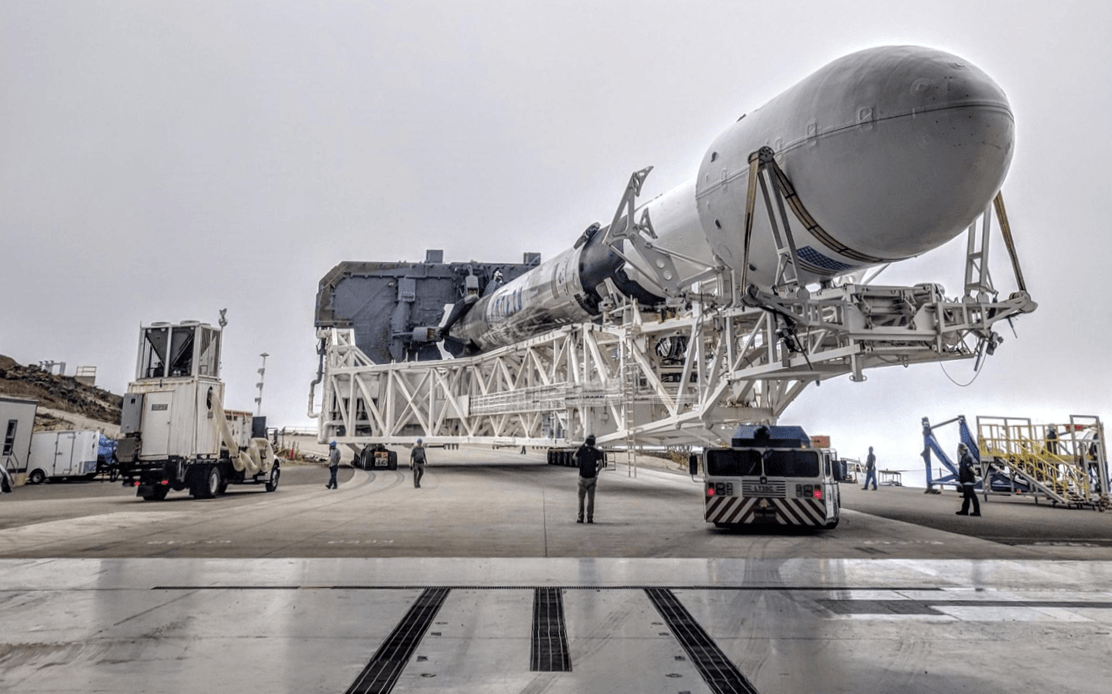
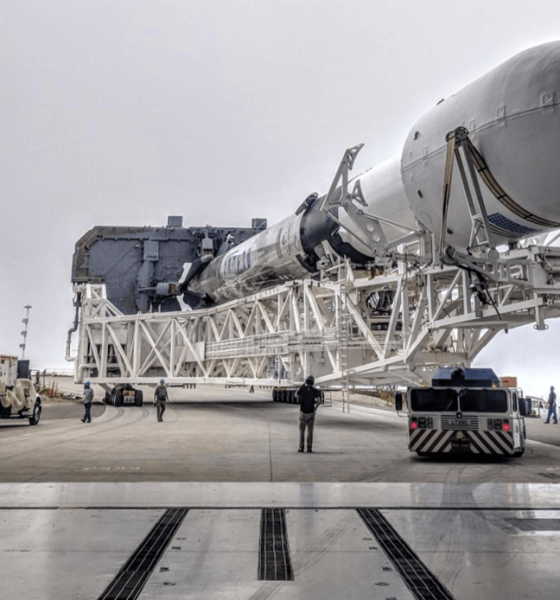
SpaceX’s first dedicated rideshare – a collection of small satellites manifested for launch and organized by a third party – is into the final stretches of prelaunch preparations, readying for a ride to orbit on a flight-proven Falcon 9 no earlier than (NET) November 19th.
While unconfirmed, it appears that SpaceX is working to make SSO-A’s launch the first time the same Falcon 9 booster flies three missions, an accomplishment that may look minor up close but is actually a major step forward for orbital-class reusable rockets.
Who doesn't love a CONVOY? Watch our spacecraft start its journey to the launch pad here: https://t.co/97MxmjnKfl #ssoa #smallsatexpress
— Spaceflight (@SpaceflightInc) October 22, 2018
SSO-A organizer and launch customer Spaceflight Industries announced yesterday (Oct. 22) that the collection of several dozen satellites – called a “stack” when integrated together in and on Spaceflight’s custom dispenser – arrived at Vandenberg Air Force Base (VAFB) within the last few days, setting the stage for post-shipment health checkouts and encapsulation inside Falcon 9’s payload fairing.
“The assembled stack has now traveled by road 1,075 miles (1730 km) from Seattle. It will travel another 357 miles (575 km) to reach its targeted orbit. So we could say that the longest part of the journey is over…but the most exciting part is still to come!”
-
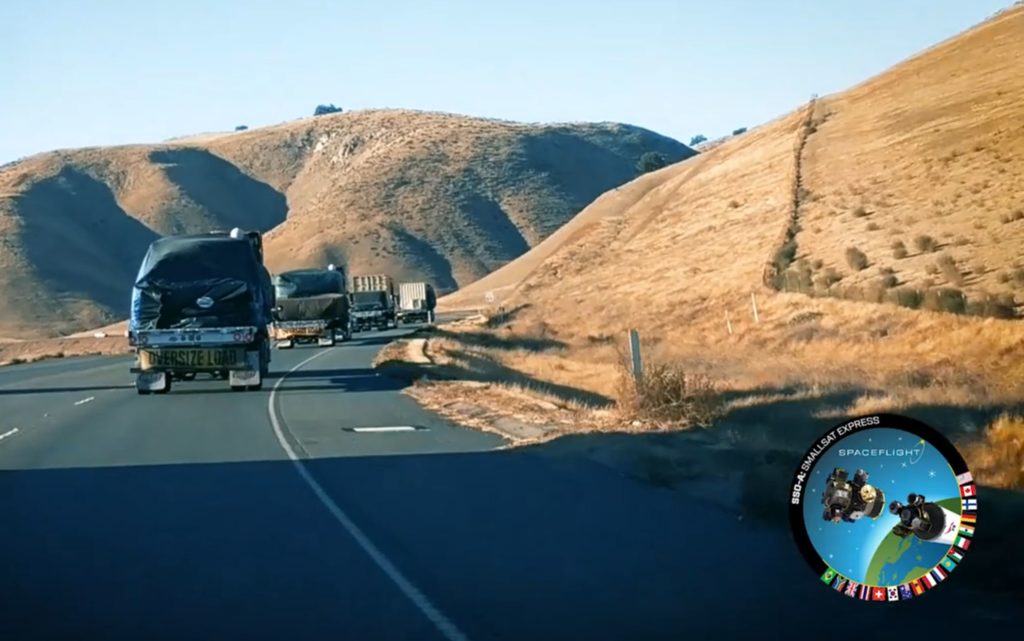
- Spaceflight’s convoy of support vehicles follow as the stack is shipped from Auburn, WA to Vandenberg, CA, a journey of ~1000 miles. (Spaceflight)
-
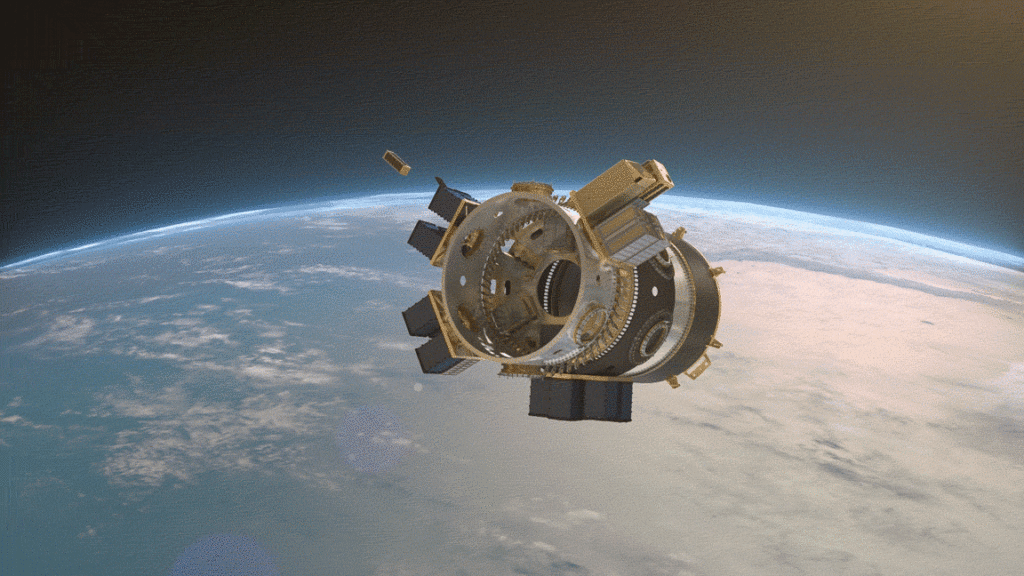
- Spaceflight’s SSO-A Upper Free Flyer visualized deploying cubesats shortly after launch on Falcon 9. (Spaceflight)
-
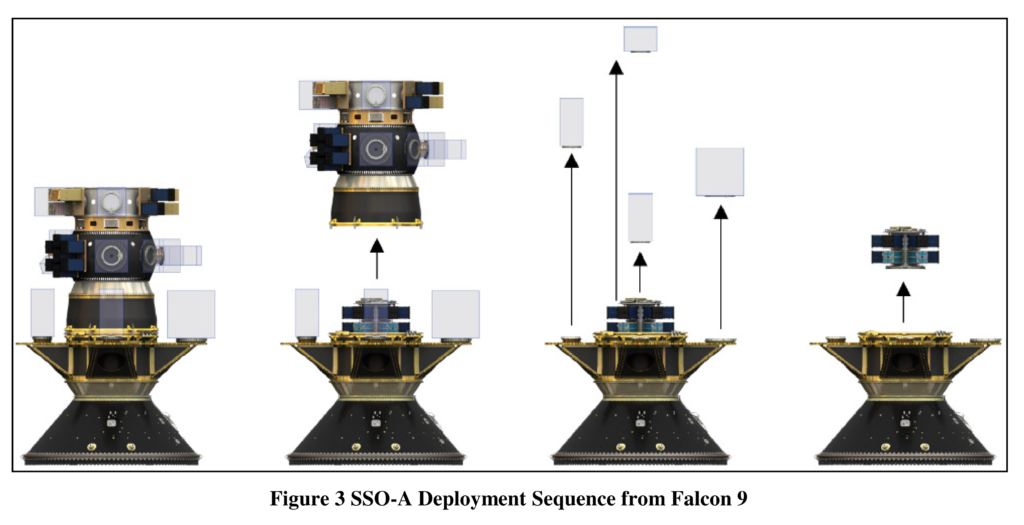
- SSO-A’s fairly intricate deployment sequence. (Spaceflight)
Arrival at the launch site is a huge milestone for any satellite or spacecraft and that is perhaps even more so the case for massive rideshare missions like SSO-A. The task of wrangling together dozens upon dozens of satellites of all different shapes and sizes – all coming from dozens of customers spread across the world – is understandably unenviable from a logistical standpoint. Despite the major hurdles and the apparent loss or slippage of a few dozen previously-planned satellites, it appears that Spaceflight Industries has made it through logistical hell and can now begin to focus on prelaunch operations after arriving at or near SpaceX’s California launch site.
If there were any stragglers with satellites that were not quite able to make it to Spaceflight’s Auburn, WA integration facilities ahead of shipment to California, there may still be a very limited time-frame for those customers to redirect their spacecraft to California and integrate with the full stack before the whole thing is closed up inside Falcon 9’s payload fairing.
-
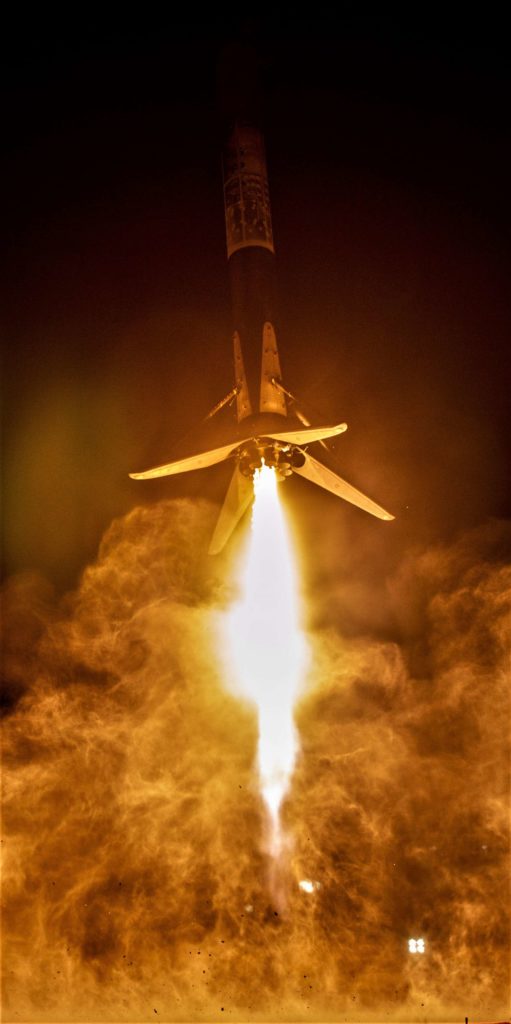
- Falcon 9 B1048.2 landed at LZ-4 after its second successful launch. (SpaceX)
-
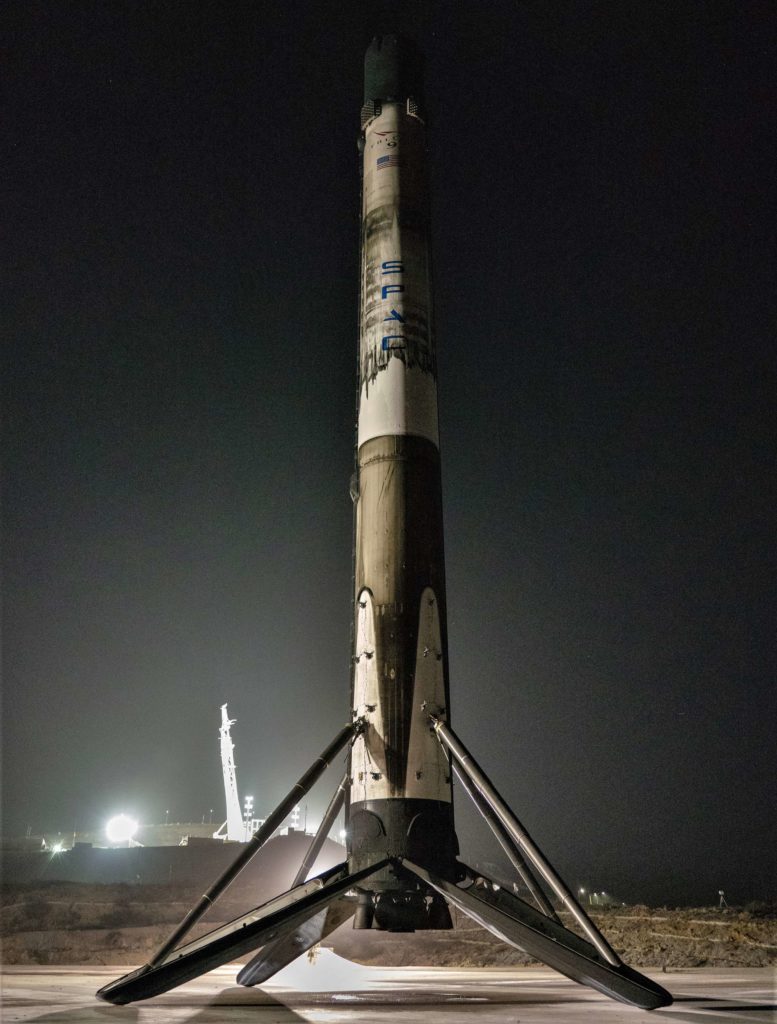
- Falcon 9 B1048 landed at LZ-4 after its second launch and is now being refurbished on the opposite coast. (SpaceX)
-
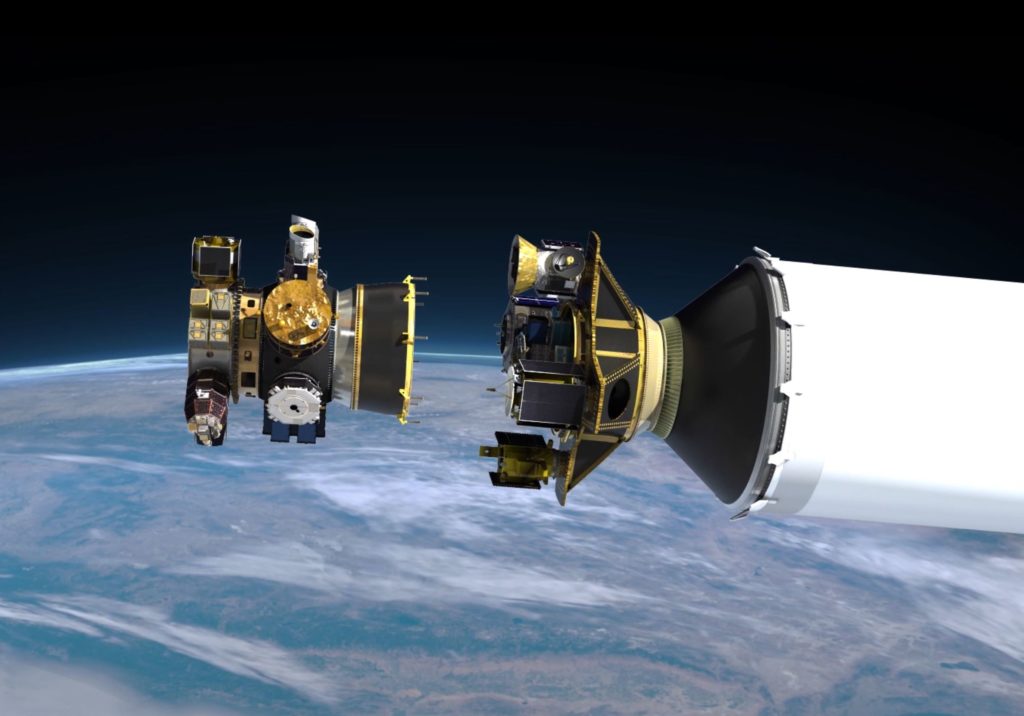
- A render of Spaceflight’s SSO-A dispensers attached to Falcon 9’s second stage.
Third time’s the charm
For Falcon 9, SSO-A is equally exciting. Likely to fly on either booster B1048 or B1046, both now with two successful launches on their records, this mission could mark the first time a Falcon 9 booster completes three orbital-class missions. If the rocket managed a successful recovery, either at SpaceX’s recently-inaugurated Landing Zone-4 (LZ-4) or well-worn drone ship Just Read The Instructions, it would pave the way for its fourth reflight and beyond. SpaceX designed Falcon 9 Block 5 to be capable of a minimum of 10 launches per booster with little to no refurbishment, potentially enabling 100+ flights each with regular maintenance.
If schedules hold, SSO-A will launch as few as five days after SpaceX’s NET November 14th launch of communications satellite Es’Hail-2 on the opposite coast.
For prompt updates, on-the-ground perspectives, and unique glimpses of SpaceX’s rocket recovery fleet check out our brand new LaunchPad and LandingZone newsletters!



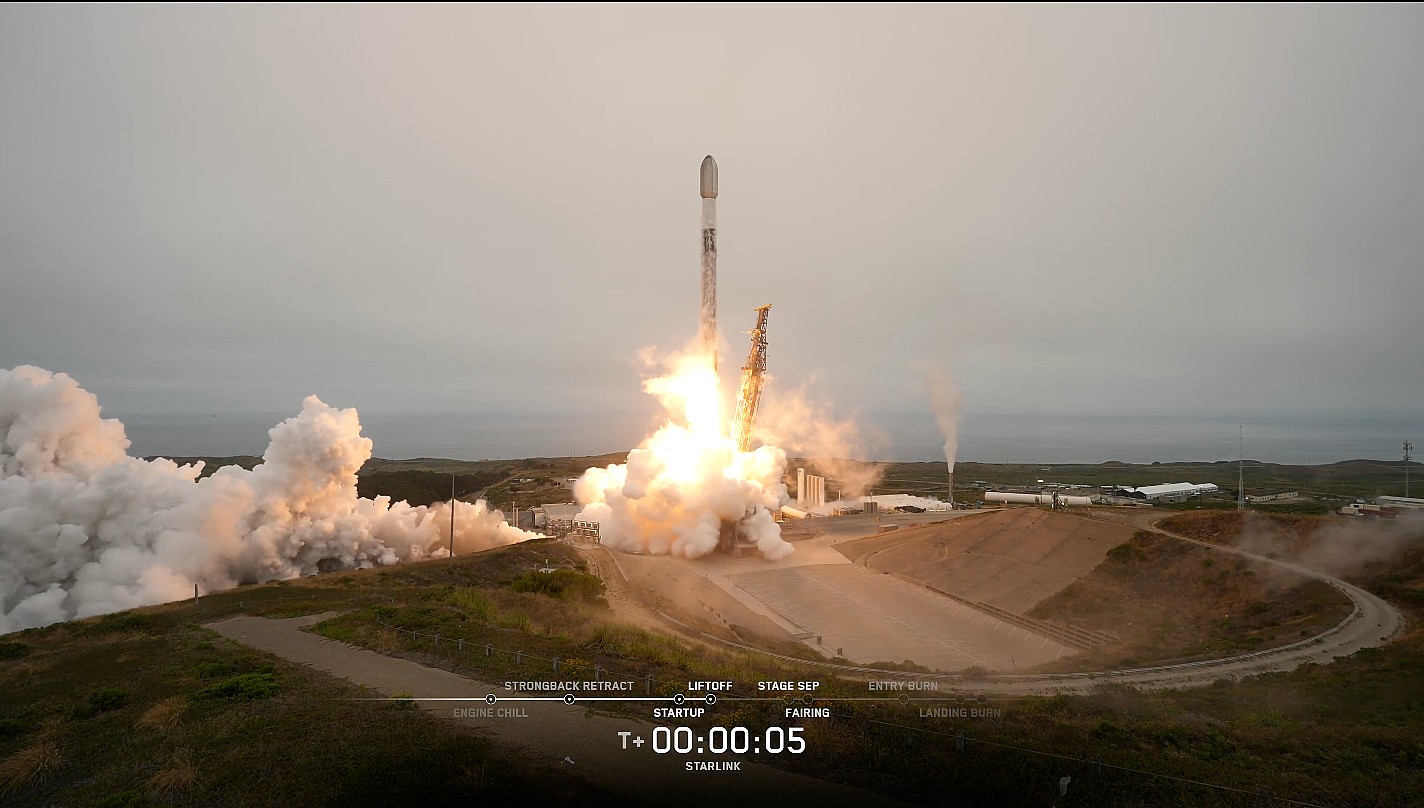
SpaceX executed its first Falcon 9 launch since going public on June 15, a routine yet symbolically powerful Starlink mission from Vandenberg Space Force Base in California.
Liftoff of the Falcon 9 booster B1093, on its 14th flight, occurred at approximately 8:34 a.m. PDT from Space Launch Complex 4E (SLC-4E), deploying 24 Starlink V2 Mini Optimized satellites into low-Earth orbit.
The first stage successfully landed on the droneship “Of Course I Still Love You” in the Pacific Ocean, underscoring the company’s unmatched reusability track record.
Watch Falcon 9 launch 24 @Starlink satellites to orbit from California https://t.co/meDwb05qOE
— SpaceX (@SpaceX) June 15, 2026
This mission comes just three days after SpaceX’s historic IPO on June 12, which shattered records as the largest ever. The company raised $75 billion by pricing shares at $135, with trading under ticker SPCX on Nasdaq opening at $150 and closing at $160.95—a 19 percent gain—valuing SpaceX at over $2.1 trillion.
The launch highlights the seamless transition from private innovator to public powerhouse. SpaceX, founded in 2002, has revolutionized access to space with over 650 Falcon 9 flights and a massive Starlink constellation now serving millions globally.
As a public company, it faces new pressures: quarterly earnings, shareholder scrutiny, and expectations to accelerate Starship development for Mars ambitions and deeper NASA partnerships. Yet the market response signals strong confidence in its dominance, as launch costs are slashed by 95 percent, rapid satellite deployment, and a backlog of government and commercial contracts.
SpaceX maintains bold advertising push for Starlink, contrasting Tesla’s minimalistic approach
Analysts view today’s flight as business as usual, but it carries extra weight. With shares volatile in early trading days, successful operations reassure investors that core capabilities remain unaffected by public status.
SpaceX now operates under heightened transparency, potentially unlocking capital for ambitious goals like Starship orbital tests and global broadband expansion.
Challenges loom, including regulatory hurdles for megaconstellations, competition in reusable rockets, and orbital debris concerns. Nevertheless, this morning’s flawless execution reinforces SpaceX’s trajectory.
As Musk often notes, the company’s mission—to make humanity multiplanetary—now aligns with Wall Street’s growth demands. The stars, it seems, are aligning for both.
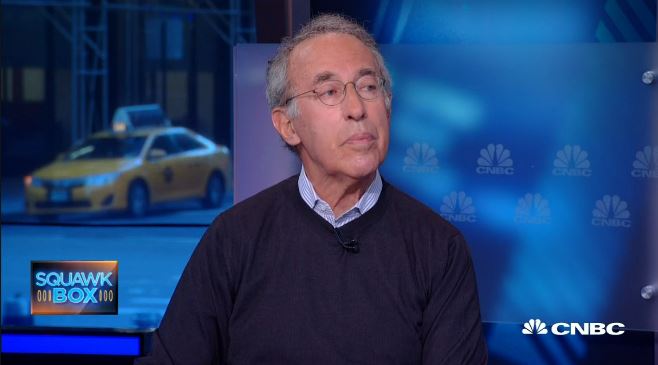
Renowned investor Ron Baron, founder and CEO of Baron Capital, has once again demonstrated his unwavering faith in Elon Musk’s ventures.
Just after SpaceX’s record-breaking IPO, Baron announced he purchased an additional $1 billion in SpaceX (NASDAQ: SPCX) shares. This move pushes Baron Capital’s total holdings in the company to a staggering $25 billion in market value, underscoring one of the most successful private-to-public investment stories in recent history.
Baron’s relationship with SpaceX dates back to 2017, when his firm began investing approximately $1.75–2 billion through secondary markets and employee tender offers at valuations around $20–22 billion.
By the time of the IPO, which valued SpaceX at over $2 trillion with shares closing near $161, those early stakes had generated more than $13 billion in unrealized gains. Post-IPO, Baron’s position ballooned further, reflecting the company’s meteoric rise driven by reusable rocketry, Starlink’s global satellite internet constellation, Starshield defense applications, and ambitious plans for orbital infrastructure.
In a recent interview, Baron articulated his bullish outlook with characteristic enthusiasm.
Ron Baron said today that he bought $1 billion of @SpaceX IPO shares last Friday, and said that all of Baron Capital’s $SPCX holdings are now worth $25 billion.
“I think we’re going to make hundreds of billions of dollars; If you read the prospectus, you realize what they… pic.twitter.com/U8F471KtJS
— Sawyer Merritt (@SawyerMerritt) June 15, 2026
“I think we’re going to make hundreds of billions of dollars,” he stated, emphasizing that SpaceX’s achievements in rocketry and satellite technology are “not possible for anyone else to accomplish.” He envisions the company as a cornerstone of humanity’s multi-planetary future, potentially reaching valuations of $10–30 trillion within 10–15 years.
Baron has repeatedly affirmed he has no plans to sell, viewing SpaceX as a “lifetime investment” alongside Tesla.
Tesla bull Ron Baron reveals $100M SpaceX investment, sees 3-5x return on TSLA
This conviction stems from SpaceX’s unparalleled execution. The company has revolutionized access to space with Falcon 9 reusability, deployed thousands of Starlink satellites, and is advancing Starship for Mars missions and point-to-point Earth transport.
Baron highlights emerging opportunities like space-based AI data centers and direct-to-cell satellite connectivity, positioning SpaceX at the forefront of a new space economy projected to generate trillions in value.
Critics may question the lofty projections amid high valuations and execution risks, but Baron’s track record speaks volumes. His Tesla holdings, initiated in the mid-2010s, have also delivered outsized returns. As one of the largest institutional holders of SpaceX pre-IPO, Baron Capital’s funds, such as Baron Partners, benefited immensely from valuation markups.
Baron’s $1 billion IPO purchase signals deep confidence in SpaceX’s post-IPO trajectory. In an era of short-term market noise, his strategy exemplifies patient capital: backing visionary leadership and transformative technology.
For investors watching the space sector, it serves as a powerful endorsement that the final frontier may indeed yield the next great wealth-creation engine. As Baron puts it, SpaceX isn’t just building rockets—it’s trying to “save humanity” by expanding our horizons beyond Earth.
Elon Musk
Elon Musk just put a $1 Trillion revenue number on SpaceX
SpaceX surged 19% on its first trading day as Musk projected $1 trillion revenue by 2030.

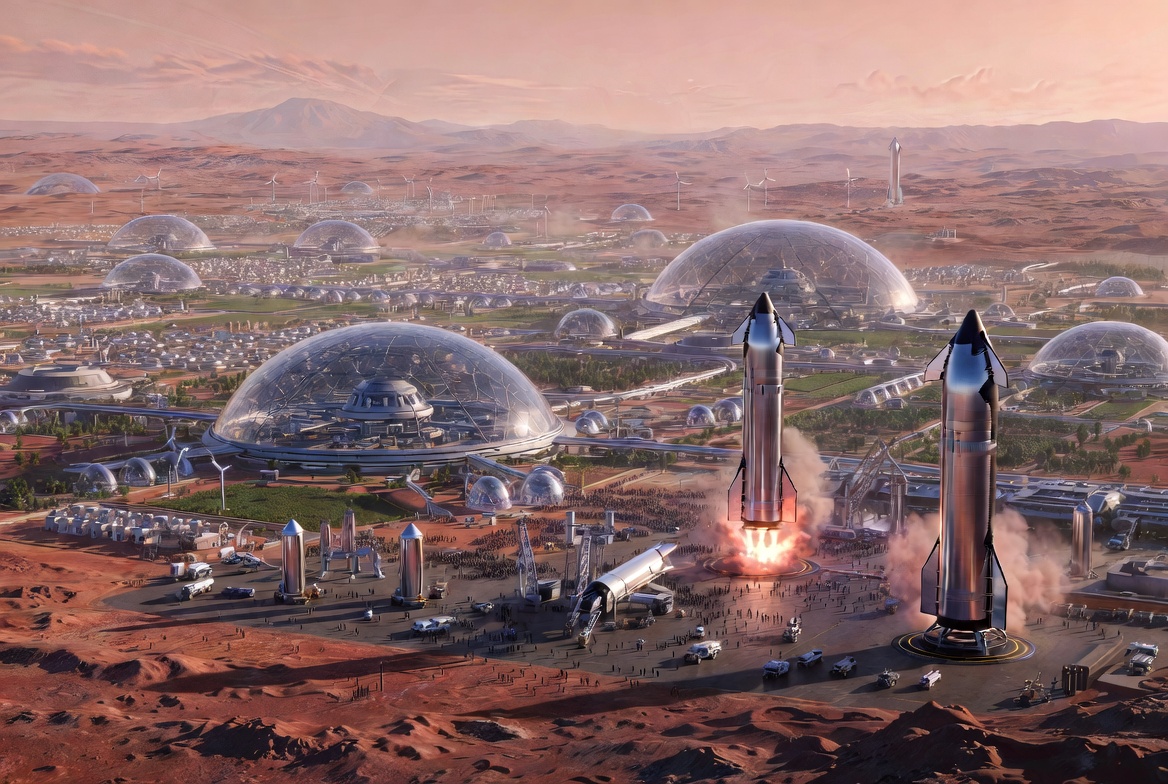
Just days after SpaceX stock pushed its market cap past $2 trillion on its first trading session, closing at $160.95, a 19% gain on the $135 IPO price, Elon Musk posted his own revenue projection on X that went well beyond anything Wall Street modeled. “I think SpaceX might be able to reach approximately $1T revenue in 2030,” Musk wrote, then followed up: “And I would be surprised if revenue is not greater than $1T in 2031.” That forecast sits roughly three times above the most bullish institutional estimate on the table.
Morgan Stanley, one of the lead underwriters, projects SpaceX revenue of $160 billion in 2028, $330 billion in 2030, and $3.4 trillion by 2040, with adjusted EBITDA projected to exceed $2.7 trillion at that point. Reaching those numbers from SpaceX’s $18.7 billion in 2025 revenue requires a compound annual growth rate of roughly 42%, which would outpace even Amazon’s fastest growth era. Morgan Stanley’s model places AI infrastructure as the heaviest revenue driver, projecting $190 billion from SpaceX’s AI business alone by 2030. That figure is anchored to xAI’s Grok platform and the Colossus supercomputer following the earlier merger.
Elon Musk launches TERAFAB: The $25B Tesla-SpaceXAI chip factory that will rewire the AI industry
The government revenue pipeline provides a more predictable foundation under those projections. As we have previously reported, SpaceX holds at least $22 billion in cumulative federal contracts across NASA, the Space Force, the NRO, and the Space Development Agency, with 52 active contracts carrying $11.8 billion in remaining value. The NASA Artemis Human Landing System contract alone is valued at $4.04 billion, covering a second crewed lunar landing demonstration targeted for the Artemis IV mission. SpaceX is also a frontrunner for the Golden Dome missile defense shield, and the FAA has approved up to 44 Starship launches from LC-39A in 2026, setting the stage for Starship to become the backbone of both commercial and government heavy lift. Whether Musk’s $1 trillion number proves visionary or simply optimistic, the infrastructure to get there is already being funded.

Tesla Cybercab specs revealed: range, curb weight, range ratings, and more

Tesla Cybercab snags huge regulatory green light that readies it for public roads


