SpaceX
SpaceX ships two Falcon boosters to Florida for a busy spring of launches

Two days before the first attempted launch of Falcon Heavy Block 5, a Florida local caught a separate Falcon booster crossing the state border on its way to one of SpaceX’s two Cape Canaveral launch pads.
Soon after, a separate Falcon booster was tracked heading East through Arizona, Louisiana, and Florida, a rare back-to-back rocket shipment bringing to an end two months of little visible activity. Prelude to a busy spring and early summer manifest, these Falcon booster arrivals signify a new influx of rocket hardware as SpaceX prepares for several upcoming missions. Ranging from Falcon Heavy Flight 3 to Crew Dragon’s critical in-flight abort test, SpaceX has no less than seven launches planned between now and the
Core Spotting – Episode 74
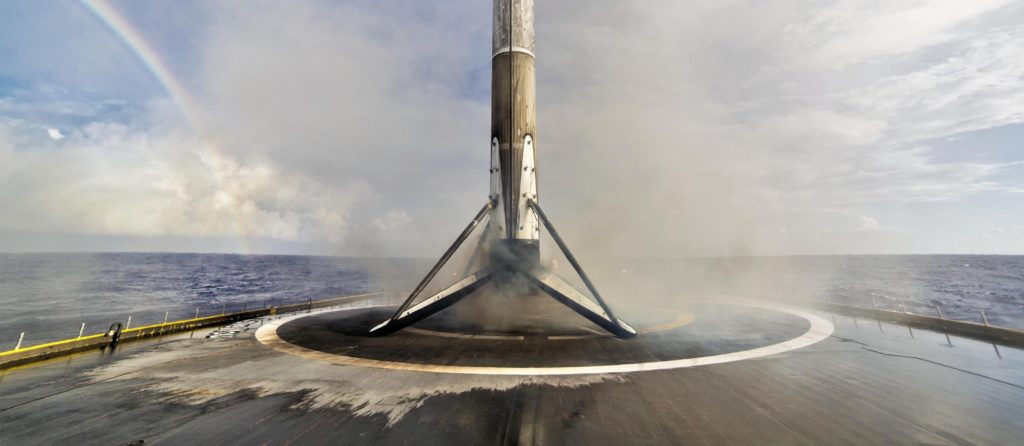
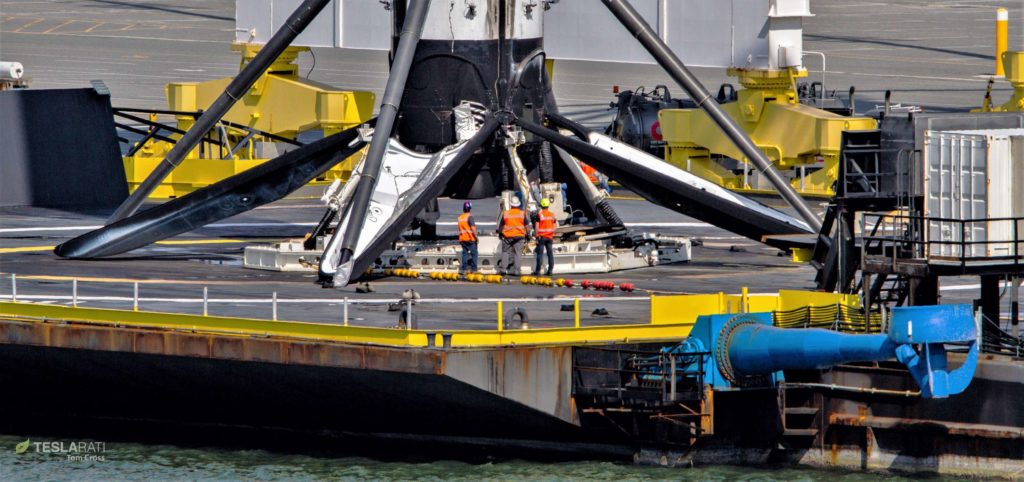
This brings us to another episode of analysis of SpaceX’s ever-changing fleet of Falcon 9 and Falcon Heavy boosters. The cast of flightworthy Block 5 rockets now includes either seven or eight flight-proven boosters and perhaps 2-3 unflown boosters. The new center core believed to be assigned to Falcon Heavy’s third launch (B1057) is reportedly already in Florida, while both flight-proven Falcon Heavy side boosters (B1052 and B1053) were transported to SpaceX’s Pad 39A hangar for refurbishment less than a week after their first launch and landing.
Of the above fleet, B1047, B1048, B1050, B1051, B1052, and B1053 are already known to be located at SpaceX’s Florida facilities, all of which launched from Cape Canaveral within the last five months. After successfully supporting Crew Dragon’s orbital launch debut in March, B1051 is currently assigned to SpaceX’s second West Coast launch of the year and will likely be shipped to California in the next few weeks. B1057, believed to be the next new Falcon Heavy center core, is likely already in Florida to prepare for its a launch as early as late June.
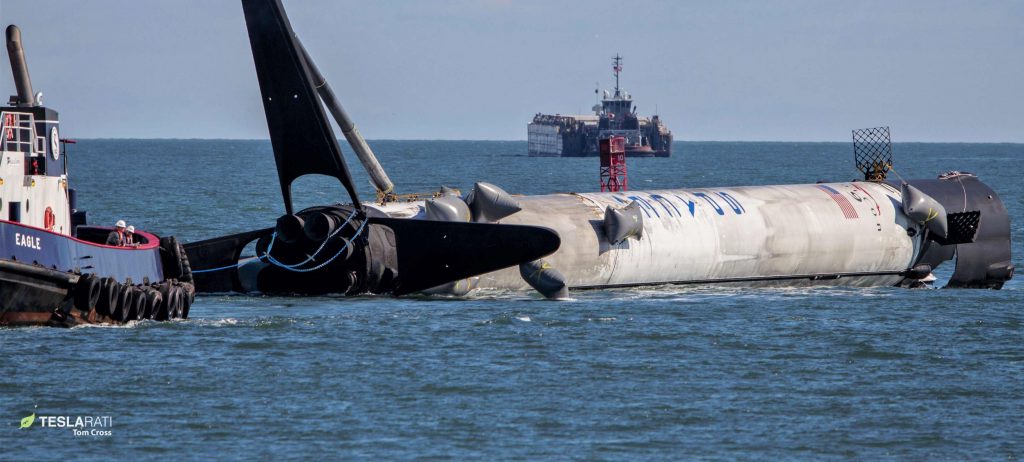
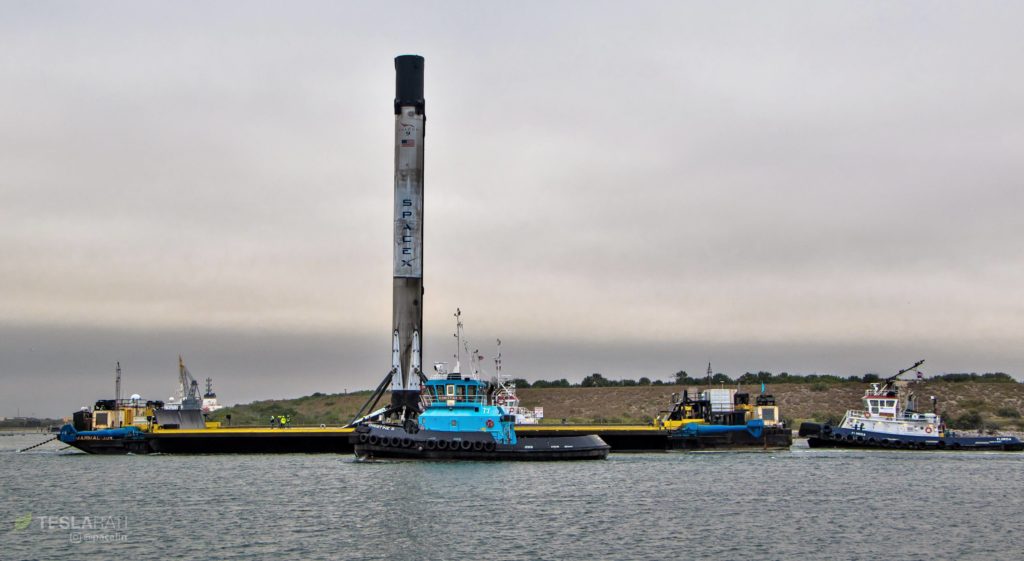
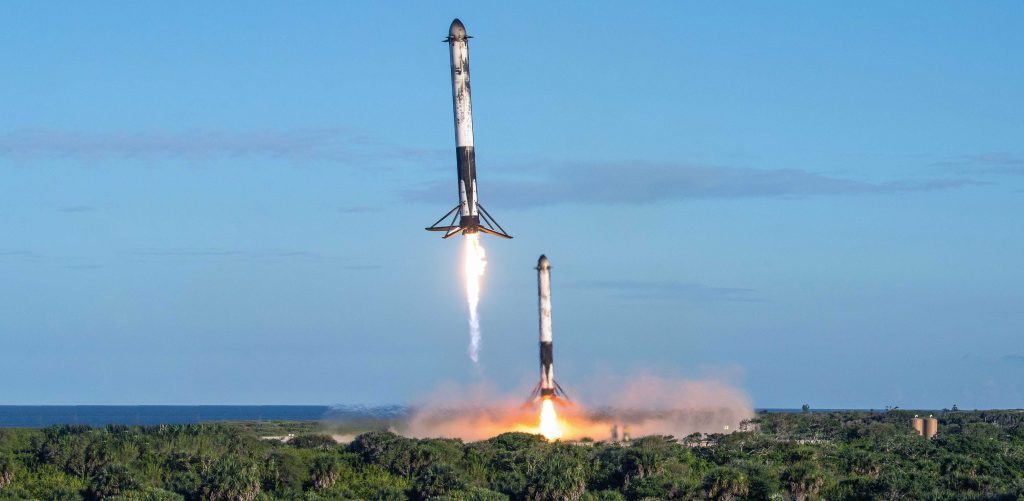
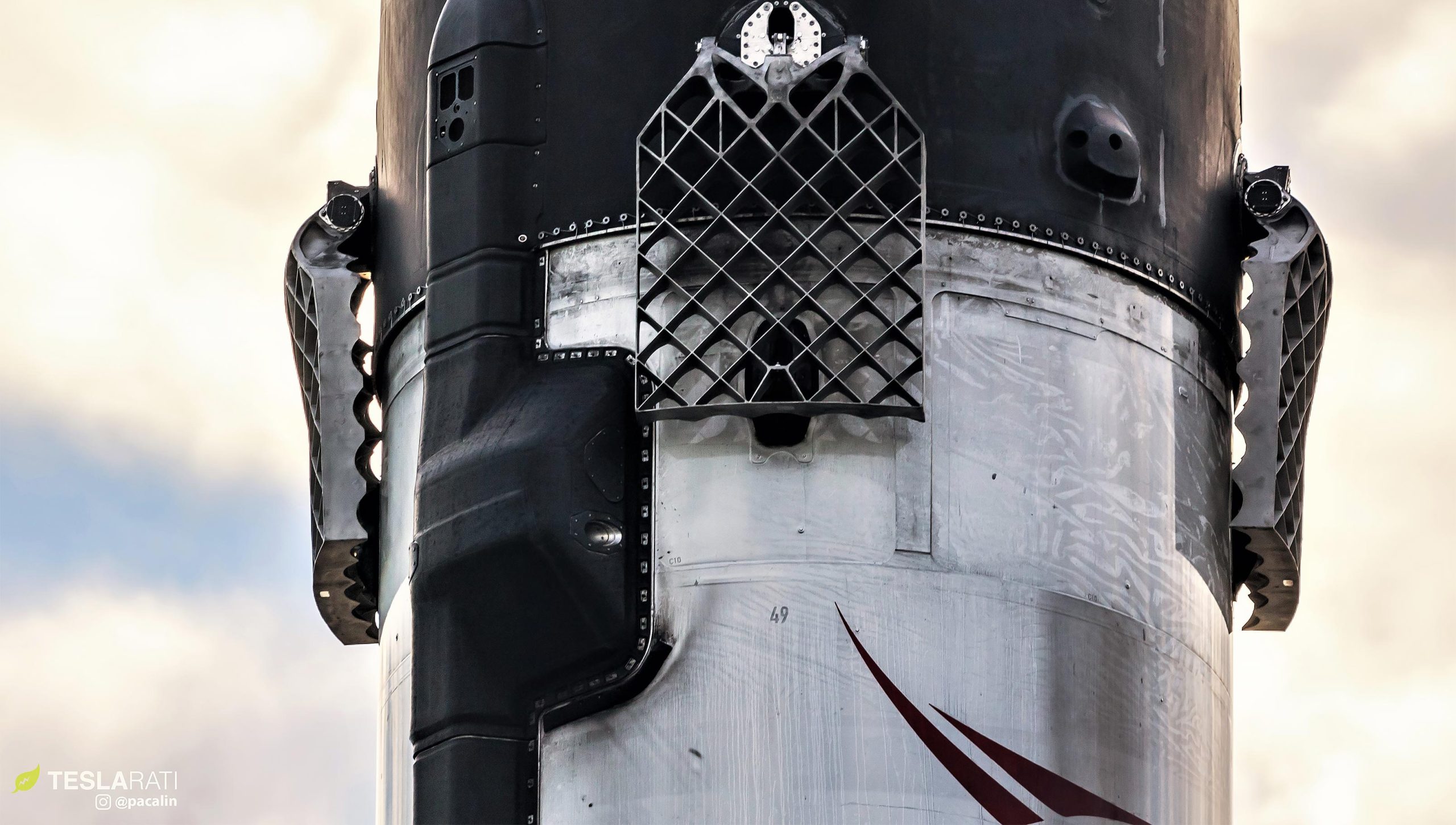
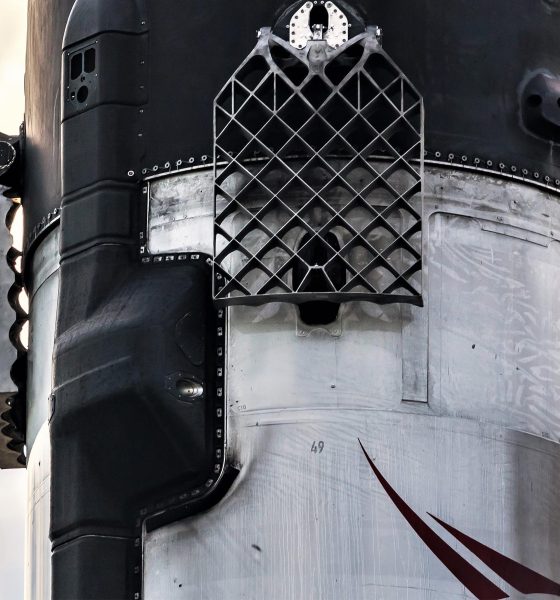
This leaves either two known flight-proven boosters or new Falcon boosters as the likely suspects captured in a duo of April core spottings, one on April 8th and another on April 17th. SpaceX has two flightworthy Falcon 9 Block 5 boosters – B1047 and B1048 – at its Florida facilities, so it’s not out of the question that both spotted cores are new. They could also be B1046 and B1049, both of which recently completed launches from SpaceX’s Vandenberg pad and have been undergoing refurbishment in California. SpaceX’s West Coast manifest could have just two launches for the rest of 2019, meaning that there is no practical reason to keep unassigned boosters nearby.
Meanwhile, SpaceX has plans to begin operational Starlink constellation launches as early as mid-May and likely has more than one planned for 2019. The launch-hungry venture will need as many Falcon 9 boosters as it can get – the more, the merrier. Heading into Q3 2019, SpaceX’s first crewed launch of Crew Dragon (DM-2) is in need of a new Falcon 9 Block 5 rocket and is reportedly scheduled no earlier than (NET) October. One of the cores spotted in the last week or so could be that very rocket, arriving early due to the gravity of DM-2 and the need to double, triple, and quadruple-check the hardware to best ensure mission success.
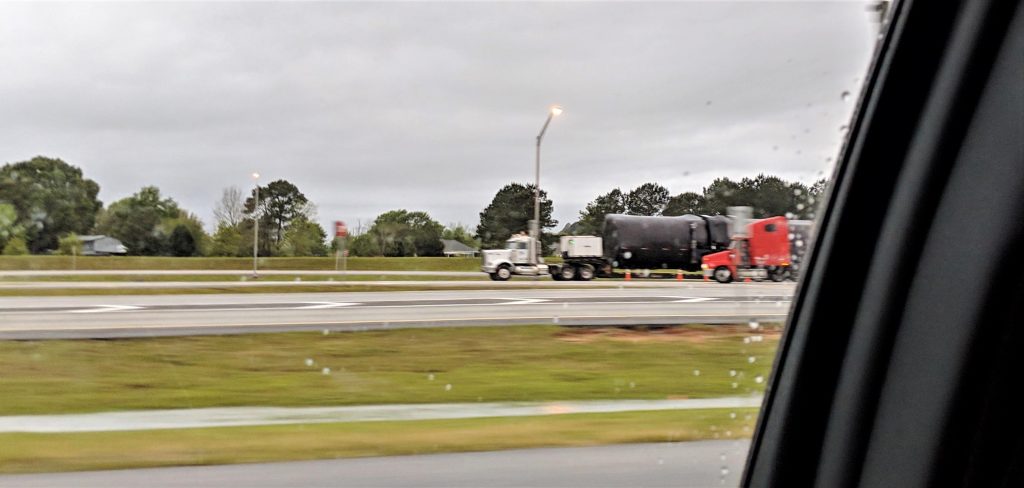
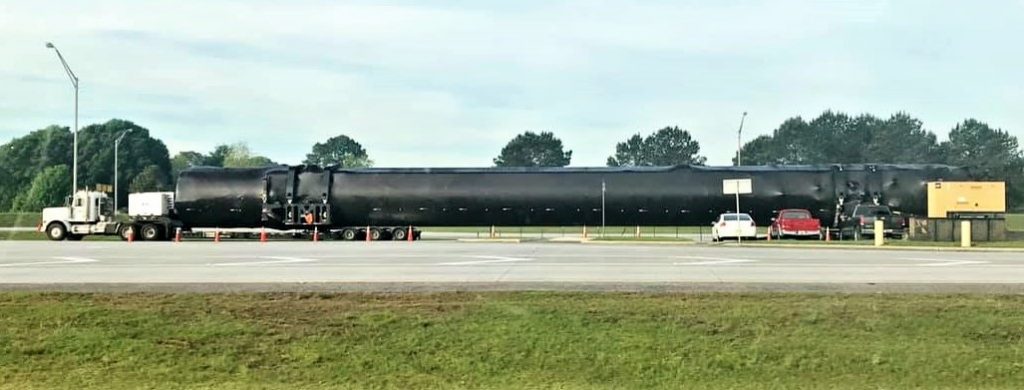
At the end of the day, the most likely explanation is that one of the boosters spotted is new, while one is B1046 or B1049. This is supported by the fact that the second instance was coincidentally tracked throughout its journey, with fans in California, Tuscon, Louisiana, and Florida all catching glimpses between April 12th and April 17th. SpaceX static fires all unflown boosters in McGregor, Texas before they are delivered to a launch site, a procedure that typically takes no less than two weeks from arrival to departure. The booster spotted entering Florida on April 8th, however, does not seem to have been spotted by the same unofficial network of SpaceX fans.
Finally, there is a chance that one of these boosters is a new Falcon 9 assigned to SpaceX’s next Cargo Dragon mission to the International Space Station. CRS-17 is scheduled for launch on April 26th, cutting it extremely close for the booster to be arriving just two weeks before its static fire test.
Check out Teslarati’s Marketplace! We offer Tesla accessories, including for the Tesla Cybertruck and Tesla Model 3.



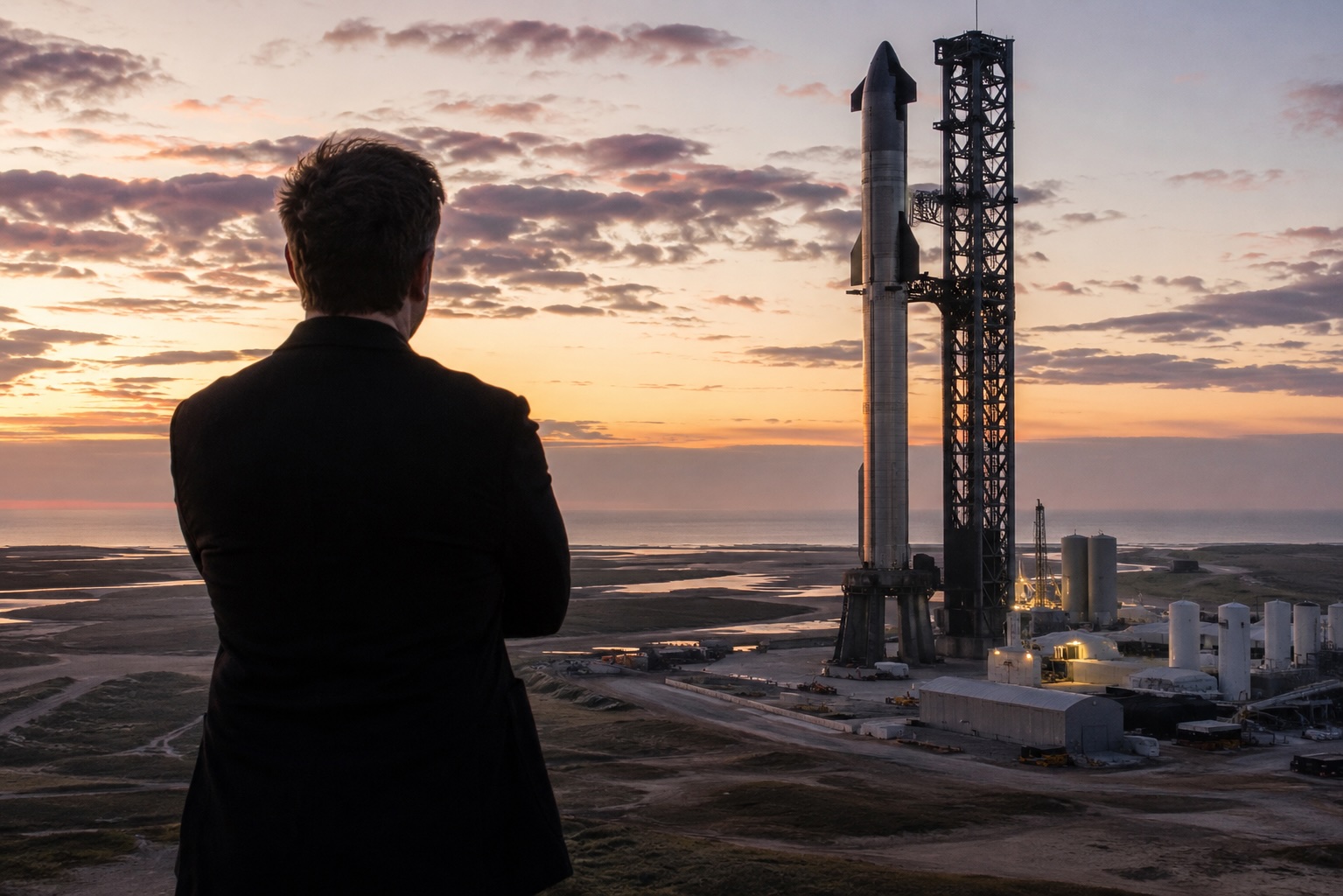
Elon Musk said he is planning to give “every one of his SpaceX shares to every kid in America” in 2027, stating that “this will be the first of many.”
SpaceX went public earlier this year, and its stock price has been relatively stable since leveling off shortly after its IPO. Based on its current price, it’s a gift of just over $10 billion to children across the United States.
It appears to be closely related to President Donald Trump’s bank accounts for children, which were set up earlier this year as Trump Accounts.
Just hours earlier, Anthropic had announced the establishment of its Anthropic Public Benefit Fund, “a new wholly-owned entity dedicated entirely to public benefit.” Musk responded by stating he recommended “giving the shares directly to the public,” and that he would be doing it that way.
Just a little bit later, Musk said children across the U.S. would be getting a share from him:
Next year, I will give one of my SpaceX shares to every kid in America.
This will be the first of many.
— Elon Musk (@elonmusk) October 19, 2026
There are roughly 70 million children, meaning someone under the age of 18, in the United States, according to the Federal Interagency Forum on Child and Family Statistics. Musk’s ownership of SpaceX stock shows he has around 849 million Class A shares of SpaceX stock, according to filings with the SEC.
Investor's Corner
SpaceX’s biggest earnings test yet lands Tuesday, and Tesla shareholders should be watching
SpaceX reports earnings Tuesday as Wall Street watches AI spending, Starlink growth and Tesla merger

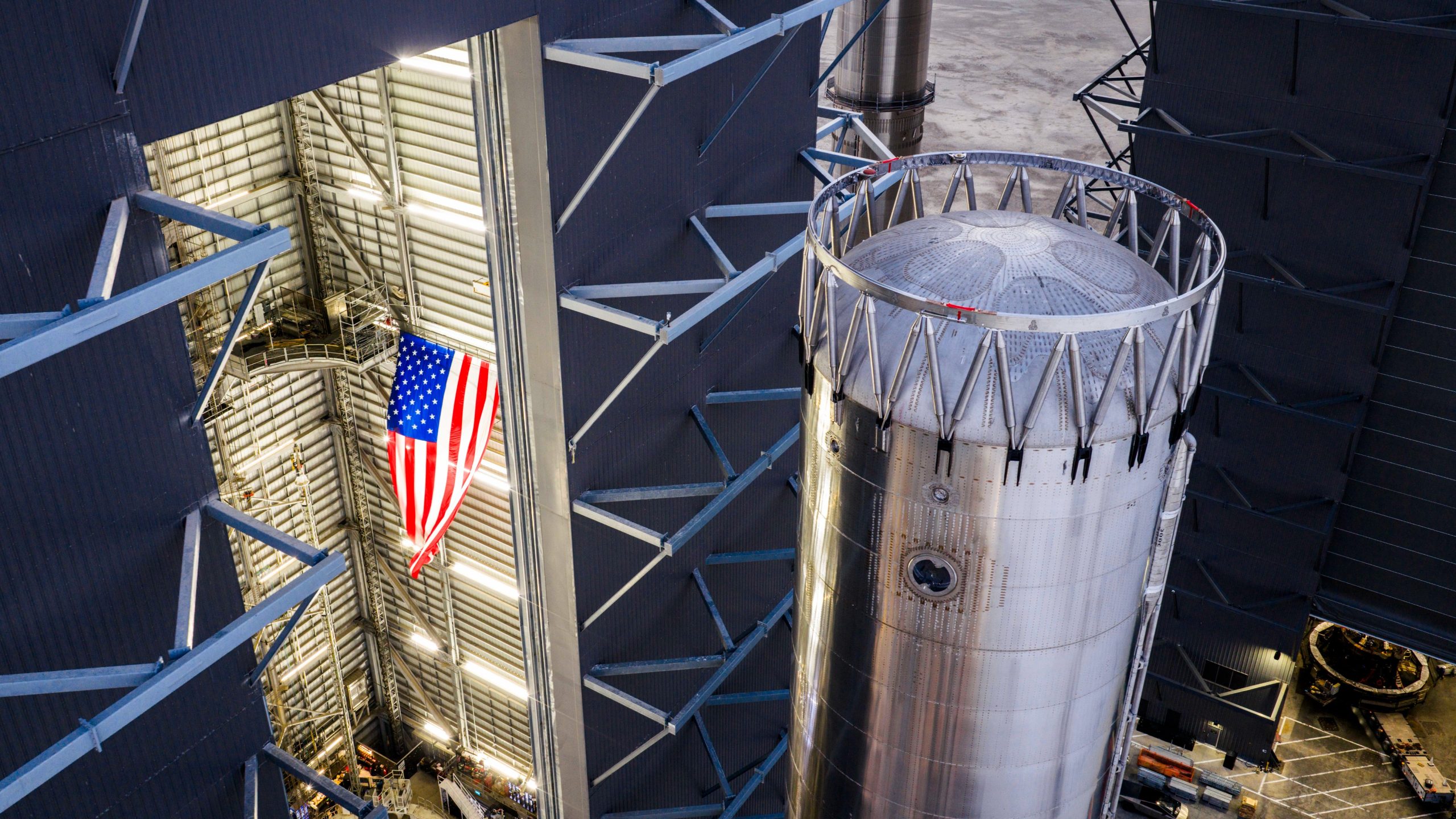
SpaceX reports third quarter results after the market closes Tuesday, with a webcast at 4:30 p.m. ET streamed on X, and Tesla follows a day later. Bloomberg consensus, cited by Pepperstone, calls for revenue of $12.89 billion, adjusted EBITDA of $6.62 billion and adjusted EPS near $0.15. That would be about 65% growth from the second quarter and SpaceX’s first profitable quarter since its IPO. Analysts expect roughly $6.4 billion from AI and $4.9 billion from Starlink, which is projected to reach 14.3 million consumer subscribers. Capital spending is forecast at $19.6 billion, leaving free cash flow near negative $11.6 billion.
The numbers matter because SpaceX has spent months trying to win over a skeptical market. It priced its record IPO at $135, spiked to $225.64, then sank near $105 in early August. Friday’s close of $146.03 sits about 28% below the June high. The Q2 report beat on revenue at $7.8 billion and put Starlink at 12 million subscribers, but $18.4 billion of capex hurt the stock. Since then SpaceX reached orbit on Starship Flight 14 with 26 Starlink V3 satellites, agreed to buy 800 MHz spectrum for about $8 billion as part of its Starlink Mobile push, and signed a fourth compute hosting deal in four months worth roughly $13 billion a year from December. Management is targeting more than 2 gigawatts of compute by year end and a $100 billion annualized revenue run rate. Evercore ISI, which raised its target to $275, said the quarter may be judged more on those targets than the reported figures
All of this sits under the Tesla merger question. Barclays analyst Dan Levy expects an all stock deal in which SpaceX buys Tesla at a premium, using reference values of $2.1 trillion and $1.5 trillion, and said an announcement would need to come by late October or early November to be voted on at Tesla’s December 6 annual meeting. Barclays estimates Musk would hold about 37% of the combined company and 56% of the votes. Musk said in July that combining companies cannot be discussed on an earnings call, but an investor question asking when SpaceX will merge with Tesla is sitting on SpaceX’s Q&A platform, and Teslarati has tracked how the Roadster demo revived the talk.
If a deal happens, Tuesday’s result would effectively set the price Tesla holders would receive. Their shares would convert into SpaceX stock, along with exposure to a company with a heavy investment on AI, while Tesla itself expects 2026 capex above $25 billion. A strong quarter and calmer spending would make that exchange easier to sell. Another round of heavy capex and a falling stock would make it harder.
News
SpaceX’s Gwynne Shotwell just made a quiet gesture toward Tesla
SpaceX president Gwynne Shotwell quietly followed Tesla on X, and merger watchers noticed right away.
SpaceX President and COO Gwynne Shotwell has started following Tesla’s official account on X, a small change that landed in the middle of a very loud merger conversation. Whole Mars Catalog joked about it on Sunday.
A follow is not an announcement, and neither company has said anything about a deal. What gives the moment weight is the timing. Barclays analyst Dan Levy has told clients that an agreement could come before Tesla’s annual meeting, which must be held by December 6, with SpaceX as the buyer in an all stock deal, as we reported after the Roadster unveiling. Wedbush’s Dan Ives has stuck with a 2027 timeline.
“Shit, I better start following their X account if i’m gonna be helping run the company”
— Whole Mars Catalog (@wholemars) October 18, 2026
Shotwell is the executive most worth watching if the two companies do move closer. When Musk was asked at the All In Summit why Tesla and SpaceX remain separate, Shotwell sat next to him and said SpaceX personnel had already moved into xAI to fill leadership and engineering gaps. The businesses were integrating “faster than I thought,” she said, though “not fully integrated yet.” Her responsibilities have also grown since SpaceX absorbed xAI, and she now oversees operations that include Grok and the company’s AI compute buildout.
The financial links are already there. Tesla’s $2 billion xAI investment turned into a stake of less than one percent in SpaceX, the two share the Terafab chip project in Austin, and Musk exercised his 2018 Tesla options a week after SpaceX began trading, a sequence analysts flagged as giving SpaceX public shares to use in a deal. Musk holds about 20 percent of Tesla and controls 85.1 percent of SpaceX’s voting power, according to our earlier breakdown.
The next test is close at hand. SpaceX reports its second earnings as a public company on Tuesday after the close, and Tesla follows on Wednesday. Musk told analysts in July that “we can’t talk about combining companies and that kind of thing on an earnings call,” so a direct answer is unlikely from either stage. Tesla shareholders can still submit and vote on questions through the Say portal until 4 p.m. EDT on Monday, and the merger is a recurring theme in the queue.

The Boring Company’s latest Tesla tunnel truck mod “fits like a glove”

Elon Musk will give ‘every kid in America’ a SpaceX share in 2027

Elon Musk reveals why Boring Co’s biggest East Coast project never happened

SpaceX reveals how its 1 Million AI satellite network will work and prevent space collisions

Tesla Roadster: Three configs, one can fly, 0-60 in 0.8 seconds


