News
SpaceX’s Starlink internet constellation deemed ‘a license to print money’

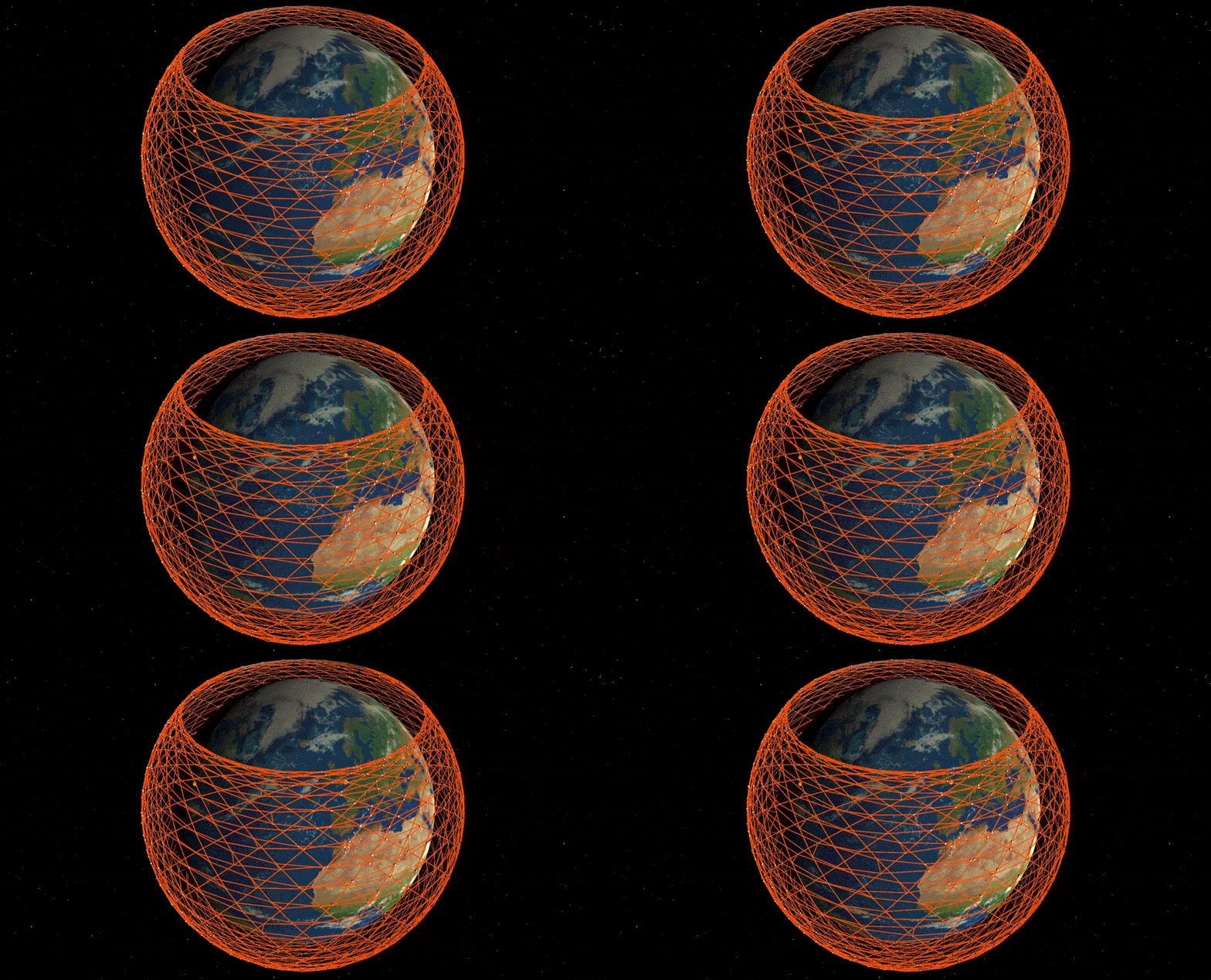
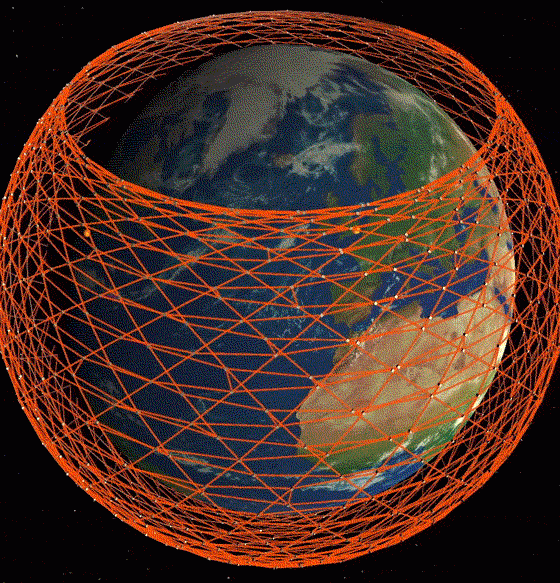
According to a draft paper written by networking researcher and professor Mark Handley, SpaceX’s Starlink internet satellite constellation has the potential to significantly disrupt the global networking economy and infrastructure and do so with as little as a third of the initial proposal’s 4425 satellites in orbit.
A step or so further, Dr. Handley (according to a University College London colleague) suspects that a network like that proposed by SpaceX could rapidly become “a license to print money” thanks to the tangible benefits it would provide financial institutions and banks – as of today, shaving mere milliseconds off of communications latency can be a serious competitive advantage for traders.
The three LEO constellation planes (not including the seven thousand VLEO in the latest filing) pic.twitter.com/btX0pLQAzc
— Andrew Moore (@awm22) September 25, 2018
Asked to condense his argument into a few sentences, Dr. Handley’s colleague (Reddit /u/davoloid) described his excitement as such.
A Professor in Computer Science [Mark Handley] who specializes in how networks work has done a simulation of Starlink based on the available information. It will make long distance links very fast, as in, a short delay in sending a message, which we call latency. That’s very important to banks and similar companies, who always want to have the fastest information. They pay a lot of money to create networks, often private ones rather than through regular commercial providers. Even with the first phase of 1600 satellites, there will be big revenues for SpaceX.” – Reddit /u/davoloid, 11/2/18
-
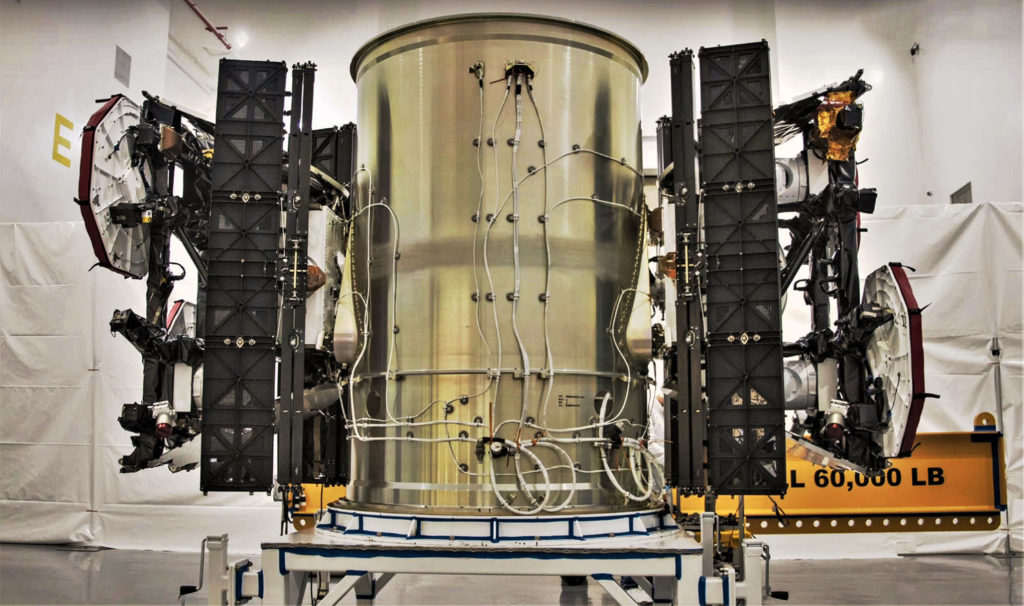
- SpaceX’s first two Starlink prototype satellites are pictured here before their inaugural launch, showing off a thoroughly utilitarian bus and several advanced components. (SpaceX)
-
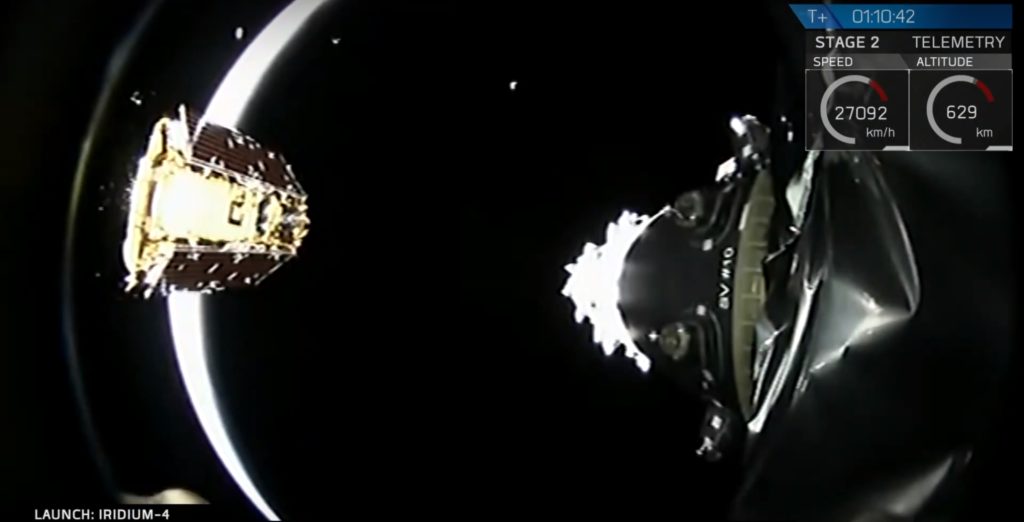
- A beautiful string of Iridium NEXT satellites deployed into the sunrise. (SpaceX)
Judging from the recent past of a practice known as High-Frequency Trading (HFT), where algorithms take over trading in financial markets and operate at speeds on the order of trades per millisecond, the highly volatile industry has already reached its conclusion. This is to say that HFT went from a wildly disruptive and lucrative technological advantage to a fundamental part of the world’s ever-changing financial infrastructure in just a few decades.
“The story about [HFT] is done. It’s a mature industry now, as much an embedded feature of our society as mutual funds or the income tax.” – Tim Worstall, 2017
“HFTs are still involved in the speed race and sometimes even race to pick off their market maker brethren. While it may be more expensive and more competitive today for HFT to pick off the slow traders, make no mistake, they have not gone away.” – Themis Trading, 2018
Much like electricity, the internet, and railroads went from kings of profit to marginal and tedious enterprises, it seems that HFT has gone from a nascent and fickle technology to a basic component of global infrastructure. As such, it is in no way, shape, or form “dead”. Just like step-change advancements in technology have forced service-based companies to upgrade or die, it seems that the availability of Starlink (or any comparable interconnected internet constellation) will create a massive imbalance between financial institutions that adopt early and those that do not or cannot.
If that ends up being the case, there will undoubtedly be an extraordinary surge in competitive financial infrastructure investment, with institutions desperately pursuing new ways to remain competitive (leveling the playing field vs. a shortcut to the front). Dr. Handley’s draft paper, accompanying video, and colleague’s clear excitement about the possibilities demonstrate (at least theoretically) that even just the first third (37%) of SpaceX’s preliminary 4425 satellite Starlink constellation would exhibit dramatic latency improvements between most conceivable access points.
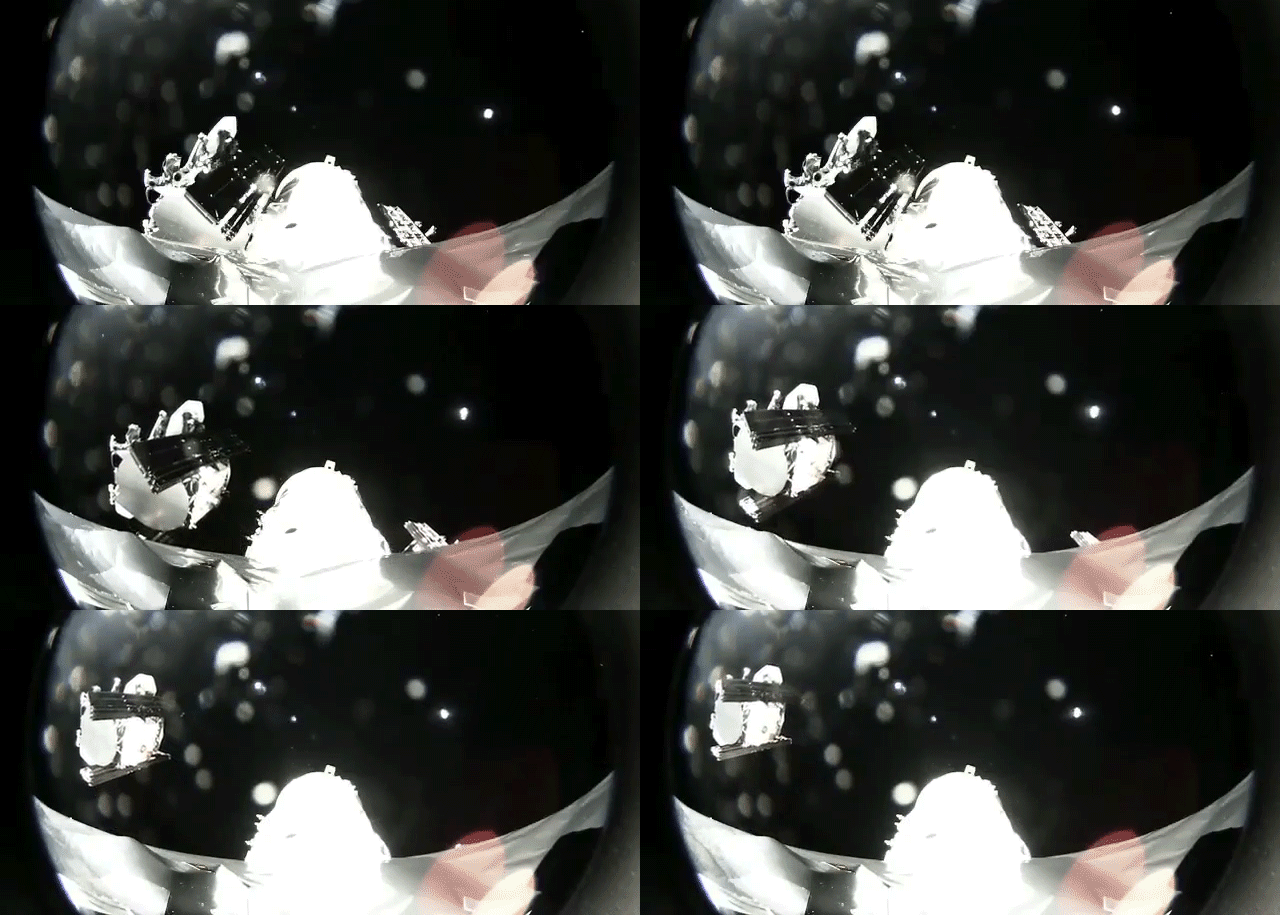
The first step’s first step
With all 4425 satellites in place, the benefits approach or even surpass theoretical best-case statistics for literal straight-line fiber optic cables. Of course, SpaceX’s true proposal includes yet another 7520 very low Earth orbit (VLEO) Starlink satellites (~350 km) that would more than double the bandwidth available while potentially cutting another huge chunk out of the already unsurpassable latency performance of LEO Starlink (~1100-1300 km).
Of course, a massive amount of work remains before SpaceX before any of the above futures can or are even technically able to come to fruition. Aside from regulatory difficulties and concerns about space debris from a potential ~12,000+ new satellites, SpaceX will have to go one or even two magnitudes beyond what the status quo of satellite manufacturing believes is achievable, mass producing and launching satellites in volumes that will dwarf anything undertaken in the history of spaceflight. Still, if anyone is going to accomplish such an extraordinary feat, one would be hard-pressed to find a better bet than SpaceX.
Watch an animation of Starlink created by Dr. Mark Handley here.
For prompt updates, on-the-ground perspectives, and unique glimpses of SpaceX’s rocket recovery fleet check out our brand new LaunchPad and LandingZone newsletters!



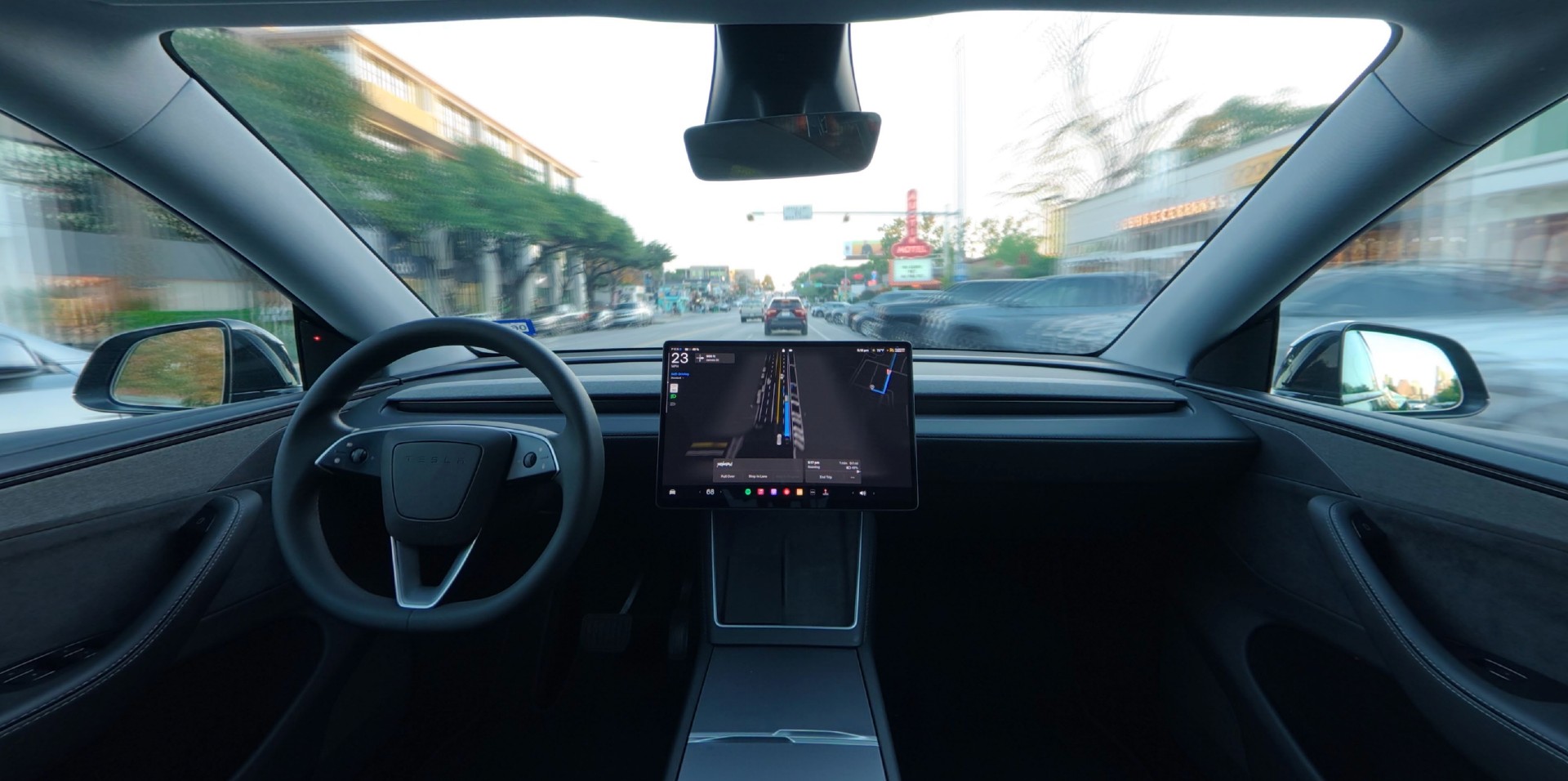
Tesla has reached a notable benchmark in its autonomous driving program after its Robotaxi fleet surpassed one million miles of unsupervised operation. The company made the announcement during its Cybercab event in Austin on September 3.
Tesla Vice President of AI Ashok Elluswamy told attendees he was happy to report the fleet had achieved one million miles of unsupervised Robotaxi operation as a testament to safety.
The new total marked a sharp increase from the 380,000 unsupervised miles Tesla disclosed during its second-quarter 2026 earnings update in late July.
In roughly six weeks, the company added about 620,000 miles. That acceleration followed Tesla’s decision to remove in-vehicle safety monitors from most of its operations outside the San Francisco Bay Area.
Credit: Tesla
Tesla first launched Robotaxi service in Austin in June 2025 with safety drivers present. It later began fully unsupervised rides and expanded into Dallas, Houston, Miami, Orlando, and Tampa. The San Francisco Bay Area remains the exception, where a safety monitor still rides in the vehicle under California permitting rules.
The company has not released a city-by-city breakdown of the one million unsupervised miles.
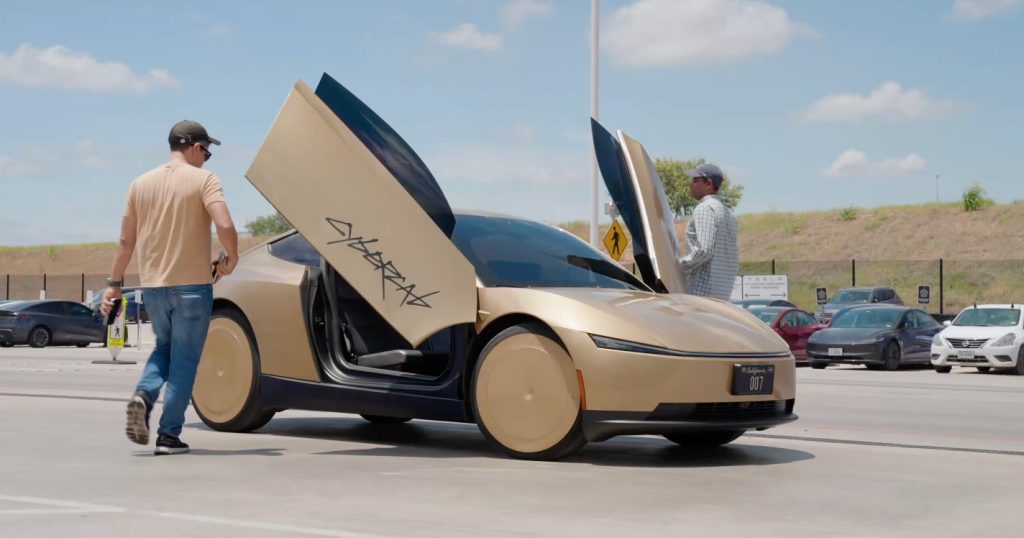
The milestone arrived as Tesla began offering public Cybercab rides in Austin. The purpose-built vehicle has no steering wheel or pedals and is designed only for autonomous ride-hailing. Production versions joined the existing fleet of modified Tesla vehicles already operating in the service.
Tesla’s unsupervised mileage is growing at a double-digit weekly rate according to earlier company comments, yet its fleet size remains modest compared with established competitors. Waymo has accumulated more than 200 million fully autonomous rider-only miles. Tesla has described its own unsupervised operations as having recorded zero notable incidents in the period leading up to the July update.
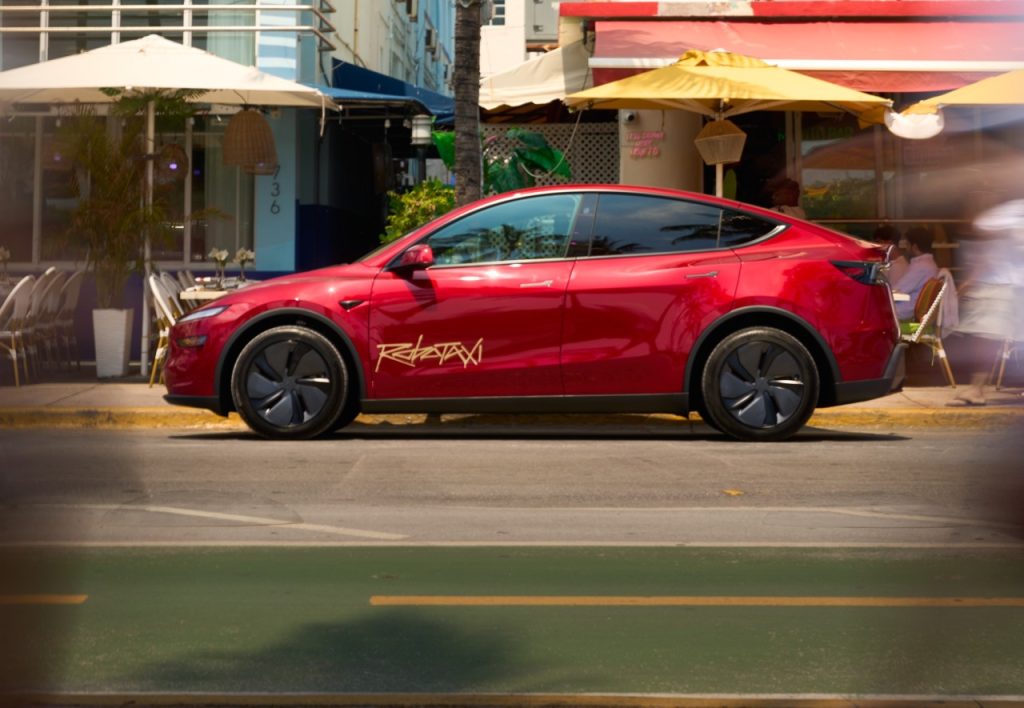
The one-million-mile figure reflects Tesla’s shift from supervised testing to broader driverless service in multiple states. It also highlights the company’s strategy of using both existing Model Y vehicles and the new Cybercab to scale its network.
Credit: Tesla
Whether the rapid recent growth continues will depend on further city expansions, regulatory approvals, and the performance of the purpose-built Cybercab in everyday paid rides. Tesla has not specified how many of the latest miles involved the new vehicle versus the rest of the fleet.
The announcement underscores Tesla’s progress toward a larger robotaxi network while illustrating the remaining gap in total autonomous experience relative to longer-operating rivals.
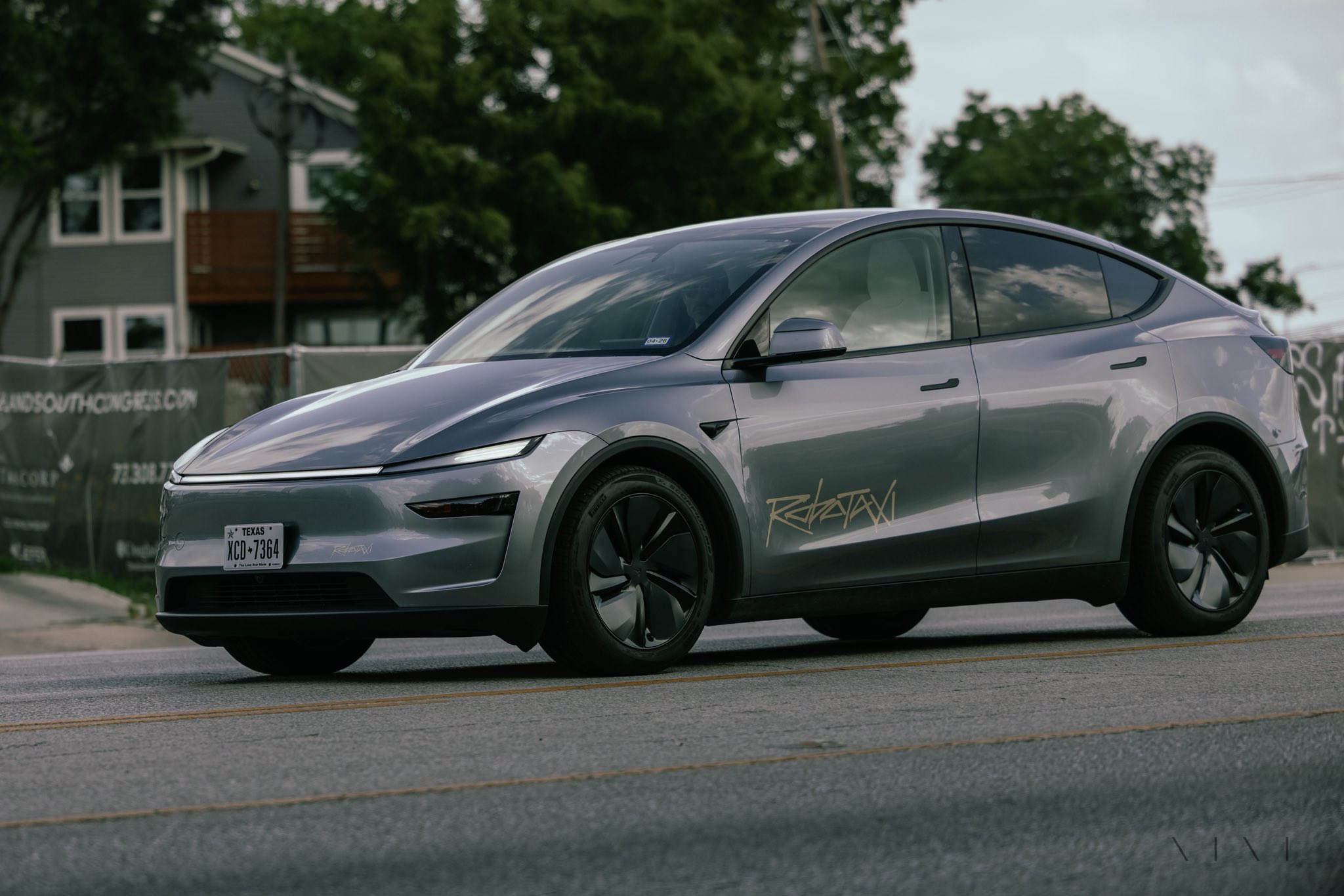
Tesla AI lead Ashok Elluswamy said this week that 24-hour Robotaxi service is close. Replying on X to a rider who wanted Cybercab trips all night, he wrote that the capability would arrive “next month or so” once “the next tech to merge on the v15 plan” is ready.
The comment landed on September 4, one day after Tesla opened public Cybercab rides in Austin. It is the clearest near-term timeline yet for overnight unsupervised operation. Tesla’s paid Robotaxi network currently runs from 6 a.m. to 10 p.m. seven days a week across Austin, Dallas, Houston, Miami, Orlando, and Tampa.
next month or so. the next tech to merge on the v15 plan will enable it.
— Ashok Elluswamy (@aelluswamy) September 4, 2026
That 16-hour window is shorter than the 6 a.m. to 2 a.m. schedule the company used for much of the prior year.
Elluswamy did not name the specific feature or say whether the change would apply first to purpose-built Cybercabs, the existing Model Y fleet, or both. He also offered no city-by-city rollout list. The link to Full Self-Driving v15 is nevertheless significant.
Tesla has described v15 as a step-change architecture with seven parallel improvement tracks and roughly ten times more parameters than earlier builds. Early versions of that software already operate on the Robotaxi fleet and contain about 40 percent of the planned gains.
By July 2026, the unsupervised fleet had logged more than 380,000 miles across six cities in two states with what the company called an impeccable safety record and no notable incidents caused by the vehicles themselves. Tesla has repeatedly argued that camera-based end-to-end neural networks, rather than extra sensors, are the core of the solution.
Overnight service would test that claim in lower-light conditions and would also raise vehicle utilization, a key variable for Robotaxi unit economics. The company has already begun using public Superchargers at night and is building dedicated Robotaxi charging sites.
Riders have asked why software must change if the cars already drive in the dark. The practical answer appears to be reliability and scale: Tesla has held back mass expansion until more of the v15 stack is merged, citing the need for higher confidence before putting thousands of unoccupied vehicles on streets around the clock.
If the next module arrives on the timetable Elluswamy sketched, 24-hour service could begin in October 2026 in at least some markets.
That would mark a shift from a daytime-bounded pilot to a service that can run whenever demand exists, including the late-night hours that have so far remained out of reach.
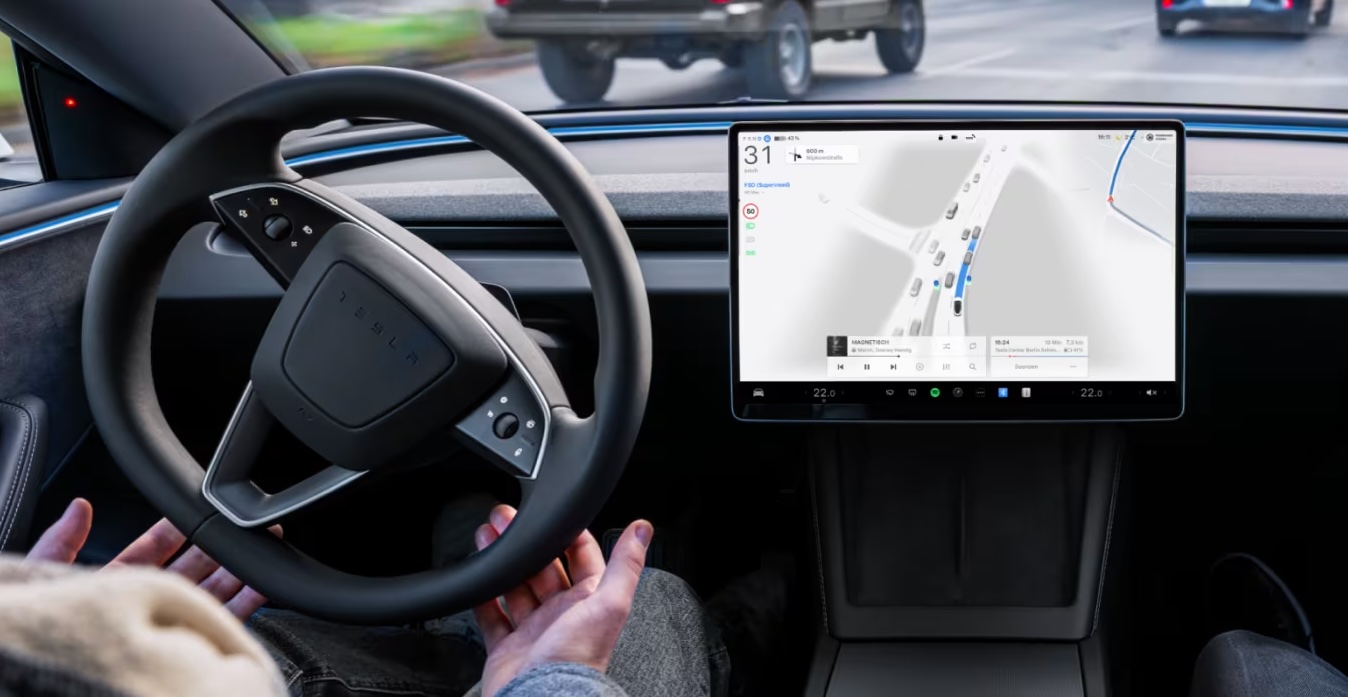
Tesla is beginning to roll out Full Self-Driving Supervised v14.3.9 with a new active safety layer that can take control even when the driver is operating the car manually.
Tesla AI said the software can activate FSD on the driver’s behalf when an imminent collision is detected and Automatic Emergency Braking may not be enough. It may also engage if the system detects heavy distraction or an accidental FSD disengagement.
FSD Supervised v14.3.9 starting to roll out shortly
This release includes a new active safety feature set: FSD Supervised can now activate on your behalf when an imminent collision is detected and Automatic Emergency Braking (AEB) may not be enough.
It may also engage if we…
— Tesla AI (@Tesla_AI) September 4, 2026
The capability is essentially Automatic Collision Evasion. However, unlike conventional AEB, which mainly applies the brakes in a straight line, this feature can use steering, braking, and acceleration together if the car calculates that stopping alone will not prevent impact and a safer path exists. The system may change lanes or move toward a shoulder when conditions allow, then continue driving after the immediate threat is handled rather than simply coming to a stop.
The intervention is meant as a last-resort safety net, not a replacement for attentive driving.
Tesla Full Self-Driving v14.3.7 early review: FSD saved me from an accident
Tesla’s own description still frames FSD as supervised assistance. Secondary reports on internal release notes say the feature can fire while the car is being driven manually if cabin-camera monitoring suggests the driver is not sufficiently attentive, such as reaching toward the back seat, or if FSD appears to have been turned off unintentionally.
After the emergency maneuver, the car is expected to alert the driver and request a return to manual control.
The safety case is straightforward. Many collisions happen in the last second because a driver is looking away, fumbles a control, or faces an obstacle that braking cannot fully solve. A system that can both recognize that AEB is insufficient and execute a coordinated evasive path can reduce those remaining high-severity events.
Re-engaging after accidental disengagement also addresses a practical failure mode: a small steering nudge that drops FSD at the worst moment. The advantage is a background safety net that uses the same vision stack already running in v14, instead of leaving the car solely to emergency braking once the driver is no longer in command.
The feature still depends on FSD being enabled and, according to reports, an active FSD purchase or subscription. It does not make the vehicle unsupervised. Drivers remain responsible, and Tesla has not published how often the system is expected to intervene or how it will handle false positives.
If the rollout is conservative and the false-alarm rate stays low, the update is a meaningful step: FSD is no longer only a feature the driver turns on. In the rare moments when disaster is already forming, it can step in.

Tesla crosses major Unsupervised Self-Driving milestone

Tesla Robotaxi will be a 24/7 service: here’s when


